Leonard Weber
June 2, 2023
During the last 5 or 6 weeks, most of my nature walks in Eliza Howell Park have included a pause near a nesting box at the edge of the trees. By late April, it was clear that a pair of Black-capped Chickadees had selected this box as their 2023 nesting cavity.

Chickadees regularly nest in the park, usually excavating their own cavity in dead wood. They carefully carry the chips away from the site.

Sometimes they use a natural cavity or an old woodpecker hole. This is the first time I have seen them choose a human-provided cavity.
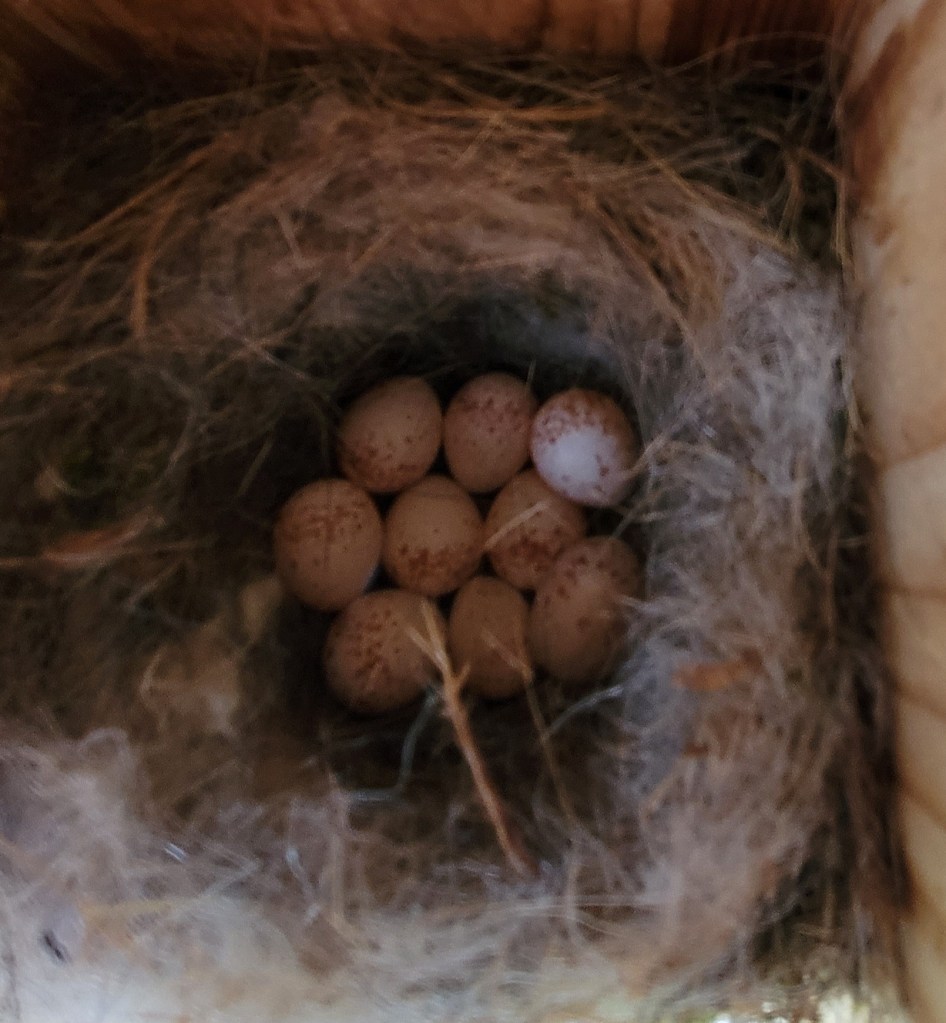
On the morning of May 2, after seeing both of the birds fly away, I quickly walked to the box to take a look. The nest was packed with 9 small eggs.
Last year, House Wrens used this same box for their brood.
House Wrens often return to the same area, and they are known to be aggressive in expelling other species, like chickadees, that nest in “their” territory. The wrens were not yet back from their wintering grounds in early May this year (as far as I could tell), but I wondered what the chances were that the chickadees would successfully hatch and fledge.

As May progressed and there was no evidence of House Wrens near the nest, I began to think that the wrens might be nesting later this year or might have selected another location.
Both the female and the male chickadee feed the young in the nest, and the large brood meant many trips in and out of the box. By the end of May, based on an estimate of the number of days that had passed since I first noticed feeding, I thought the babies might have left the nest.
When I saw no adults on May 31, I went for a close-up look. The young were still in the nest, but clearly ready to fly out (one left as I watched).

By the next day, June 1, they had fledged, leaving a nest empty except for one unhatched egg.

Because it is still spring, still nest making season, I decided to return the next day, to clean out the box and make it more attractive if another species was looking for a site. The egg was gone.

As I was trying to figure out what had happened, I was chased away by two birds — not House Wrens, but Tree Swallows, another cavity nester. They often nest in June, and it looks like they are claiming this nesting location — without waiting for it to be cleaned.

The chickadees had a successful turn in the “apartmen,” but the demand for the spot remains high. In rapid sucession, last year and this, three different species have found it to be the right cavity in the right location — House Wren, Black-capped Chickadee, and Tree Swallow.

 Eliza Howell Nature Walk
Leave a comment