Kathleen Garrett
June 16, 2023
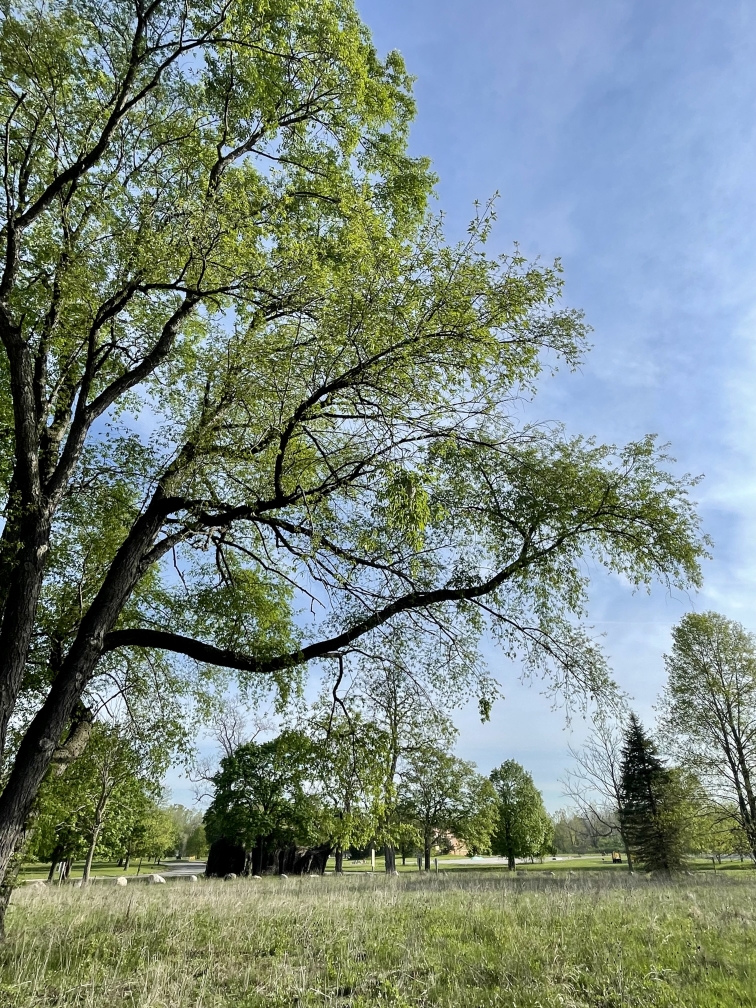
Black Cherry trees, both young and old, are easy to find at Eliza Howell Park. While Black Cherry trees are native to Michigan, the artistic arrangement of the trees in the open fields indicates that these trees were planted some years ago. In this open space, the crowns of these fast-growing trees are broad with some branches dipping low enough for a close look at the flowers.
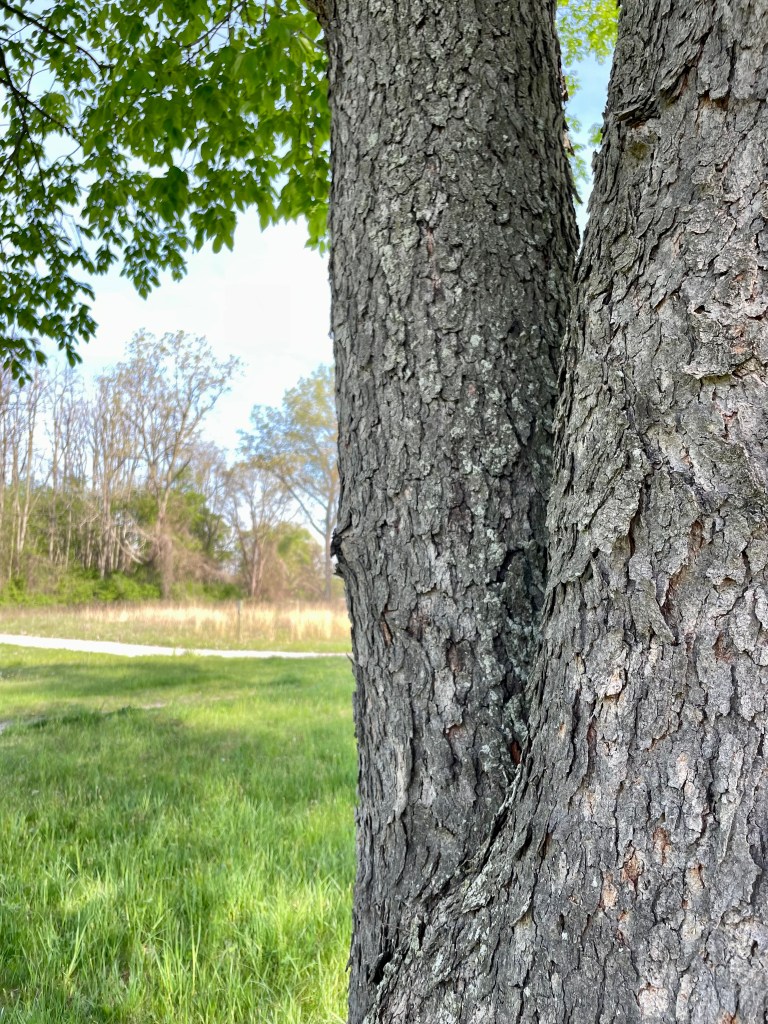
Most often described as “burnt potato chips,” the bark is very distinctive. To me it looks as if someone was using their thumbs to sculpt dark clay, pushing up. The bark and roots of Black Cherry trees are rich in hydrocyanic acid, which has been used as a cough suppressant and as flavoring in rum and brandy.
Baltimore Orioles often choose mature Black Cherry trees in the open fields as excellent spots to build their woven, hanging nests. If you are lucky, you can watch Orioles build their amazing nests in the outer, drooping branches of Black Cherry trees while the leaves are still young and small and the branches thin enough to sway in the breeze. Once fully leafed, the nests can be hard to spot.
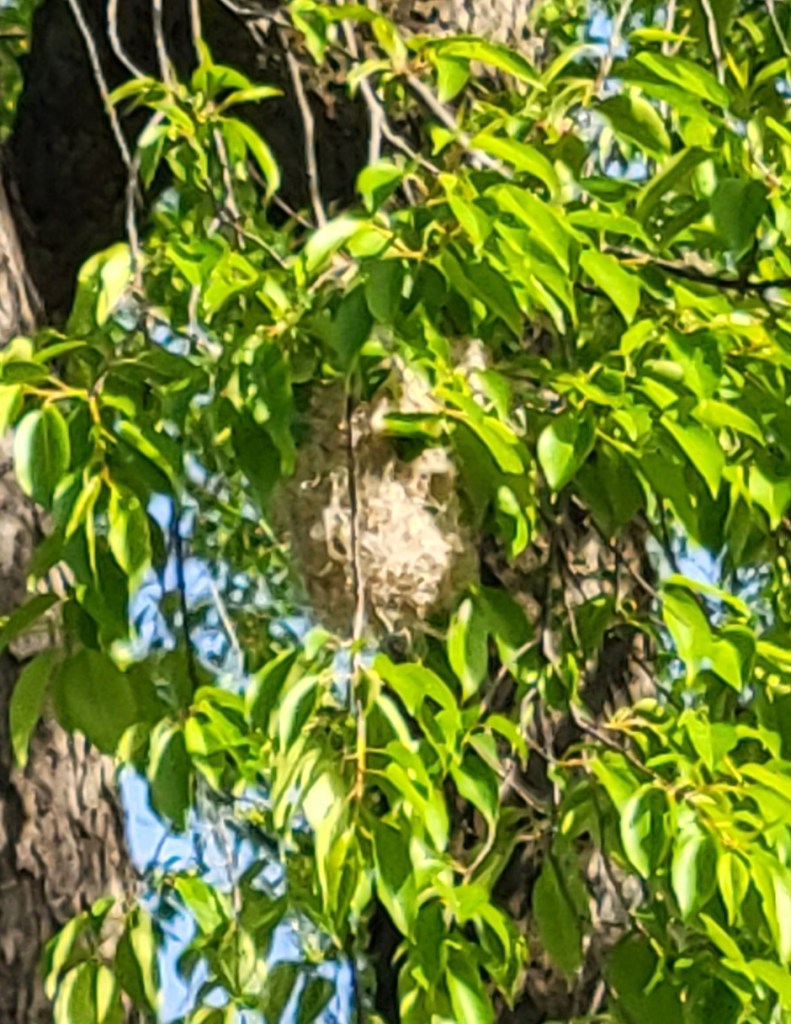

Photo courtesy of Margaret Weber
White, pendulous flowers come next on the hanging branches of the Black Cherry.

The pea-sized fruit that follows is not the kind we put in pies, but maybe in jelly with enough sugar. Bees and birds such as Robins, Cedar Waxwings, Grosbeaks (all seen at EHP) kindly scatter the seeds of the Black Cherry as they gorge on the fruit.
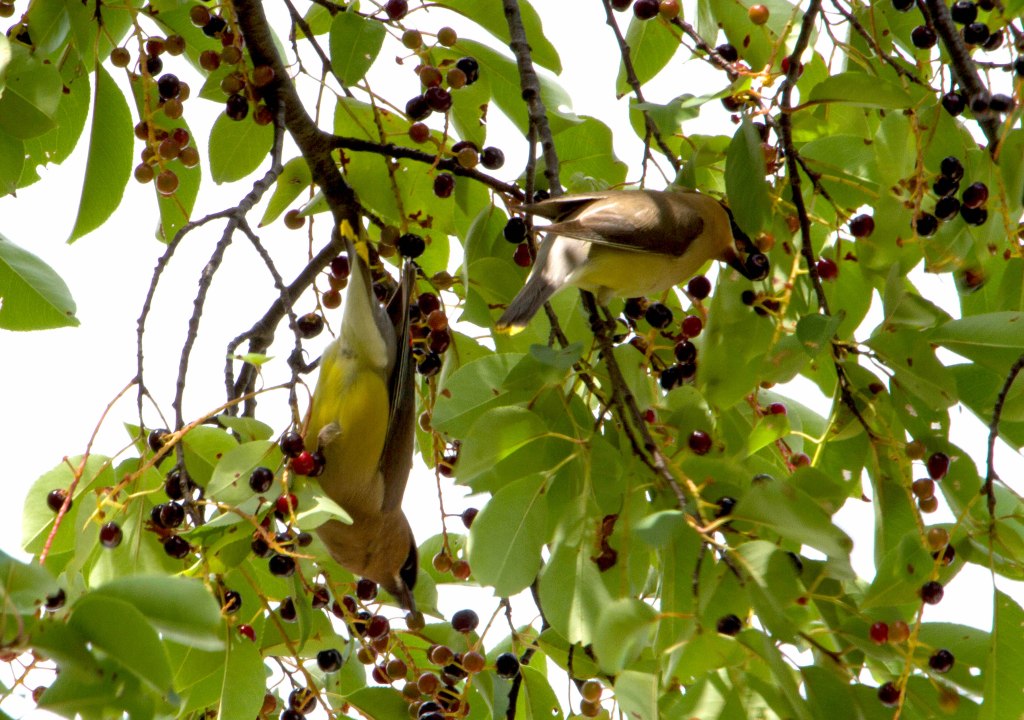
Photo courtesy of Margaret Weber
The birds know when to eat the fruit because the color of the berries changes as it ripens. It is thought that the color changes may also signal potential fruit-dispersing animals that the cherries are about to ripen, convincing them to stick around to feed on the ripe fruit.
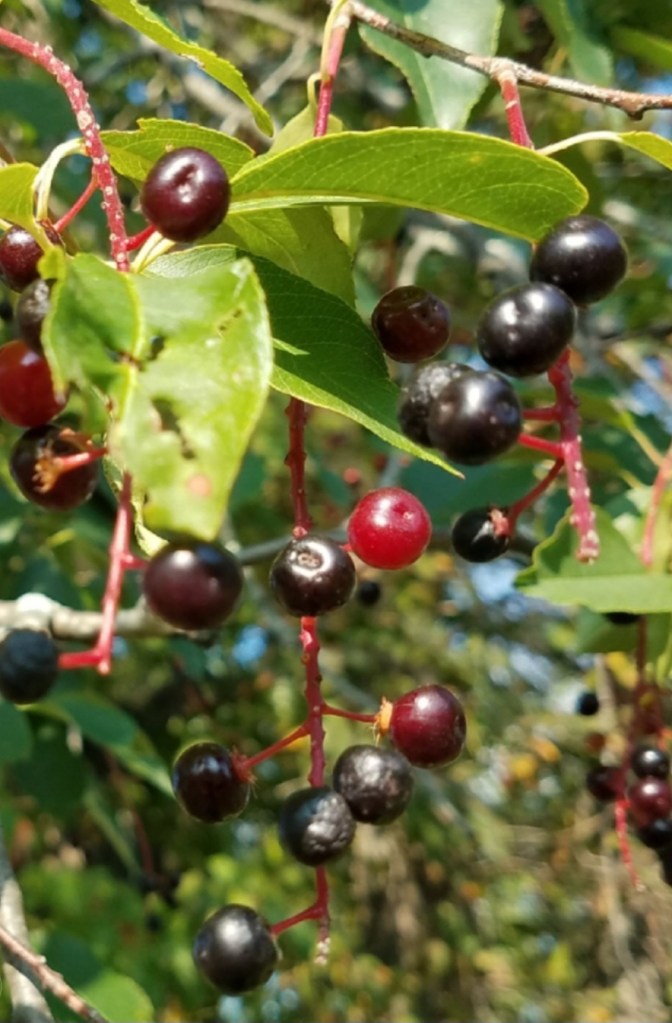
Red foxes, raccoon, fox squirrel, white footed mouse, and bear (not (yet) seen at Eliza Howell Park), also eat the berries, dispersing the indigestible seeds along their way. Most trees rely on the wind to do their pollinating. Known as a “foraging-hub,” Black Cherry trees are one of the few native trees that need pollinators to help them bear fruit just as the pollinators need the trees.
The Black Cherry trees in the open fields are showing their age. Large, dead limbs and the appearance of fungi on the trunks are signs of this.

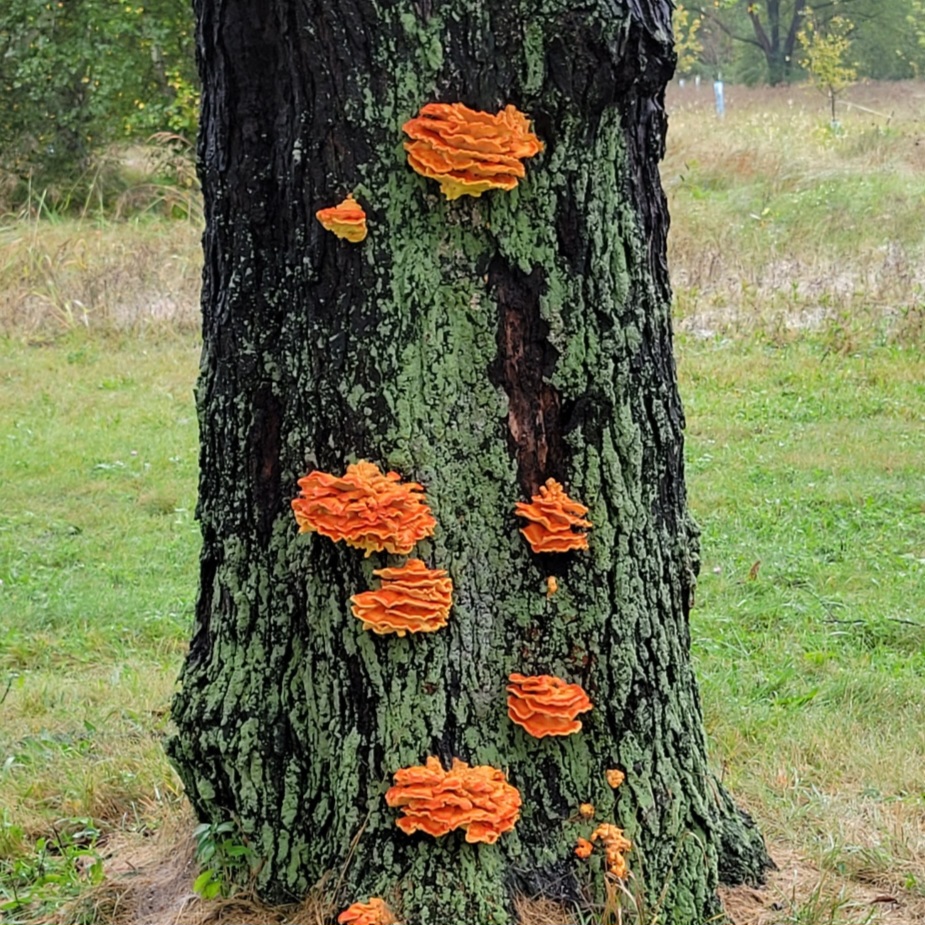
Photo courtesy of Leonard Weber
There are young Black Cherry trees along the path in the woods, however. These most likely were not planted by humans, but in the woods these trees compete with many others for sun. In the woods, the trunks of these trees are long and narrow heading straight for the sun, and the much smaller crowns are without drooping branches. Binoculars are needed to look at the flowers of these trees.

Time and Nature will tell which trees will survive to maturity.
 Eliza Howell Nature Walk
Leave a comment