Leonard Weber
July 5, 2023
For those of us who enjoy finding and picking wild Black Raspberries, there are few sights more satisfying than a large raspberry bramble with plenty of reachable ripe fruit.
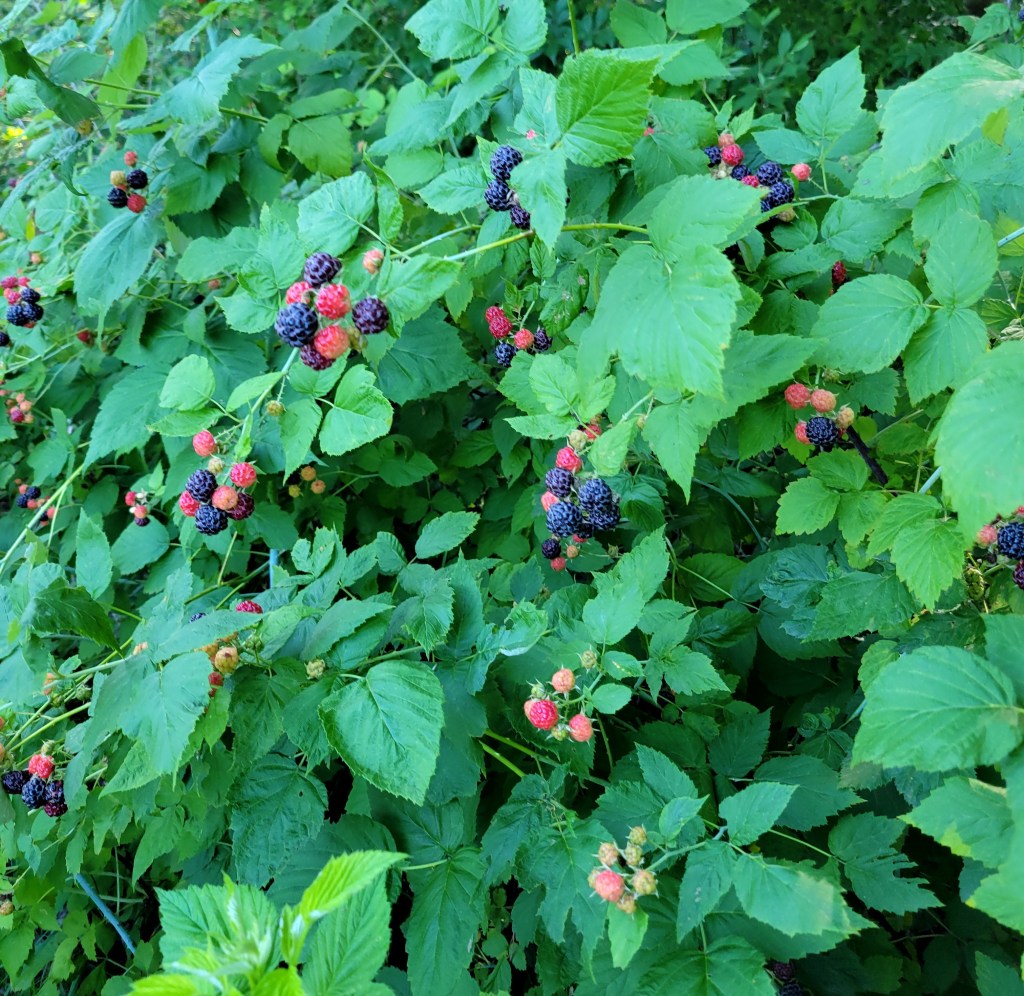
I regularly walk in Detroit’s Eliza Howell for nature study and enjoyment, not to collect food. But some of what nature offers is simply too good not to enjoy. Black Raspberry tops that category.
The picking season usually starts at the end of June. The fruit does not all ripen at once, so the same patches can be visited several times over a period of about two weeks.

Black Raspberries are sometimes confused with Blackberries, but they are quite different in taste. The raspberries usually grow in clumps with the berry in the center often ripening first.

Ripe berries come off the stems easily. If a berry doesn’t, if I have to pull, it is not ready. Often, picking is one berry at a time; sometimes, I can get two or three at a time. Picking a’quart is not a quick project.
(The next photo shows the remaining stems look like when the berries are picked.)

Black Raspberry is sometimes called “blackcap” and sometimes called “thimbleberry.” Both of these names refer to the shape of the picked berry.

Black Raspberry is native to Eastern North America and often grows at woodland edge. It is a prickly shrub, sometimes as tall as 6 feet. Picking frequently means reaching through and around thorny canes, resulting in many arm scratches.
Scratches are one risk. Another is the risk of losing the berries by failing to keep the container balanced as I lean and stretch, often with at least one foot in the brambles.

The berries are excellent eating right off the bush, and they make great jam and pie.
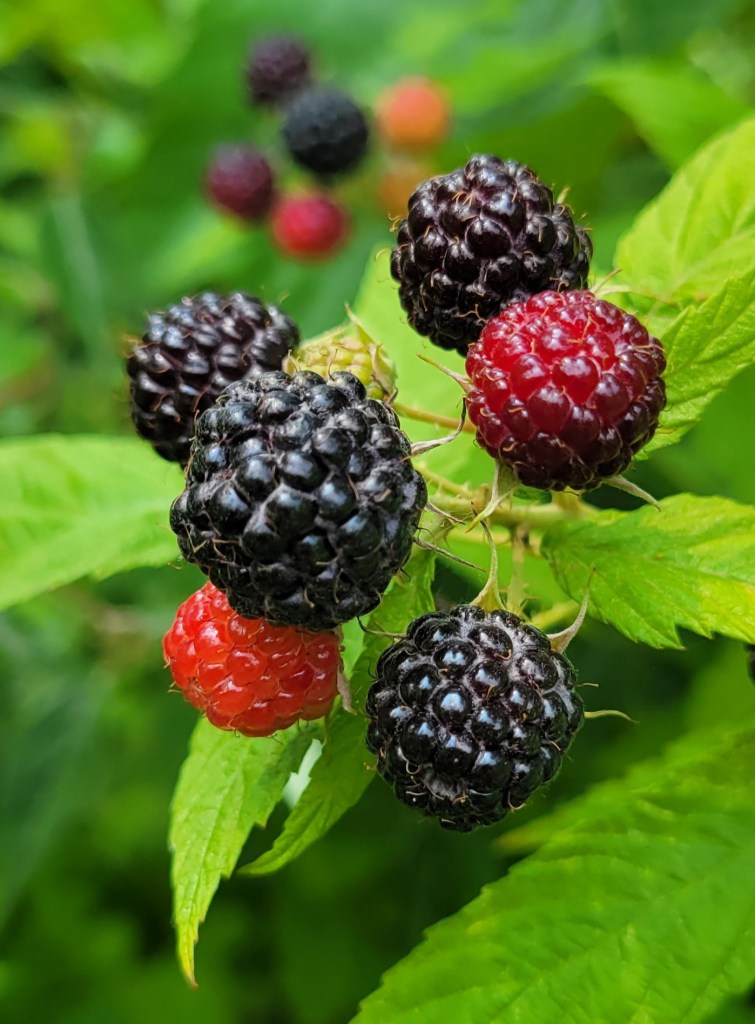
Black Raspberries are perennials but with a limited lifespan of probably less than 10 years. And other plants in rapidly growing thickets might overwhelm them. So patches that I have picked in three years ago might not be so productive this year.
On the other hand, there are always new stands appearing, probably thanks to the wildlife that eat the berries and spread the seeds. So part of the adventure each year is finding new picking lications.

I enjoy eating Black Raspberries. Sometimes, however, I think that I enjoy the challenge of finding new productive locations and bringing home berries in quantity even more than the eating.
 Eliza Howell Nature Walk
Leave a comment