Leonard Weber
August 14, 2023
As is often the case with insects, the first time I saw a Dogbane Leaf Beetle, I didn’t immediately know what it was. After identifying it, I followed up with a little research.
Today, I went looking for the beetle in Eliza Howell Park and was pleased to find three after about 10 minutes.

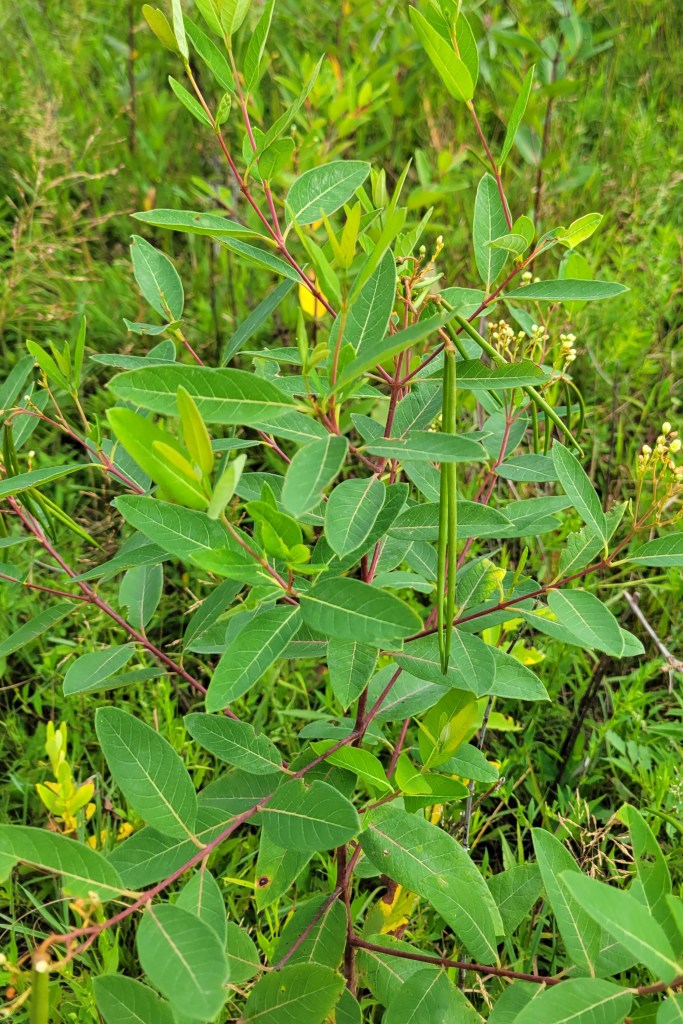
I knew where to look for the beetle because of its relationship with Hemp Dogbane. Hemp Dogbane is a host plant for the beetle: adult, eggs, and larvae. The plant grows about 3 – 4 feet high and there are several patches of it in the park. Right now, it is mostly finished flowering and starting to produce hanging, beanlike seed.
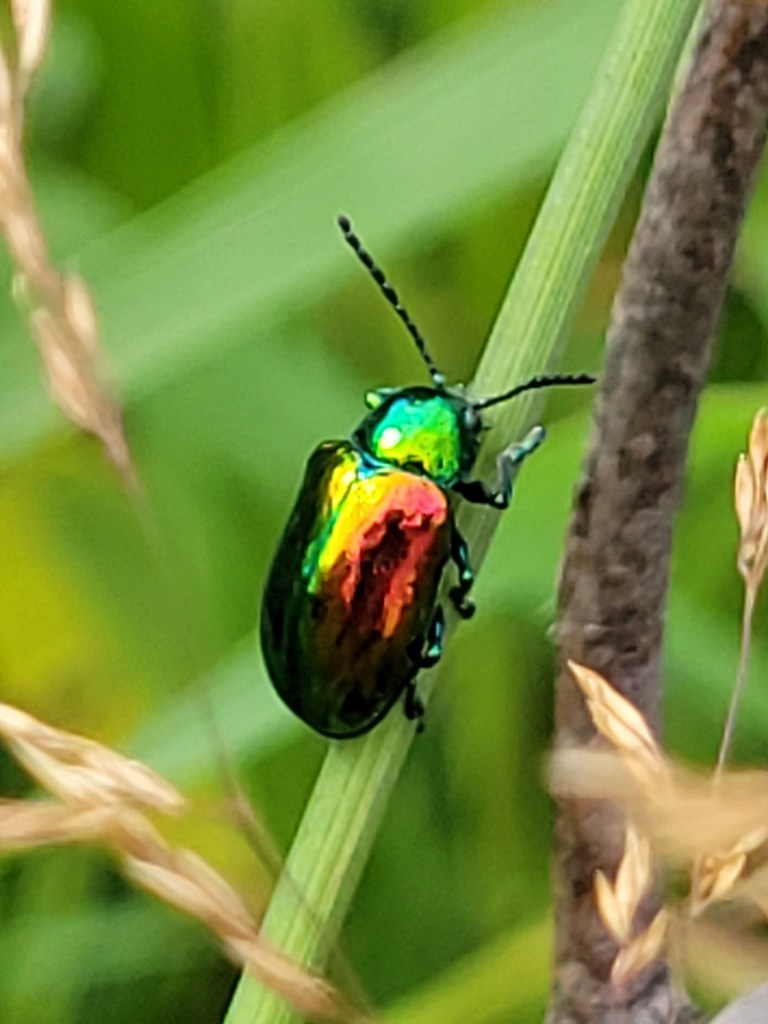
Though the beetle is only about 1 centimeter long, its flashy iridescent colors make it quite visible. It feeds on dogbane leaves, a plant in the same family as milkweed, and the beetle acquires a toxicity similar to that of Monarch butterflies.
Its bright visibility might be nature’s way of advertising the beetle’s toxicity to potential predators.
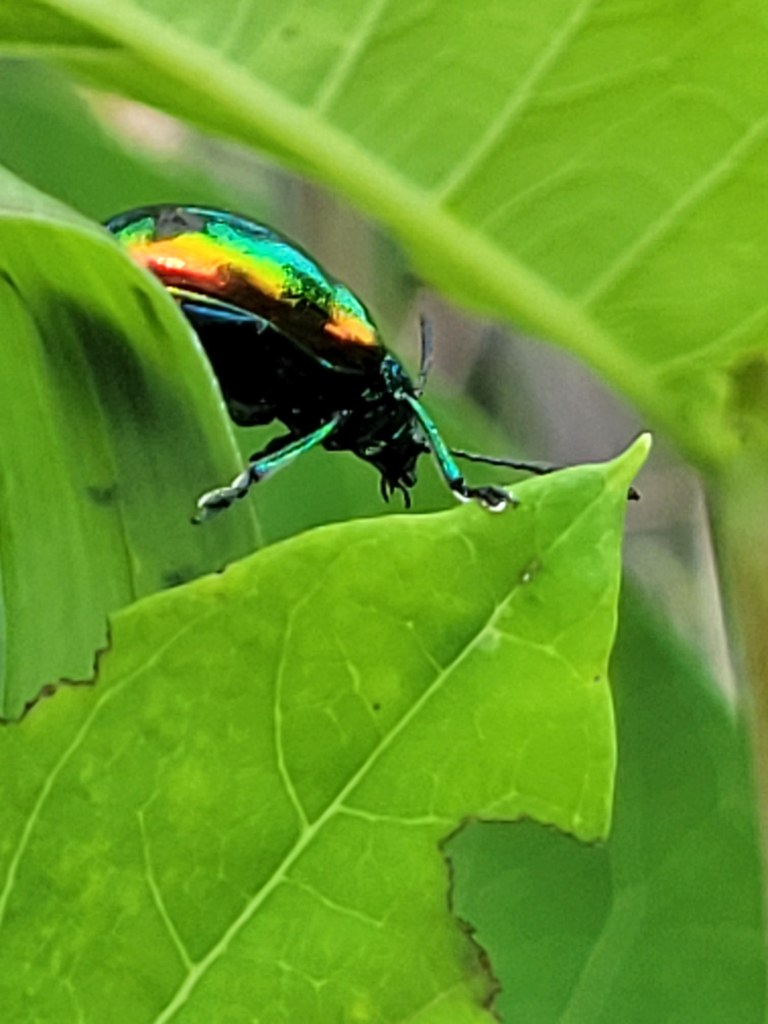
The larvae spend the winter underground anong the dogbane roots, and the new adults emerge from the pupa stage in the spring. They can be found on or around the dogbane plants during the summer.
Since the iridescent colors look different from different angles, it is tempting to take photo after photo after photo.

Hemp Dogbane is called “hemp” because its fibers have historically been used to make rope. It is called “dogbane” because it is toxic to dogs (and other mammals). The seedpods hang on late into the fall, and the seeds are dispersed by wind when they open, similar to milkweed seeds.
Dogbane also spreads by underground rhizomes, the reason many plants are frequently found in close proximity.

One commonly seen shiny beetle in southeast Michigan is the Japanese Beetle, and, on first glance, someone might think “Japanese Beetle” when seeing Dogbane Beetle for the first time. A comparison makes the differences clear.
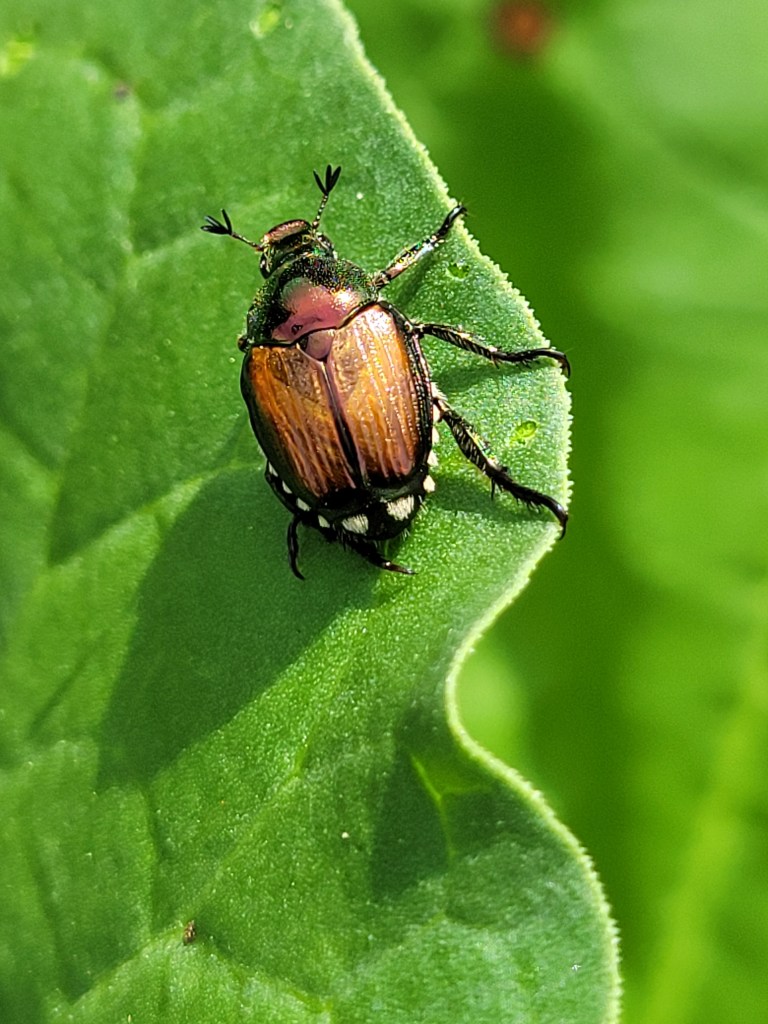

Given its striking appearance, combined with its close connection with the Dogbane plant, it is not easy for me to confuse this beetle with any other. I now count it among my favorite bugs!
 Eliza Howell Nature Walk
Leave a comment