Leonard Weber
September 20, 2023
Nature is cyclical. The same phenomena can be observed at approximately the same time each year.
One of the items on my annual September nature-walk agenda in Eliza Howell Park is to check on the fruit of a variety of vine species.
1. Virginia Creeper

Virginia Creeper is one of my favorites. I love the look of red stems holding ripe blue berries (here, not quite fully blue). It ripens earlier than many, usually well along in the middle of September when I first start my vine rounds.
I focus these fruit walks on vines that a) climb trees and shrubs and that b) are perennials. When I first started some years ago, I had only five on the list. Since then, I have become aware of other, less widespread species that I now include.
2. Climbing Nightshade
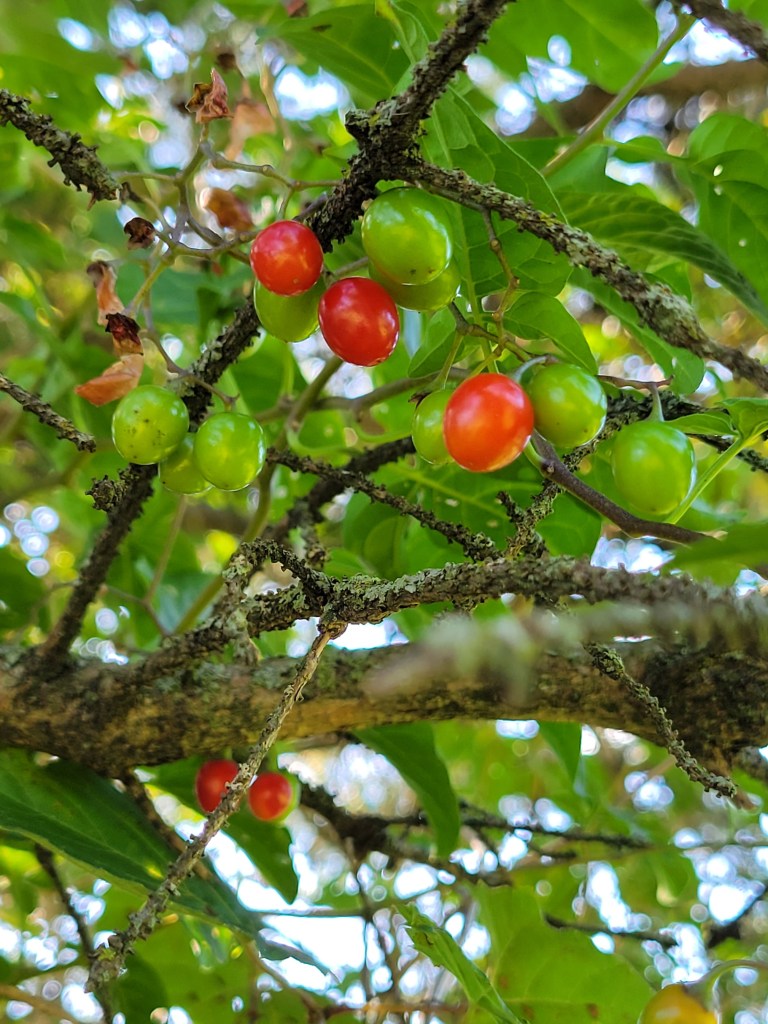
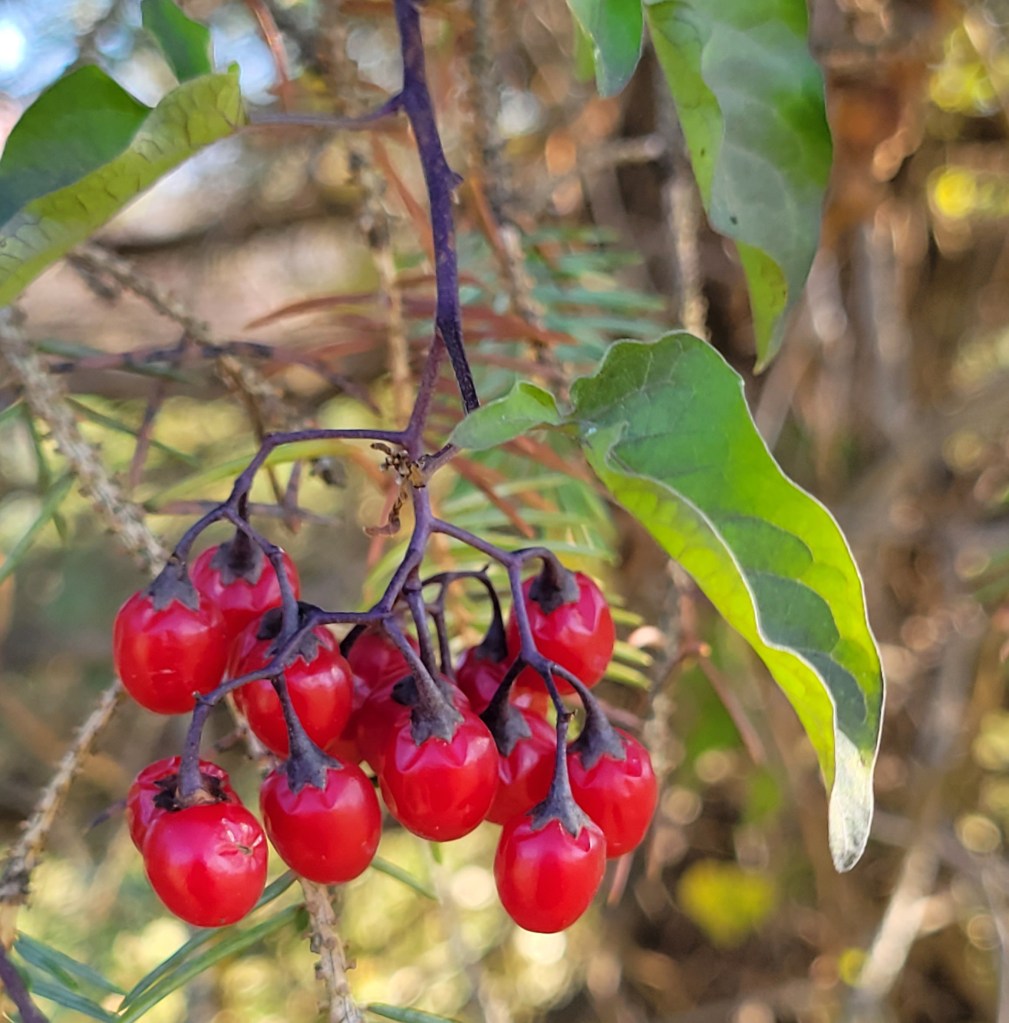
To my knowledge, there is only one location in Eliza Howell Park where this vine grows. It has worked its way around some of the lower limbs of a spruce tree and is the most recent addition to the September vine walk
The berries turn from green to a bright red at this time of the year. They are lovely to look at, but this fruit is not for eating.
3. Wild Grape
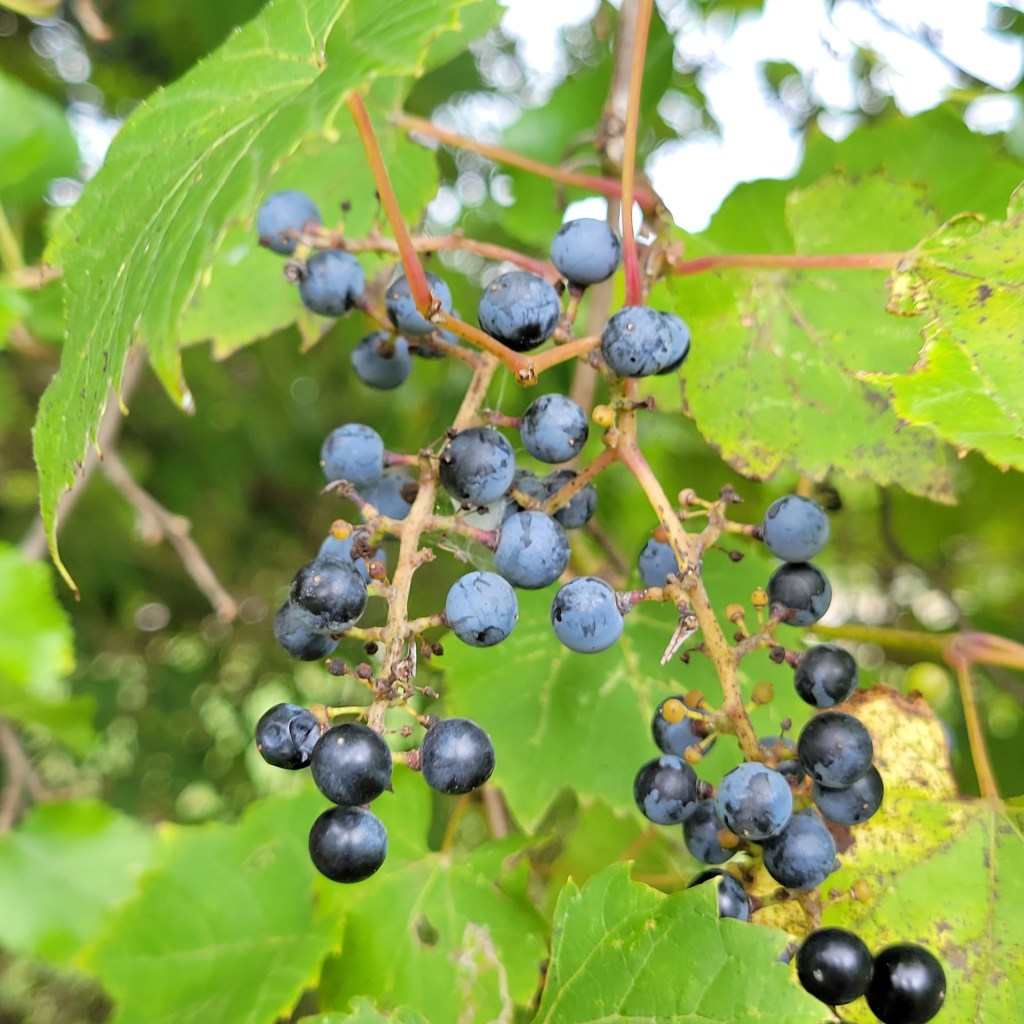
Grape is a common vine in the park, sometimes growing high in large trees. The vine is very common, but the fruit is not always easily found. I often check out several lower growing vines in the summer to find bunches that can be observed as they ripen.
Grape is another species that ripens early, often being past its peak in mid-September.
4. Poison Ivy
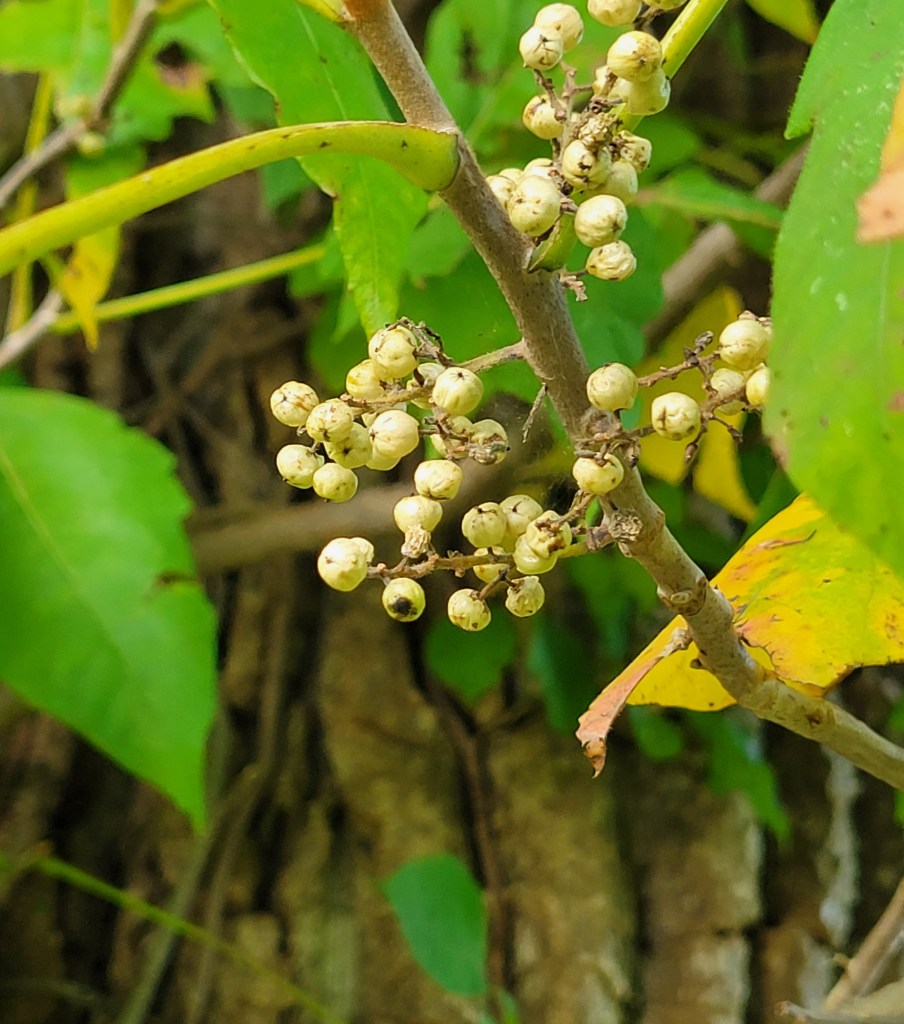
Poison Ivy is common in Eliza Howell and climbs a number of large trees. Many people recognize it by the leaves; the fruit is less well known.
Even if we weren’t afraid of an allergic reaction from coming into contact with the plant, we probably wouldn’t try too hard to get close-up photos of Poison Ivy fruit. It is not as eye-catching as many other berries.
5. Moonseed

Moonseed is an uncommon species here. I have seen it in only one area, under trees, near the river. It is sometimes not easy to discern the true color of the fruit because of the deep shade.
“Moonseed” is given that name because the seed in the berry is crescent-shaped.
6. Porcelain Berry
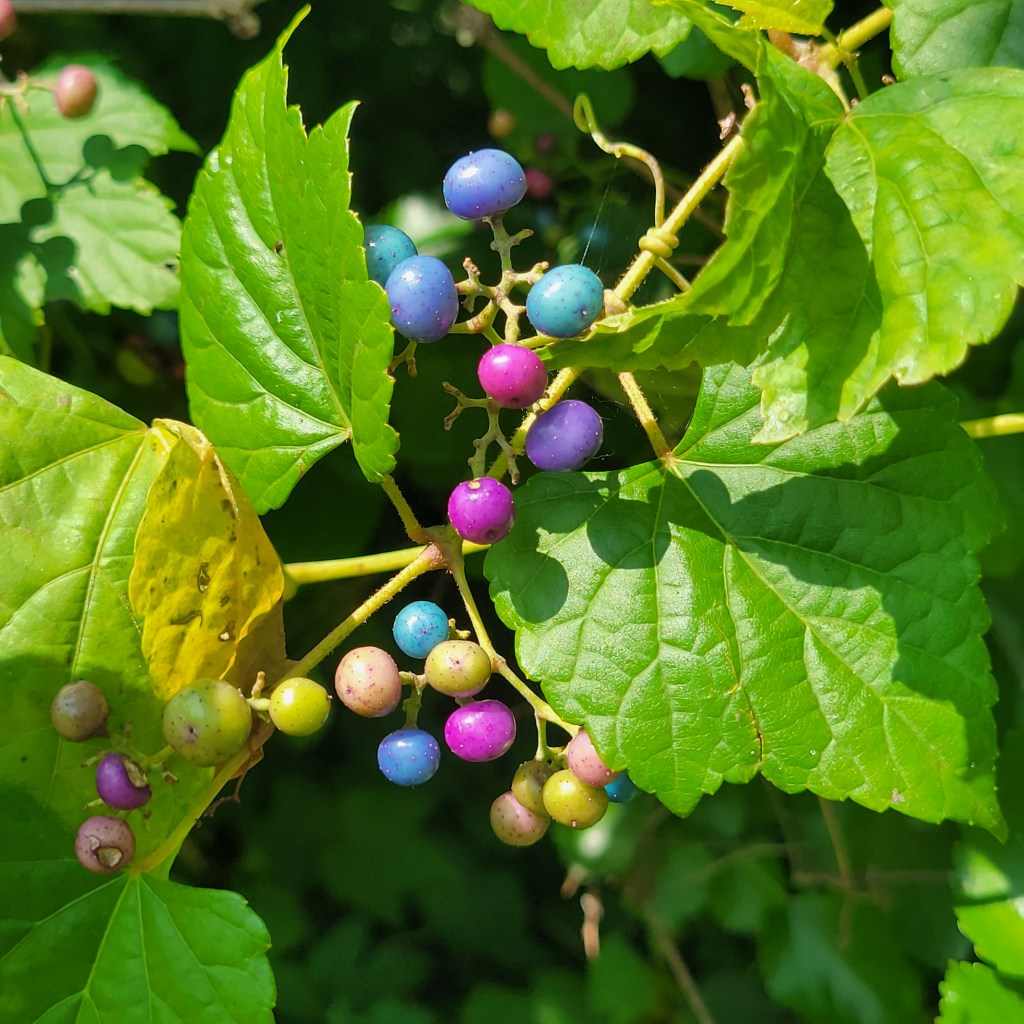
Porcelain Berry is widespread in Eliza Howell, climbing trees and shrubs where the trees are scattered and along woodland edges. It is not found inside the wooded sections of the park.
It grows fast and spreads fast.
The multicolored berries are numerous and popular with several bird species. Birds eat many of the nine berries pictured here, but Porcelain Berry is the most popular berry food in mid-September.
7. Greenbrier

Greenbrier grows in a few locations in the woods near the river. The particular species here is, I think, Bristly Greenbrier. It is not showy, in leaves or vining or fruit, and can be easily overlooked.
The brightest color is seen when the berry is opened.

8. Oriental Bittersweet
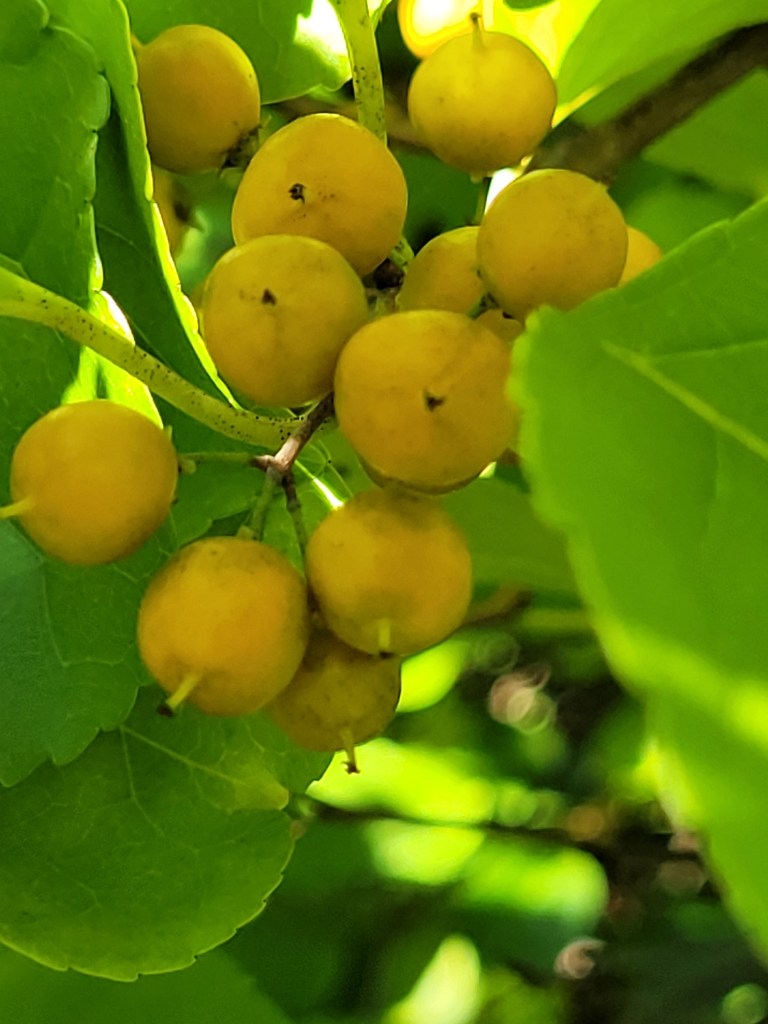
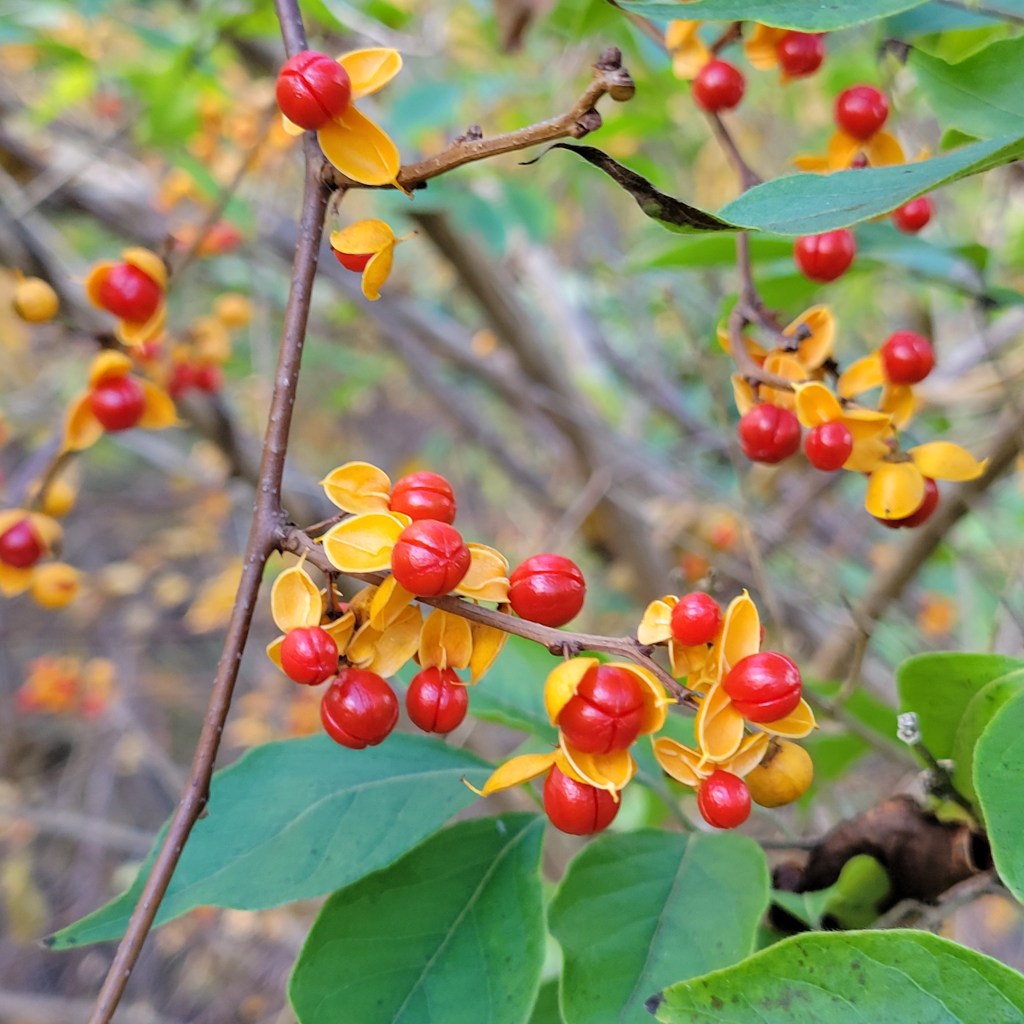
Oriental Bittersweet is widespread and is an aggressive grower at woodland edges. It doesn’t appear in deeper woods.
The fruit reaches maturity later than many of the others. In September, the clusters are easy to find, but the outer layer of the berries is not ready to open and reveal the red inside. When it does ripen, birds have finished some of the other fall berries and turn here.
9. Winter Creeper
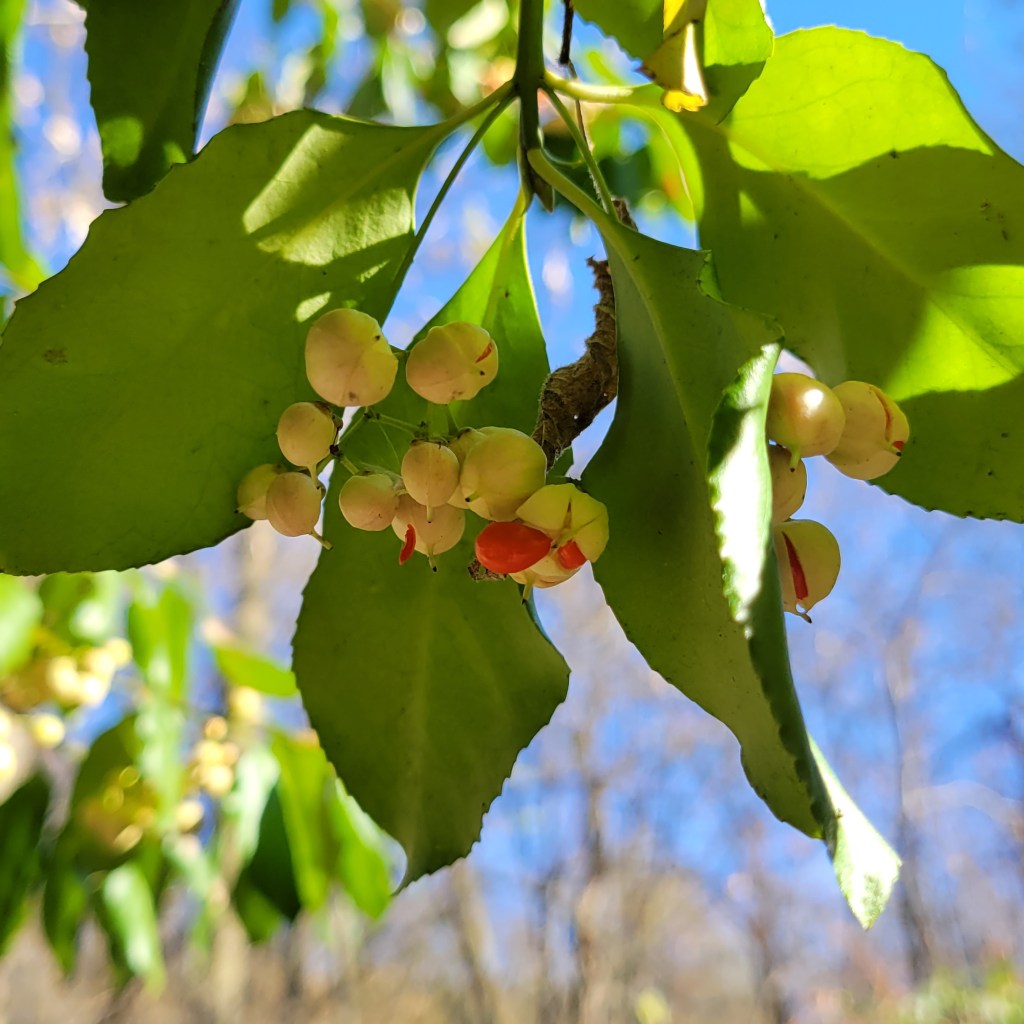
This is the only evergreen vine in the park (as far as I know). There are a number of them climbing trees in one part of the woods near the river. I have seen them nowhere else.
Winter Creeper ripens later in the fall, and the berries often hang on into the winter (the probable reason for the name).

Having made the September vine rounds for many years, I know where to walk to find each species, to see some long-time acquaintances and some newer ones.
And I remain alert to the possibility of finding additional perennial fall fruiting vines. Nature is cyclical, but there is always something new for us to discover or learn.
 Eliza Howell Nature Walk
Leave a comment