Leonard Weber
November 1, 2023
There are two related social wasps that I have paid special attention to over the years in Eliza Howell Park: Bald-faced Hornets and Yellowjackets. Most years, I find at least one active nest of each.
This year, I have visited the site of an underground Yellowjacket nest regularly over the past 10 weeks.
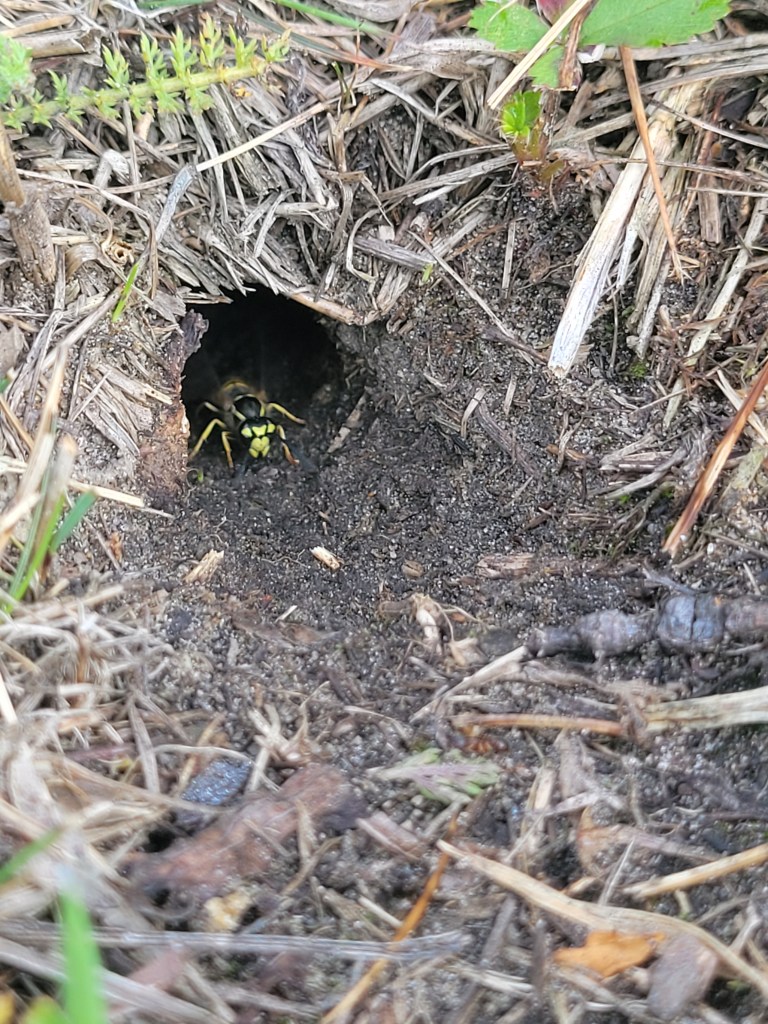
There was always a stream of wasps entering and exiting the hole in the ground.
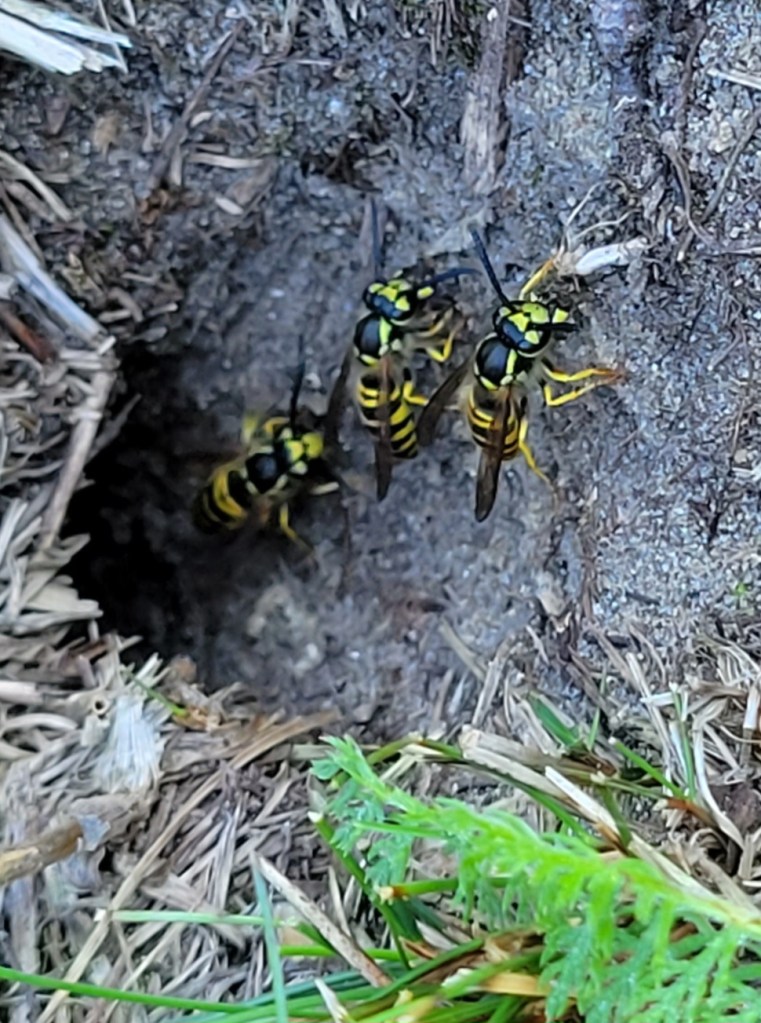
The life cycle of the colony is fascinating. In the spring, a single fertilized female (the queen), who has spent the winter in hibernation, chooses the location (perhaps a former rodent burrow) and starts the paperlike nest, made of wood fiber mixed with saliva. She lays the eggs and feeds the first young, all of which are infertile females. The new generation (the workers) then take over expanding the nest and feeding the many additional young. The queen focuses on laying eggs.

an oak insect gall
The colony continues to grow — and I continue to watch the entrance, being careful to be as non-threatening as possible. Most Yellowjacket stings are the result of workers protecting against what they perceive as threats to the nest.


Later in the season, the queen produces males and fertile females. When mature in the fall, they mate. The males die, and the mated females seek a safe place to spend the winter (I have seen them under logs). The new queens that survive the winter start new nests / new colonies in the spring.
The old queen and the workers die when the weather turns cold. I recently noted that those gathered by the entrance were not moving or very sluggish.
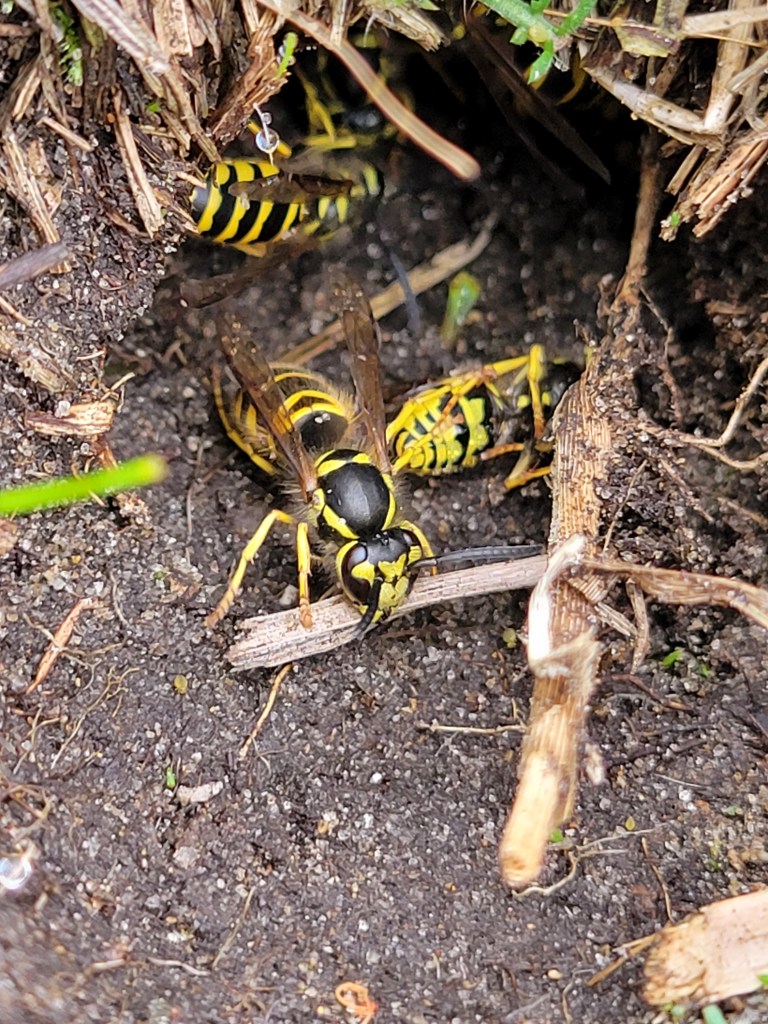
Since Yellowjackets do not reuse nests, the death of the colony is a time to attempt an excavation of the hidden underground nest.
My colleague Kathleen Garrett and I dug around the entrance hole today. The top of the nest was only a couple inches under the surface.
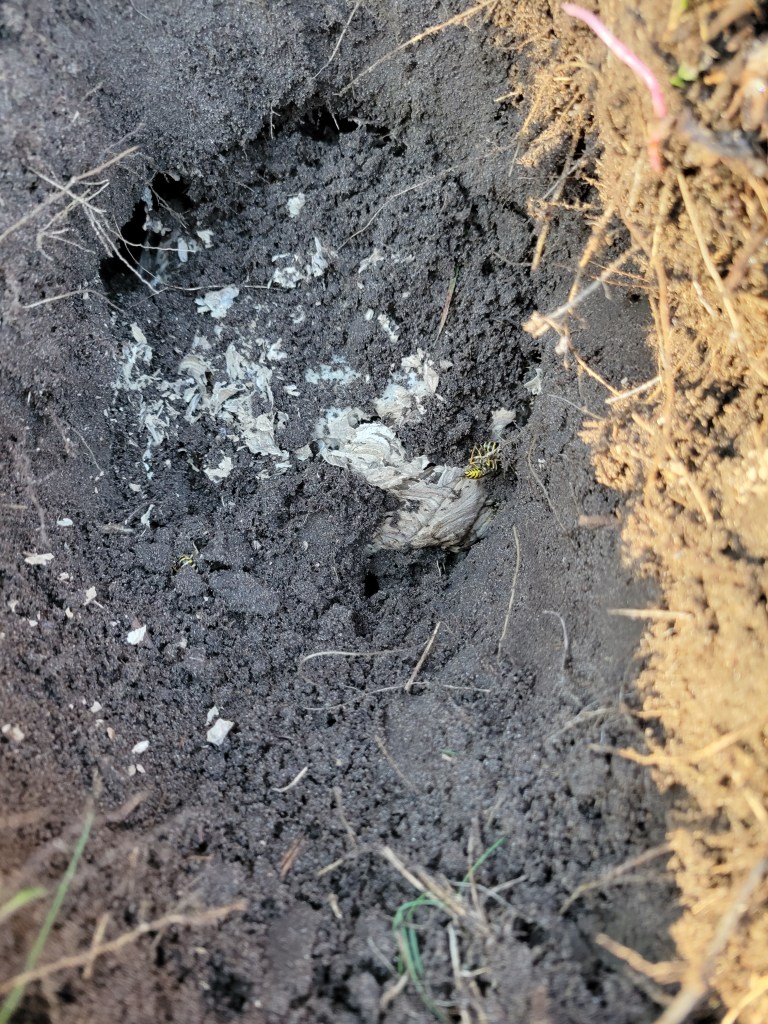
The nest itself was about 6 inches high and fairly easy to lift out. The paper covering didn’t stay fully intact, but that provided an opportunity to see some of the cells inside.

In the last several months, hundreds of insects have lived here. Worker wasps have made many, many trips in and out providing food for larvae. They have built and managed a complex nest and social system. Now it is done.
The colony is dead, but it was a successful one. Somewhere in the park, new queens are beginning their dormancy. And people like me have hopes of witnessing and observing another active colony or two next year.
 Eliza Howell Nature Walk
Leave a comment