Leonard Weber
November 9, 2023
After a cloudy beginning, the sun appeared during my most recent morning nature walk in Eliza Howell Park, presenting an invitation to photo-record some seasonal observations.
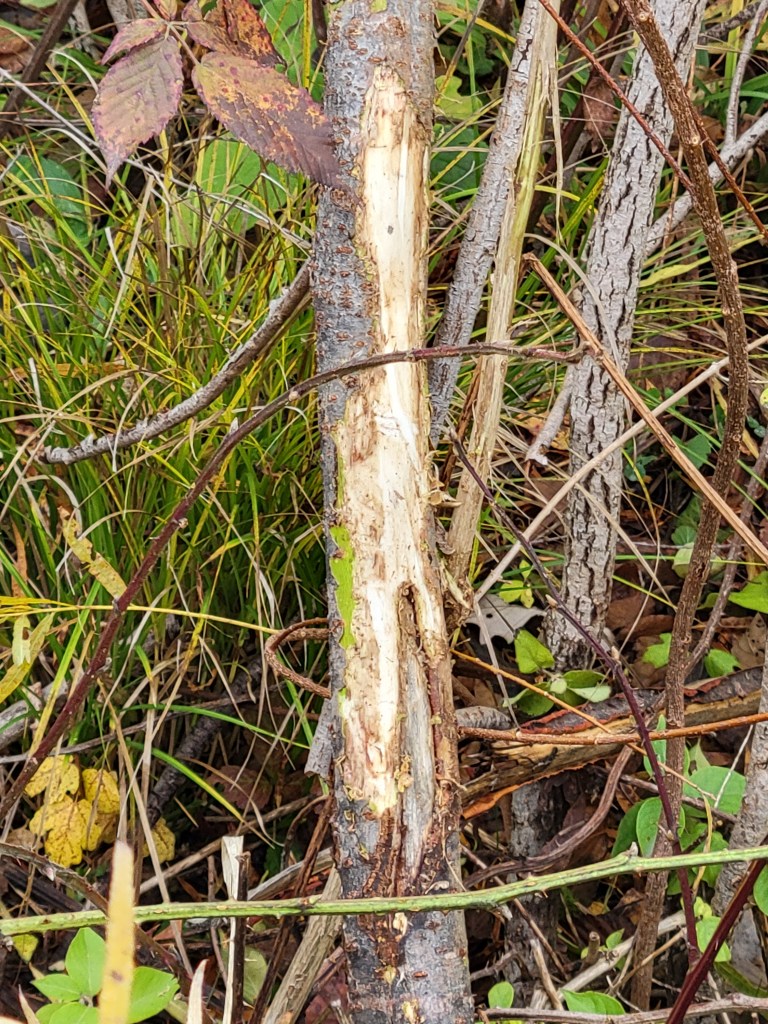
This is deer rutting or mating season. A new rubbing at this time of the year means that a buck recently scraped the bark from this Sumac tree and then rubbed his forehead gland along the wood, leaving his scent, communicating his presence to both potential mates and rivals.
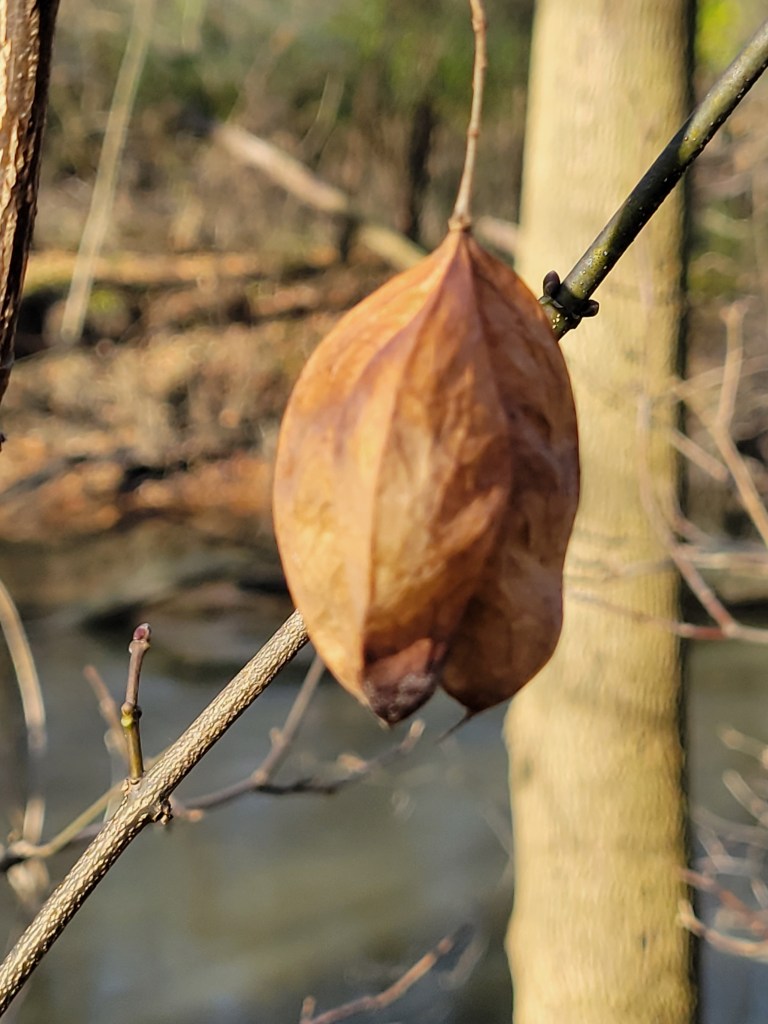
The leaves have fallen from Bladdernut trees by the river, but the papery shells holding the seeds remain on the tree.

Fresh mushrooms often appear quite late in the year, after what we typically think of as the “growing season” is over. Many of them, including this one, are on logs.

November is a good time to check trees and logs for moss and/or lichen, especially in wetter sections of the park. I enjoy finding them growing next to each other, as here.
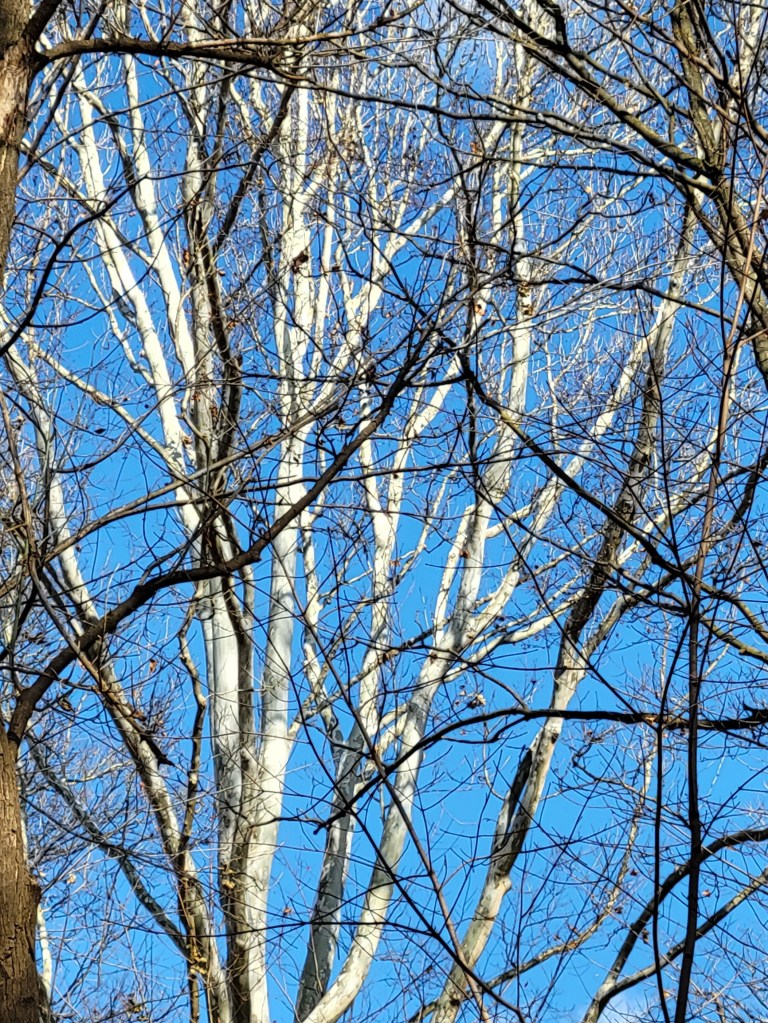
On clear days, for at least 5 months, from November until spring, I pause my walks to admire the white branches of tall Sycamore trees against the background of the blue sky. This was the first day for this stop this year.

One dead tree caught my attention on this walk. It is straight and strong — and totally without bark. It provides a fascinating opportunity to begin to learn about the boring insects (beetles, probably) that were active under the bark when the tree was alive.

With the leaves now dried or fallen, the seed balls of the American Sycamore are quite visible. Most of them will hang on throughout the winter.
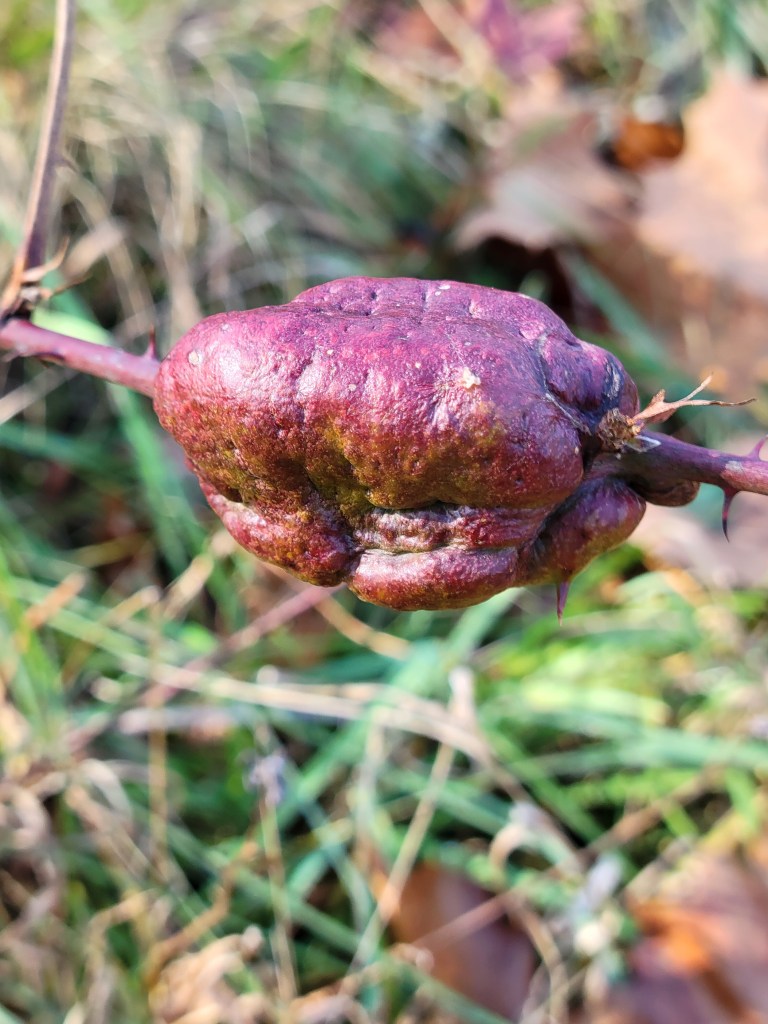
The falling leaves also make it easier to see insect galls on the vines of some of the blackberries in the park. Inside these galls are the larvae of small wasps that will feed and grow all winter and emerge in the spring. The galls are better known than the wasps that lay the eggs, as can be seen from the fact that the wasp is known as “Blackberry Knot Gall Wasp.”
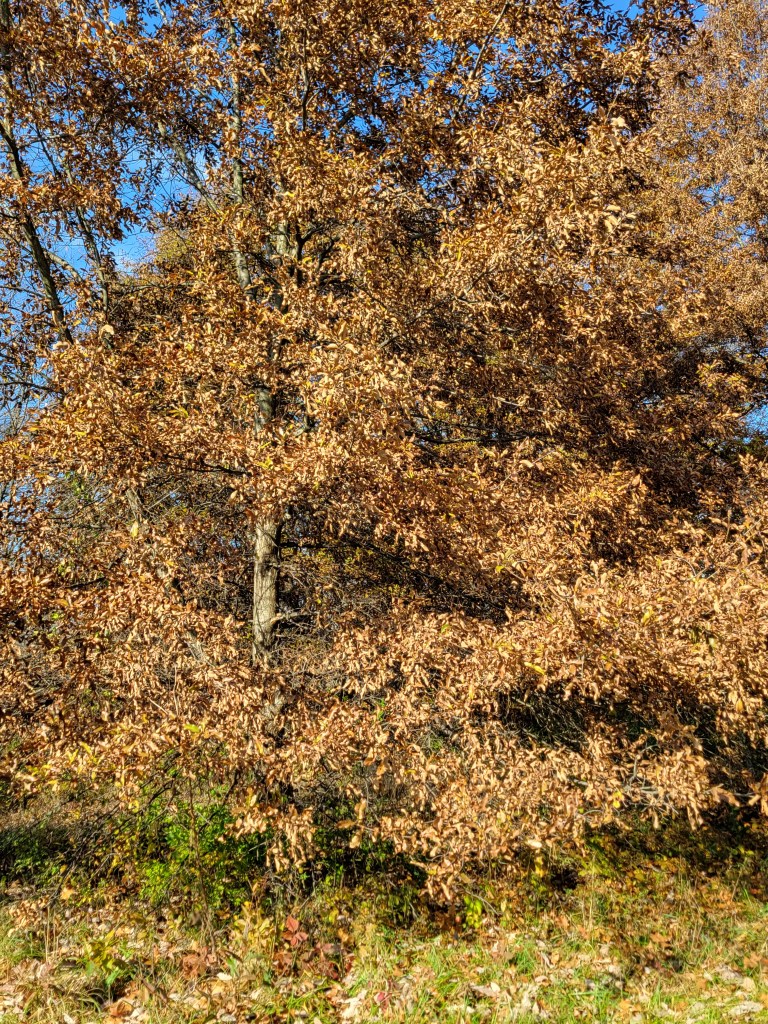
A few trees don’t drop their leaves in the fall, but hold on to them all winter after they turn brown. The best examples in the park are several Shingle Oak trees.
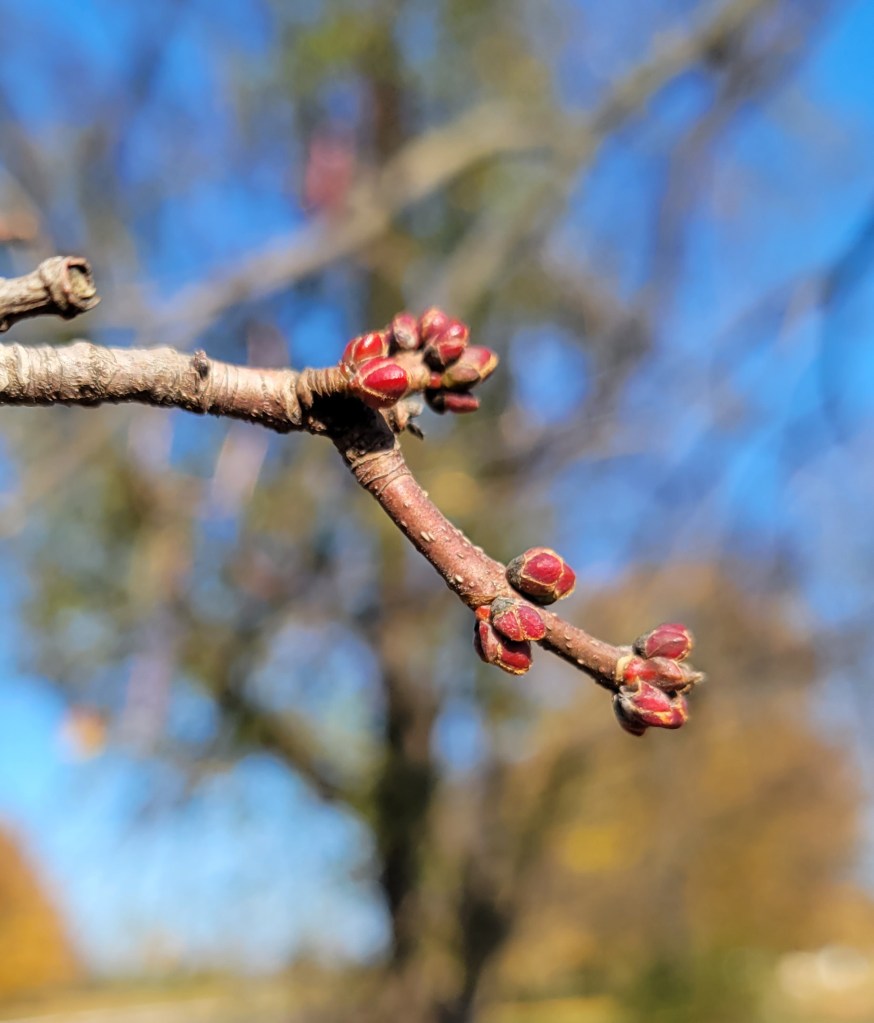
Trees are mostly dormant in the winter. Before dormancy, the buds for the next year’s growth appear. These Red Maple buds will complete development in the spring of 2024. Whenever, during the next few months, I want a reminder of nature’s cycle, a reminder that spring is coming, I can stop by this or some other tree with low branches and see buds.
—-
P. S. I also stopped for birds during this walk, seeing the first migrating Golden-crowned Kinglets of the fall and what are probably the last Wood Ducks in the park this year.
 Eliza Howell Nature Walk
Leave a comment