Leonard Weber
January 2, 2024
This is the beginning of my 20th year of bird study in Eliza Howell Park in Detroit. I have recorded the birds seen here in every month of the past 19 years. This January is the 229 consecutive month, with a total of 2347 different bird-watching days so far.
The 20th year is good time, I think, to report on some of what I have been learning.
Over 19 years, the average number of bird species seen during the calendar year is 112. There are not 112 species present at any one time, of course. The average number of species seen in a month varies from a low of 19 in February to a high of 69 in May.
One important key to knowing birds is to recognize the migration (or non-migration) patterns of different species.
The species that are seen in southern Michigan can generally be divided into 4 different groups:
1. Present only in winter.
2. Present only in the breeding season (spring and summer).
3. Present briefly twice a year as they migrate through (north in the spring and south in the fall).
4. Present year-round.
Those species that spend the winter here are relatively small in number. They breed in the far north and our latitude is their southern wintering location.
—
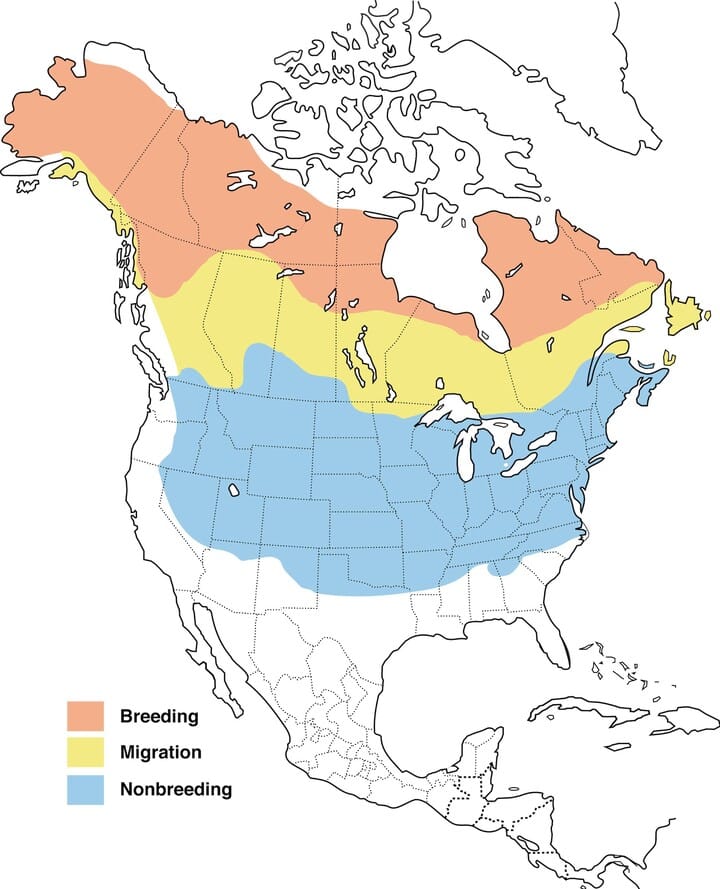
1. Present only in winter. One example of a winter resident now found in Eliza Howell Park is the American Tree Sparrow.

photo courtesy of Margaret Weber
As can be seen from the range map, found at the Cornell Lab of Ornithology species account, it has come a long way from its breeding territory to winter here.
2. Present only in breeding season. Spring is such an exciting time for bird watching partly because many species that nest here return from their southern wintering grounds at this time and quickly turn to nest building.
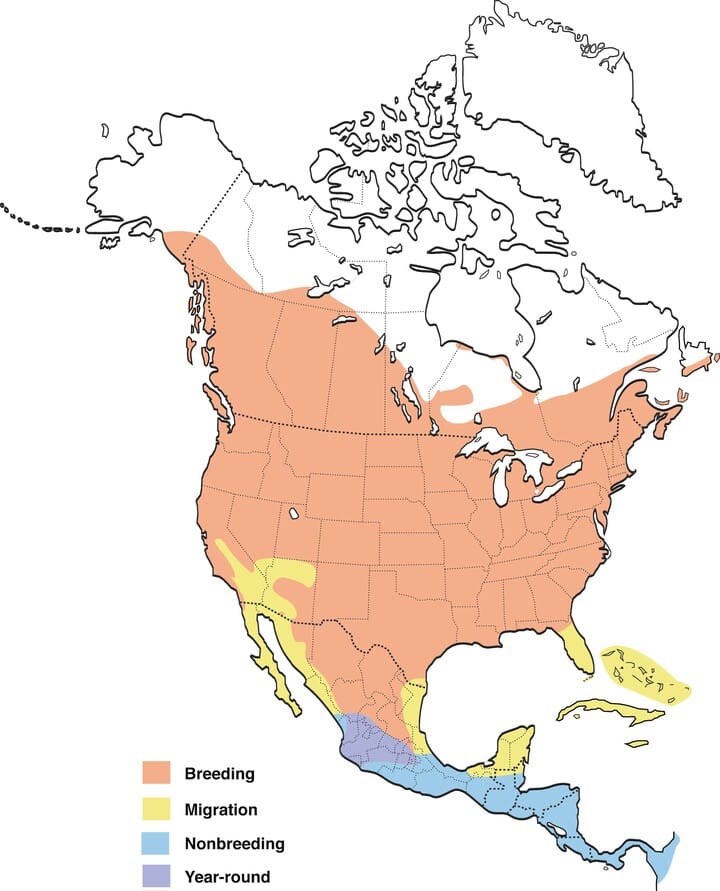
One example is the Barn Swallow, which nests in the park every year.
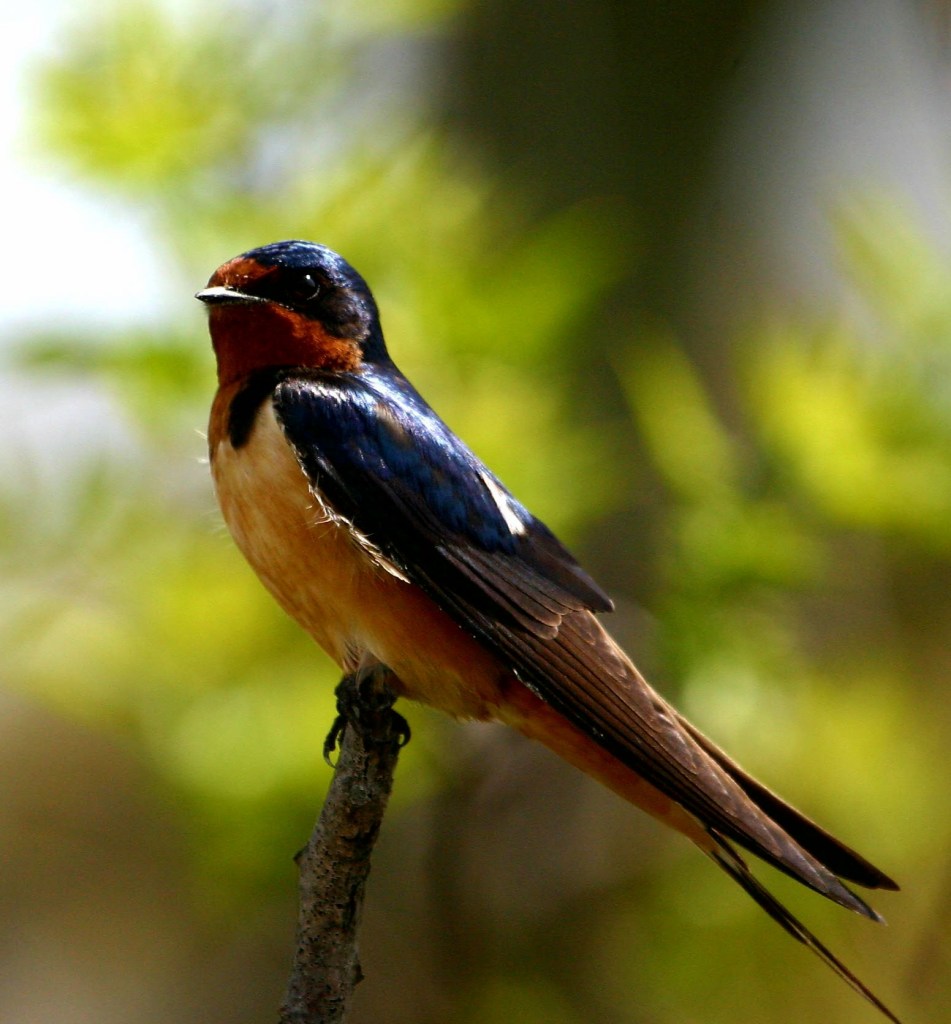
photo courtesy of Margaret Weber
Again using a range map from the Cornell Lab of Ornithology, one can see that the species is now, in winter, in Central America. It can be expected back in the park in April, according to my records.
3. Present only when migrating through. Many species that I (sometimes) see in Eliza Howell travel a long distance in migration twice a year. They breed north of here and winter to the south. Many warblers are in this category, including Cape May Warbler.
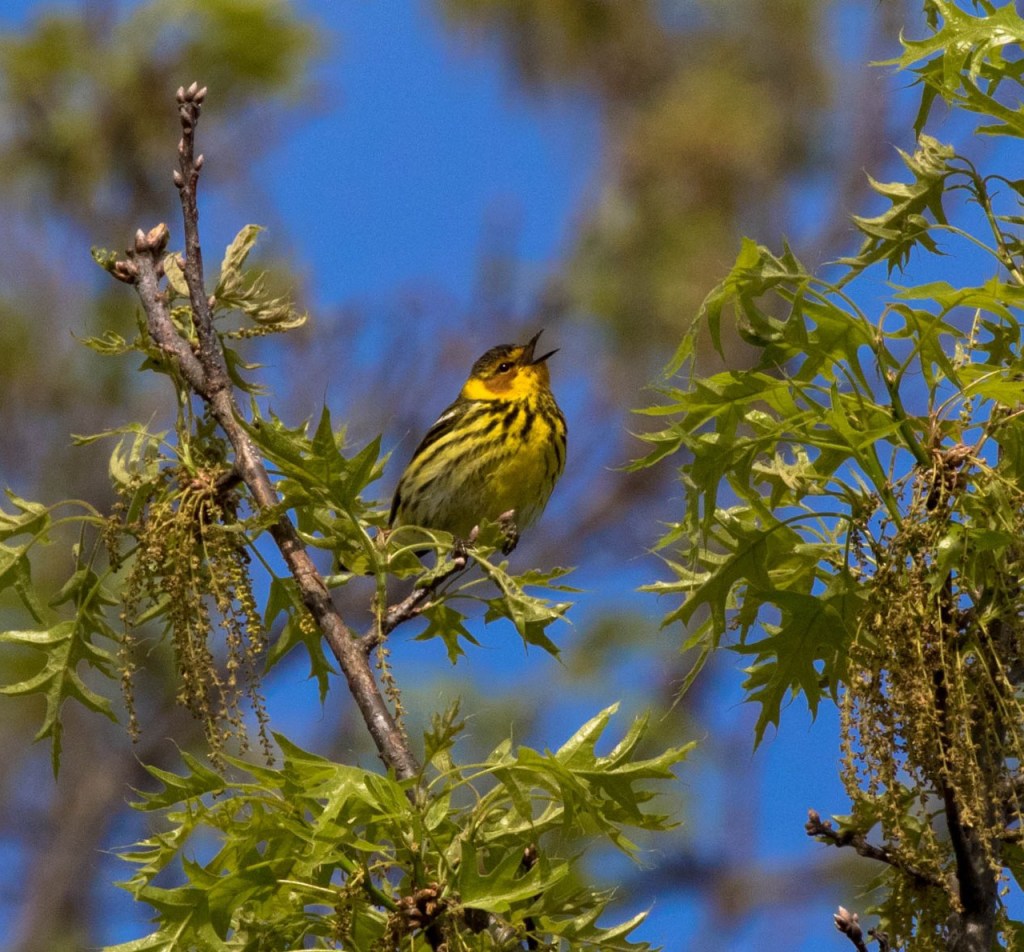
photo courtesy of Margaret Weber
As the range map (Cornell Lab of Ornithology) shows, Cape May Warbler breeds in Canada and the Upper Peninsula of Michigan and winters mostly in the Caribbean Islands.

4. Present year-round. My example here is Red-tailed Hawk, which nests in the park regularly. It can be seen (and heard) during every month of the year.
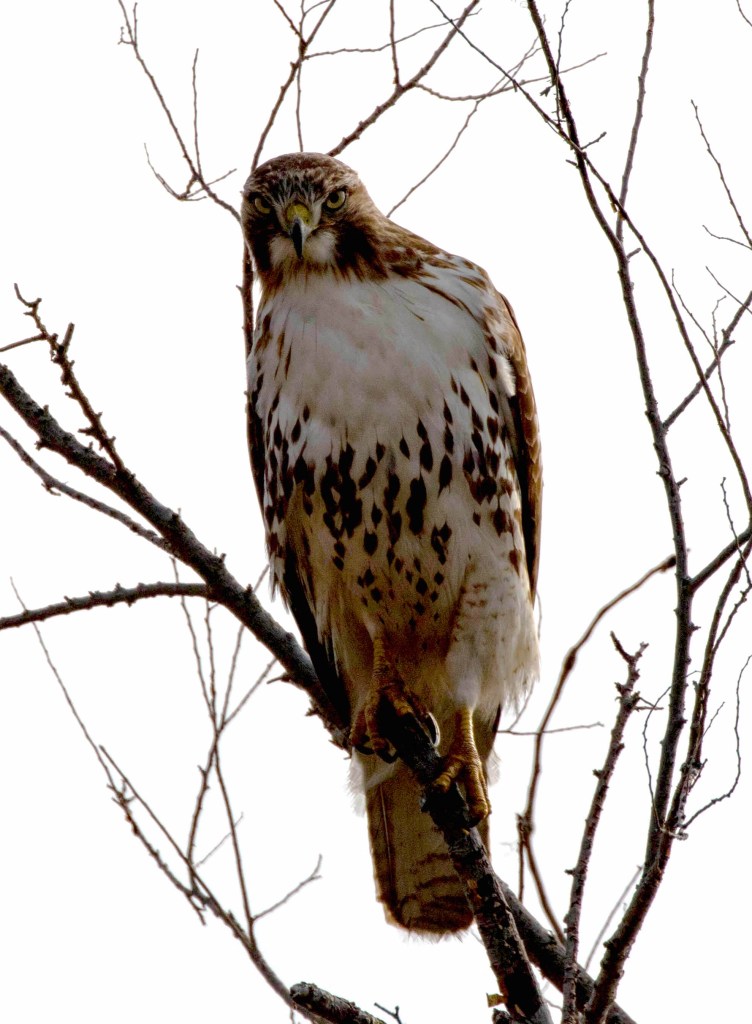
photo courtesy of Margaret Weber
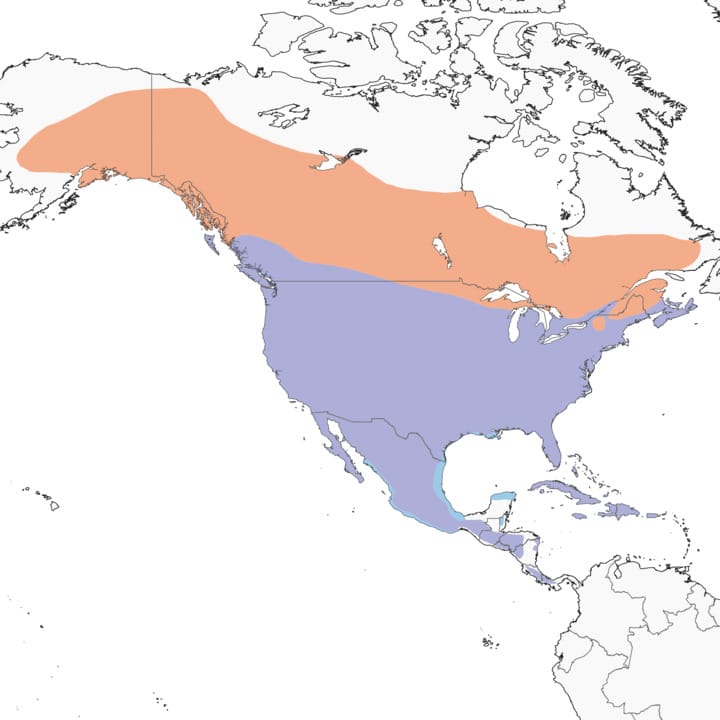
While many Red-tailed Hawks (almost all of those that breed in Canada) do migrate south in the fall, they are permanent residents here. (On the maps from the Cornell Lab of Ornithology, purple represents year-round.)
On a month-by-month basis, the average number of bird species seen in Eliza Howell Park is lowest in winter and highest in peak migration months for song birds.
January = 21
February = 19
March = 32
April = 48
May = 69
June = 46
July = 43
August = 52
September = 68
October = 55
November = 33
December = 25
During this, my 20th year of bird watching in Eliza Howell Park, I plan to report periodically on bird behavior — which birds are doing what when.
 Eliza Howell Nature Walk
Leave a comment