Kathleen Garrett
January 5, 2024
One of the easiest trees to identify by its bark is the hackberry. This fast-growing, native tree is abundant in the woods at Eliza Howell Park and can be quickly recognized by its raised ridge, often called “corky” bark. The ridges on the hackberry can be so pronounced they cast a shadow, as seen in this photo:

Also called sugarberry, nettletree, beaverwood, this tree has many uses, if not so much for human commercial use. The blueberry-sized fruit appears in late summer or early fall and changes color from an unripe green to a ripened orange-red or dark purple. Birds and small mammals eat the fruit and disperse the seeds. Humans can eat the seeds that are inside the flesh of the fruit, (apparently it tastes similar to figs), but the seeds are small and encased in a hard shell.
At Eliza Howell, the fruit is often hard to reach. Most of the hackberry trees grow quickly straight up, reaching for what sunlight they can find in the woods, fruiting finally in the higher branches well beyond our reach.
Cedar waxwings, Robins, Yellow-bellied sapsuckers, and Fox squirrels have no problem reaching the fruit, however.

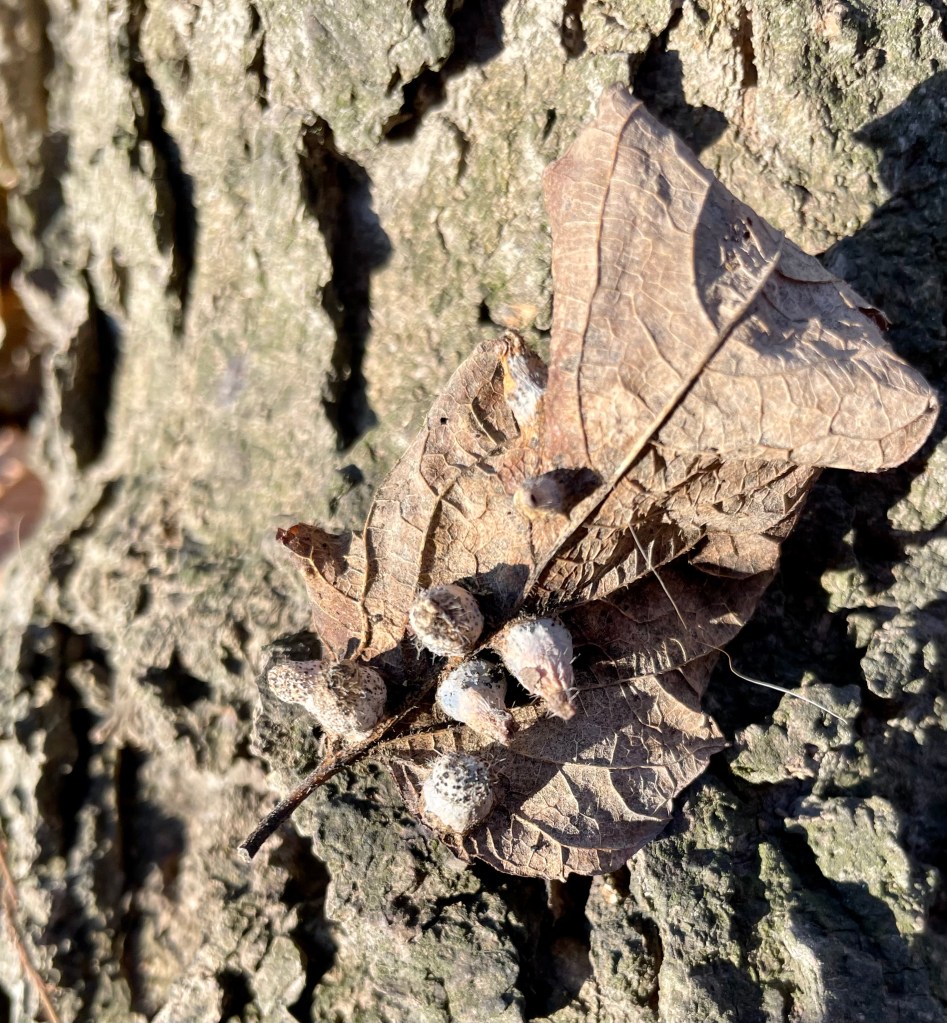
For psyllids, an insect that looks alot like a small cicada, hackberry trees are essential. In the spring, psyllids deposit eggs on hackberry leaves, which causes abnormal growth of leaf tissue around individual eggs, called hackberry nipplegalls. This gall or growth offers protection to the larva while the larva eats the leaf and begins to mature. Once mature, the psyllid emerges from the gall and drops to the ground where it will molt and overwinter as an adult. Migrating songbirds rely on a plentiful supply of insects, psyllids included, to refuel. With its abundance of hackberry trees, Eliza Howell would be a great stopover site for songbirds passing through.

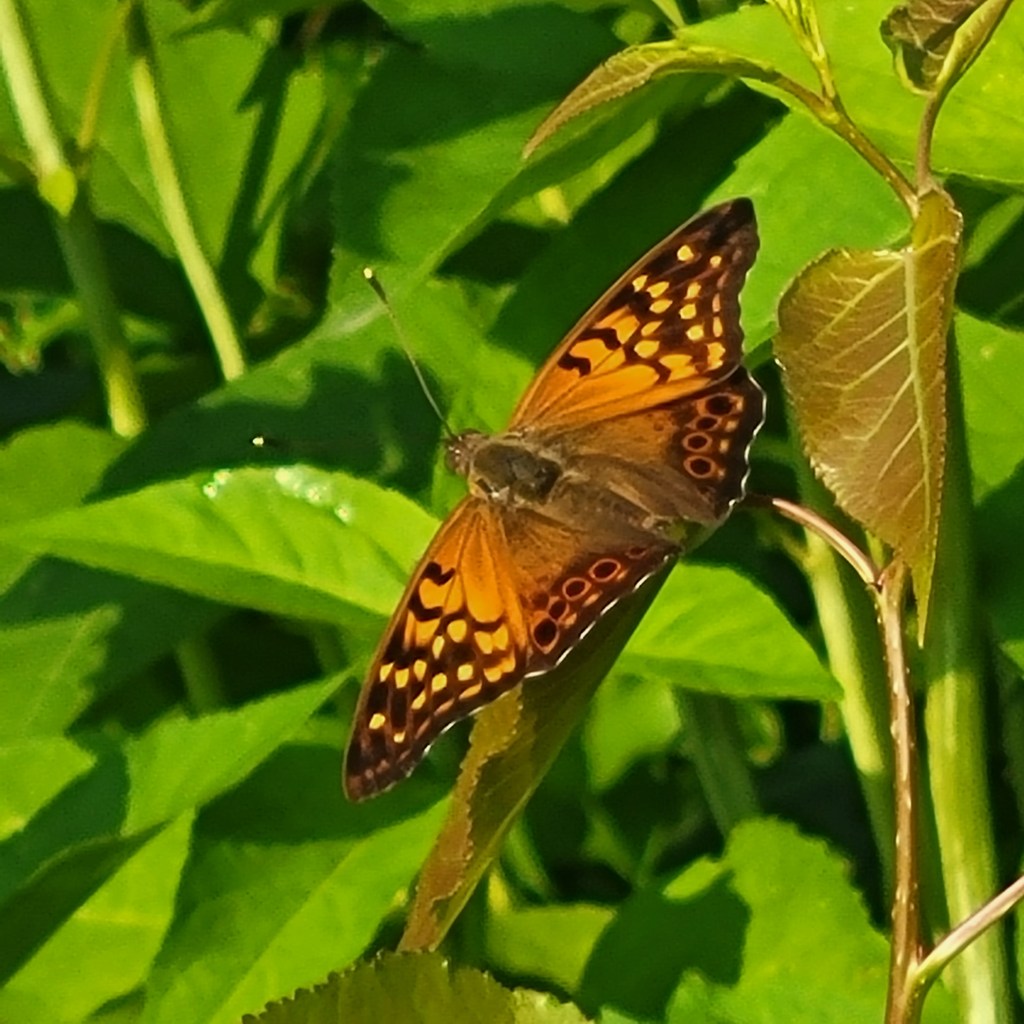
Butterflies are not often associated with trees, but there are several species of butterflies seen at Eliza Howell that rely on hackberry trees for incubation and food: Hackberry Emperor, Tawny Emperor, Mourning Cloak, and American Snout. The Tawny Emperor butterfly, for instance, lays its eggs in clusters on hackberry leaves in late July. The emerging caterpillars eat through the leaves and then scatter, each looking for a leaf to overwinter and then, in early summer, emerge as butterflies. Neither the psyllids nor the butterflies damage hackberry trees.
One of the largest hackberry trees at Eliza Howell is about 8’ in circumference, which translates to about 60 years old. Interestingly, when young, hackberry bark is mostly smooth.

The beautiful and distinguishing ridges come with age, as if they are earned.

To learn more about identifying trees in winter at Eliza Howell Park, join the Detroit Bird Alliance Trees in Winter Walk on Saturday, Jan. 20 at 1 pm. You can register here.

 Eliza Howell Nature Walk
Leave a comment