Leonard Weber
January 15, 2024
Most of my bird watching in winter in Eliza Howell Park involves observations of the ways different species forage for food. I enjoy finding Downy Woodpeckers and White-breasted Nuthatches and Brown Creepers searching crevices of tree bark for insect larvae and eggs, and I try to spot Goldfinches and Tree Sparrows and Dark-eyed Juncos gleaning any remaining seeds in the wild flower fields.
When we reach the middle of winter, though, I start to watch for changes in behavior that indicate the approach of the breeding season.
Now is the time to start to watch for pair bonding.
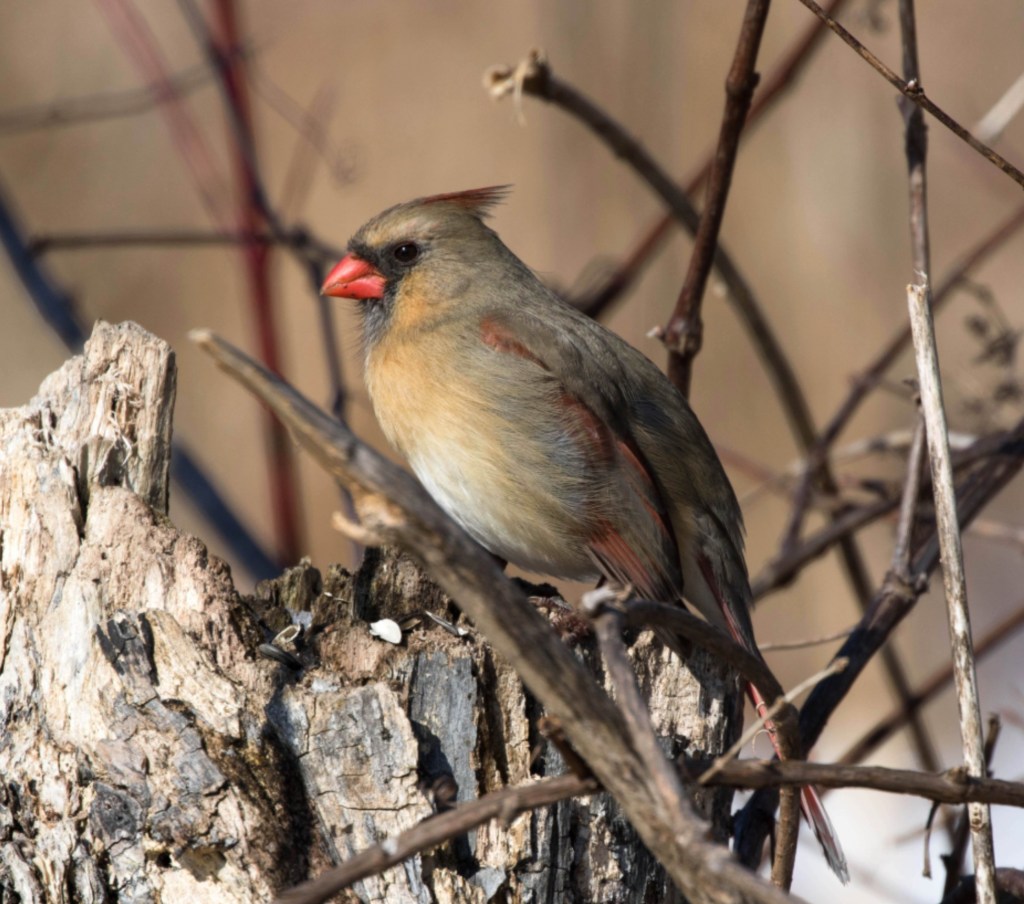
photo courtesy of Margaret Weber
Cardinals tend to spend most of the winter in small flocks, but, in late winter, they form pairs and become territorial. The loud and distinctive whistling song that we hear frequently during spring and summer is absent in late fall and winter — until February. Their renewed singing in February is one clear indication that spring breeding season is coming.
(In the last four years, I heard the first-of-the-year Cardinal singing in Eliza Howell on Feb. 12, Feb. 17, Feb. 8, and Feb. 11.)
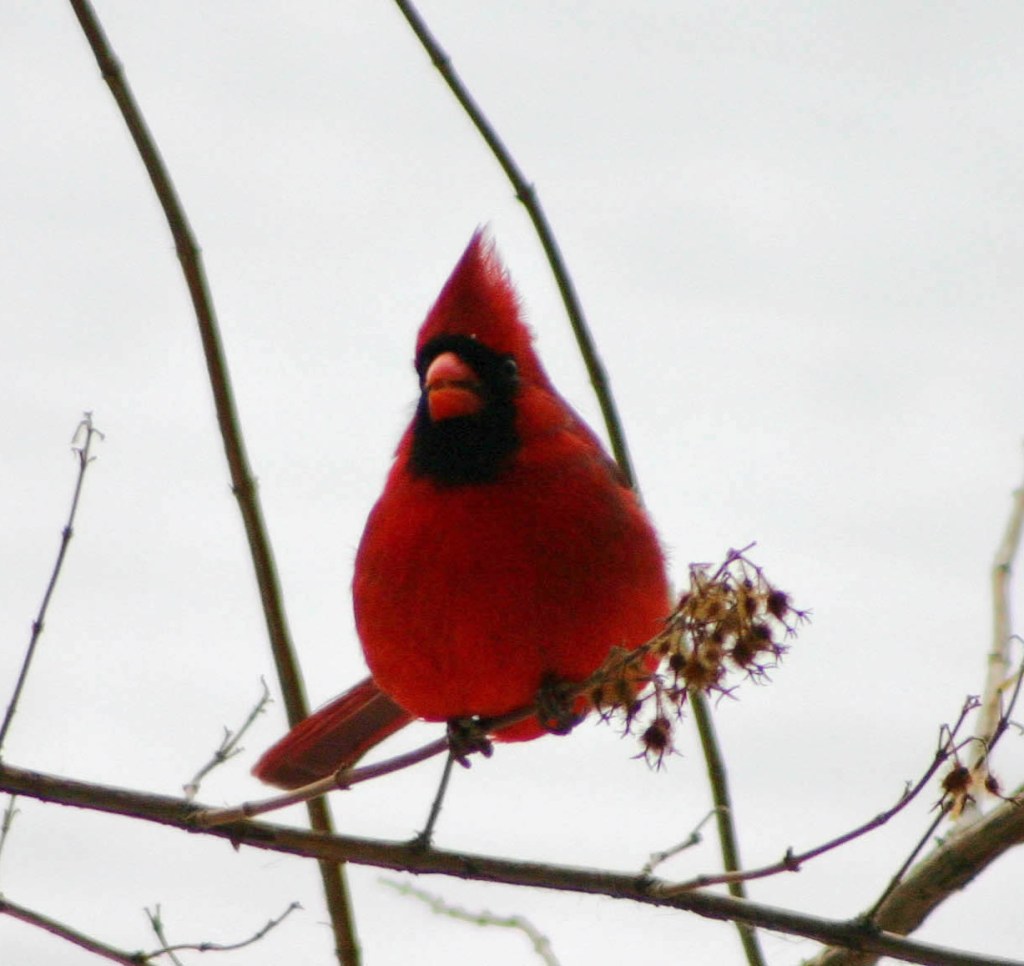
photo courtesy of Margaret Weber
Another year-round species that spends the winter in flocks (up to 15 individuals) is Mouring Dove. They forage for seeds on the ground. I usually see them when they fly up to perch in trees.

photo courtesy of Margaret Weber

photo courtesy of Margaret Weber
Mourning Doves also sometimes starts to call in February, the male sending out its “coo” message as an enticement to its (potential) mate. They start nesting very early in the year; based on my past records, I will look for nest building in the middle of March, before it is really spring.
Other Eliza Howell species that I often see pairing off in winter are Red-bellied Woodpecker …

photo courtesy of Margaret Weber
.. and Downy Woodpecker.

photo courtesy of Margaret Weber
While most bird species form pairs that stay together during breeding season, they vary on the length of their bond.
Based on published reports, Mouring Dove, Downy Woodpecker, and Red-bellied Woodpecker usually pair for just one season, seeking a different mate the next year. Northern Cardinals normally partner for more than one.
Carolina Wren is another bird that is frequently seen (or at least heard) in winter in the park. They have the same mates year after year. And they are together all year, not just in breeding season; when I see one/hear one now in January, I usually see/hear two.
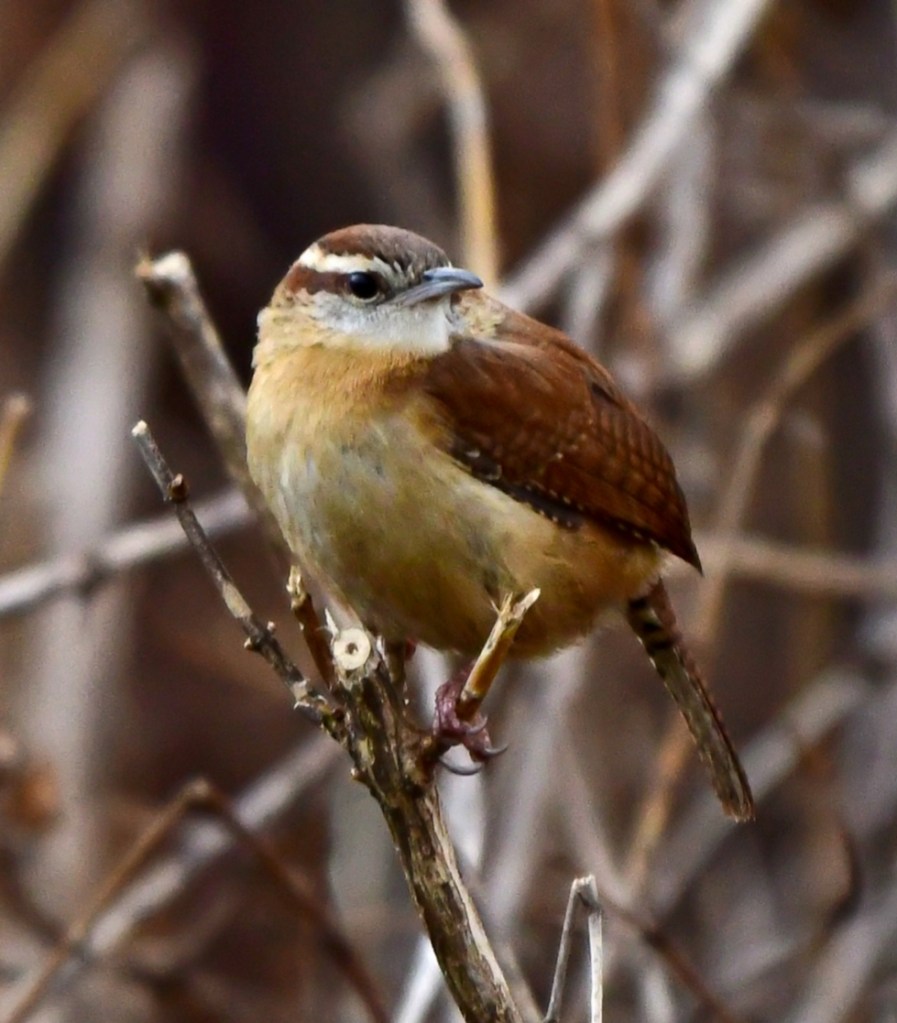
photo courtesy of Kevin Murphy
We are now in the midst of winter, but I recently saw a pair of Red-bellied Woodpeckers together. It reminded me of how frequently pair bonding begins in the season of ice and snow.
 Eliza Howell Nature Walk
Leave a comment