Leonard Weber
January 30, 2024
One of the trees that is easy to recognize during winter walks in Eliza Howell is the Box Elder. To be more precise, the female Box Elder tree with low branches is easy to recognize.
The winged fruit/seeds (samaras) hang on till late winter.
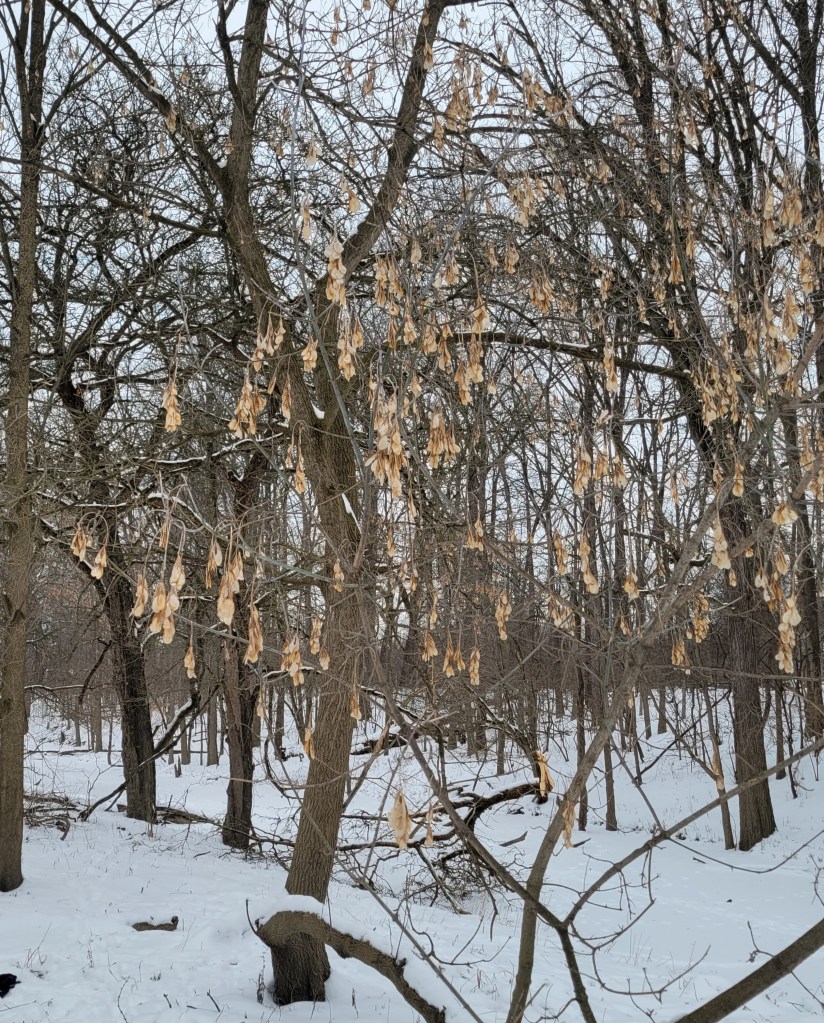
Box Elder is a type of maple, as the seeds indicate, but the leaves are different from typical maples. The compound leaves, with three to five leaflets, are now long fallen; our full attention is drawn to the seeds.
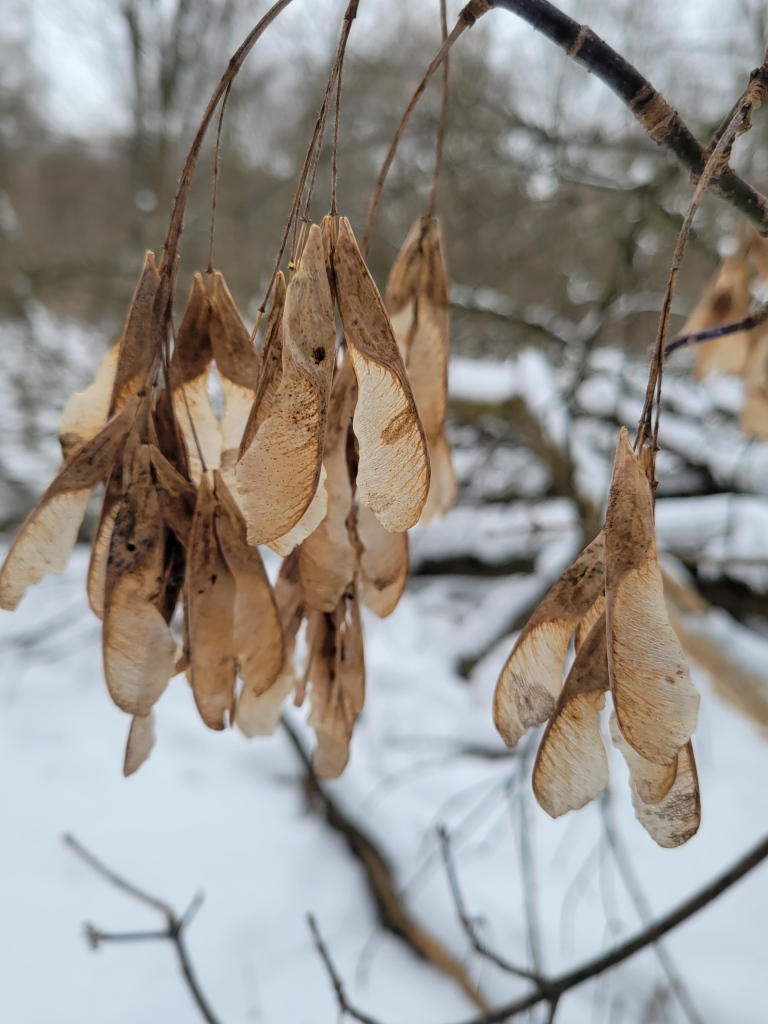
Box Elder is dioecious, a species with separate female and male trees. Females and males have different types of flowers in the spring (about the time that the leaves begin to grow) and, of course, only females produce the seeds.
Box Elder is known as a tree that often does not grow straight and has brittle limbs that frequently break.
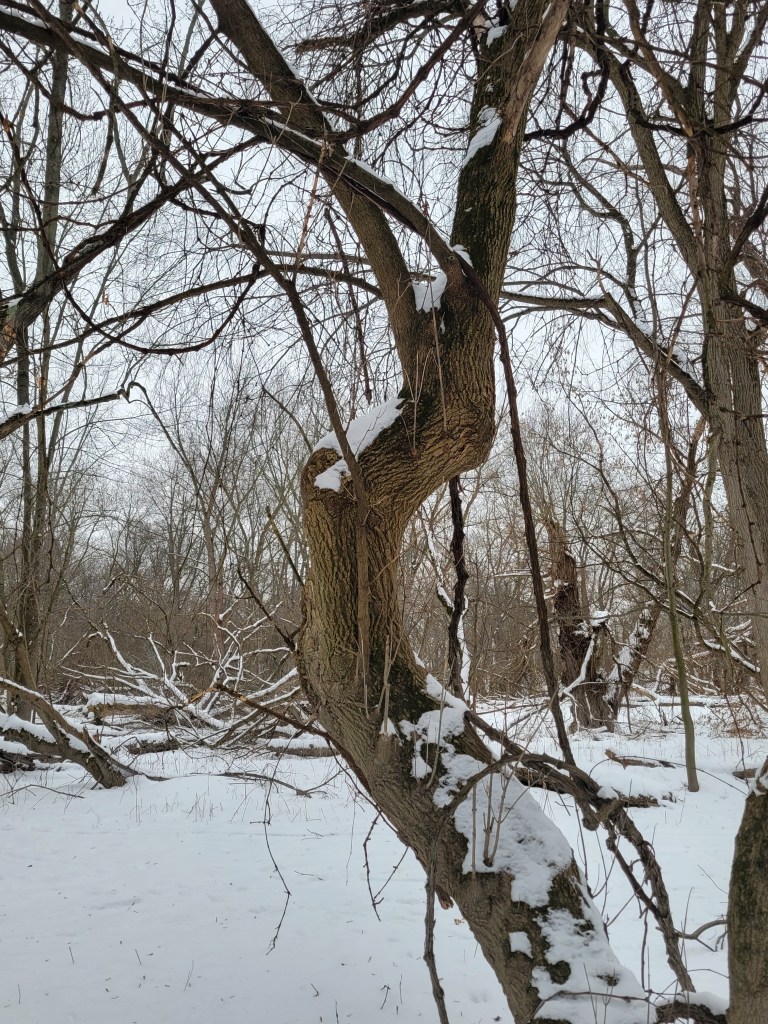
One of the reasons the tree is so noticeable in winter is that seed-bearing branches are sometimes close to the ground on bent or broken branches.
It is native to this part of North America and grows in different environments and soils. A good place to look for it, however, is near a river or in some other wet area. It is easiest to find in the park in an area that frequently floods.
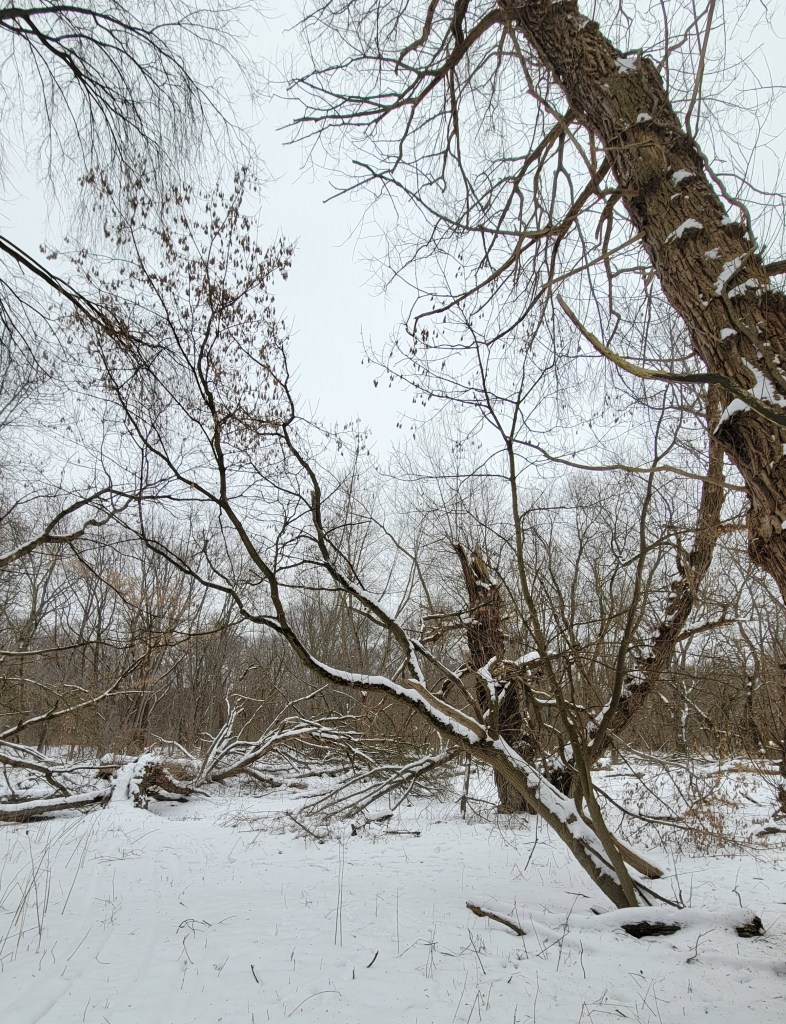
The bark is commonly the focus when getting to know trees better in winter. In the case of Box Elder, however, the clusters of seeds persisting into late winter definitely distract my attention from the bark.
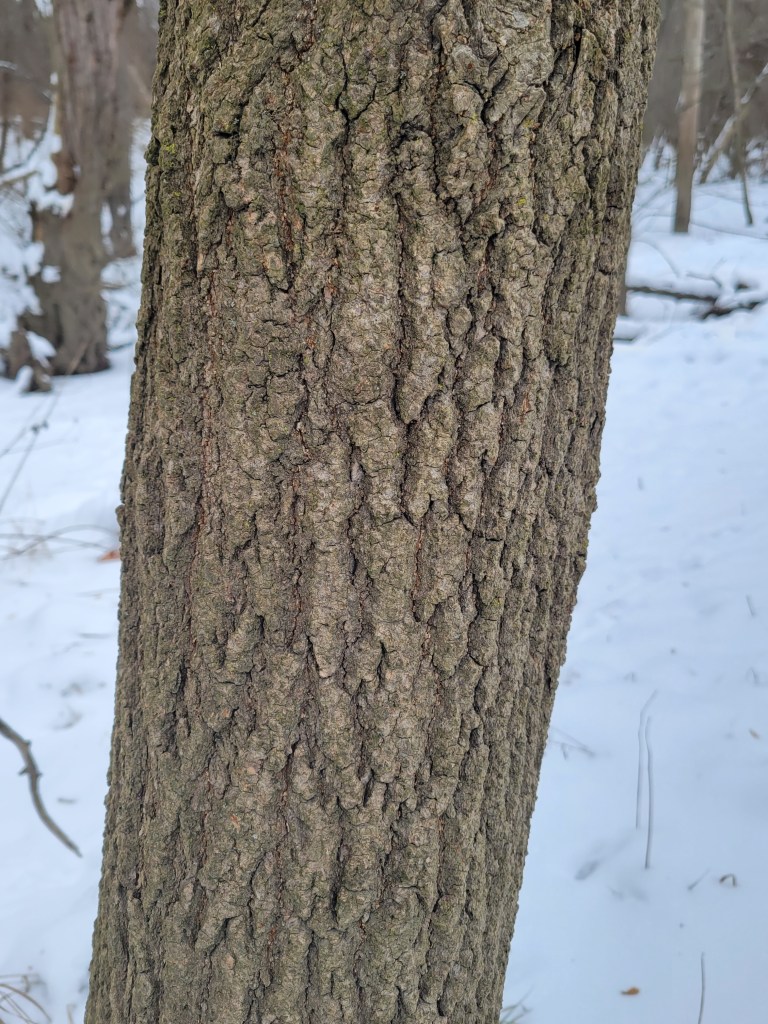
I usually get to know a tree species first in the growing season, and that recognition is the starting point for additional observations in winter.
In the case of Box Elder, the opposite is true. This January, I have been making note of several samara-laden trees. These looks will, I hope, remind me to stop and examine the flowers and leaves more carefully in spring.
I am putting Box Elder on my spring agenda.
 Eliza Howell Nature Walk
Leave a comment