Kathleen Garrett
February 20, 2024
A winter walk at Eliza Howell Park is a great time to notice the lives of bark beetles.
While there are over 545 species of these tiny insects, they share similar life cycles. It’s not the beetles
themselves that are noticeable, however, but the tunnels they sculpt into both living and dead
trees.
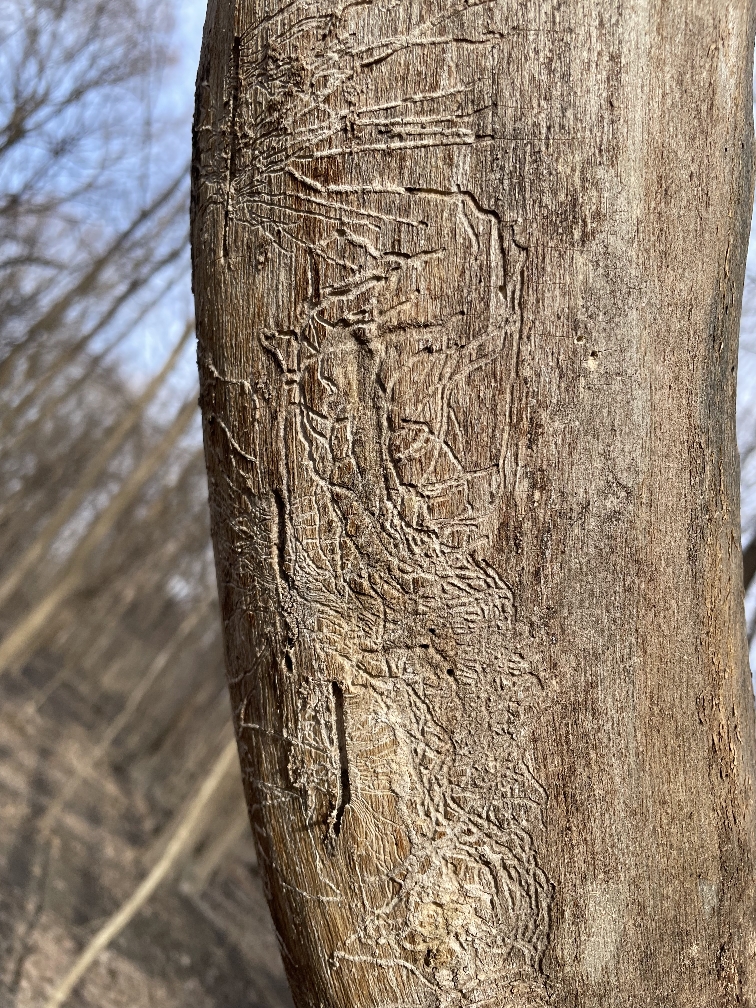
Many of the designs of the tunnels are beautifully arranged, seemingly following rules of symmetry and/or design.
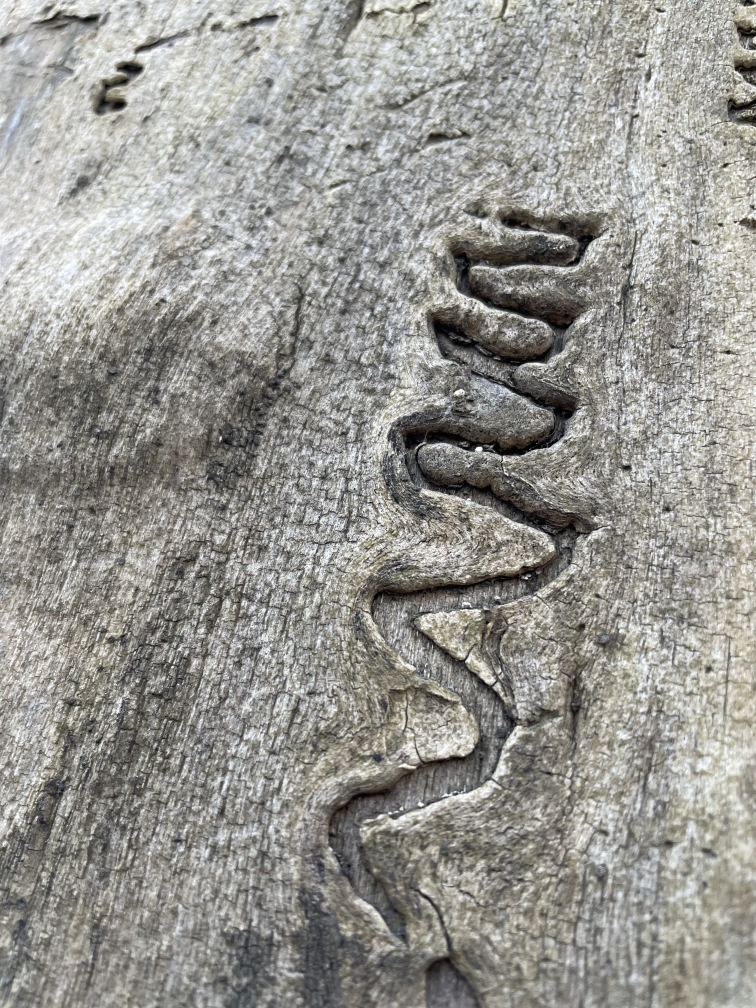

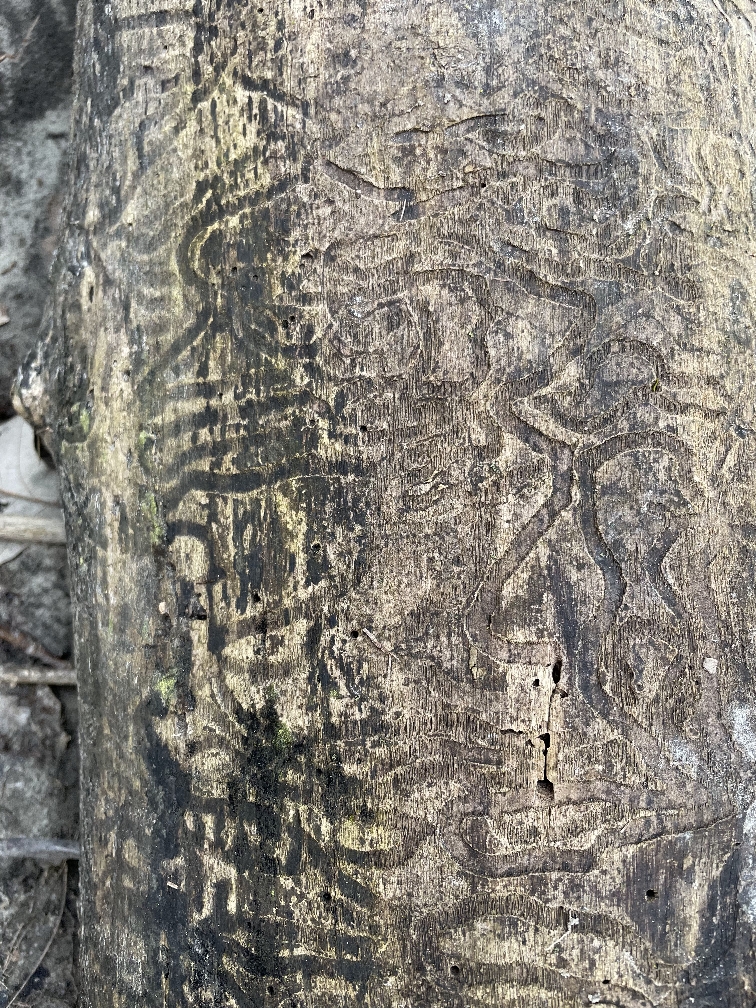
Bark beetles make tunnels on live standing trees (sometimes quite high up), dead standing trees, and trunks on the ground. Each species builds its tunnels only in certain types of trees.
Depending on the species, there are several loose categories that bark beetle tunnels are sorted into. Some that are evident at Eliza Howell Park include:
Simple egg tunnels:
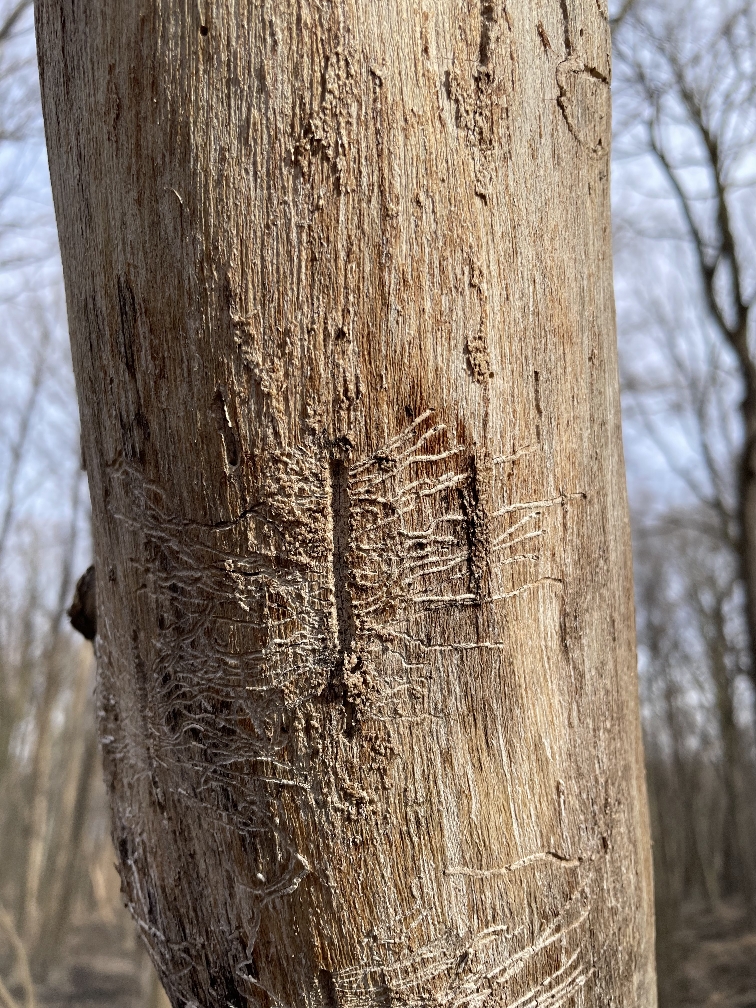
Radiate egg tunnels (this may be a Radiate egg tunnel):
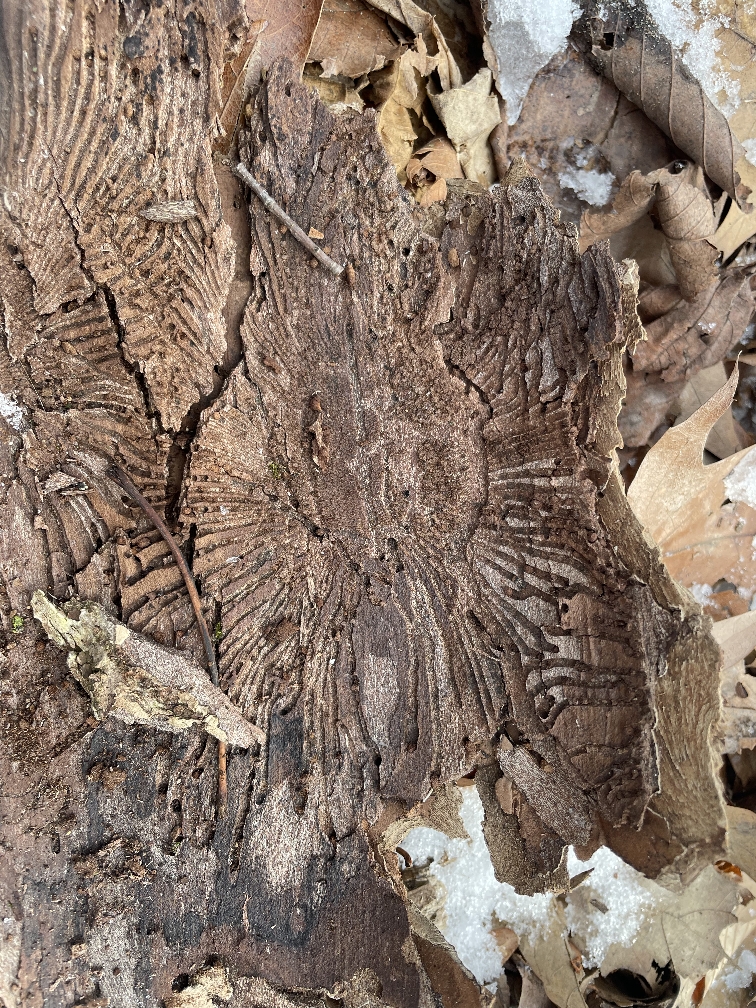
Forked, Cave, and a catchall category: Irregular: (photo)

Perhaps unique to Eliza Howell Park is the mathematician bark beetle:

These tunnels are where the eggs are laid and where they develop. The female may or may not have her mate’s help boring holes through the bark and creating the tunnels, but once the eggs are laid, the development of the larvae is similar across species.
After the females lay the eggs at the ends of the tunnels, the larvae hatch, eating the wood and thus creating their own tunnels which grow as the larvae grow. Once they are done eating, the larvae hollow out a chamber and form a cocoon and eventually transform into adults. As adults, they emerge through the bark and fly to another, nearby tree to begin the process all over again.
While these beetles can girdle and even kill a tree, they must first escape the notice of woodpeckers who regularly check tree bark for insects to eat. Bark beetles overwinter as larvae, pupae, or adults, and so provide some excellent winter eating for woodpeckers.

 Eliza Howell Nature Walk
Leave a comment