Leonard Weber
April 28, 2024
Nature is usually predictable in terms of the annual sequence — what animals are visible and active at specific times of the year.
Every once in a while, there is something unusual enough to raise the question: “Why is this happening?” This year, there has been an unusually large number of Red Admirals in Eliza Howell Park in April.
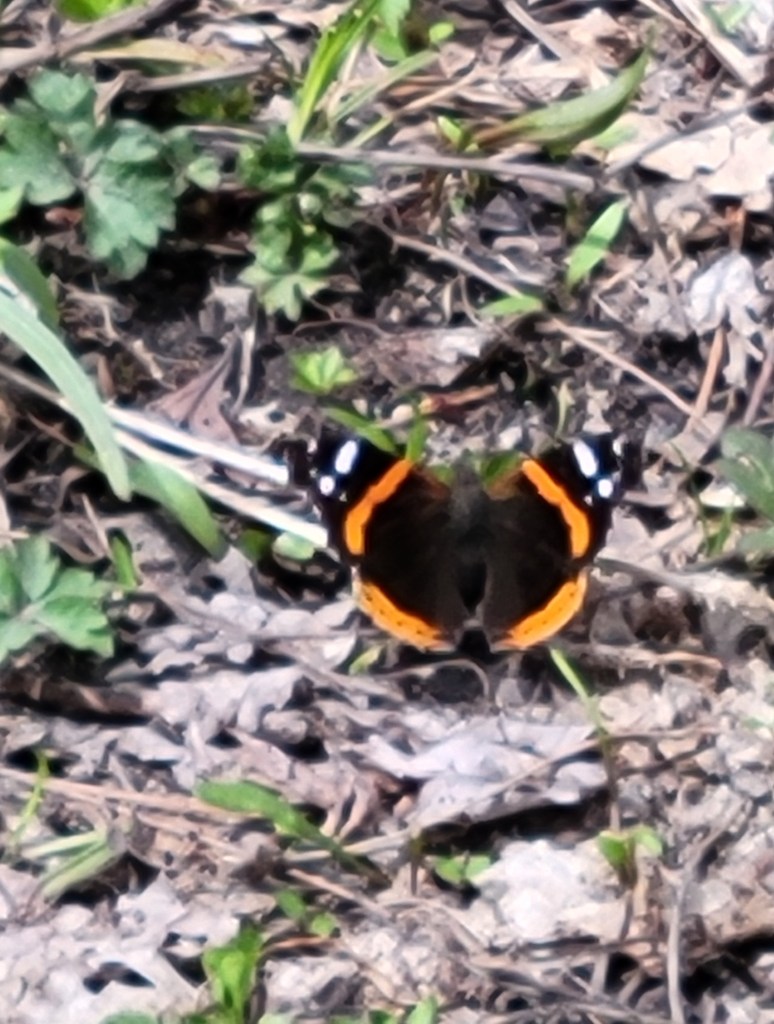
Over the years, Red Admiral has been a regular in the park, one of the butterfly species seen many times from spring to fall. In the heart of the summer, they can be seen visiting flowers in bloom. July is a good time to get good views of them nectaring.

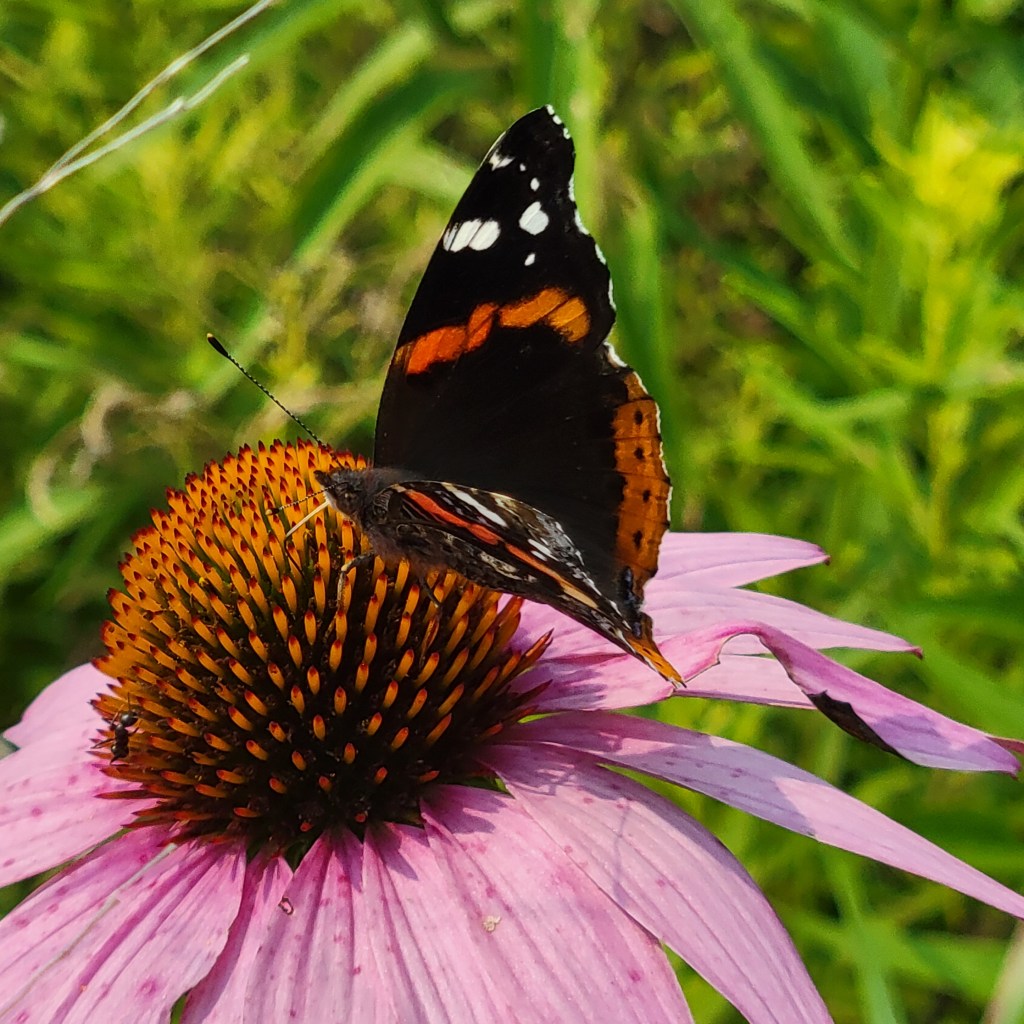
Red Admirals survive the winter as adults in a state of diapause (similar to hibernation). They cannot survive very cold temperatures, however; those that spend the summer in northern climates migrate south for the winter and return in the spring.
Most of the reports indicate, though, that they can survive some freezing weather, as long as it is not too intense.
The Red Admirals in southern Michigan have long been thought to be migrants. The large number present this early in the year leads me to wonder whether, because of more mild winters, an increased number of Red Admirals are now spending the winter here.

There are fewer flowers in bloom in the park in April than in the summer, but the Red Admirals do well without nectar. They are often seen on the ground, getting moisture and minerals. Their preferred foods are reported to be tree sap, animal droppings, and rotting fruit.

Red Amirals fly fast and are not easy to recognize while in flight. When they stop, they are very identifiable, especially when they have their wings open.
This April, their numbers have far exceeded that of all other butterfly species combined — a question-raising phenomenon!
 Eliza Howell Nature Walk
Leave a comment