Leonard Weber
May 6, 2024
One of my May bird-watching goals each year in Eliza Howell Park is observing nesting activities of Blue-gray Gnatcatchers. For each of the past 13 years, this goal has been achieved. Two nests in process have already been located in 2024.
The Blue-gray Gnatcatcher is a very small bird that is almost constantly in motion. A few begin arriving in the park in late April every year, after having spent the winter, perhaps, somewhere in Central America.

Blue-gray Gnatcatchers are insect eaters, though they don’t seem to focus specifically on gnats. They forage in foliage and on limbs, sometimes flicking their white-edged tail.

Within days of arriving here, they begin nest building, a process that can take up to two weeks. The female and male work together, using tiny pieces of plant fibers, hairs, bark, catkins, fine grasses, and similar material, all bound together and attached to the support limb by spider webs. The nest is considerably taller than wide, when complete. and is quite flexible. The inside of the cup is less than 2 inches in diameter, just big enough to hold the typical 4 eggs / young of these small birds.
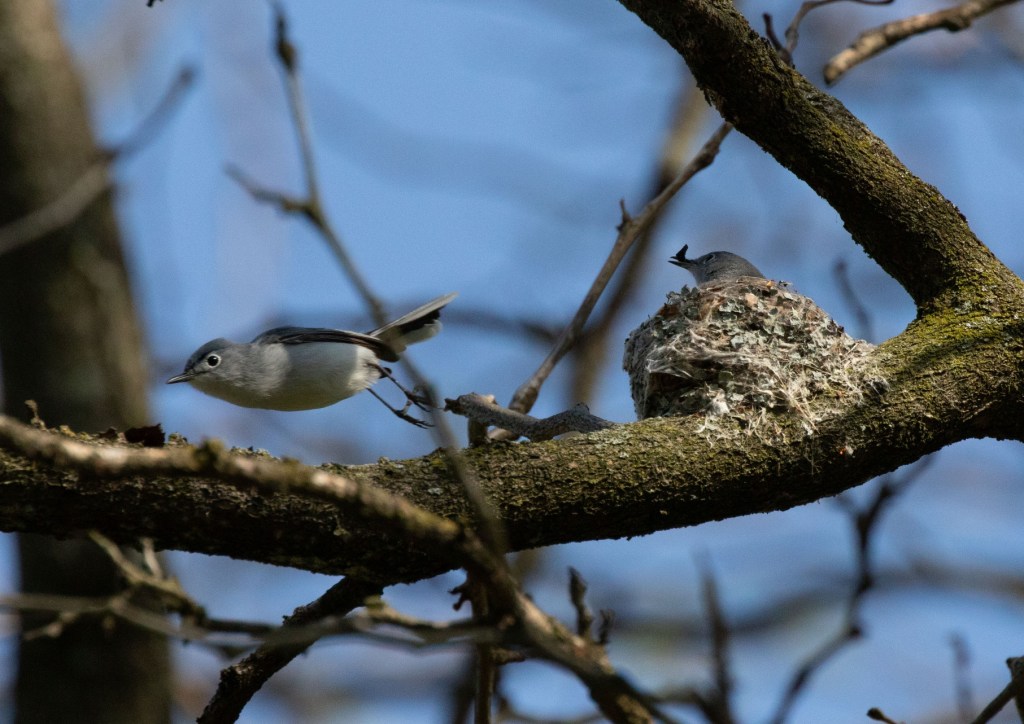
In the following photo sequence, a male is bringing a female a piece of nesting material (it looks like it might be bark) and heading back for more.


Margaret Weber
The completed nest is “decorated” on the outside with lichen flakes, helping to camouflage a nest placed on a tree limb that often has lichen on it.
The next photo is of a finished nest. This is a close-up view of the nest on a small limb; the nest is not as big as it may seem here.

Both sexes incubate the eggs and both feed the young, just as they both build the nest. The nestlings have a diet of insects, either in adult or larvae form.
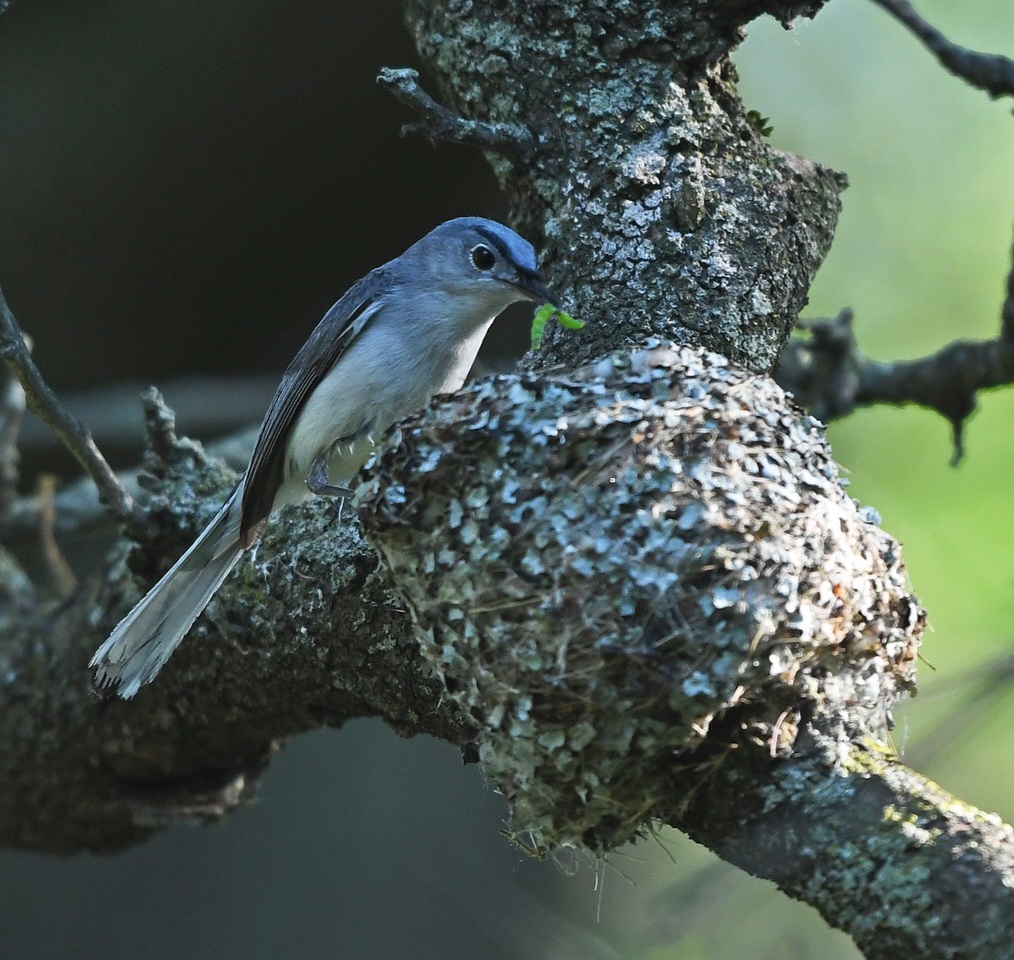
When the young are a little larger, the feeding parent no longer needs to reach into the nest: they are met above the rim.

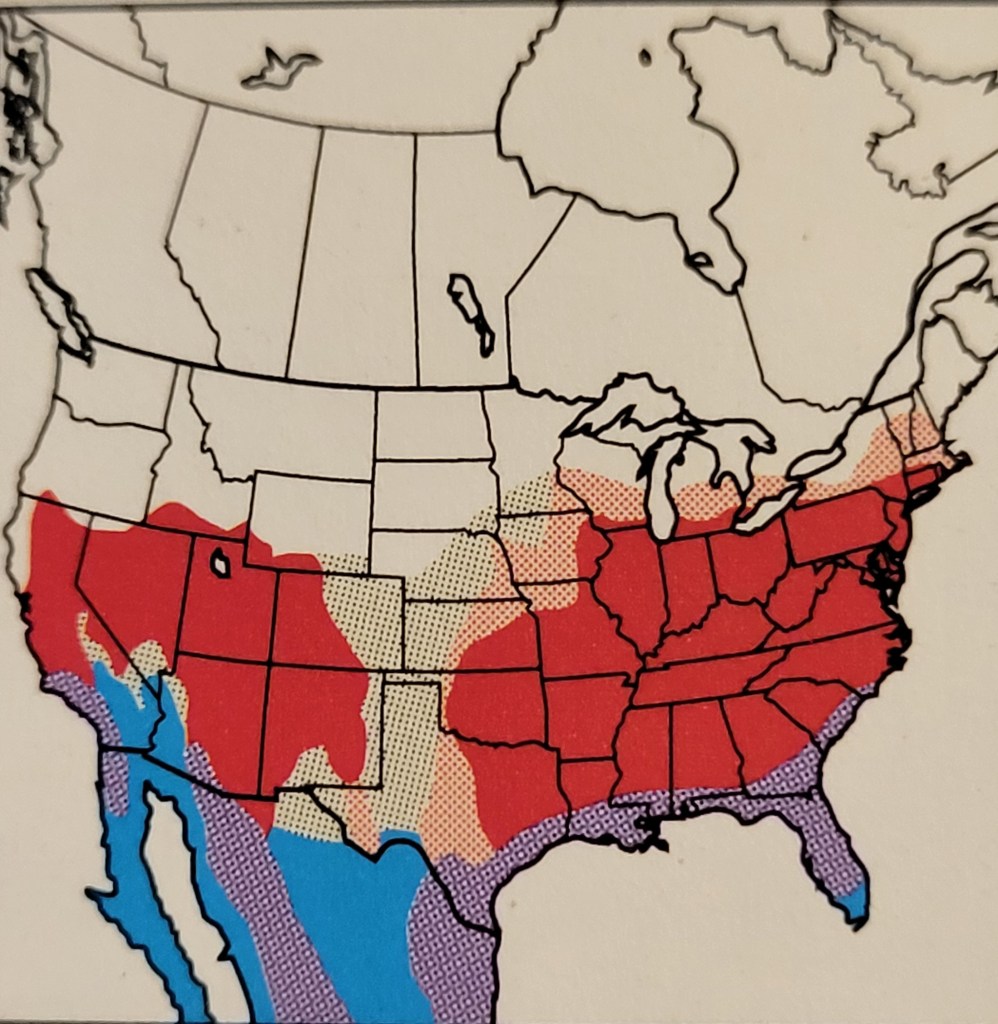
Though Blue-gray Gnatcatchers are regular breeding-season residents of Eliza Howell Park, they are not abundant overall and are not recognized by many people. They have been expanding northward in recent decades, but they remain much more a southern species. Southern Michigan is as far north as they breed. (Map key: red = breeding season; blue = winter grounds; purple = present all seasons.)
Kaufman Field Guide to Birds of North America
It takes time and careful watching every year to find these active little insectavores in the process of nesting, but it is immensely satisfying. Perhaps most satisfying of all is to be able to provide an opportunity for others to watch and enjoy.

 Eliza Howell Nature Walk
Leave a comment