Leonard Weber
July 22, 2024
A little more than a year ago, I wrote about watching “Red Aphids and Ladybugs” (July 16, 2023), having watched them on False Sunflower plants.
Today, I started watching another interaction between insects involving aphids. In this case, the aphids are Oleander Aphids, the other insects are ants, and the plant is Common Milkweed.

with aphids visible at top center
Oleander Aphid is sometimes called Milkweed Aphid. This far north, these aphids are not likely to find any oleander to feed on, but there is plenty of milkweed.
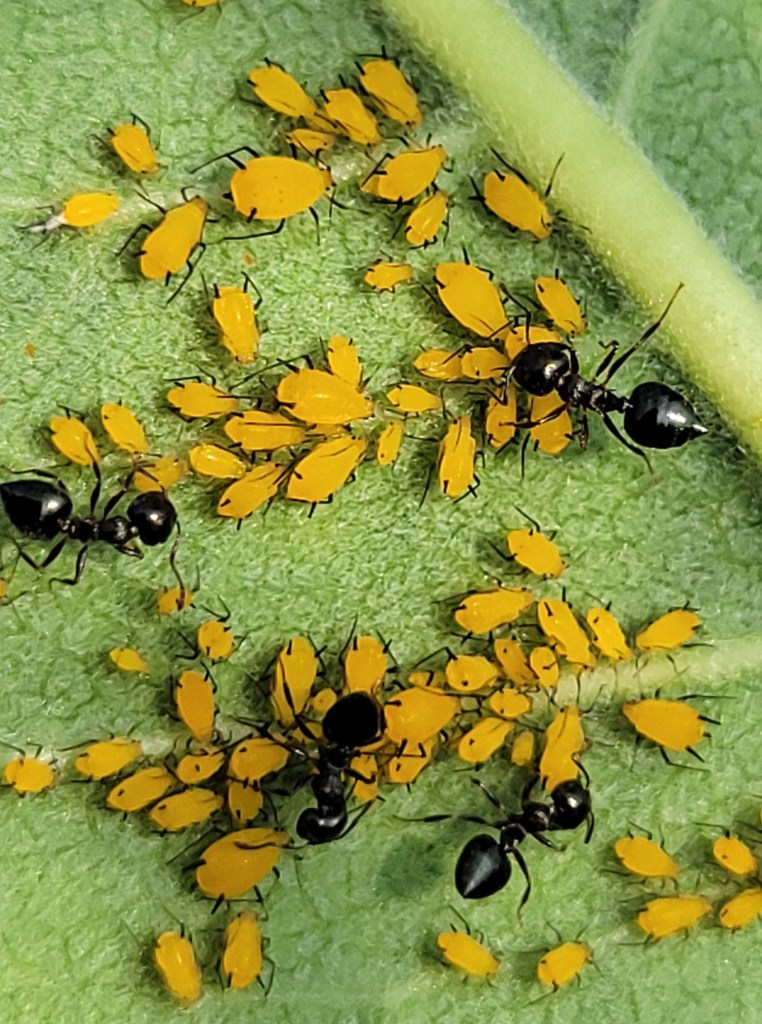
on underside of milkweed leaf
Aphids suck the sap from plants, secreting a sweet liquidy waste called honeydew. Various insects, including some bees and ants, consume honeydew.
At some point in the past, some ants initiated a systematic approach to getting honeydew. They acquire a herd of aphids and “milk” them for the honeydew.

In published reports, the relationship of aphids and ants is often described as one in which both species benefit. The ants milk the aphids by taking the honeydew that is released when an aphid is tapped by an ant. The aphids benefit from the protection from potential predators provided by the ants.
I have been aware of this fascinating relationship for some time, but this is the first time I have observed aphid herding in Eliza Howell Park.

There is much that I do not yet know. I don’t even know whether they are likely to be on the same plant tomorrow.
I look forward to learning more, especially about the ways in which the aphids benefit.

Especially at this time of the year, a slow walk among the park’s abundant wildflowers, with frequent stops for taking close looks, sometimes leads to new experinces, to observations that deepen one’s appreciation of the natural wonders to be found in this urban park.
 Eliza Howell Nature Walk
Leave a comment