Leonard Weber
August 6, 2024
Among the flowers beginning to bloom as July turned to August in Eliza Howell Park this year is one that I have not observed carefully in past years: Cutleaf Teasel.
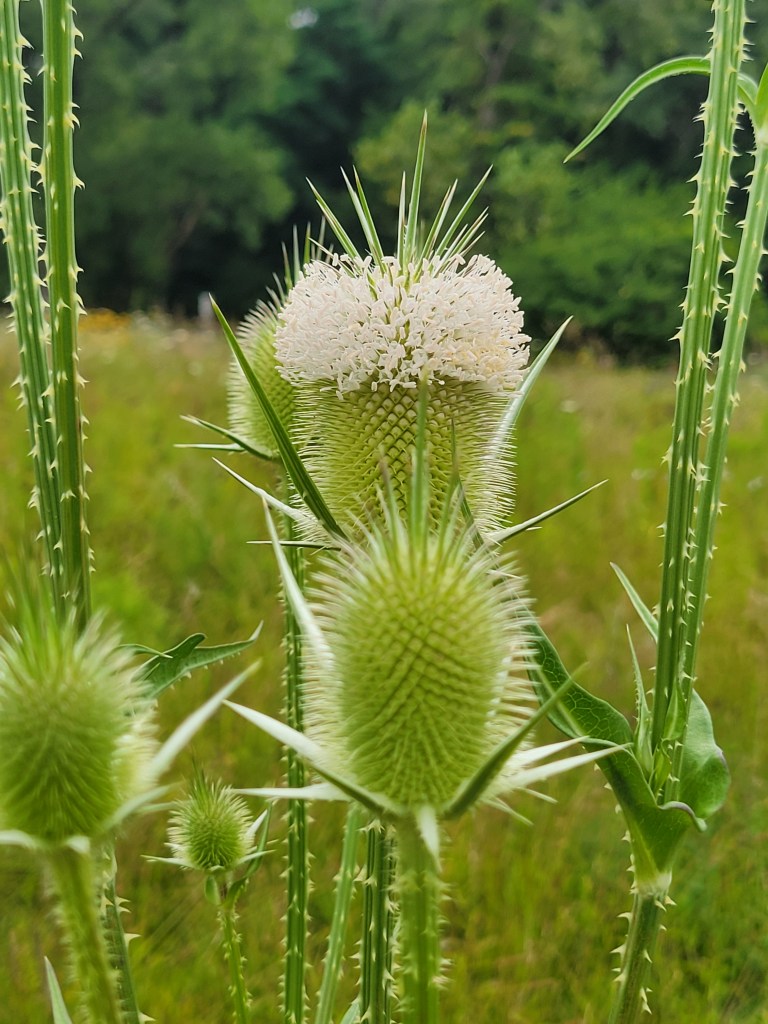
There are, to my knowledge, only a very few of these plants in the park, located in one area within the road loop. Having spotted a couple Teasel plants earlier this year,
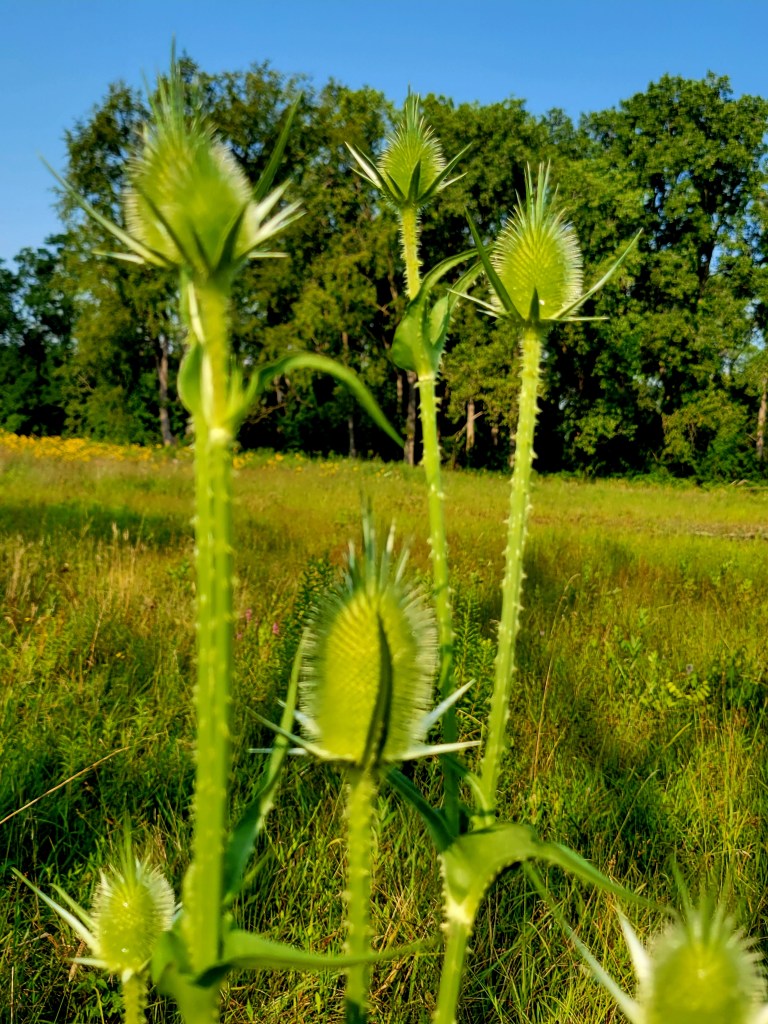
a colleague and I have been waiting for them to bloom.
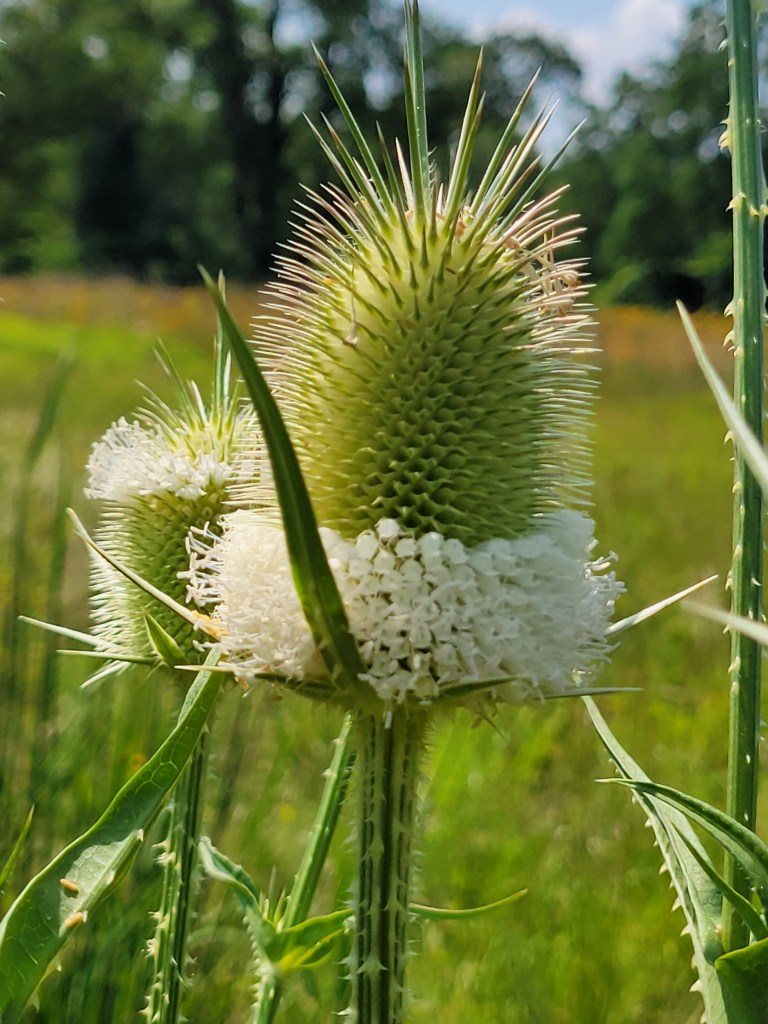
When blooming began, the flower color was a little different from what I was expecting. Based on a little prior experience of Teasel elsewhere, I expected lavender to purple flowers, not white.
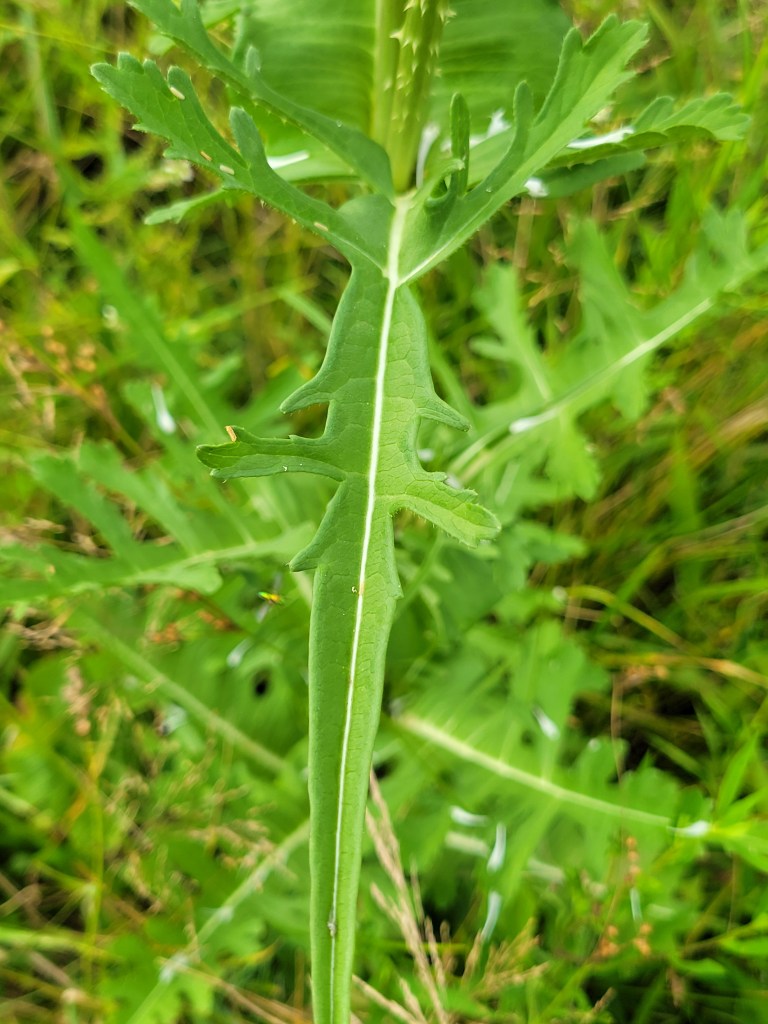
I now know that there are two species of Teasel, Common Teasel and Cutleaf Teasel. The one with white flowers is Cutleaf. As the name indicates, another difference is the fact that the leaves are lobed rather than entire.
The flowerhead has many small individual flowers that each bloom for only one day. Each day, a different part of the cone-shaped flowerhead is white. The pattern observed is, for the most part, blooming first at the top of the cone and moving down.
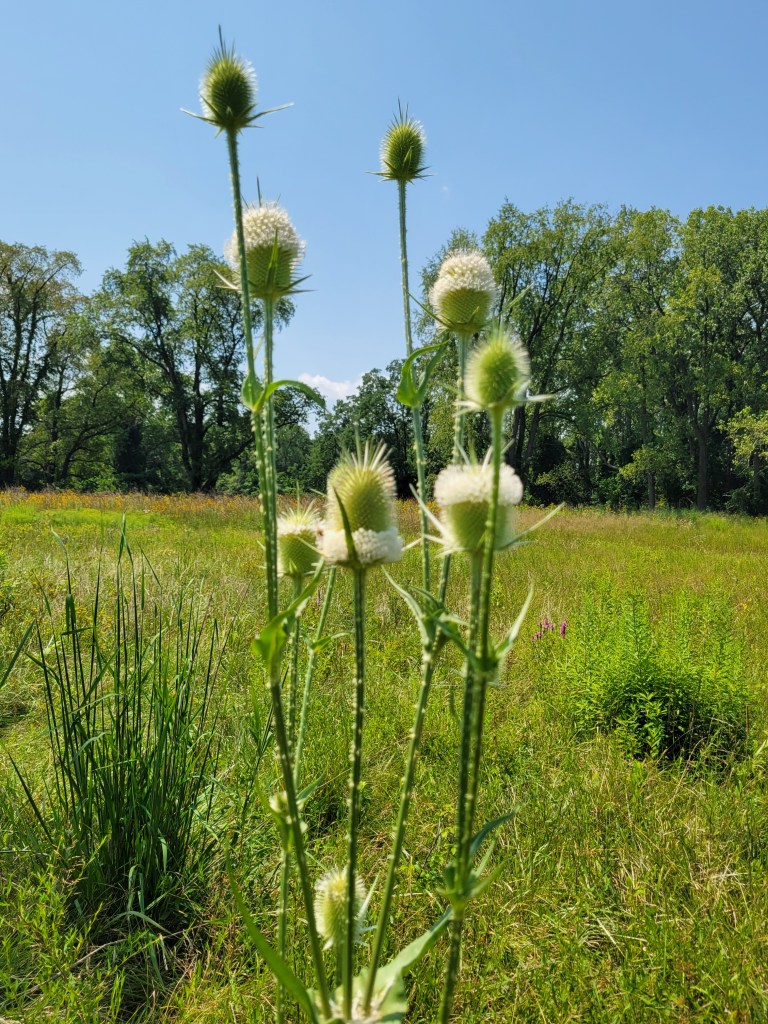
The plant is also notable for its many prickles, similar to thistles.
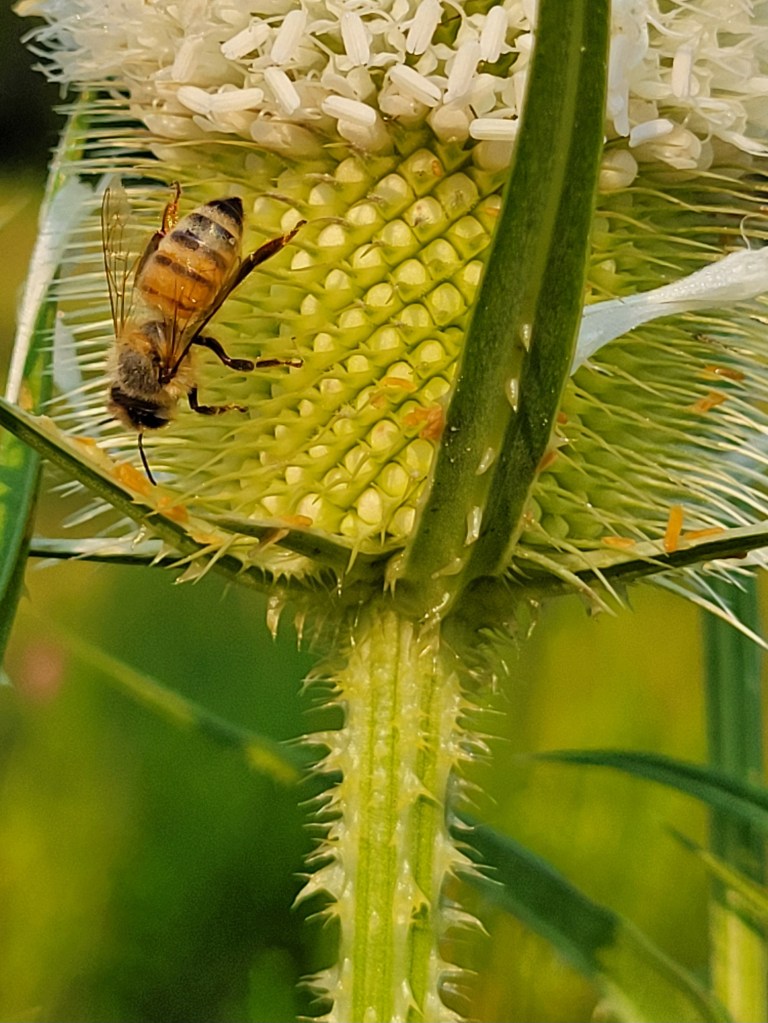
In addition to bees, the flowers attract a variety of other insects.
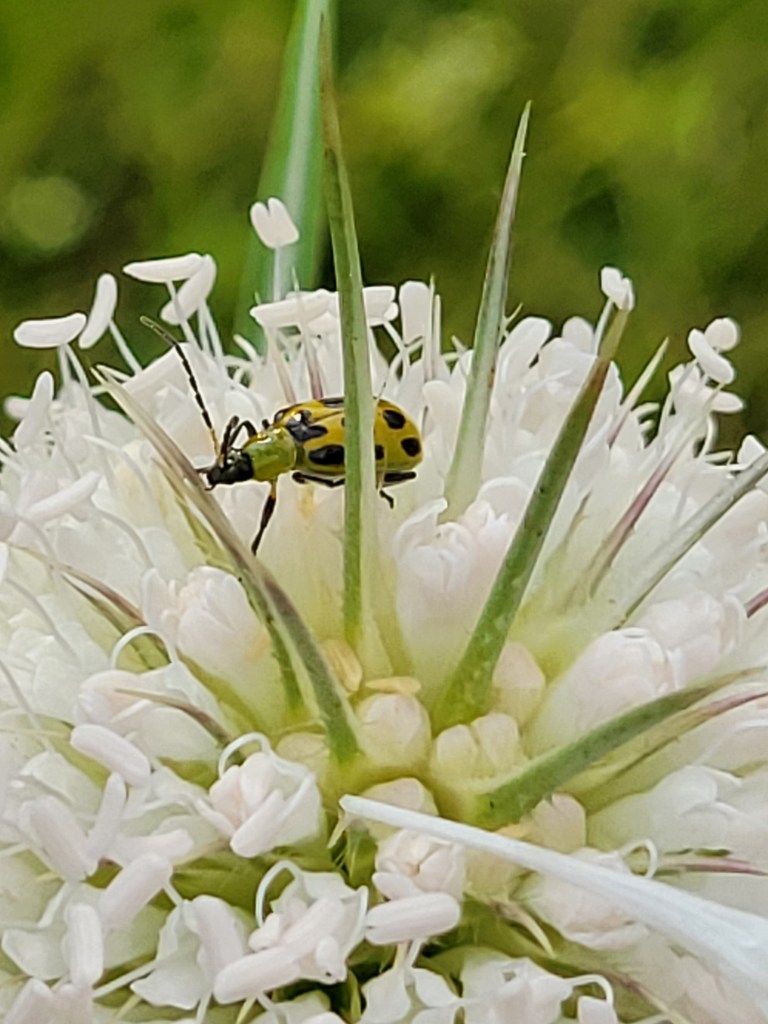
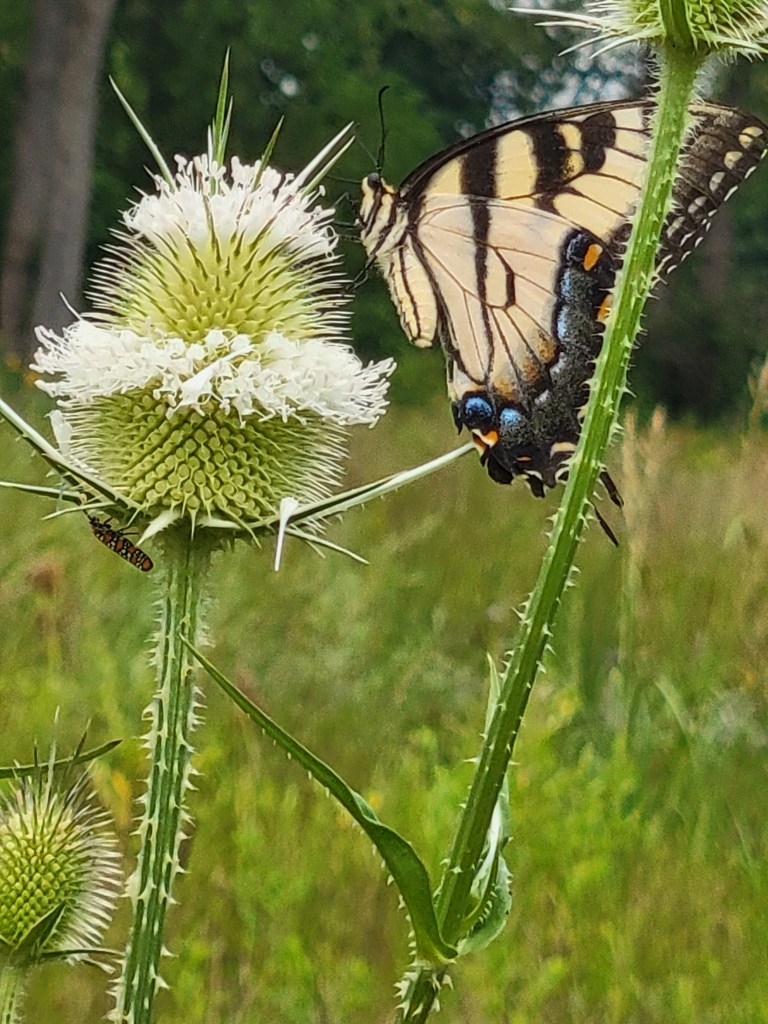
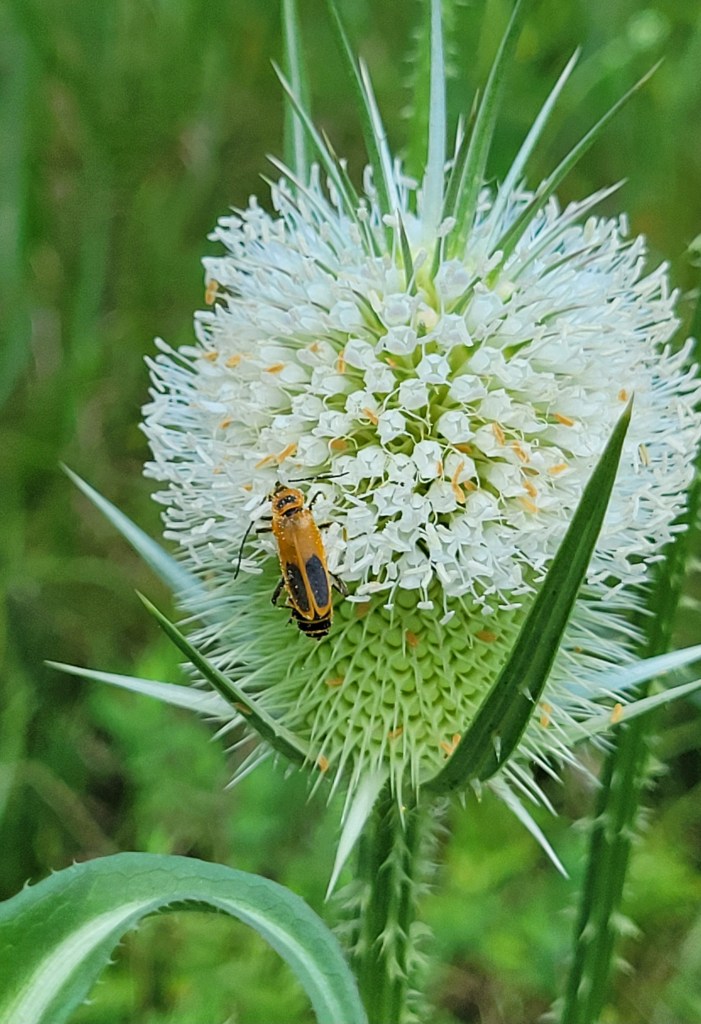

Another fascinating characteristic of Teasel (both species) is that the opposite leaves are joined at the stem, forming a cup that holds rain water. Some published reports refer to Teasel as semi-carnivorous because the plant appears to use nutrients from decaying bodies of small insects trapped in the cups.
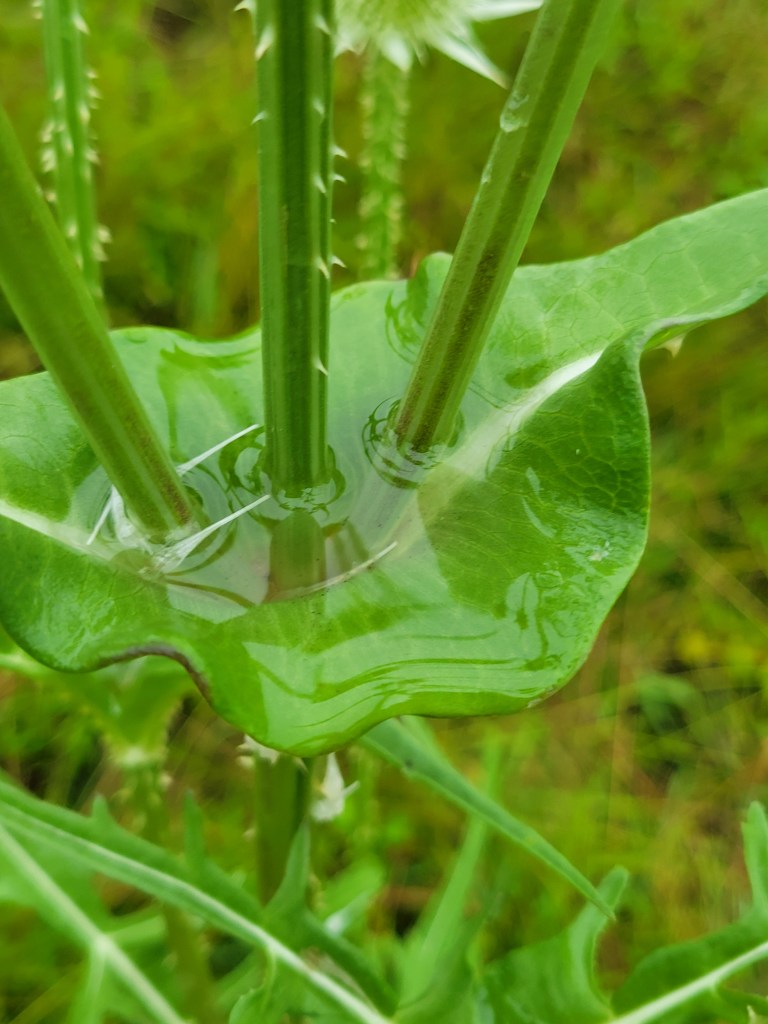
Teasel is not native to North America; it was introduced as early as 1700 for horticultural reasons. Historically, the spiny dried seedheads were used for hand carding of wool (untangling and aligning wool fibers).
In some locations, Teasel is now considered an invasive species, a commentary on the human practice of moving plants from one environment to another, not a commentary on the plant itself.
I have not previously followed Teasel from flowering through seed growth and dispersal. I am looking forward to the opportunity to do so this year.
 Eliza Howell Nature Walk
Leave a comment