Leonard Weber
September 7, 2024
The seasons are constantly changing, even from week to week. Here are a few examples of stops on nature walks during the first week of September 2024.

Wild grape vines (the species here is probably Riverbank Grape) grow in various locations in the park, often climbing trees and/or shrubs. They can climb 60 feet or more. This is a productive year for fruit, which is now mostly ripe.

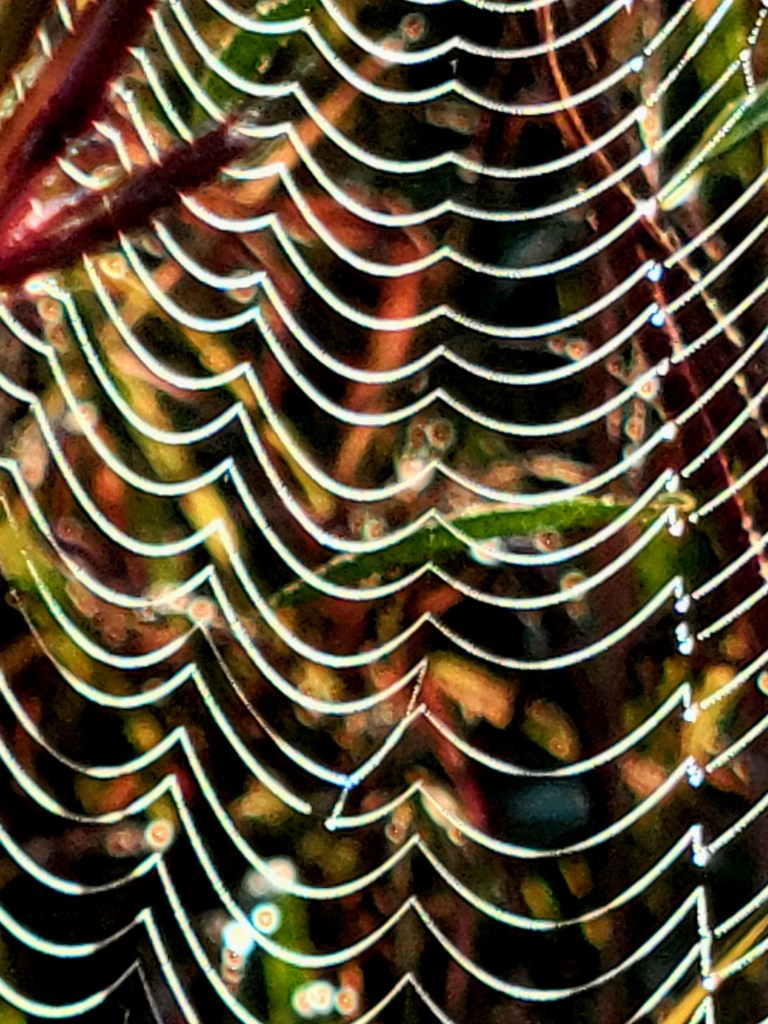
This is best time of the year to find the fascinating webs of a group of spiders called “orb weavers,” named after the (often) large and (always) intricate webs they weave. The webs are almost invisible during the day (the better to snare unsuspecting insects) but can be found early on sunny mornings when the dew is hanging on each thread. They are most visible when one looks among wild flowers in the direction of the sun.

The butterfly season is quickly moving toward an end, but there are still some to see. I was delighted to see this Common Buckeye in the goldenrods on September 1. Buckeyes will likely be working their way south soon.

Milkweed seed pods are filled with seeds attached to a silky material that allows the seeds to float away in the wind. The seedpods have only recently begun to open.

Another climbing vine in Eliza Howell is Virginia Creeper. It also climbs trees but is not as easy to find as grape. There is only a short period of time around the beginning of September when it is possible to find the blue-colored berries on the red stems. Birds love these berries, and they quickly disappear.


Thistles, in general, do not have a good reputation. Some are hard to control, and, of course, it is difficult to enjoy the sharp spines. Field Thistle has spines, but it is a natural part of native wildflower meadows, attracting many nectaring insects.
Field Thistle is in full bloom in the park in the beginning of September.
—-
These are just a few of the sights of early September. There is always more to see — and next week will look a little different.

 Eliza Howell Nature Walk
Leave a comment