Leonard Weber
December 19, 2024
An area within the road loop of Eliza Howell Park contains scattered mature trees. The trees are primarily Oak, Cottonwood, and Black Cherry. Among them is one, only one, large American Beech.

The other large beech trees in the park are in the woodland where, as is usually the case with forest trees, they have grown tall with few lower side branches.

The Beech featured in this post has many horizontal branches, starting quite close to the ground.

The tree spread is impressive, up to 40 feet from the trunk to the end of low branches.
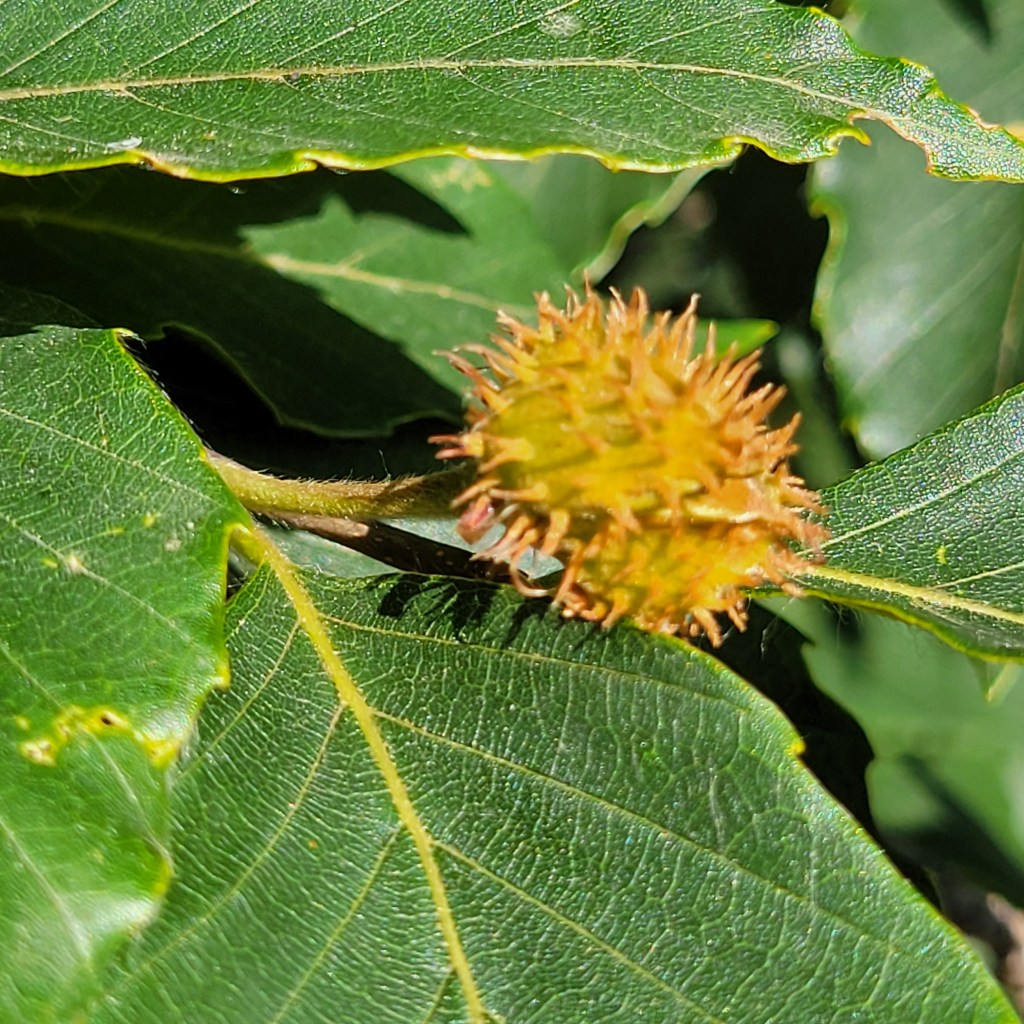
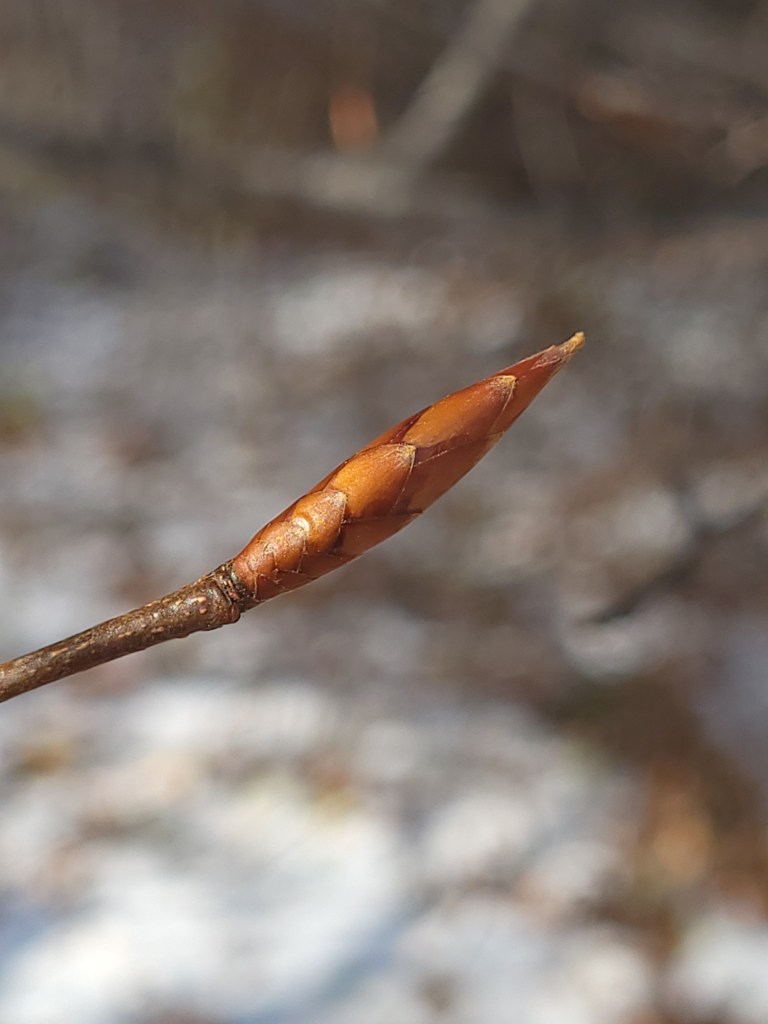
This spread allows nature walkers easy access to the leaves, nuts, and buds.

The large horizontal limbs seem to project character and strength.

It is clear that this tree has been here for a long time. Recently, I have been wondering how long.
There is a method for estimating the age of a tree based on the size of the trunk. The first step is to measure the circumference of the trunk at 4 and a half feet from the ground. Dividing that number by pi (3.14) gives the diameter. The diameter, in inches, is then multiplied by the growth factor of the particular species (lists of the growth factor of many tree species are published by different organizations.) The growth factor is based on how fast a species tends to grow.

This Beech tree has a circumference of 10 feet 3 inches — or 123 inches — at 4 and a half feet high. Dividing 123 by 3.14 = 39 inches in diameter.
American Beech is a relatively slow growing species, with a growth factor of 6. 39 times 6 equals 234. Based on this method, the tree is estimated to be about 234 years old.
This aging method is a quick way of estimating the age of a tree and is not exact. It does confirm, however, that this is indeed an old tree.
234 years ago was 1790. George Washington was President in 1790. Later, in 1802, the city charter for Detroit was approved. It incorporated a city of about 213 acres; the city size is now about 139 square miles.
This tree was growing here all (or nearly all) of these years.

Passenger Pigeons, once abundant in Michigan, were hunted to extinction over a century ago.
One of the favorite foods of Passenger Pigeons was beechnut.
This Beech, mature enough to produce nuts during much of the 19th century, may have been visited by hungry Passenger Pigeons.
I admire this American Beech tree as a strong, attractive, and durable example of the species. I admire it also as a reminder of the ways we are connected to the past as we walk and observe nature in the park.
 Eliza Howell Nature Walk
Leave a comment