Leonard Weber
December 24, 2024
There are eight different members of the woodpecker family normally found in Michigan. All but the Black-backed Woodpecker, an uncommon species of the northern forests, have been observed in Eliza Howell Park in Detroit.
In 2024, for the first time in 20 years of nature walks, I have seen all seven here in the same calendar year.
Woodpeckers as a group are distinctive enough to be recognized with a little experience. They have straight chisel-like beaks, are frequently found on trees, and most have an undulating flight with small swoops. It is common to hear their pecking (hammering) on tree trunks or limbs, behavior that makes it easier to locate them.

The Red-bellied Woodpecker is probably the most common woodpecker in the park, present every month of every year. This would not have been true a couple (human) generations ago; they have extended their territory northward since the mid-20th century.
Red-bellied Woodpeckers nest in standing dead trees or large dead limbs of a live tree. It is often easy to find them at work excavating a nesting cavity in the spring; their hammering and loud calling announce their location.
Most woodpeckers, including all of the Eliza Howell species, have two toes in the front and two in the back of the foot (most other bird species have three front and one back). The two back toes, together with stiff tail feathers, facilitate clinging to the side of trees.

Also very common here is Downy Woodpecker, the smallest of the seven. It is present year round and is frequently seen on tree trunks as well as smaller limbs probing for insects, insect eggs, and larvae. It sometimes forages on dried stalks of wildflowers or other tall plants.
Downy Woodpeckers often excavate their nesting holes on the underside of a slanting dead limb.
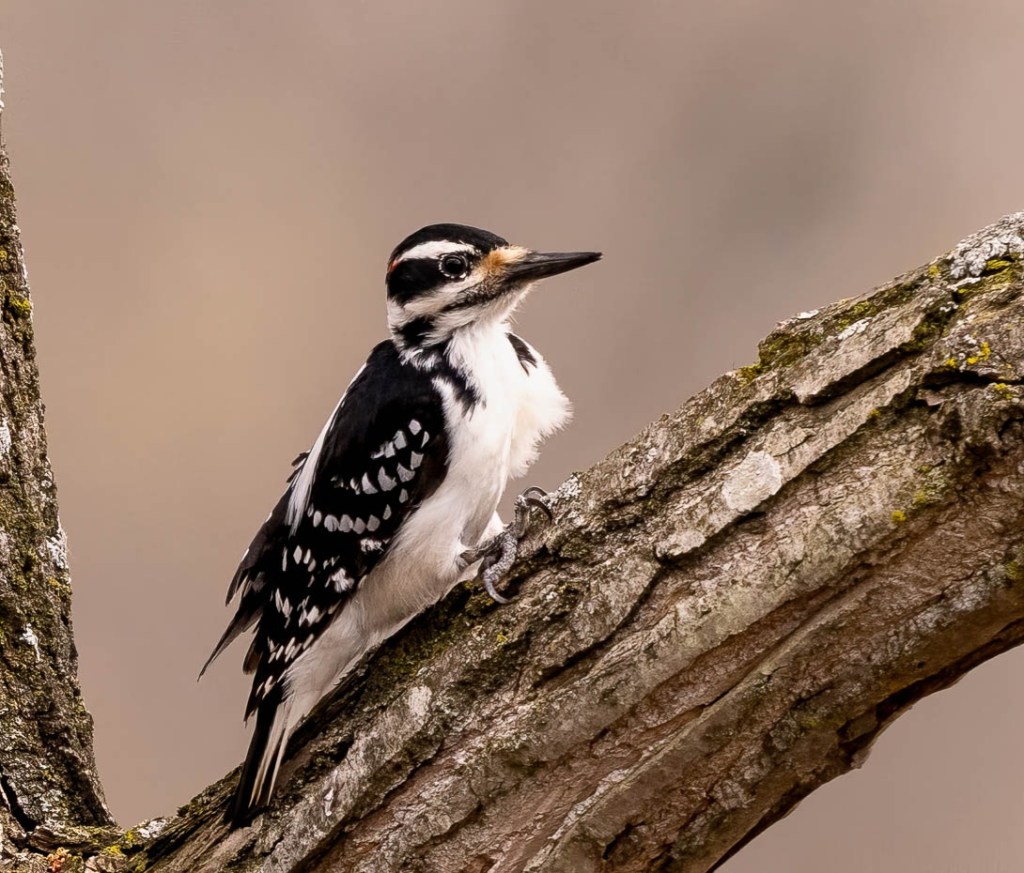
Hairy Woodpecker is the third Woodpecker present throughout the year in the park. It is less common than the two above and less likely to be seen outside the woodland.
A Hairy looks like a slightly larger version of a Downy. The size of the bill is a key indication of the difference.
Almost all woodpeckers drill a new nesting hole every year. The hole is usually quite deep and, once the hole is large enough for it to get its whole body inside, the excavating bird comes to the opening to “spit” out the chiseled pieces.

Photo courtesy of Margaret Weber
The Northern Flicker also nests in Eliza Howell Park. It is different from the three above in that it migrates (but not a long distance). While one might occasionally be seen in the park in winter, it is essentially a breeding-season-only resident.
Flickers often feed on the ground, ants being a favorite food. When they fly up away from the watcher, the white spot on the rump is evident and one way of identifying the species.
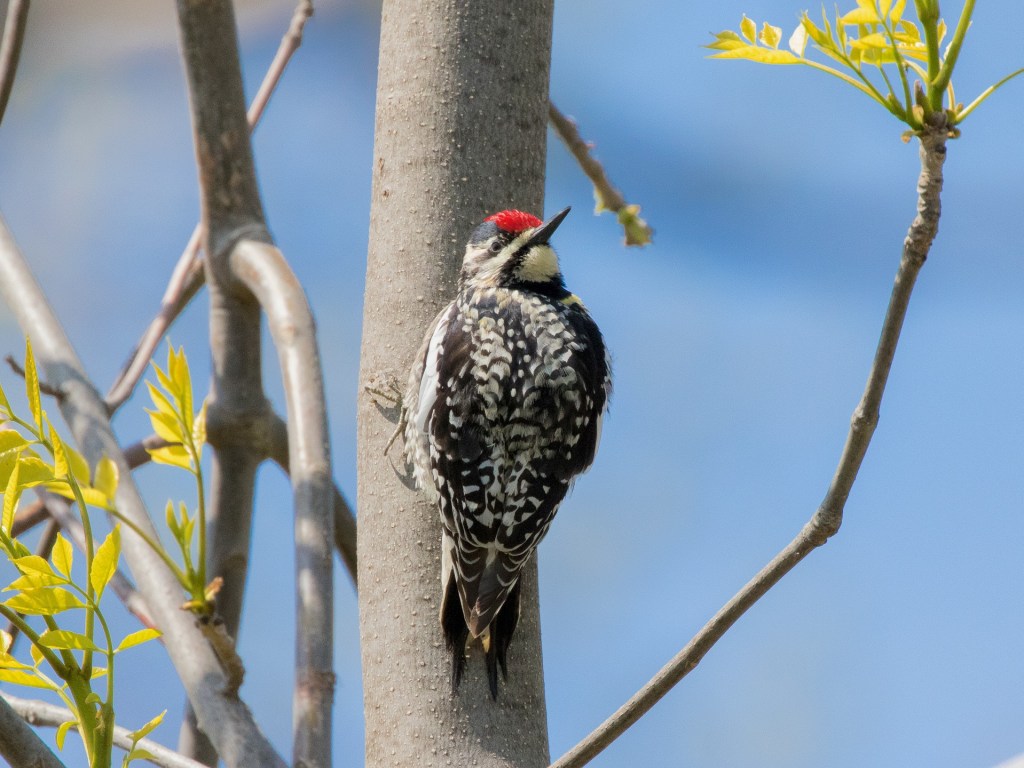
Photo courtesy of Margaret Weber
Yellow-bellied Sapsuckers breed north of Detroit and winter to the south. They migrate through twice a year and are most likely to be seen in April and October.
Especially at the time of their spring stopover, one can see how sapsuckers seek food and how they got their name. They drill a role of holes (“sap wells”) in the bark of a tree, then return periodically to snag the insects attracted to the sweet sap as well as to feed on the sap.
There are other sapsuckers in the west, but Yellow-bellied is the only one in eastern North America.

Photo courtesy of Margaret Weber
The caption does not specify the sex of the bird in this photo because female and male adult Red-headed Woodpeckers look alike.
This species makes only an occasional appearance in Eliza Howell Park. A single bird shows up every 3 – 4 years on the average, usually in the summer, and stays for only a day or two. This year, one was sighted in June.
Red-headed Woodpecker numbers have been declining, though they are a little more common south of Michigan.
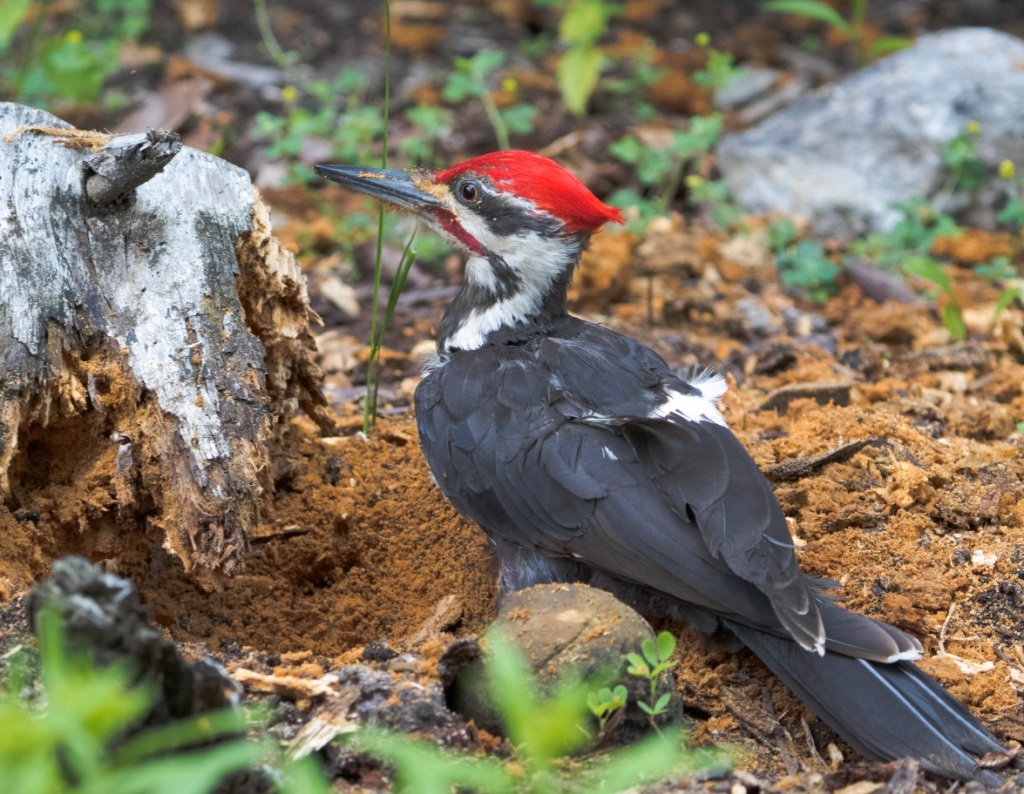
This is the largest of the seven park woodpeckers (it is about the size of a crow) and is the most recent addition to the list of woodpeckers seen in Eliza Howell.
Pileated Woodpecker is a non-migrating species that requires large trees. Each pair claims a significant area for its territory. In the last couple years, including early 2024, one was seen in the park for a brief period of time. There is no indication that they have taken up residence here yet, but they will be a splendid addition if and when they do.
—
It has been a pleasure to get to know the Eliza Howell Park members of the woodpecker family. They include colorful species; some are quite vocal, with distinctive calls; woodpecker nesting and foraging behavior can often be observed. And there is no time during the year when they are all absent.


 Eliza Howell Nature Walk
Leave a comment