Leonard Weber
January 4, 2025
In Eliza Howell Park, January and February are quiet months, months with no major seasonal changes in what nature walkers observe: no migratory bird species arriving or departing, no trees leafing out or dropping leaves, no flowers opening or going to seed, no butterflies to watch and photograph.
Despite it being the quiet season, there is always something that leads to further observation and learning.
This winter, there are two important questions determining the direction of many of my cold walks in the park.
1. What is the Merlin’s prey?
Starting in late fall, there has often been a Merlin perched on a tree limb in the same general area of the park. I now look for the small falcon every time I approach the scattered Wild Black Cherry trees. It can usually be recognized by its silhouette as it perches on a high limb on a gray winter day.
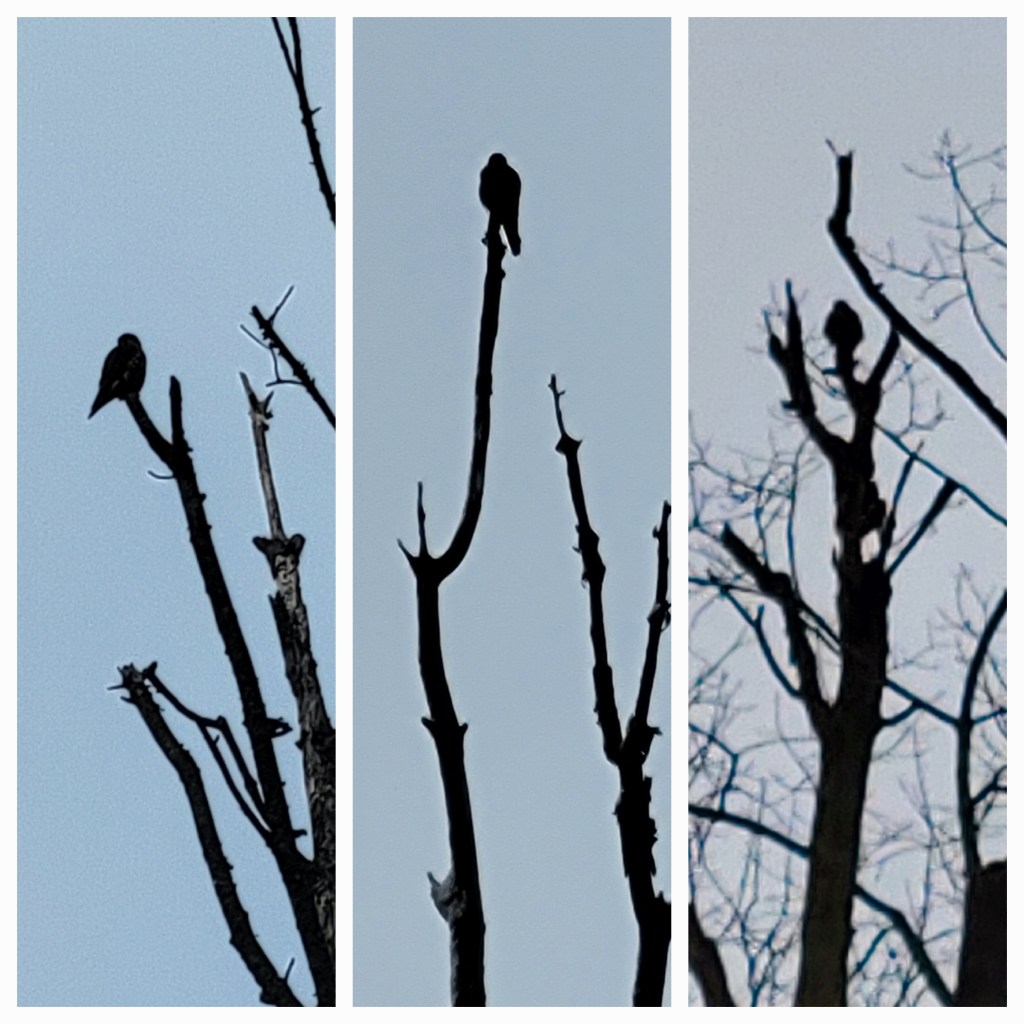
Merlins hunt from an open perch. They turn their heads frequently, looking for prey on all sides. They are raptors, with small birds making up the major part of their diet. When they spot something, they take off at a high speed and are often able to overtake and snag a fleeing bird.
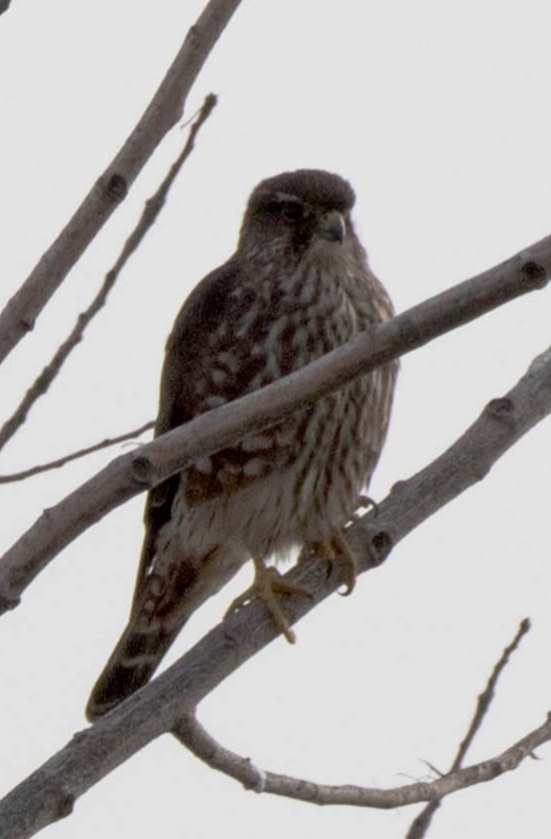
Merlins are only around Detroit in the winter, and this year, one is a regular in the park. The fact that it continues to select its hunting perch in the same general area is likely to mean it has been successful in its hunts here. I have not yet been able to see what its prey is this year, however, so I am planning to increase my observation time in search of an answer.
One of the amall birds that feeds on or near the ground near the Cherry trees is American Tree Sparrow, often foraging in a small flock.

Photo courtesy of Margaret Weber.
Merlins are patient predators, sometimes remaining on the same perch for a long time. In order to identify its (attempted) catch, I, too, will need to be patient, spending longer periods of time (in the cold) watching.

nature walks.
2. Will the Beaver stay all winter?
The Beaver is a mostly nocturnal mammal, so it’s no surprise that I have not had an actual sighting of the legendary rodent in Eliza Howell Park. However, there have been abundant signs of its (their?) presence since the beginning of November 2024.


The only other time in recent history there were similar Beaver signs was from November 2019 till January 2020. One or a pair was here for about two months before moving on (or before something else happened).
The nature walk route this winter will regularly include the different areas along the river where the beaver has been active.
So far, the evidence of its continued presence has consisted of felled trees and gnawed bark. It appears to be carrying away small limbs for winter eating, but the location of food storage or of a bank den remains unknown. There is much more to be observed and learned.

December 31 walk
Nature walks are, by definition, always open to the unexpected and to revisiting known flora or fauna sites to gain additional information or insight. A pre-planned agenda needs to be flexible.
At least as of now, however, the Beaver and the Merlin questions are likely to be on my mind on every walk.


 Eliza Howell Nature Walk
Leave a comment