Leonard Weber
January 14, 2025
Last week, while on a morning nature walk, Kathleen Garrett and I saw a Mink traveling along the river in Eliza Howell Park. It trotted downstream on the ice along the river’s edge.

Over the years, I have occasionally seen a Mink in the park. Each time, it was quite early in the morning, and the Mink was always on a log in the river or right at the edge of the water. Mink is crepuscular (especially active at dawn and dusk) and semi-aquatic, so both the time and the location are expected.
American Mink is widespread in North America, though not frequently spotted or photographed in the wild.

Melissa McLeod
Mink, a mammal in the weasel family, is best known for its fur. It does not seem to be known very well otherwise.
It is usually solitary, except in breeding season (late winter to early spring). The male does not participate in caring for the young.
Mink often den in river banks, sometimes in hollow logs or in crevices. They are good swimmers and can climb trees. They do not hibernate.

Karen Panagos
They may appear non-threatening in appearance, but they are aggressive carnivores. In the winter, they eat mostly mammals — rabbit, muskrat, and smaller rodents like voles. In other seasons, their diet includes fish, amphibians, crustaceans, even birds.
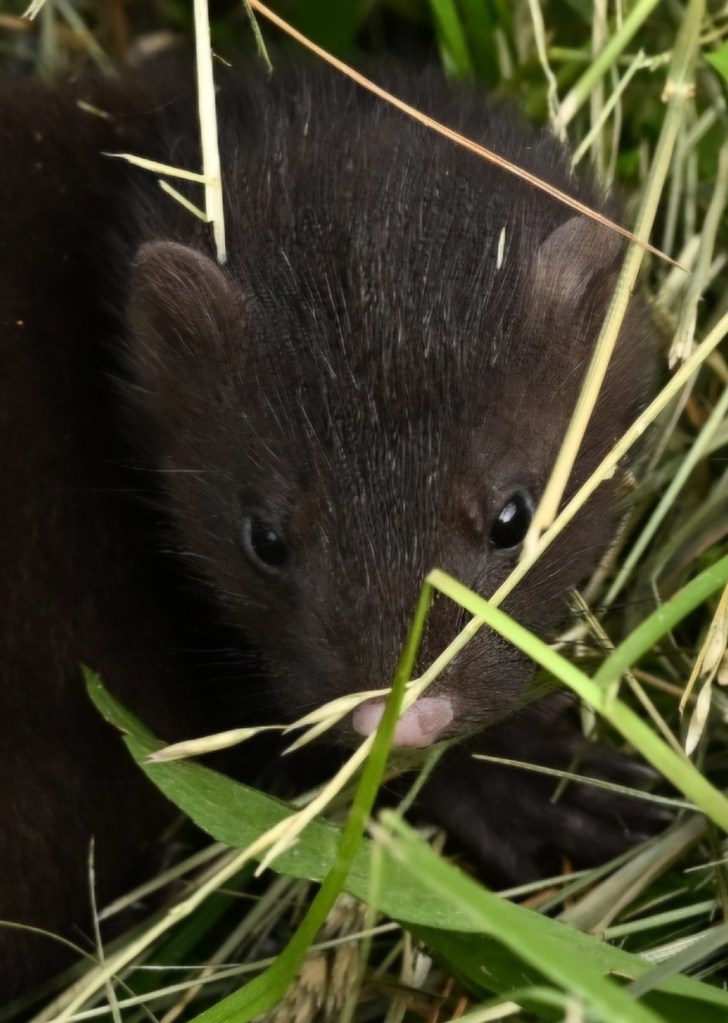
Kevin Murphy
Now that we know Mink is present here this winter, narure walkers can consider this species among several others in examining tracks in the snow by the river.
Sometimes, a Mink uses a bounding, jumping run. The front feet come down together, then the hind feet land in the same spot as the front feet take off again.
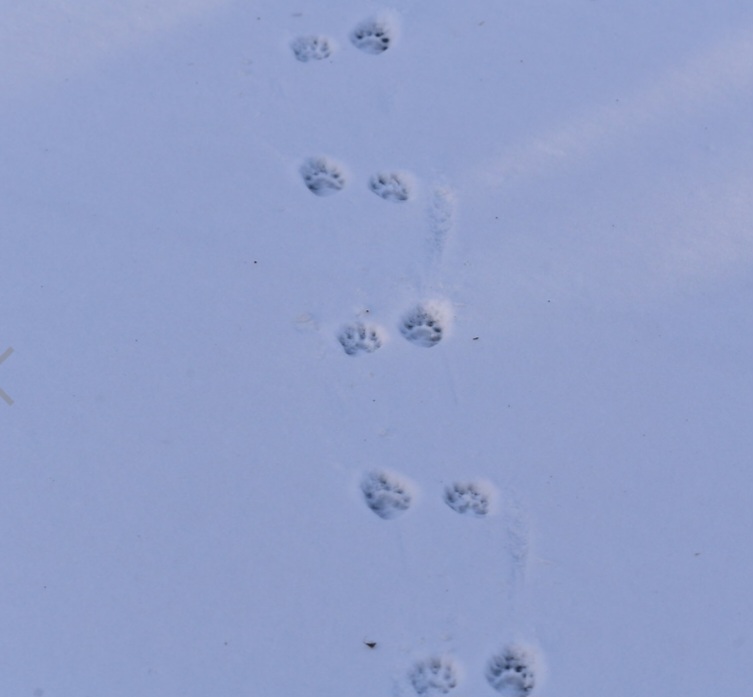
Photo courtesy of Kevin Murphy
It’s a good winter when we have both Beaver and Mink on our minds while walking along the Rouge River in this Detroit park.

 Eliza Howell Nature Walk
Leave a comment