Leonard Weber
January 21, 2025
The number of climbing vines that I have observed growing in Eliza Howell Park continues to grow. It is now 13.
Some are woody, some not. Some climb 50 feet, some only a few feet. Some are native to Michigan; some are not. Some have bright fruit, others don’t. They have different methods by which they climb trees and other plants. The variety is fascinating.
Here is a very limited look at and a brief comment on each, just an invitation to learn more in 2025.
1. Greenbrier.
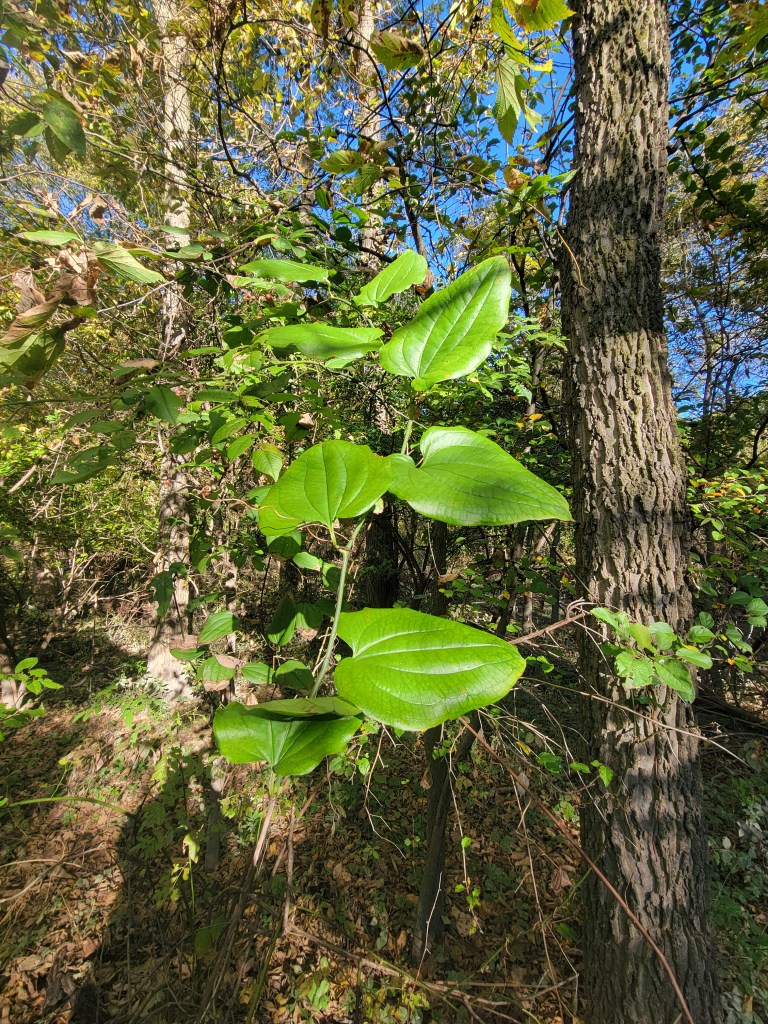
leaves
Greenbrier grows in the understory of the woods, usually fairly close to the river. The lower vines are green and thorny, and the leaves remain green until late in the fall.
2. American Groundnut
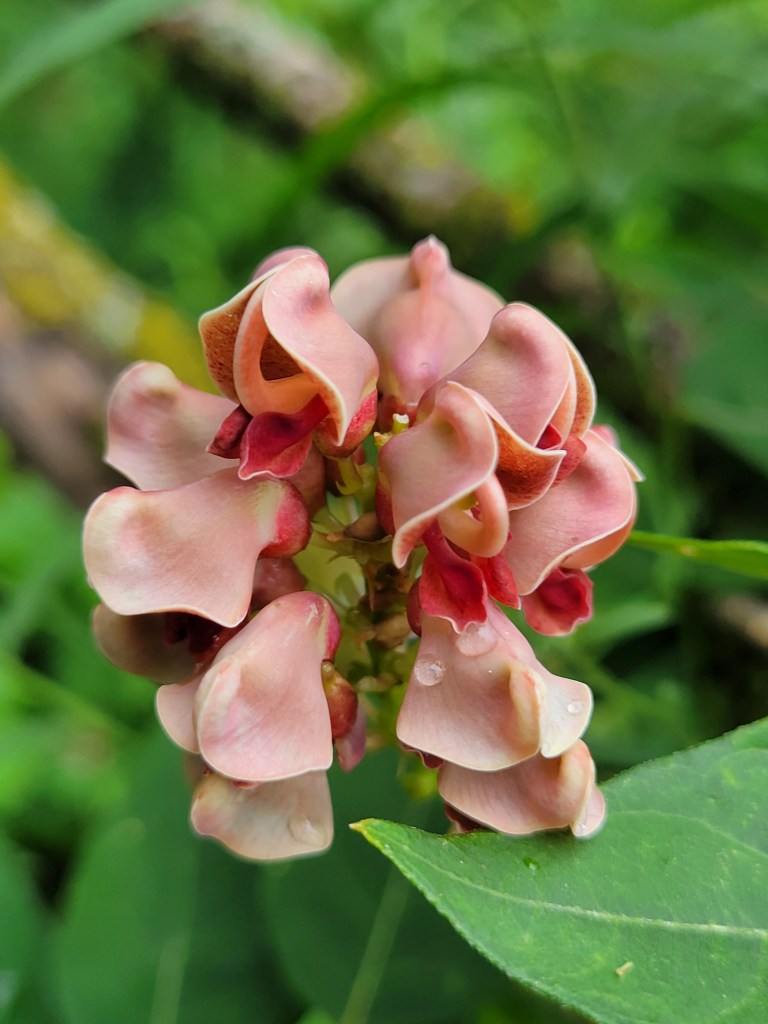
flower
I am aware of only one patch of American Groundnut in the park. Growing among shrubs and climbing them, it is not very noticeable until the flowers bloom in August. Among those who forage for food, American Groundnut is known for its edible tubers.
3. Moonseed
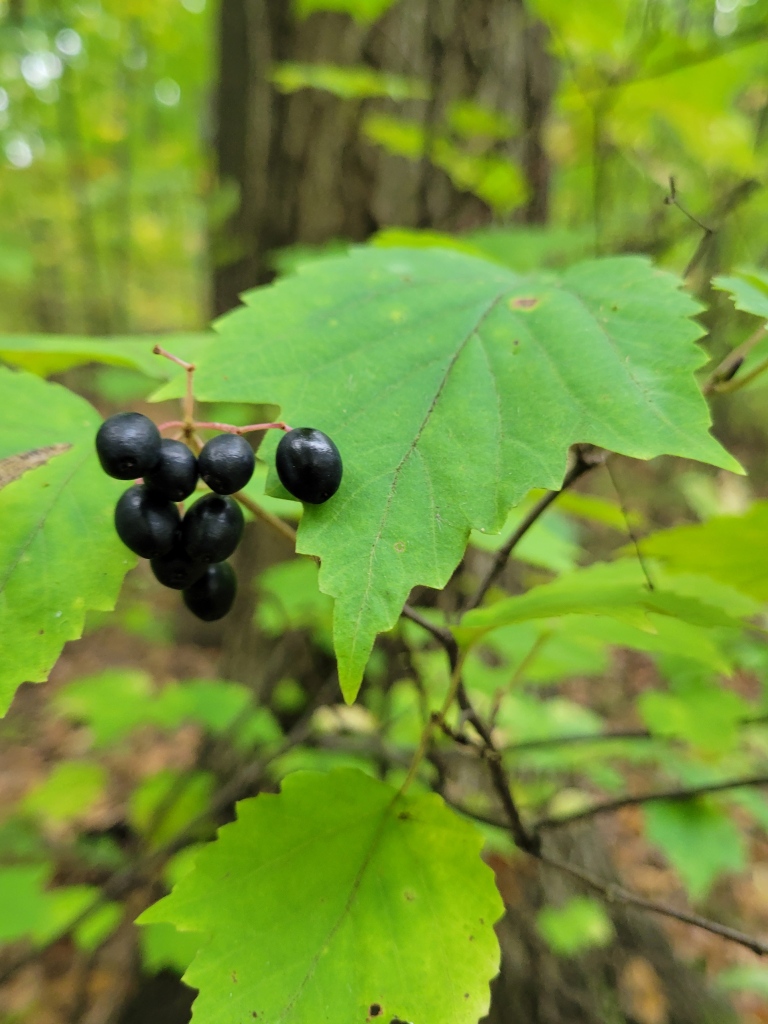
berries and leaves
Moonseed gets its name from the fact that the single seed in each berry is shaped like a crescent. So far, I have seen it in only one area of the park. It climbs small trees by twining. (See the next vine.)
4. Oriental Bittersweet
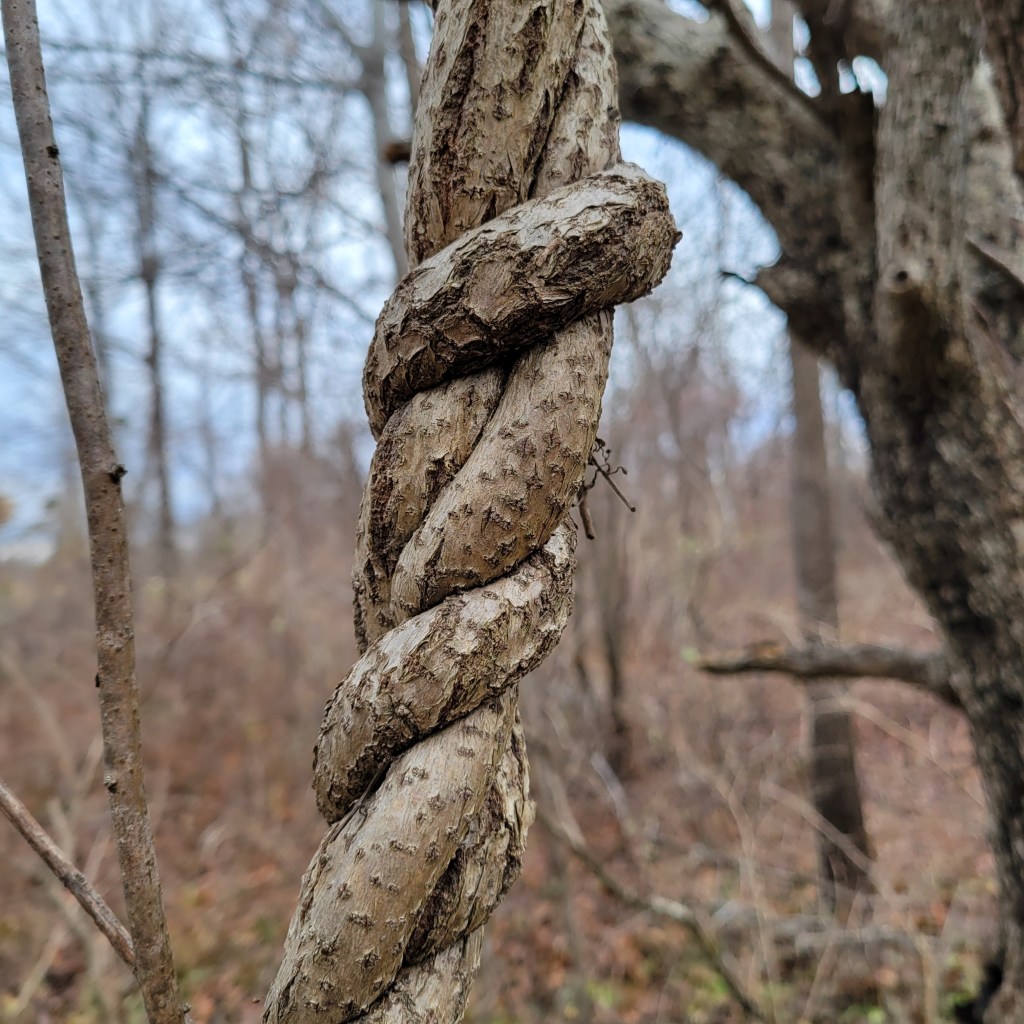
twining vines
Oriental Bittersweet is widespread in Eliza Howell, where it can be found on both small and large trees. It produces abundant fruit.
5. Winter Creeper
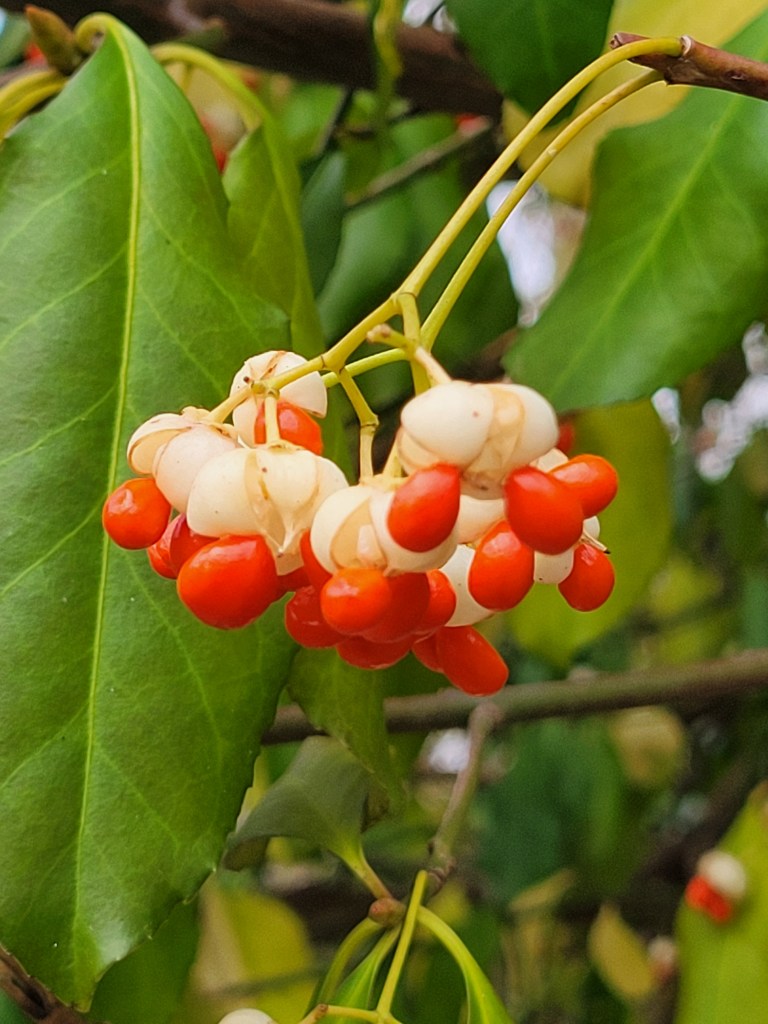
berries and leaves
Winter Creeper is the only one of these 13 vines that is an evergreen. The fruit ripens late in the season, often still on the plant when the first snow comes in late November. It is located in only one area of the park, to my knowledge, where it climbs tree trunks.
6. Wild Grape
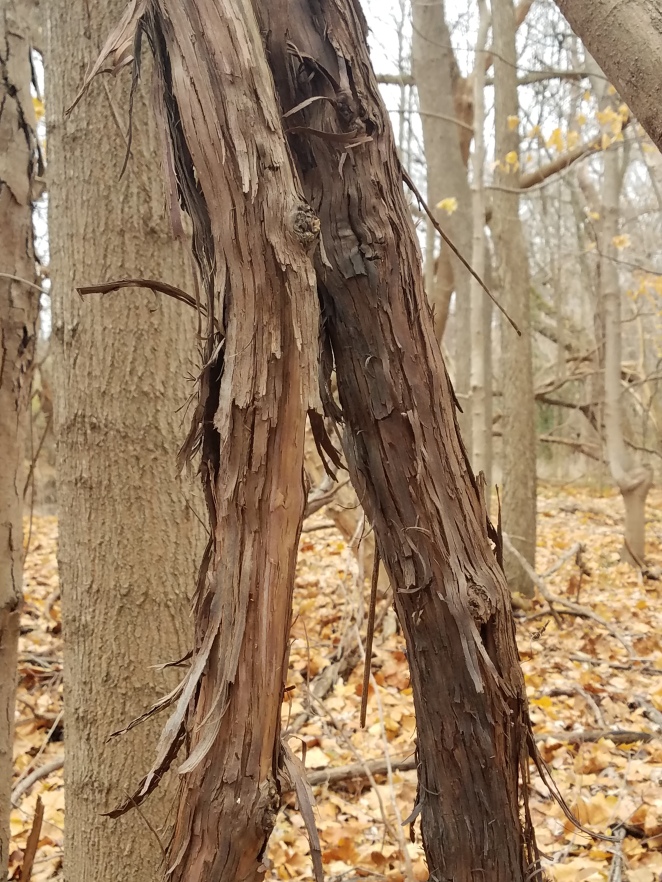
old woody vines
Grape vines reach up very high on some trees in the woods, the large vines characterized by loose bark. The smaller leafy vines can have abundant fruit.
7. Wild Cucumber
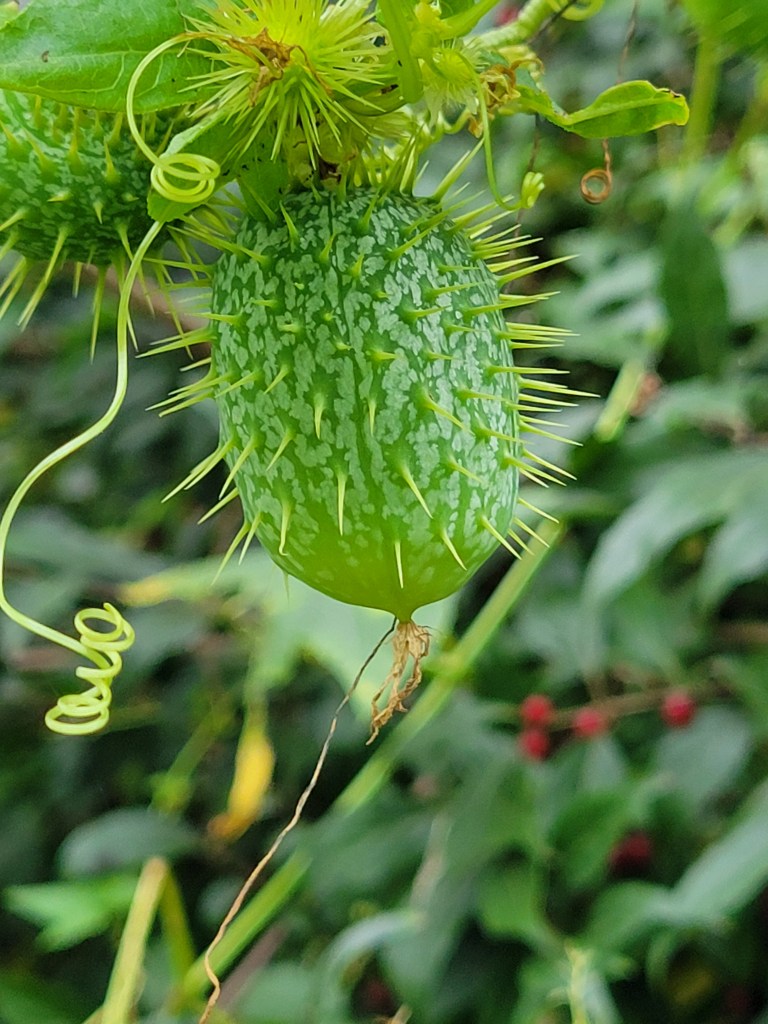
fruit and tendrils
Wild Cucumber is the only annual in this list, starting anew each year. It climbs quickly, using tendrils to attach and climb. The flowers are white.
8. Poison Ivy
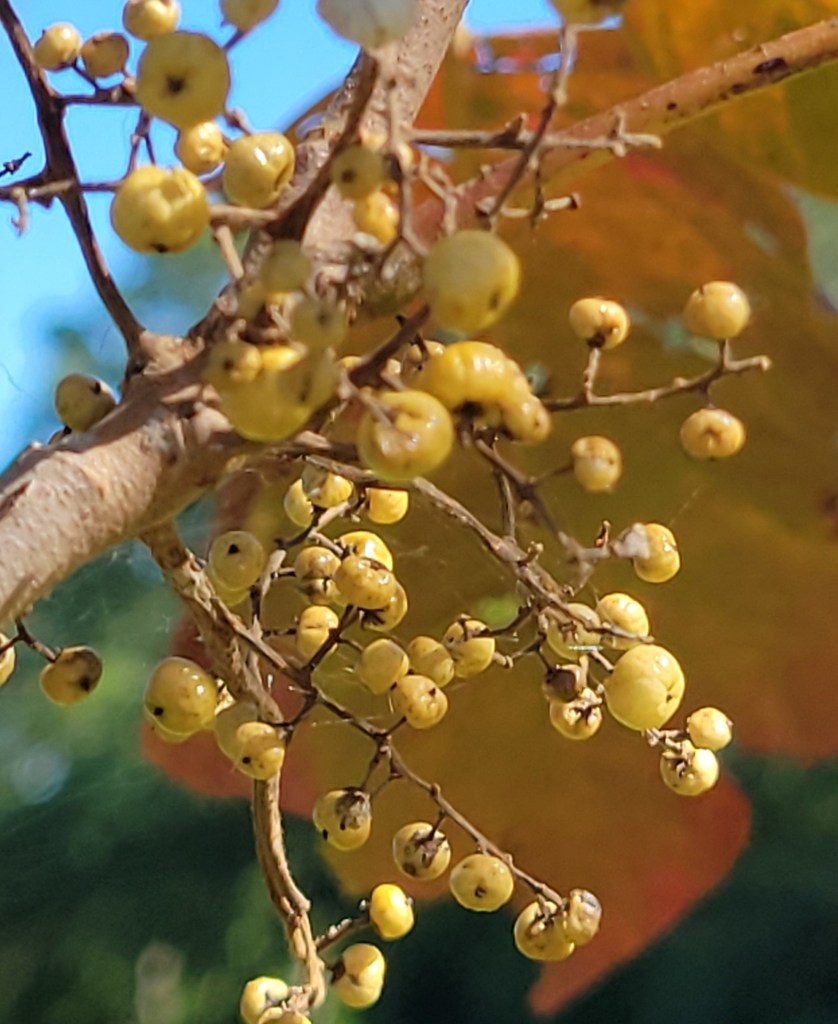
berries
Poison Ivy can be found climbing trees in both the woods and in the more open area of the park where the trees are scattered. The three leaflets are often noted, but it is the fruit that gets the attention of birds.
9. Virginia Creeper

leaves in September
Virginia Creeper is sometimes confused with Poson Ivy, but it has 5 leaflets. It has blue berries, on red stems, in early fall.
10. Climbing False Buckwheat
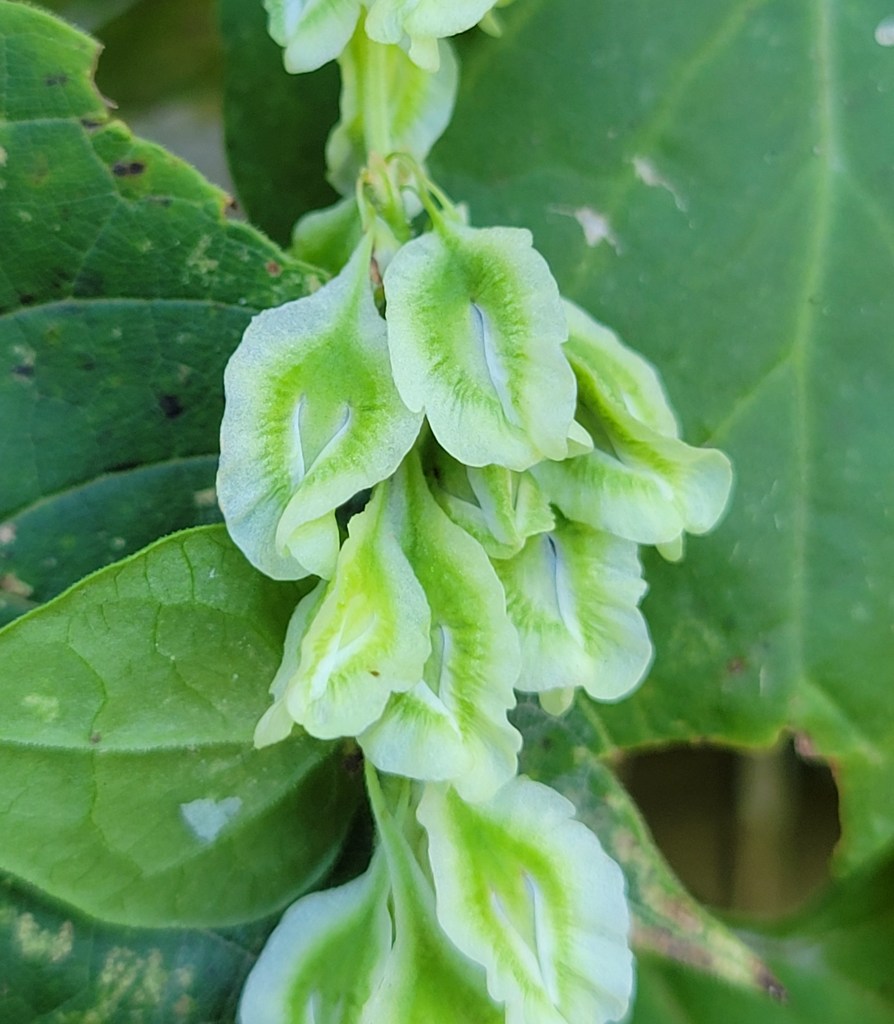
Climbing False Buckwheat seems to drape its vines over shrubs or small trees. It is not common in Eliza Howell Park and is easy to miss.
11. Climbing Nightshade
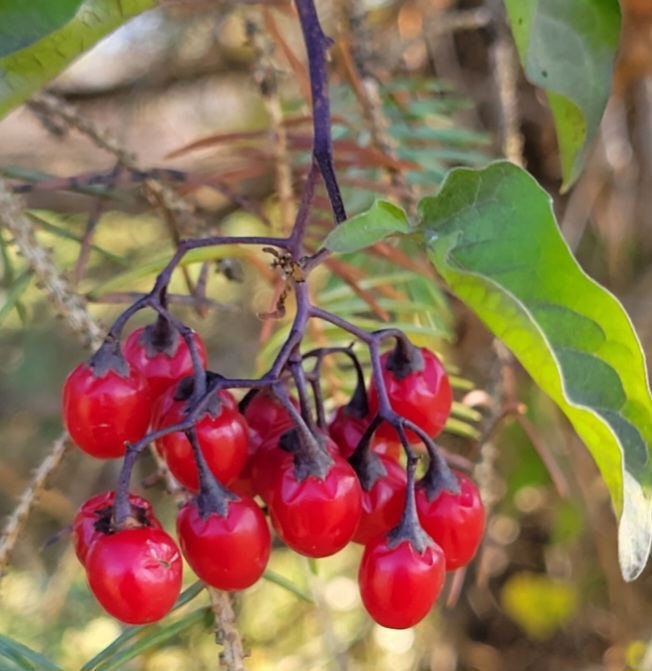
fruit and leaf
I am aware of only one location where Climbing Nightshade grows in the park, under and growing up in a small spruce tree. The berries ripen from green to red.
12. Virgin’s Bower
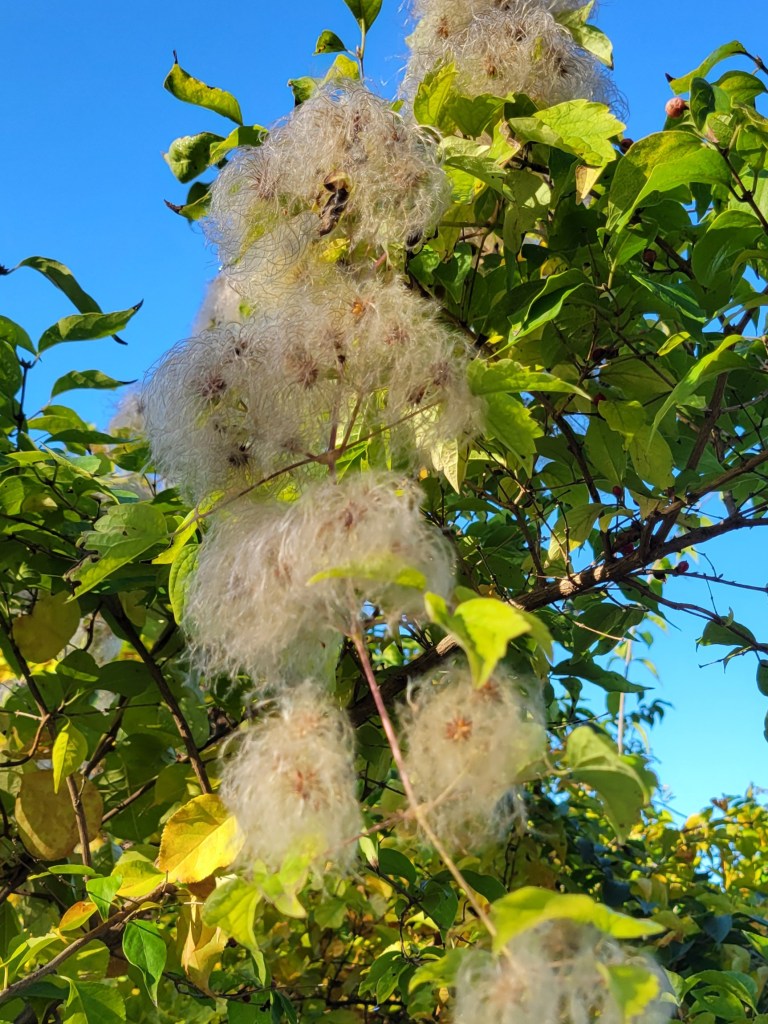
silky seed heads
Virgin’s Bower is a native clematis, one that blooms quite late in the growing year. The seeds are dispersed by wind, and many hang on through October
13. Porcelain Berry
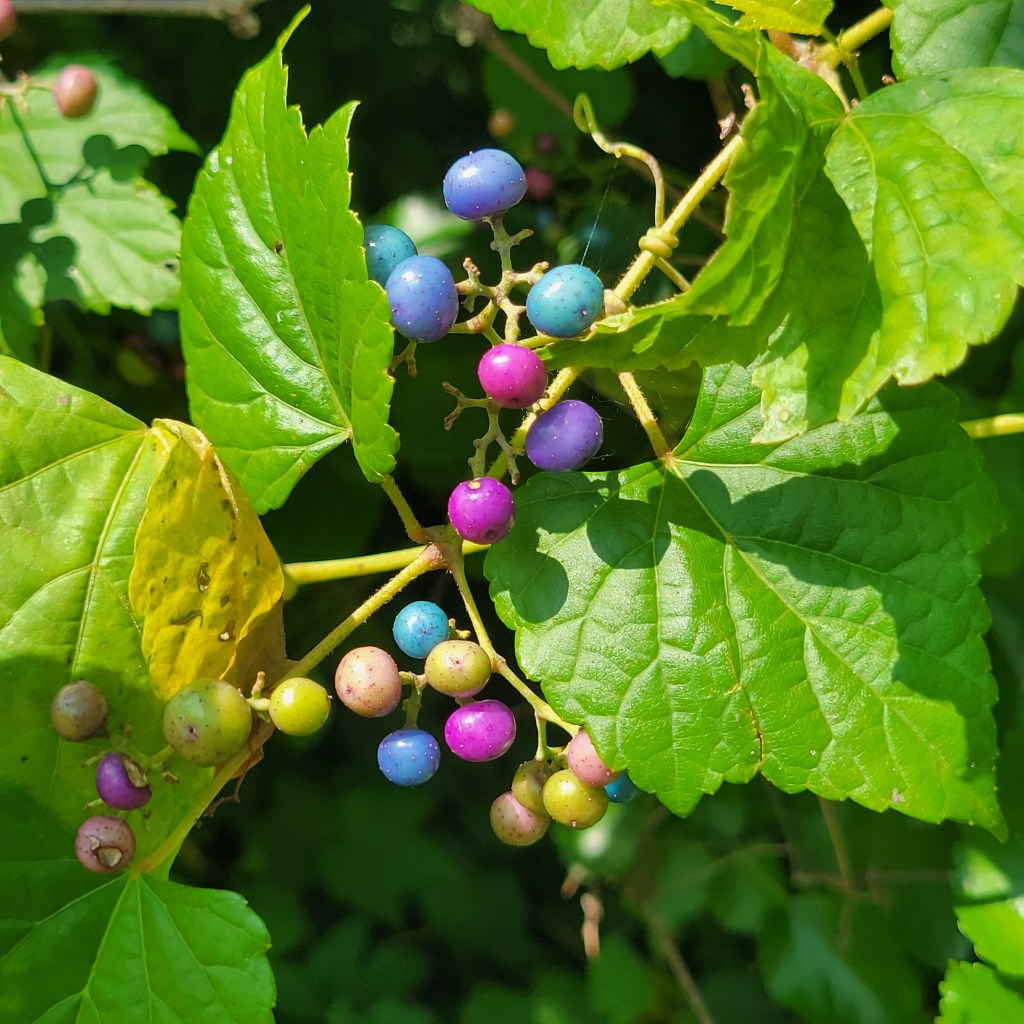
leaves and fruit
Porcelain Berry, in the grape family, is a vine that grows vigorously and can cover smaller trees. The colorful fruit is eaten by many birds.
….
The vines climb by different methods.
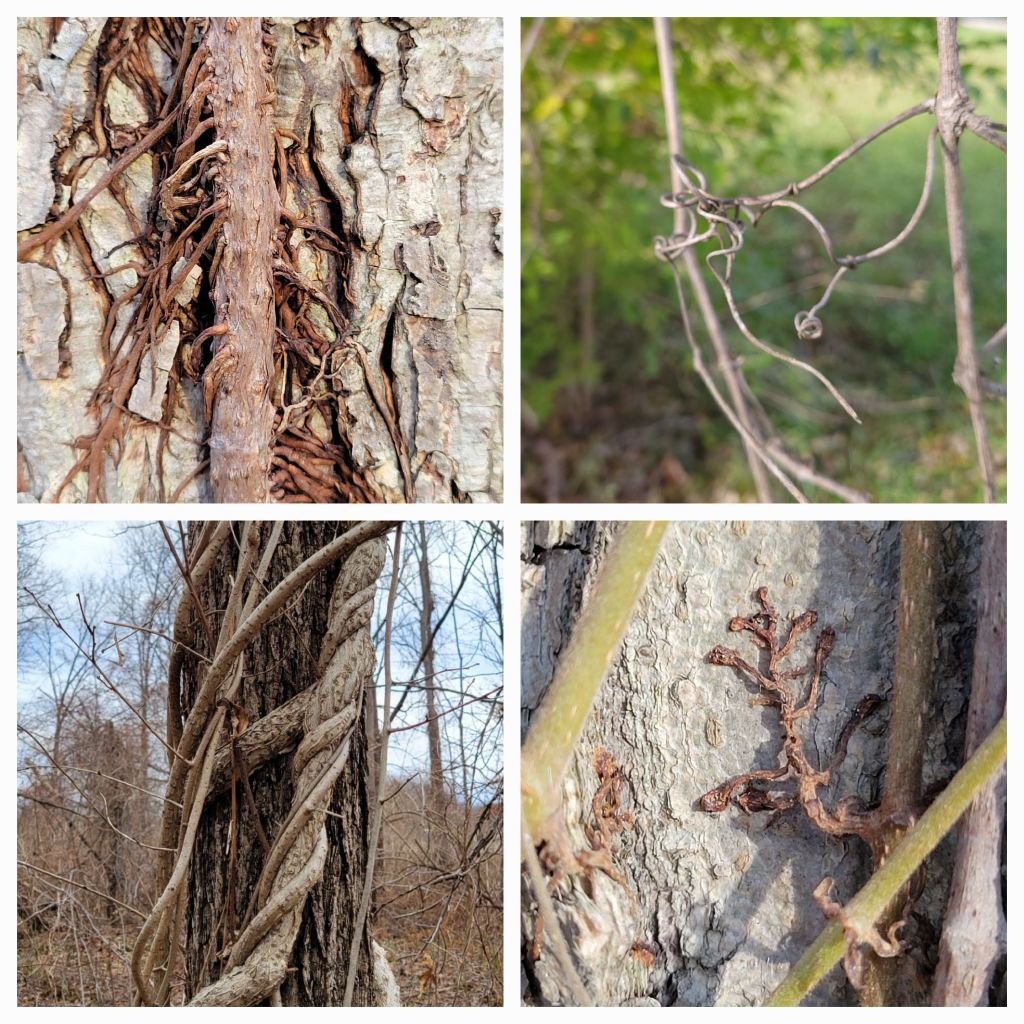
Each of these 13 vines has its own characteristics. I expect to continue stopping for further looks in 2025, to get to know them better.
I wonder what other climbing vines are here that I have not yet discovered.
 Eliza Howell Nature Walk
Leave a comment