Leonard Weber
January 28, 2025
It’s winter in Michigan and, for many birds that spend the winter here, survival is not easy. Knowing how difficult it has been at times to keep myself warm enough during my walks in Eliza Howell Park during the recent cold spell, I have begun to give more attention to the winter survival strategies of different species.
One winter species here is the Black-capped Chickadee, a year-round resident.

Photo courtesy of
Margaret Weber
My typical winter walk takes me over the river and into the woods. The area near the footbridge is a good place to stop to check for bird activity.

I recently spotted a Black-capped Chickadee on a raised log by the walking path.

In their foraging, Chickadees usually move quickly from one location to the next. This one stayed in one spot long enough for me to observe that it had found something to eat.
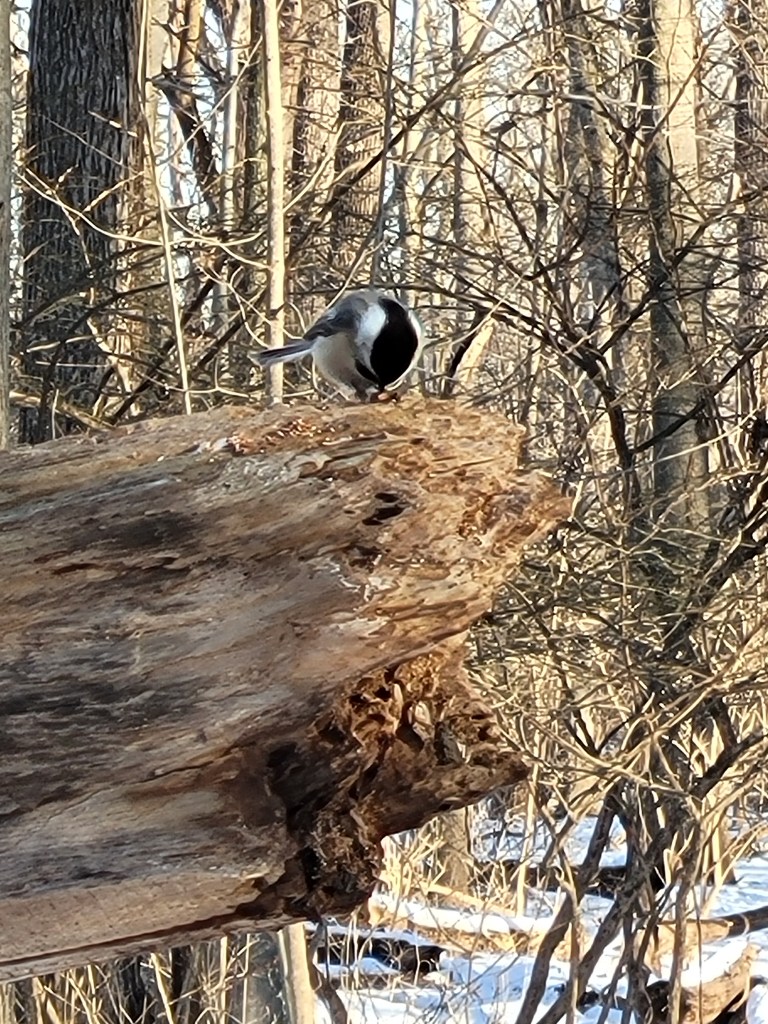
In the winter, Chickadees forage among tree branches looking for spiders and insects (often in the egg or pupa stage). They also eat food that they had previously stored.
Anyone who has watched a bird feeder has probably noticed Black-capped Chickadees grabbing a seed and immediately flying up into a nearby tree. Sometimes, they eat the seed, and sometimes they cache it, perhaps under an edge of bark.
Chickadees have the spatial memory skill that allows them to remember over a thousand different locations where they have stored food for later eating.
While I have long known about Chickadees storing food, I did not know about another winter survival skill until recently.
Black-capped Chickadees usually spend the winter nights in small cavities, by themselves. According to reports, on very cold nights, they conserve energy by significantly lowering their metabolism and body temperature — practicing a form of very short-term hibernation. In the morning, they warm themselves by shivering and then join others for another day in pursuit of sufficient food.

Margaret Weber
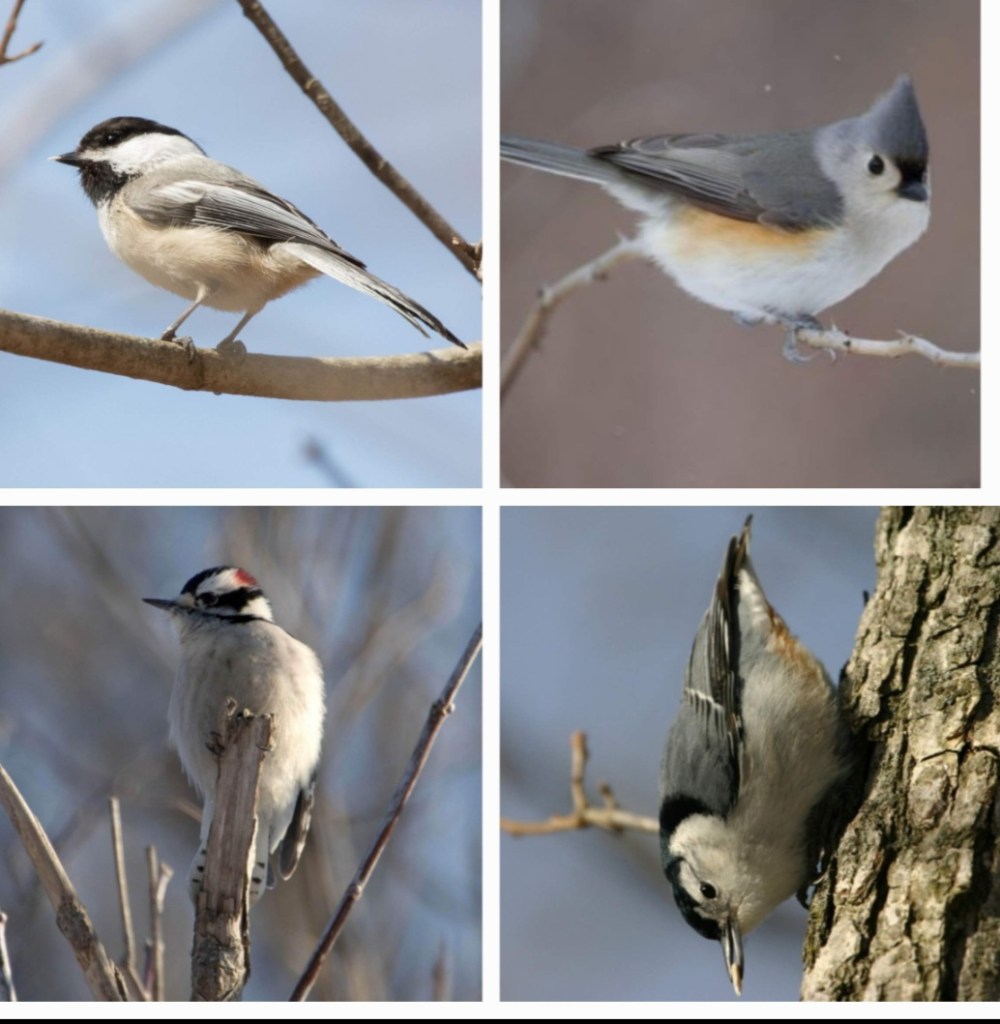
Black-capped Chickadees are often seen in winter in a small mixed-species flock. In addition to the three companions shown in the collage below, the flock of small birds might include Brown Creeper or Golden-crowned Kinglet.
Margaret Weber
In these foraging groups, Chickadees appear to be the leaders. They show up first and seem to determine the direction in which they all move. The other species pay attention to their calls
The Black-capped Chickadee has been a bird of special interest to me over the years in my study of nesting practices. It is fascinating to see this tiny bird excavate or enlarge a nesting site in a dead tree, almost as though it were a woodpecker.

Margaret Weber
Other small non-woodpecker cavity-nesting birds, like nuthatches and titmice, do not take such a constructive role in preparing the nesting site.
Chickadees sometimes choose to nest in bird boxes. When one pair did so in Eliza Howell Park, the nest contained nine eggs.

The Black-capped Chickadee is an energetic bird in all seasons. It is fascinating to see them manage the coldest weather of the year.
 Eliza Howell Nature Walk
Leave a comment