Leonard Weber
February 14, 2025
Ever winter, I stop several (or many) times at moss-covered logs in Eliza Howell Park. I stop to admire and, often, to take pictures. Moss is a plant green in winter.


I have learned over the years that what might look like a smooth uniform green carpet is complex and multicolored when viewed close up or magnified. Photos can assist in this close-up look.


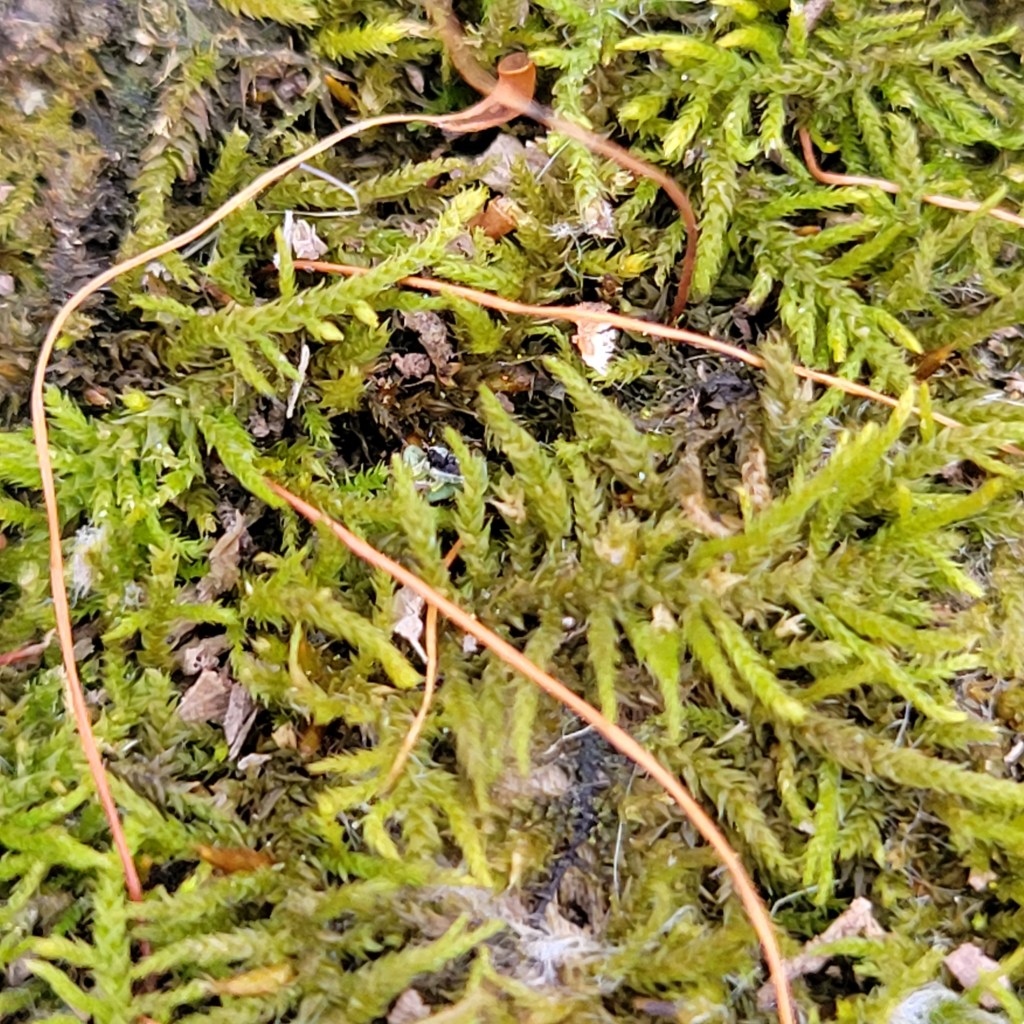
This year, my moss viewing has been enriched by reading GATHERING MOSS by Robin Wall Kimmerer. Kimmerer is a bryologist, the term for one who studies non-vascular plants like mosses and liverworts.

the 22nd printing was in 2024
Kimmerer has the ability to combine scientific information about mosses with stories of her moss-related experiences in different settings and with a sense of appreciation of and respect for this ancient plant.
Mosses are true plants, but they do not have roots, and they do not flower. They have rhizoids, which help them adhere to logs or rocks or soil, but do not provide the plant with moisture and nutrients as roots do. Mosses get moisture from the atmosphere and absorb nutrients through their cells. They thrive in moist environments, which is where I know I can find them in the park.

share a log
Moss is often used by birds in constructing nests.

with a base of moss
There is much to learn about moss, an ancient plant that includes many different species, about 12,000.
Kimmerer is an admirable nature author, in my opinion, because she writes both to describe how moss grows and to communicate her respect and admiration. She communicates a sense of awe and wonder, something that I often feel on my nature walks.

It’s great just to look at moss on logs in winter.

 Eliza Howell Nature Walk
Leave a comment