Leonard Weber
February 20, 2025
This is part 3 of my report on Eastern Screech Owl activity in Eliza Howell Park this winter. (For previous observations, see posts from November 18, 2024, and February 4, 2025.)
As the winter has progressed, I have become increasingly fascinated by the owl’s activity in the park. Most recently, it has provided evidence that Southern Flying Squirrels are residents of Eliza Howell.
I have continued to check Wood Duck nesting boxes from time to time since discovering that they are being used by a Screech Owl both for daytime sleeping and for storing some prey for later eating.
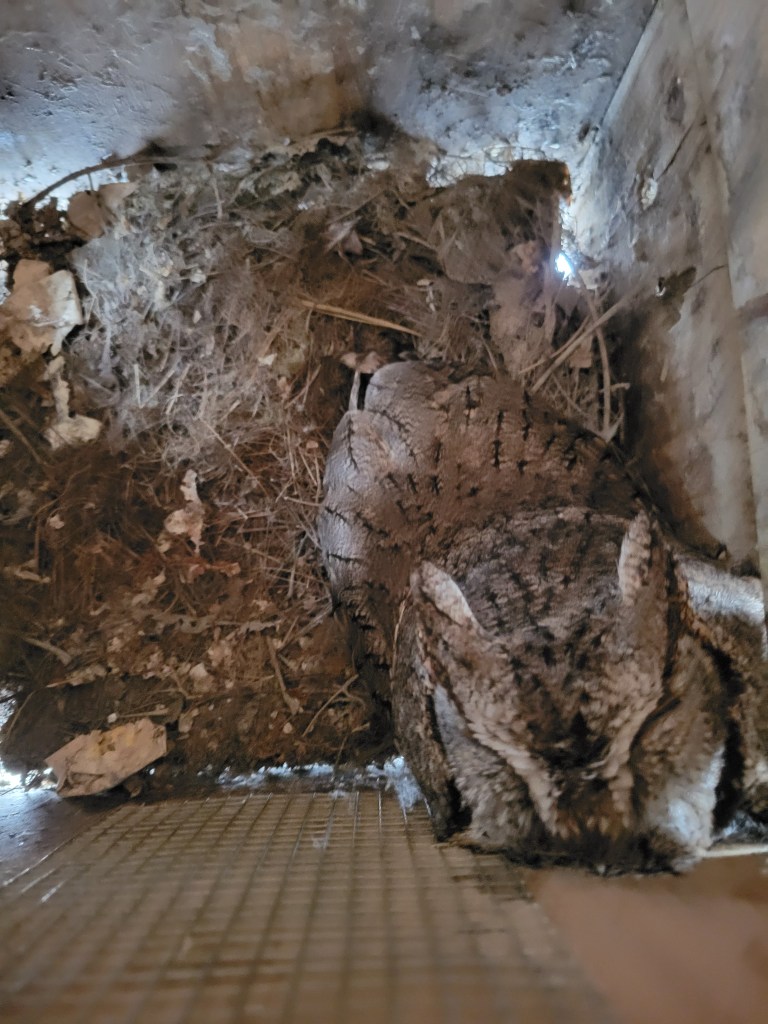
February 12, 2025
Seeing the sleeping owl confirms its ongoing presence, and examining a stored food location provides information about its prey and its hunting / eating practices.
Owls, like other birds, do not have teeth. As they eat, they consume pieces of fur and feathers and bones, which are indigestible. These indigestible fragments get packed together and regurgitated as “pellets.”
On February 12, my colleague Kathleen Garrett and I spotted one such owl pellet in a nesting box being used at times by a Screech Owl.
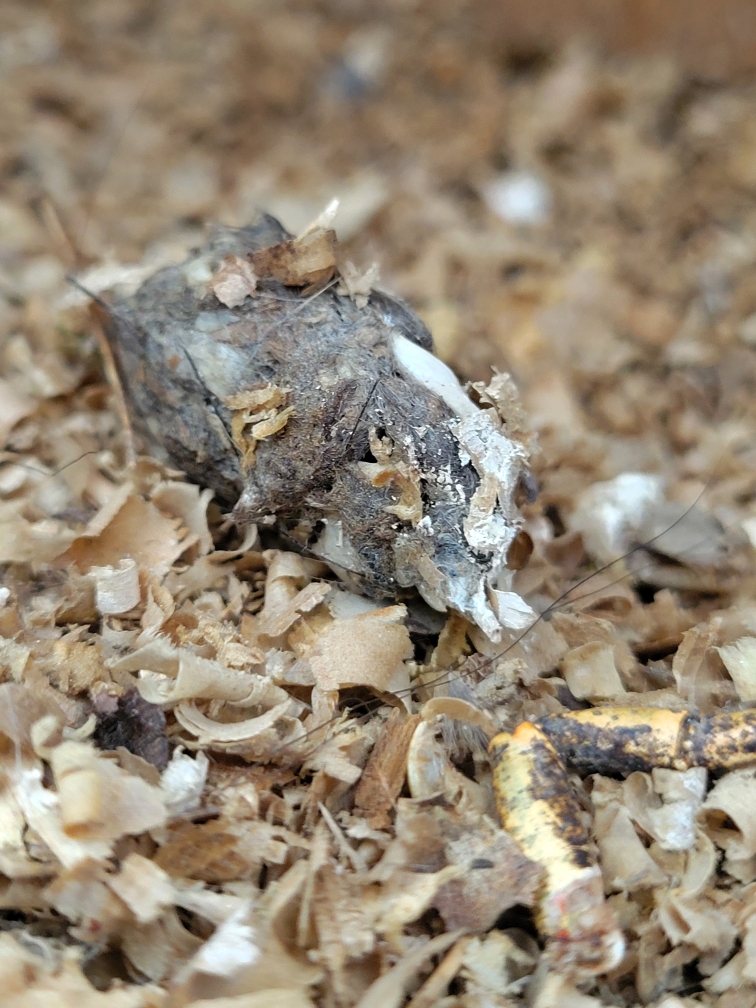
She later dissected it.
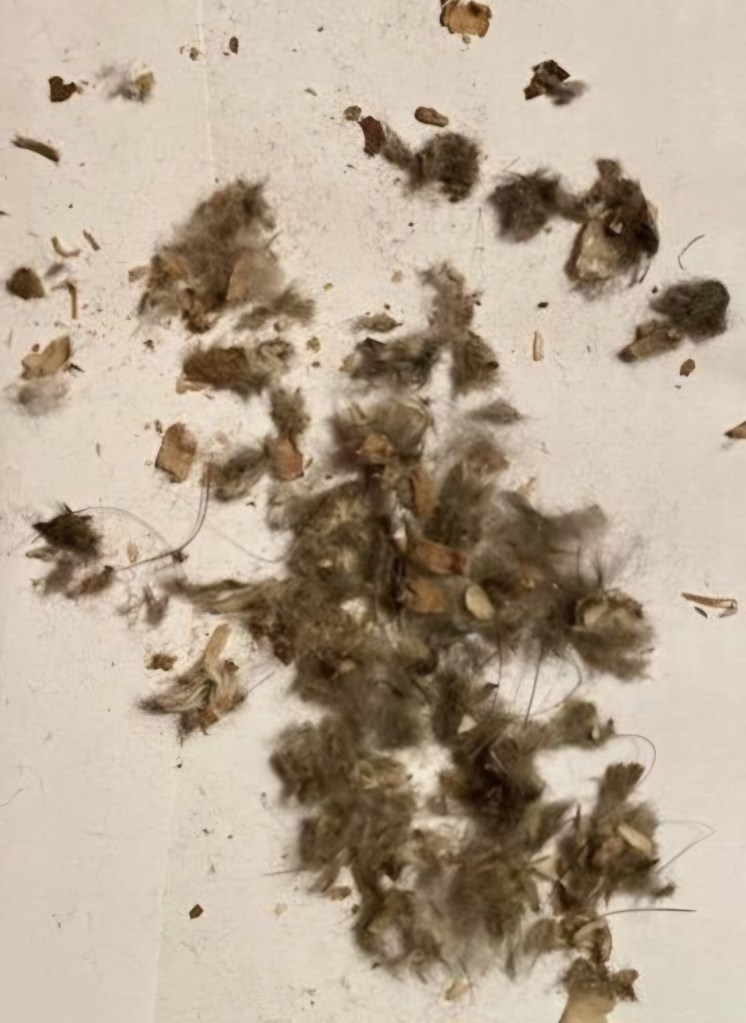
Kathleen Garrett
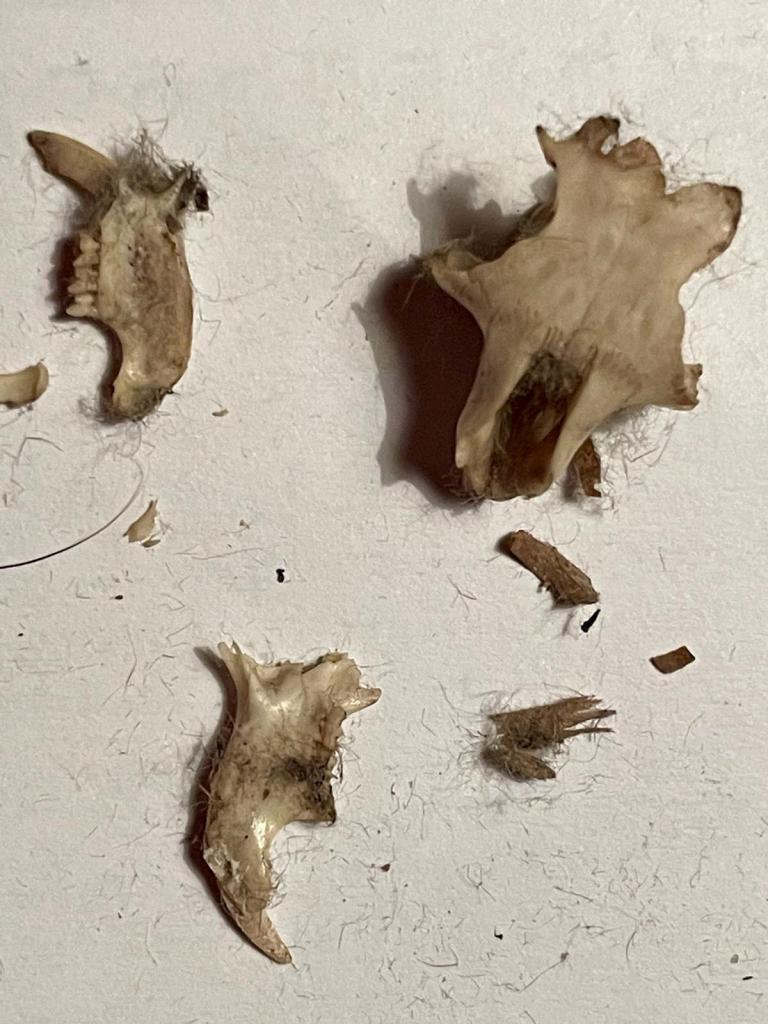
Kathleen Garrett
The pellet’s contents included fur and bones, perhaps from a small rodent.
A few days later, the owl’s food storage box had two carcasses. One looked like a Deer Mouse. The other, a larger mammal, was more difficult to identify since there was neither head nor tail visible.
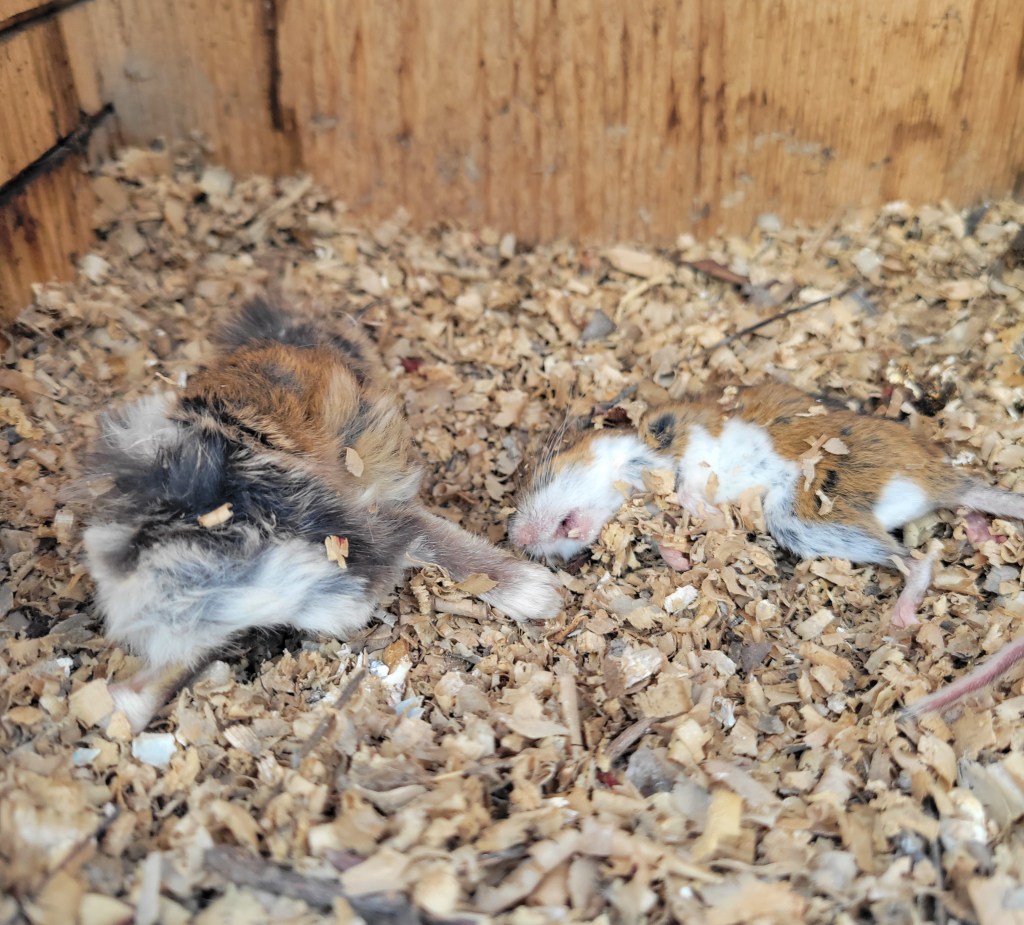
Owls often eat the head of their catch first. A theory (speculation?) is that the head is the most prized and nutritious part of their prey and the owls don’t want to take the chance that it will not be available later.
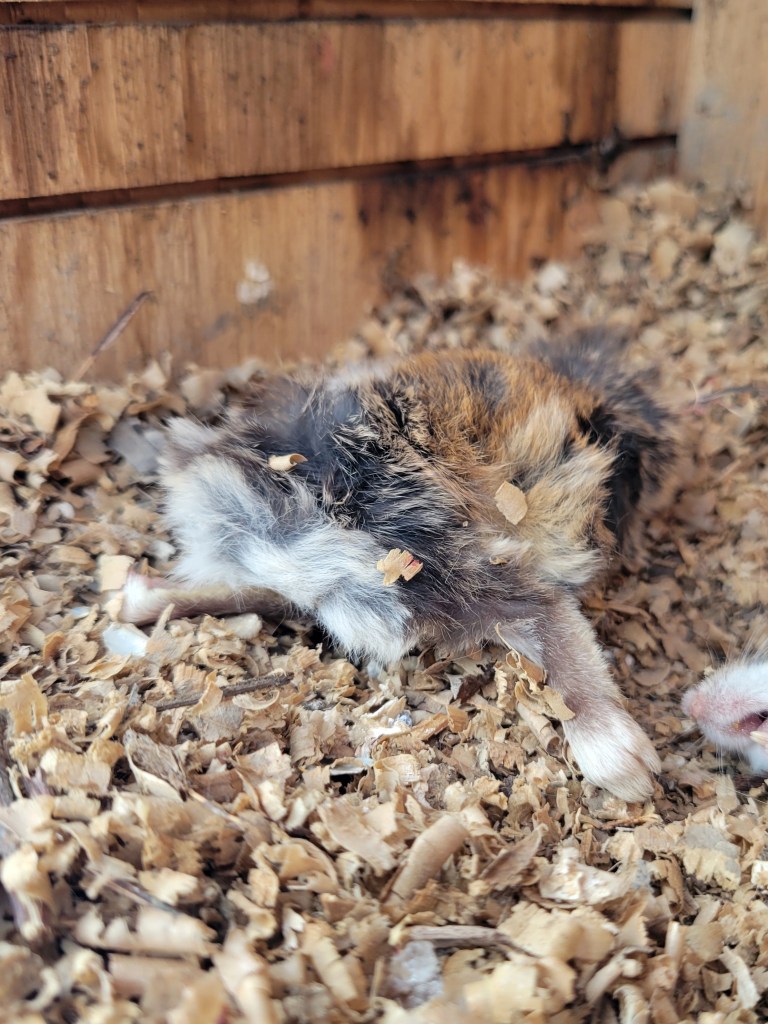
flying squirrel?
After studying this photo — the size of the body and the colors of the fur, particularly the white underneath — I tentatively identified it as a Southern Flying Squirrel. I had never seen one up close, so my visual knowledge was limited.
Flying Squirrels are nocturnal and, while not uncommon in Michigan, are rarely seen. The mature forest of Eliza Howell is a quite suitable environment, though I am not aware that their presence in the park has been confirmed in the past.
Flying Squirrels sometimes spend the coldest parts of winter in groups, even huddling together to stay warm. If I knew this, I was sure the Screech Owl knew this as well. Having caught one, it would likely return to the same area hunting for more. Flying Squirrels frequently forage on the ground, which is where Screech Owls look for most of their prey.
I started checking the owl’s food storage box more frequently, hoping to get another look for better identification.
Two days later, I found what I was looking for. This one, while missing its head, did have a distinctive flat and slim tail. The overall length was about 9 inches or a little more, including the tail, and estimating the size of the missing head. That also fits Southern Flying Squirrel.


I know of no local photographer who has an image of a live Southern Flying Squirrel, so I encourage the reader to look online or in a guidebook to see what the head looks like. Alive, it is often considered “cute.”
The flaps of skin that stretch between the legs of these squirrels allow them to catch air and glide when they launch themselves from trees (the reason they are called “flying”). They “steer” with their legs and tail.
—-
The Eastern Screech Owl has provided excellent opportunities this winter to learn more about what happens after dark in Eliza Howell Park on these cold winter nights. It is fascinating.
 Eliza Howell Nature Walk
Leave a comment