Kathy Garrett
and
Mara Crawford
March 4, 2025
This January, some friends and members of the Detroit Bird Alliance gathered at Eliza Howell Park to identify some tree species that are discernible in winter.

While many trees will maintain their anonymity in winter for most park visitors, some species have distinct markers in their leaves, seeds, or bark, even in winter.
One arboviral park resident that is identifiable by its leaves during winter is the Turkey Oak. It is a white oak whose distinctive leaves stay attached for most of the winter months. When leaves hang on to their leaves all winter, it’s called marcescence.

Young Beech trees are noticeable because they retain their rust-colored leaves during winter.

Nearby is this older Beech with its distinctly smooth bark.

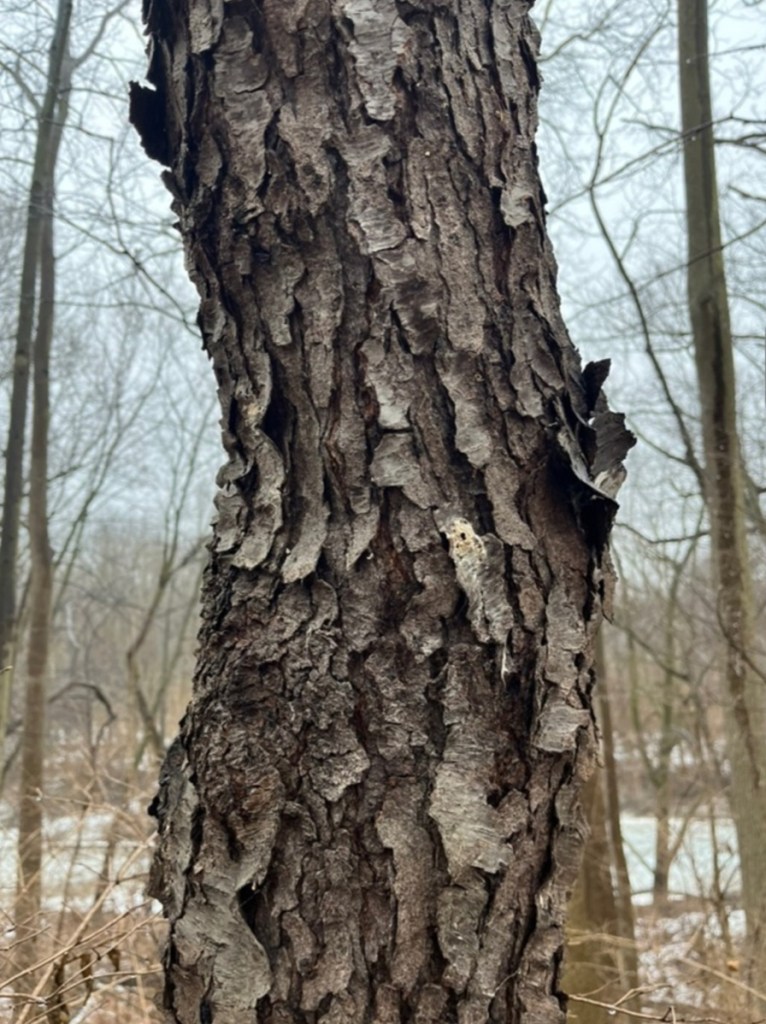
The Black Cherry tree has distinctive bark that is significantly darker and flakier than most of its neighbors
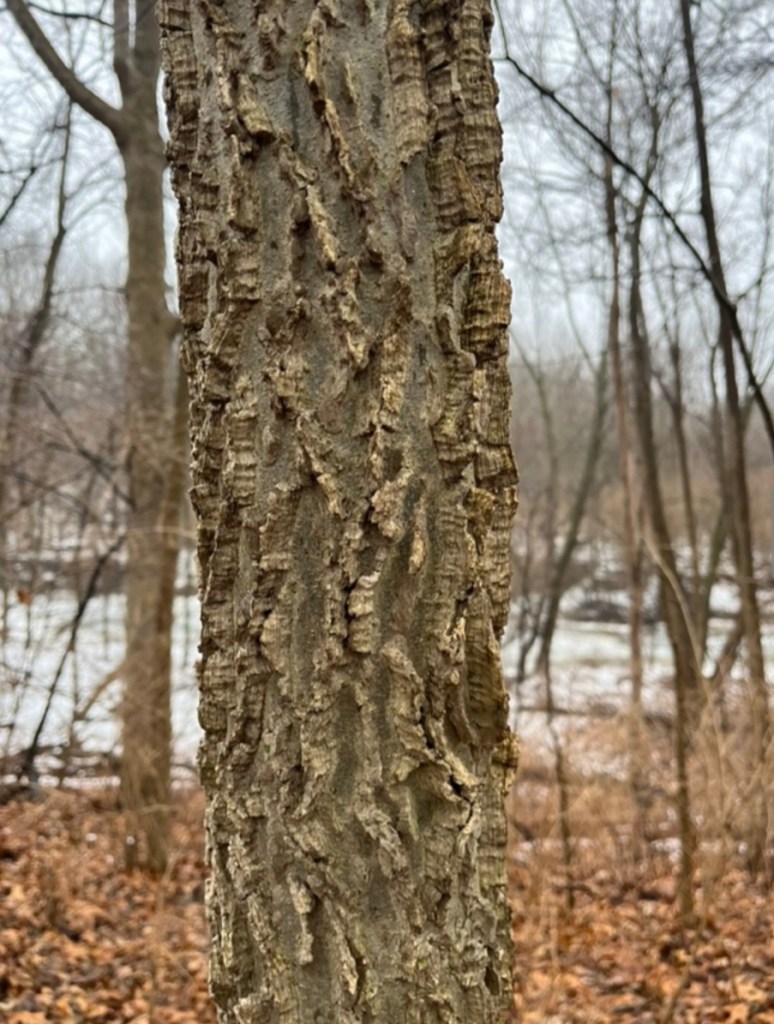
Hackberry trees can be identified by their sharp ridges of layered bark that cover the trunk of the tree.
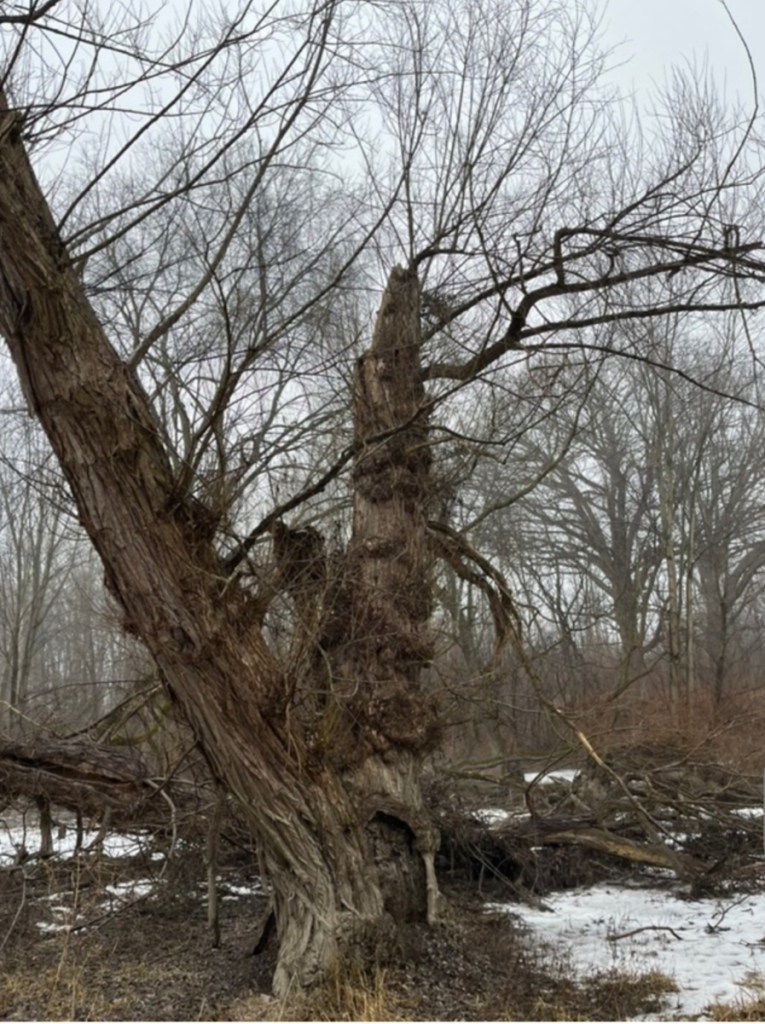
Older Black Willows in the park often have patches on their trunks where lots of new branches are growing. Willow trees have adventitious buds that grow on the roots and trunk. These buds turn into new growth when a tree is pruned or damaged, giving them a distinct look.
The dense clusters of the Box Elder’s samara seeds stand out against a snowy forest floor, making it easy to identify even in winter.

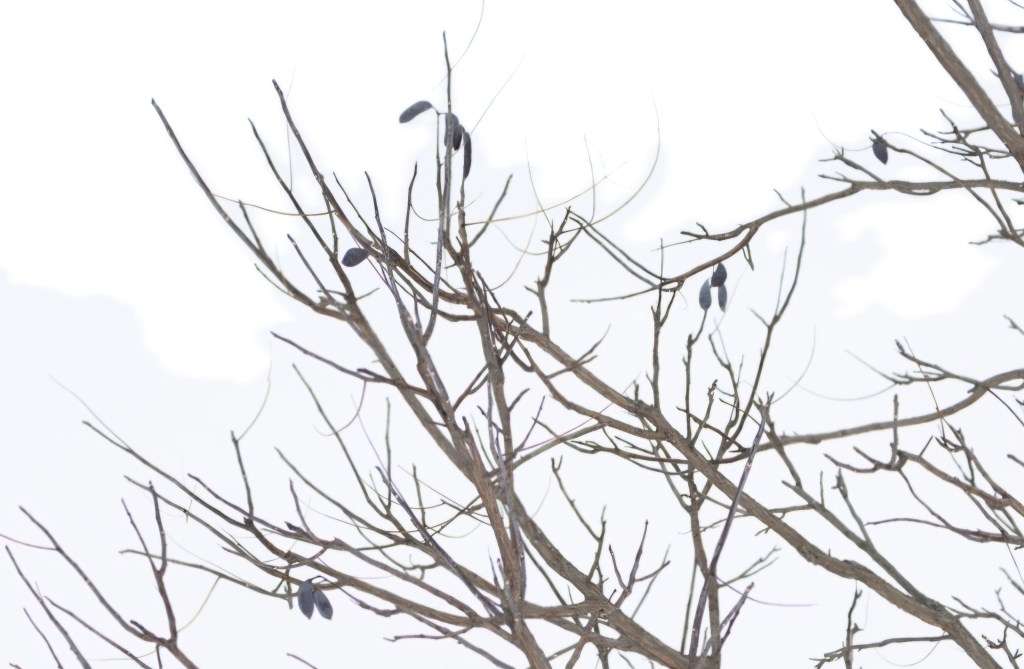
Kentucky Coffee Trees have very distinct seed pods, if you can find them. They do not fall until spring.
Leaf buds are present on trees throughout winter. Some trees are easily identified by these buds if you can get close enough to examine them. These leaf buds are from a Norway Maple whose branches are low enough to see.

Sugar Maple leaf buds are distinctly different. The trees in the woods are harder to identify by their leaf buds as they are on branches far out of reach.

One of the easiest ways to identify trees in winter is to familiarize yourself with their leaves and fruits (if visible) in the warmer months. Regularly visiting Eliza Howell Park is a great way to get to know the trees.
 Eliza Howell Nature Walk
Leave a comment