Leonard Weber
March 14, 2025
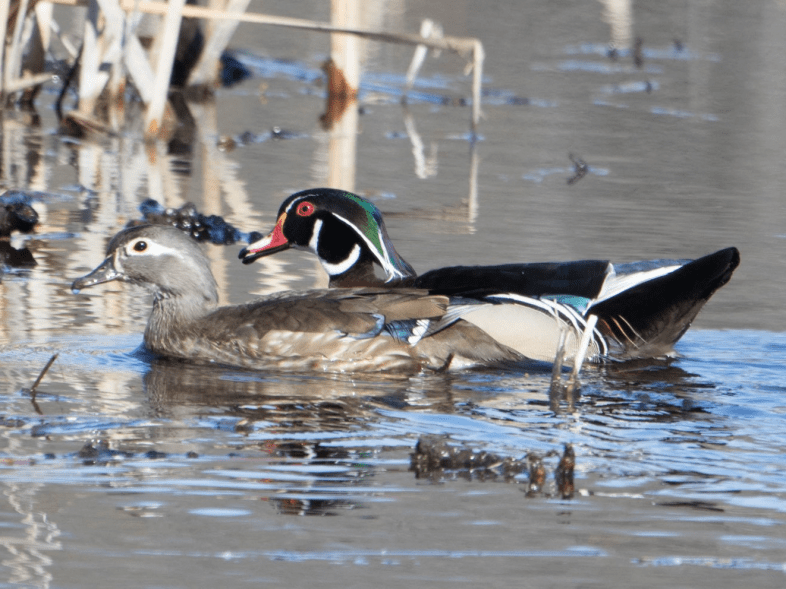
I have been keeping records of the bird species observed in Eliza Howell Park since January 2005. This is the 21st year, and on Match 7 this year, I saw a pair of Wood Ducks for the 21st consecutive March.
Margaret Weber
It’s hard not to like Wood Ducks. They are eye-catching; they have fascinating nesting practices; they are an added attraction to early spring in the park.
Wood Ducks are occasionally found in southern Michigan in the winter, but only occasionally, in locations where the water doesn’t freeze.
When they start to return in early March, they have already formed breeding pairs. A pair can sometimes be spotted on the river if one is looking, but it is not easy to get a good look. They are wary of humans, quickly flying off as one approaches. The female can often be heard calling a distressed sounding “oo-eek, oo-eek” as two dark-looking birds fly low over the river.

Photo courtesy of
Margaret Weber
Perhaps because our first knowledge of ducks is of ground-nesting species like Mallard, we are often surprised when we learn that some duck species nest in cavities in trees. Wood Duck is a cavity-nesting species.
Someone watching carefully close to the Rouge River early on a spring morning might see a pair of ducks up in trees, as the male acconpanies the female as she checks out different possible nesting locations. They often nest quite high in a natural tree hollow, but sometimes they find a seven-foot high birdbox (an artificial tree cavity) quite acceptable.

Wood Duck
The female typically lays one egg a day until the clutch is complete (the eggs usually number from 6 – 12). Incubation begins when all the eggs are laid and lasts about a month. It is all done by the female.
The nest is lined with down feathere plucked from the mother’s breast.

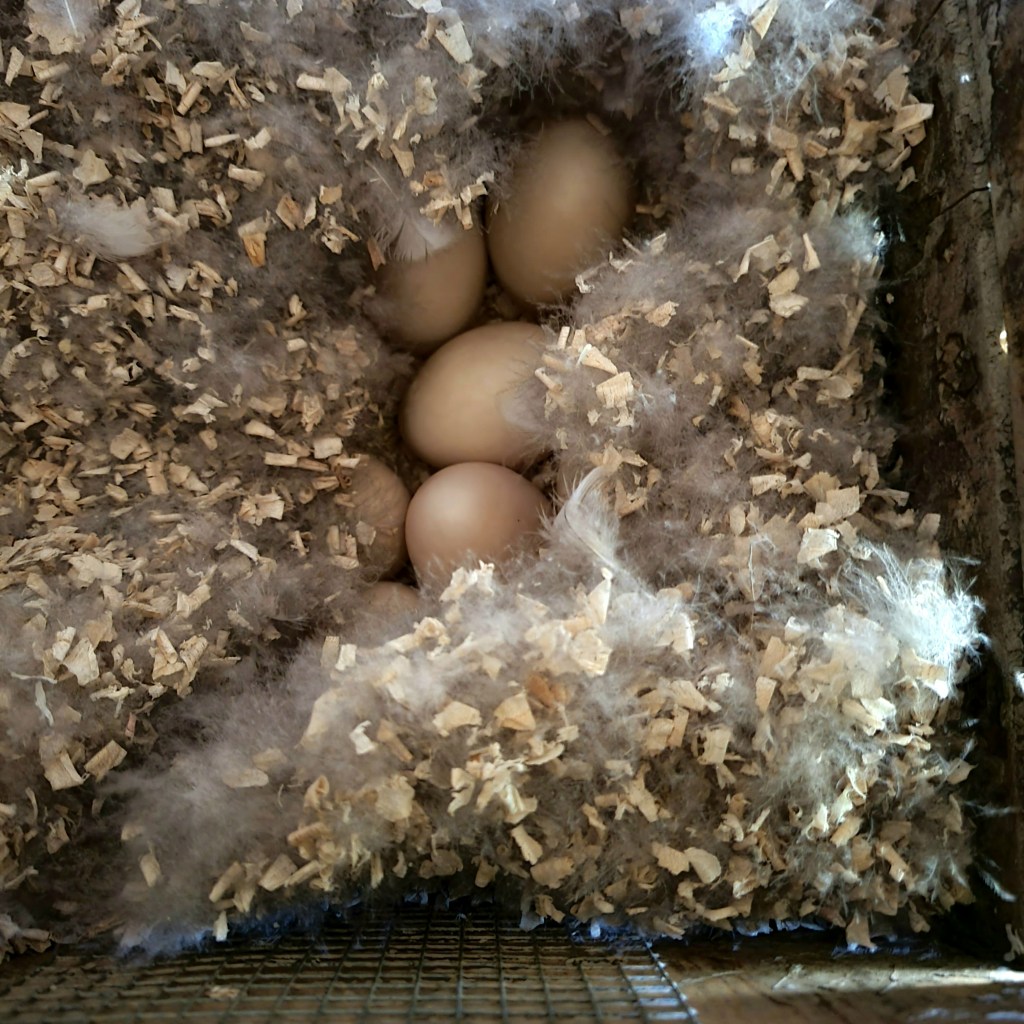
Once incubation begins, the male is no longer involved in parenting. In addition to doing all the incubating, the female cares for the young by herself after they hatch.
While the young of some bird species emerge from the egg naked and helpless, Wood Duck young are among those (often termed “precocial”) who are much further along. They have feathers, are able to walk and swim, and can feed themselves.
About one day after they hatch, at the mother’s call, the young use their clawed feet to climb up the inside of the cavity to the entrance — and jump out. Even when the jump is from 50 feet up, they are uninjured and ready to follow the mother to the water.
The young stay with the mother for the next 6 weeks or so.

The mother keeps the young mostly at the edge of the river or in shallow little bodies of water, such as a vernal pool. Their diet varies, usually including both insects and plant-based food like seeds.

Photo courtesy of
Margaret Weber
The male, the drake, is so striking that few other species compare. The female, the hen, manages the roles of laying the eggs, hatching them, and trying to keep the young safe. The precocial young are ready to jump out of the nest and feed themselves at the age of one day.
It’s quite a species to watch! I am thrilled every March when they return for the breeding season. They are now back in Eliza Howell Park.
 Eliza Howell Nature Walk
Leave a comment