Leonard Weber
April 21, 2025
Birds that breed in North America and winter in the “new world” tropics (Central / South Anerica and Mexico) are often called neotropical migrants. They migrate long distances and will be arriving soon in our area on their way to their 2025 breeding grounds.
Among the many species of neotropicals are warblers, a large family of small, often colorful, birds that include over 30 species that can be found in Michigan annually.
Here are some examples.

Cape May Warbler. Photos courtesy of Margaret Weber
A number of warblers appear in Detroit’s Eliza Howell Park in the spring, though the exact number that stop here on their northward migration varies from year to year. The first ones will start arriving before the end of April, with their spring migration peaking in the first ten days to two weeks of May.
Below are 8 warbler species that are likely to be seen in the park during spring migration (though not on every visit).
1. Yellow-rumped Warbler

Photo courtesy of
Margaret Weber
Yellow-rumped Warbler is perhaps the most common warbler in spring migration here and is almost always the earliest to appear. They do not remain in this area to breed, passing through to their nesting area further north.
In 2025, Yellow-rumped Warbler is again the first to be seen, the first one spotted on April 21.
2. Palm Warbler
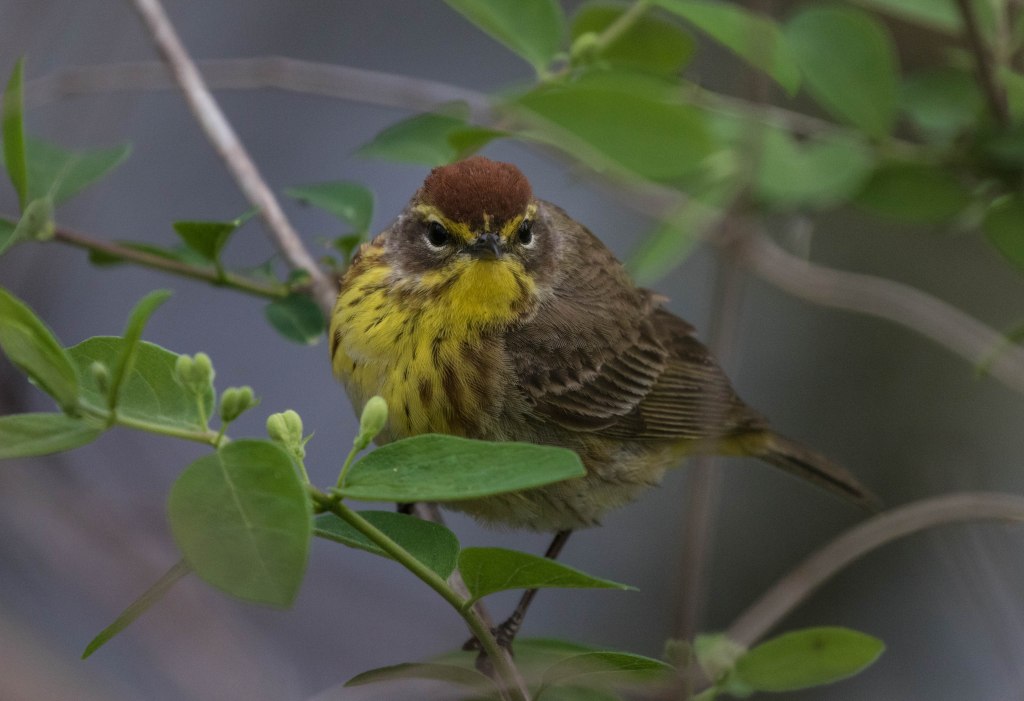
Photo courtesy of
Margaret Weber
Palm Warbler is another that is likely to be seen in April. Their migration is very long; most of them are headed to the boreal forests of Canada to breed.
Palm Warbler can sometimes be recognized by its tail bobbing.
3. Nashville Warbler

Photo courtesy of
Margaret Weber
Nashville Warbler has a misleading name. It appears in or near Nashville only in migration; it has no special connection to the city. It is often seen relatively close to the ground.
4. Black-and-white Warbler
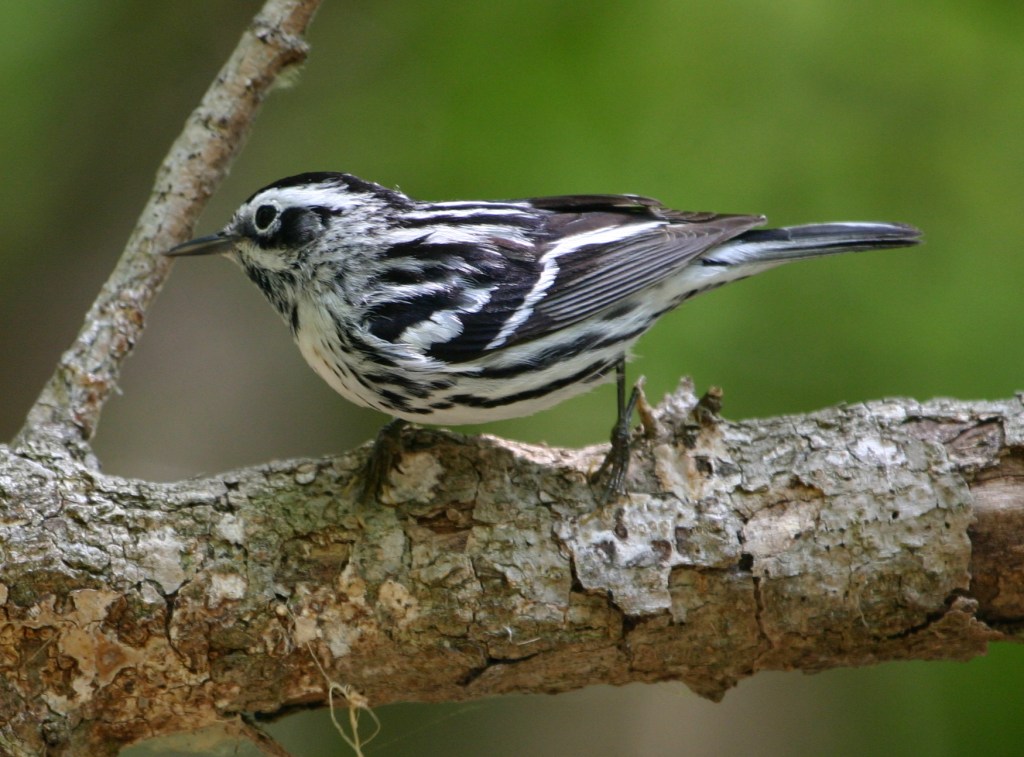
Photo courtesy of
Margaret Weber
This warbler’s behavior is a little different from that of other warblers. It is usually seen creeping along on larger limbs and trunks of trees, while other warblers typically forage among small limbs and leaves.
5. American Redstart

Photo courtesy of
Margaret Weber
The male American Redstart is mostly black with red-orange patches. The female is more gray above, white below, with yellow wing and tail patches. The breeding range includes southern Michigan, though I am not aware of any nesting in the park in recent years.
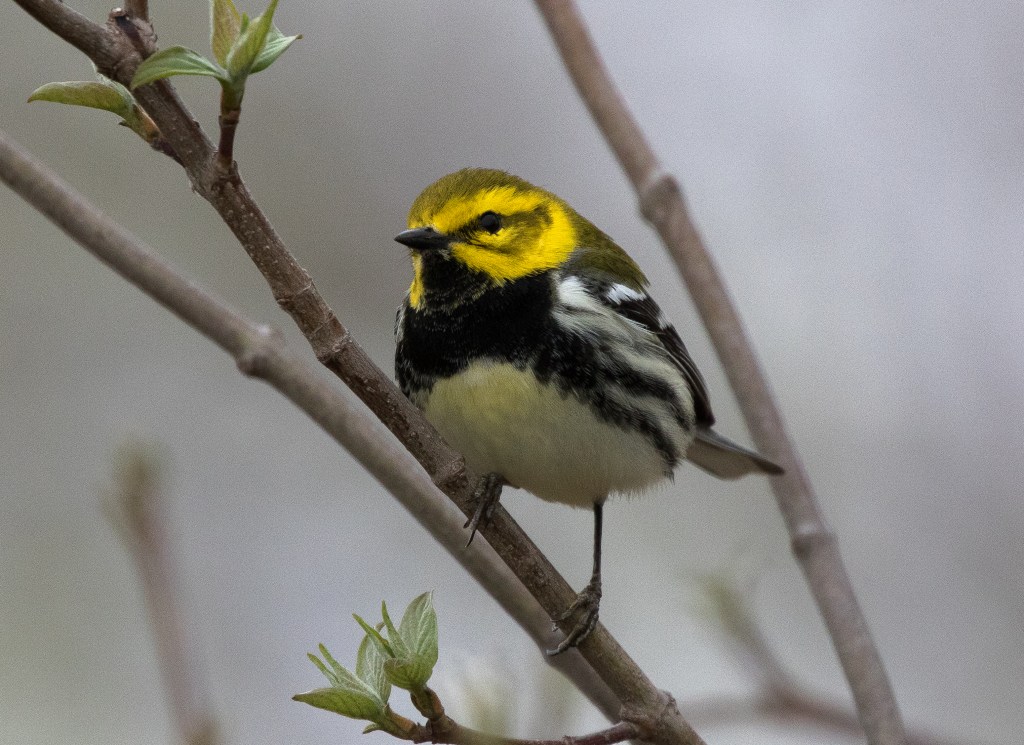
6. Black-throated Green Warbler
Margaret Weber
This is a warbler that is often high in tall trees. The most distinctive feature is the yellow face. In females, the throat is mostly white.
7. Yellow Warbler

Photo courtesy of
Margaret Weber
While many warblers have some yellow, this is the species that is named after the color. Yellow Warbler is the only warbler that I have found nesting in the park in my years of nature walks here.
8. Northern Parula

Photo courtesy of
Margaret Weber
Northern Parula is small, even for a warbler. Though it can be seen in Eliza Howell Park almost every spring, it is never in large numbers. Its small numbers, plus the distinctive colors, mean that seeing one is always exciting.
—
For many bird watchers, spring migration is the most exciting time of the year, and warblers are the most exciting part of spring migration. Because the warblers are only around for a few days each year and because there are so many species, getting to know them can be difficult.
A good recommendation is to get to know a few at a time. In Eliza Howell Park, these 8 might be a good start.
 Eliza Howell Nature Walk
Leave a comment