Leonard Weber
May 7, 2025
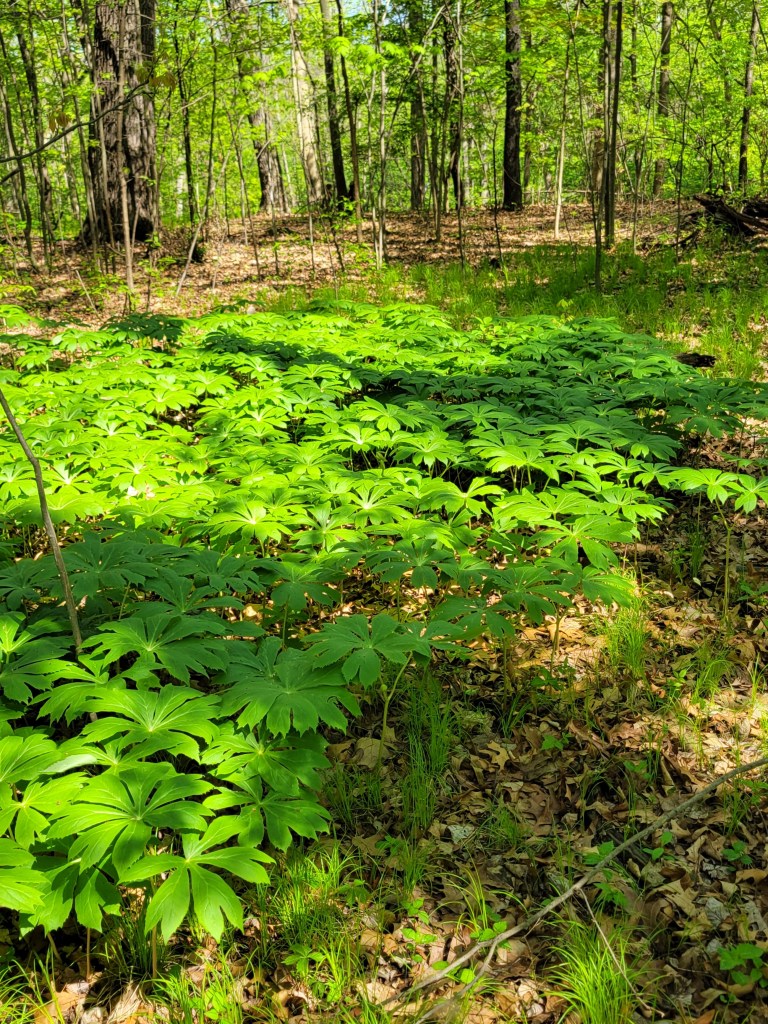
Mayapple is a very common plant found in parts of the Eliza Howell Park forest.
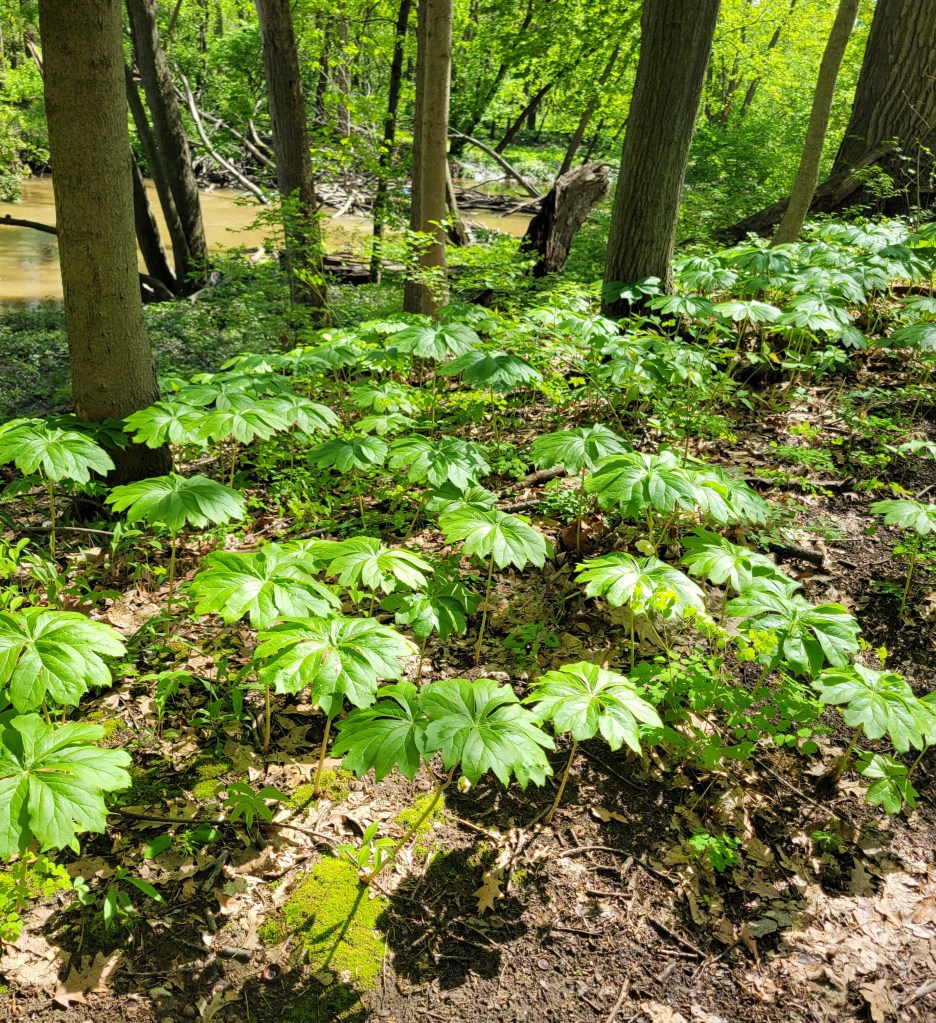
The plants resemble a group of umbrellas; the Cherokee name for it has been translated as “it wears a hat.” To see the flower and, later, the fruit, one needs to look under the umbrella.

Some plants have two leaves, with the flower/fruit stem growing from the point at which they separate.
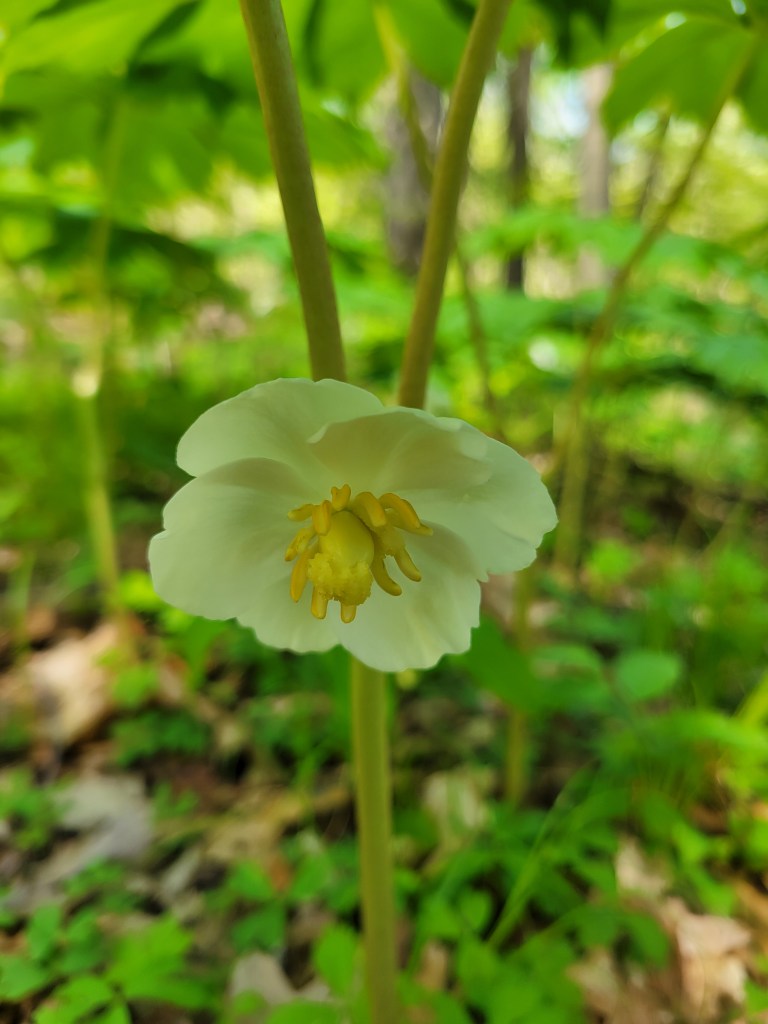
Some have only one leaf. In these cases, there is no flower.
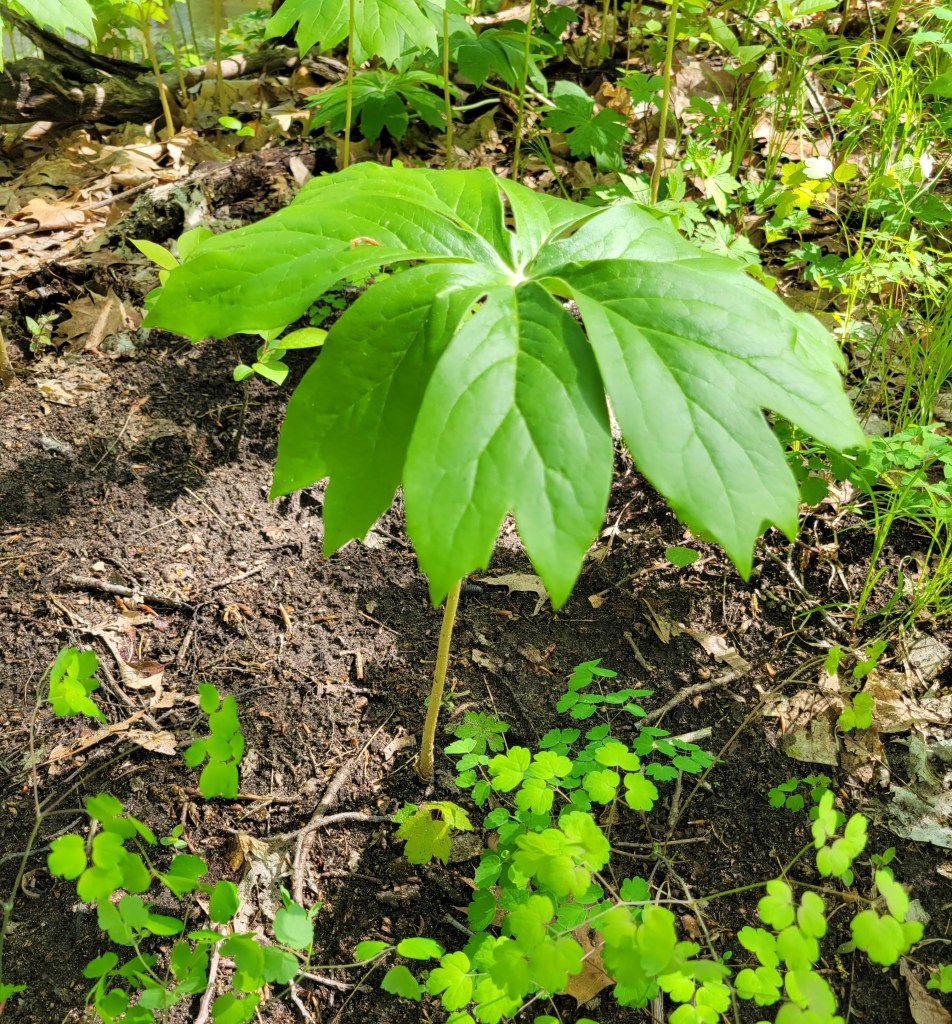
Mayapple is flowering now, and the apple-like fruit matures in the summer. The fruit is green at first, ripening to yellow.
Mayapple spreads by rhizomes, with a common root system supporting many stalks.
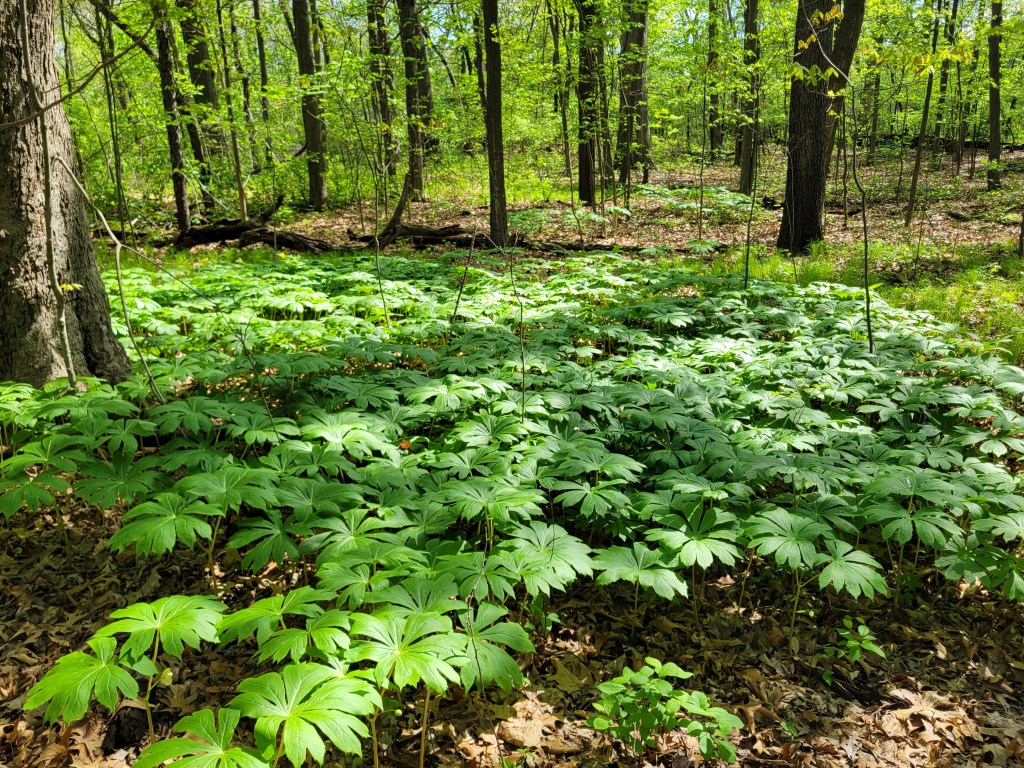
Deer that are common in the park and consume many other green plants do not feed on Mayapple. Mayapple leaves, stems, roots, flowers, and fruit are all toxic to some extent.
The plant was considered medicinal by many indigenous Americans, used as a purgative as well as for other purposes. The Osage name for Mayapple is translated as “it pains the bowels.”
Even those of us who are old enough to remember “Carter’s little liver pills” might not know that Mayapple was the ingredient that made the pill a laxative.
Mayapple continues to be of medicinal interest, studied in recent decades especially for its anti-cancer properties.
I do not know of other Eliza Howell spring flowers that compare with Mayapple in terms of the historical and ongoing medical interest.
Long before I learned about their medicinal qualities, however, I greatly enjoyed coming upon a Mayapple patch. It is a fascinating colony flower, and this is the season it is in bloom. It is a highlight of the forest floor in May!
 Eliza Howell Nature Walk
Leave a comment