-
Red Squirrel in January: A Black Walnut Diet
This winter is far from being the coldest in memory in Southern Michigan, but it is cold enough that I encounter very few other humans during my two to three hour walks in Eliza Howell Park.
The Rouge River is always flowing, but even moving water gradually freezes over at temperatures under 20 degrees F.
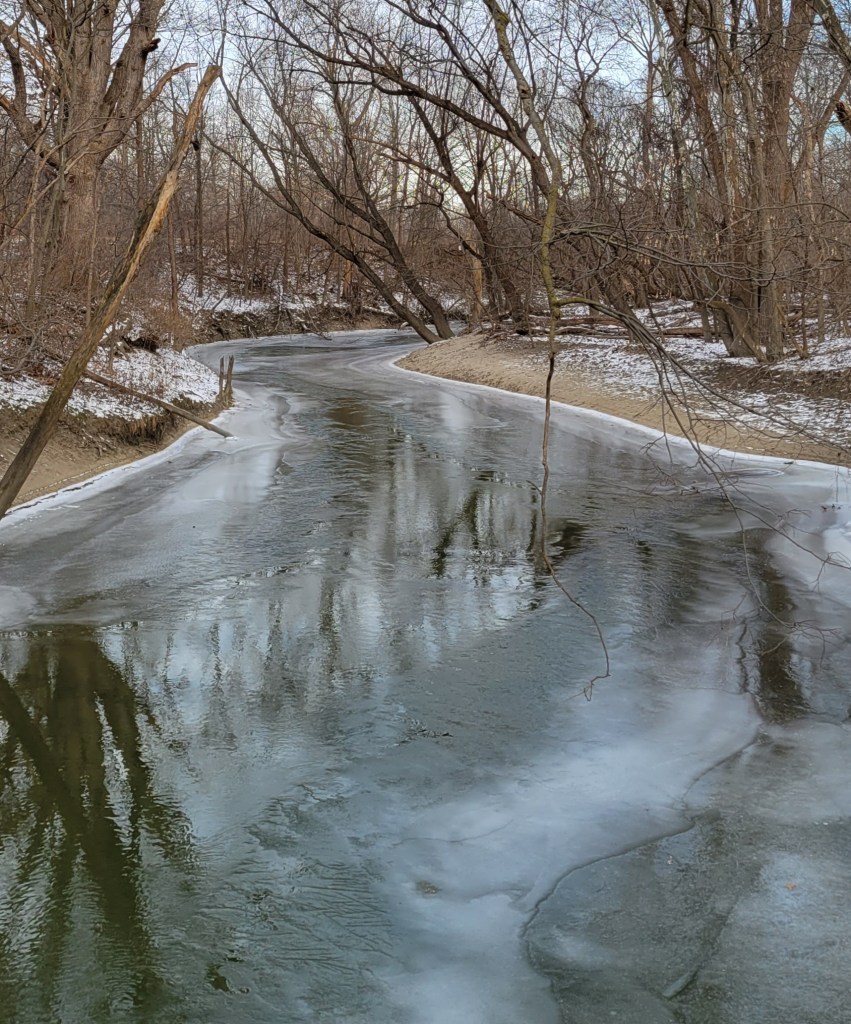
On recent walks, I have been looking for signs of how various other animals are managing in the winter. I check on raccoons (curled up in open tree cavities, their backs to the open air) and watch a variety of small birds foraging for food in shrubs, in flower/grass seeds, and on the ground.
Much of my attention, however, has recently been focused on squirrels. Tree squirrels don’t hibernate in winter; rather they rely upon the food that they stored (“squirreled away”) in the fall.
I have been most intently watching Red Squirrels, the smallest of the squirrels in the park.
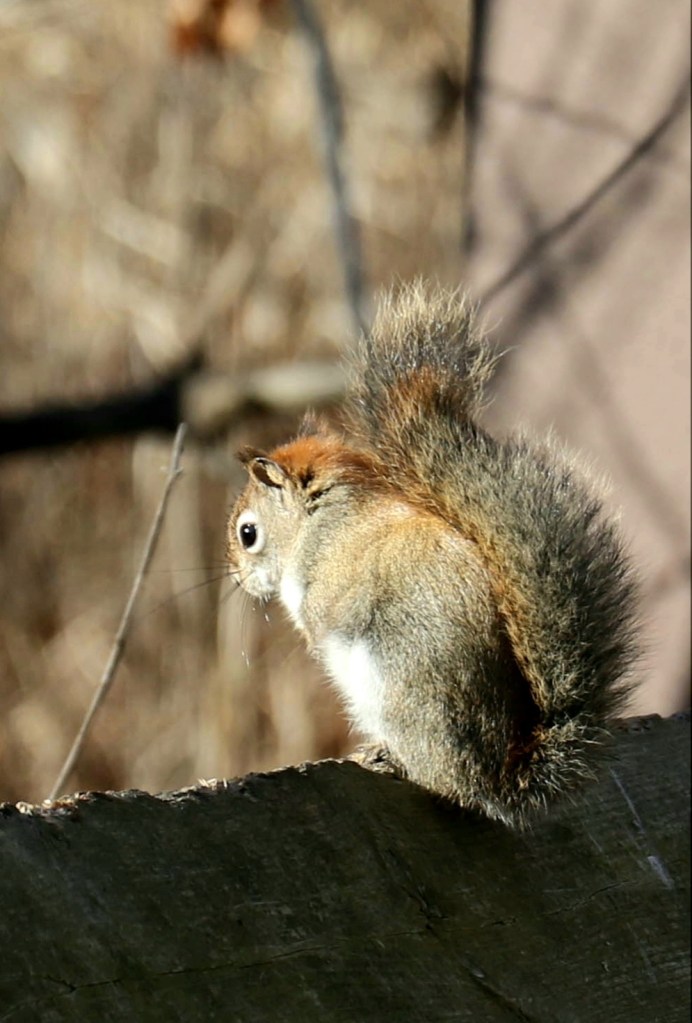
Photo by Margaret Weber The American Red Squirrel is a northern species, rarely found south of Pennsylvania and Ohio in the eastern half of the U.S. It frequently inhabits coniferous forests and is well known for hoarding and eating conifer seeds. It is sometimes known as “Pine Squirrel.”
Eliza Howell Park woodland is deciduous, however, and the Red Squirrel’s primary winter food here is Black Walnut. Black Walnut trees are quite common and 2021 was a very productive year. The green-hulled walnuts in trees in summer…

have become the black-hulled walnuts on the ground in the winter.

Red Squirrels store large numbers of nuts for the winter, but this year that does not yet seem to have been needed. There are still many unclaimed nuts on the ground.
Red Squirrels live solitary lives (except for females with young). This winter I have located the tree where one is sheltering. Here it is taking a look out, perhaps watching me, perhaps just keeping an eye on its territory .
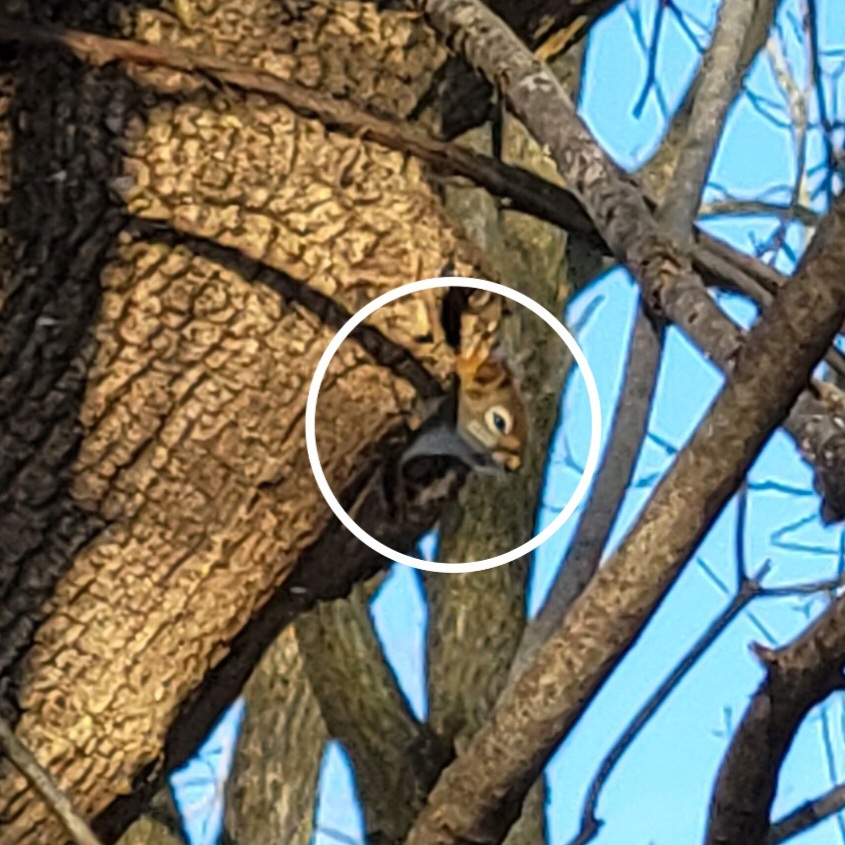
This small squirrel, which always seems to be in a hurry, carries a large walnut in its teeth up to a perch to start the process of opening the hard nut.

It quickly shreds the hull, turning the nut constantly with its feet as it removes this layer, letting the small pieces fall.

The hard task of opening the shell takes much longer. This requires cutting with its sharp teeth. Other squirrel species (in EHP, Fox Squirrels and Gray Squirrels) also eat Black Walnuts, but they open them differently. They keep cutting from one side, removing the entire side, until they are able to eat all the nutmeat inside.

The Red Squirrel, on the other hand, opens the nut by making a hole in one side at a time, leaving the dividing rib in place.

I frequently spot the squirrel when I visit the area where it is wintering. And it is often in the process of carrying or eating a walnut. I wonder how many nuts are eaten in a day or a week or a winter. This picture, from a different January, suggests that a squirrel does not move on from a walnut diet quickly.

-
Spring after Winter: The Repeated Refrain of Nature
Sixty years ago, in 1962, Rachel Carson published Silent Spring, a book that awakened many Americans to the often harmful effects of the use of pesticides.
Carson’s writings reveal a respect for and love of nature that continue to inspire me. One quotation from Silent Spring seems particularly relevant at this time of the year:
“There is something infinitely healing in the repeated refrains of nature – the assurance that dawn comes after night, and spring after winter.”
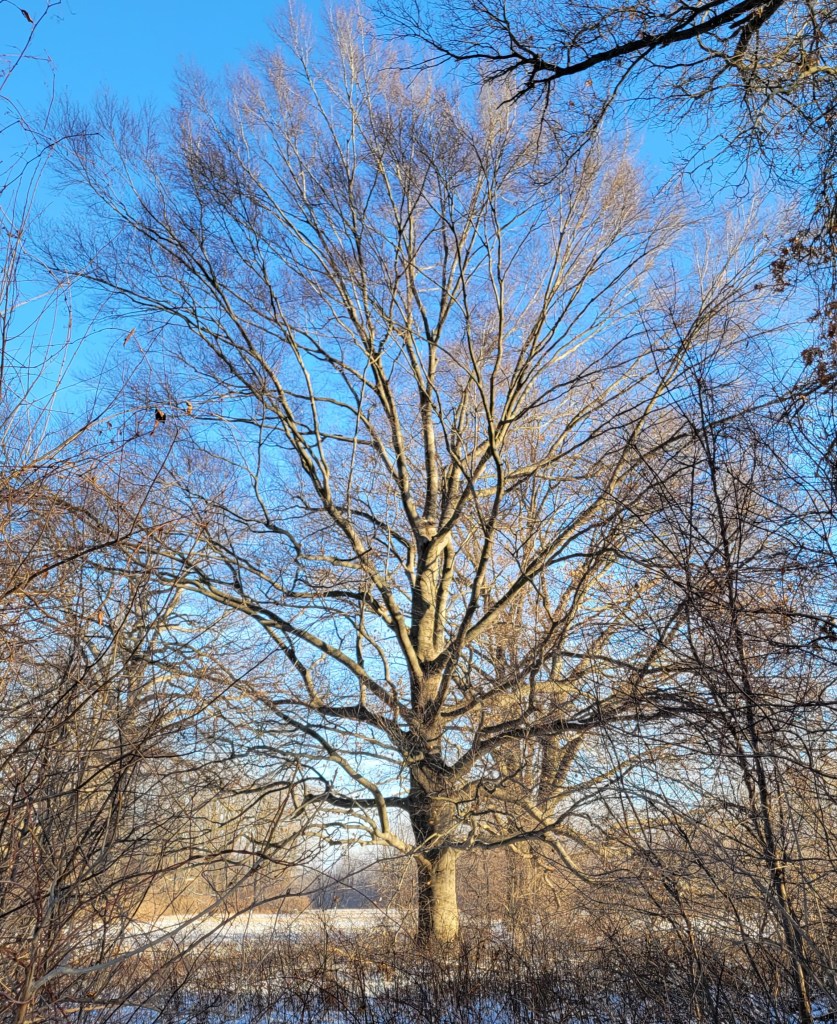
This first week of 2022 is a cold one in Eliza Howell Park in Detroit and I find myself thinking about nature’s assurance that spring will follow winter. When my walk brings me to some of the trees that I visit in other seasons, I see them as they are now, but also in spring flowering and with the fruits/seeds of summer and fall.
American Beech.

Eastern Redbud


Black Cherry

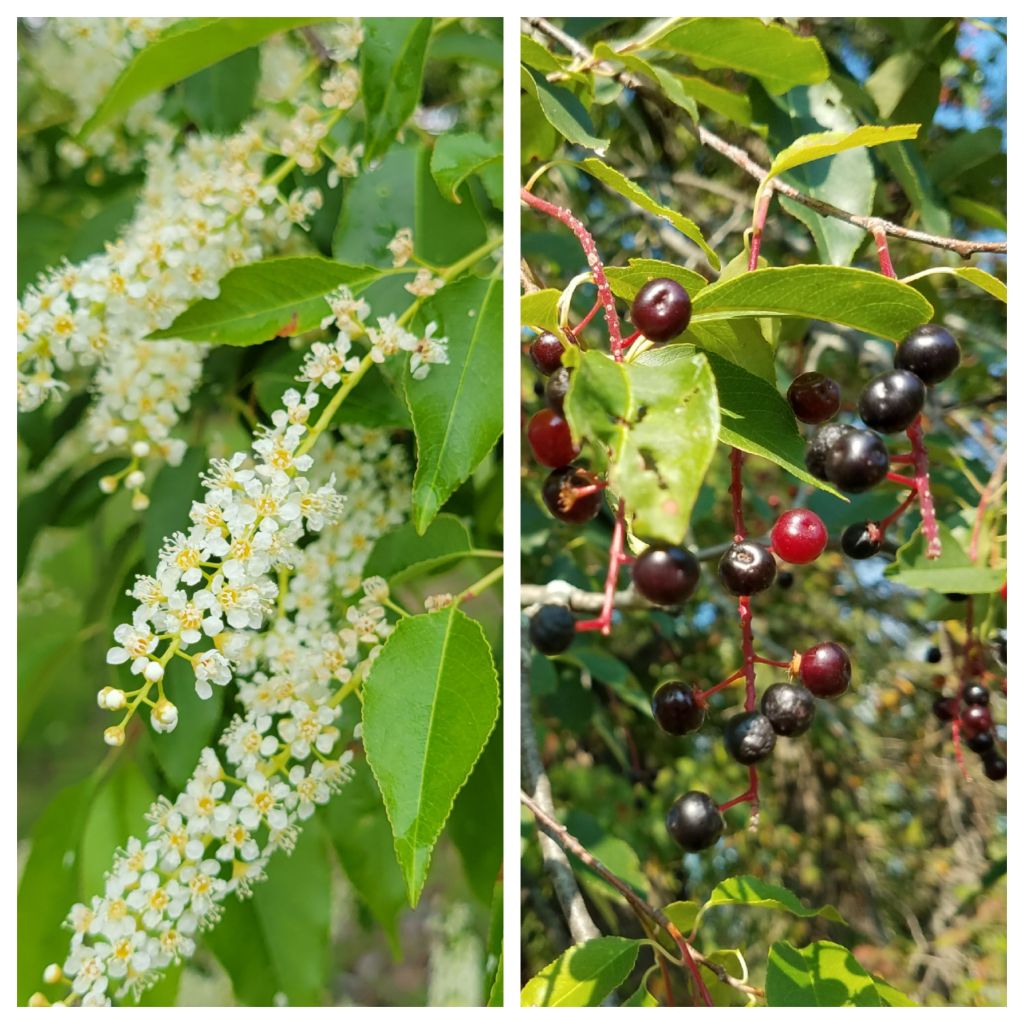
Bladdernut


Chinese Chestnut


Eastern Cottonwood
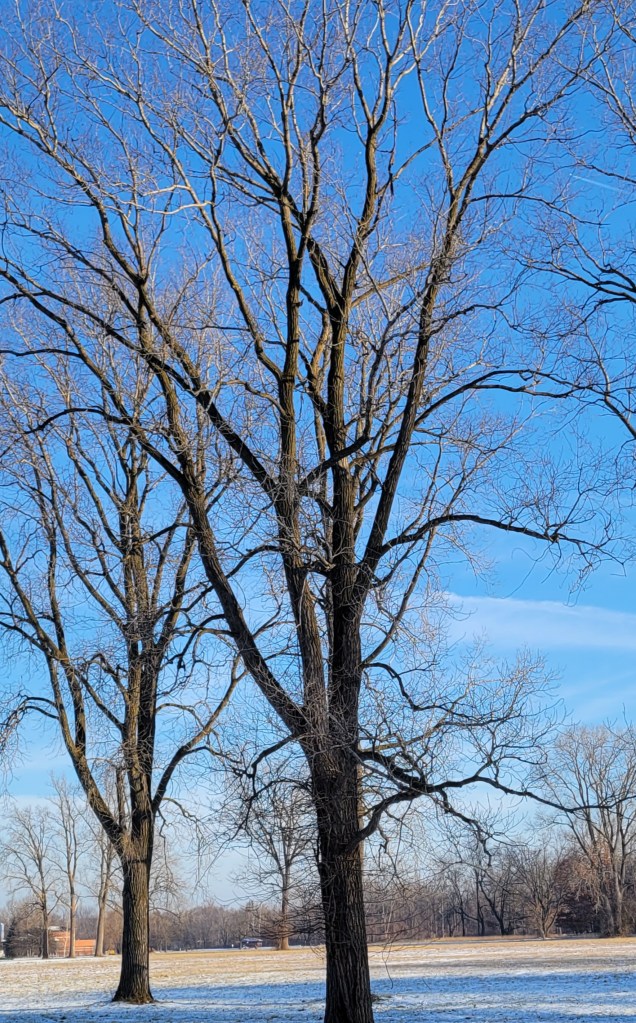
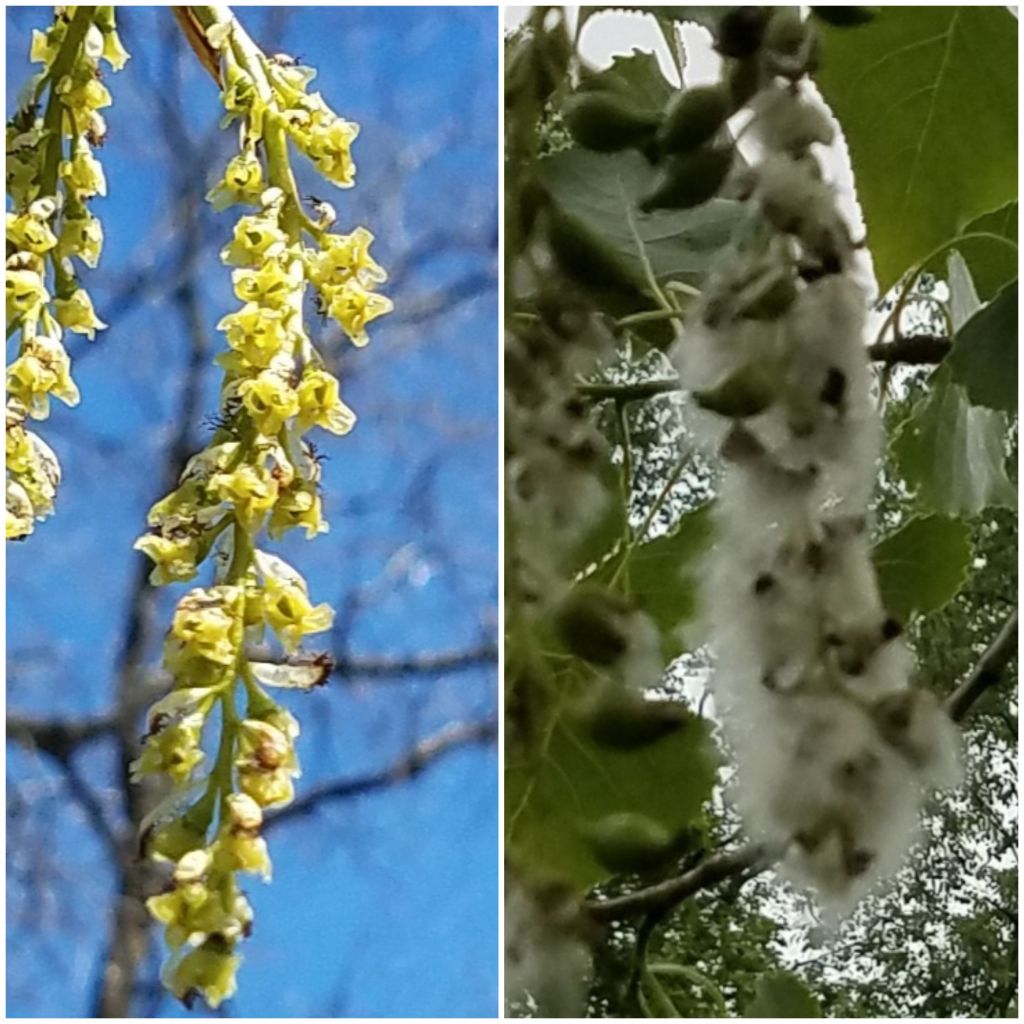
Amur Honeysuckle

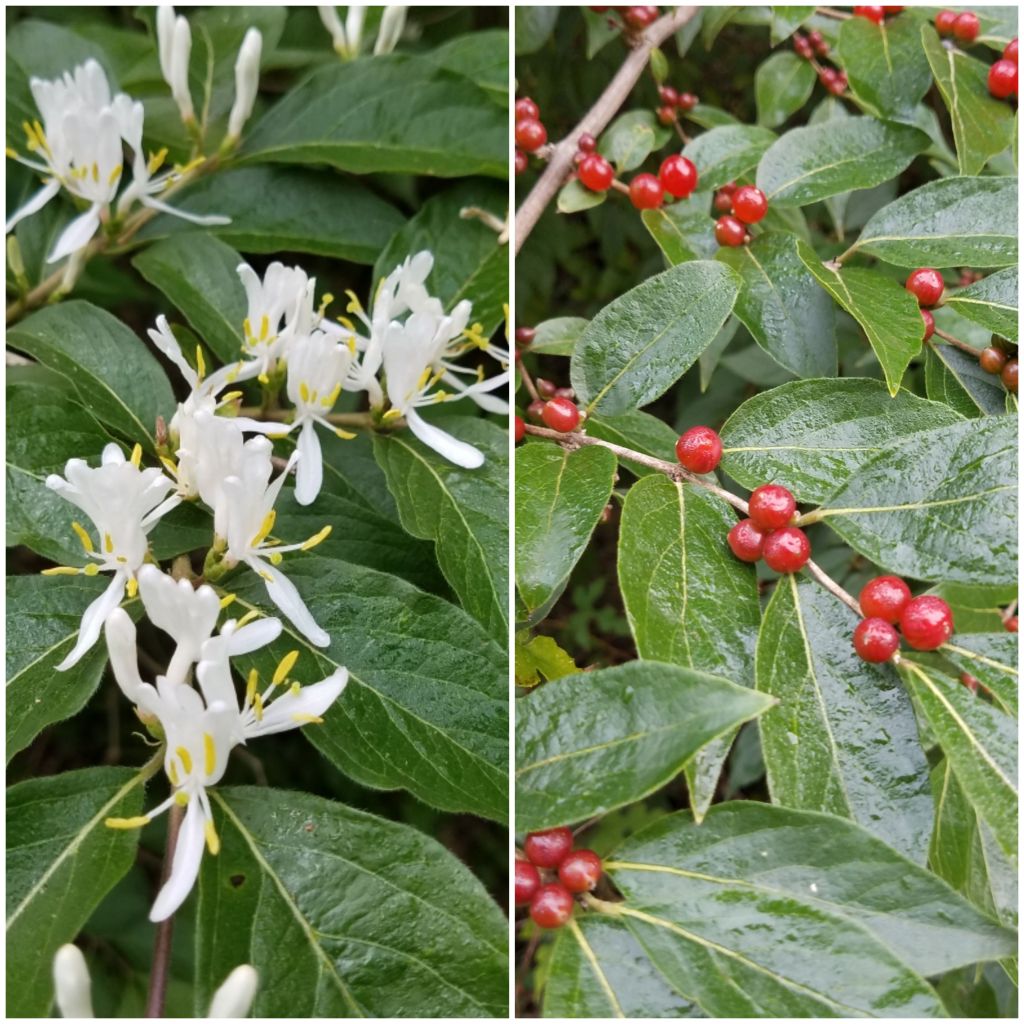
Recognizing nature’s repeated refrains, a winter walk in the cold is a reassuring reminder of the other seasons that are coming this year.
-
Woodlouse / Roly-poly: A Recent Nature Walk
In the woods of Eliza Howell Park in late December, the leaves are on the ground, the insects are mostly inactive, the number of bird species is lower than it has been in months. The quiet season has begun.
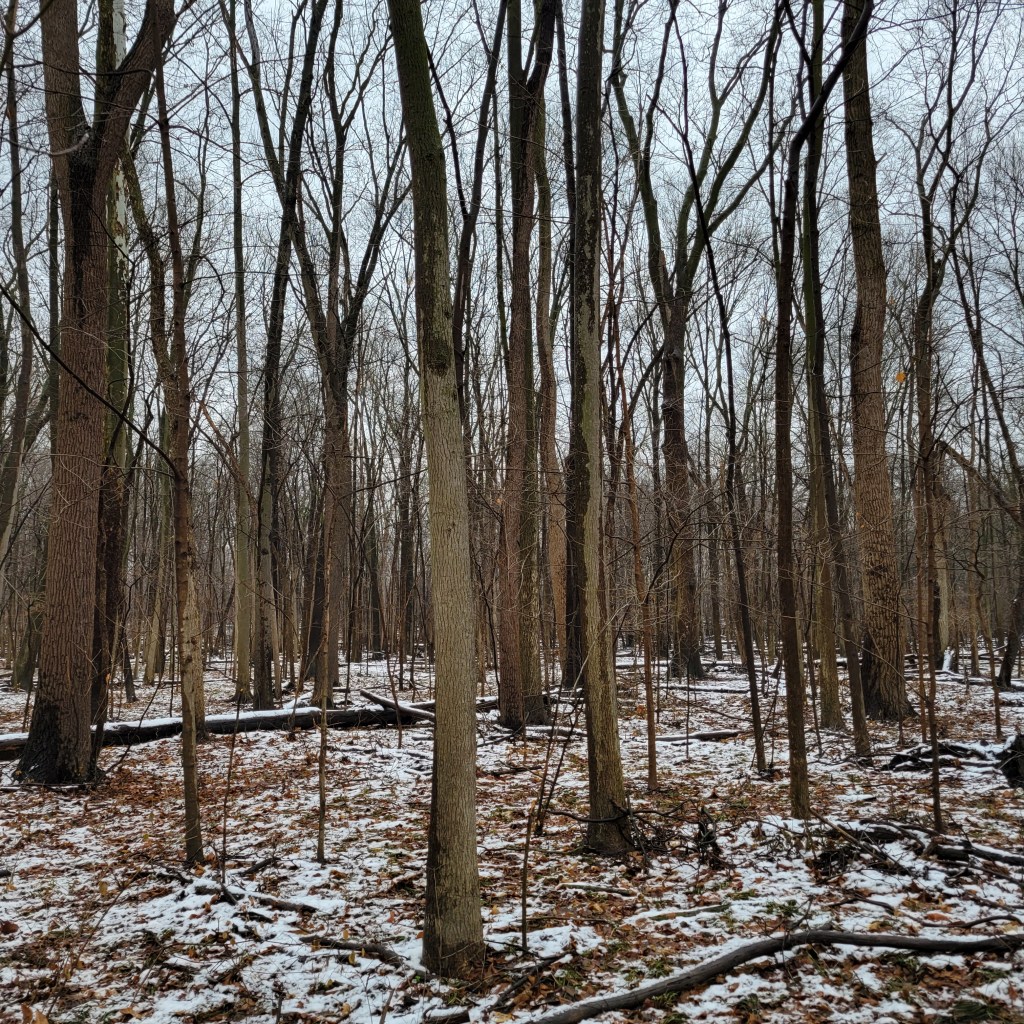
This is a good time to learn more about a quietly active member of the park fauna — the Woodlouse. On one walk this week I went looking for them.
From past experience, I know that I can usually find them by looking under rotting logs before the ground is solidly frozen. They are often on the underside of logs that are quite advanced in the decay process.
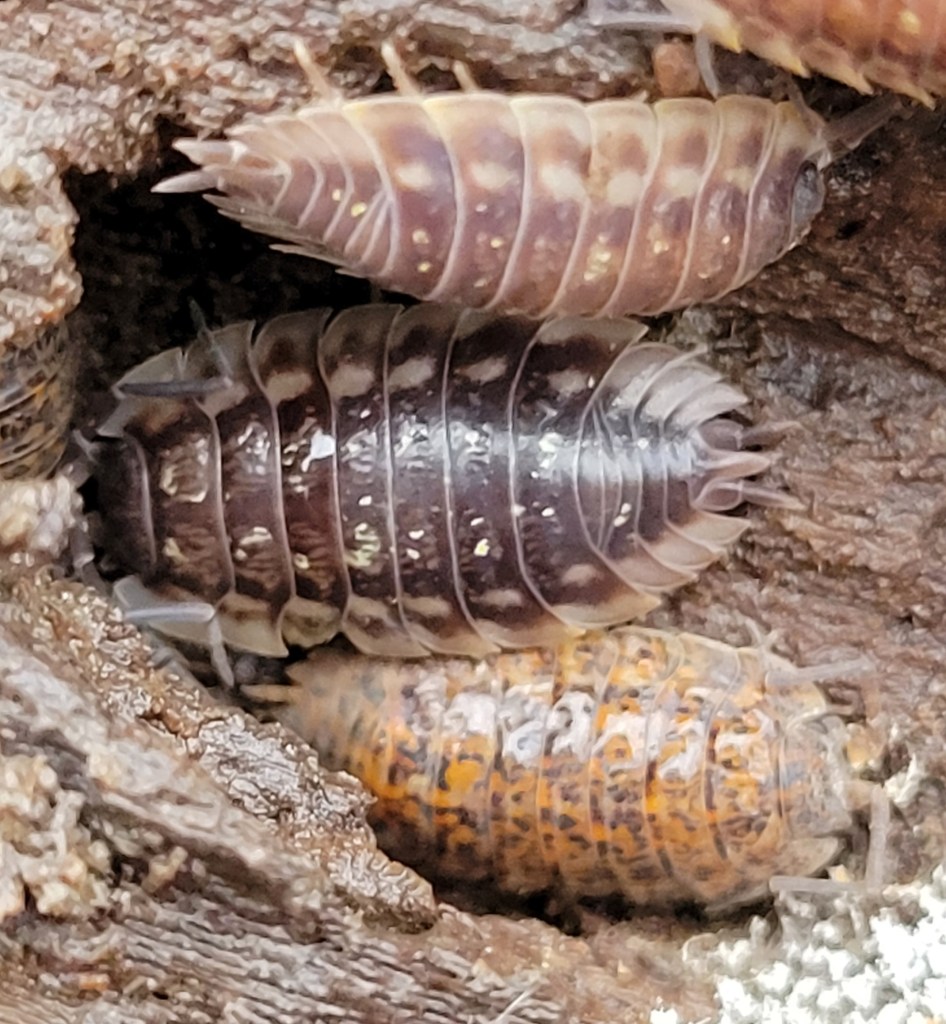
Woodlice are known by many other names; a common one in the U.S. midwest is “Roly-poly.” They are not in any way related to head lice. In fact, though usually referred to as “bugs,” they are crustaceans, not insects, the only crustaceans in North America that do not live in water.
Because their gills need moisture, they spend much time in damp locations, like under rotting logs. It is not unusual to find ten or more of them together.
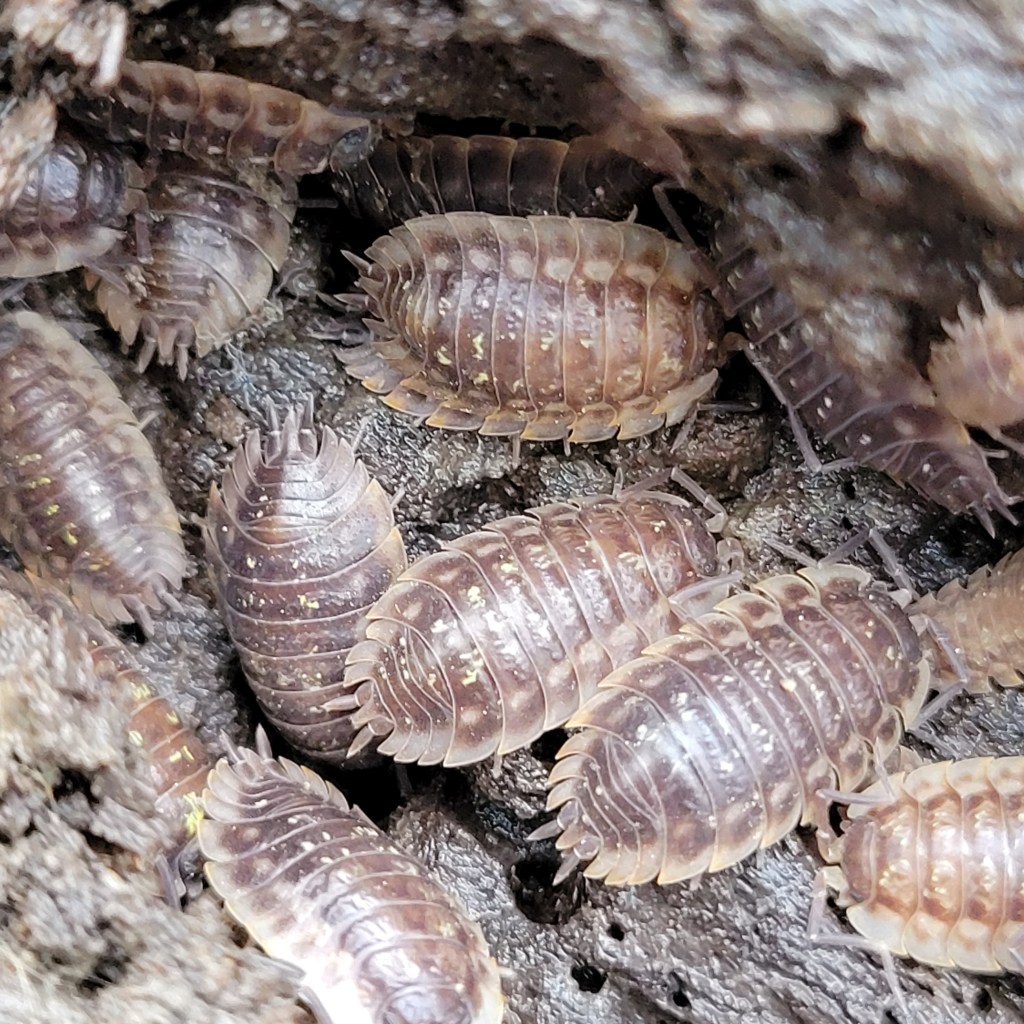
Woodlice feed mostly on dead plant matter, including wood and leaves, contributing to the breakdown of dead organisms and returning nutrients to the soil. They have a significant decomposer role in nature’s recycling.
Their “segmented armor” allows them to roll into a ball to protect themselves or to preserve moisture (the basis for the “Roly-poly” name).
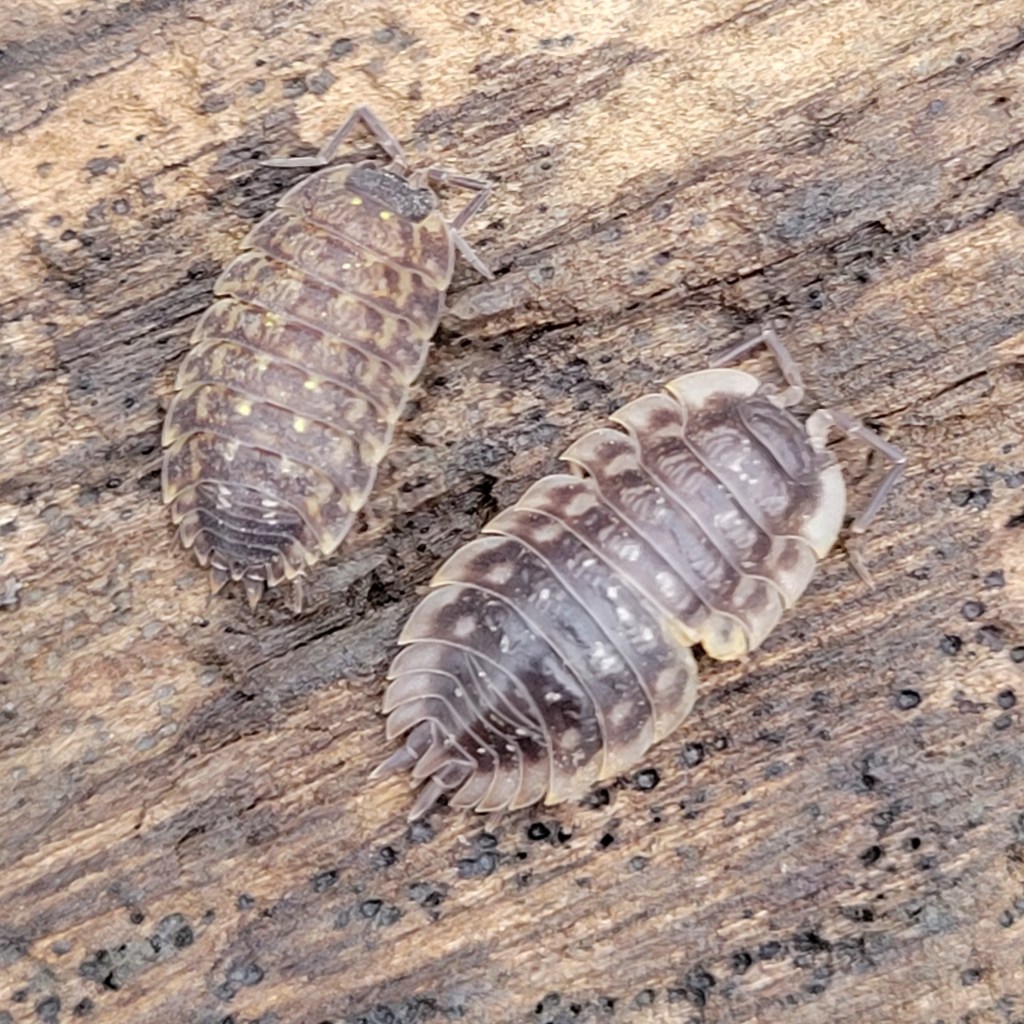
As is the case with other crustaceans, like shrimp, they are edible — though I do not know of anyone who has eaten them and I have never been asked about them as possible food.
Woodlice are not glamorous looking and the name reminds us of an insect that lives on human scalp, so it is not surprising that few people head out on nature walks in the woods looking for them. But such a nature walk might be a good idea.
I, for one, am excited to turn over a rotting log and find Woodlice, especially knowing their role in the bigger picture.
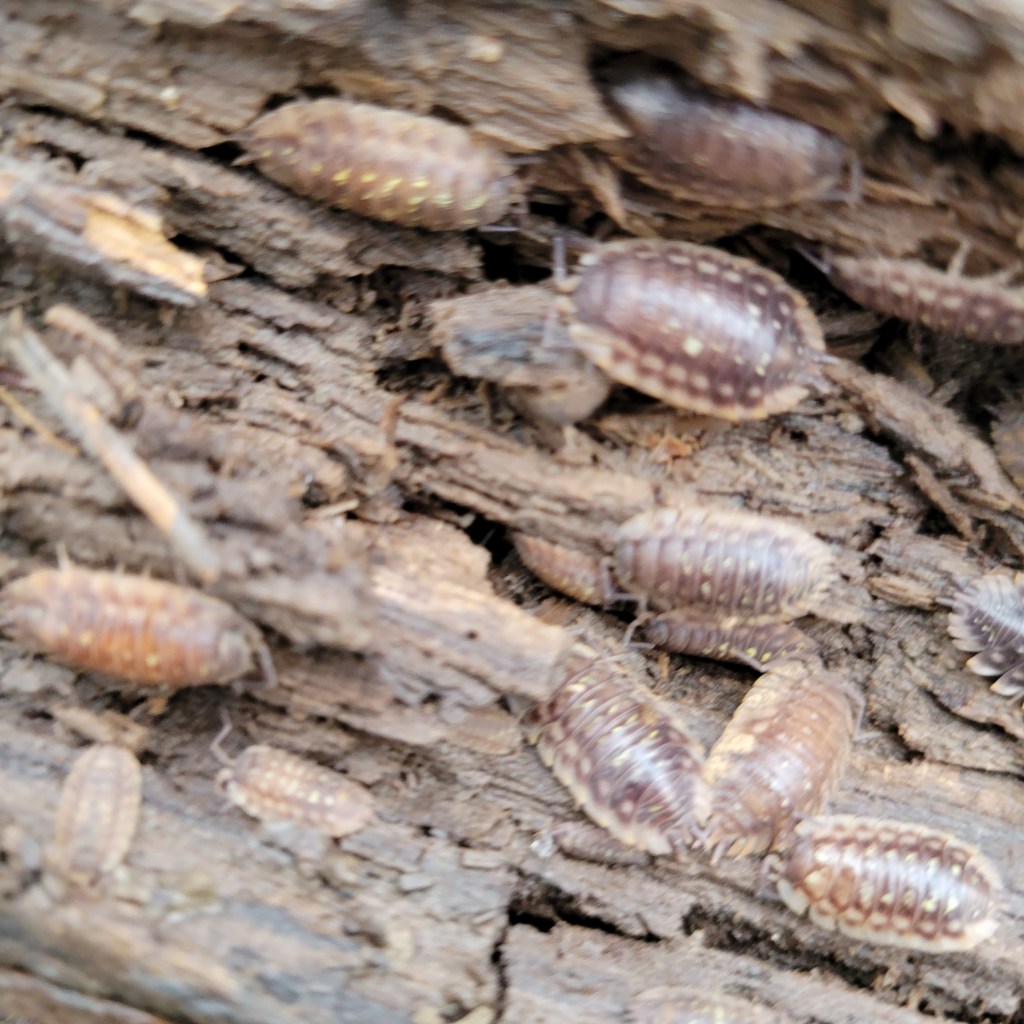
Reminder: Logs that are turned over in a search for Woodlice and other “critters” should be turned back when the looking is done, in oder to protect their habitat.
-
Winter Solstice: Frost Crystals Everywhere
The sun was shining this morning, December 21, when I started my walk in Eliza Howell Park. The temperature was near 30 degrees F and the conditions were perfect for the formation of frost crystals.

As usual at this time of the year, I first looked for seed-eating birds among the plants in the wildflower field. They were there today — American Goldfinches, Dark-eyed Juncos, and American Tree Sparrows — foraging among the seedheads as they often do.
I did not hesitate to walk through the field myself to enjoy the frosty scenes.

Every exposed part of every plant was frost-covered. My stops included:
Bush Clover

Goldenrod

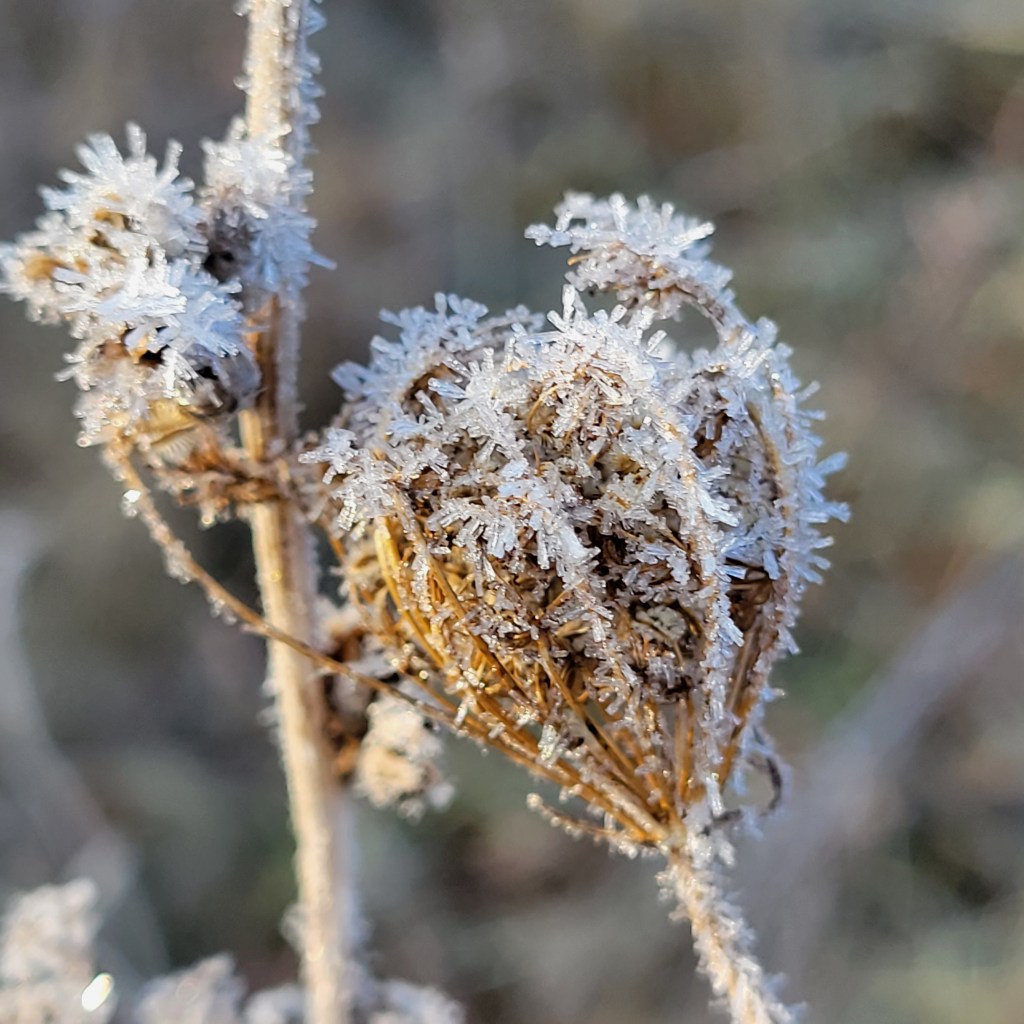
Queen Anne’s Lace
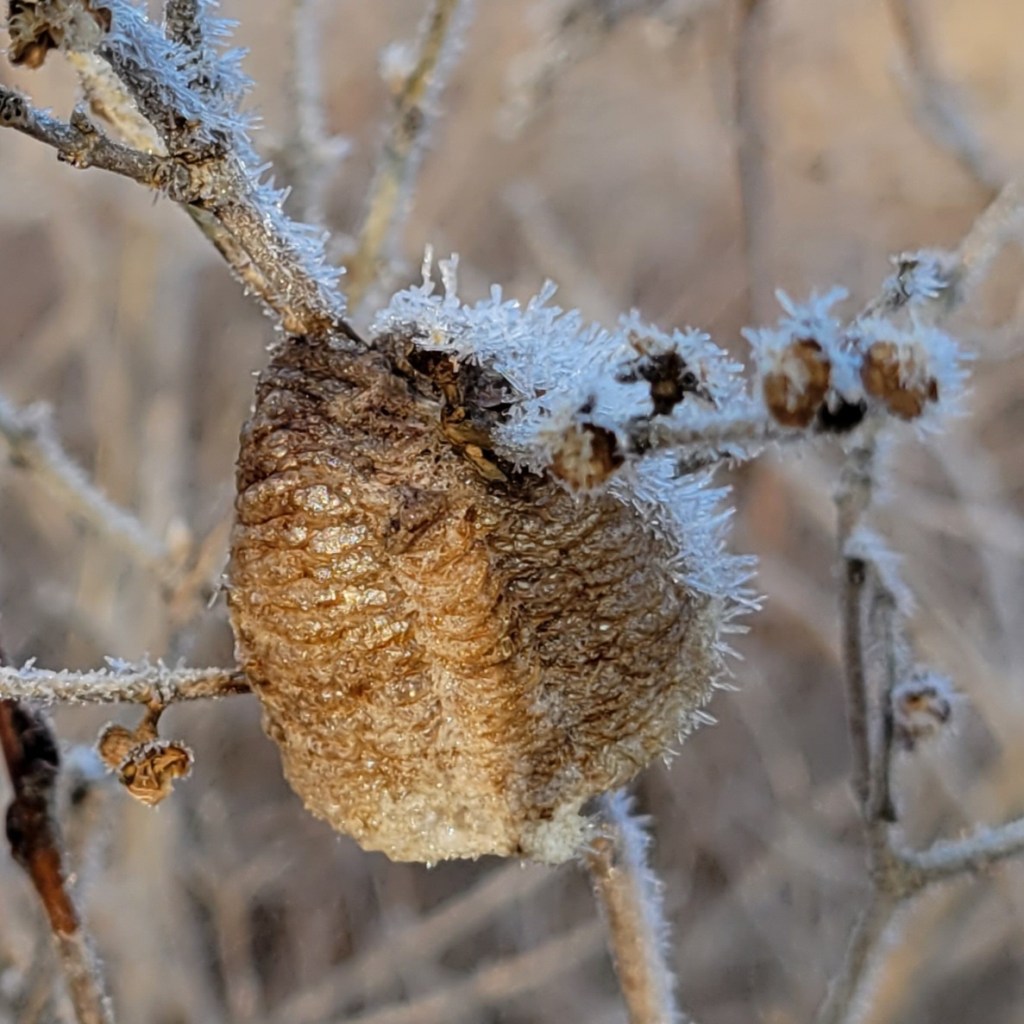
A Praying Mantis egg case also caught my attention.
At the edge of the field, Staghorn Sumac seed clusters clearly explained the term “frosting.”

There is something so very fitting and so thoroughly enjoyable to being greeted with sunshine and frost on the first day of Winter.

-
Goldenrod Gall Fly: A Solitary Life Inside
This week I have been focusing on Goldenrod Ball Galls, the home of the insect known as the Goldenrod Gall Fly.
When I walk among the goldenrods in Eliza Howell Park in December, it is not to admire the flowers or to observe pollinators and preying insects, as it was in September. Now it is primarily to look for signs of insects overwintering in the egg or larval stage.

The absence of leaves makes it easier to locate the galls on the stems of some goldenrod species (Canada Goldenrod is one species they favor). They are usually found halfway or more up the stalk.

Goldenrod Gall Flies have a very interesting/unusual life cycle. They live about a year (if they are not eaten by predators) and almost all of that year is spent inside the gall, in the larval and pupal stages. Winter months are spent in diapause, dormant time.
In Spring, the female fly lays eggs on young goldenrod stems. After eggs hatch in about 10 days, the larva burrows down into the plant stem and begins eating. This stimulates the plant to grow around it, providing the ball-shaped shelter with plant fibers inside for food. The fly larva does not harm the overall health of the plant

Each gall has only one developing fly inside. It stays here, alone, for about 11 months, before finally emerging as an adult in the spring, just in time to mate and for the female to lay eggs before they die.
The adult is a little smaller than a house fly. It has no mouth parts and is incapable of eating. It’s adult role is limited to reproduction and usually lasts less than 2 weeks.
Since the adult cannot chew its way out of the gall, in the fall, before going into diapause, the larva excavates a tunnel to the outside, leaving only the surface layer. This tunnel is for the adult to use when it emerges from the pupal stage in the spring.
Some of the galls that I have located recently have had a hole drilled into them.
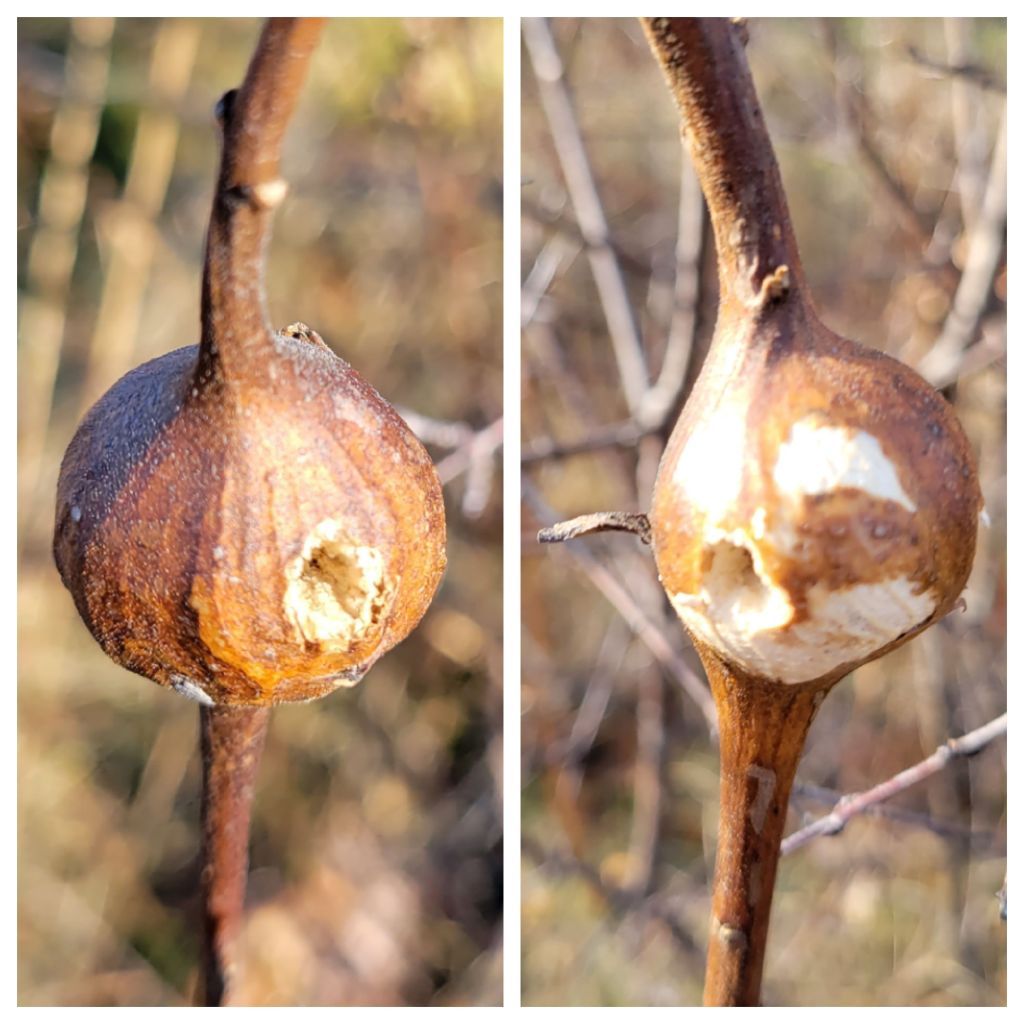
The fly larva is nutritious food for birds that can get to it, like woodpeckers and chickadees. I suspect that these holes were made by a Downy Woodpecker, which often forages quite close to the ground.

Photo by Margaret Weber I could take a look at the inside of a gall, without interfering with the life processes inside, by cuting into a bird-opened one.

The center is a cozy-looking “nest” for the solitary resident.
Cutting open one half through the predator’s opening shows the direct line to the nesting center. It looks like the bird found and used the escape tunnel the larva had made.

The Goldenrod Gall Fly has been studied and written about quite extensively (perhaps because it makes for a good study project in the winter?), so I was able to expand upon my field observations easily by doing a little online research.
A lifetime that is 95% prior to adulthood is a great contrast to what I once considered “normal.”
An adult animal unable to sustain its life is also a great contrast to what I once considered “normal. “
One of the reasons I am fascinated by this insect, which I do not see, is that it leads me to think again, perhaps more deeply, about the diversity of animal life.

Winter is a time for seeing some of what we miss on nature walks in the busier seasons of the year. It is also, for me, a time of reflection on the (sometimes unexpected) wonders of nature.
-
A December Morning Walk: In the Absence of Leaves
It was gray and blustery as I began my walk in Detroit’s Eliza Howell Park on the morning of December 6.
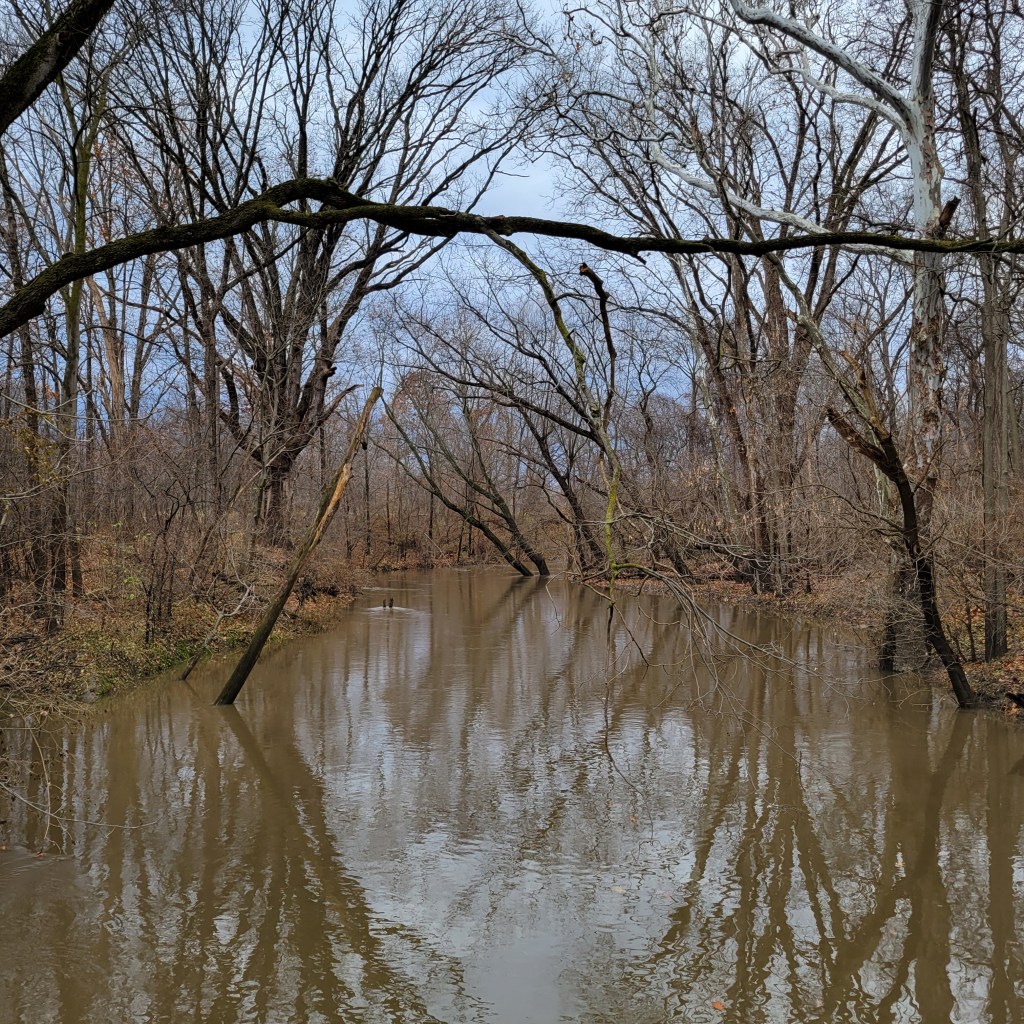
Since the mixed rain and snow precipitation the day before had ended with a period of steady rain, I headed to the river to check the water level. The water was quite high, though not over the banks, and the view of the landscape from the footbridge was typical of any snow-free day in December.
Later, in the perennial flower field where many seed stalks remain standing, I focused on Queen Anne’s Lace (aka Wild Carrot). In a world of shades of brown, seed clusters can be quite attractive.

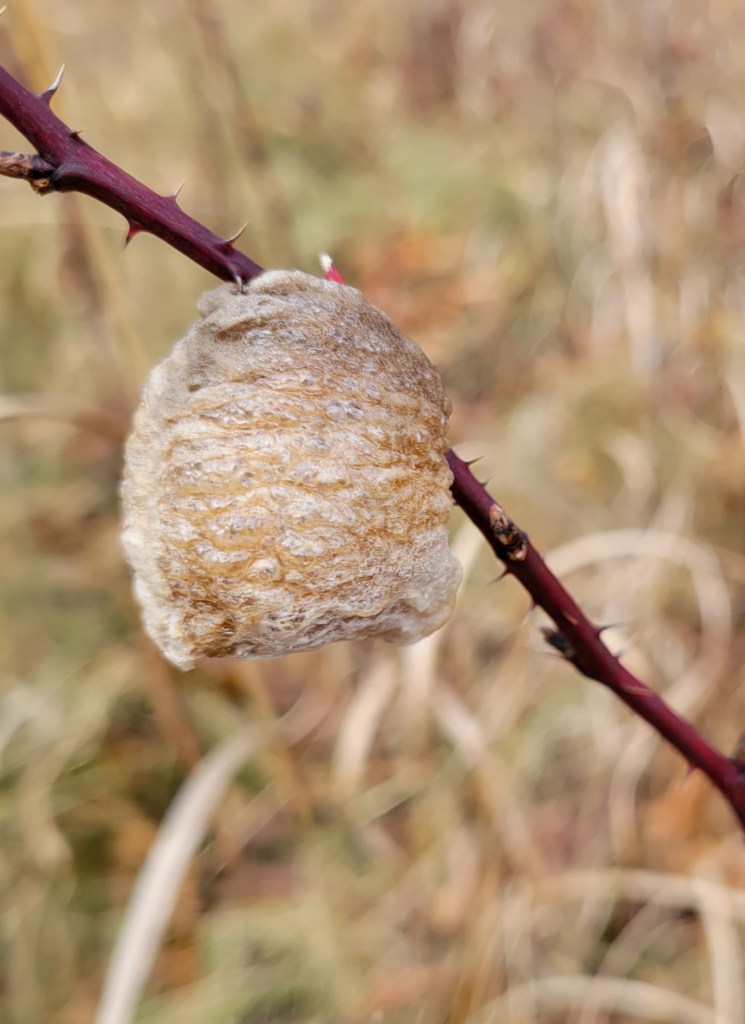
About two and a half months ago, female Praying Mantises, nearing the end of their lives, were laying eggs on various standing plants. Now that the leaves are fallen, it is much easier to locate the egg cases they made.
In about five more months, dozens of little mantises will emerge from each of the cases that make it safely through the winter. This one is attached to a Blackberry cane
Climbing vines have long interested me (maybe “fascinated me” more accurate). Halfway through the morning I was noting again the way Bittersweet vines twine their way up trees and up other vines.
Here Bittersweet vines are climbing a larger Grape vine (the darker one with peeling bark), which is attached to a tree much higher

A few of the American Sycamore trees in the park have small branches low enough for one to view the color patterns of the bark. The absence of leaves makes winter a perfect time to stop here.
The green trees in the background are Spruce.

A little over a month ago, in early November, I reported on the Cinnabar Polypore mushrooms that I found growing on fallen Cherry branches. They have not changed much in the last month, still present, still soft, and still brightly colored both above and below.

After I wandered around the park for about 3 hours (and walked about 4 miles), the sky cleared briefly as I headed back. I stopped at a patch of Staghorn Sumac, admiring the way the seed “cones” still stand tall, as they have since July. They will continue to add a little color all winter.

Winter presents, in a sense, a different world. It is a world that does not call attention quite so constantly to flowers and leaves and insects and fruit. And in this different world, there is opportunity to observe the wonders of nature a little differently.
-
Killdeer: The 274 Day “Summer”
In checklists prepared for participants on Eliza Howell Park bird walks, I use these descriptions of the seasonal presence of different bird species in the park:
Year-round (present in all seasons)
Summer (Spring to Fall, breeding season)
Migrating Through (present for short times twice a year)
Winter (Fall to Spring)
One of the Summer birds is Killdeer. It is a Summer bird, but it is still present in the snows of late November!
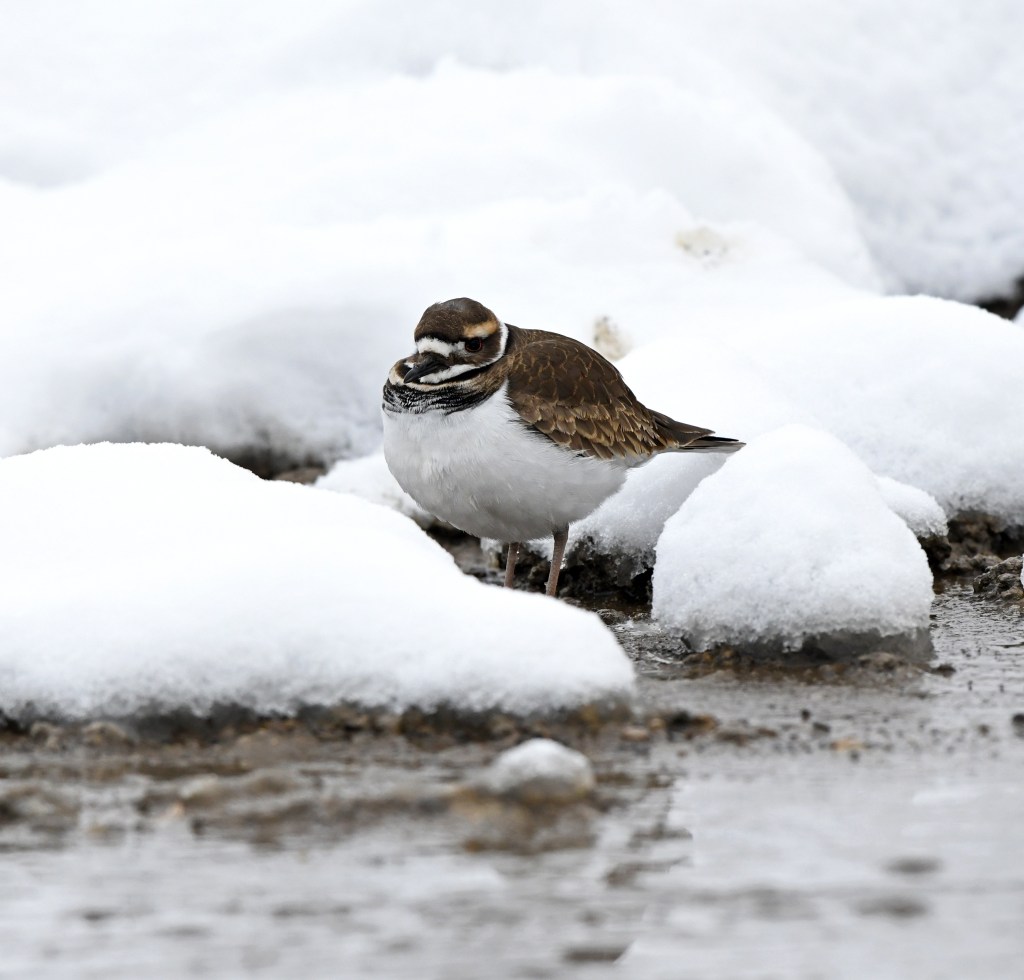
Photo by Kevin Murphy Killdeer is one of the first Summer residents to arrive in the spring, usually between March 1 and March 15. This year it was March 2.
(Adult females and males look alike.)

Photo by Margaret Weber Killdeer are ground birds; they feed on the ground, nest on the ground, rest on the ground. They are strong flyers, but I have never seen one in a tree.
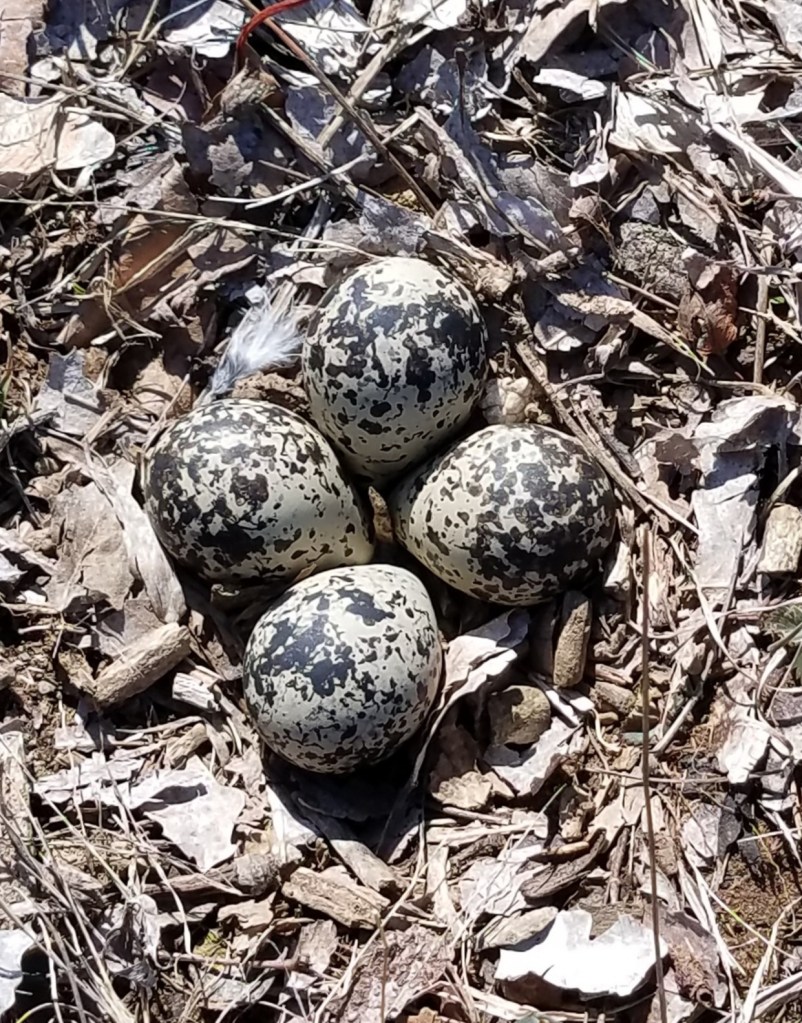
Though they breed in Eliza Howell every year, it takes careful watching — or good luck — to find a nest, camouflaged out in the open.
By mid-summer they are usually not seen as often here, less restricted to a particular location than while nesting and caring for young.
This year, however, they were frequently found by the edges of the recently expanded meadow pond.


Photo by Kevin Murphy In the 17 years that I have been keeping records, this is only the second year that I have observed them in EHP in November. It is likely, of course, that those present in the fall are not the same ones that nested here, but others migrating south from breeding areas further north.
(The range map is from Cornell Lab of Ornithology )

Still present on November 30, it is now 274 days since Killdeer first arrived in 2021. The snows have not yet convinced them all to move on, so this might be the first year in my watching that they are present every month except January and February.
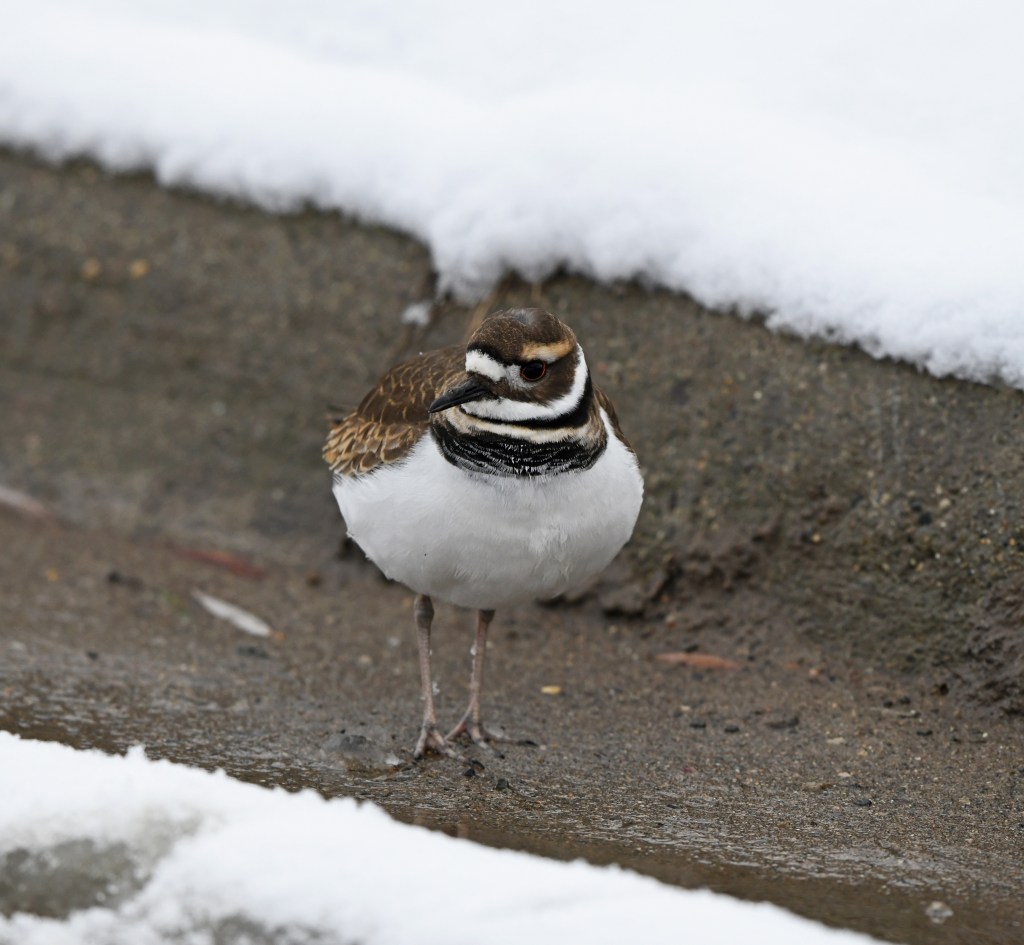
Photo by Kevin Murphy Nine months is indeed a long summer.
-
Winter Creeper: A Holiday Look
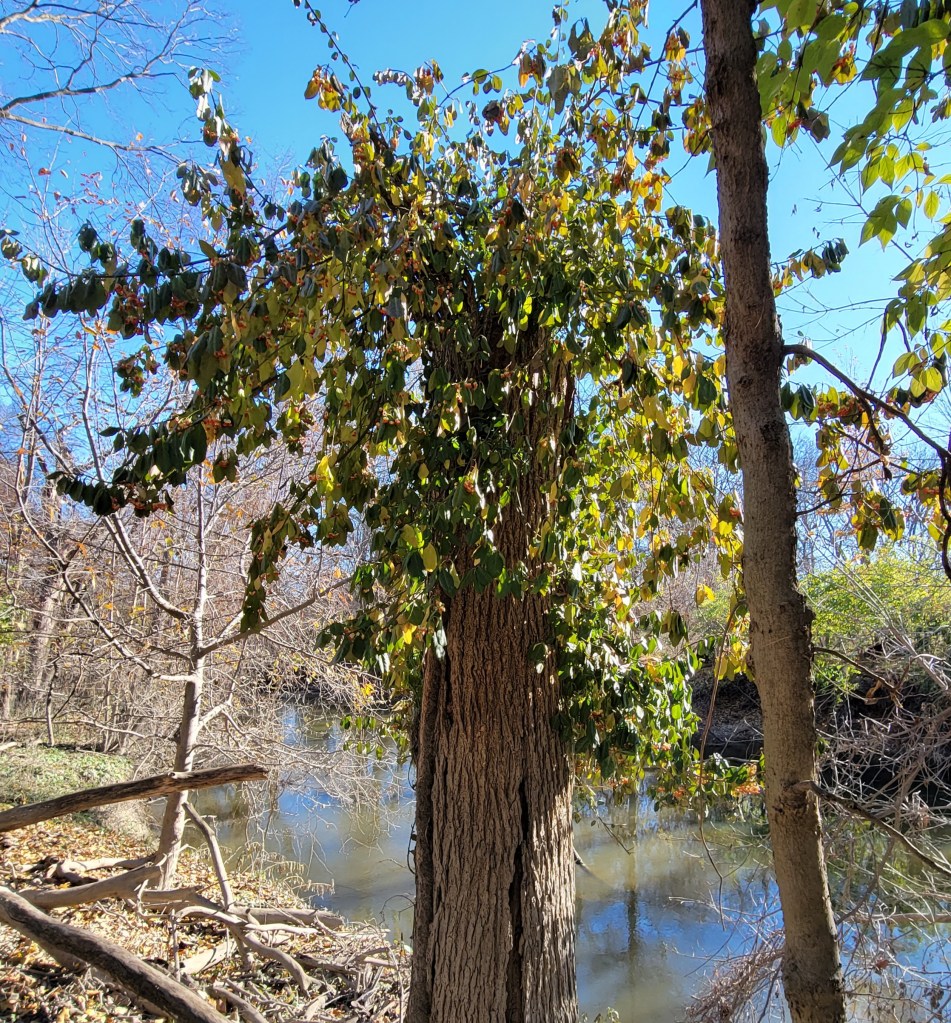
Winter Creeper vines have climbed a few trees in the woods near the river in Eliza Howell Park, 7 or 8 trees fairly close together. The capsules of the late-ripening fruit are just now opening, revealing the bright seeds.

This year the fruit seems to be especially plentiful, with large hanging clusters.

Winter Creeper is an evergreen, a type of Euonymus native of Asia, introduced into North America as an ornamental ground cover/shrub in early 1900. It has escaped gardens and is now a spreading climbing vine in some forests.
After climbing tree trunks, it branches out, sometimes looking like a shrub several feet up (especially in the case of a broken-off dead tree, as in this photo).
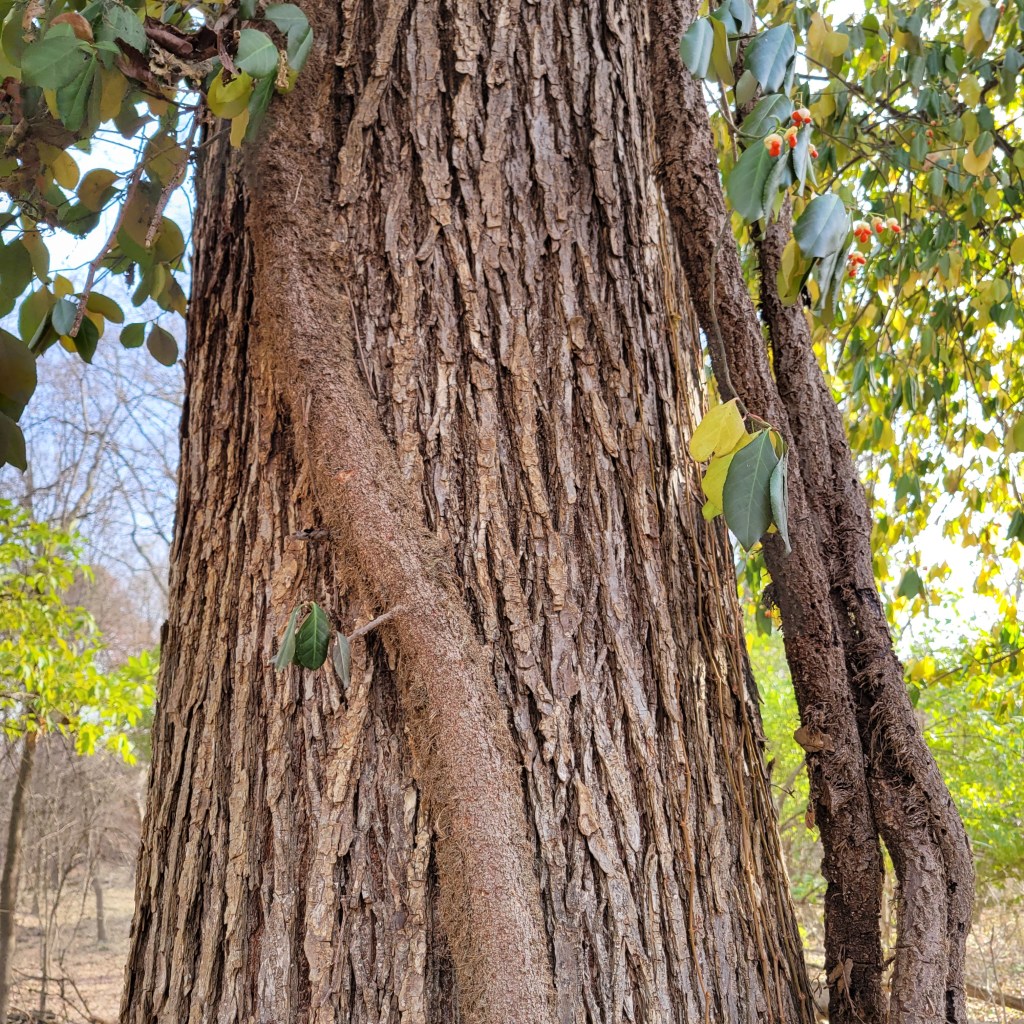
Winter Creeper vines grow straight up large trunks, using small aerial roots to grasp and hold onto the bark.

The vines can grow up to 40 feet or more. When the vines are attached higher in the tree, the large lower vines sometimes hang loose from the trunk
The fruit, not recommended for human consumption, contains a single seed inside similarly colored pulp.

When the leaves of deciduous trees have fallen and the woods are acquiring the winter look, the fruit of Winter Creeper provides a festive holiday look.

-
Subscribe
Subscribed
Have a WordPress.com account? Log in now.

