Leonard Weber
July 28, 2023
While I often have butterflies on my mind when I visit the wildflower field in Eliza Howell Park in late July, there are many other fascinating pollinators that catch my attention.
Perhaps especially worthy of note are Hummingbird Moths. These are daytime flying moths that are referred to as “hummingbird moths” because, while sipping nectar from flowers, they hover, suspended in the air, as hummingbirds do.
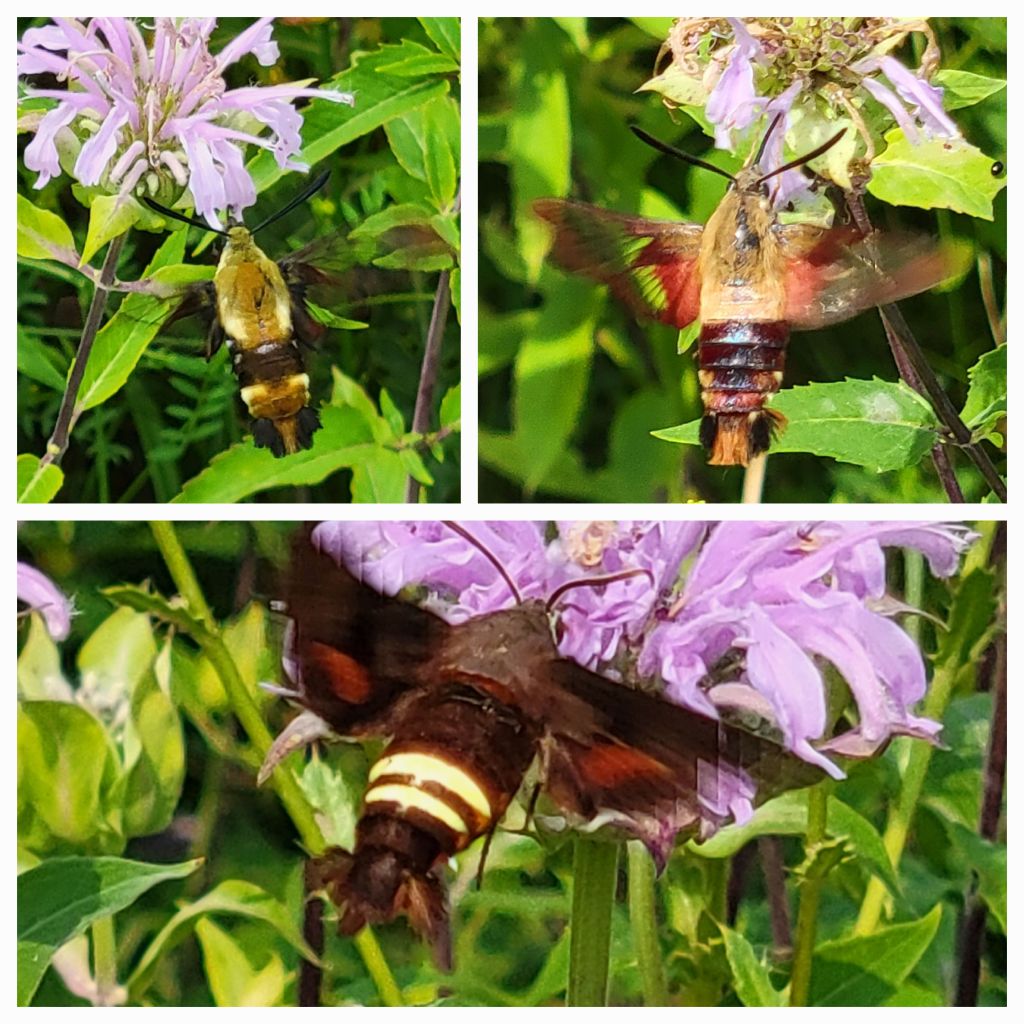
Hummingbird moths are not abundant in Eliza Howell Park, but it is possible to see three different species visiting flowers here during July and August.
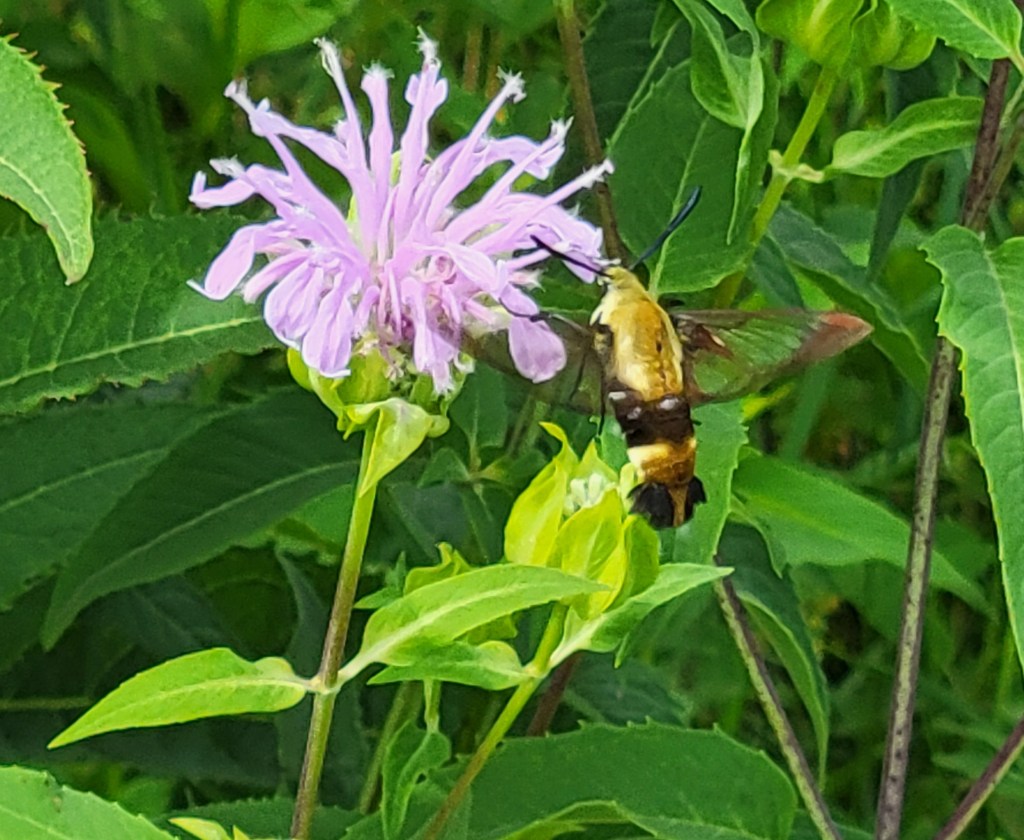
1. Snowberry Clearwing Moth.

Smowberry Clearwing Moth is small, about 1.5 inches. Being yellow and black, it looks similar to a bumblebee as it visits flowers. I usually see it at Wild Bergamot.
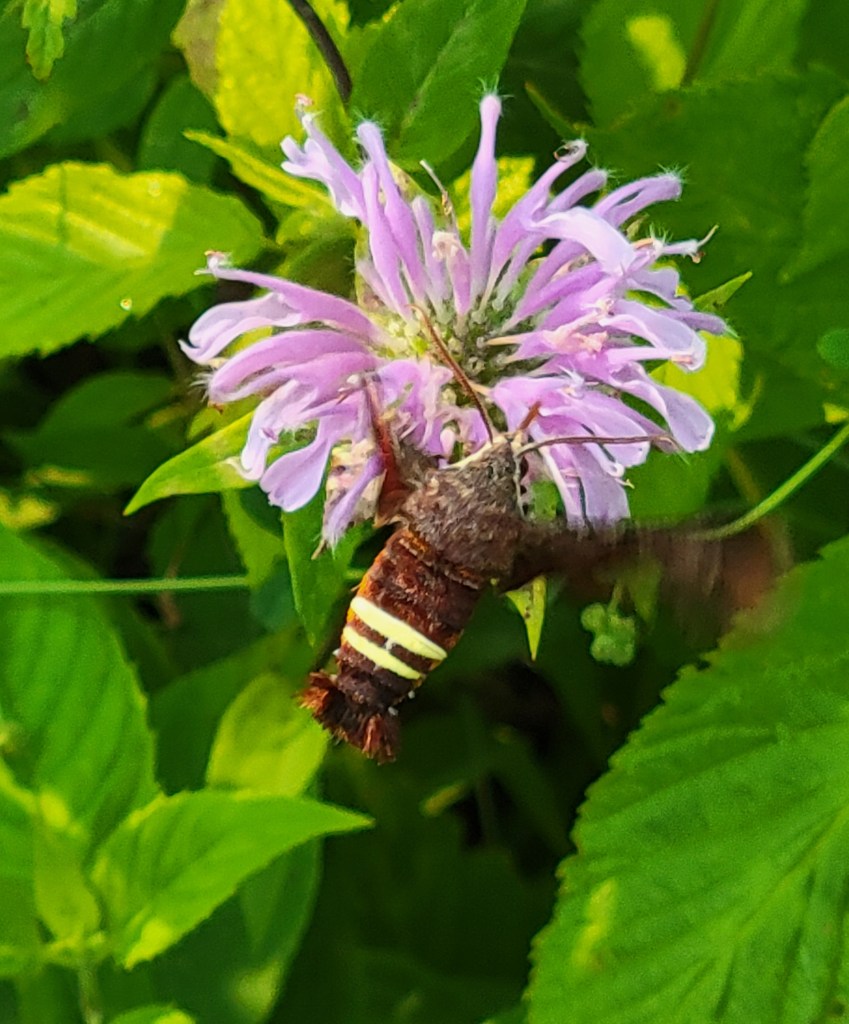
2. Nessus Sphinx Moth.
Nessus Sphnix Moth is a little larger than Snowberry Clearwing, with a wingspan of about 2 inches. The two yellow bands on the abdomen are distinctive. It too hovers as it uses its proboscis to drink nectar.

3. Hummingbird Clearwing Moth.
This one has been named after its hummingbird-like behavior. It is about the same size as Nessus Sphnix Moth. I find the wings especially attractive.
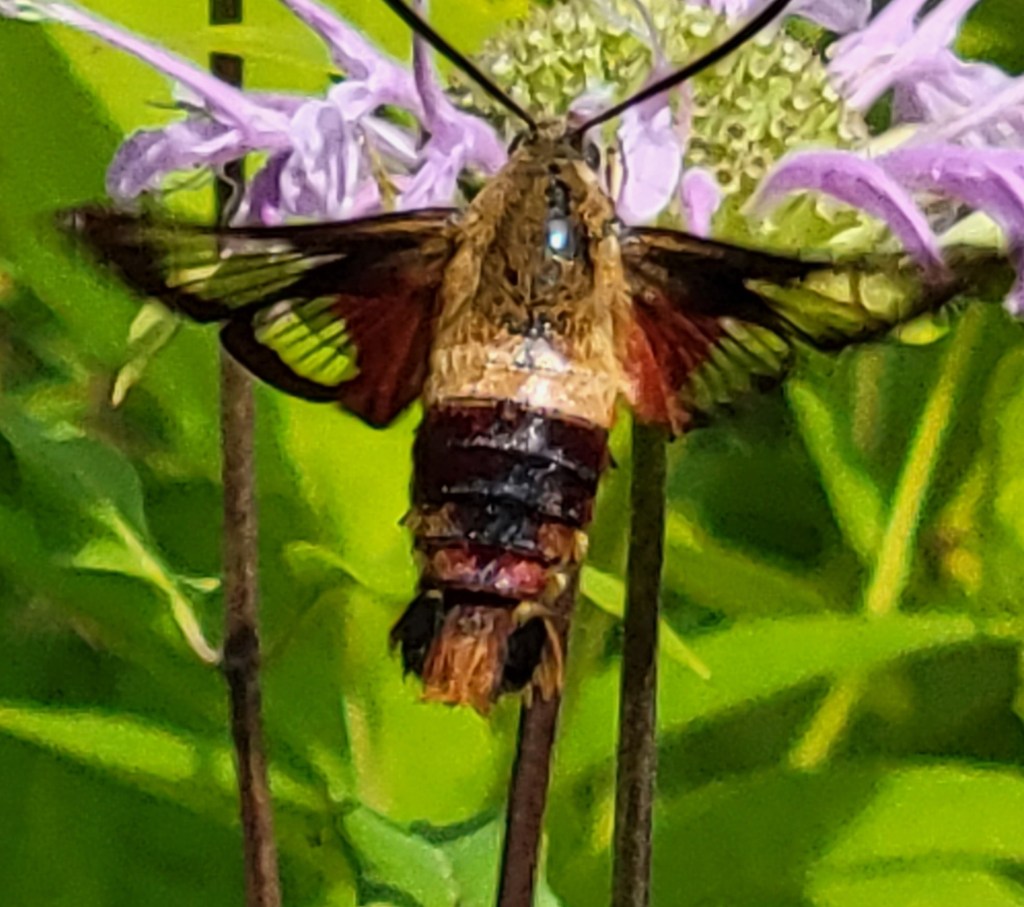
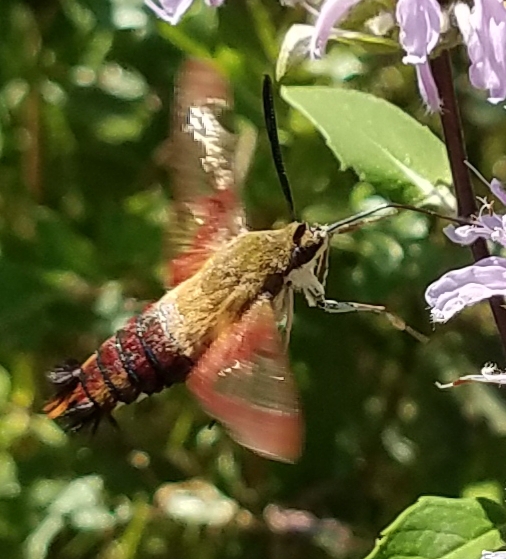
In a close-up view, it is possible to see the use of the proboscis to get the nectar.
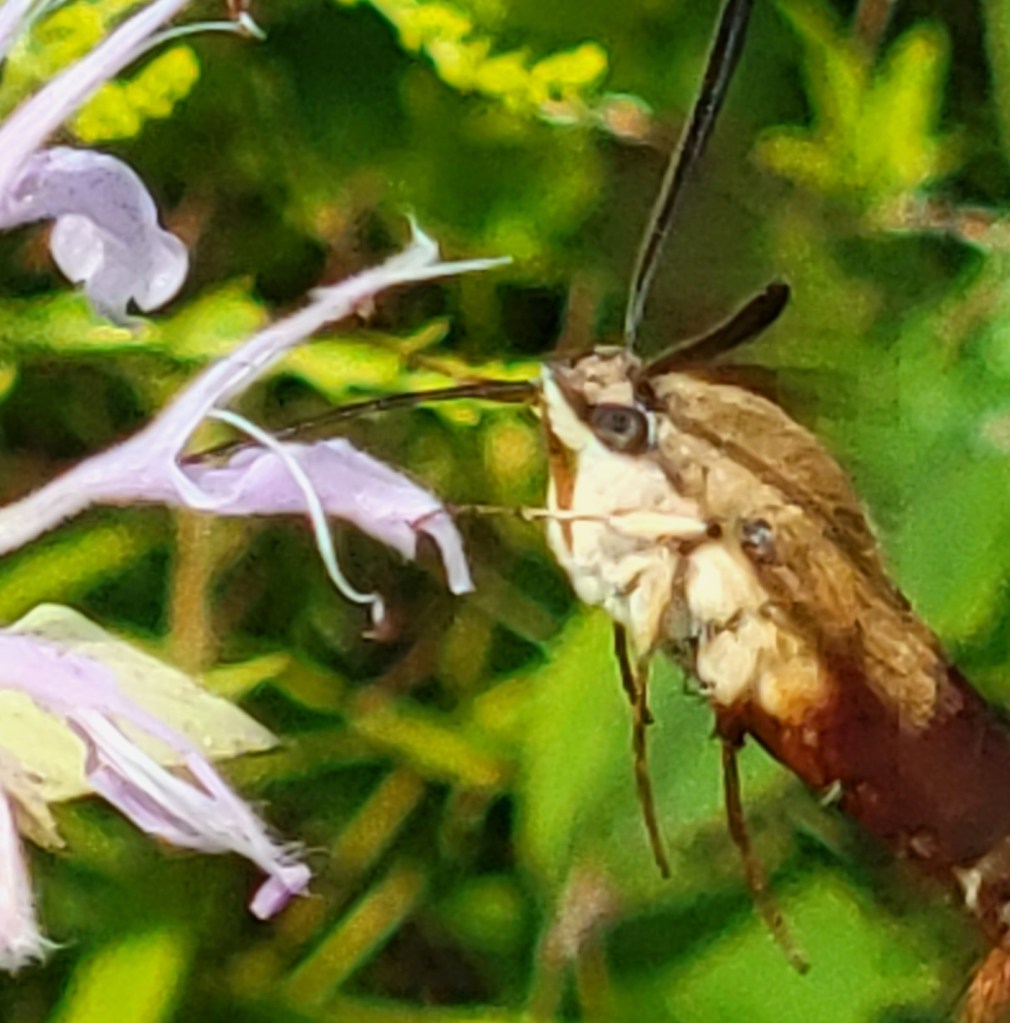
I remember the first time I saw a hummingbird moth and my “what’s that” reaction. The reaction was both lack of familiarity and excitement. I have, over the years, become familiar with these moths, but excitement remains a big part of my reaction when I begin to see them each July.

 Eliza Howell Nature Walk
Leave a reply to Sally Lackaff Cancel reply