Leonard Weber
March 31, 2024
It is not unusual that the first (non-raptor) bird species that can be observed nest building in the spring in Eliza Howell Park is the Mourning Dove.
Since March 21, I have been checking regularly on one of their nests. We were in the midst of a cold spell when I located it that day; 4 inches of snow fell the following day.
Through the cold and snow, the nest has been attended day and night (female and male share the duty of keeping the eggs warm, the female taking the night and the male the day). I don’t know when the eggs were laid, but the end of the usual 14-day incubation period may be arriving soon.
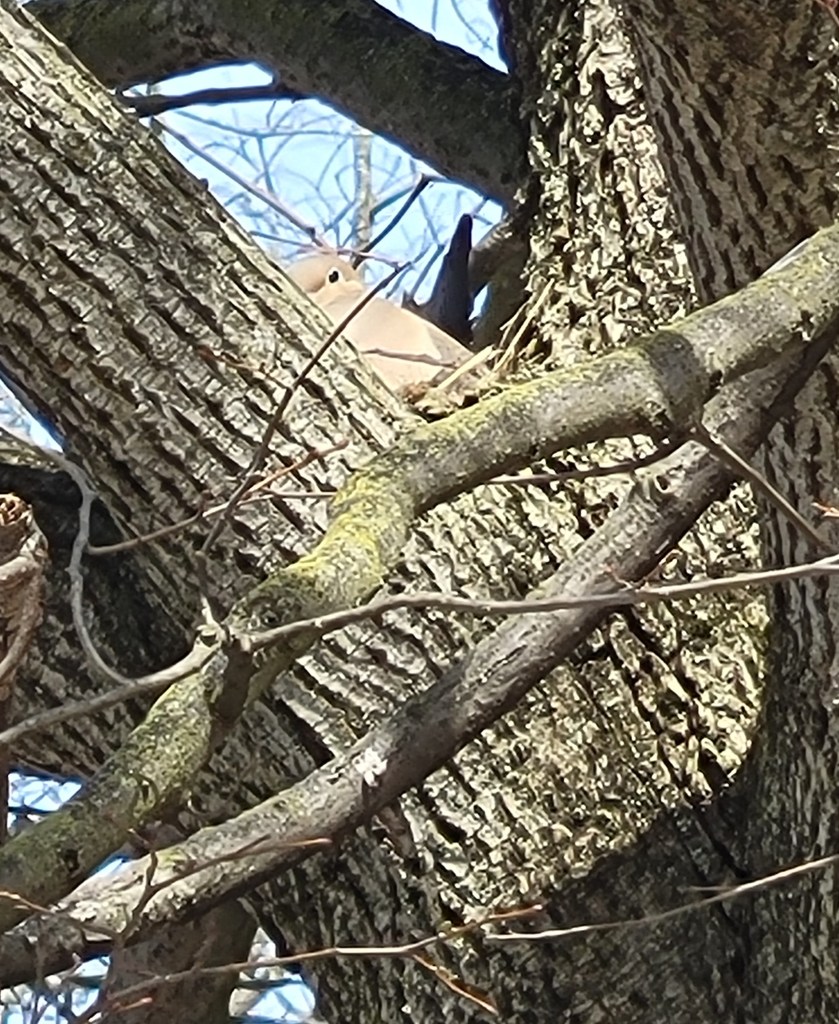
Mourning Doves are common year-round birds in the park and several pairs nest here each year. Though they are common, their nesting-related behaviors are quite uncommon.
They usually start their breeding season singing (“cooing”) by the end of February and the first ones start nesting in March, several weeks before many of the other breeding birds of Eliza Howell even return from their wintering grounds.
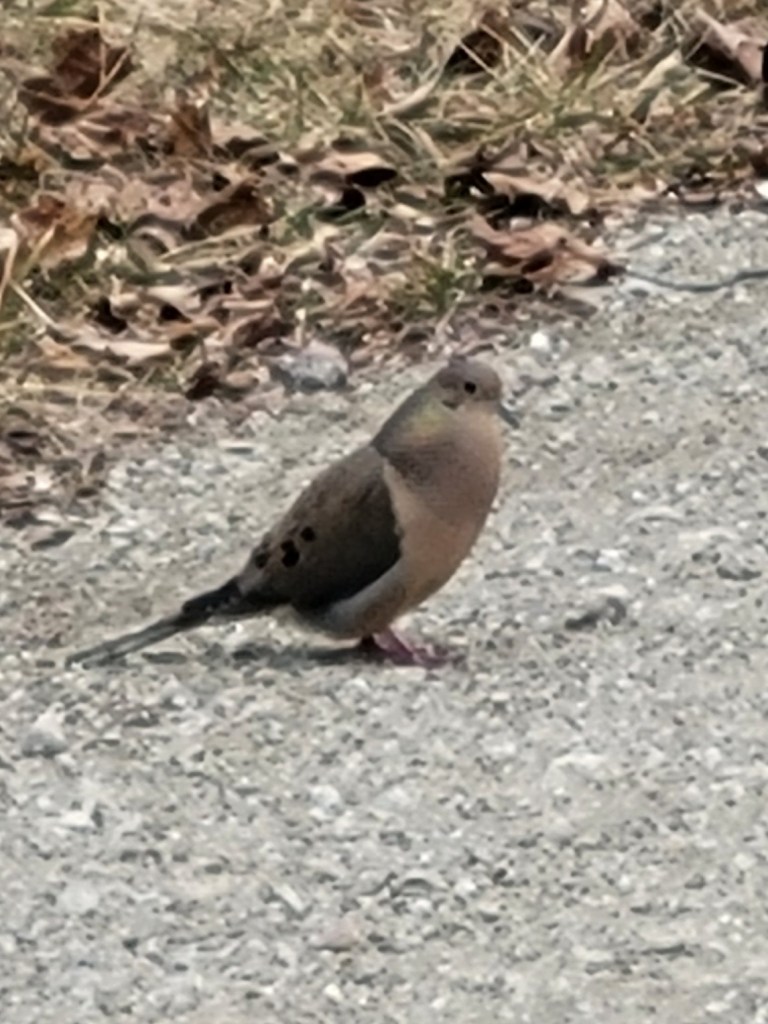
February 22
There are other ways in which Mourning Dove nesting behavior is atypical.
They put together a flimsy nest of twigs and grass, a nest without an inner cup, in about 2-3 days. This compares to about a week for many other species. The female stays on the chosen limb as the male brings each piece to her, steps on her back, and presents it to her when she turns her head. She then tucks it under and/or around her while he immediately gets the next piece. It is a very quick construction process, fascinating to watch.
The nest shape and construction are partially visible in the next photo.
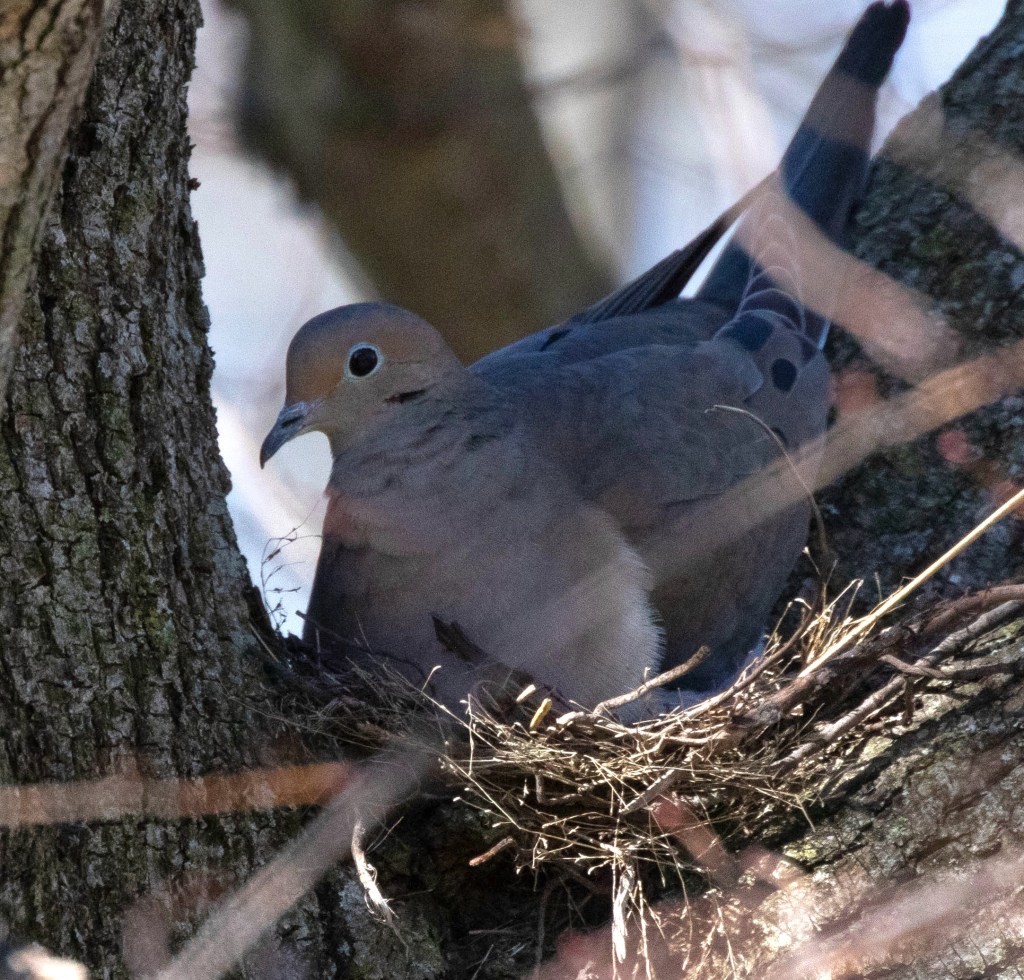
of Margaret Weber
Mourning Doves typically lay just two eggs (half as many as most song bird species). They have 2 or more broods each year, so they are able to keep their numbers up despite the small brood size
The number of eggs per brood is directly related to the method of feeding the young.
While other song bird species that nest here feed insects to their hatchlings, birds in pigeon family (pigeons and doves) have the capacity to produce “crop milk” or “pigeon milk” to feed the babies.
Pigeon milk is a semi-solid substance (described sometimes as being like cottage cheese). It is high in protein and fat. The young are not able to digest the Mourning Dove regular seed diet in the first days after hatching. Both females and males produce the milk and feed the young, but even between the two of them there is not enough milk for more than two young at a time.

The ability to produce pigeon milk makes early nesting possible. They do not need to wait for an increase in insect prey for feeding the young, as other birds do.
It’s not easy for observers to know when the eggs hatch. There will be no frequent visits to the nest as the parents bring insect food. Rather, the parent will continue to keep the chicks warm, feeding them “milk” without needing to leave the nest.
If all goes well and if my visits are timed right, perhaps I will be able obseve the young several days after they hatch, when they have grown enough that the parents are transitioning in feedings from milk to seeds.
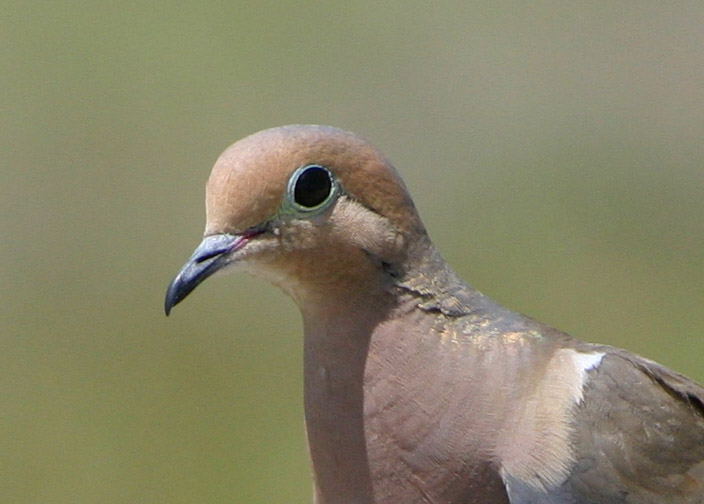
Margaret Weber


 Eliza Howell Nature Walk
Leave a reply to Thomas H Hubert Cancel reply