Leonard Weber
April 4, 2025
It is April. Bird nesting season is now beginning in Eliza Howell Park.
—–
NOTE: At the end of this post, there is information about a 5-week Birds Nesting field course in Eliza Howell Park this spring.
—–
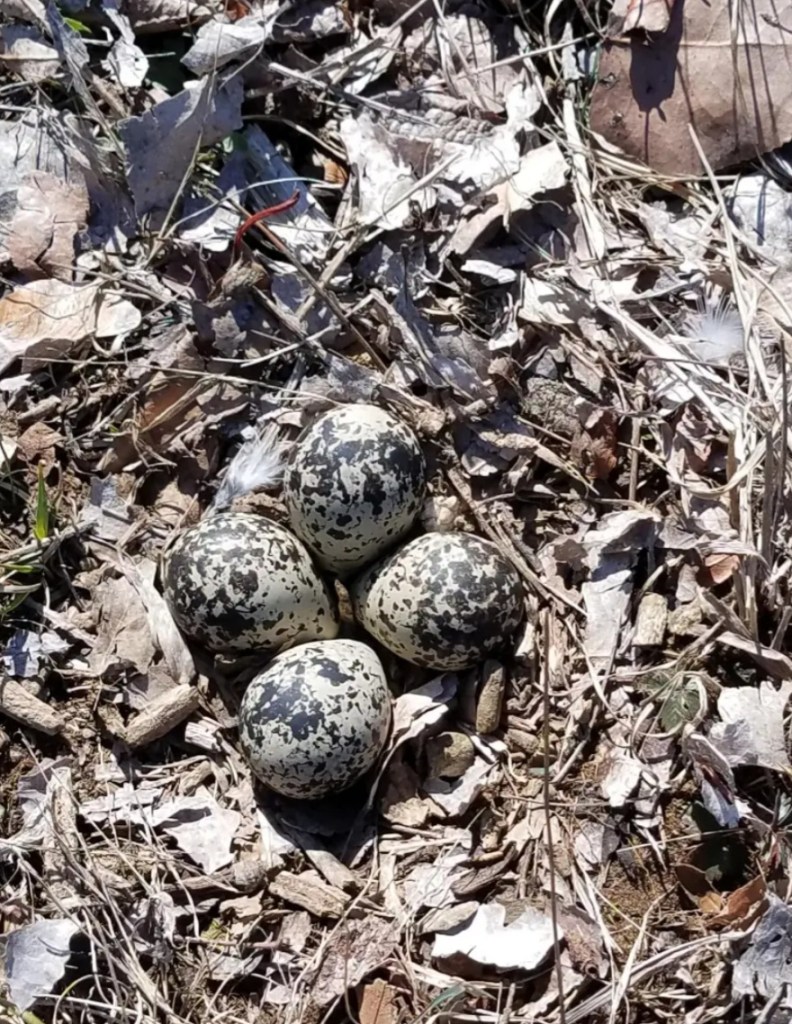
Some of the earliest nesters in the park are Mourning Dove, American Robin, Red-bellied Woodpecker, and Killdeer.
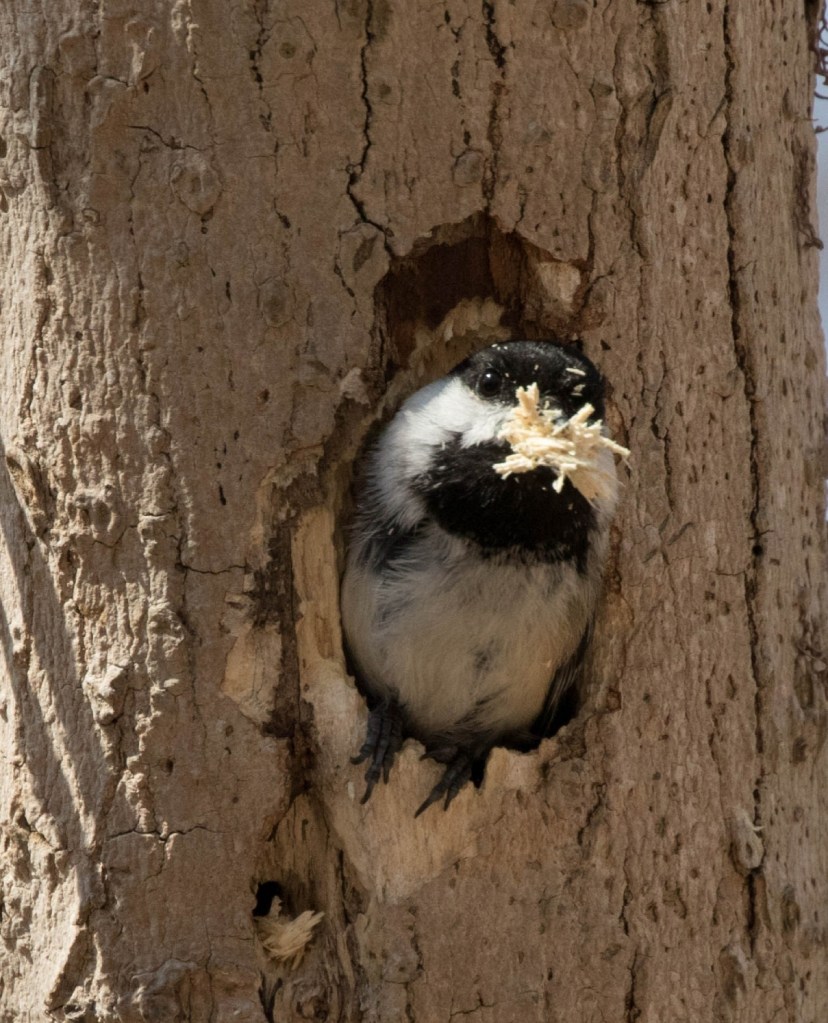
Another early nester is the Black-capped Chickadee. One of my favorite experiences watching birds making nests was in April 2019. I stopped frequently along the path in the woods over a period of a week to watch a pair of Chickadees working together to hollow our a small dead tree.
Margaret Weber
Chickadees are cavity nesters that will often use an existing cavity (a natural hole in a tree or an old woodpecker hole or a bird box), but they will sometimes make a new hole in dead wood. In this case, the pair was preparing their nesting site by excavating a hole about 12 feet high in a slim, slanting dead tree.
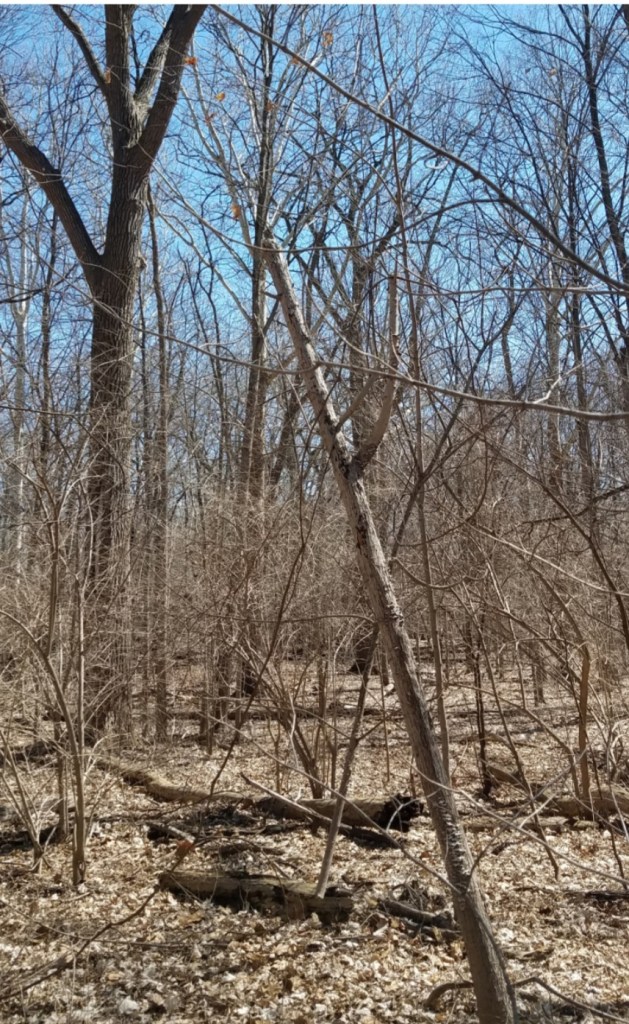
Chickadees do not have the beak and head perfectly suited for hitting hard wood
repeatedly, as woodpeckers do. Woodpeckers often chip out solid wood for a nest.
Chickadees, when they make a new hole, seem to select softer, rotting wood. Once they get started, their excavating is not so much chipping away at the wood as it is pulling the soft wood apart. In the first picture above, the bird emerged with a beak full of wood chips only 3 or 4 seconds after entering the hole.
When woodpeckers excavate,
they bring the chips to the
opening and “spit” or drop them from the entrance.

Margaret Weber
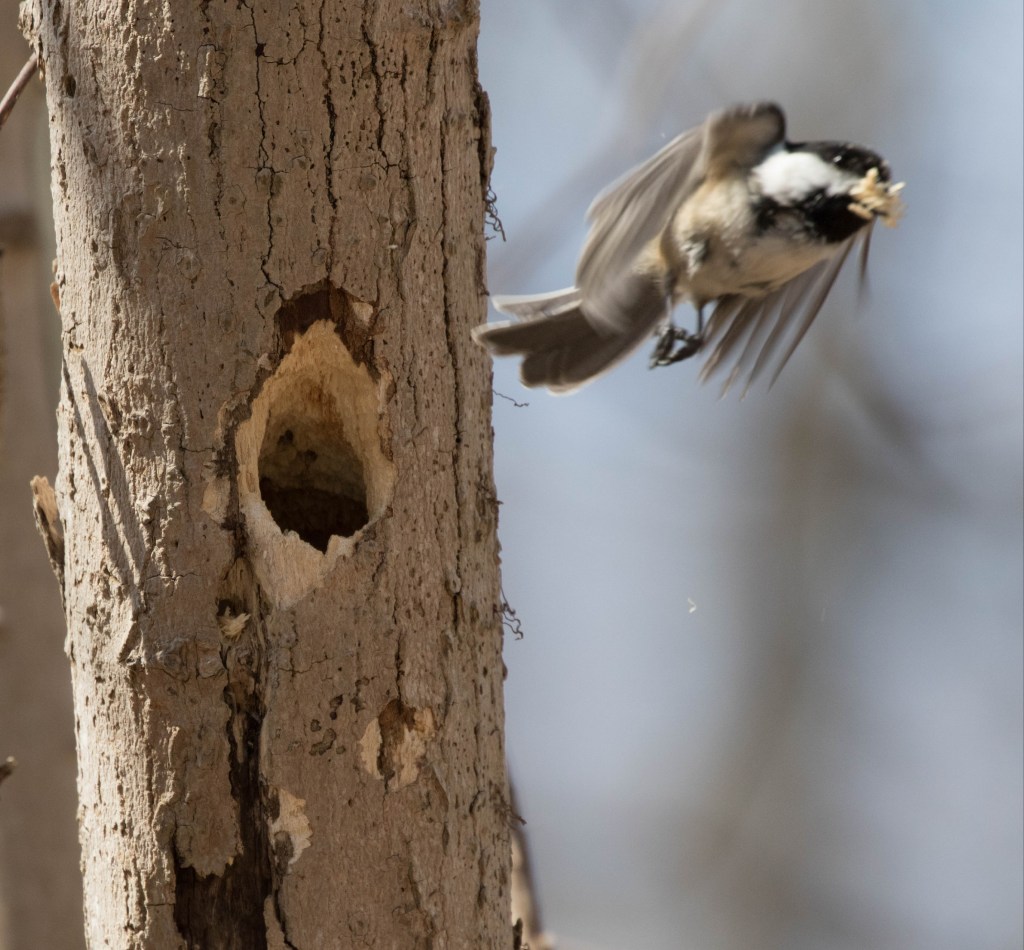
Chickadees, on the other hand, carry their excavated chips a good distance away from the nest before dropping them. They leave no clue of their work near the base of the tree, presumably not wanting to lead a predator to the nest.
Margaret Weber
Female and male work together to make the hole, but they have separate roles in some of the next phases. The female will make a nest of soft material in the cavity, lay the eggs (often 6 or more of them), and incubate them. While she is incubating, the male will feed her. The hatched young are tended by both parents.
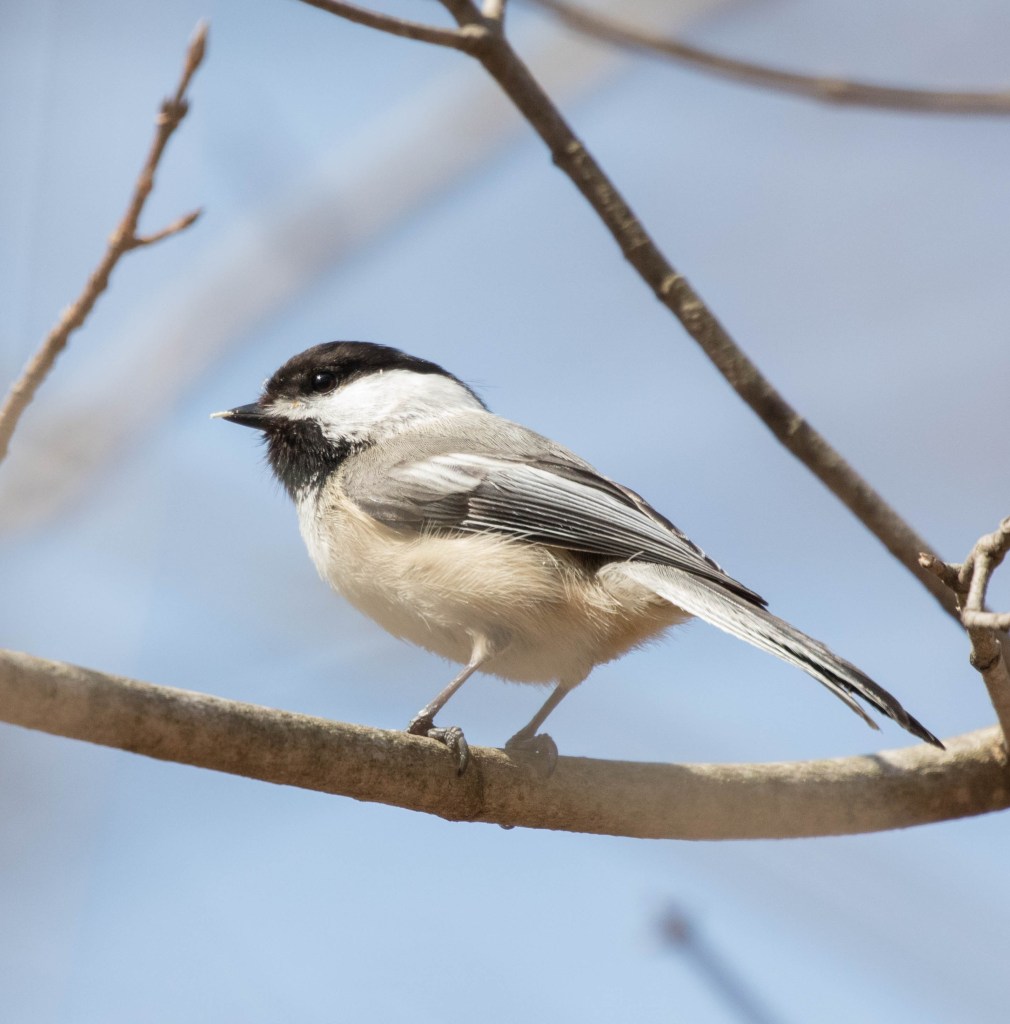
Margaret Weber
Chickadee is just one of many bird species that regularly nest in Eliza Howell Park. The peak of the nesting season is late April to early June, but early nesting activities are starting now.
—–
As part of its “Be a Better Birder” program, Detroit Bird Alliance is offering a 5-session Birds Nesting field course on 5 Saturdays beginning on Saturday, April 26. This is an opportunity to learn more about the nesting behavior of perhaps a dozen different species. All sessions are in Eliza Howell Park.
More information can be found at the Detroit Bird Alliance website.
—–


Leave a comment