-
American Kestrel: The Smallest Raptor
Leonard Weber
October 28, 2024
Taking frequent long nature walks throughout the year, I see approximately 110 different bird species annually in Detroit’s Eliza Howell Park. In mid-October this year, I saw an American Kestrel, a species that is not one that I spot every year; this is the 8th year in 20 years of records.
American Kestrel is a falcon, birds of prey characterized by fast flight and pointed wings.
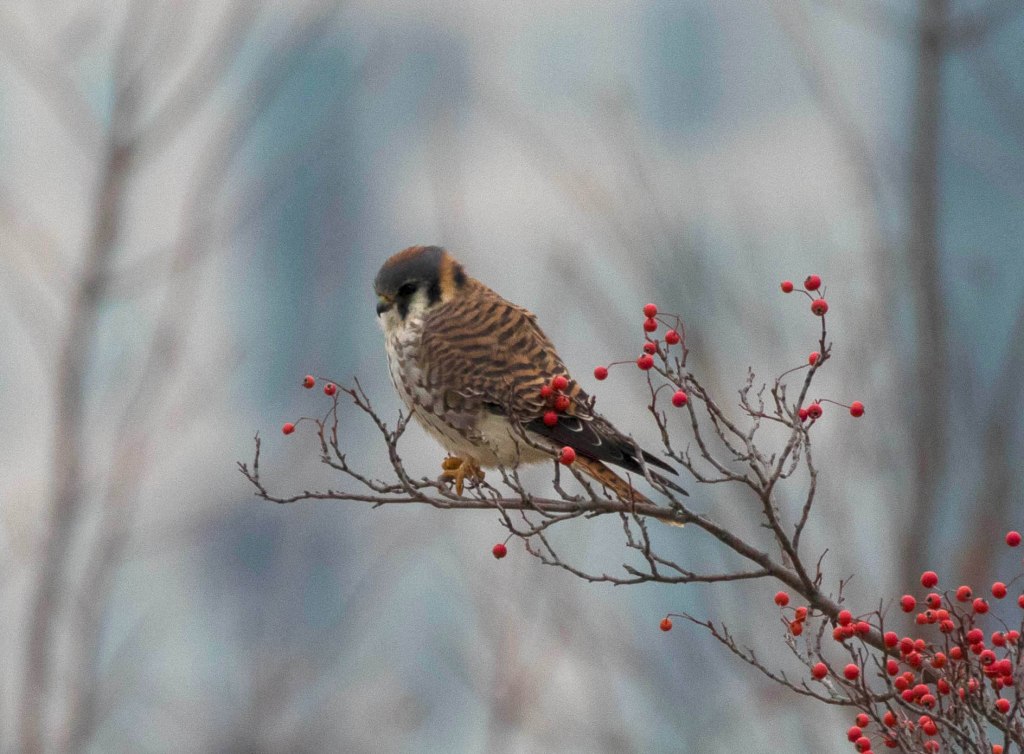
Photo courtesy of Margaret Weber As can be seen in the photo, American Kestrels are small. Bird size is usually measured from the tip of the bill to the end of the tail. Kestrels are about 10 inches long, slightly smaller than Blue Jays. It is the smallest raptor in North America.
Kestrels often hunt by perching in a location with good visibility, ready to fly down and grab its prey on the ground. They mostly eat large insects (like grasshoppers) and small mammals (such as voles and mice), sometimes small birds and reptiles.

Photo courtesy of Margaret Weber It is a migratory bird, one of the species counted annually at the various hawk count locations. It breeds in much of the country, nesting in tree cavities. It is possible to see them at any time of the year here, but sightings are more frequent, it seems, during spring and fall migration. Detroit is at the northern end of the winter range.
(In this map, red is breeding season only, purple is all seasons, and blue is winter only.)

Range map from Kaufman Field Guide to Birds of North America Though there are no roadside wires in Eliza Howell, these wires are favorite hunting perches for the little falcons.

Photo courtesy of Margaret Weber The October sighting was the second of 2024; the first was in April. It would be great to see another of these attractive little hunters soon!
-
October: Leaf Senescence
Leonard Weber
October 19, 2024
Many times on nature walks in Eliza Howell Park in October, my attention is divided between fauna and flora. I am alert to migrating birds and am looking for the last butterflies of the year, but it is impossible not to notice the changing foliage.
I was able to arrive early on the morning of October 17. The sun was bright, highlighting the first frost of the fall and the colorful foliage at the edge of the woodland.

October 17 The term “senescence,” meaning growing old, is sometimes used to describe the process of tree leaves changing color in the fall. Leaf senescence signifies that the growing season is over, and dormancy is beginning.
On some of the earliest trees to change, most of the green is gone by the middle of October.

Yellow Bud Hickory, October 15 
Sugar Maple, October 14 Not all trees of the same species change at the same time.

Another Sugar Maple, Ocotober 14 Based on observations in previous years, the second Sugar Maple pictured here will not be fully red until very late in the month.

Sugar Maple, October 23, 2023 The view from the footbridge over the Rouge River demonstrates the changes during October.

October 1, 2024 
October 17, 2024 By the end of the month, as a photo from last year indicates, most leaves will have fallen.

October 31, 2023 In the woodland, much of the change takes place during the second half of October.

October 16, 2024 Walking the path will be quite different by the end of October, as shown by a photo from last year.

October 26, 2023 The word senescence is a general term to describe aging and age-related deterioration. In humans and other mammals, senescence is not something that we usually celebrate. It will not be followed by dormancy and new growth; nor is it colorful.
Leaf senescence, on the other hand, is a joy to observe and one of the major reasons October is a great month for nature walks.
-
The Sparrows of October: Three of Nine
Leonard Weber
October 13, 2024
In a typical year, I see about 55 different bird species in Eliza Howell Park in Detroit during the month of October. Some of these are summer residents that have not yet departed south for the winter; some are year-round residents; some are migrants that spend neither summer nor winter here; a few are winter-only residents.
Among the birds of October are usually 9 different sparrow species (not including the House Sparrow). Among those that arrive in the first half of the month from the north are three that always capture my attention.
White-throated Sparrow

Photo courtesy of Margaret Weber White-throated Sparrows eat fruit as well as seeds in the fall and can usually be found in the brushy edges where trees meet fields. They are typically seen in small flocks at this time of the year.
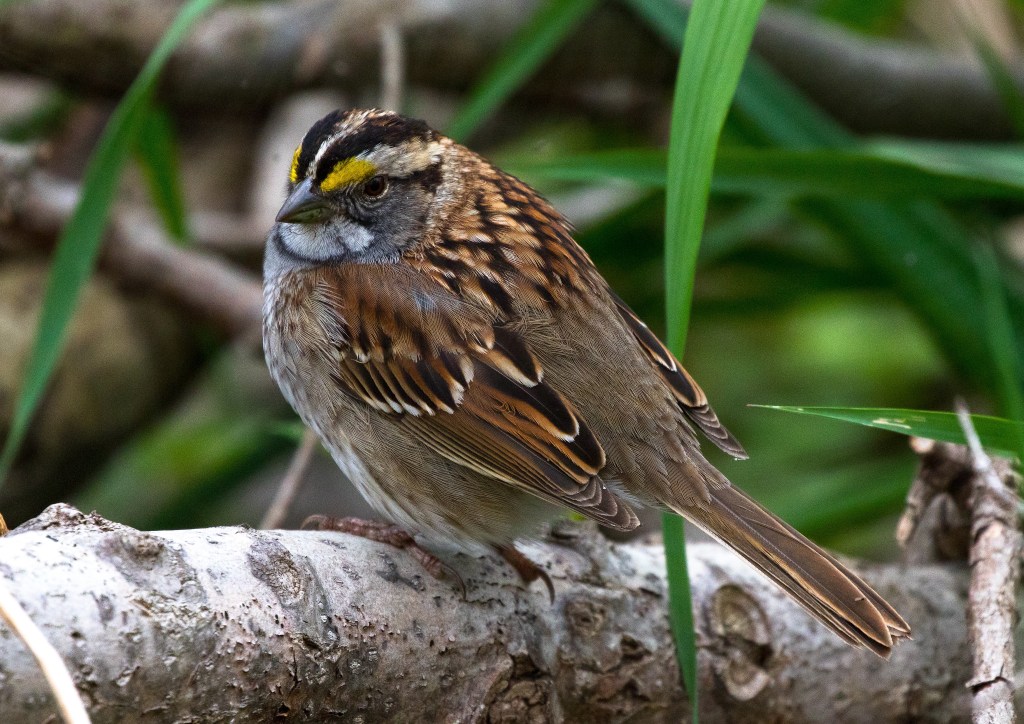
Photo courtesy of Margaret Weber Detroit is south of their summer grounds and at the northern edge of their winter range. We may see a few in the winter months, but most are just passing through. (Range map is from Cornell Lab of Ornithology.)

Range of White-throated Sparrow White-crowned Sparrow
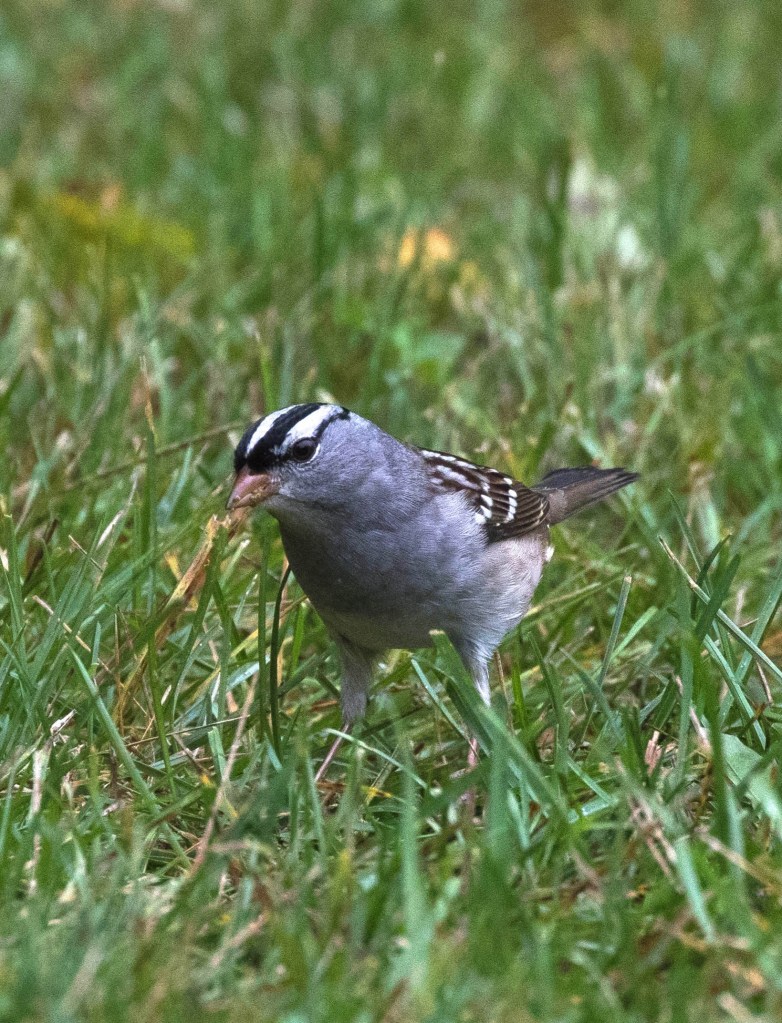
Photo courtesy of Margaret Weber The above is the typical look of White-crowned Sparrows. A few in the fall look a little different. These are immatures, hatched earlier in the year, whose head does not yet show the characteristic white and black crown of adults.
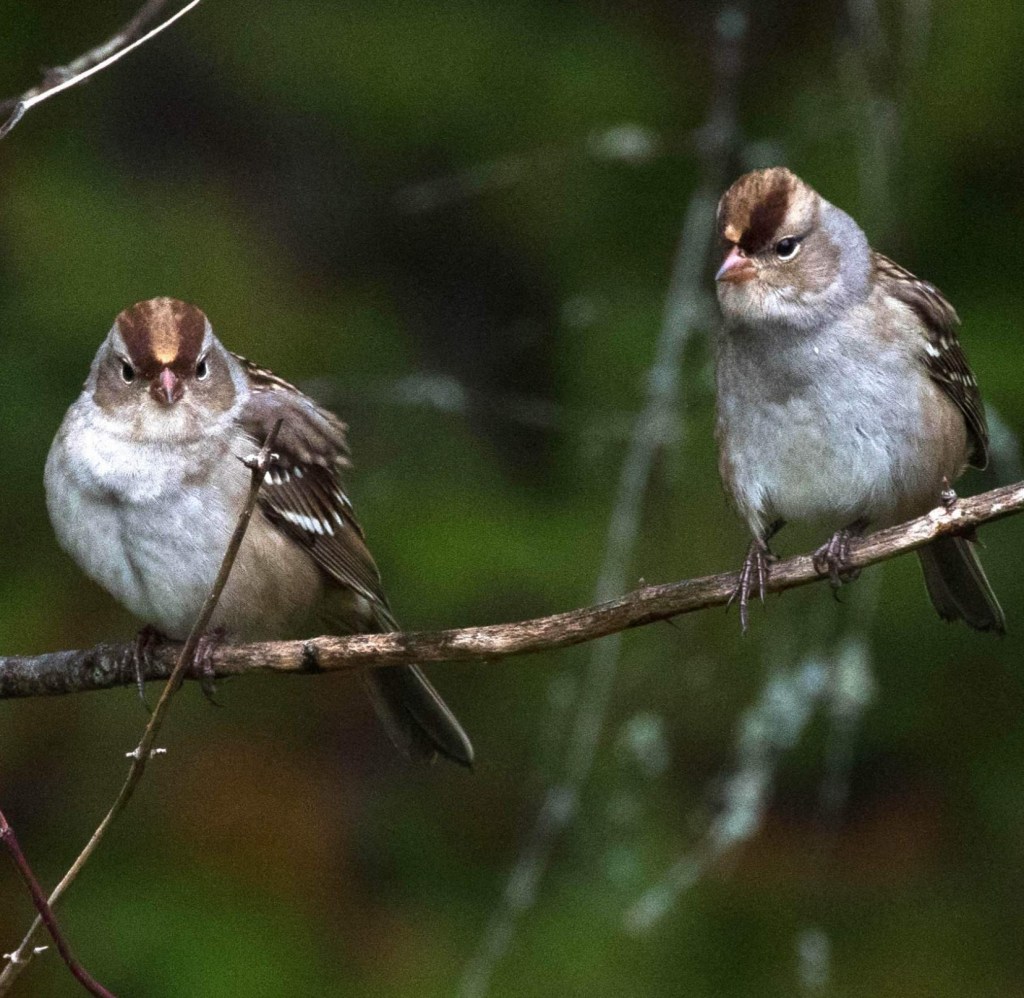
Immature White-crowned Sparrows. Photo courtesy of Margaret Weber White-crowned Sparrow can usually be found on the ground in the fall, searching for seeds and other food.
It breeds much further north and winters a little south of here, so it can normally only be seen twice a year in the park. (Range map is from Cornell Lab of Ornithology.)
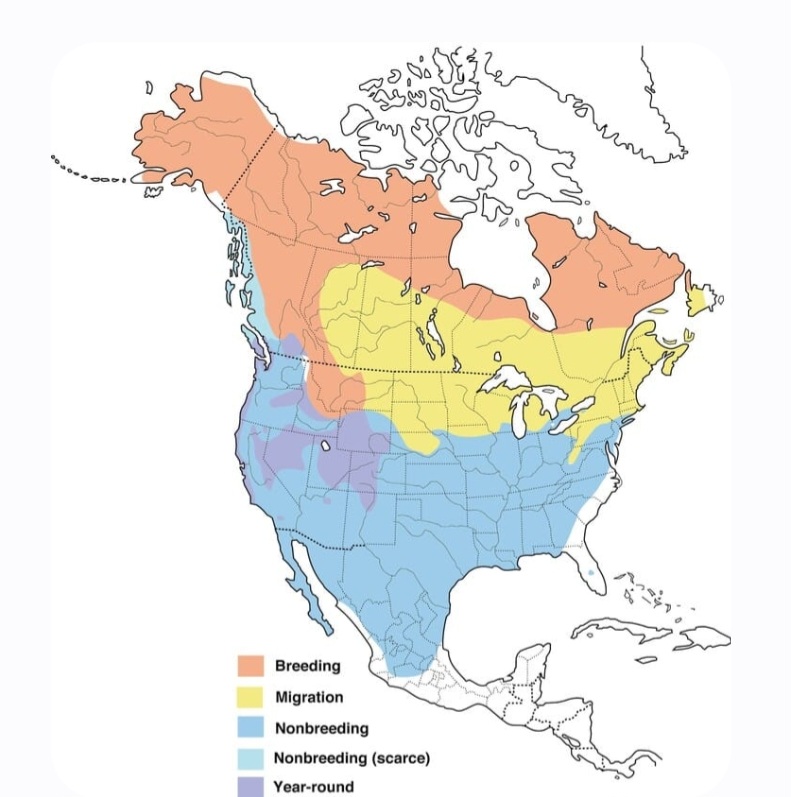
Range of White-crowned Sparrow Dark-eyed Junco
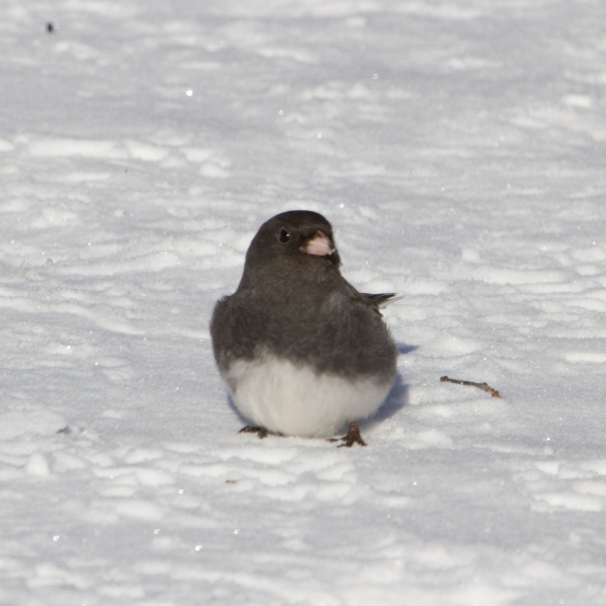
Photo courtesy of Margaret Weber The Dark-eyed Junco, considered the “snowbird” in many parts of the country because it is present all winter (and not at all in the summer), is present in Eliza Howell Park from October until early April.
The Junco’s fall arrival is a noteworthy event annually. In 2024, it was first spotted on October 8.
Not surprisingly, the “snowbird” is often photographed when there is snow on the ground.

Photo courtesy of Margaret Weber It is a seed eater and a ground feeder. It is attracted to bird feeders, frequently seen on the ground under a feeder, eating fallen seeds.
In east and central North America, Dark-eyed Junco breeds mostly in Canada but is found throughout the U.S. in the winter. (Range map is from Cornell Lab of Ornithology. )
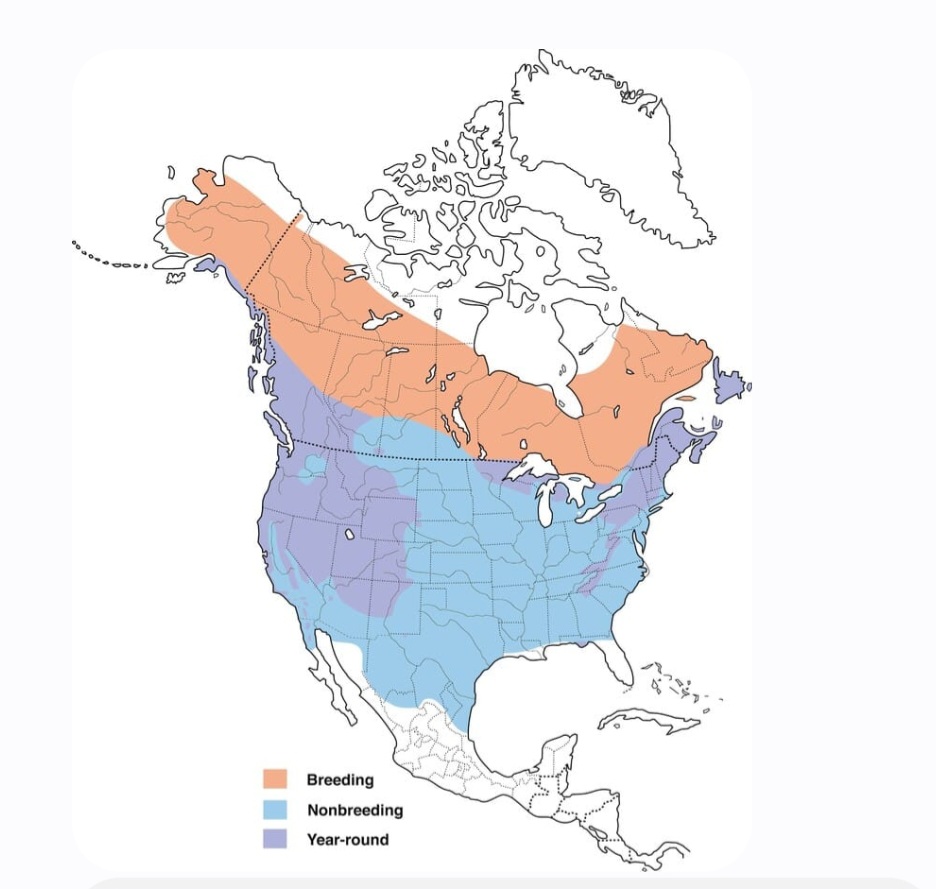
Range of Dark-eyed Junco In a typical October, the sparrow species that can be observed in Eliza Howell, in addition to the three featured above, are:
Song Sparrow
Chipping Sparrow
Field Sparrow
Swamp Sparrow
American Tree Sparrow
Fox Sparrow
While sparrows in general do not have the same reputation for excitement and color as some other bird families, those of us who watch birds in October in southeast Michigan know that sparrows are a highlight of fall migration and that the arrival of White-throateds, White-crowneds, and Juncos is a special part of the fall seasonal transition.
-
Looking for Mushrooms: Abundance on a Beech Log
Leonard Weber
September 29, 2024
There are many fallen logs in the woodland of Eliza Howell Park, as is normal for an old forest. Fall is a wonderful time of the year to check out these logs and to note the variety of mushrooms that can be found.

Recent photos The log mushrooms are often fascinating in appearance and texture. In addition, they are agents of decomposition, contributing to the process of breaking down the wood and eventually returning nutrients to the ground to be used by other plants.
—-
After viewing a number of other logs, I walked to a large beech log that had been down for some years. It has often hosted mushrooms in past years, and I was curious to see what might be present this fall. I was surprised by the abundance!
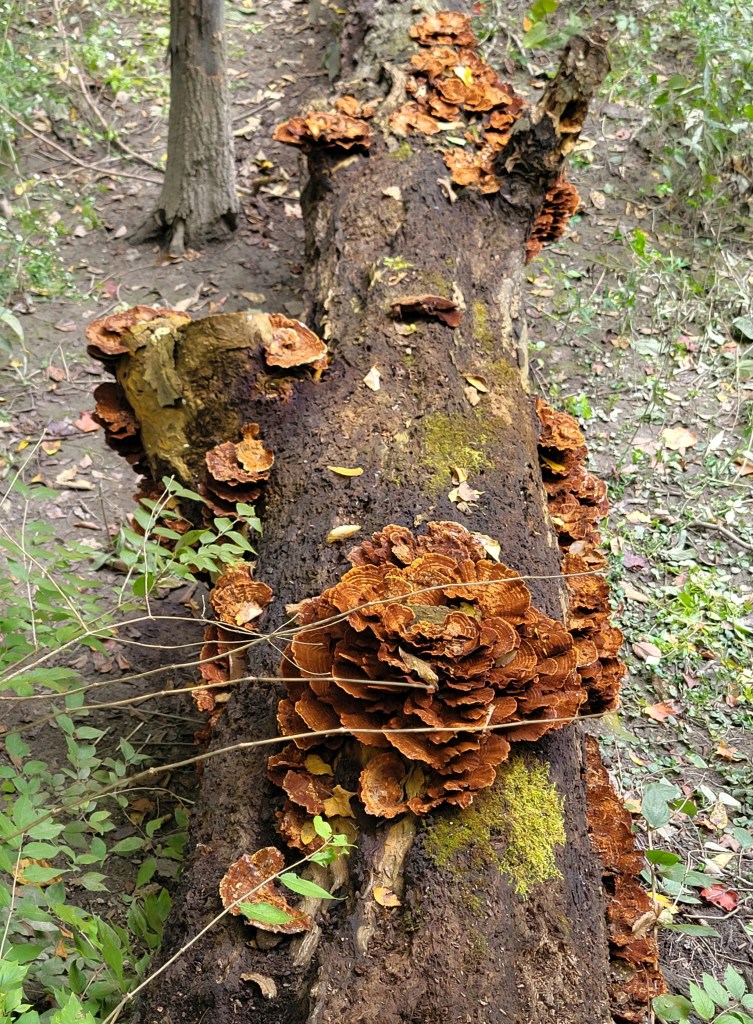
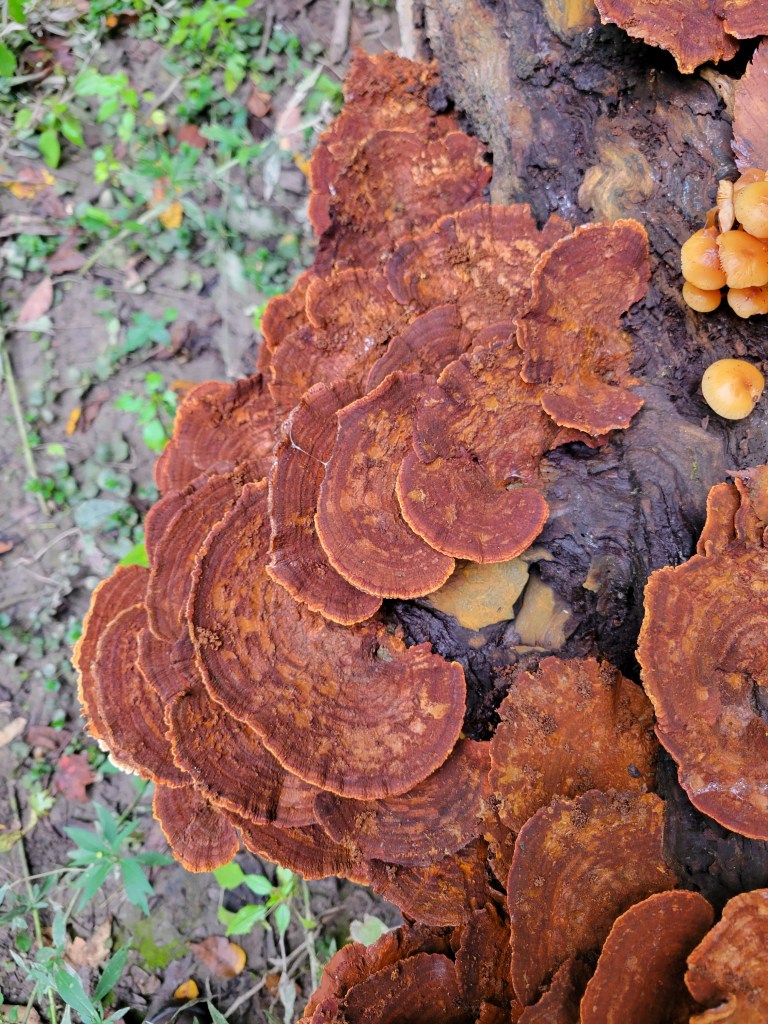


The pen helps to indicate the size It’s difficult to catch in photos the full impression that this mushroom log makes when one stops for a look. Since I first saw it a few days ago, I have returned each time I have been in Eliza Howell Park.

Who would think that agents of decay could be so impressive!
-
Common Buckeye 2024: A Tribute
Leonard Weber
September 19, 2024
I have always found the Common Buckeye a most attractive and intriguing butterfly. Though usually not common in frequency of appearance in Eliza Howell Park, 2024 has been something of an exception. This year, I have had the opportunity to see one quite frequently, sometimes for close-up looks.
With these photos, I express my gratitude and appreciation for the Common Buckeyes of 2024.
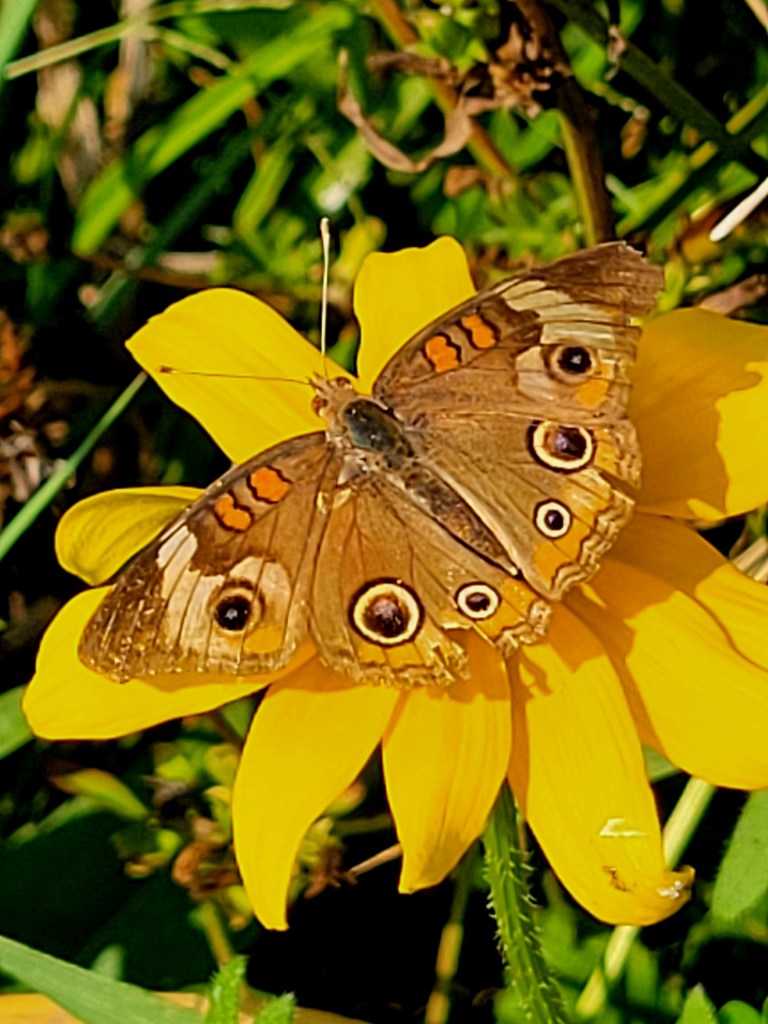
On Black-eyed Susan, September 11, 2024 Earlier in the season, Common Buckeyes in the park were often on and near the ground.
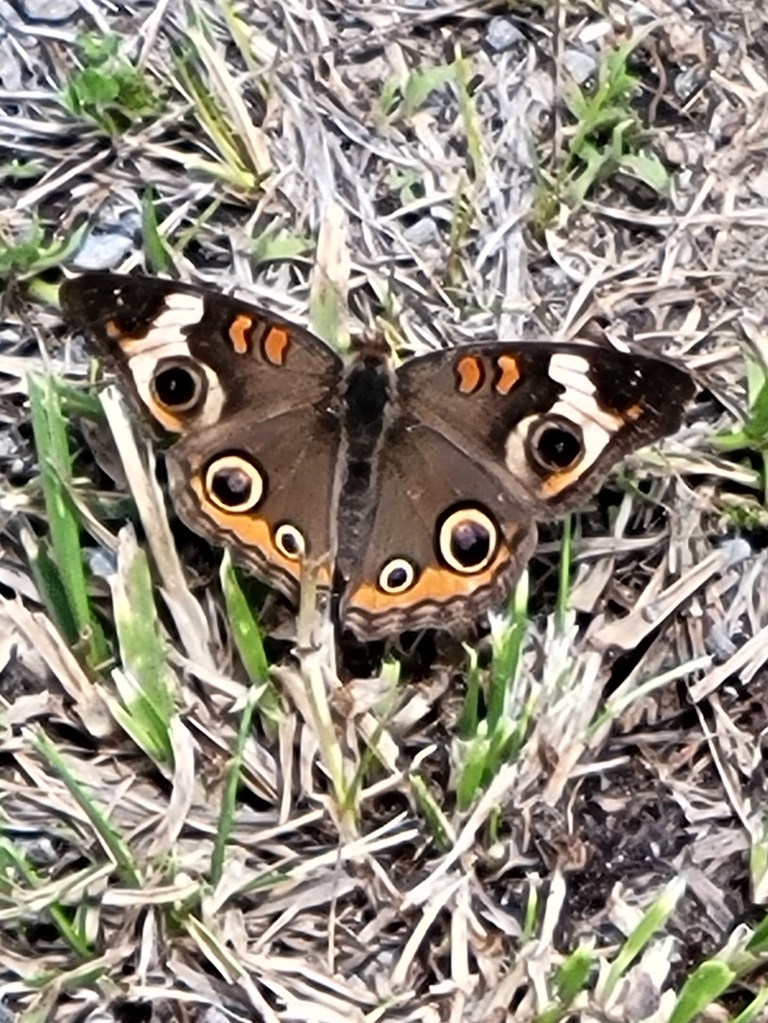
June 27, 2024 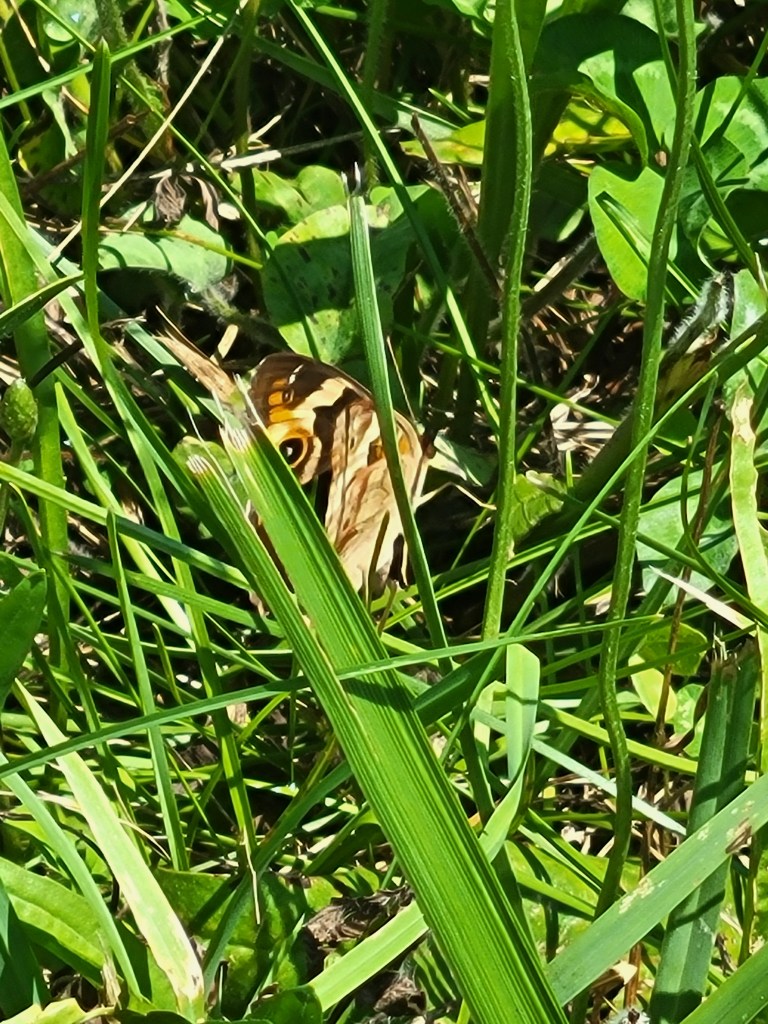
July 15, 2024 As the summer went on, I saw them more frequently on flowers.
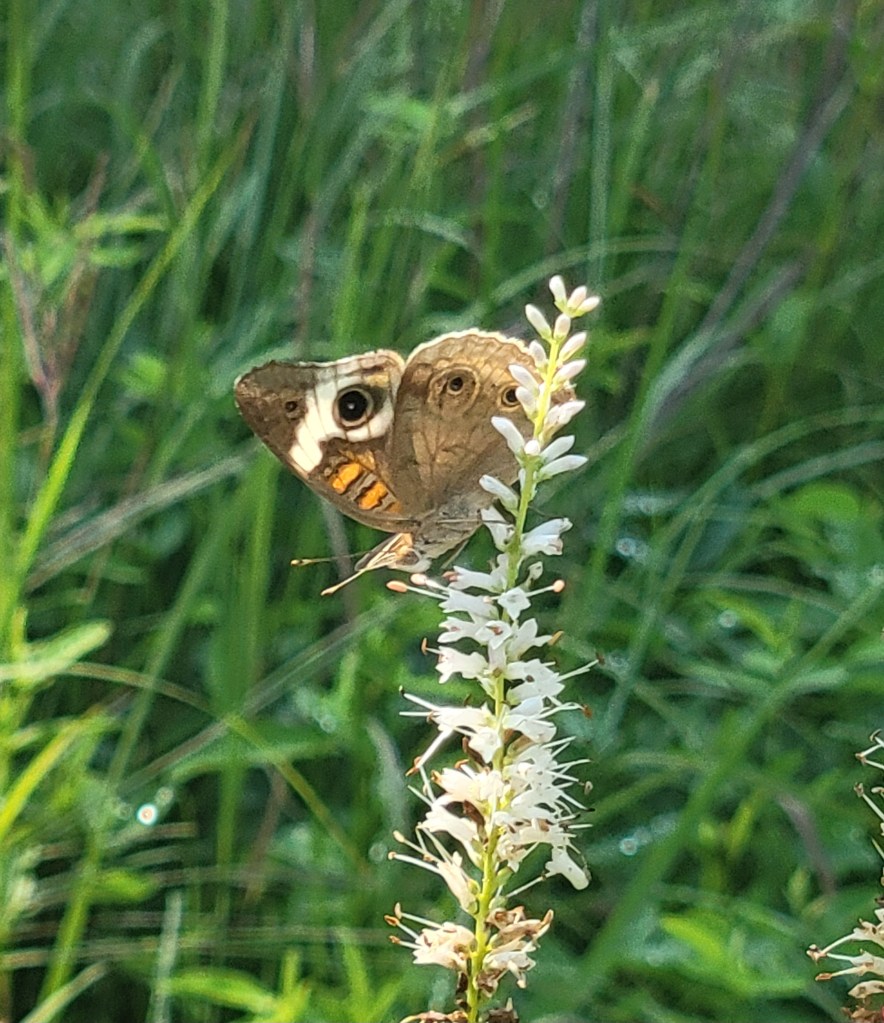
On Culver’s Root, July 31, 2024 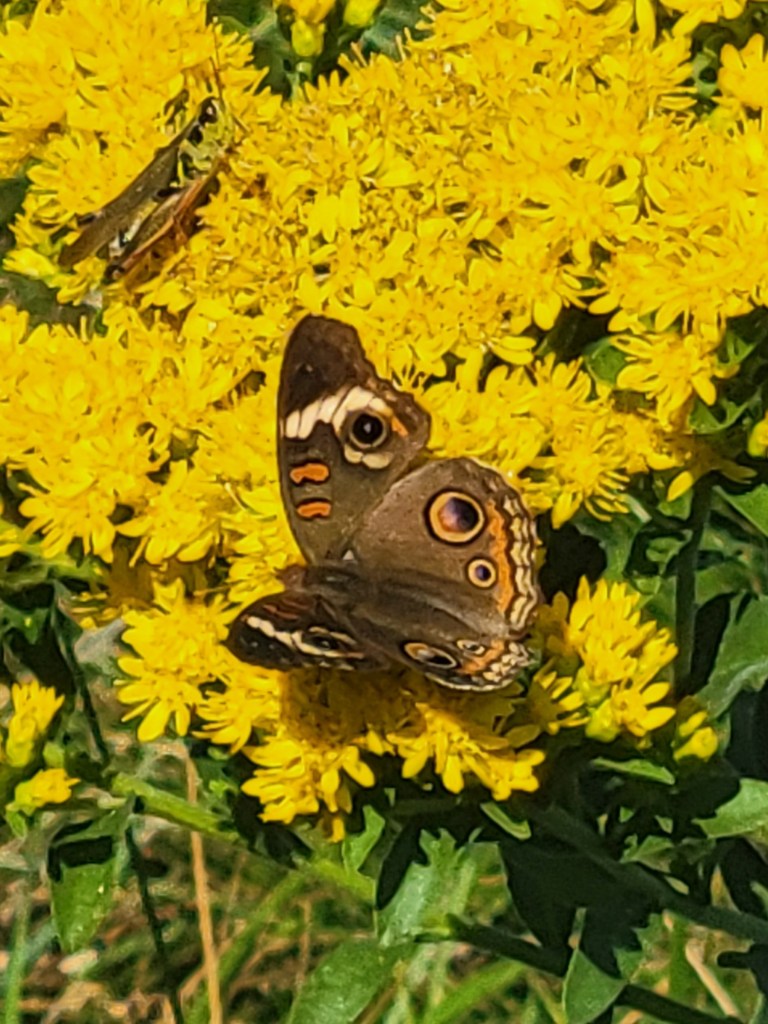
On Goldenrod, September 1, 2024 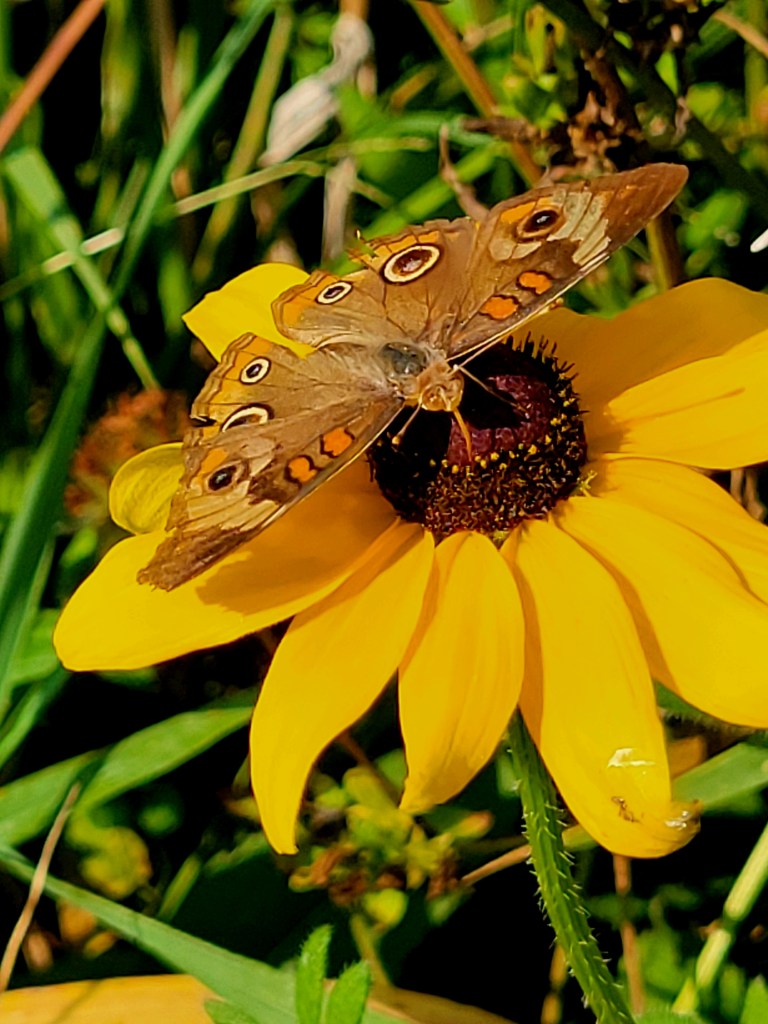
On Black-eyed Susan, September 11, 2024 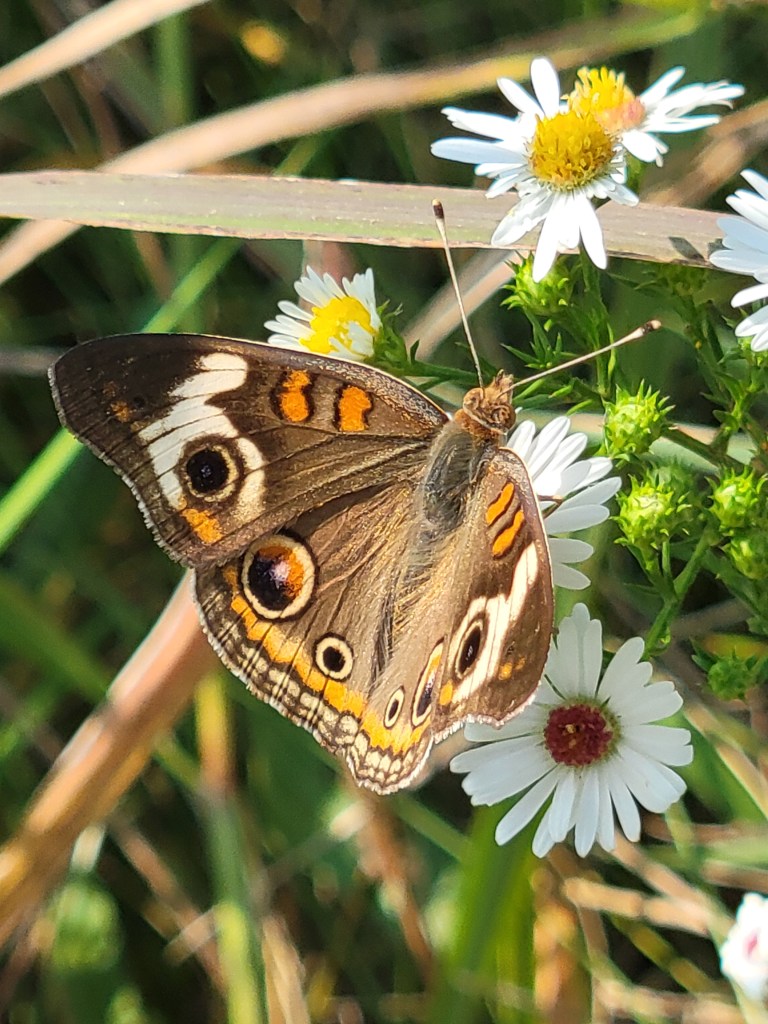
On Aster, September 12, 2024 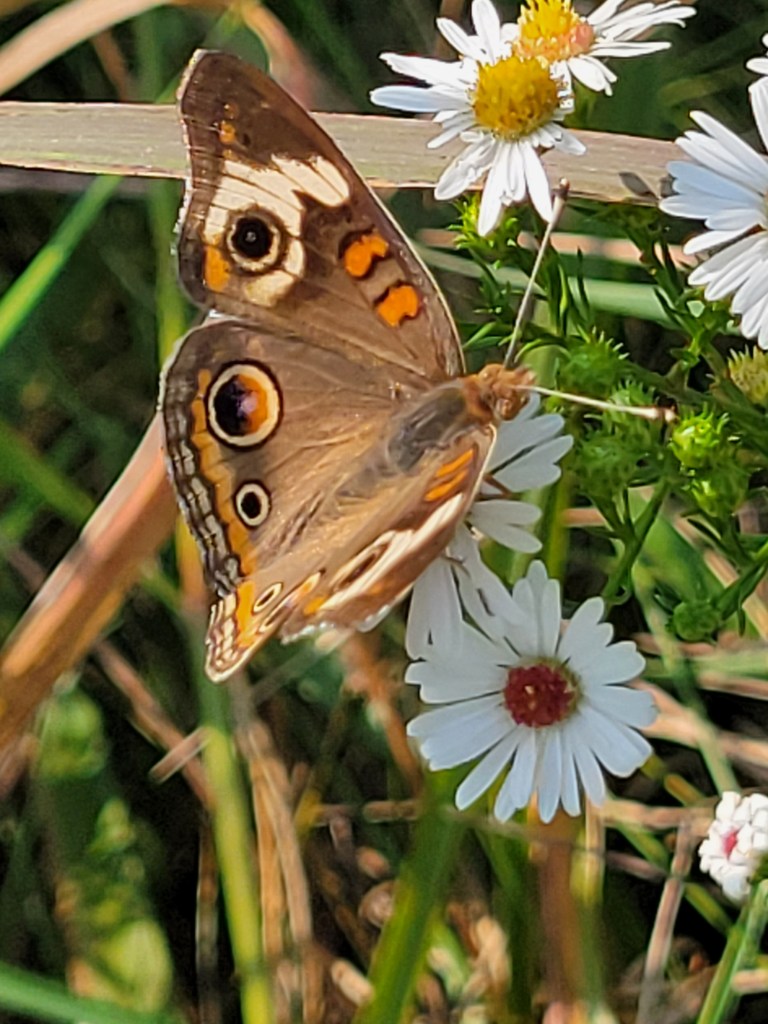
On Aster, September 12, 2024 I saw the first Common Buckeye this year on June 18, and the most recent observation was on September 19.
It has been a great year!
-
The September Monarch Butterflies Are Different
Leonard Weber
September 12, 2024
September is a good time to observe Monarch butterflies in Detroit’s Eliza Howell Park. During the first third of the month, the caterpillars can be found relatively easily on milkweed leaves, eating steadily.
Here are three from the past week.

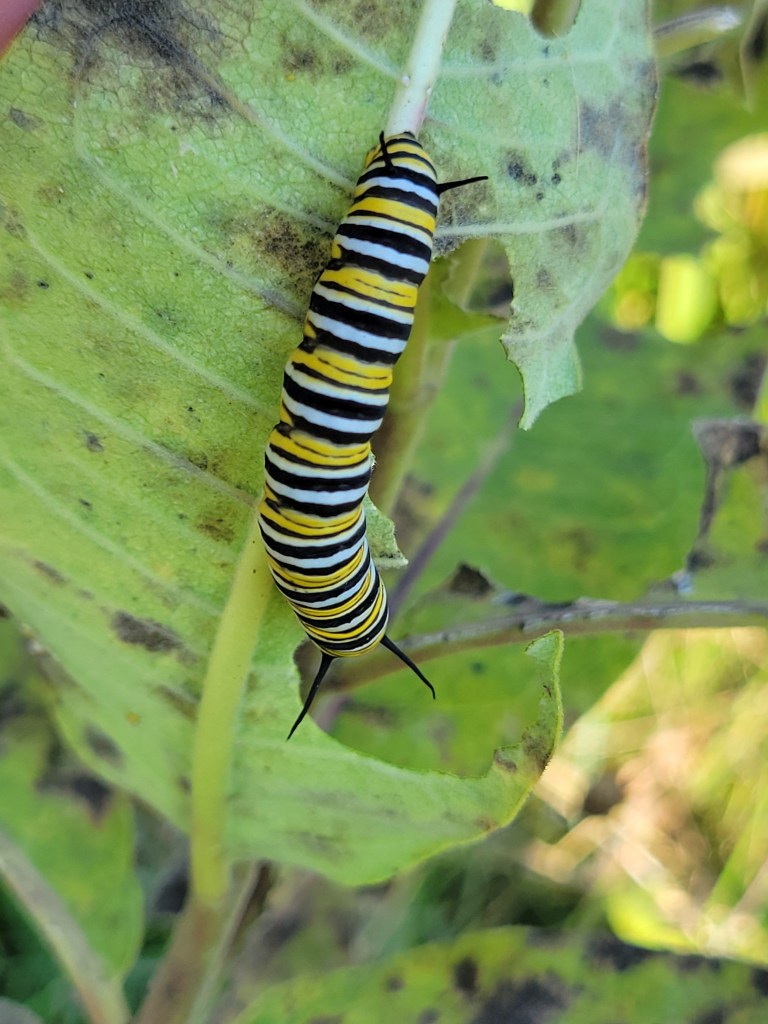
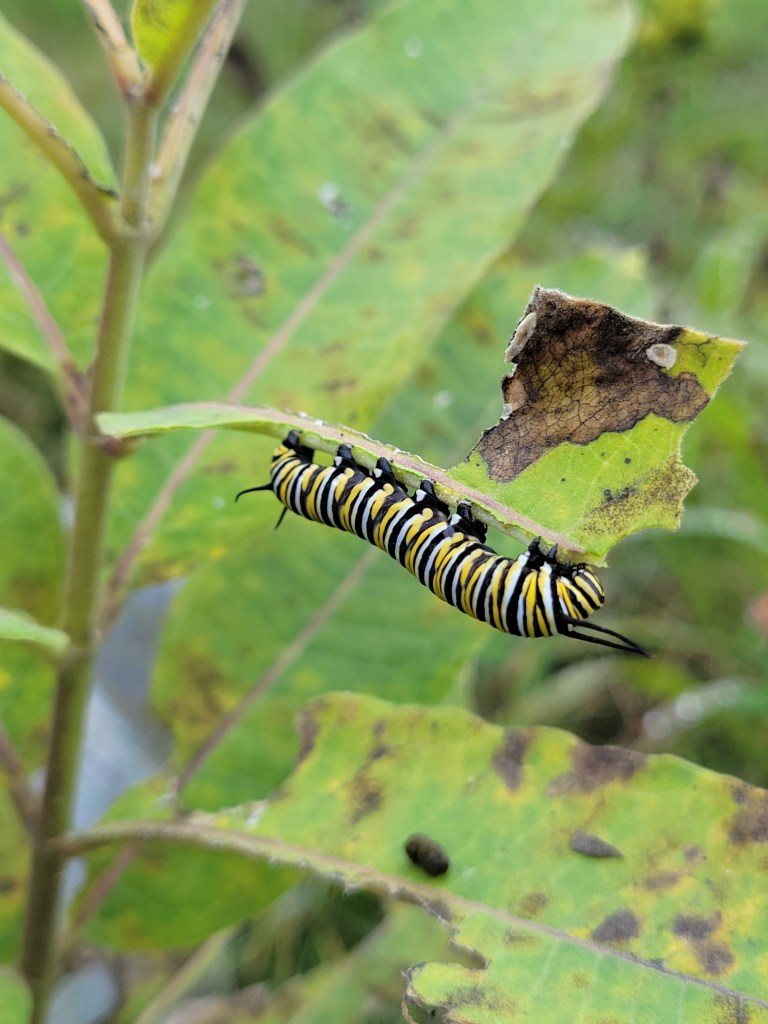
Many of the milkweed leaves are turning brown, and some are starting to fall, but the caterpillars munch away.
This is the overwintering generation, the individuals that will migrate about 2000 miles to the Sierra Madres Mountains in Mexico to spend the winter.
First, though, they need to complete development. The caterpillars I have been seeing look about full size. The next step is to form a chrysalis, where they transform into the adult butterfly in about a week or 10 days.
The caterpillars crawl down and away from the host plant (milkweed) to select a spot for the chrysalis.

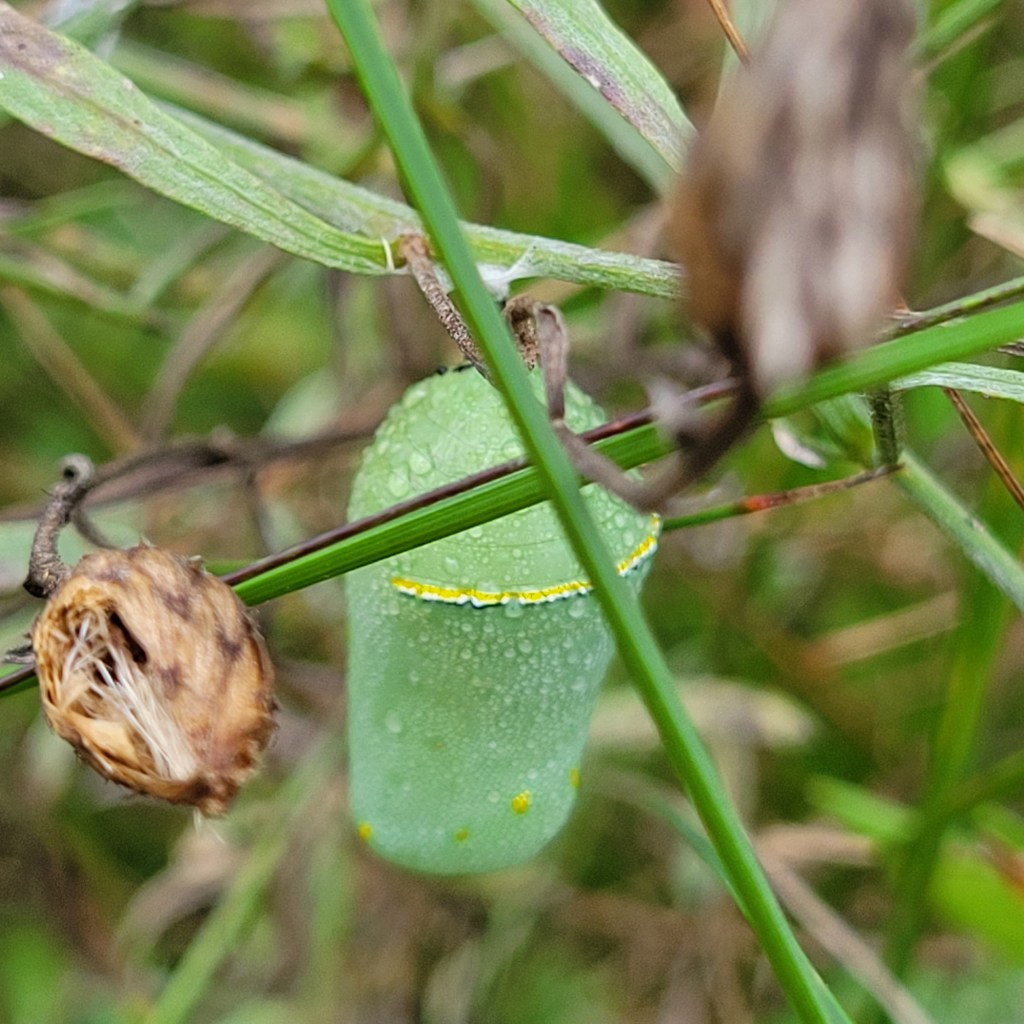
Monarch Chrysalis The chrysalis is usually very well hidden, and the above is the only one I have ever been able to locate in the park.
The Monarchs that emerge at this time of the year are quite different, both biologically and behaviorally, from their parents. Those, as adults, lived only a few weeks, mating and laying eggs shortly after emerging.
1) These new butterflies will live much longer (till next spring if all goes well). 2) They will travel much further, flying the roughly 2000 miles to the Mexico wintering ground (traveling 50 to 100 miles a day when migrating). 3) They postpone mating activity until they have started back north next spring.
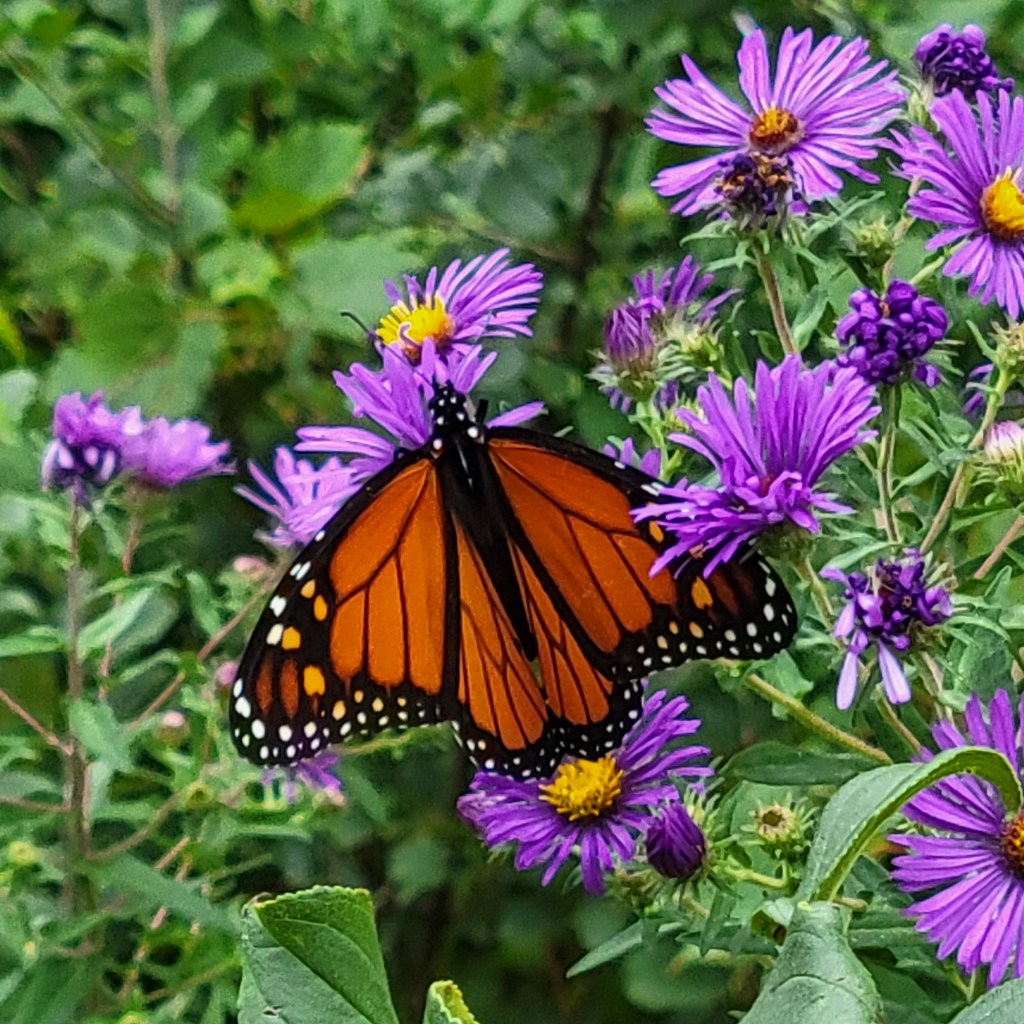
Newly emerged September Monarch feeding before migrating
(photo from a previous year)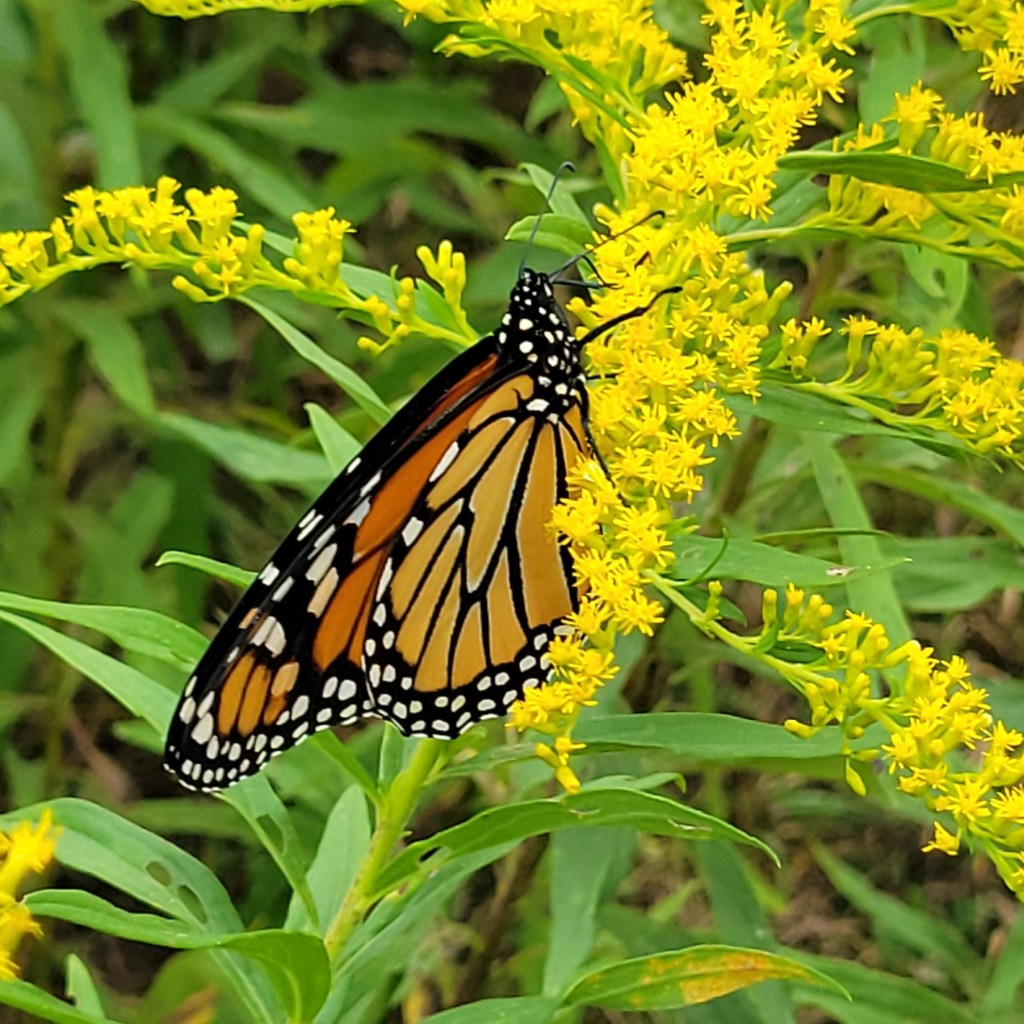
Newly emerged September Monarch feeding before migrating
(photo from a previous year)No individual Monarch butterfly ever makes a round trip. Those that fly south and survive the winter in Mexico start back, but only make it part of the way. They mate, lay eggs, and die on the return trip. It is the next generation that we will see here starting in May
How do butterflies that have never been to some place know how to “return” there?
I don’t know the answer, but I am watching the final days before the fascinating trip.
-
Some Early September Nature Walk Stops
Leonard Weber
September 7, 2024
The seasons are constantly changing, even from week to week. Here are a few examples of stops on nature walks during the first week of September 2024.

Riverbank Grapes Wild grape vines (the species here is probably Riverbank Grape) grow in various locations in the park, often climbing trees and/or shrubs. They can climb 60 feet or more. This is a productive year for fruit, which is now mostly ripe.

Orb Weaver Web 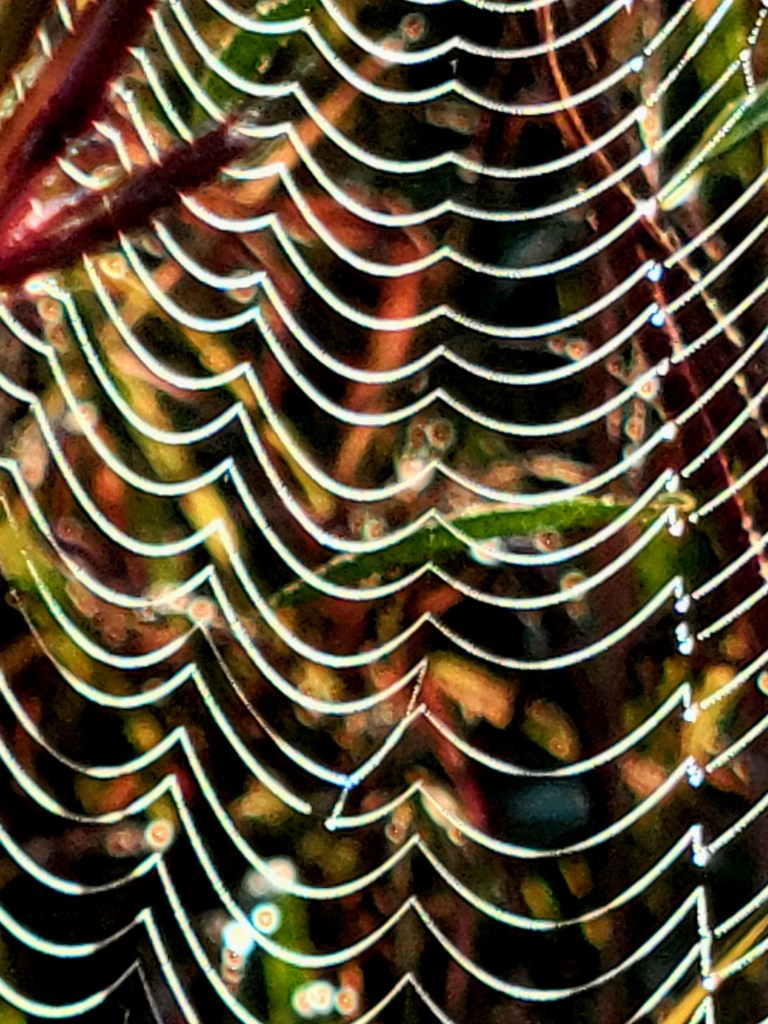
Close up of same web This is best time of the year to find the fascinating webs of a group of spiders called “orb weavers,” named after the (often) large and (always) intricate webs they weave. The webs are almost invisible during the day (the better to snare unsuspecting insects) but can be found early on sunny mornings when the dew is hanging on each thread. They are most visible when one looks among wild flowers in the direction of the sun.

Common Buckeye on Goldenrod The butterfly season is quickly moving toward an end, but there are still some to see. I was delighted to see this Common Buckeye in the goldenrods on September 1. Buckeyes will likely be working their way south soon.

Common Milkweed seed pod opening Milkweed seed pods are filled with seeds attached to a silky material that allows the seeds to float away in the wind. The seedpods have only recently begun to open.

Virginia Creeper berries Another climbing vine in Eliza Howell is Virginia Creeper. It also climbs trees but is not as easy to find as grape. There is only a short period of time around the beginning of September when it is possible to find the blue-colored berries on the red stems. Birds love these berries, and they quickly disappear.

Field Thistle in field 
Field Thistle flower Thistles, in general, do not have a good reputation. Some are hard to control, and, of course, it is difficult to enjoy the sharp spines. Field Thistle has spines, but it is a natural part of native wildflower meadows, attracting many nectaring insects.
Field Thistle is in full bloom in the park in the beginning of September.
—-
These are just a few of the sights of early September. There is always more to see — and next week will look a little different.

Common Sneezeweed -
Eye-catching Insects on Goldenrod
Leonard Weber
August 29, 2024
This is Goldenrod season in Eliza Howell Park, a time to stop and watch.
Each year, I am impressed not just by the number of insects present on Goldenrod but also by how striking many of them are.
I do not resist the urge to take photos.

Goldenrod Soldier Beetle 
Locust Borer 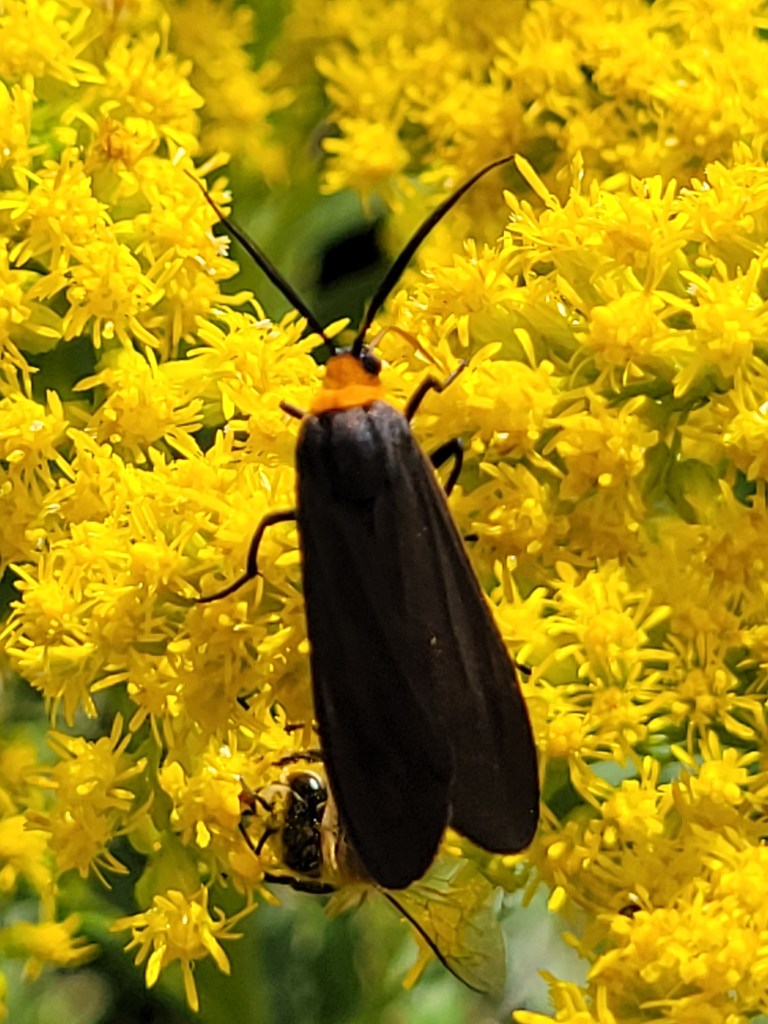
Virginia Ctenucha Moth 
Ailanthus Webworm Moth 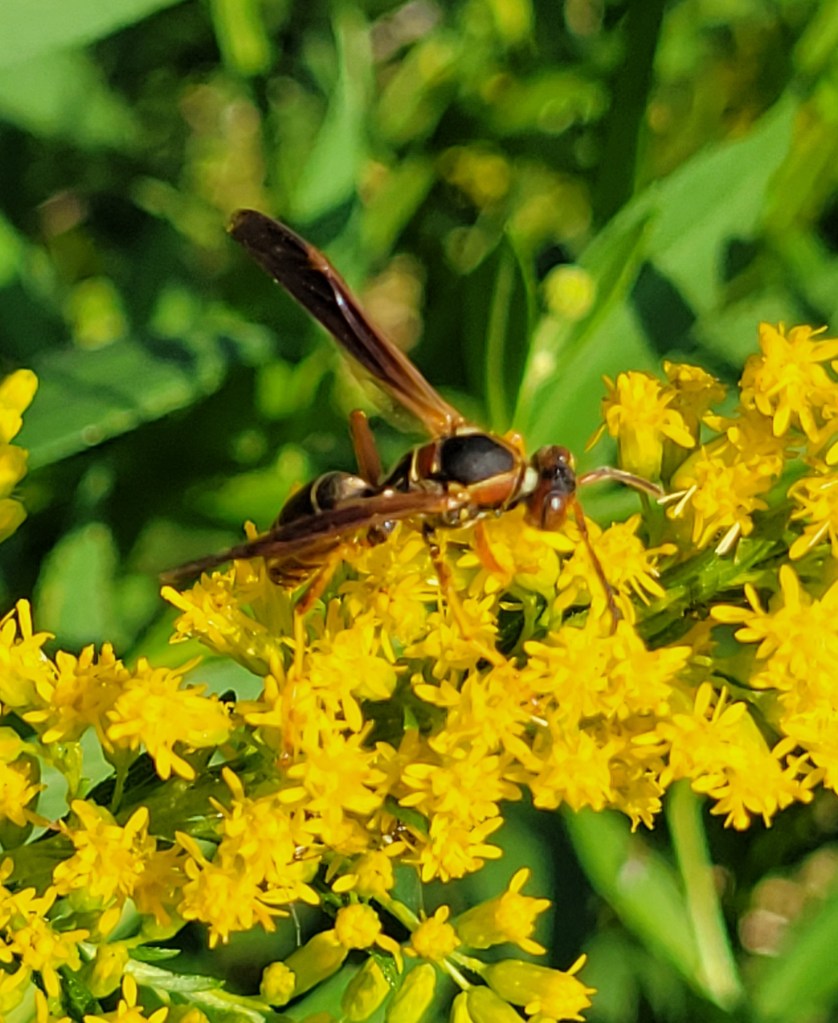
Northern Paper Wasp 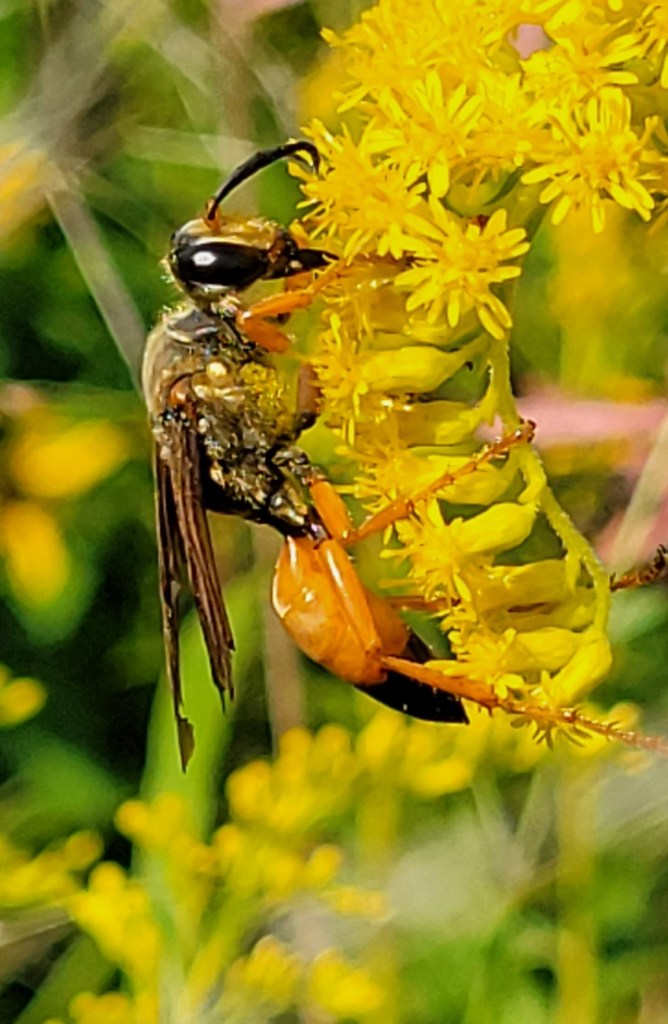
Great Golden Digger Wasp 
Bumblebee 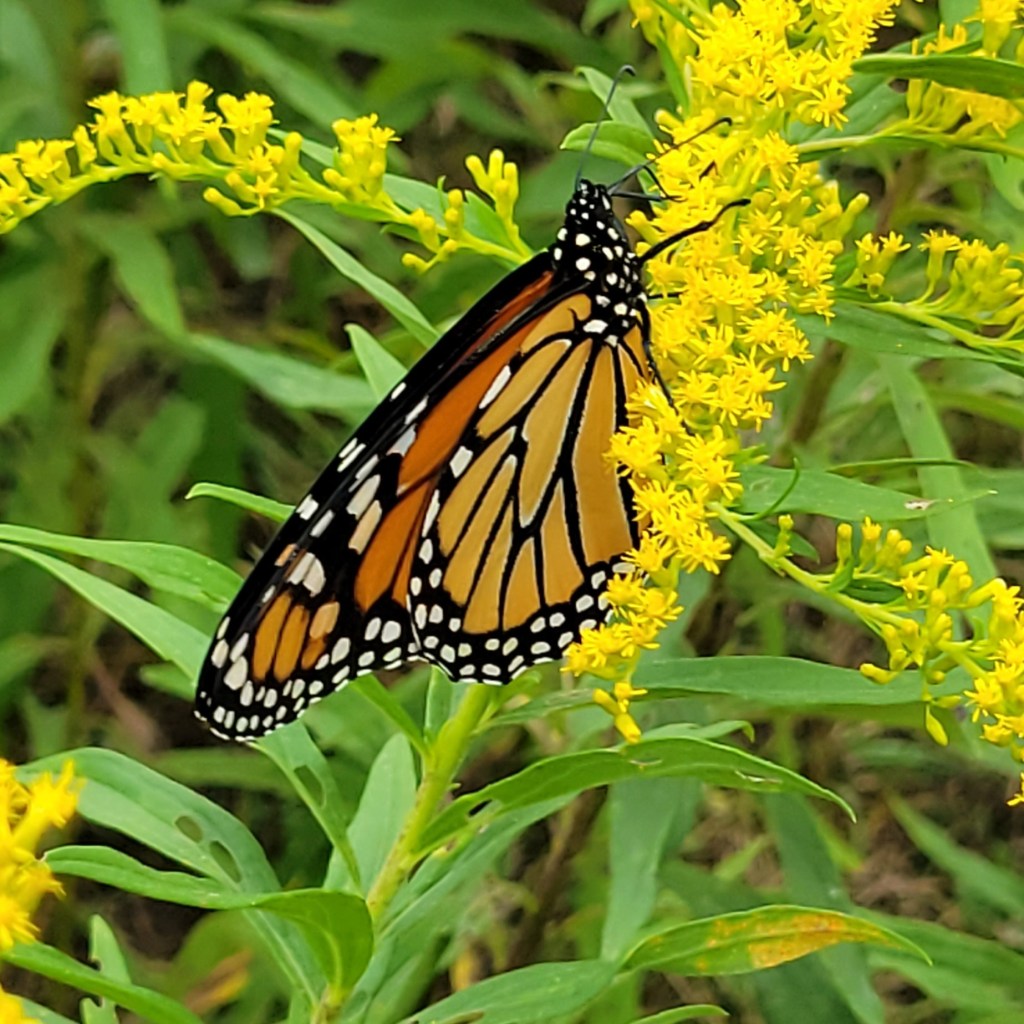
Monarch Butterfly 
Common Buckeye 
Bald-faced Hornet Sometimes, there is another insect present, less easily visible and not after nectar. Rather, it is seeking other insects.

Praying Mantis with a captured Bald-faced Hornet In general, the insects on Goldenrod are focused on the flowers and little concerned about the others sharing the plant.

Soldier Beetle and Locust Borer There are several types of Goldenrod in the park, blooming at slightly different times, making for an extended blooming season.
The insects and I appreciate that.
-
Turtles in the Park
Mara Crawford
August 26, 2024
On a summer morning, Painted Turtles can sometimes be observed in the small meadow pond at Eliza Howell Park. By afternoon, they are often out of sight. Perhaps the shallow pond warms sufficiently throughout the day to provide the turtles with a comfortable enough environment that they do not need to rely on direct sun to stay warm.
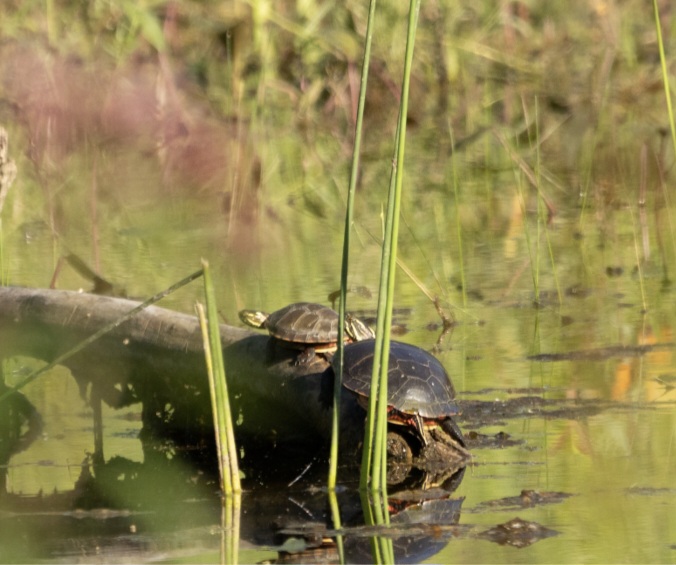
Painted Turtles in the pond.
Photo courtesy of Reid CrawfordPainted Turtles are handily identified by their bright red and yellow markings. At Eliza Howell, this pond is flanked by two gravel embankments. While arguably less attractive than the turtles, they have likely been constructed to provide ready hibernation habitat for reptiles in the park to wait out the winter months.
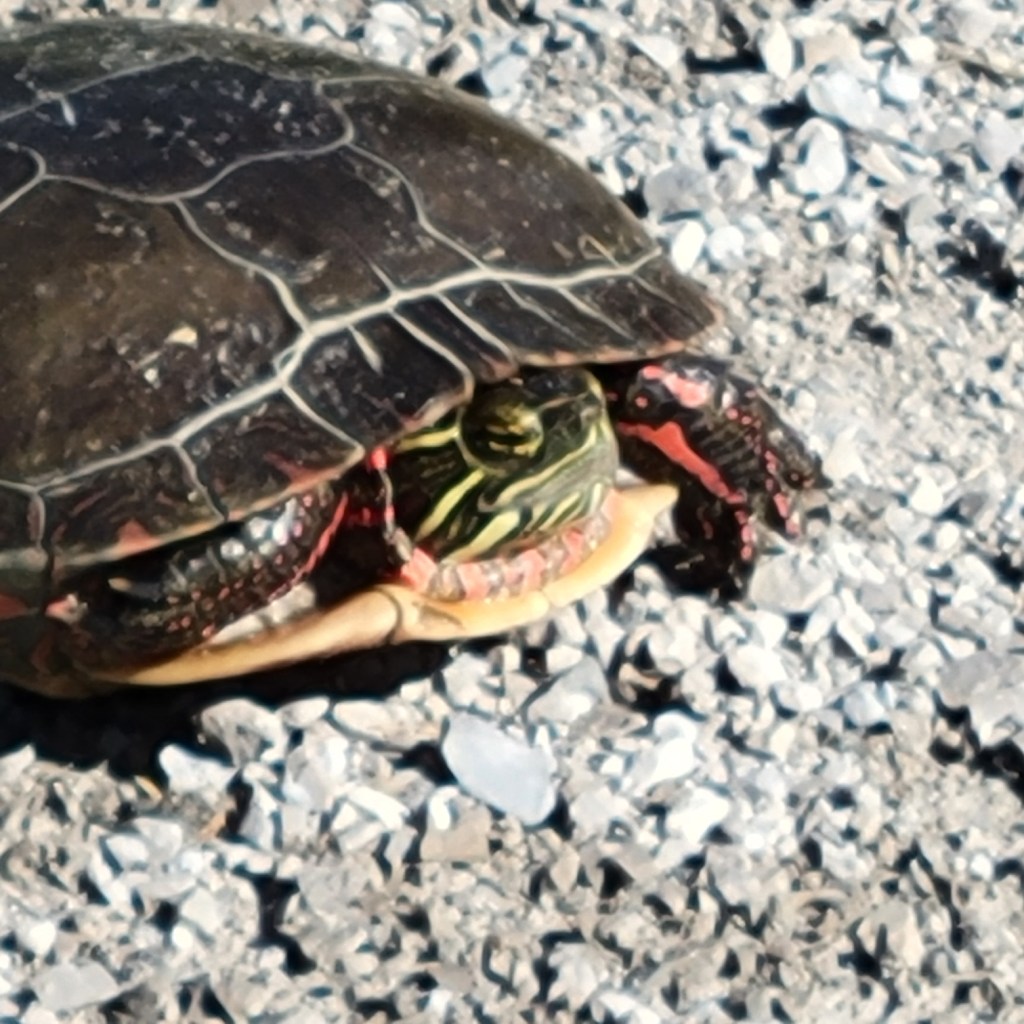
Painted Turtle up close.
Photo courtesy of Leonard WeberAccording to my Peterson field guide, Painted Turtles are not considered a particularly shy species and often bask in the sun for hours at a time. That may explain why they are more commonly sighted than the resident Snapping Turtles. Snapping Turtles are generally larger than Painted Turtles. Their behavior is uncharacteristic compared to other North American turtles in that they do not commonly bask in the sun.

Snapping Turtle.
Photo courtesy of Leonard WeberSnapping Turtles have a wide range in North America. They can be found in any permanent freshwater area. These photos were taken when a resident snapper took a brief foray away from the shady Rouge River to lay eggs in a sunny area of the park’s lawn.
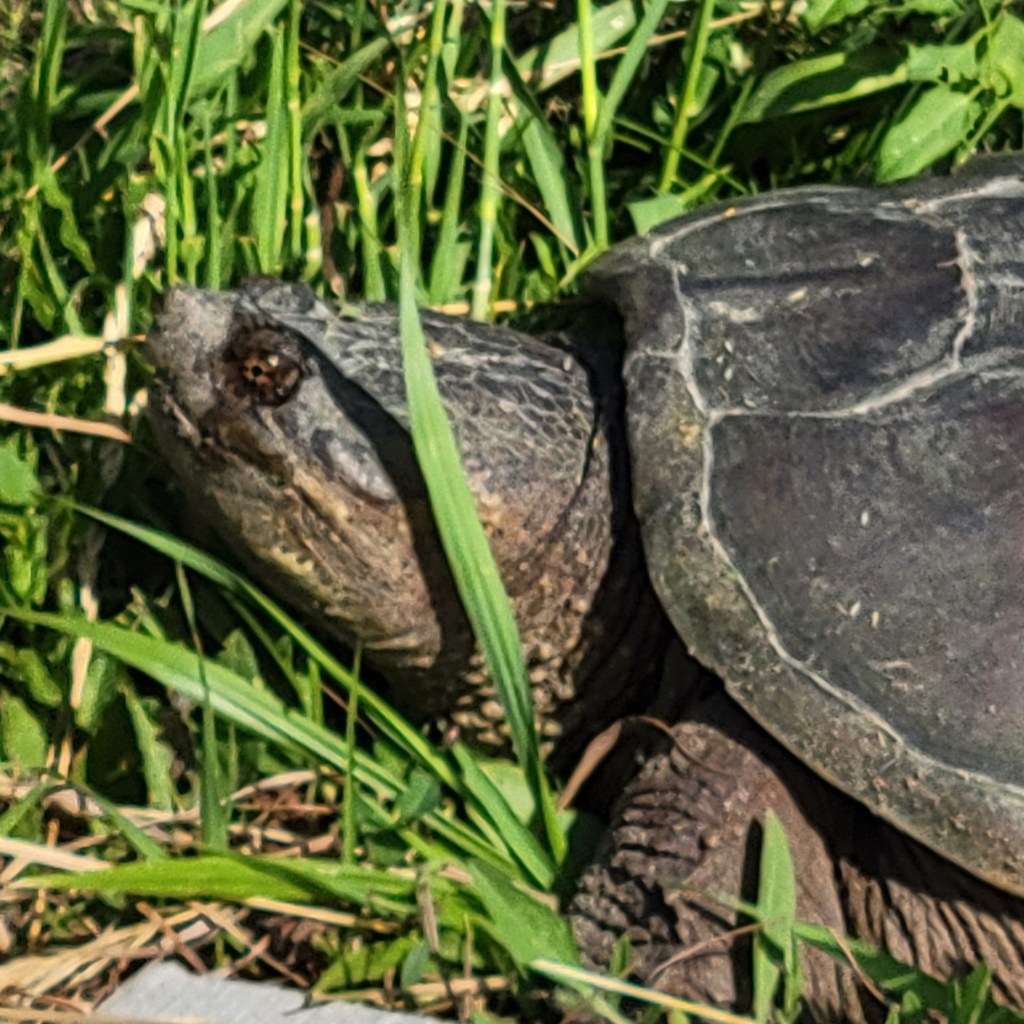
Snapping Turtle
Photo courtesy of Leonard WeberAt 250 acres in area, I think it is entirely possible that there are additional kinds of turtles to be observed at Eliza Howell Park. I wonder if I will ever run into one.
-
Acorns in August: Six Species
Leonard Weber
August 16, 2024
The middle of August is a good time to visit different oak trees to get an early view of fall acorns. Most acorns are now large enough to locate – and to assess abundance – though they are not yet fully developed.
My primary interest in doing “acorn rounds” at this time is to refresh my familiarity with the oak species present in Eliza Howell Park and to identify what I want to know better.
The six included here all grow within the park road loop (as do some other species not included here). They provide a taste of the varieties present.

Swamp White Oak and Shingle Oak, Pin Oak and White Oak,
Northern Red Oak and Turkey OakSwamp White Oak

Swamp White Oak When I see one of Eliza Howell’s Swamp White Oaks, I am always reminded of the fact that the outer stems of this species often serve as hosts of Oak Bullet Galls, the sap-covered nurseries of a small wasp. The sweet gall exterior attracts larger insects that, by their presence, probably help protect the gall wasp from predation.

Bald-faced Hornet on Bullet Gall in a Swamp White Oak tree Shingle Oak

Shingle Oak Shingle Oak acorns are small and the leaves are without lobes.
In Eliza Howell, Shingle Oak trees are the best examples of marcescence, the phenomenon of some deciduous trees retaining their dead leaves throughout the winter. The Shingle Oak leaves don’t fall until spring.

Shingle Oaks in winter Pin Oak

Pin Oak Pin Oak acorns are small, but they take two growing seasons to mature; individual trees have mature acorns every other year. This is a year of abundance for my favorite Pin Oak tree.
Many Blue Jays gather in the park every fall (starting in September), and they harvest countless acorns, both to eat and to cache.
The Blue Jays start the harvest with Pin Oak acorns and, since the acorns are plentiful this year, I know where to start watching the Blue Jay acorn harvest in about a month1.
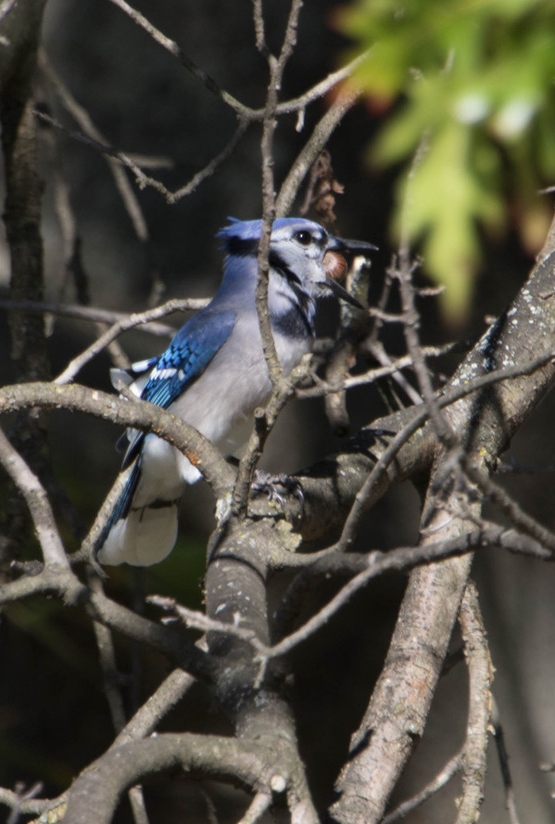
Blue Jay collecting acorns in
Eliza Howell Park
Photo courtesy of Margaret WeberWhite Oak

White Oak Above, I noted the presence of Oak Bullet Galls on Swamp White Oaks. Other insect galls can be found on other trees. The White Oaks in Eliza Howell seem to have a larger than average number and variety of galls. The following photos were taken during a brief stop at one White Oak tree.

Insect Galls on White Oak tree Northern Red Oak

Northern Red Oak Of the six kinds of acorn pictured here, Northern Red Oak appears to be the furtherest along in development in mid-August. The acorns are full size, and though the color of the shell will still change, some are beginning to fall.
Turkey Oak

Turkey Oak Turkey Oak is the one in this 6 pack that most clearly fits in the “trying to get to know better” category. It is the only one of the six not native to North America, and the trees present in the park are relatively small, perhaps not much more than three decades old.

Turkey Oak tree 
Turkey Oak leaves The nuts are initially covered totally with the hairy or prickly cap, and many are still covered in the middle of August. These photos were taken very recently.

Turkey Oak acorn As the acorns continue to develop, the nuts will emerge (further), and the cap will cover about half of the acorn at maturity. I have not previously followed this development carefully.

Turkey Oak acorn …..
I look forward to further acorn walks in the next month or two. My favorite part of the oak year has begun.
-
Subscribe
Subscribed
Have a WordPress.com account? Log in now.

