-
Black-capped Chickadee Nest Successful: A Popular Nesting Box
Leonard Weber
June 2, 2023
During the last 5 or 6 weeks, most of my nature walks in Eliza Howell Park have included a pause near a nesting box at the edge of the trees. By late April, it was clear that a pair of Black-capped Chickadees had selected this box as their 2023 nesting cavity.

Nest box made and placed by Kevin Murphy Chickadees regularly nest in the park, usually excavating their own cavity in dead wood. They carefully carry the chips away from the site.

Photo courtesy of Margaret Weber Sometimes they use a natural cavity or an old woodpecker hole. This is the first time I have seen them choose a human-provided cavity.
On the morning of May 2, after seeing both of the birds fly away, I quickly walked to the box to take a look. The nest was packed with 9 small eggs.
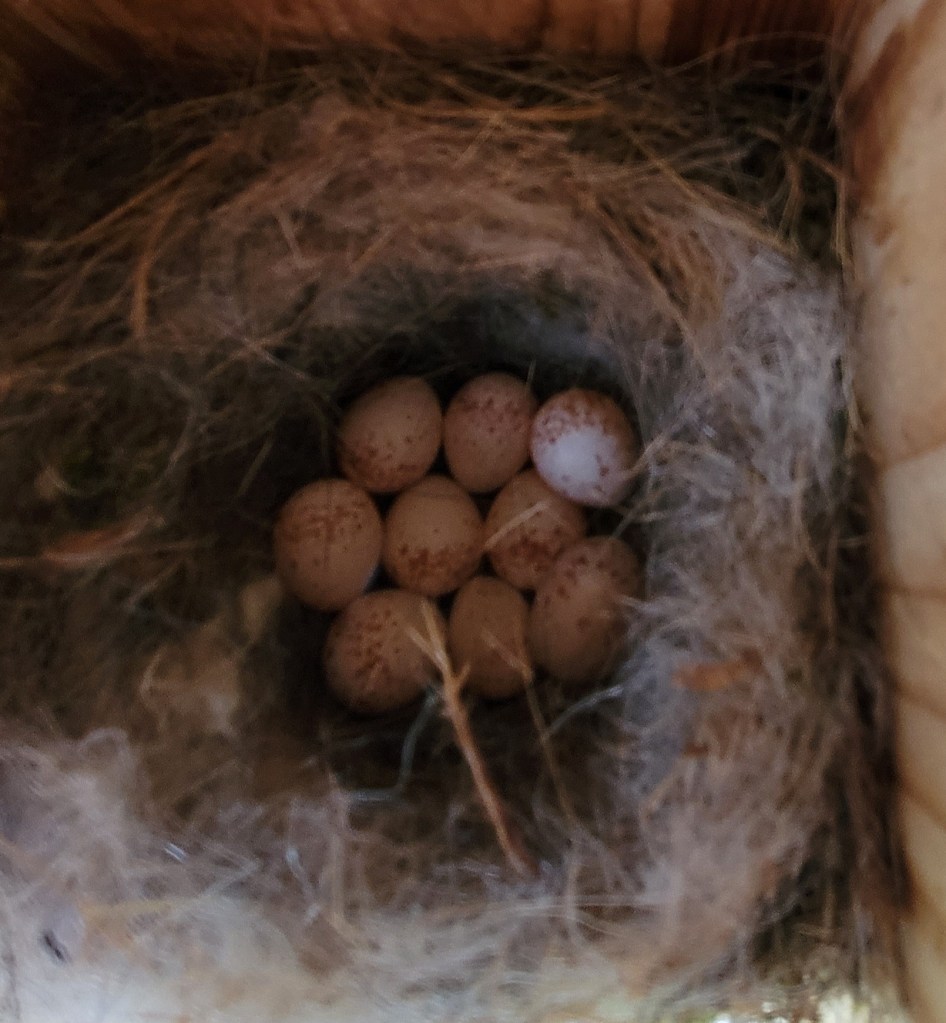
Last year, House Wrens used this same box for their brood.
House Wrens often return to the same area, and they are known to be aggressive in expelling other species, like chickadees, that nest in “their” territory. The wrens were not yet back from their wintering grounds in early May this year (as far as I could tell), but I wondered what the chances were that the chickadees would successfully hatch and fledge.

House Wren. Photo courtesy of Margaret Weber As May progressed and there was no evidence of House Wrens near the nest, I began to think that the wrens might be nesting later this year or might have selected another location.
Both the female and the male chickadee feed the young in the nest, and the large brood meant many trips in and out of the box. By the end of May, based on an estimate of the number of days that had passed since I first noticed feeding, I thought the babies might have left the nest.
When I saw no adults on May 31, I went for a close-up look. The young were still in the nest, but clearly ready to fly out (one left as I watched).

By the next day, June 1, they had fledged, leaving a nest empty except for one unhatched egg.

Because it is still spring, still nest making season, I decided to return the next day, to clean out the box and make it more attractive if another species was looking for a site. The egg was gone.

As I was trying to figure out what had happened, I was chased away by two birds — not House Wrens, but Tree Swallows, another cavity nester. They often nest in June, and it looks like they are claiming this nesting location — without waiting for it to be cleaned.

Tree Swallow. Photo courtesy of Margaret Weber The chickadees had a successful turn in the “apartmen,” but the demand for the spot remains high. In rapid sucession, last year and this, three different species have found it to be the right cavity in the right location — House Wren, Black-capped Chickadee, and Tree Swallow.

Photos by Margaret Weber -
A Late May Nature Walk
Leonard Weber
May 28, 2023
May is a month of enormous change in Eliza Howell Park. The difference in foliage from early May to late May is evident in these photos from the footbridge over the Rouge River.
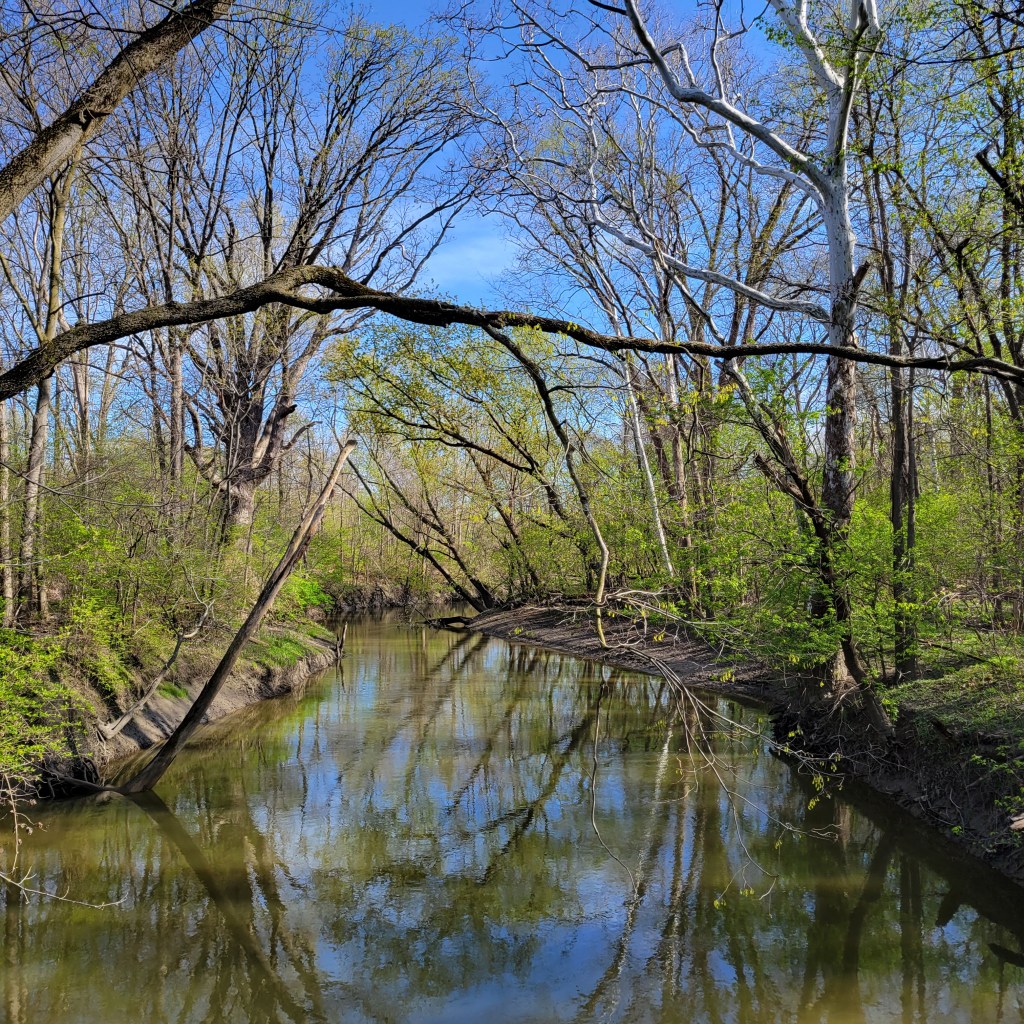
May 4 
May 27 By late May, birds that have only recently returned from their wintering grounds are busy making nests, each species with its own nest design and its own preferred location.
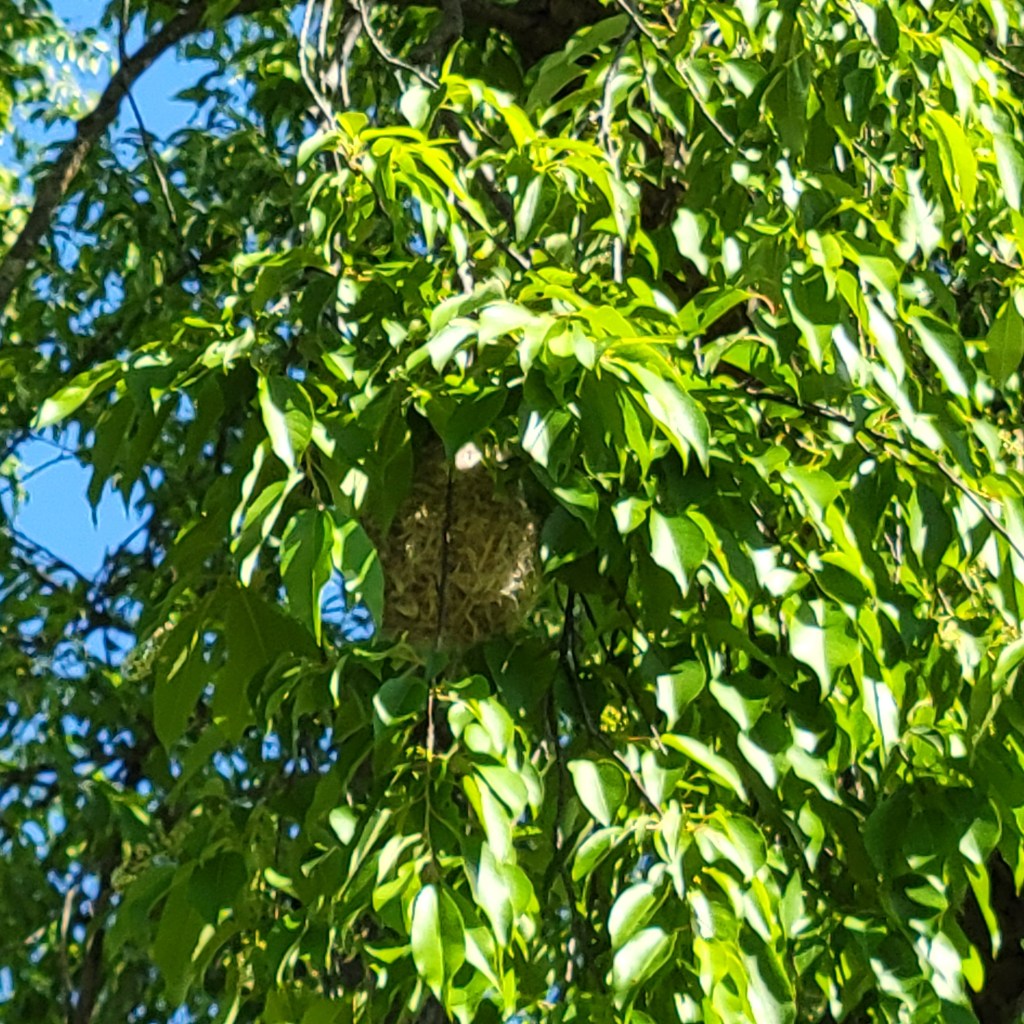
Baltimore Oriole nest
in Wild Black Cherry tree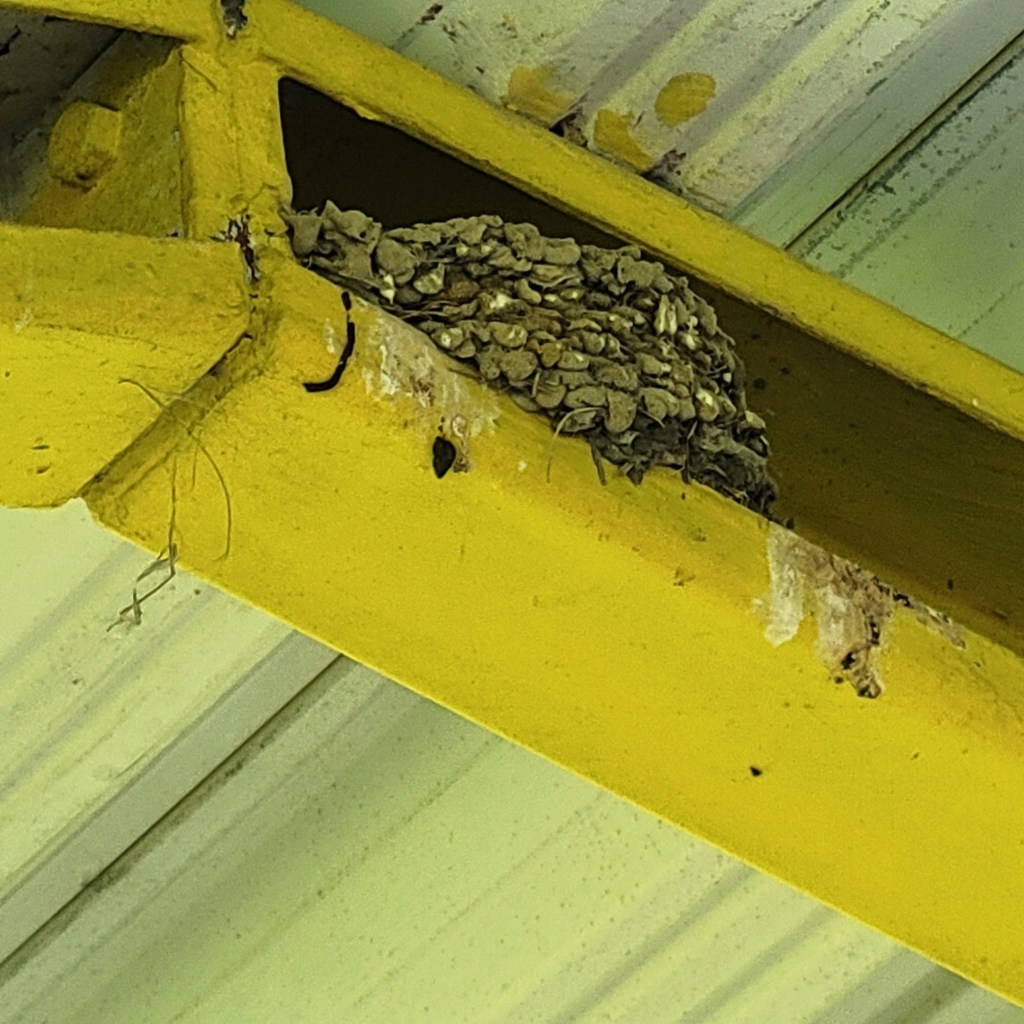
Barn Swallow nest under shelter By late May, the first of the perennial meadow wildflowers are starting to bloom, the beginning of a 4-month season of multitudes of blooms from dozens of species.
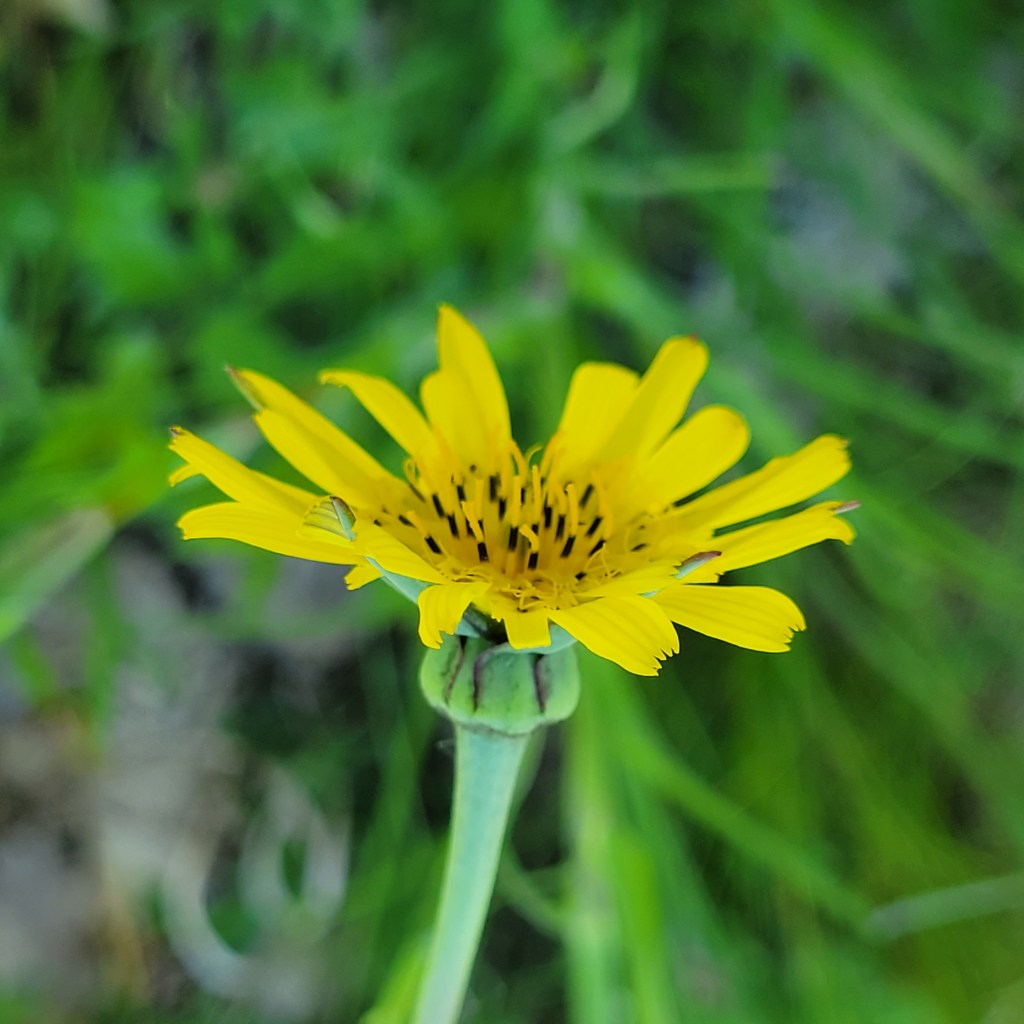
Goat’s Beard 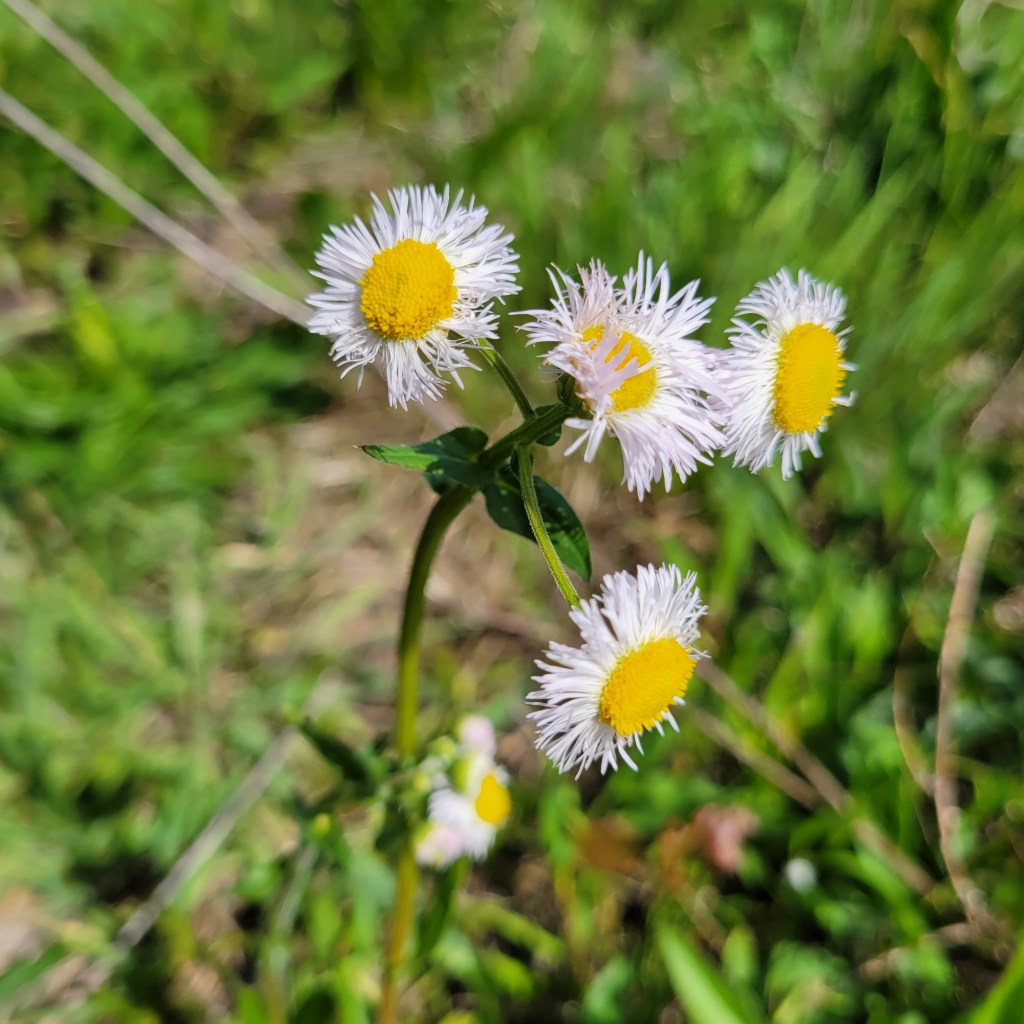
Fleabane Some trees are flowering now as well, adding stops to the walk around the road loop.

Tulip Tree 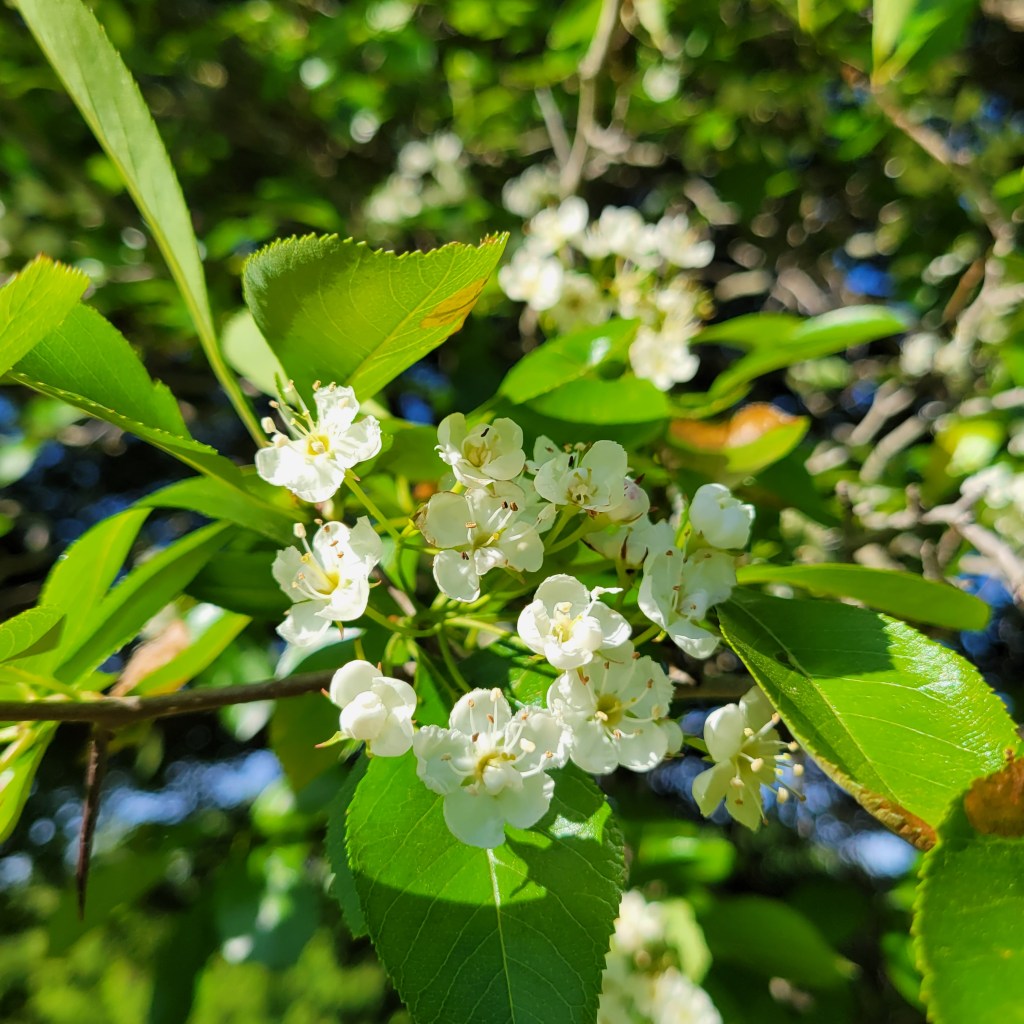
Hawthorn Deer are more visible in open sections of the park, enjoying the opportunity to graze on fresh green growth.
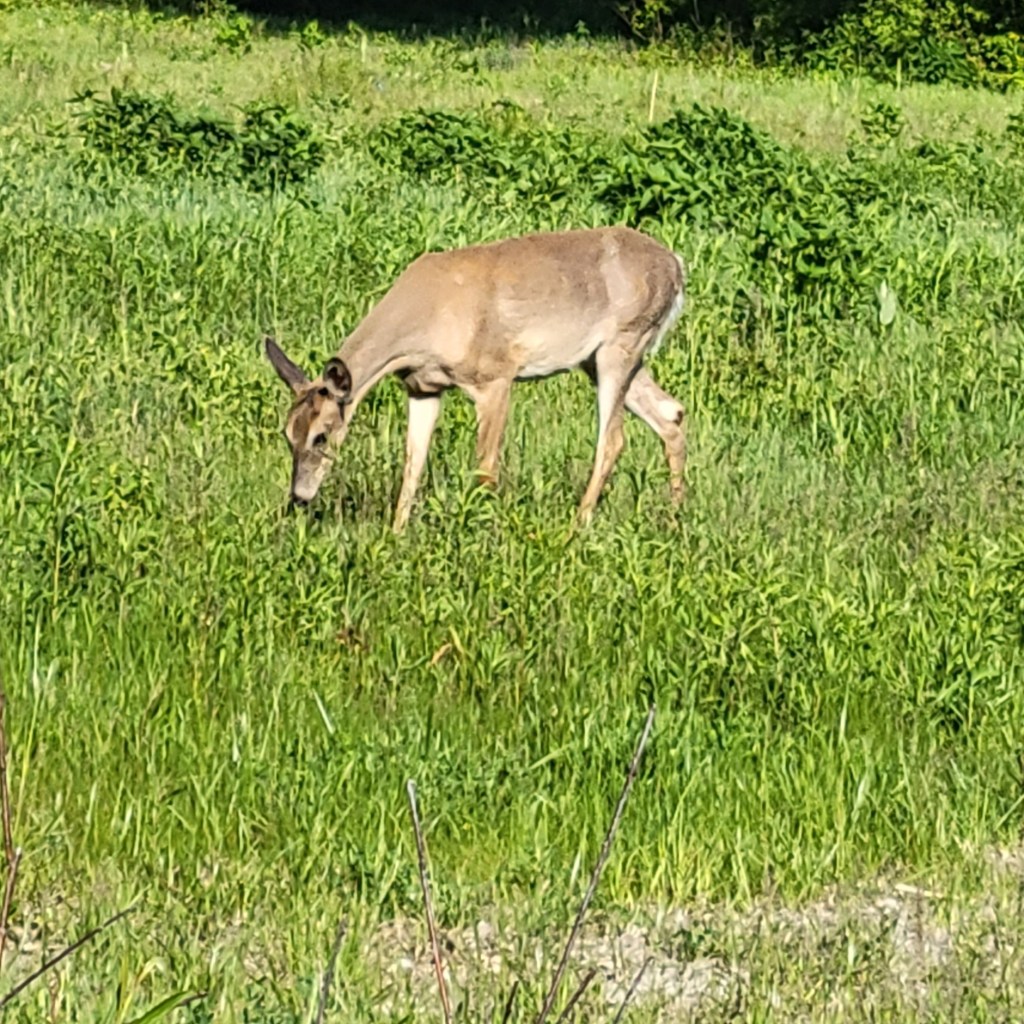
White-tailed Deer Recently, I have started to see butterflies on my walks, especially on sunny days. Many of those now active are small and more likely to be seen on leaves or on the ground than on flowers.

Eastern Tailed-Blue 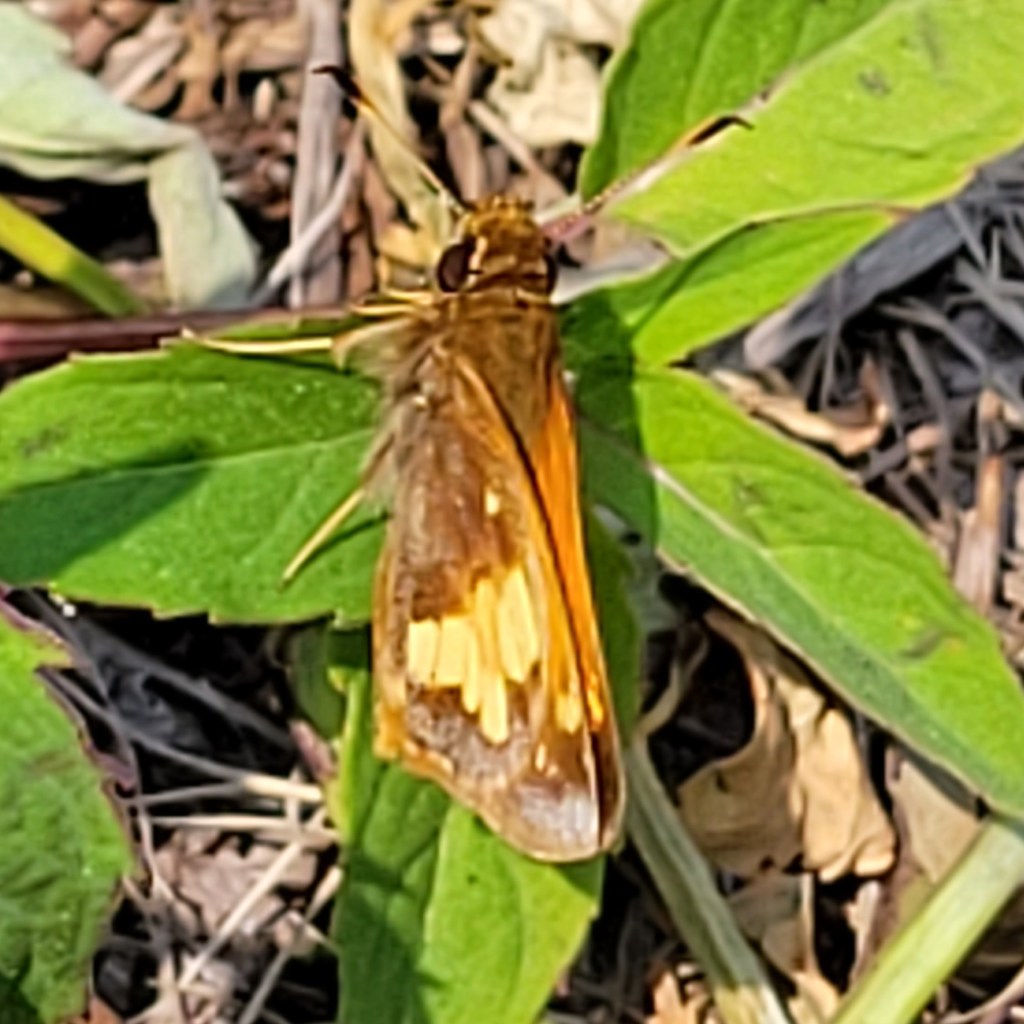
Hobomok Skipper The summer wildflowers that will attract the better-known butterflies are growing rapidly, though not yet in bloom.
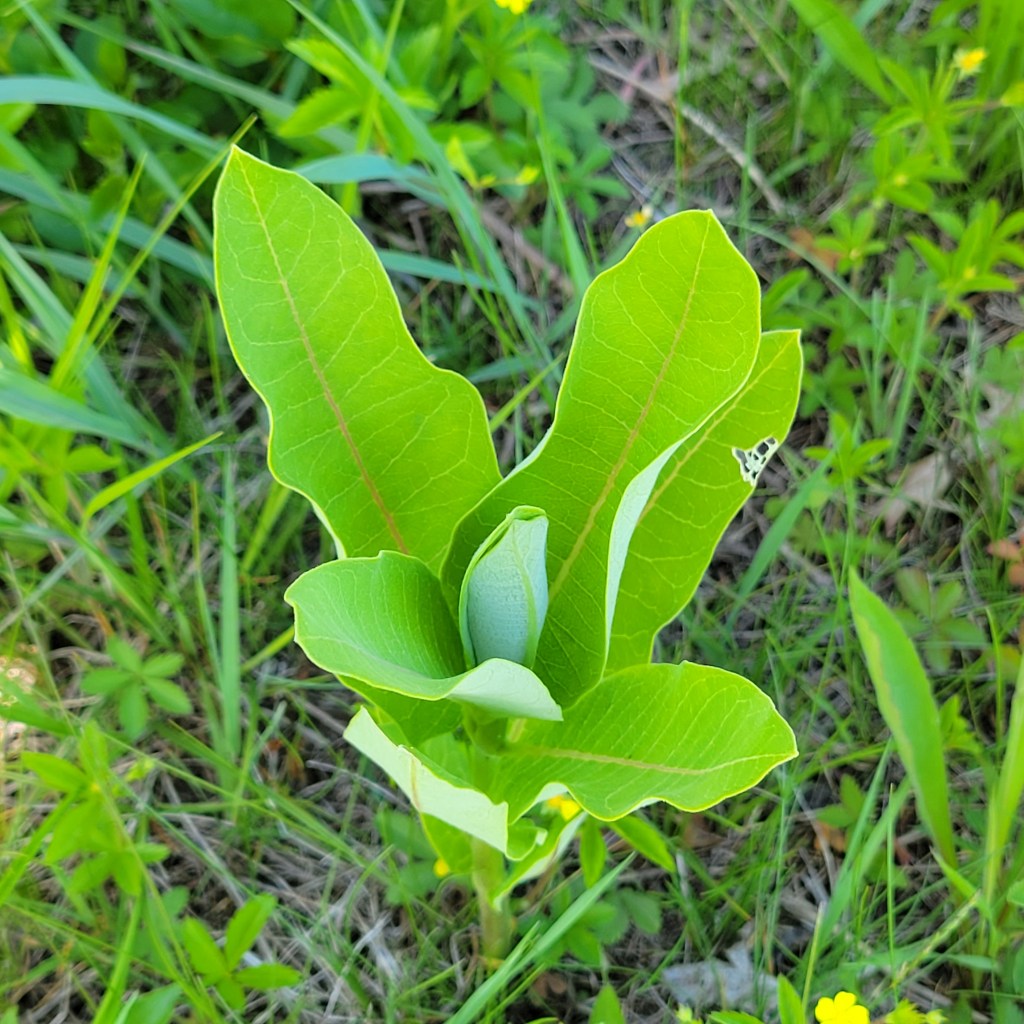
Common Milkweed I have started visiting my favorite summer wildflower field, just to watch the Bergamot and Coneflower and Joe Pye Weed grow and to anticipate the flower and insect bonanza coming soon.
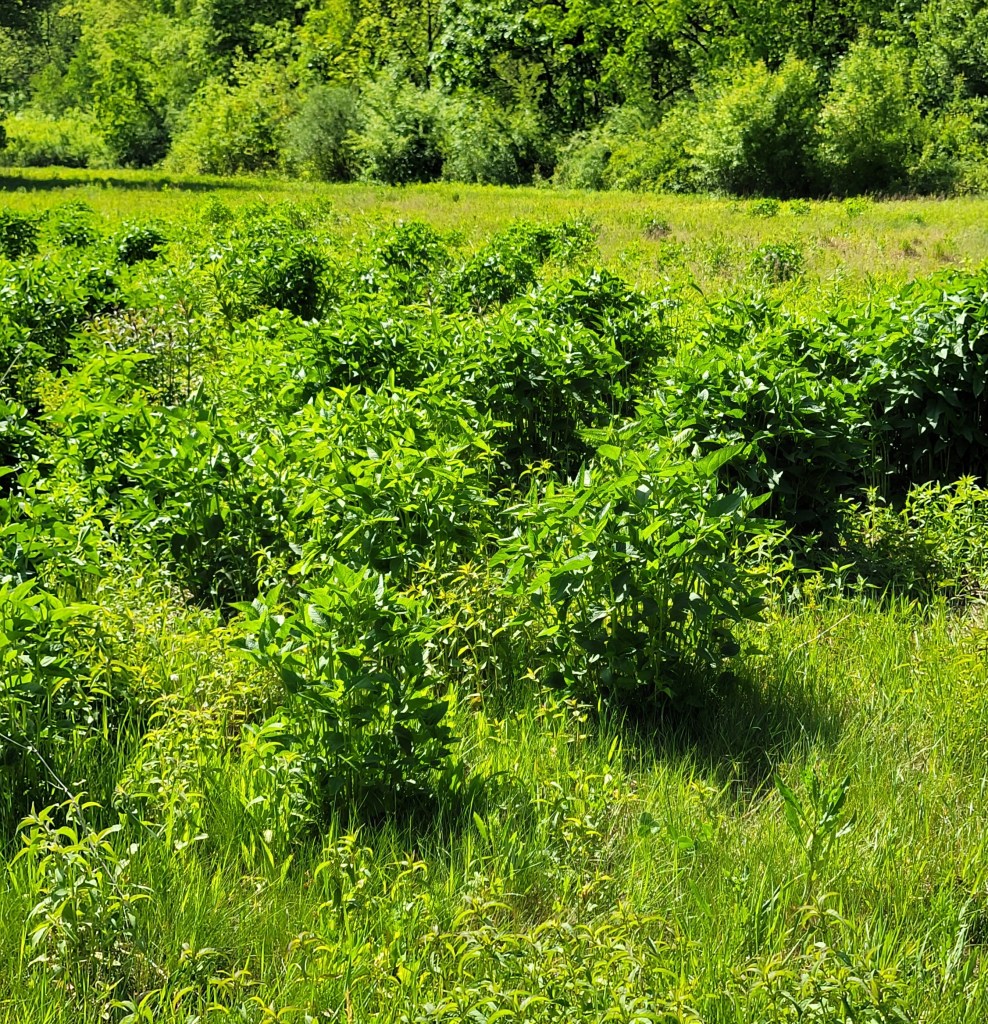
May 27 The field has come a long way from early March.
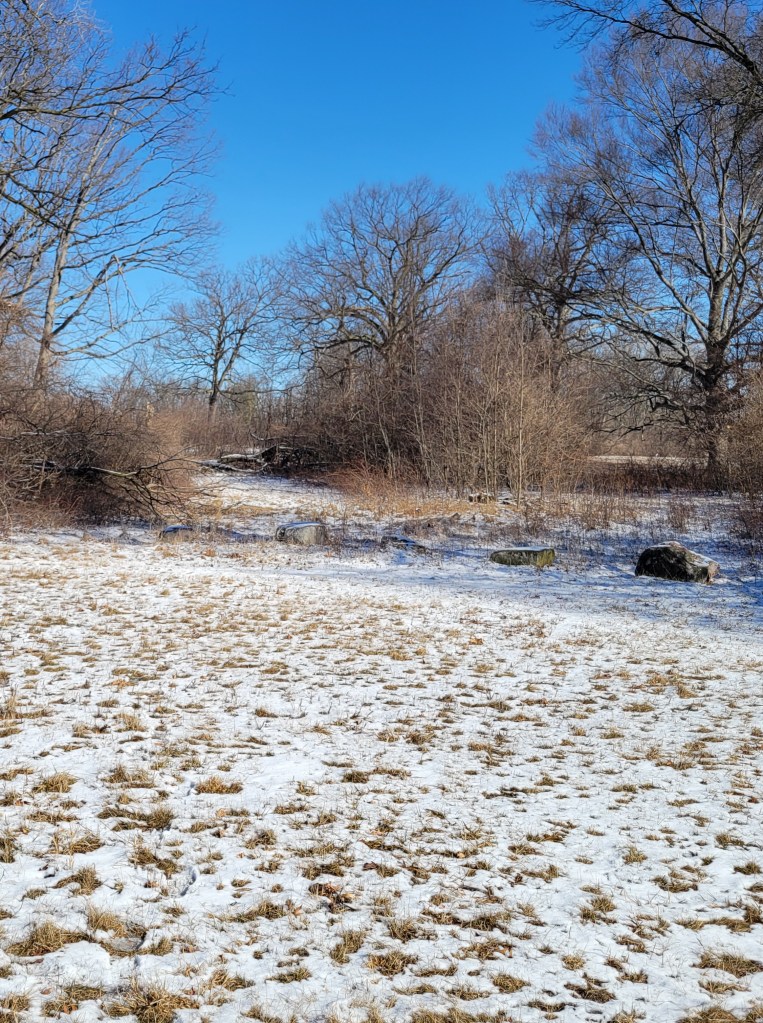
March 7 Every season has its own attractions and excitement, but there is definitely something special about late May in Eliza Howell Park.
-
Giant Swallowtail: # 17 of “23 Butterflies in 2023”
Leonard Weber
May 15, 2023
It is always a pleasure to watch a Giant Swallowtail in Eliza Howell Park. It is the largest butterfly here, with a 6-inch wingspan.
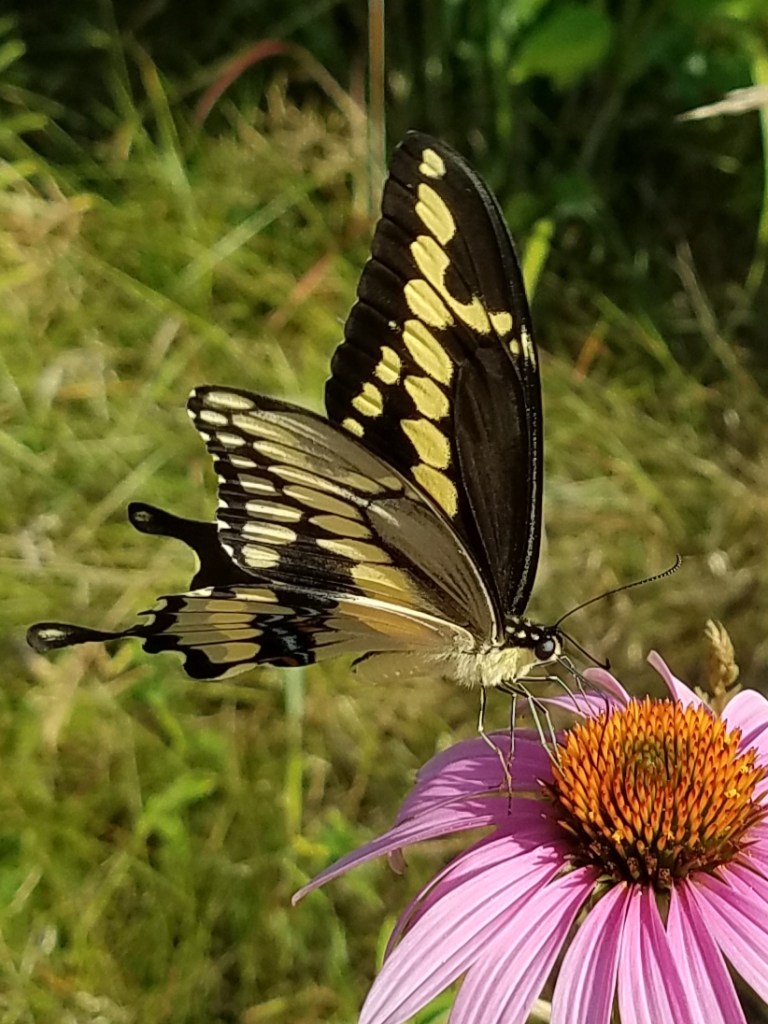
Most years, it can be seen from time to time in the park, especially in late July and early August. It is not common or numerous here, but it is always a highlight.

It is dark brown (almost black) with long lines of brifht yellow spots. And, as is the case with other swallowtails, it has an extension on each hind wing.
The underside is much lighter.
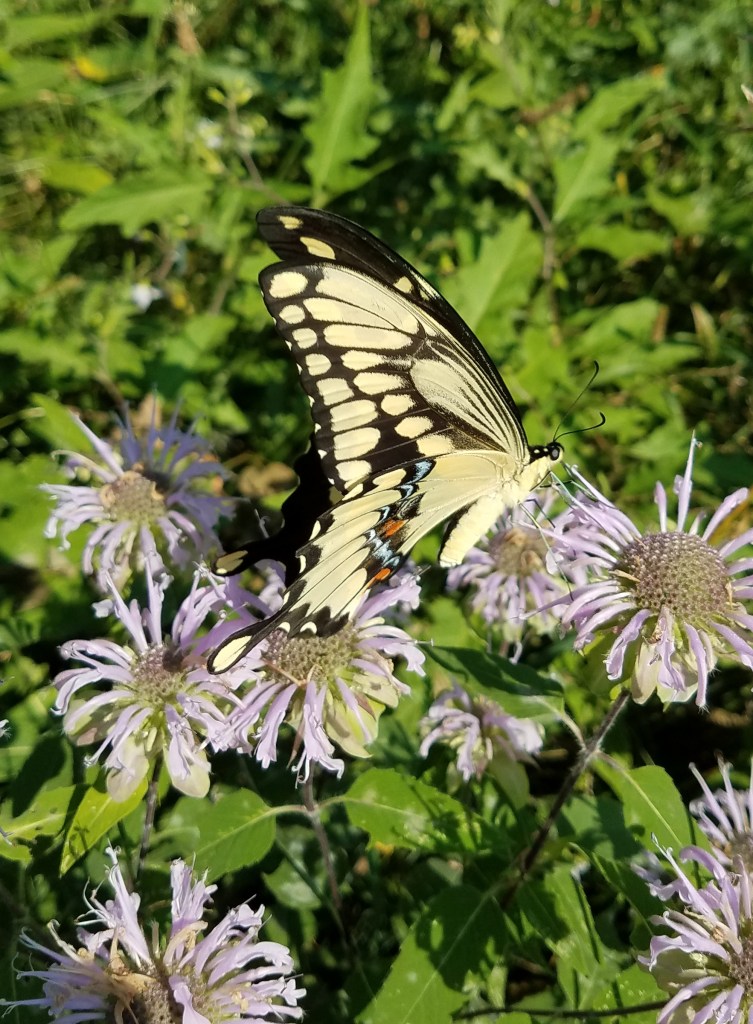
Giant Swallowtail is more common in the south, Detroit being near the northern edge of its less common range.
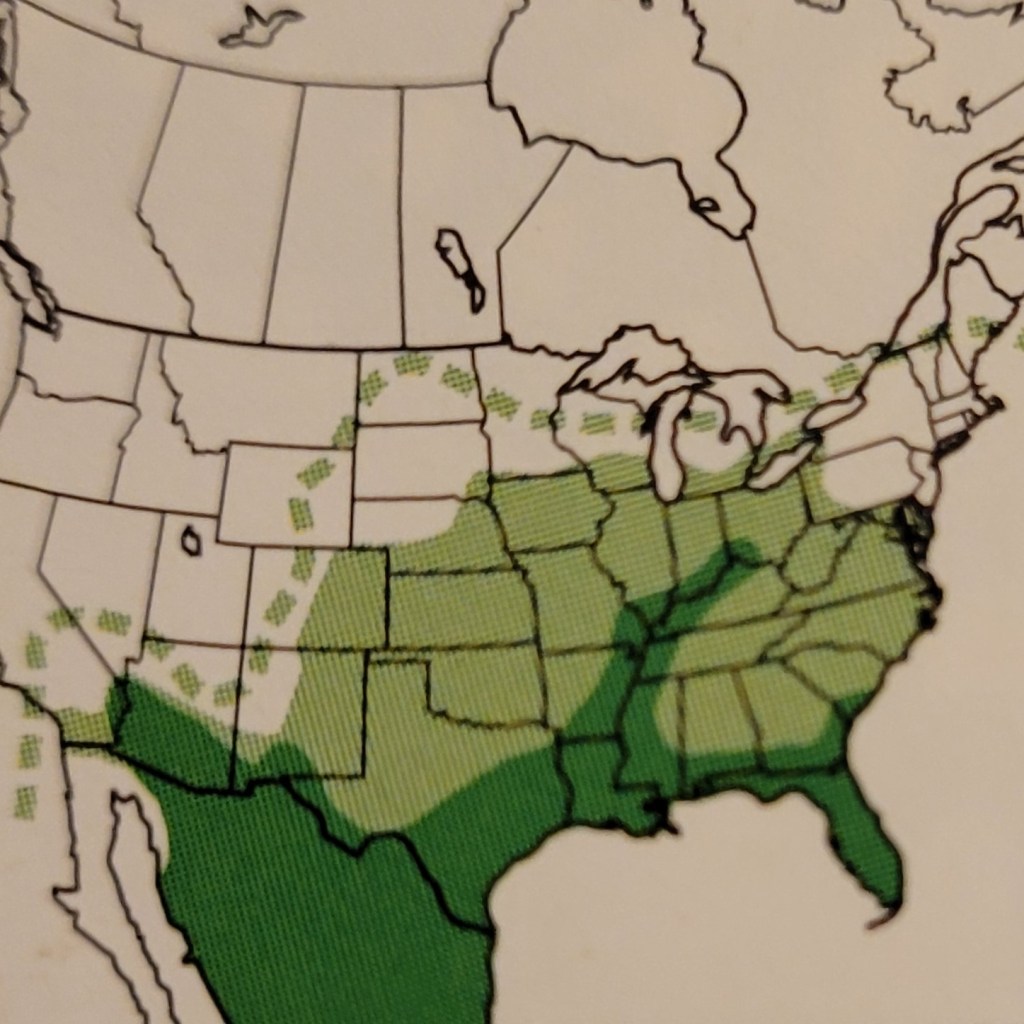
Kaufman Field Guide to Butterflies of North America Giant Swallowtail often comes to flowers for nectar. Perhaps because of the time of the summer that it is present here, I have often had success in finding it visiting Purple Coneflower.


Giant Swallowtail survives the winter in the chrysalis stage. Since it doesn’t seem to show up here until at least the middle of July, I am thinking that the ones that I see perhaps didn’t winter here, but developed further south and drifted north as the summer progressed.
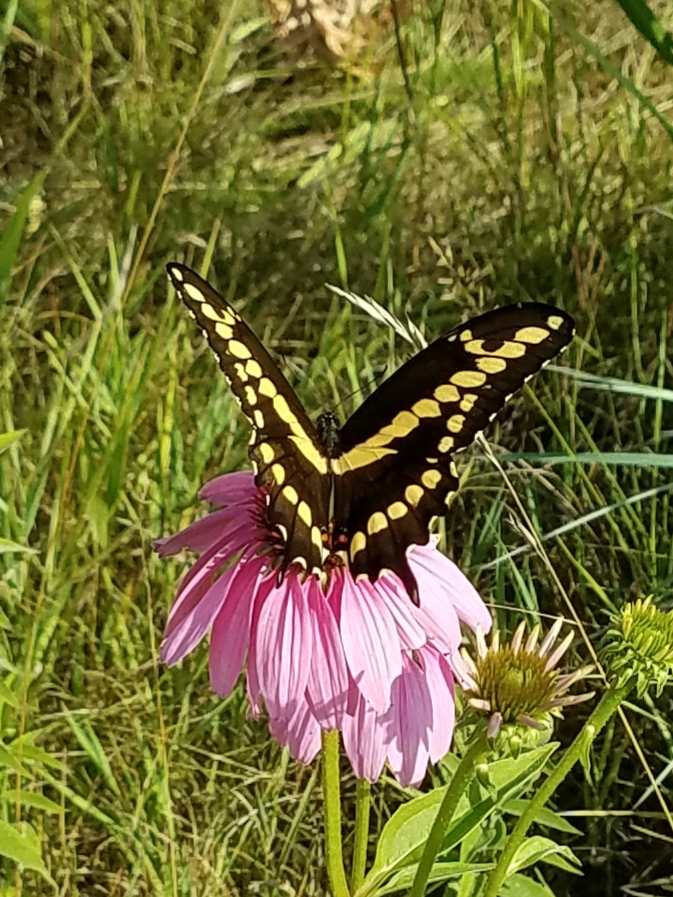
Strikingly large and attractive, the Giant Swallowtail is a butterfly that is easy to recognize. And it is unforgettable.
-
Summer Tanager: An Unusual Presence
Leonard Weber
May 2, 2023
Few things attract bird enthusiasts more than the unexpected presence of an attractive bird in a location where it is not usually found. Recently, birders have been “flocking” to Eliza Howell Park in Detroit in search of an immature male Summer Tanager.

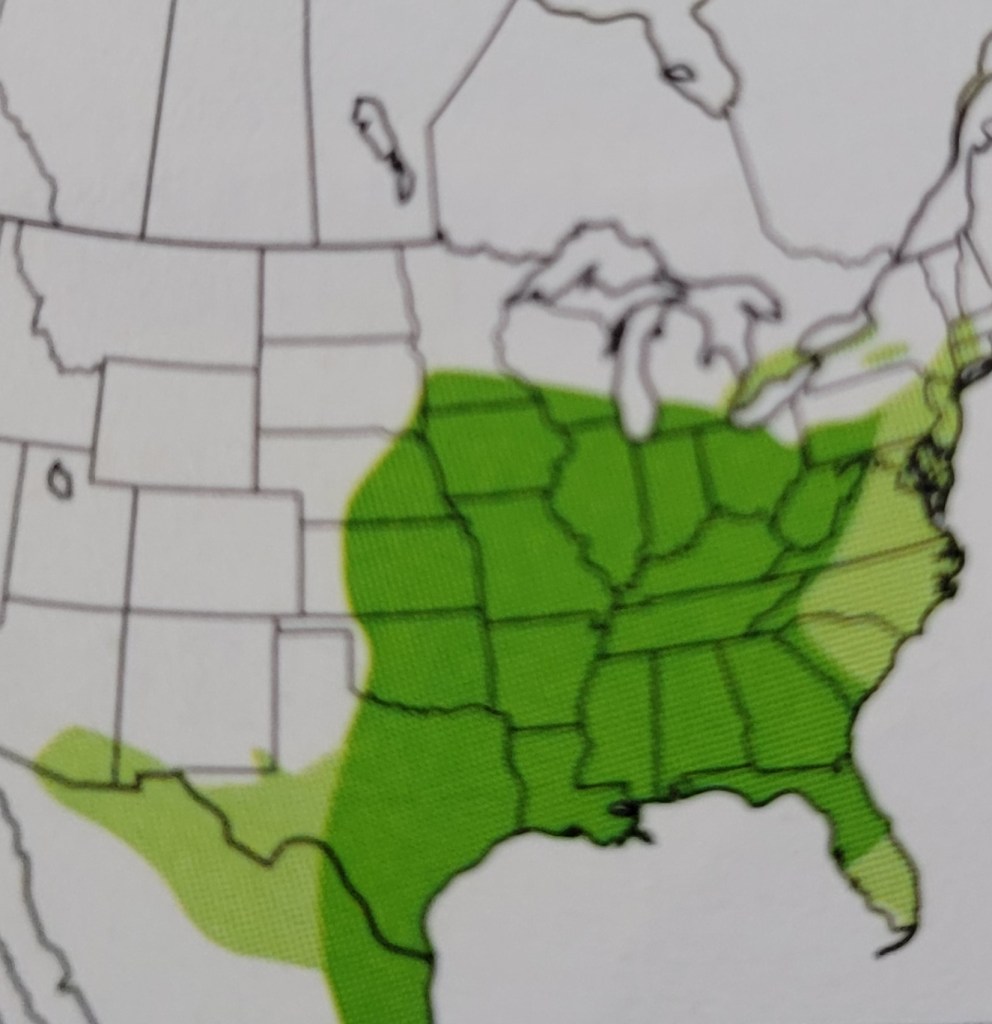
Photo courtesy of Melissa McLeod Summer Tanagers are normally found from Ohio southward in the breeding season and in Central and South America in the winter.

Range map from Connell Lab of Ornithology Adult males are red all year, in contrast to the Scarlet Tanager that breeds in Michigan. The male Scarlet Tanager has bright breeding plumage only in the spring and summer.
The next photo, of an adult male Summer Tanager, was taken in a southwestern state.
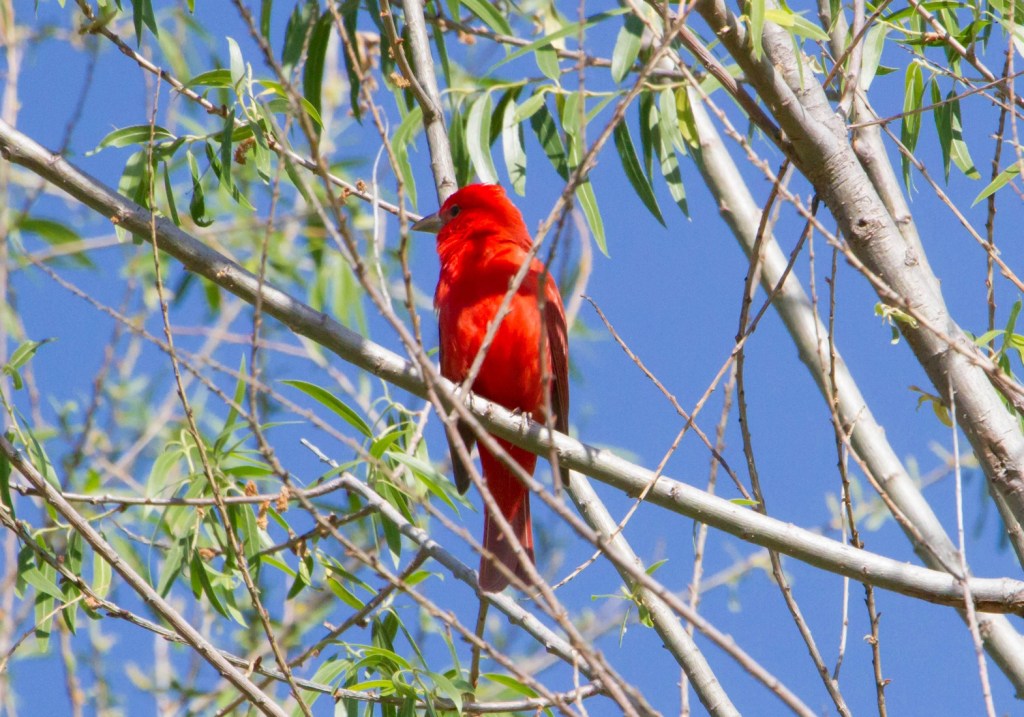
Photo courtesy of Margaret Weber In the spring and summer after the hatch year, young males are still transitioning from the mostly yellow look of the young to the red adult look. (Some bird guides do not show this mixed red and yellow phase.)
Females are yellowish. The photo, taken in Ohio, is of a female in a nest. Note the characteristic large bill.

Photo courtesy of Margaret Weber On April 19, I first saw the immature male in the park, managing to get a photo, with my phone camera, the next day. It is not of good quality but is sufficiently clear for identification purposes.
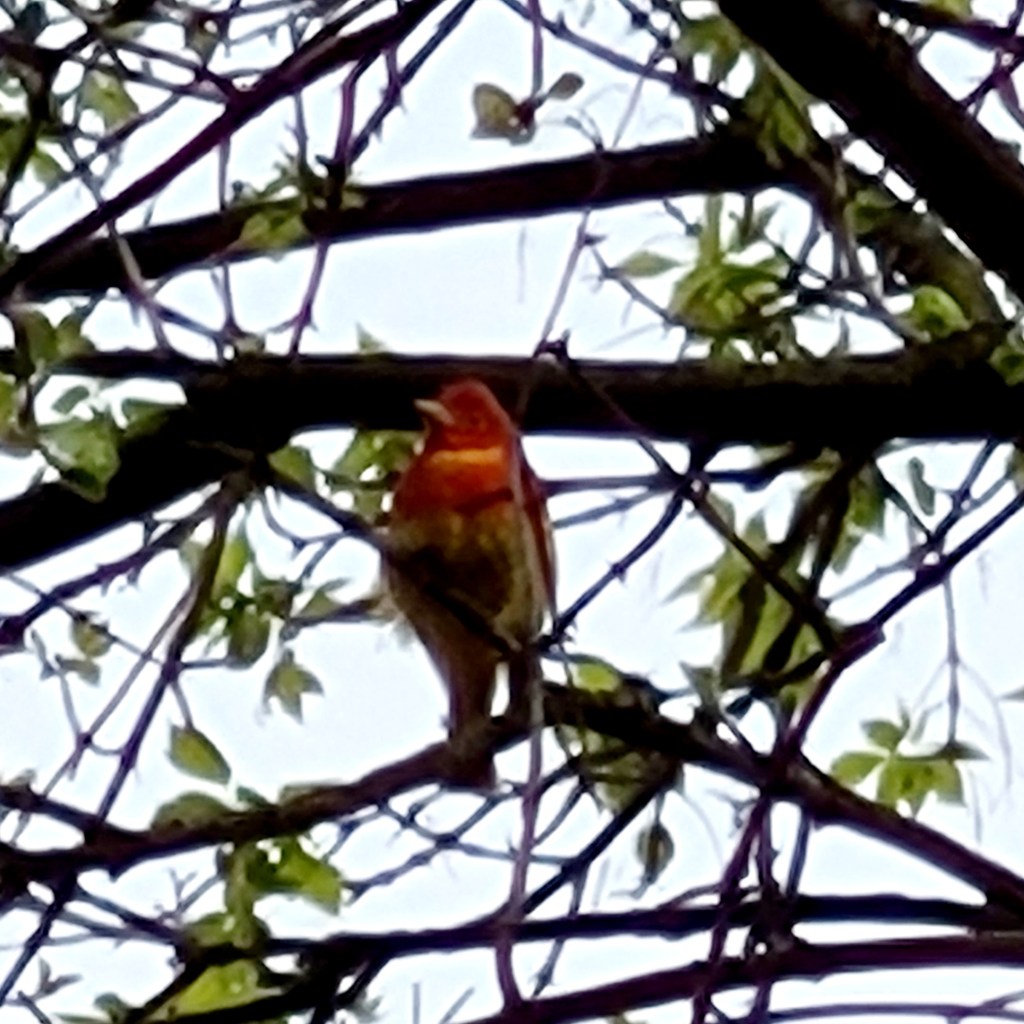
There are different ways in which the bird’s presence is unusual.
First, it is considerably north of its range. On its first time migrating north, this young male got lost.
Second, April 19 is very early for Summer Tanagers to reach any breeding grounds north of the Ohio River. The time of arrival is almost as unexpected as the location. Other examples that I recall of Summer Tanagers over-flying their normal range have been in early May.
My report of the bird’s presence on April 20 (on the Facebook group “Birding Michigan”) led a number of birders to the park, with their binoculars and cameras. Not everyone spotted the hard-to-find tanager, but some had success. And they posted their findings elsewhere, leading to an increased number of bird seekers.
As of May 1, the young male was still present. This long of a stay in a foreign territory may also be unusual, but I do not know the typical behavior of lost young male Summer Tanagers.
It seems like even a lost immature bird finds Eliza Howell Park so irresistible that it doesn’t want to go home!
-
Tawny Emperor: # 16 of “23 Butterflies in 2023”
Leonard Weber
April 26, 2023
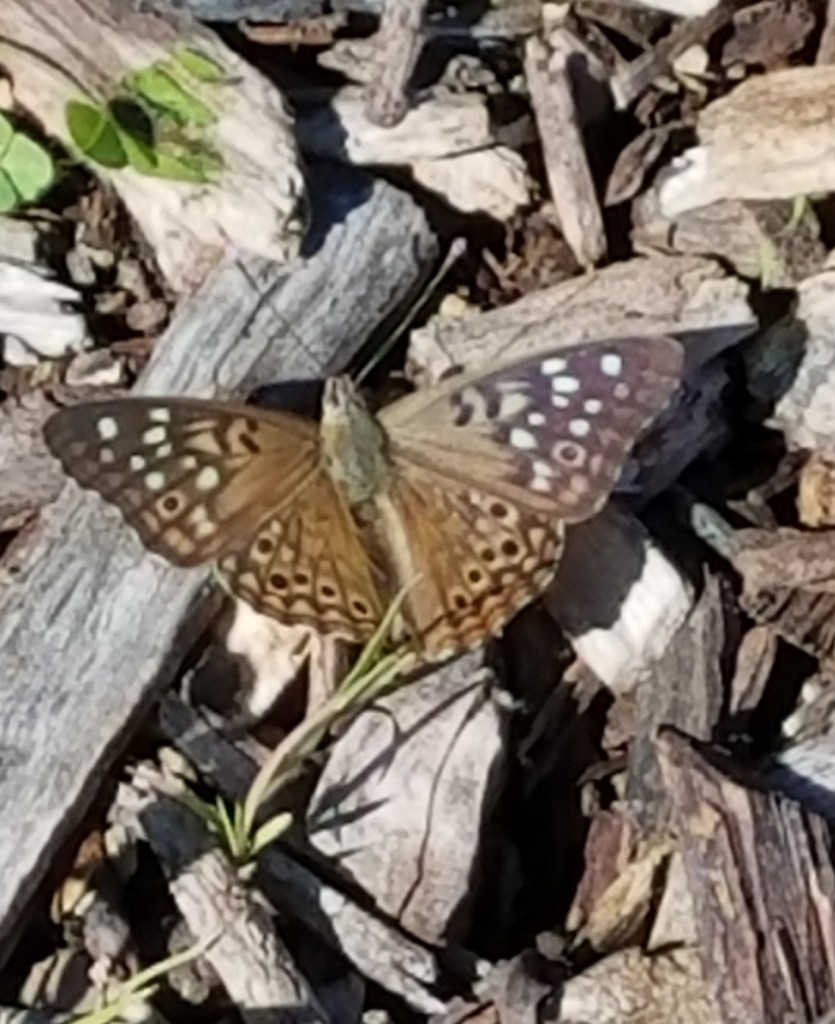
Tawny Emperor, a butterfly with a 2-inch wingspan, is not one of the most common butterflies of Eliza Howell Park. In a typical year, however, it can be seen occasionally from late June to August. It is quite irresistible, especially when it is positioned with the wings open.

Tawny Emperors do not usually visit flowers for nectar, but they can be spotted in the wildflower field at the peak of the flowering season. They are a forest edge species and this field is close to the woodland.
They vary slightly in appearance. Compare the above one with this one.

There is only one brood per year. They survive the winter in the caterpillar stage, completing development in the spring. Caterpillars feed on the leaves of Hackberry trees, which are fairly common in the woods of Eliza Howell Park.
It looks like this when the wings are closed.

Detroit is at the very northern edge of its usual range. Most Michigan butterfly watchers do not have the same opportunity to observe it as we do here.
Kaufman Field Guide to Butterflies of North America There is another Emperor butterfly found in Eliza Howell Park: Hackberry Emperor. It too feeds on Hackberry leaves as a caterpillar and it too shows up periodically in the park every year.
Hackberry Emperor I considered the possibility of featuring Hackberry Emperor instead of Tawny Emperor in this series. (Doing both would not have allowed all the other species that should be included.) I confess that I selected Tawny on the basis of personal attraction — I get more excited when I see one!

-
Eastern Tailed-Blue: # 15 of “23 Butterflies in 2023”
Leonard Weber
April 22, 2023
It is a tiny blue butterfly, but the blue disappears when it alights and closes its wings. This description fits a couple of different butterfly species that are present in Eliza Howell Park, but the one featured here is Eastern Tailed-Blue. It is the little blue butterfly seen most often in the summer in the wildflower field.


Eastern Tailed-Blue has a wingspan of (up to) 1 inch. Two little orange spots are often noticeable on the hindwings, near the tiny “tails.”
It is the only blue butterfly in southern Michigan that has tails.
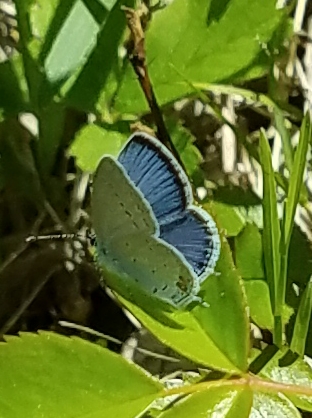
Though it is often missed because of its size, it is possible to see it here from May through August.

Males are brighter blue above than females, which may appear more brown than blue.

The caterpillars feed on the flowers and seeds of plants in the pea family (clovers, vetches, etc.). There may be 3 broods a year. The adults that emerge in the spring have spent the winter in the caterpillar stage.
The next photo is of a mating pair.
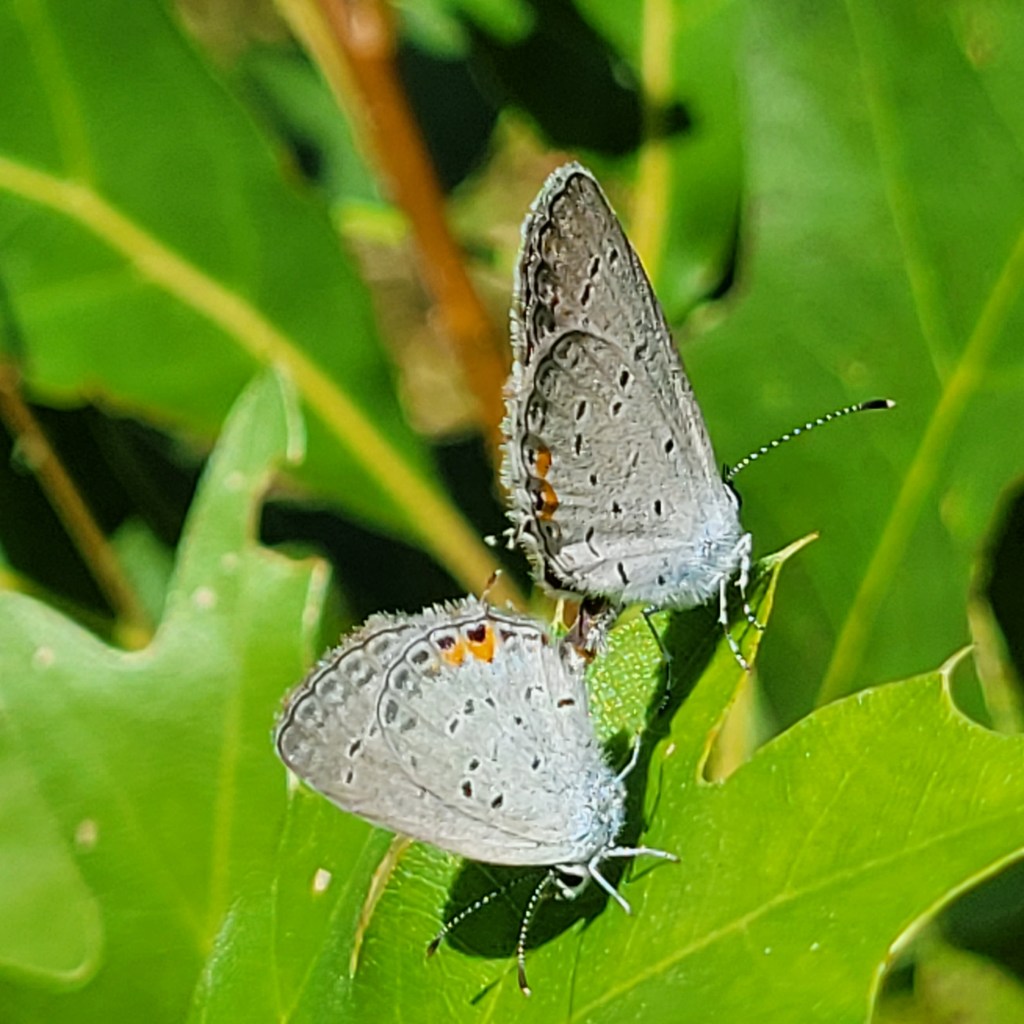
Tailed-Blues visit flowers at times, where they may nectar with wings closed or with wings open.

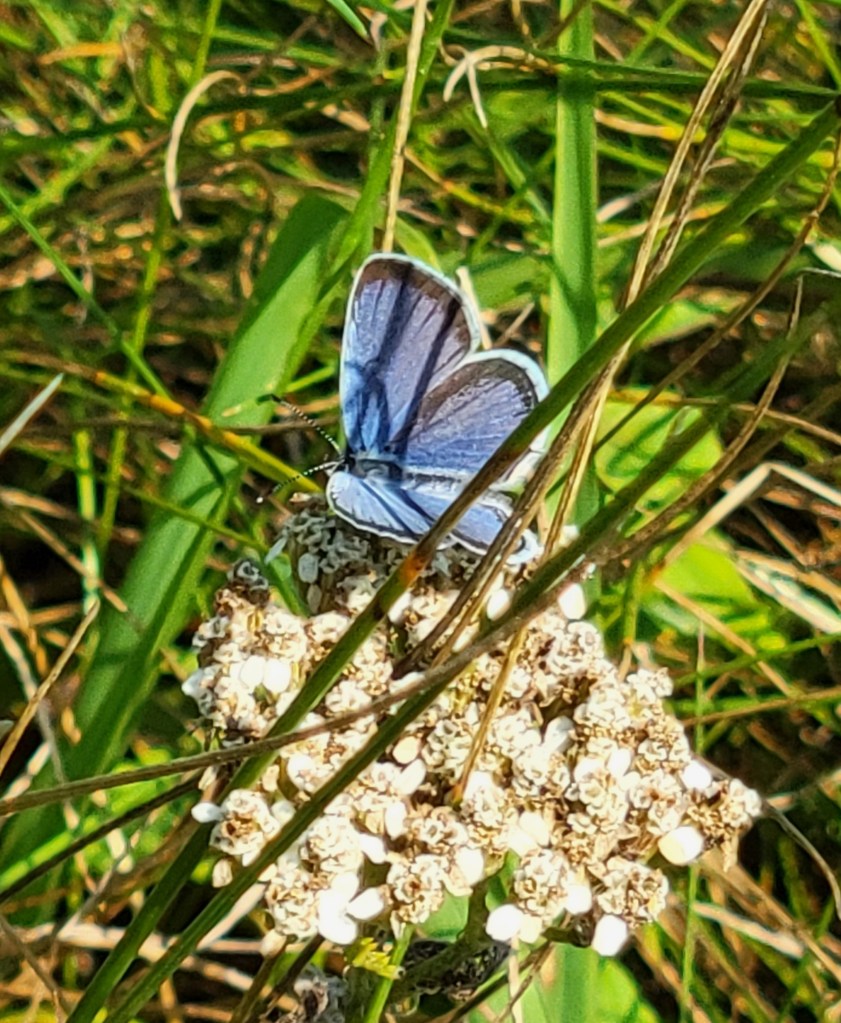
Eastern Tailed-Blue is another species that, year in and year out, enriches my butterfly watching in Eliza Howell Park
-
Dryad’s Saddle: A Mushroom Accompanying Spring Wildflowers
Leonard Weber
April 17, 2023
Though the exact dates vary, the spring woodland wildflowers appear in their fascinating variety every year in Eliza Howell Park in late April and/or early May.
And every year, as wildflower admirers walk the woodland path admiring the Trout Lilies and the Spring Beauties, we inevitably note another equally reliable spring emergent, the mushroom known as Dryad’s Saddle.

Dryad’s Saddle, sometimes also known as Pheasant Back, is a mushroom that grows on deciduous trees, usually on standing dead wood, sometimes on logs, and sometimes in wounds of living trees.
When the mushroom first emerges, it resembles a wine cork.

The cap grows quickly and can reach the size of 10 – 12 inches across. The mushrooms are sometimes solitary, sometimes in overlapping clusters

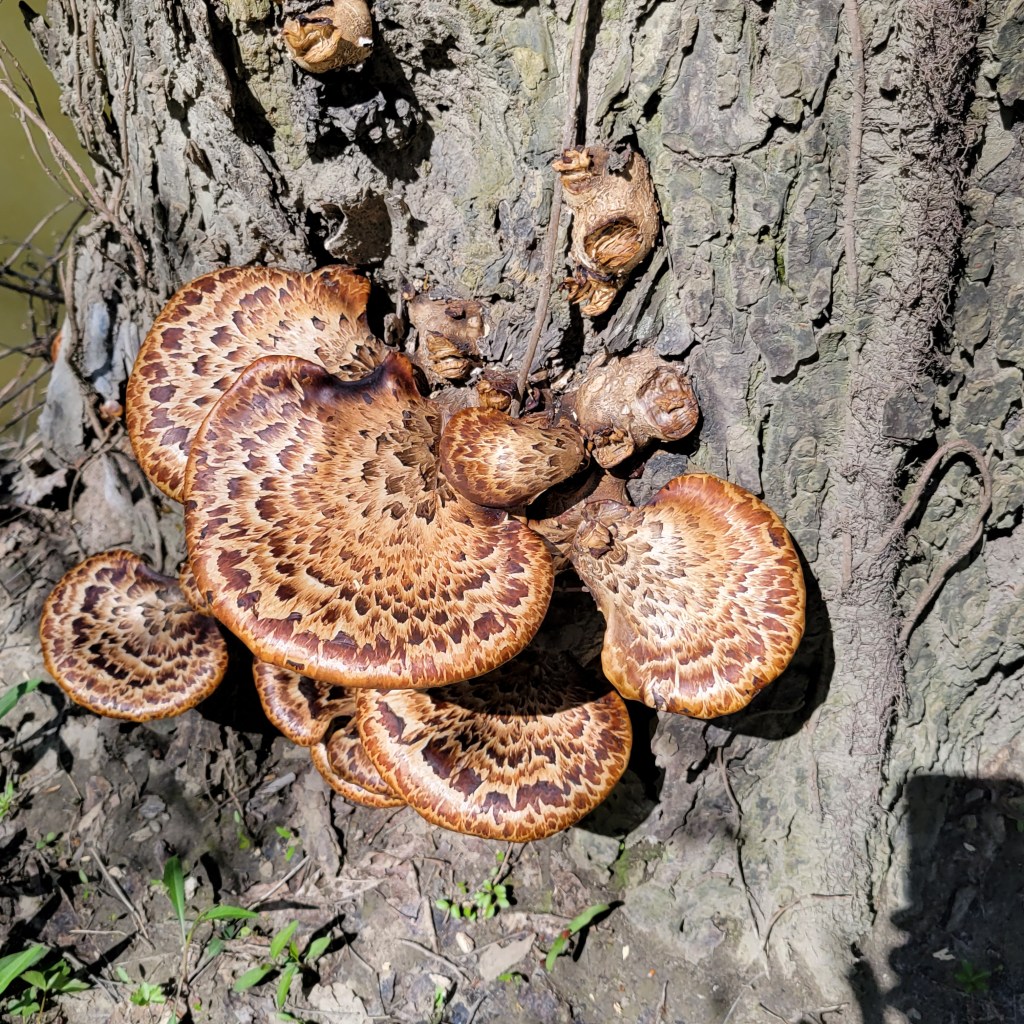
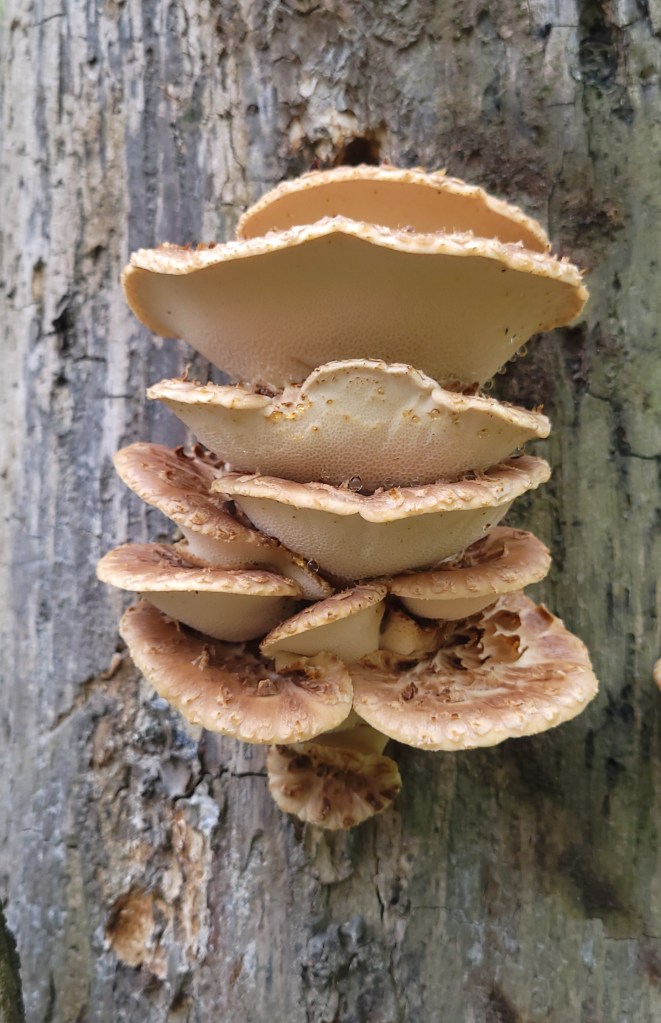
Dryads are creatures in Greek mythology who presumably could sit on the saddle-shaped mushroom. The “pheasant back” name is based on someone’s comparison of the mushrooms colors to pheasant feathers.
Although Dryad’s Saddle is occasionally found in the summer or in the fall, it is most common here during late April and early May. The dates of my first sighting in Eliza Howell over the years 2019 through 2023 are: April 28, April 26, April 18, April 29, and April 14.
The next photo is of a recently discovered growth that I am planning to check regularly to track the development. My efforts do this in the past have ended abruptly when someone harvested the edible mushrooms after a few days.

While most of my attention during the last two weeks of April is on spring birds and spring flowers, Dryad’s Saddle manages to compete successfully for its share!
-
Eastern Garter Snake: An Encounter in the Sunshine
Leonard Weber
April 13, 2023
Each year, I see the first Eastern Garter Snake of the year in Eliza Howell Park on a sunny day in March or April. They emerge from winter hibernation and seek the sun to warm up from so much time in the cold earth. This year, my first sighting was on April 7.
I have seen others since then. Normally, they slither away quickly when I walk near their sunbathing location, but today’s meeting was different. It was a quite large garter snake, about 2 feet long, that I met as I walked through a grassy field as I headed to a wooded area to look for wildflowers.

After an initial startle response, it held its ground and watched me carefully. It allowed me to get closer than I usually get to a snake.
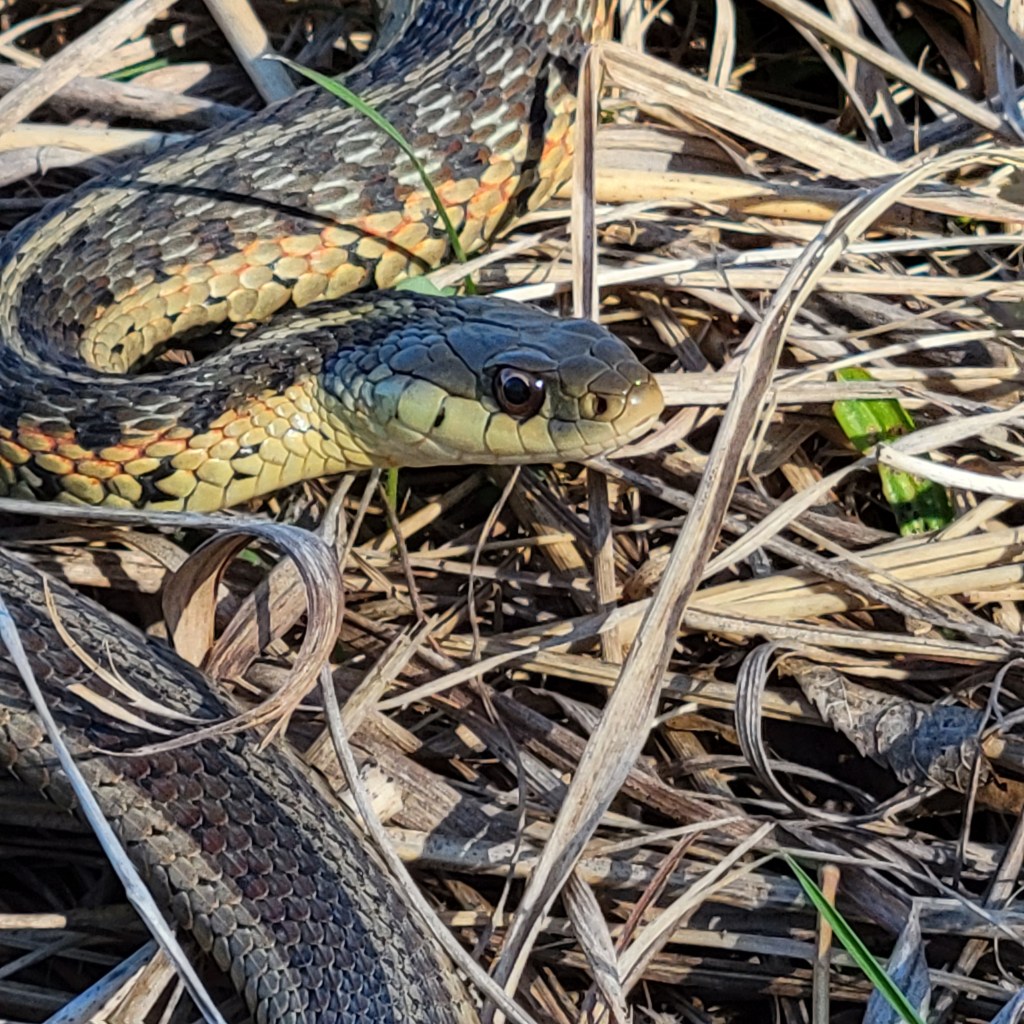
Snakes use their tongues to sense what is around them; it is often said that they “smell” with their tongues. The Eastern Garter Snake has a long tongue, red with a black split tip, that it extends frequently and rapidly.
When the one I encountered today seemed interested in keeping its spot in the sunshine, I was hopeful of getting a close-up photo of the head, possibly of the tongue. I got down low, probably about 3 feet away.

We looked each other in the eye as I took picture after picture. It extended its tongue frequently, but for only the briefest time. Finally, after about dozen shots, I got an image of the tongue.
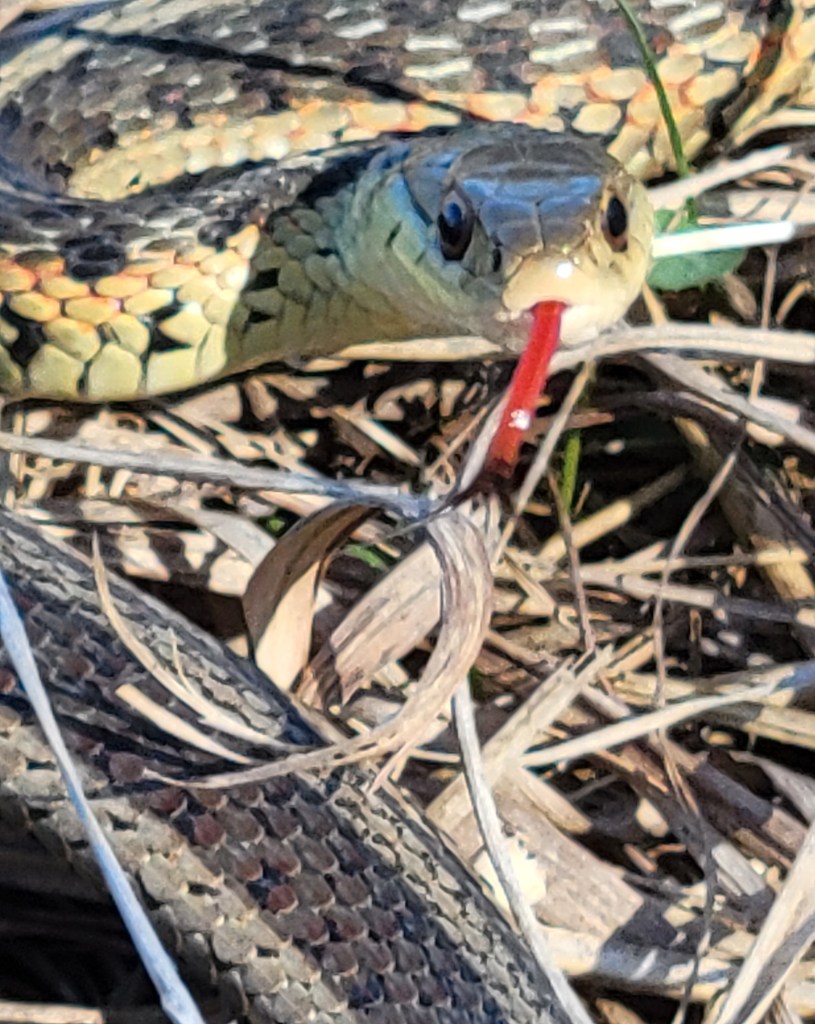
Using its tongue to get a sense of me, it apparently decided that I was not a threat. But I needed to be watched carefully!
In order to get a better look at the tongue, including the black forked tip, I further enlarged the photo later.

Today’s meeting ended with my walking away, leaving the garter snake to resume its peaceful time in the sun. I was seeking a good photo of the fascinating tongue, but I came away impressed also by the eyes, by the way it focused on me.
It was a very satisfying close encounter for me. I can not speak for the snake.
-
Common Wood-Nymph: # 14 of “23 Butterflies in 2023”
Leonard Weber
April 11, 2023
Common Wood-Nymph is in the same family as Little Wood-Satyr, # 6 in this series. They are present sequentially in Eliza Howell Park. Little Wood-Satyr is seen in May and June; Common Wood-Nymph is present from late June until late August.

June 28 Common Wood-Nymph has a wingspan of about 2 and 1/2 inches. It has two quite large eyespots on the forewings and often has several noticeable small eyespots on the hindwings
It usually has the wings closed when nectaring.

July 12 
August 7 Common Wood-Nymph is called “common” because its range is widespread while the other three species of wood-nymph have limited ranges in the western states.
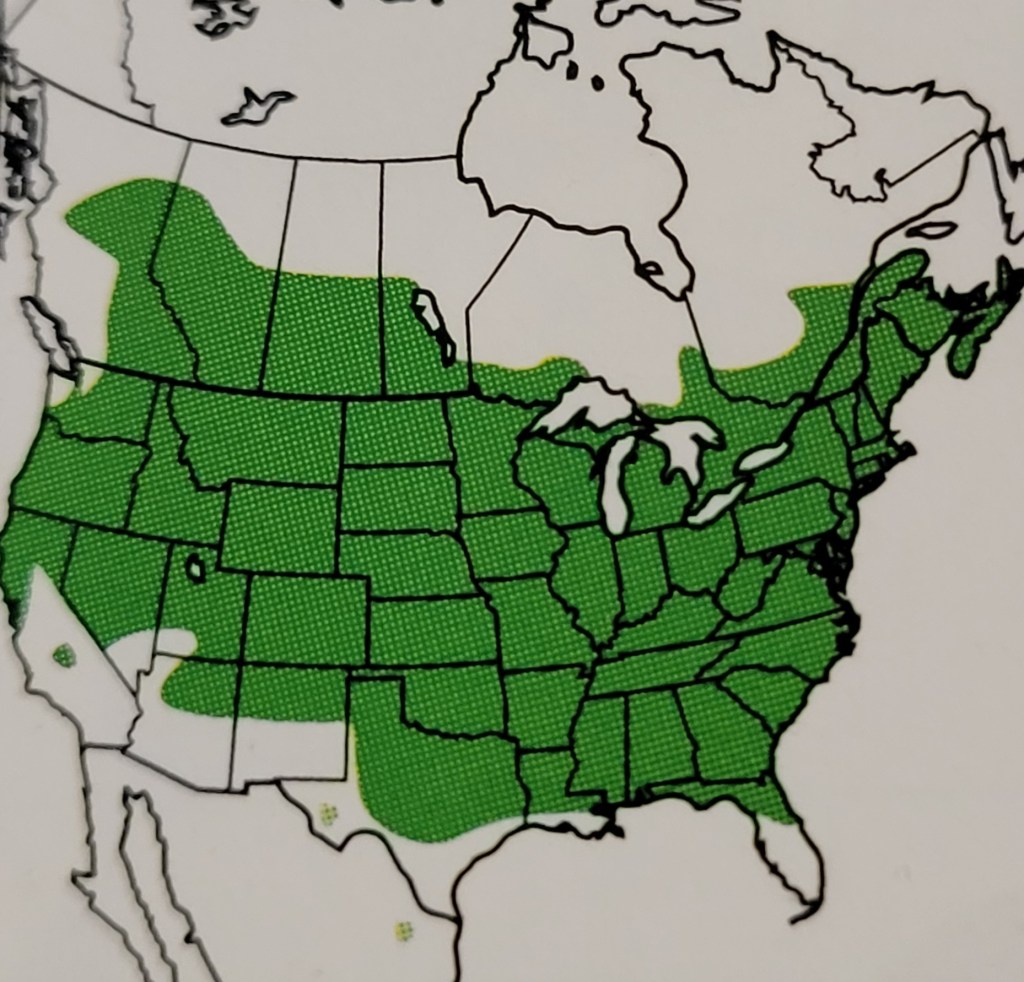
Kaufman Field Guide to Butterflies of North America There is just one brood a year. The caterpillars, which feed on grasses, hibernate for the winter and finish growing in the spring.
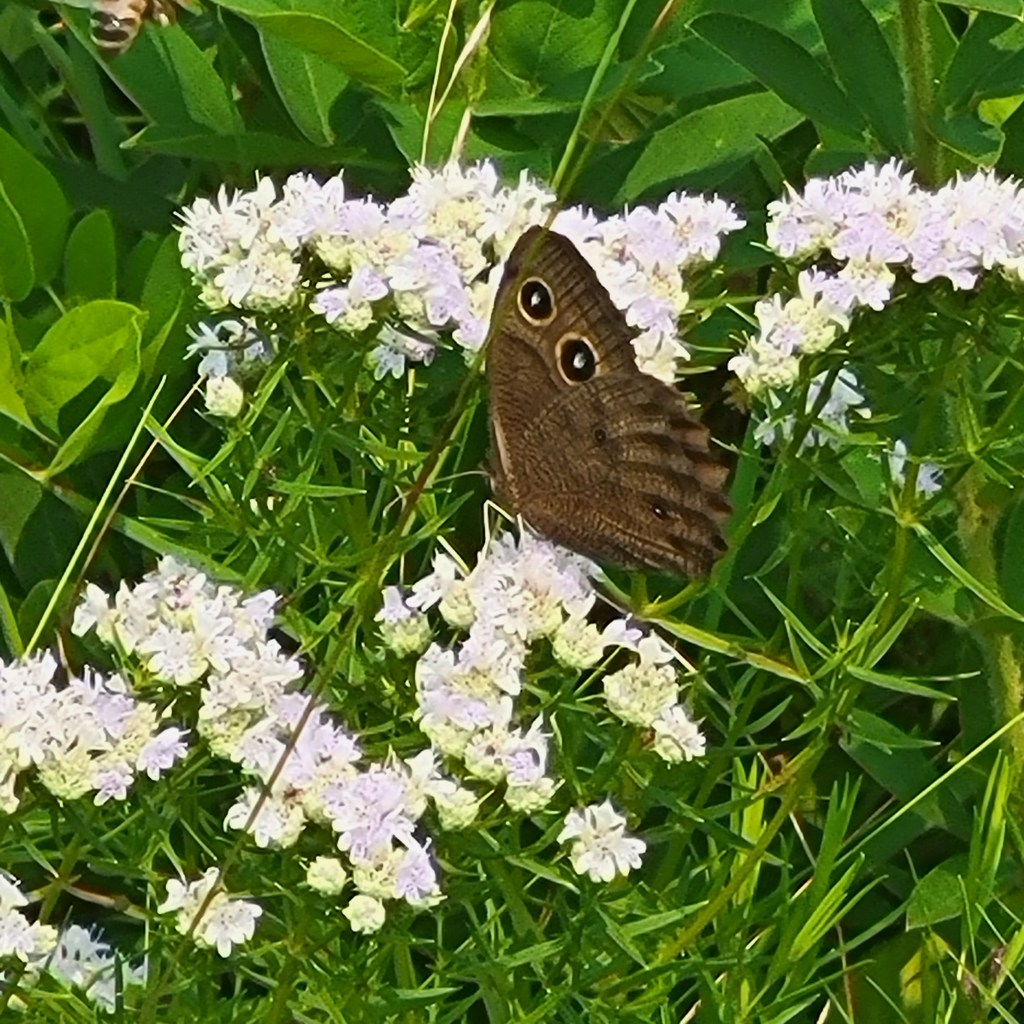
August 24 Common Wood-Nymph is not glamorous or showy, but it is a regular — and very welcome — presence in the park each year beginning in late June.
-
Ephemeral Wildflowers: An Invitation to a Public Nature Walk on April 29
Leonard Weber
April 5, 2023
The spring woodland wildflowers are often referred to as “ephemerals.” Their blooming time is brief, completed before the trees leaf out and shade the forest floor.
Anyone interested in an opportunity to see and become more familiar with a variety of small woodland spring wildflowers is invited to a free guided nature walk that will take place in Eliza Howell Park at 1 p.m. on Saturday, April 29, 2023. *
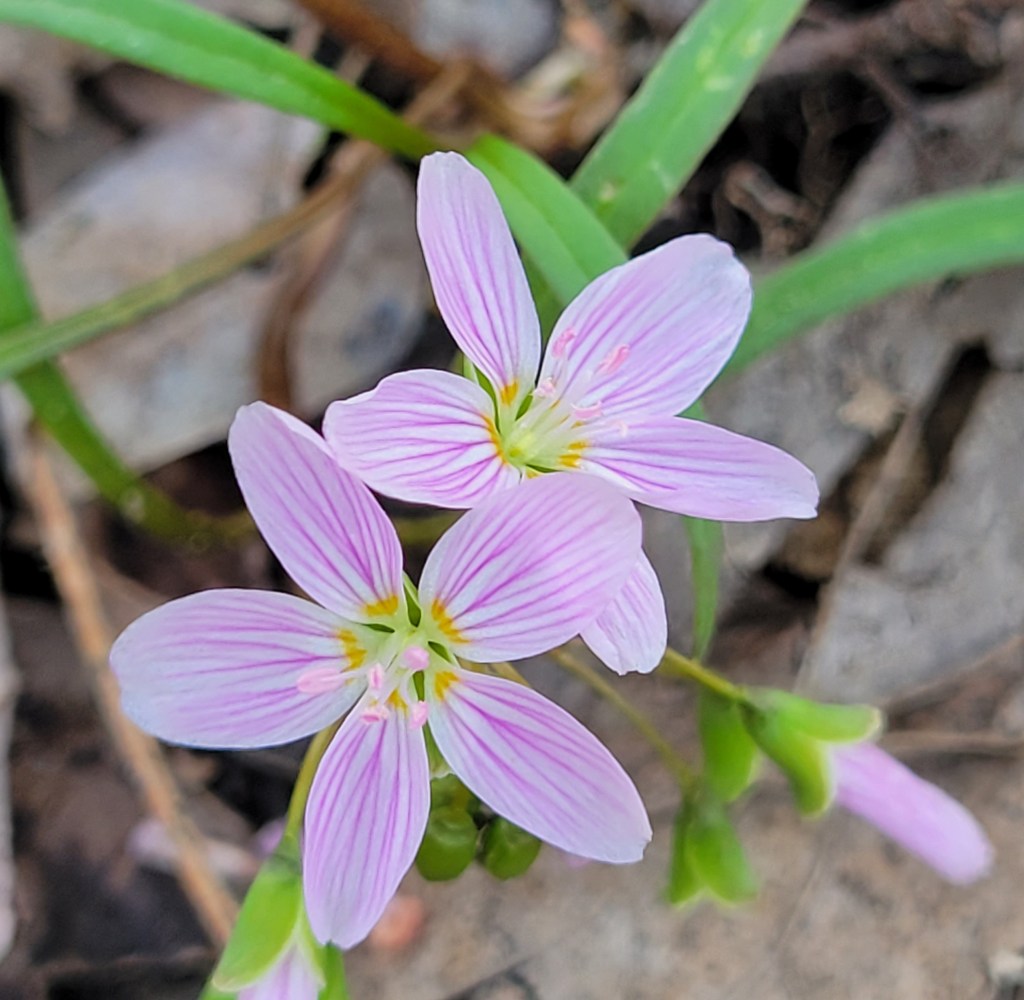
Spring Beauty It is a challenge each year to predict the exact time that these flowers will be in bloom; it naturally depends somewhat upon how warm spring is. Based on past years and on the weather to date, April 29 looks promising at this time.
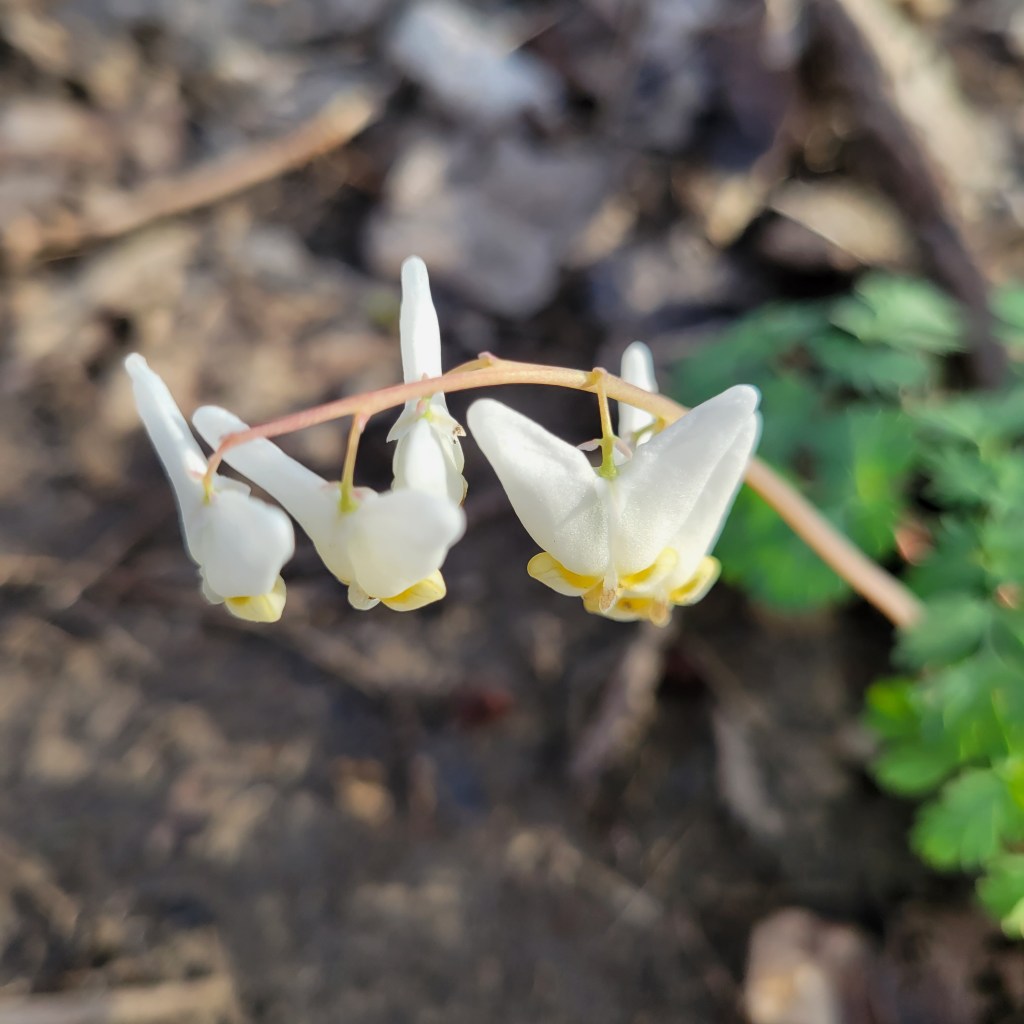
Dutchman’s Breeches We can usually expect to see the same species year after year in the park, but it is always exciting to find them — perhaps because we wait nearly 50 weeks between appearance or perhaps because we are fascinated by the names that have become attached to them historically.
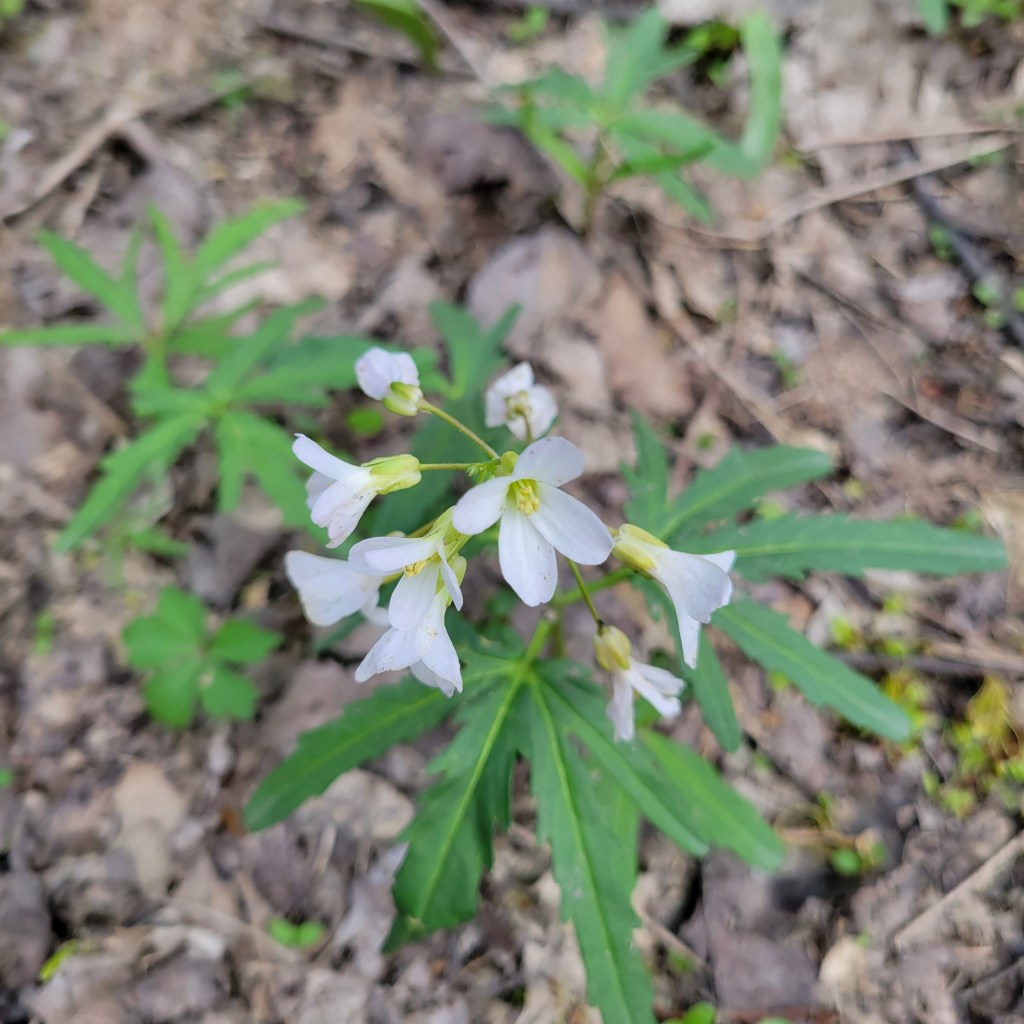
Cutleaf Toothwort Given their small size, these flowers are quite easy to miss. Until I learned when and where to look, I walked past Wild Ginger many times, failing to look under the heart-shaped leaves for the low dark flower underneath.
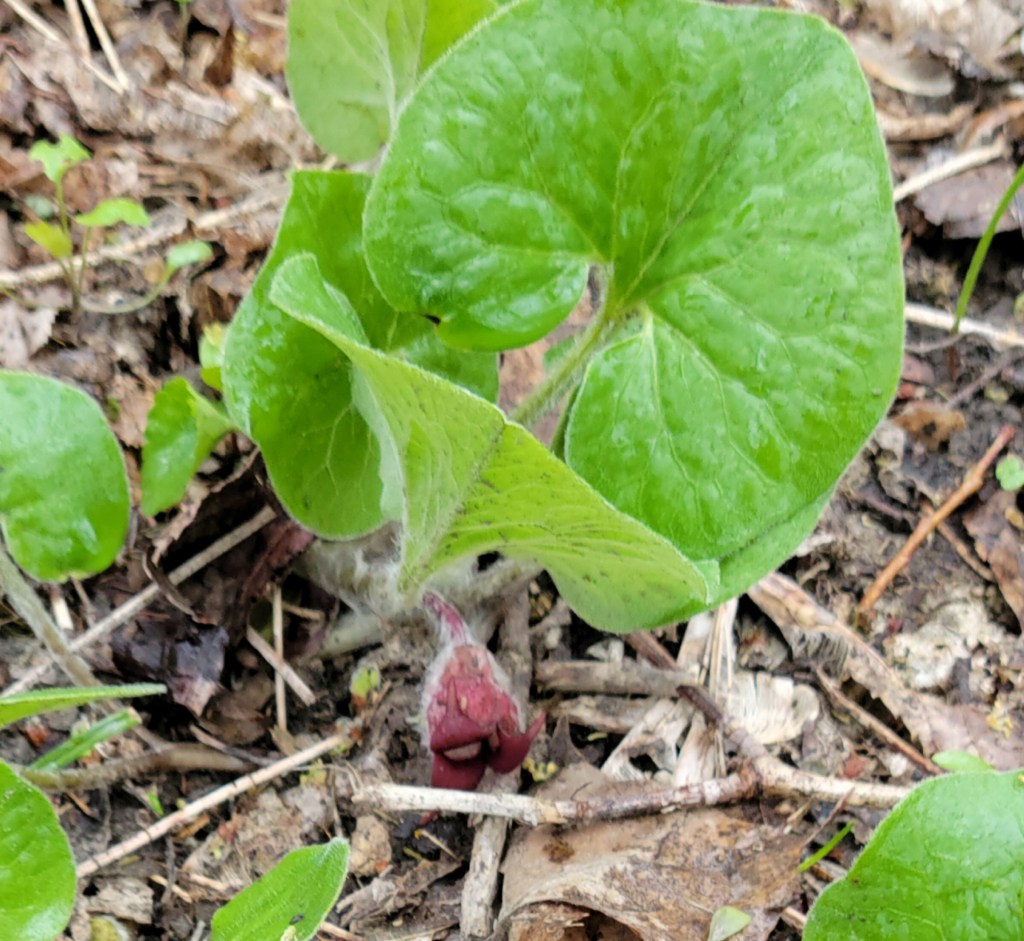
Wild Ginger It’s difficult to choose a favorite among the ephemerals, but I have a special attraction to Yellow Trout Lily.
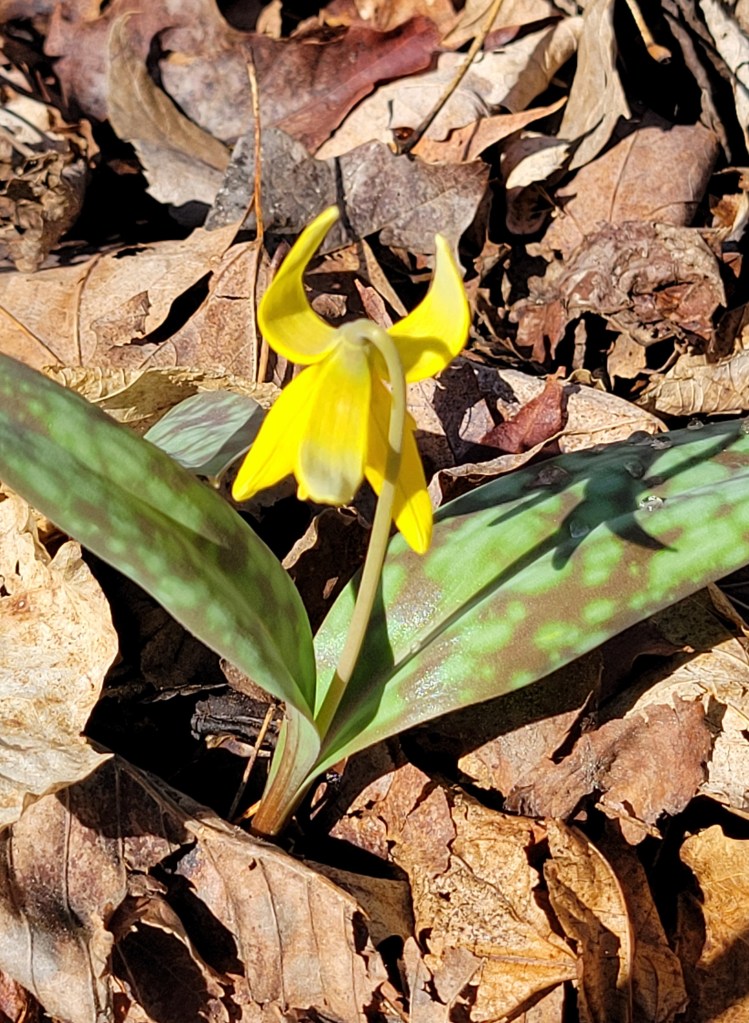
Yellow Trout Lily 
White Trout Lily The violets in Eliza Howell Park are of several varieties.
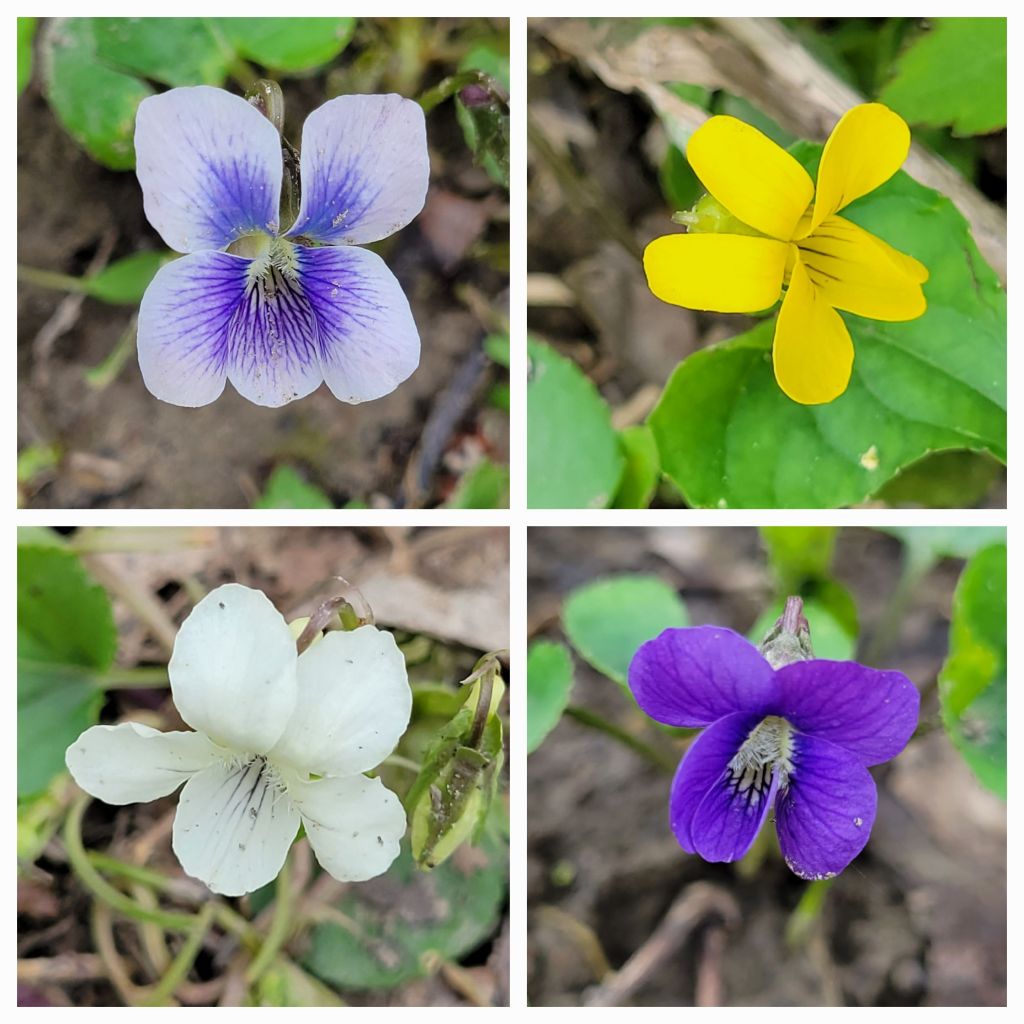
Violets While most of the woodland spring wildflowers bloom at approximately the same time, a couple are a little later. Two that might not yet be in bloom on April 29 are …
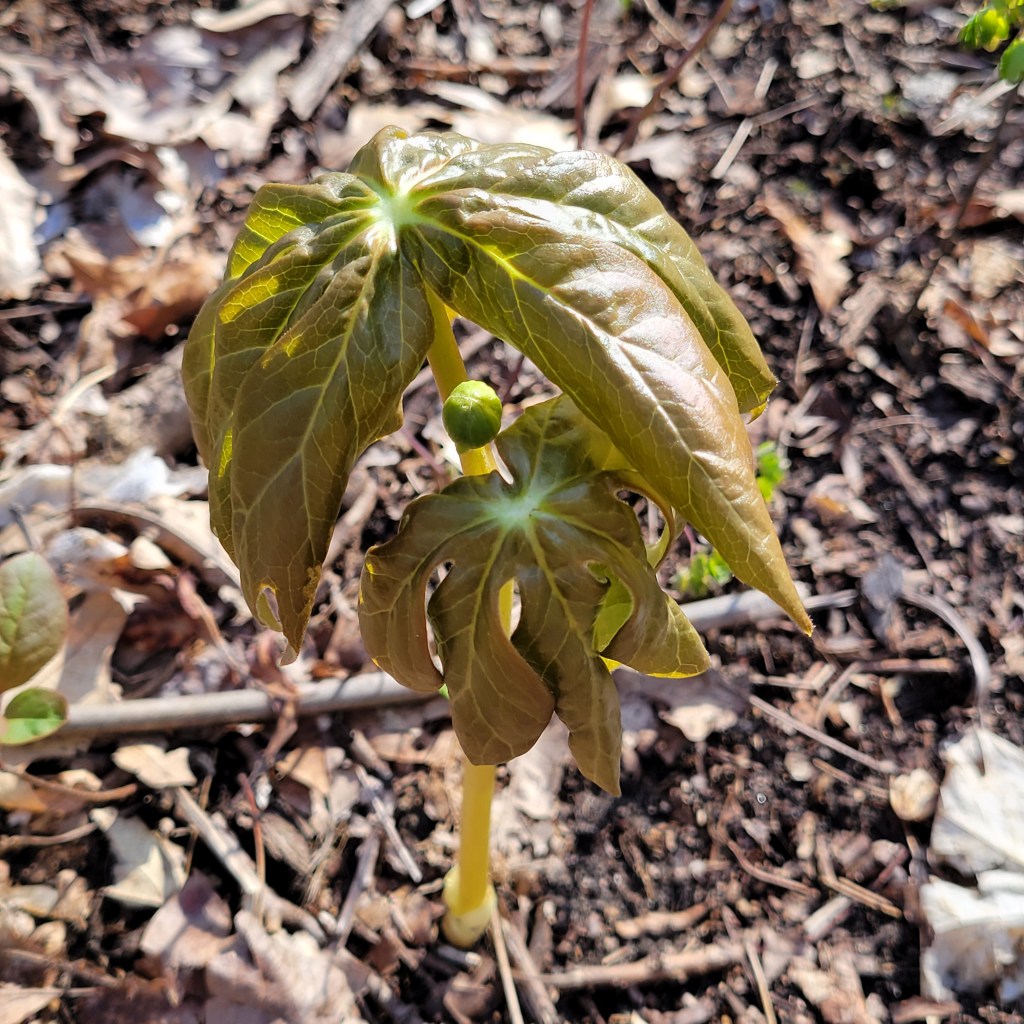
Mayapple 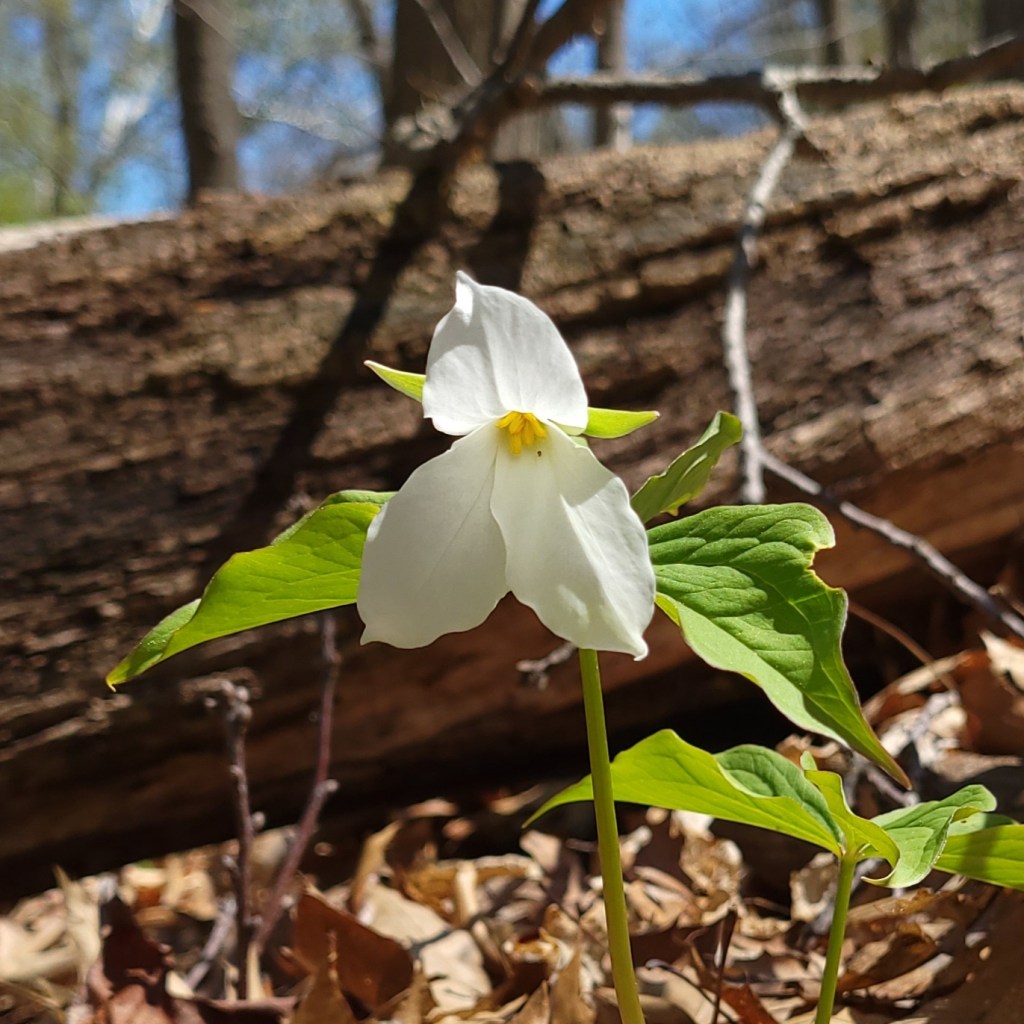
Trillium This quick preview of coming attractions is not complete until it includes one that is a favorite of a number of park visitors.
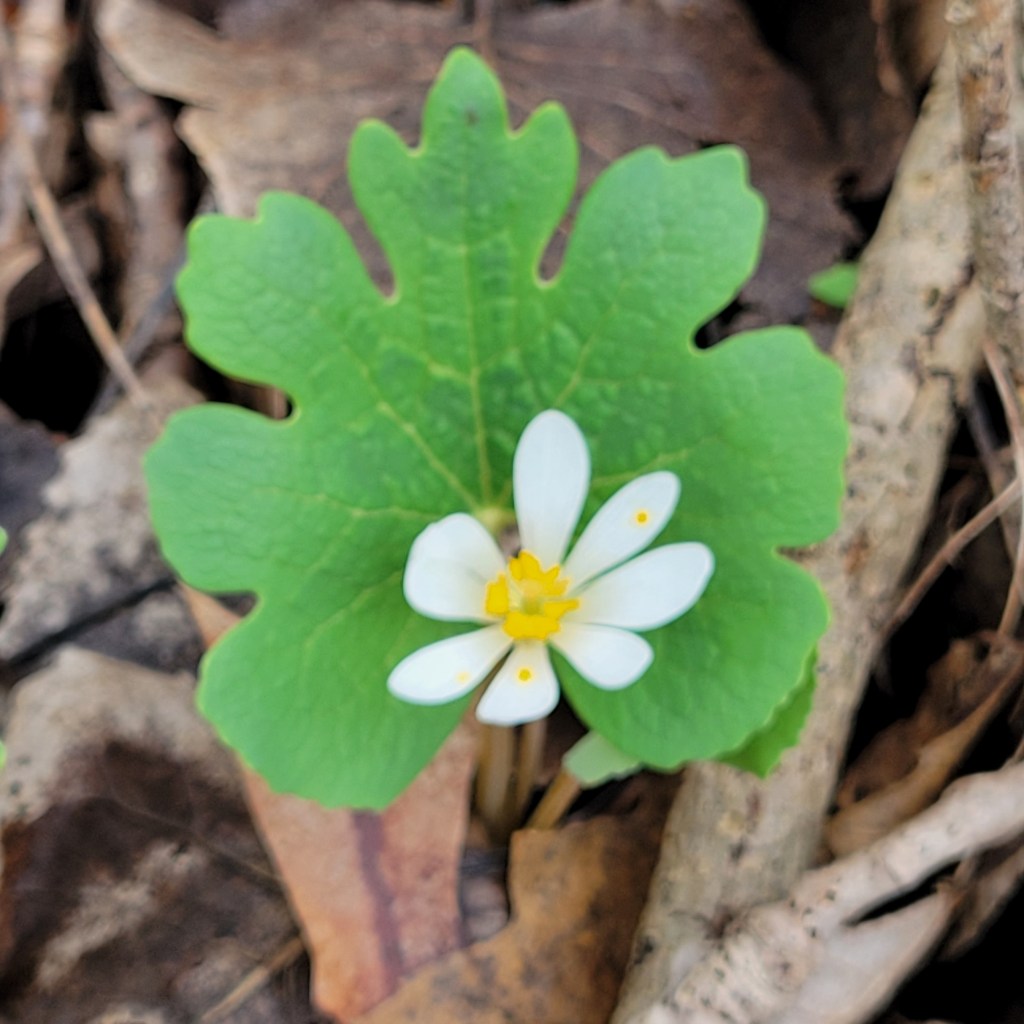
Bloodroot 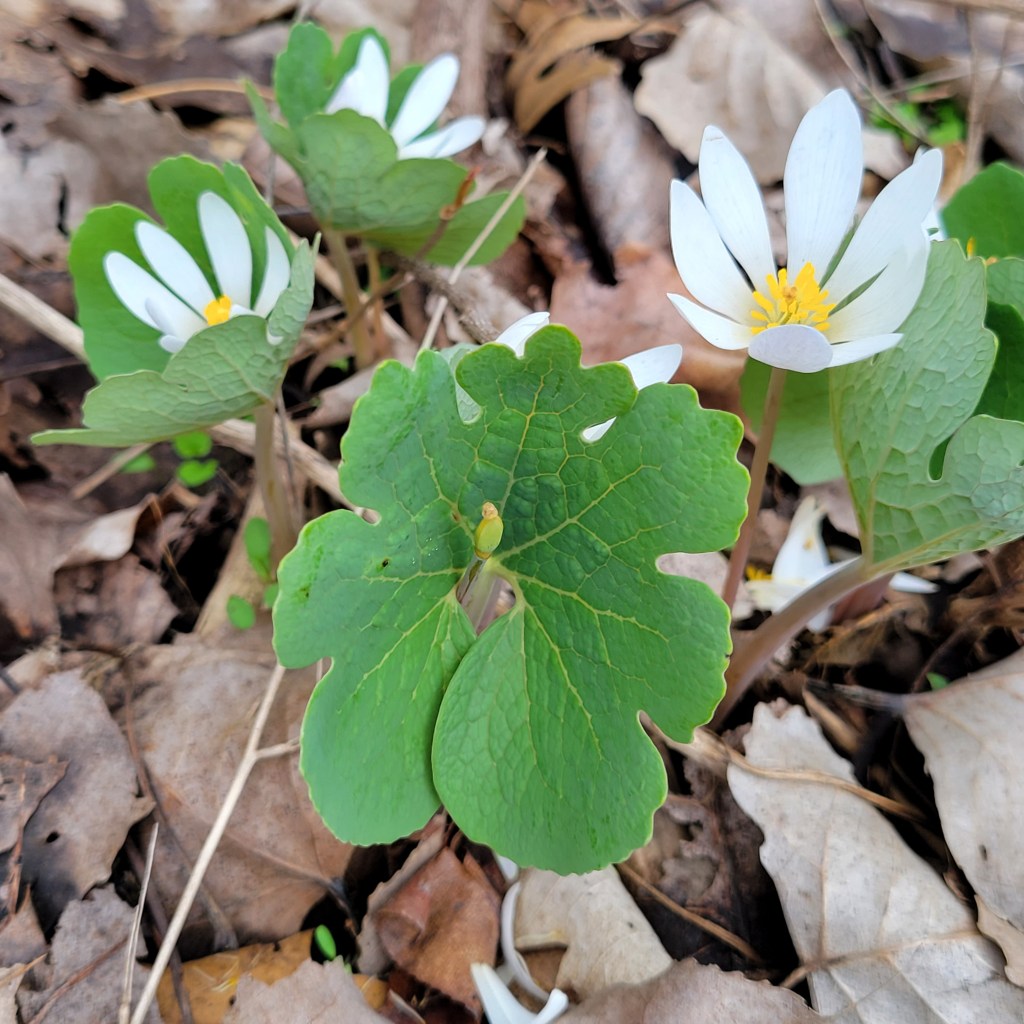
Bloodroot * Please enter Eliza Howell Park from Fenkell and go about halfway around the 1-mile road loop. The walk will last approximately 1 and 1/2 hours. The total distance covered will be about 1 mile, much of it on a dirt path.
For additional information or to sign up, please email
-
Subscribe
Subscribed
Have a WordPress.com account? Log in now.

