-
Pearl Crescent: # 13 of “23 Butterflies in 2023”
Leonard Weber
March 31, 2023
The Pearl Crescent is a small orange and black butterfly that flies in Eliza Howell Park from the middle of May into September. Perhaps because of its size (wingspan of 1 1/2 inches), it does not seem to get the attention some other common butterflies get.
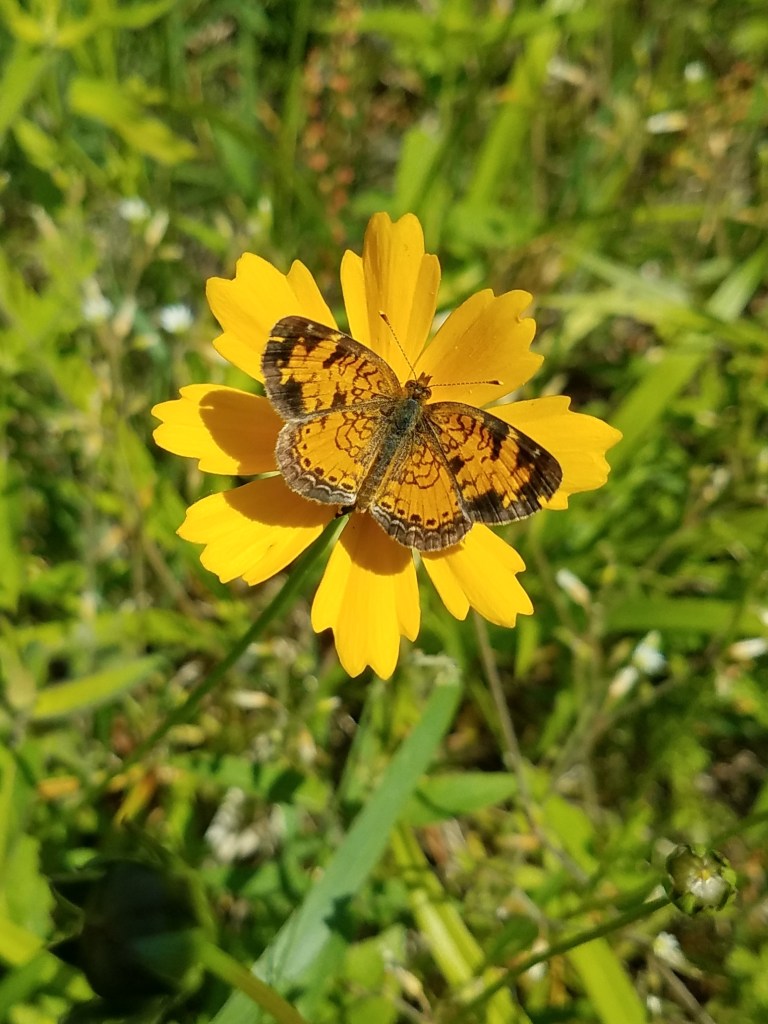
June 7 There are sometimes differences in appearance among crescents and, for a few years, I tried to examine carefully each one I spotted. I was trying to determine whether it was a Pearl Crescent or perhaps a Northern Crescent, a very similar species also found in Michigan.
This individual is ragged and faded.

June 14 Listening to experts who repeatly reported that it is extremely difficult to tell the difference in the field, I have since adopted the recommended practice of the Michigan Butterfly Network: that, for practical field identification, we name those here in southern Michigan “Pearl Crescents” and those on the other side of a line about 100 miles north of here “Northern Crescents.”

Pearl Crescent range, Kaufman Field Guide to Butterflies of North America 
Northern Crescent range, Kaufman Field Guide to Butterflies of North America While I usually enjoy the challenge of trying to make difficult identification, I have decided to go along with identification based on geography in this case. Less focus on identification allows more time to enjoy the butterfly’s beauty and to observe its behavior.

August 8 
June 3 There are usually two broods. Pearl Crescent spends the winter here in the caterpillar stage, continuing to chrysalis and then adult in the spring.
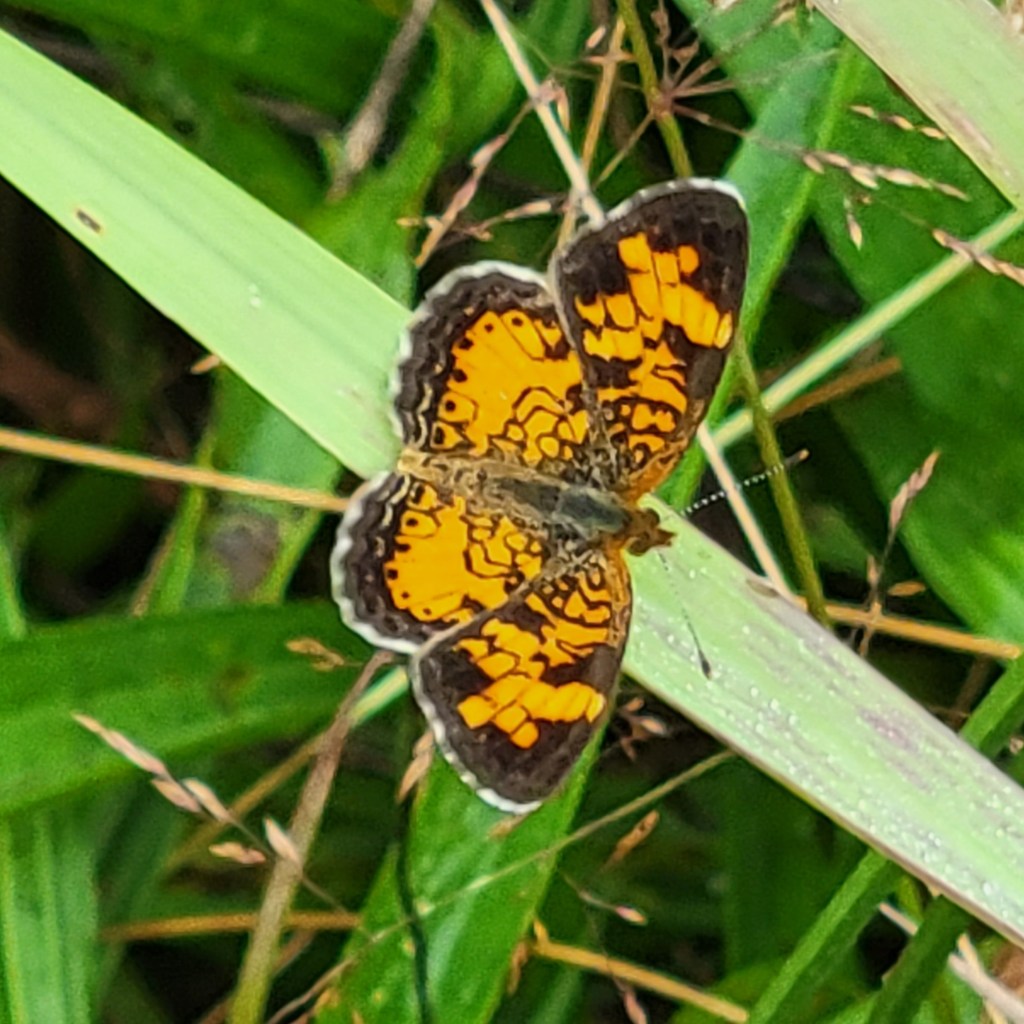
July 27 
August 29 Now that we have reached the end of March, it is only a matter of weeks before I will again look for Pearl Crescent, a regular and attractive participant in the annual butterfly extravaganza at Eliza Howell Park.
-
Black Swallowtail: # 12 of “23 Butterflies in 2023”
Leonard Weber
March 22, 2023
Black Swallowtail is one butterfly that I can usually count on seeing frequently in Eliza Howell Park from mid-May to mid-September. Over the last 10 years, the average date of my first sighting of the year here has been May 18.
It is a large butterfly, with a wingspan of approximately 4 inches. Unlike many other species, the difference between females and males is easily recognizable.

Female on Red Clover 
Male on Coreopsis As with most swallowtails, there are “tails” on the hindwings, not always easily seen. The spots are smaller on the female and, while the male sometimes shows a little blue, it is more extensive on the female.

Male on thistle 
Female on Purple Coneflower Black Swallowtails are found in fields, parks, and sunny yards. As can be seen from the photos, I usually see them in the park when they come to flowers for nectar.
Black Swallowtail is widespread in eastern United States.

Kaufman Field Guide to Butterflies of North America! The host plants for eggs and larvae are carrot family species. In vegetable and herb gardens, the caterpillars can be found eating parsley and carrot leaves. In the park, a favorite egg and larvae plant is Queen Anne’s Lace (aka Wild Carrot).

Black Swallowtail caterpillar on Queen Anne’s Lace There are probably two broods a year in this area, and it is usually in September, near the end of the second brood, that I am most likely to see caterpillars. The caterpillar in the photo appears to be full-grown, over an in h long, ready to form the chrysalis. Black Swallowtail spends the winter in the chrysalis form, emerging as an adult in spring
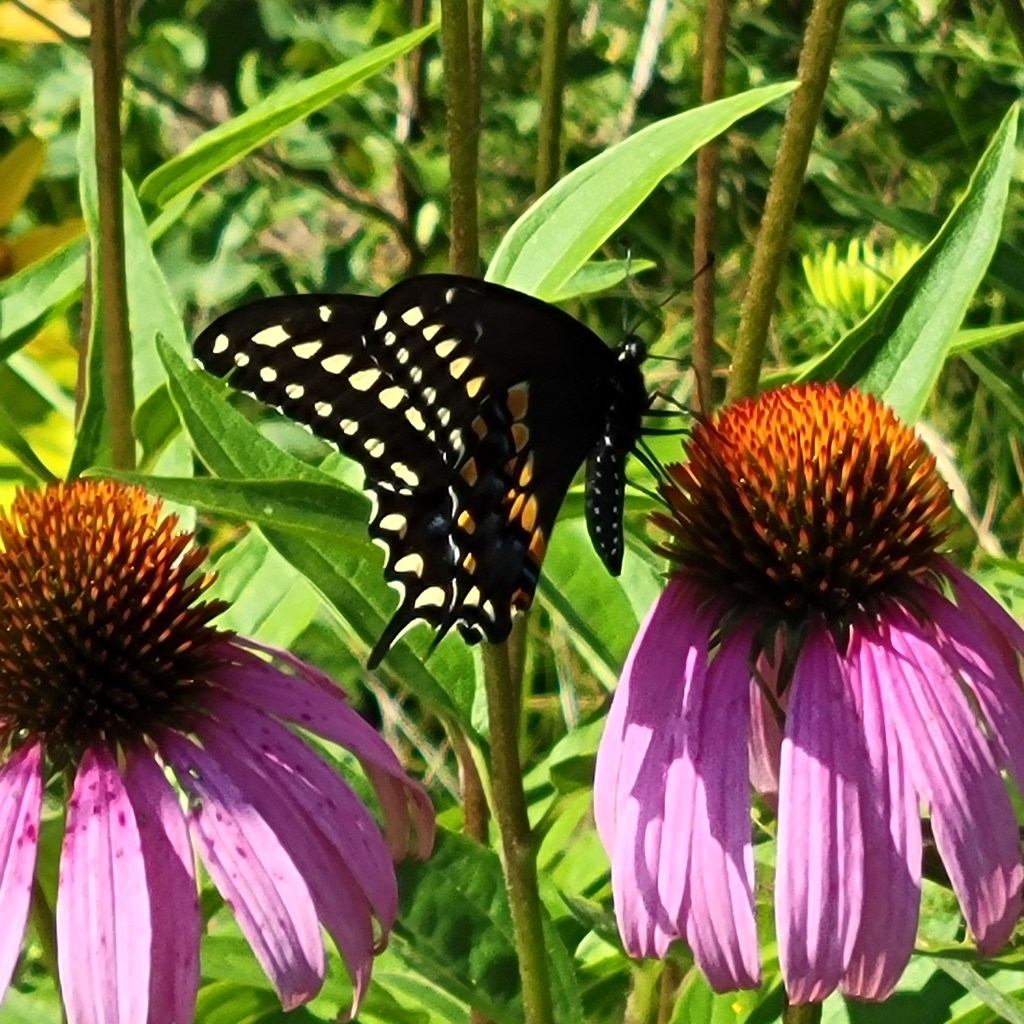
On Purple Coneflower 
On Wild Bergamot While Black Swallowtail is a common butterfly of Eliza Howell Park, I am always excited to see these large and lovely insects. I will be looking for them in the middle of May
-
Cornelian Cherry Dogwood: An Early Flowering Tree
Leonard Weber
March 18, 2023
March has been very cold this year so far here in Detroit, but I have begun anticipating flowers that will be blooming soon.
The earliest flowering tree or shrub in Eliza Howell Park is, I think, Cornelian Cherry Dogwood. The buds are now starting to show yellow.
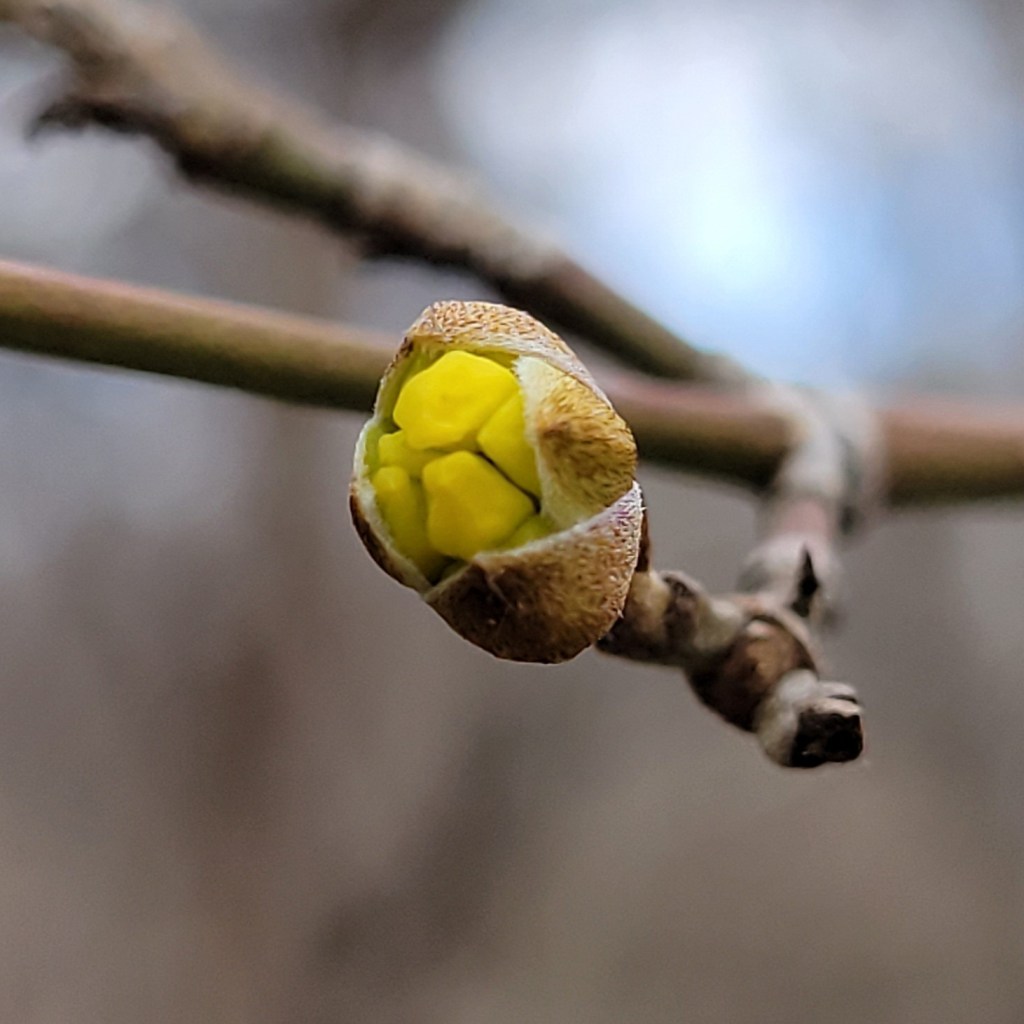
Mid-March There is only one tree of this species in the park (that I am currently aware of). It is on the bank of the Rouge River. My guess is that a seed (from a garden?) got here either via a bird or by floating downstream. The species is native to western Asia and southern Europe and is sometimes sold by nurseries in this country.
I observed it many times over the seasons last year.

Mid-April The tree is approximately 20 feet tall, which is close to full size for the species, and clusters of yellow flowers are scattered on the leafless branches in April.
Fortunately, the branches are low enough to allow for close-up looks at the clusters.

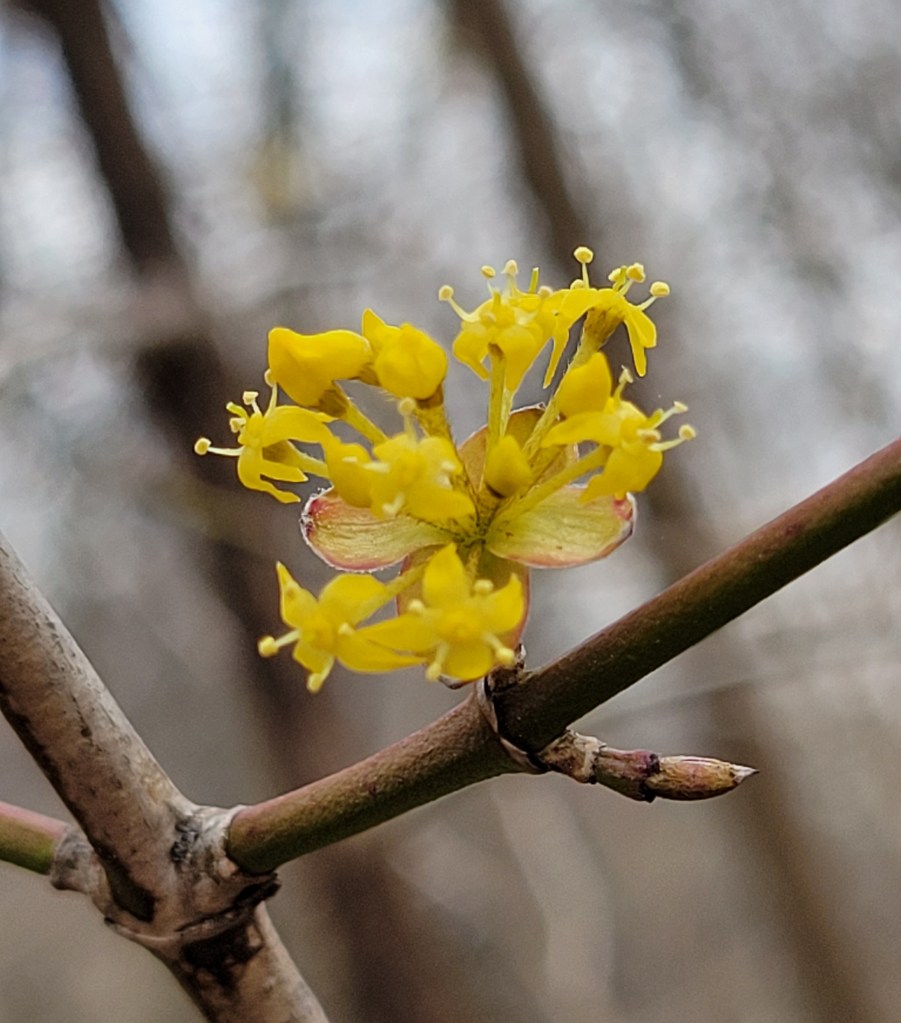
Cornelian Cherry, as it is sometimes called, is related not to true cherries but to flowering dogwoods. The edible fruit somewhat resembles a cherry and has often been used to make jams and juice.
The fruit does not ripen all at the same time. The next three photos are all from the same week in late August.

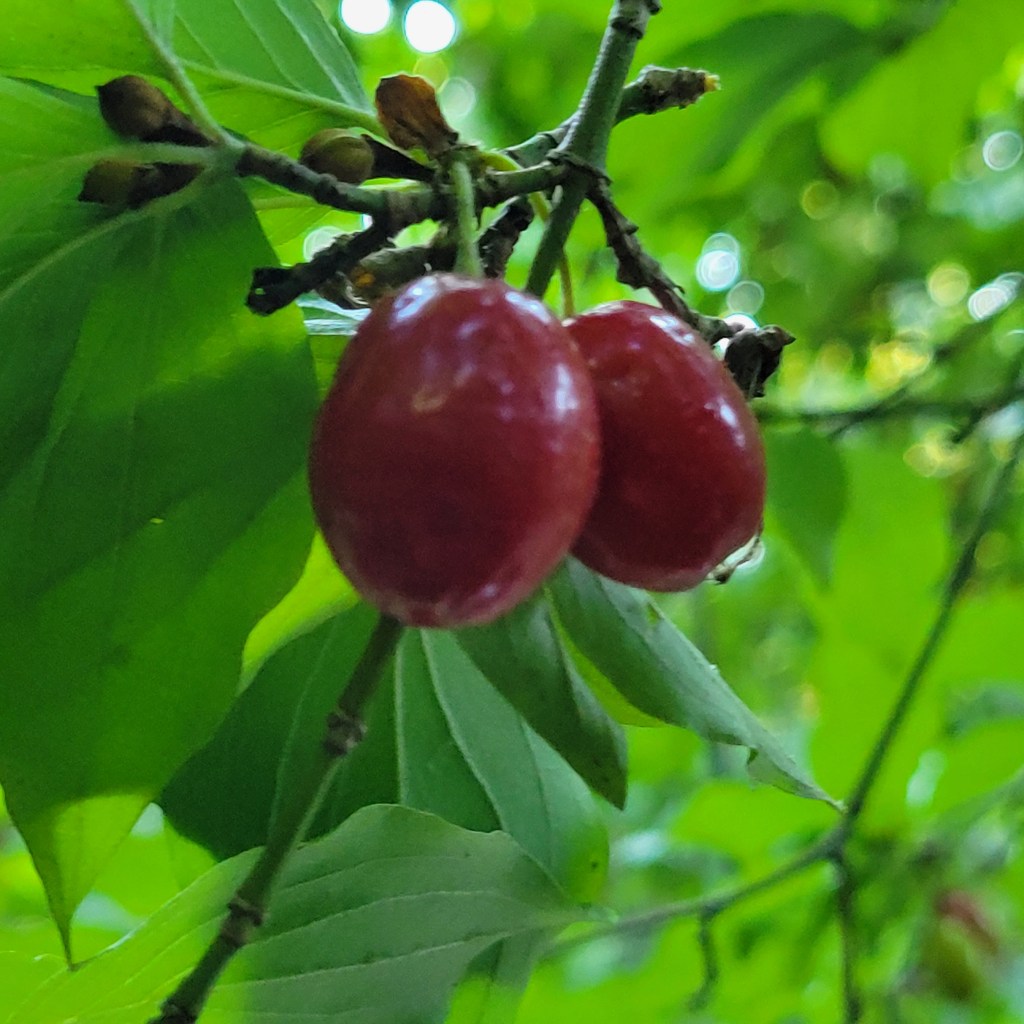

The single seed is large and the taste of the unsweetened berry might be described as tart.
The leaves do not turn until late in the fall.

Mid-November I only became fully aware of this tree last April, proving once again that there is always something new for me to learn about Eliza Howell Park, no matter how many hundred visits I have made. Now, this spot along the river bank is one of my regular stops, especially in the spring.
Cornelian Cherry Dogwood has become another addition to the floral wealth that I can point out whenever I am accompanied by others on my nature walks in the park.
-
Common Buckeye: # 11 of “23 Butterflies in 2023”
The Common Buckeye is not “common” in Michigan in the sense of numerous, but I usually see one or more each year in Eliza Howell Park in Detroit
And it is definitely not “common” in the sense of uninteresting or ordinary. Seeing one is always a special occasion.
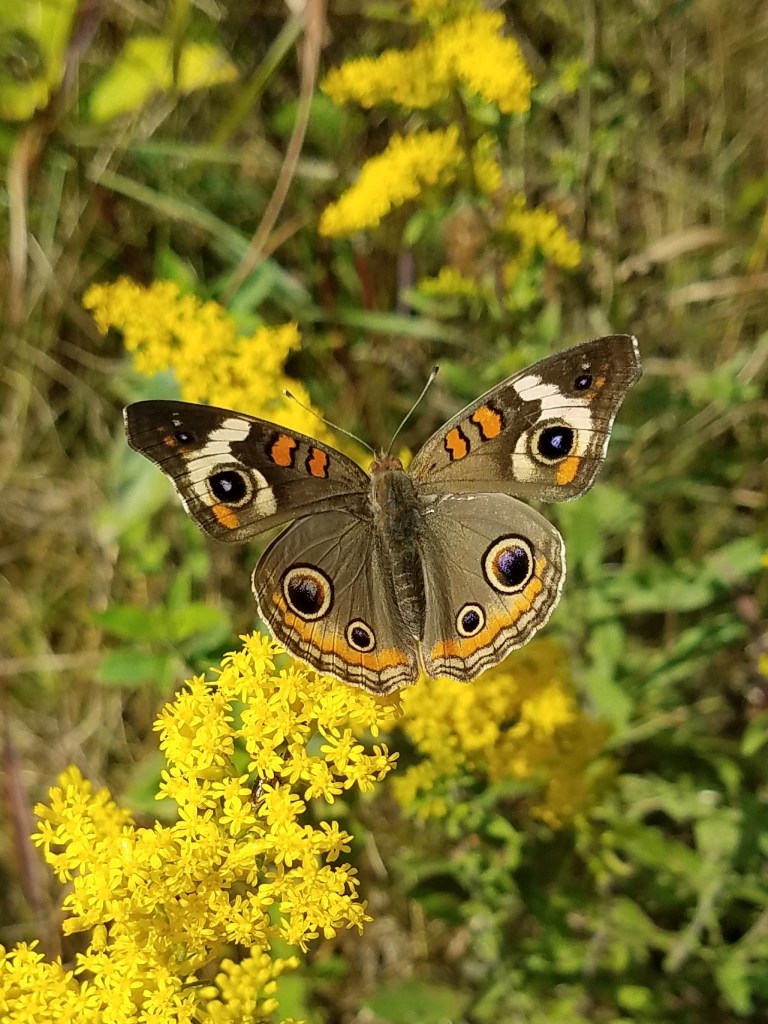
September 11, 2020 The Common Buckeye is called “common” as a way of distinguishing it from two other buckeye species that are found near the southern border of the U.S.: Tropical Buckeye and Mangrove Buckeye. The eyespots apparently reminded someone of deer eyes, resulting in the “buckeye” name.
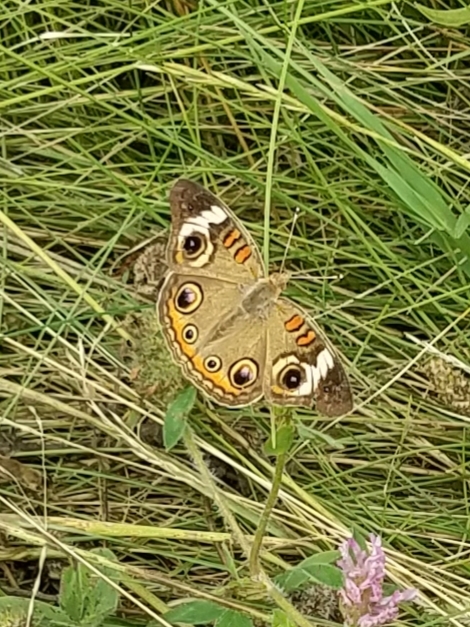
July 21, 2020 Common Buckeye, with a wingspan of about 2 1/2 inches, is a butterfly of open habitat, found most often in fields and clearings.
In our area, Common Buckeye is a migrant, arriving here in the sunmer and heading south in the fall. The best time to look for them in Eliza Howell is from late July through September.
(The lighter color green on the map indicates locations where it is uncommon.)
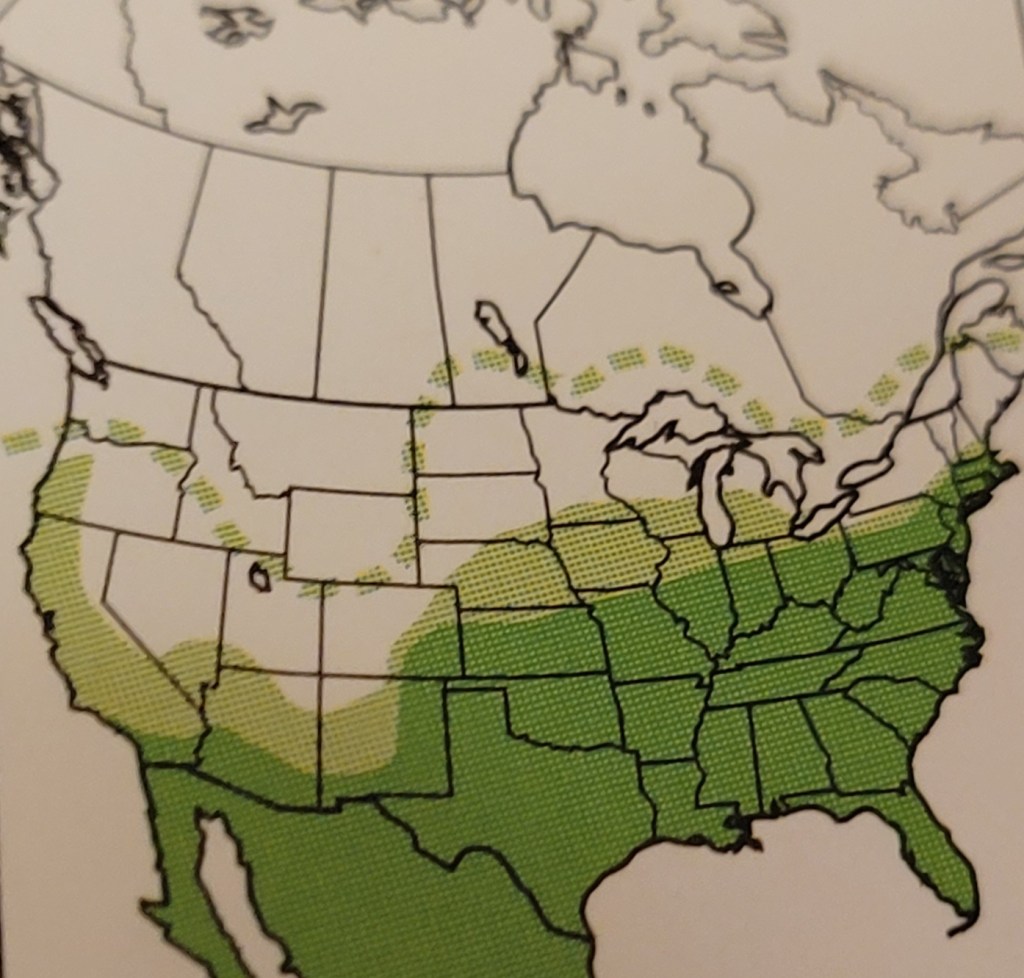
Kaufman Field Guide to Butterflies of North America It is often on or near the ground.
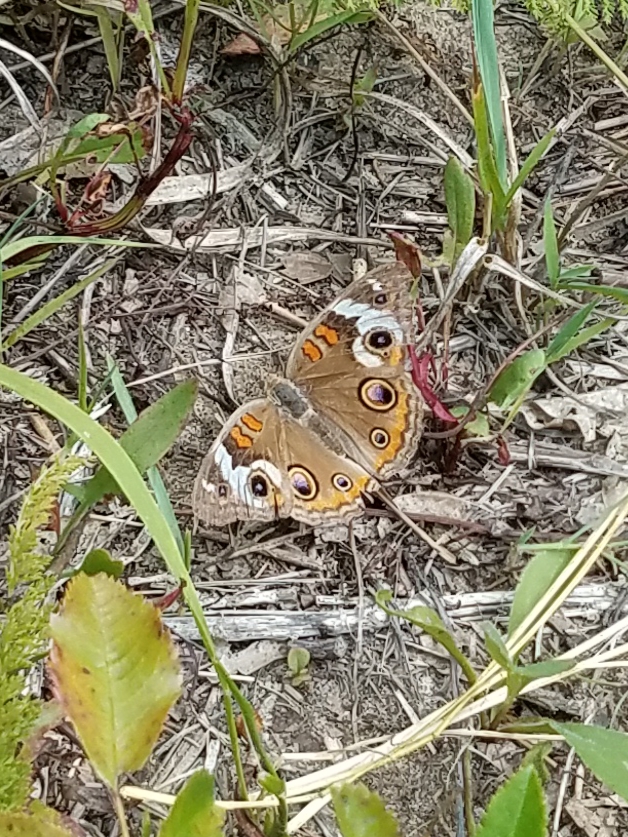
August 9, 2019 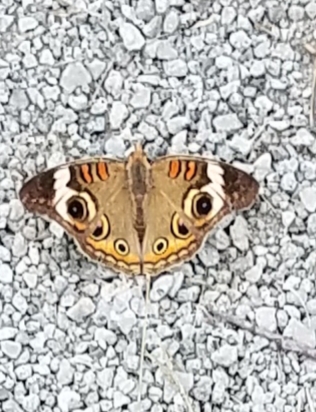
July 23, 2020 My favorite observations are the occasions when they cone to the wildflower patches.
(This individual has the battered and torn look that many buttereflies exhibit after a period of time.)
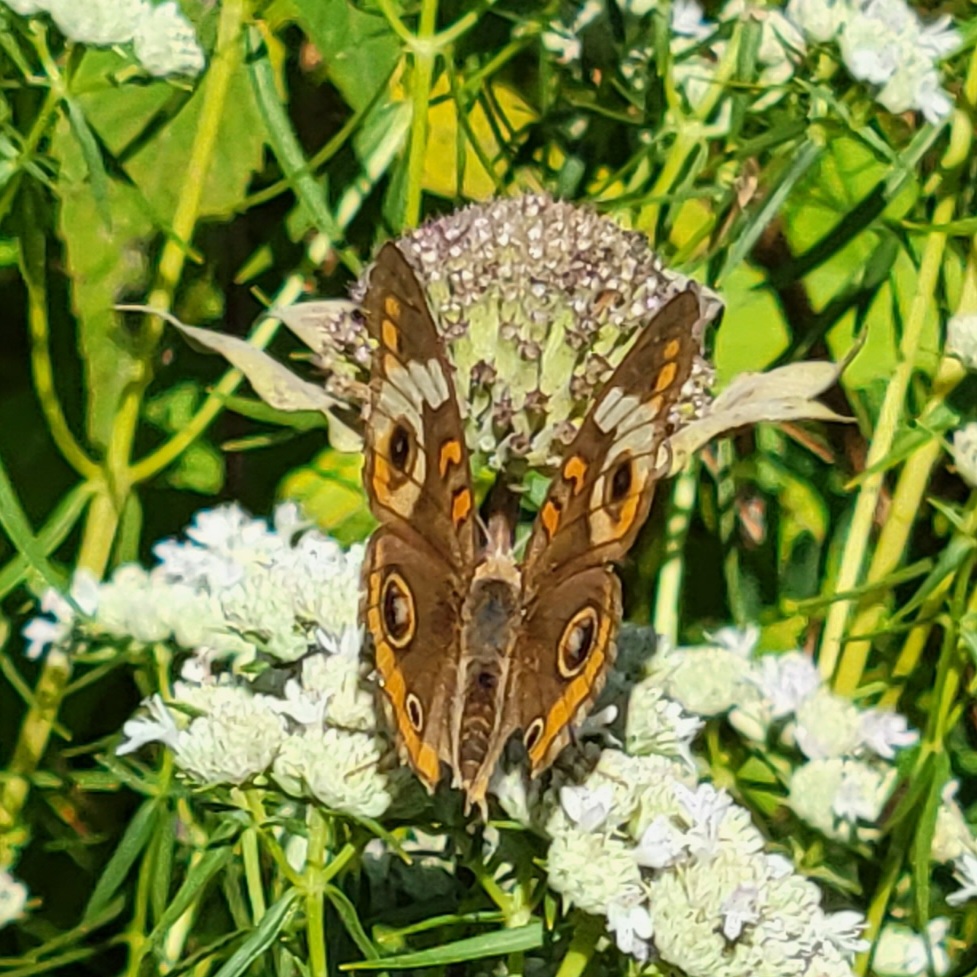
August 10, 2022 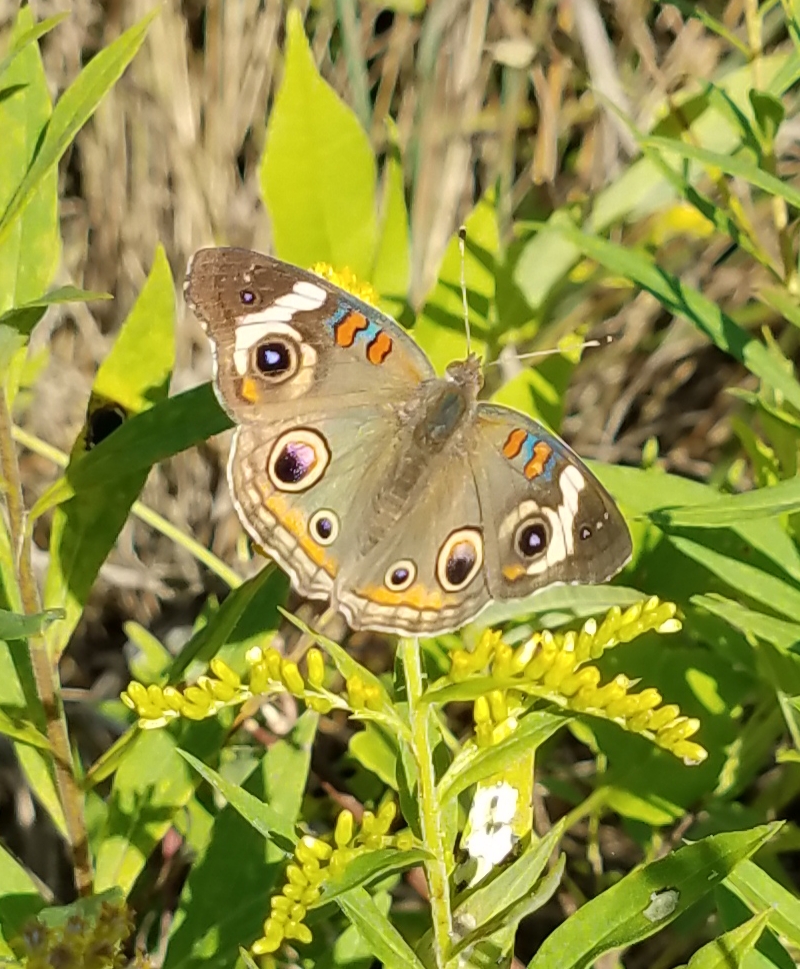
September 11, 2018 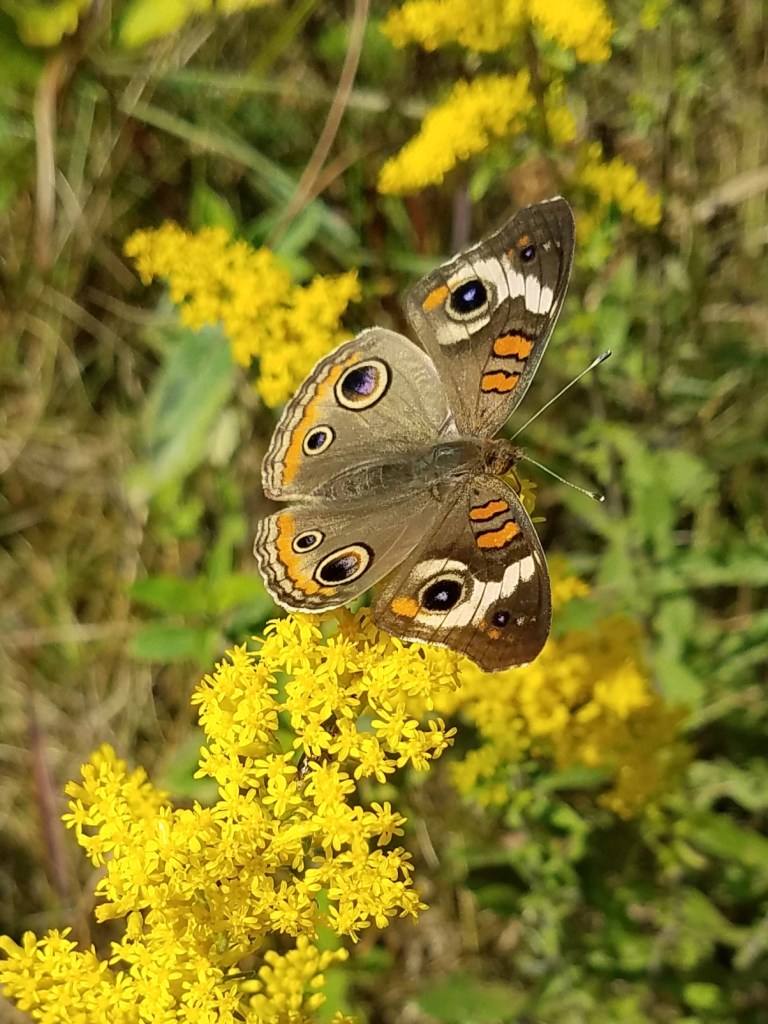
September 11, 2020 Based on my photos of the Common Buckeye in Eliza Howell Park, only a few have blue between the two orange bars on the leading edge of the wings. I admit, however, that I rarely check for that; I am so taken by the overall appearance that the details do not seem to matter. This is definitely one of my favorites butterflies of Eliza Howell.
-
Mourning Cloak: # 10 of “23 Butterflies in 2023”
Leonard Weber
March 8, 2023
The Mourning Cloak is one of the earliest butterflies of the year, often the very first. And it probably has the longest adult lifespan of all North American butterflies.
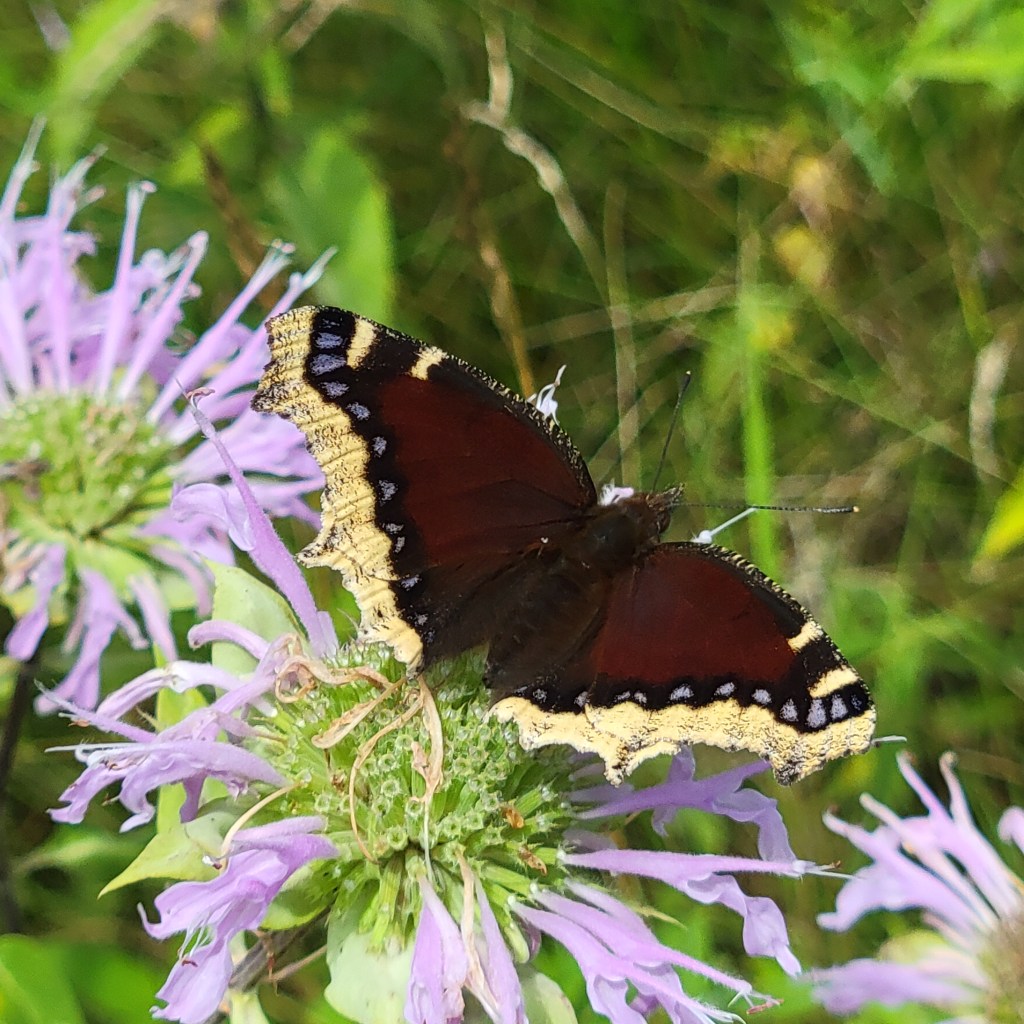
On Wild Bergamot in mid–July I usually see the first Mournibg Cloak in Eliza Howell Park in April, but have seen one as early as March 18. They hibernate as adults, sheltering under tree bark or in a hollow log or in a similar location, and they emerge on a warm sunny spring day. It’s exciting to see one before the leaves are on the trees, but I do not yet have any photos from these early appearances.
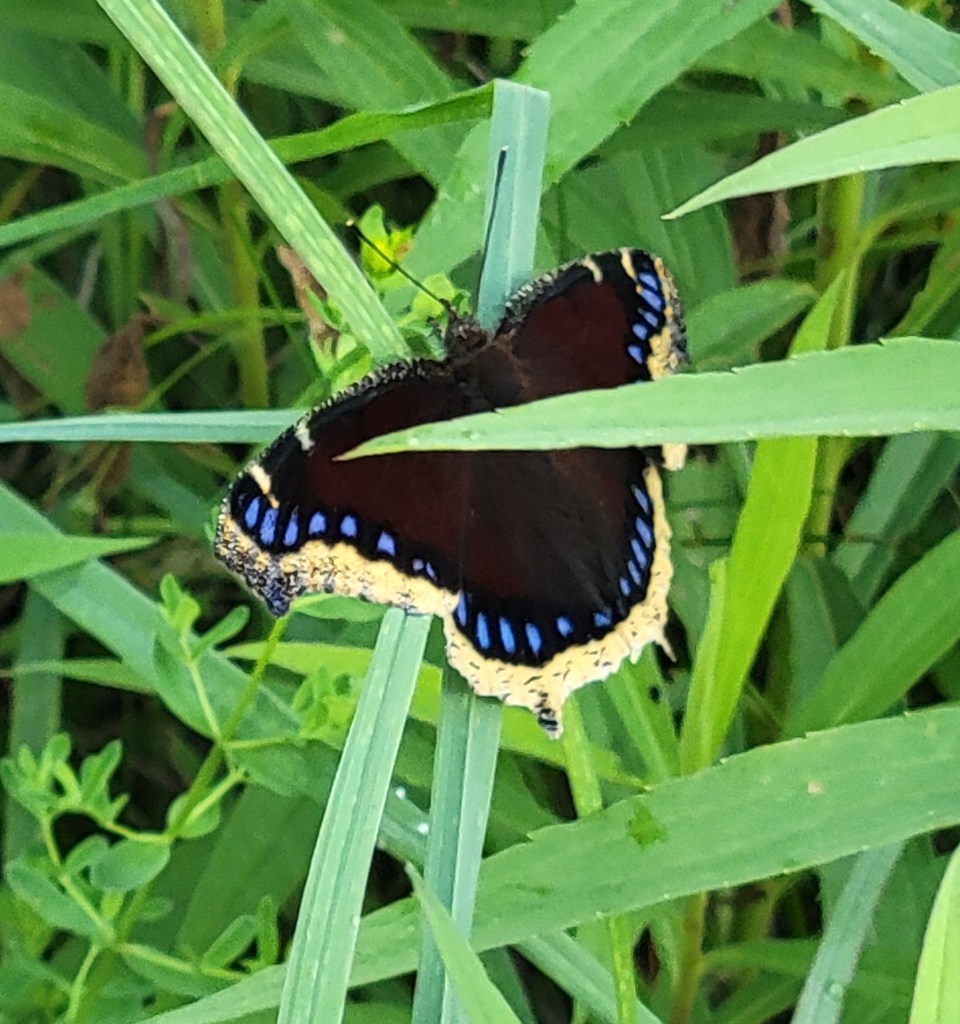
In early July When they emerge from hibernation in the spring, Mourning Cloaks have already lived about 10 months as adults and are ready to mate. The next generation usually appears in June, is active for a few weeks, then enters a dornant period for the rest of the summer. It becomes active again in the fall, before winter hibernation.
I think this individual (next photo) might have just emerged from the chrysalis when I spotted it.
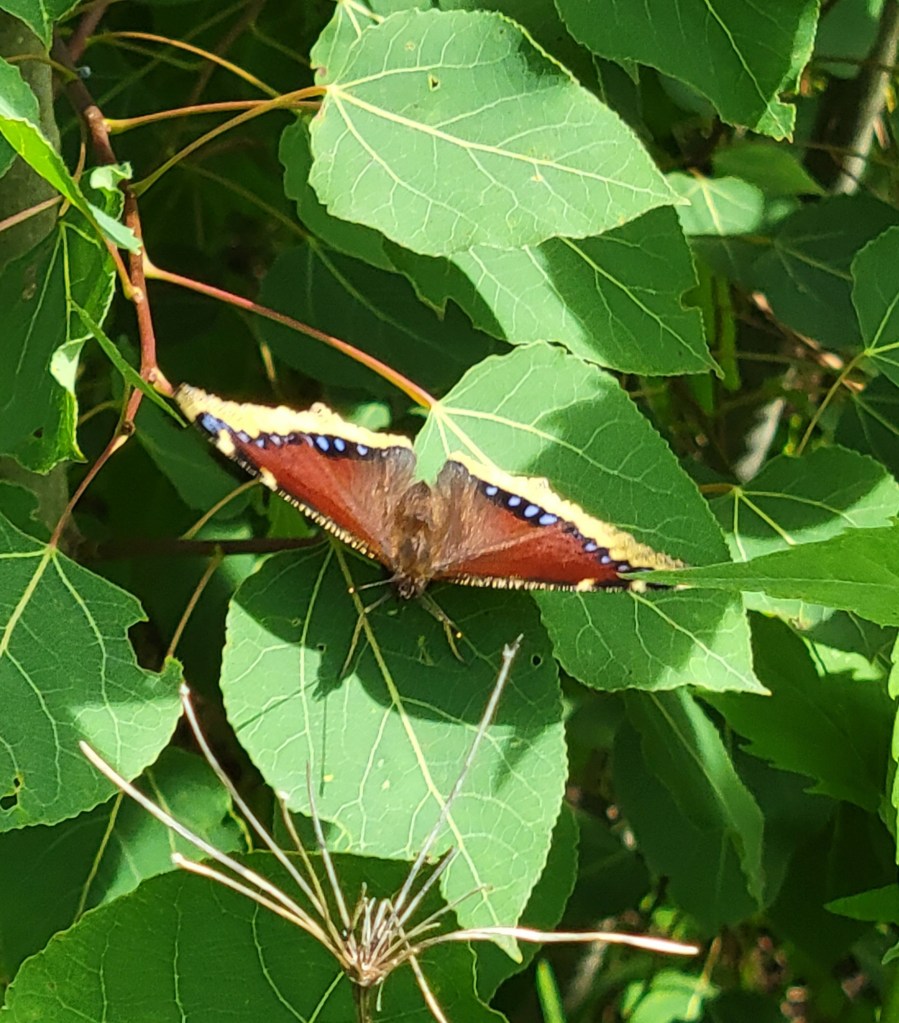
June 24 The Mouning Cloak feeds on tree sap and rotting fruit more than it does on flower nectar. In the spring, when sapsuckers make rows of holes in trees for sap, Mourning Cloaks sometimes help themselves to the flowing food. This is one place to look for them in April
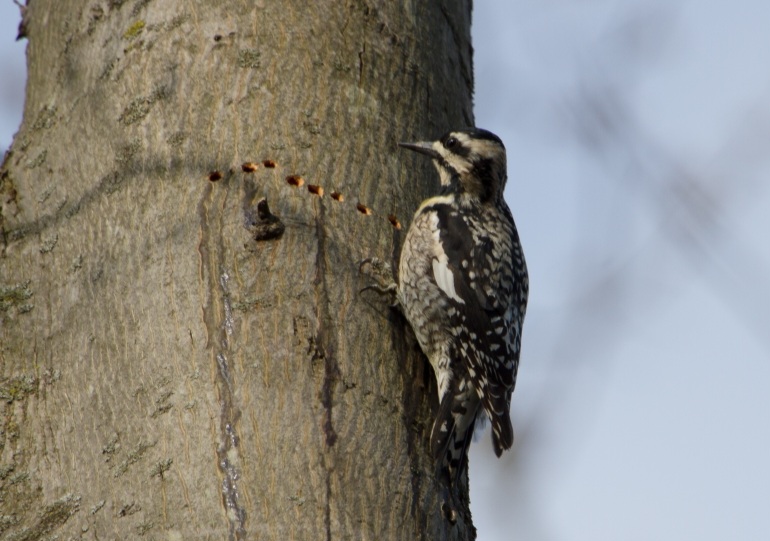
Yellow-bellied Sapsiucker. Photo by Margaret Weber They do at times visit wildflowers in late June and in July. This has been my best opportunity to get photos.
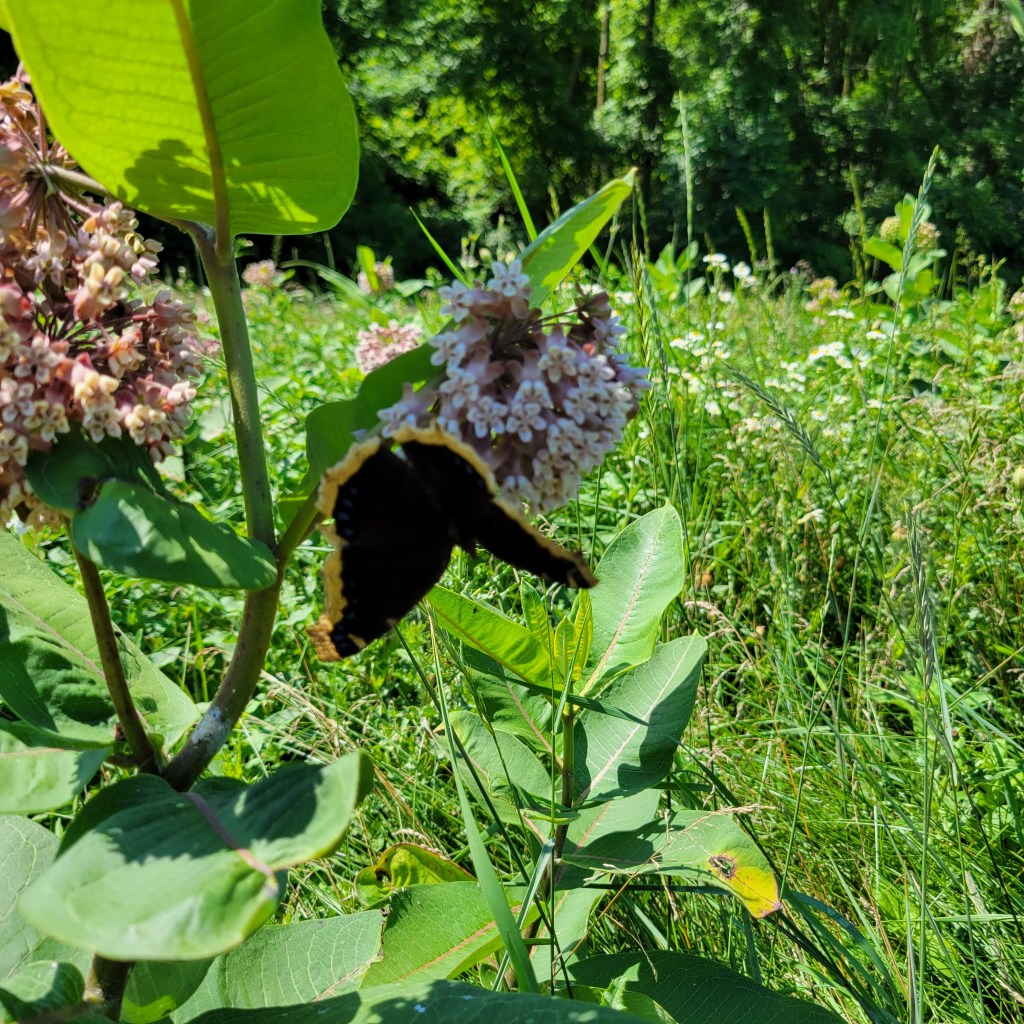
On milkweed in late June Mourning Cloaks are widespread geographically and they are found in a variety of habitats — including forests, fields, and parks. They are widespread but in most locations they are not numerous
It takes being in “the right place at the right time” and/or persistence to get a good look at one.
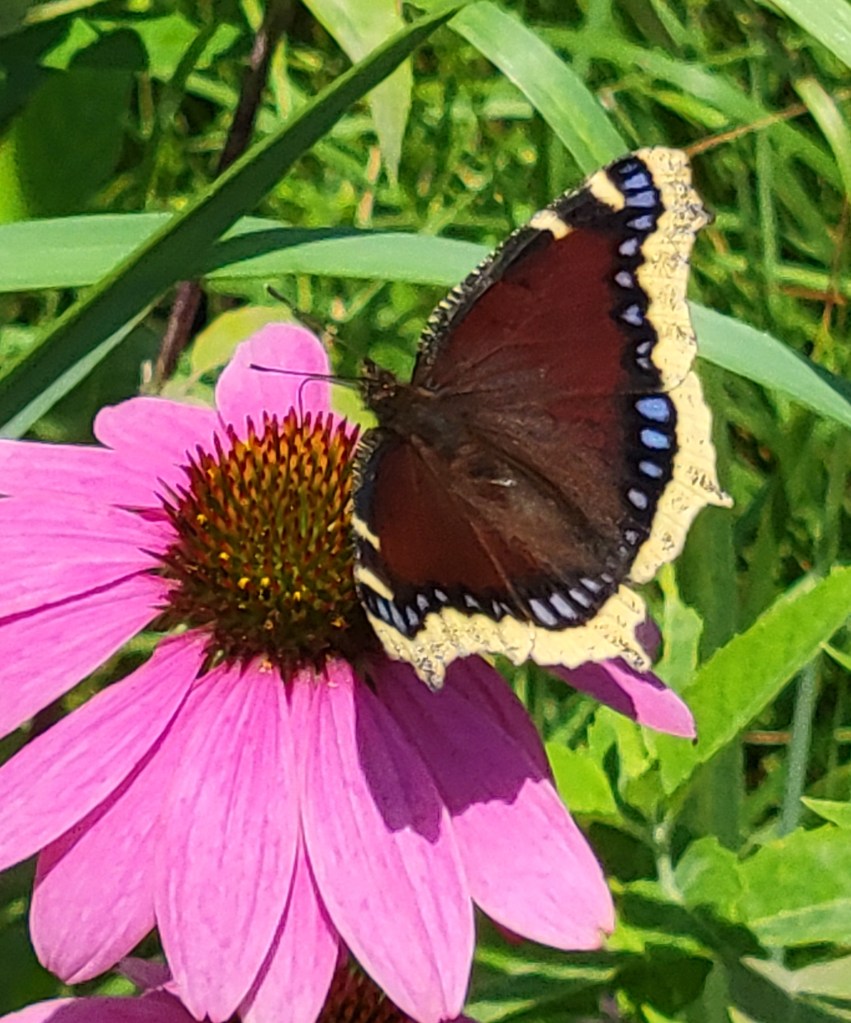
On Purple Coneflower in mid-July Thoigh I cannot assure visitors to the park in the summer of 2023 that they are likely to see a Mourning Cloak, I think it does belong on this list. It’s such an “Aha!” experience to find one, both because of its beauty and because of the nature of its annual cycle, that I encourage everyone to seek the experience.
-
The Changing Seasons on the Rouge River
Leonard Weber
March 2, 2023
March is here. A few bird species that migrated south for the winter are already returning to Eliza Howell Park, and some perennial plants are showing signs of new growth
These early signs of seasonal change call to mind the full annual cycle.
Below are photos taken from the same spot over twelve months, each taken while standing on the footbridge over the Rouge River and looking upstream.

March 29, 2022 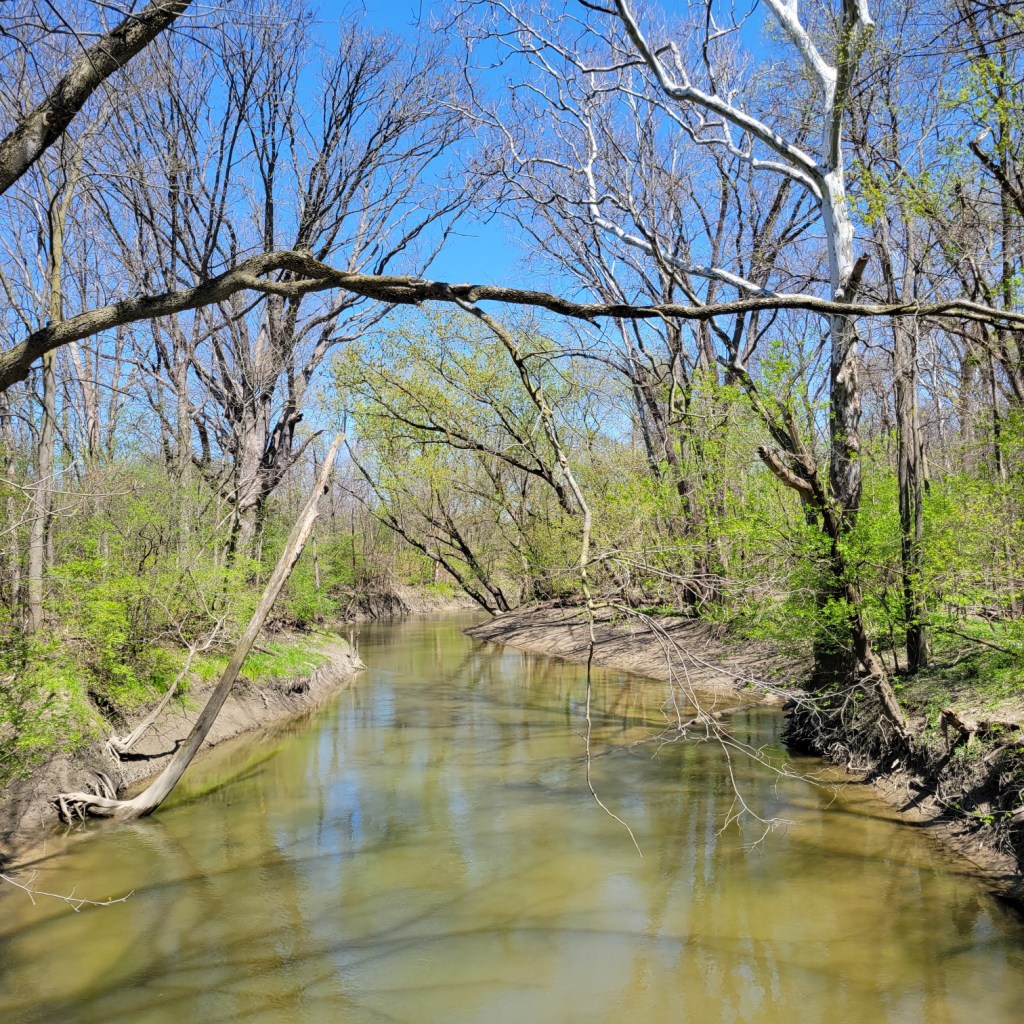
May 8, 2022 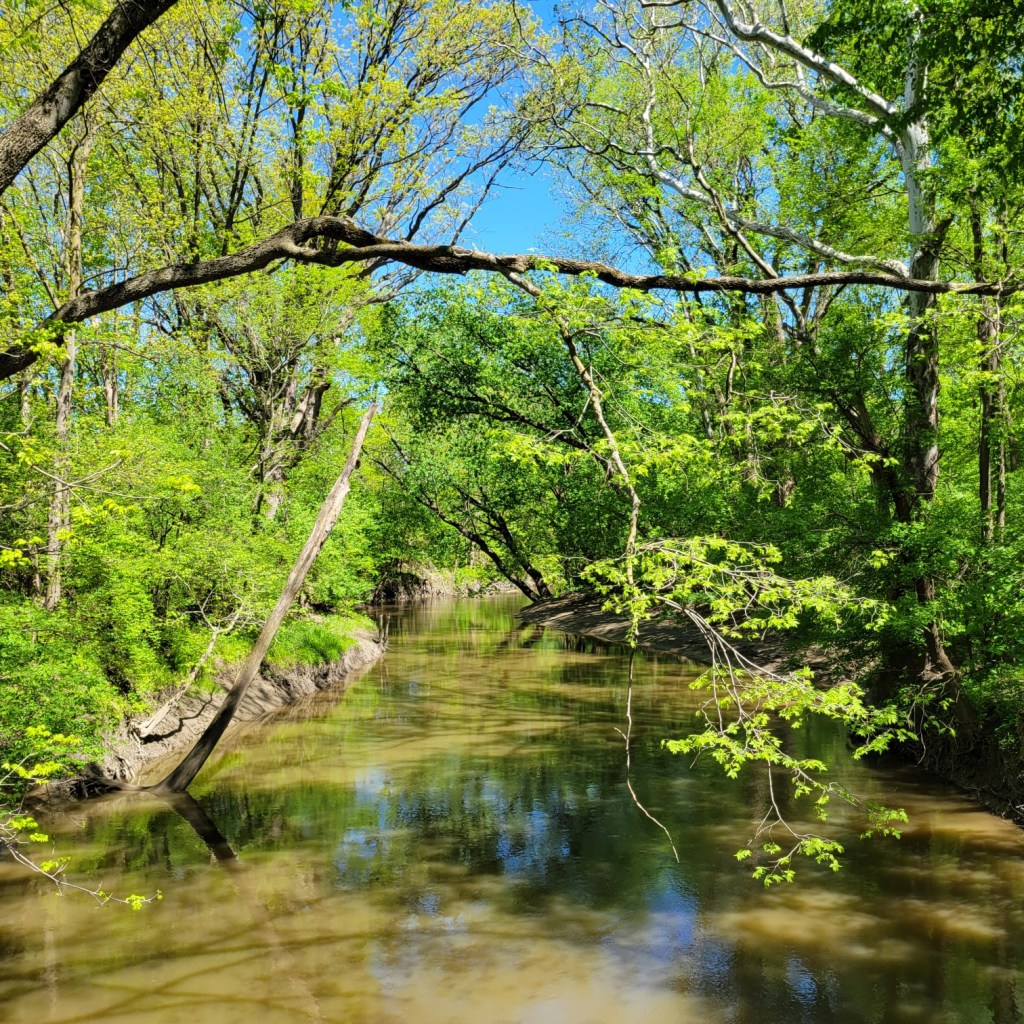
May 17, 2022 
June 22, 2022 
August 24, 2022 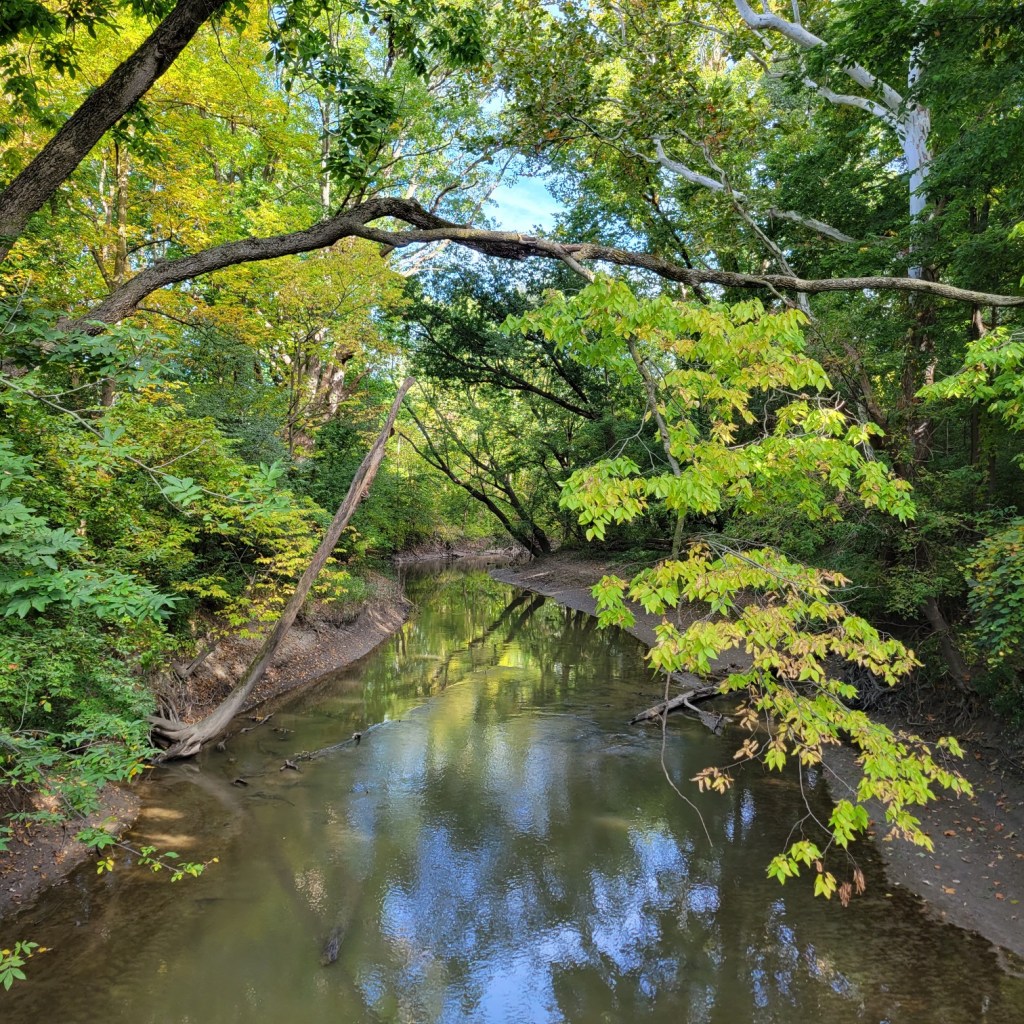
October 1, 2022 
November 1, 2022 
December 1, 2022 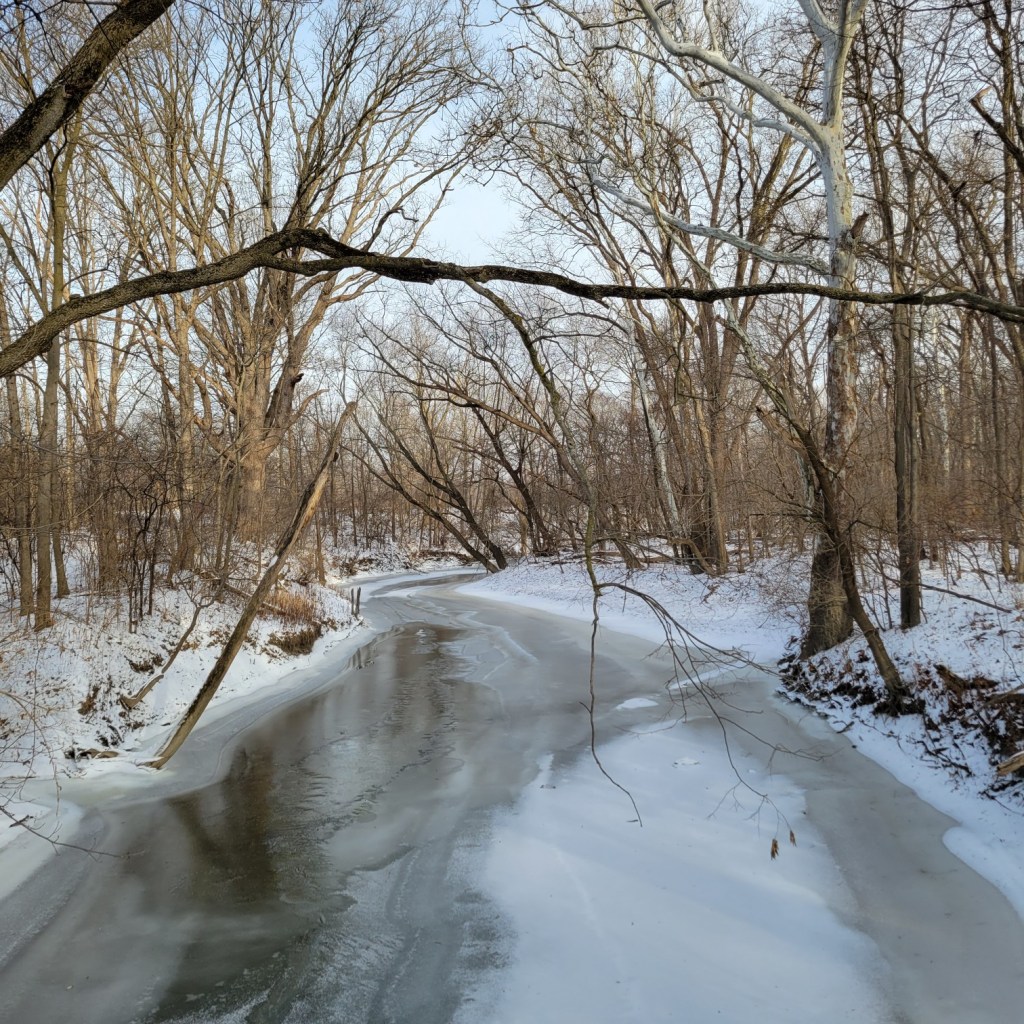
December 28, 2022 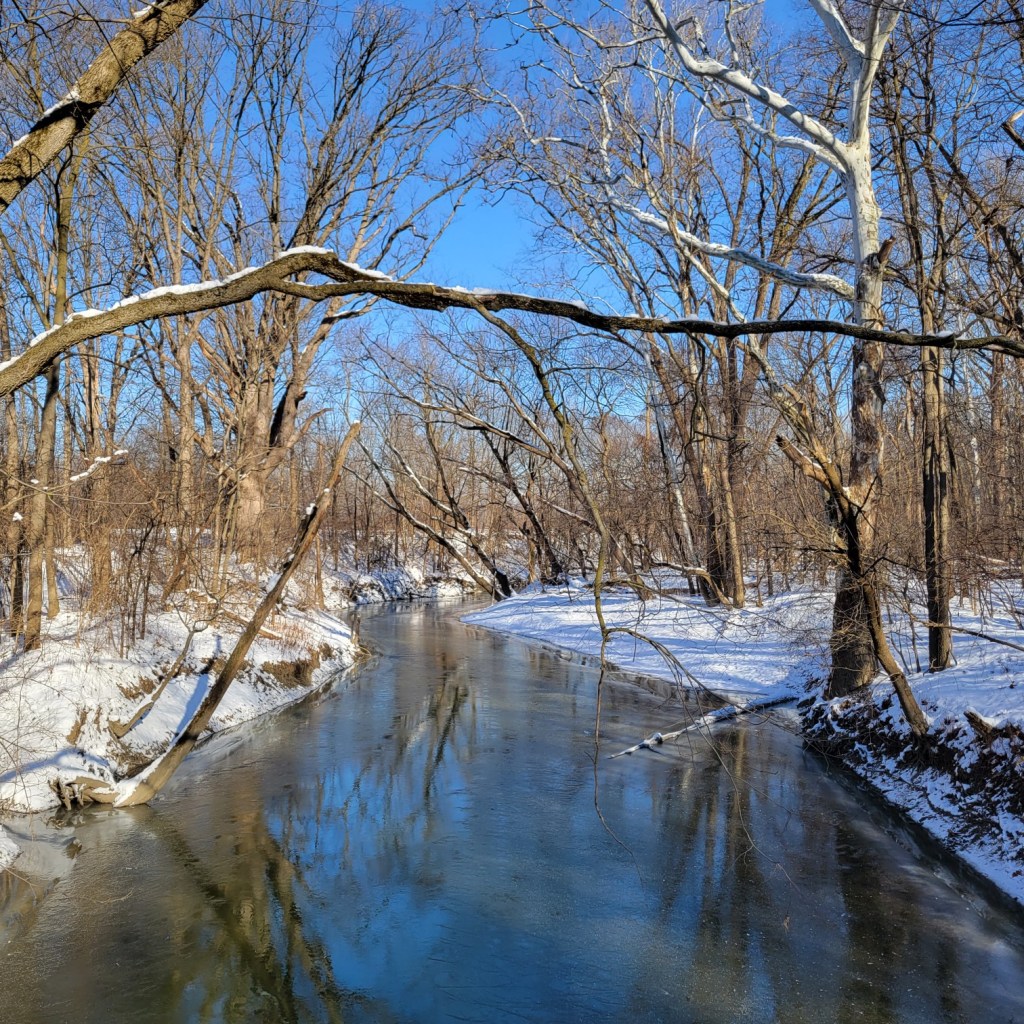
February 1, 2023 This is my 19th year of studying nature in Eliza Howell Park. These photos of the annual cycle remind me of the many rich experiences that I can expect between now and next March.
-
Red Admiral: # 9 of “23 Butterflies in 2023”
The Red Admiral is another butterfly present every year in Eliza Howell Park that is attractive and easy to spot. When it visits flowers, it often lets watchers and photographers get quite close.
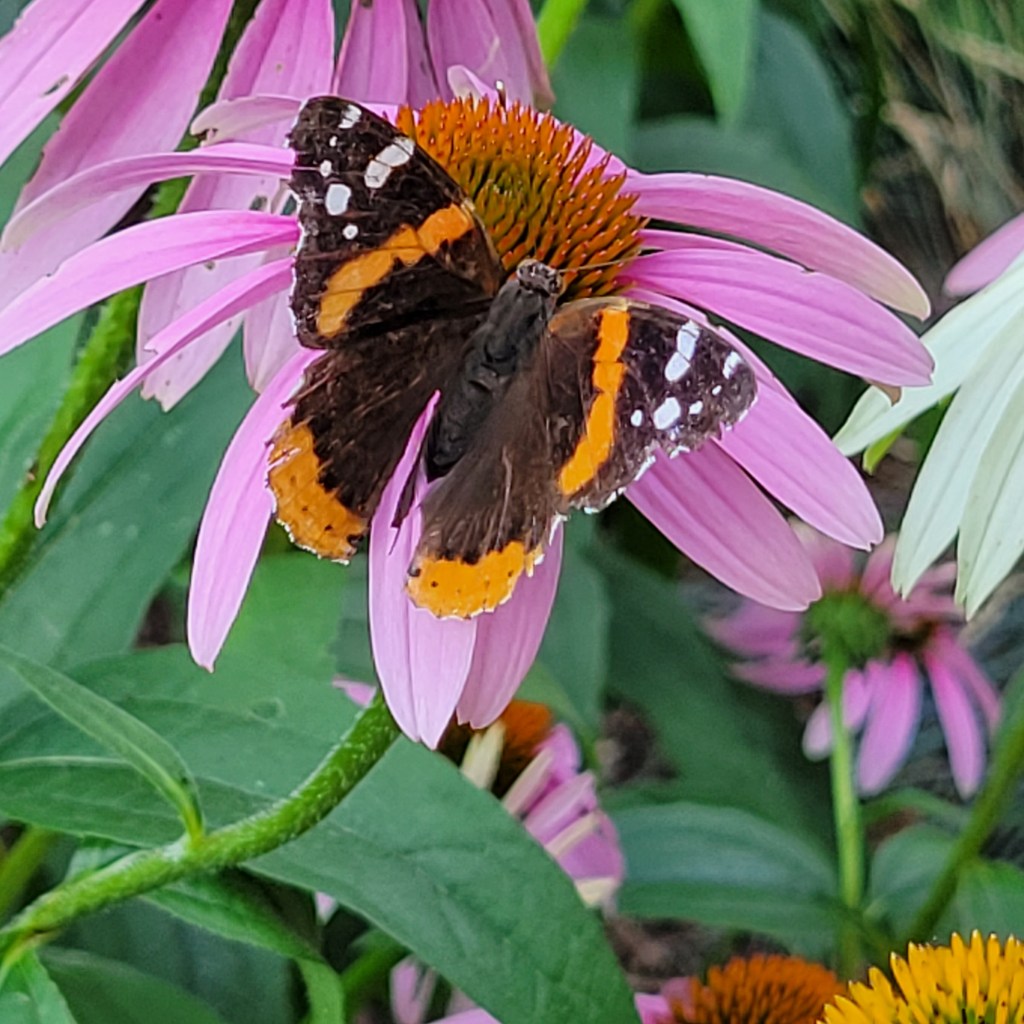
On Coneflower in July It will nectar with the wings open as well as with wings closed. The wingspan is about 2 inches.
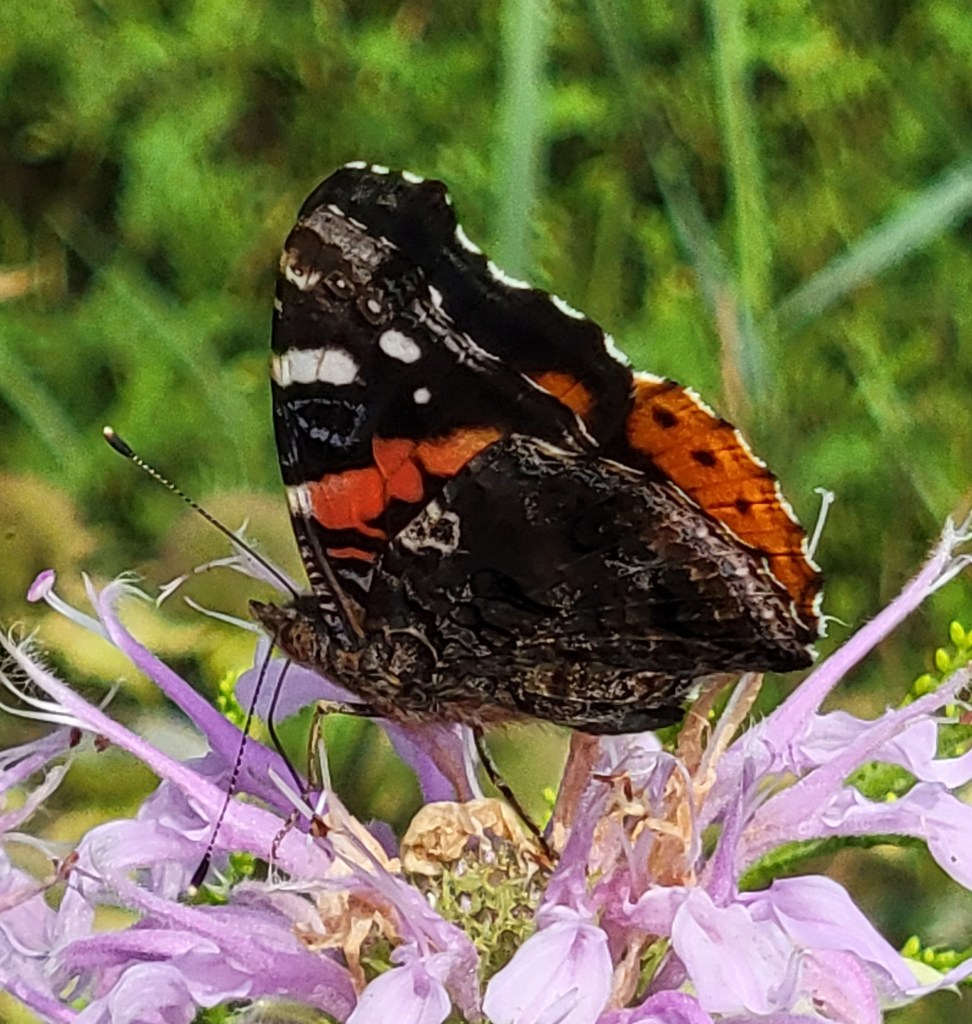
On Wild Bergamot in August 
On Coneflower in July Their season in the park is a long one. It is not unusual to see a Red Admiral in April, and at least once, I saw one in the middle of October. They are most common in the summer.
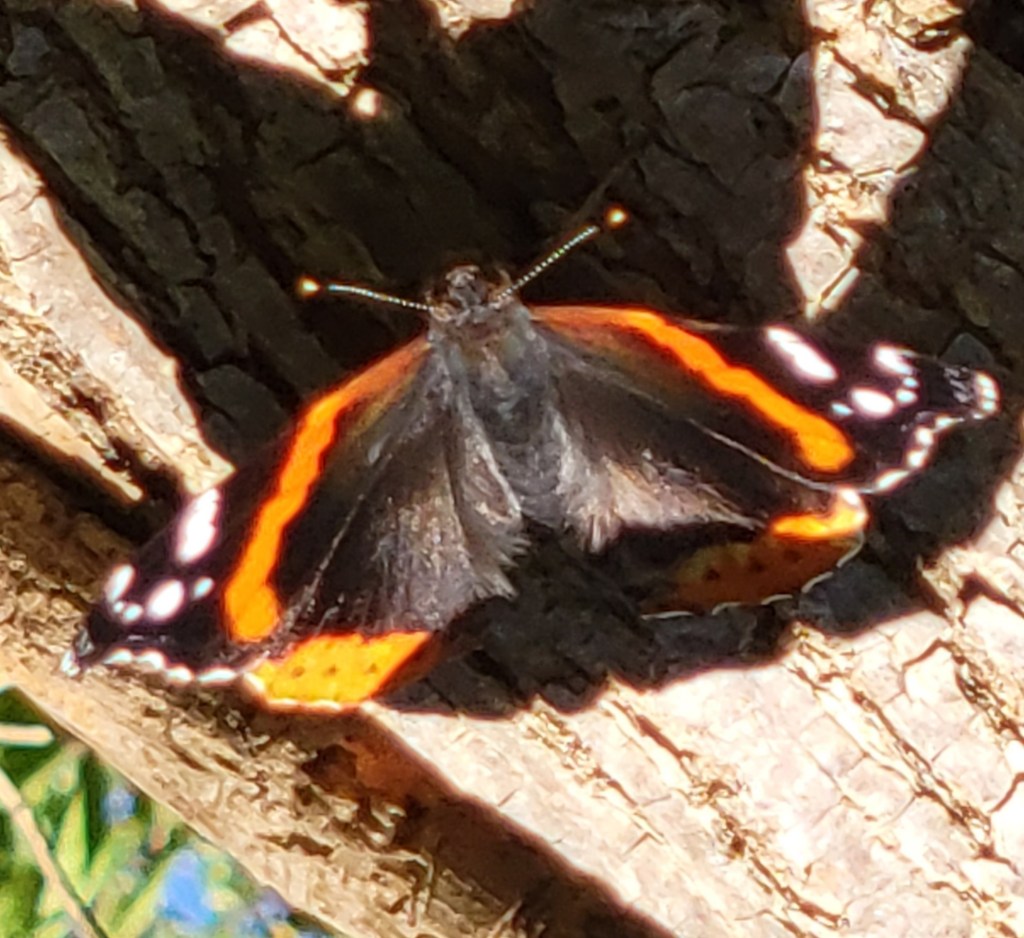
On log in October The Red Admiral is found in a variety of habitats, wooded as well as open. It is migratory, spending the winter in southern states.
It drinks sap from trees and takes moisture from rotten fruit in addition to nectar from flowers.

On ground in April Since I do most of my butterfly watching in flower patches, I usually see Red Admirals when they are nectaring.

On Knapweed in July Visitors to Eliza Howell looking for butterflies in 2023 should not have much difficulty finding a Red Admiral, especially if they check the blooming flowers in July and August. I recommend paying special attention to Purple Coneflowers.
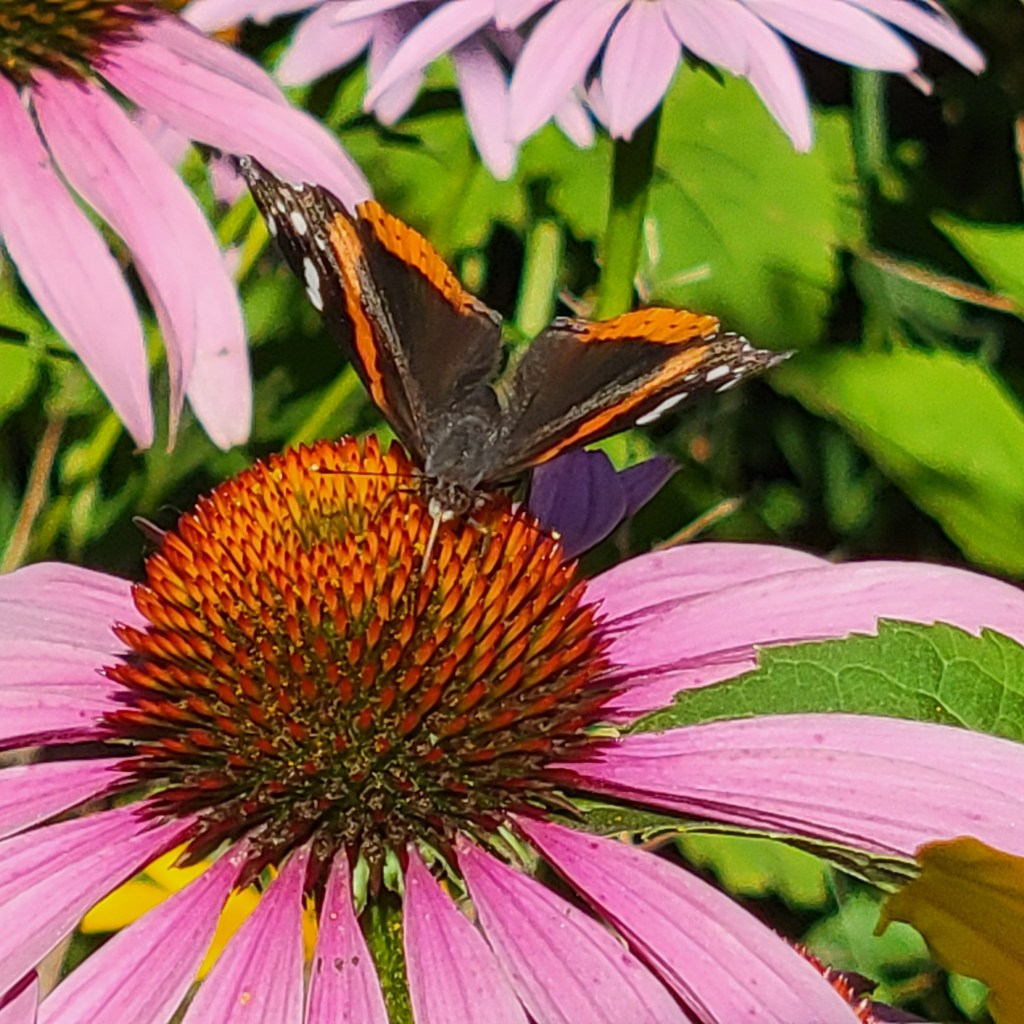
On Coneflower in July -
Common Checkered-Skipper: # 8 of “23 Butterflies in 2023”
It is called “common” and frequent visitors to Eliza Howell Park can expect to see it several time from late May into September, but the Common Checkered-Skipper is not as numerous as many of the others in this series.
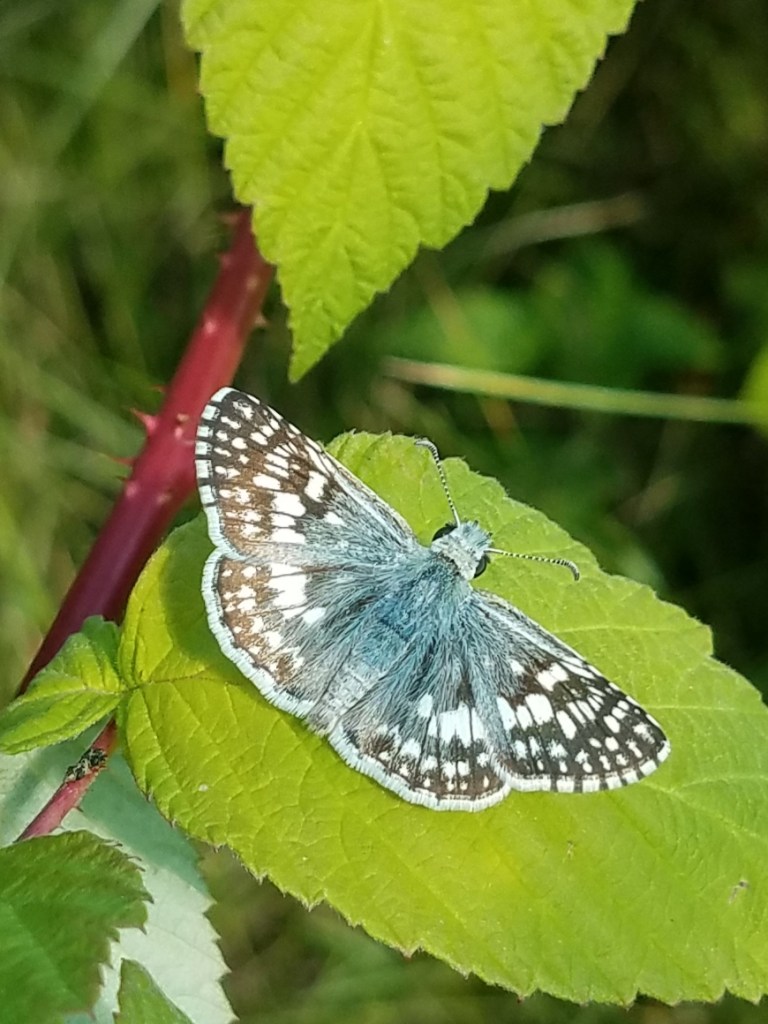
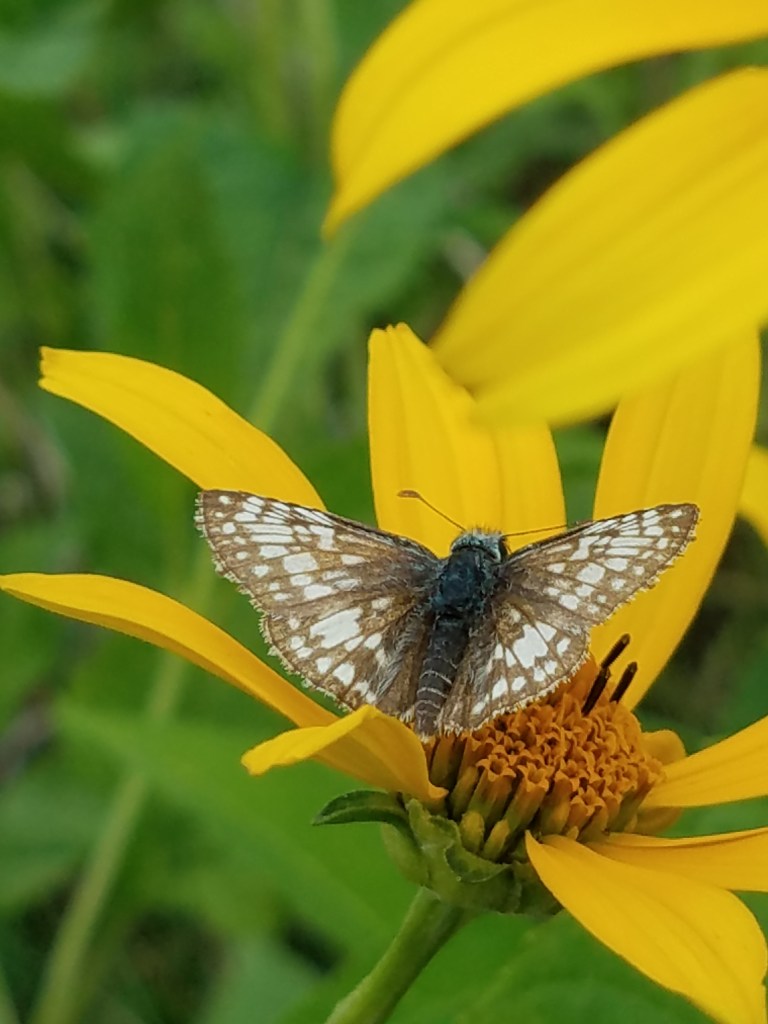
August 6 It is a small butterfly, with a wingspan of about 1 1/2 inches. As the only checkered-skipper likely to be seen in this area, it is easily identified. The colors vary somewhat, the male often with blue-gray coloring.
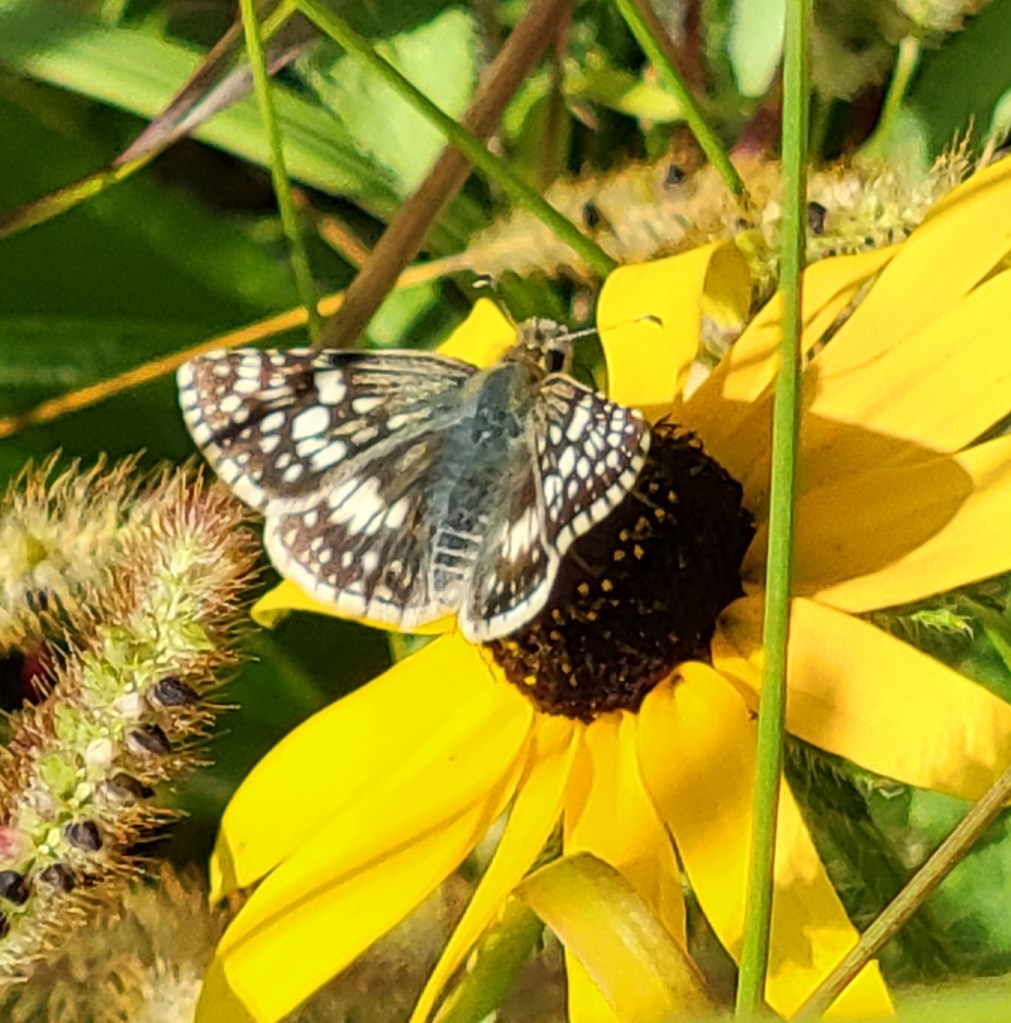
September 19 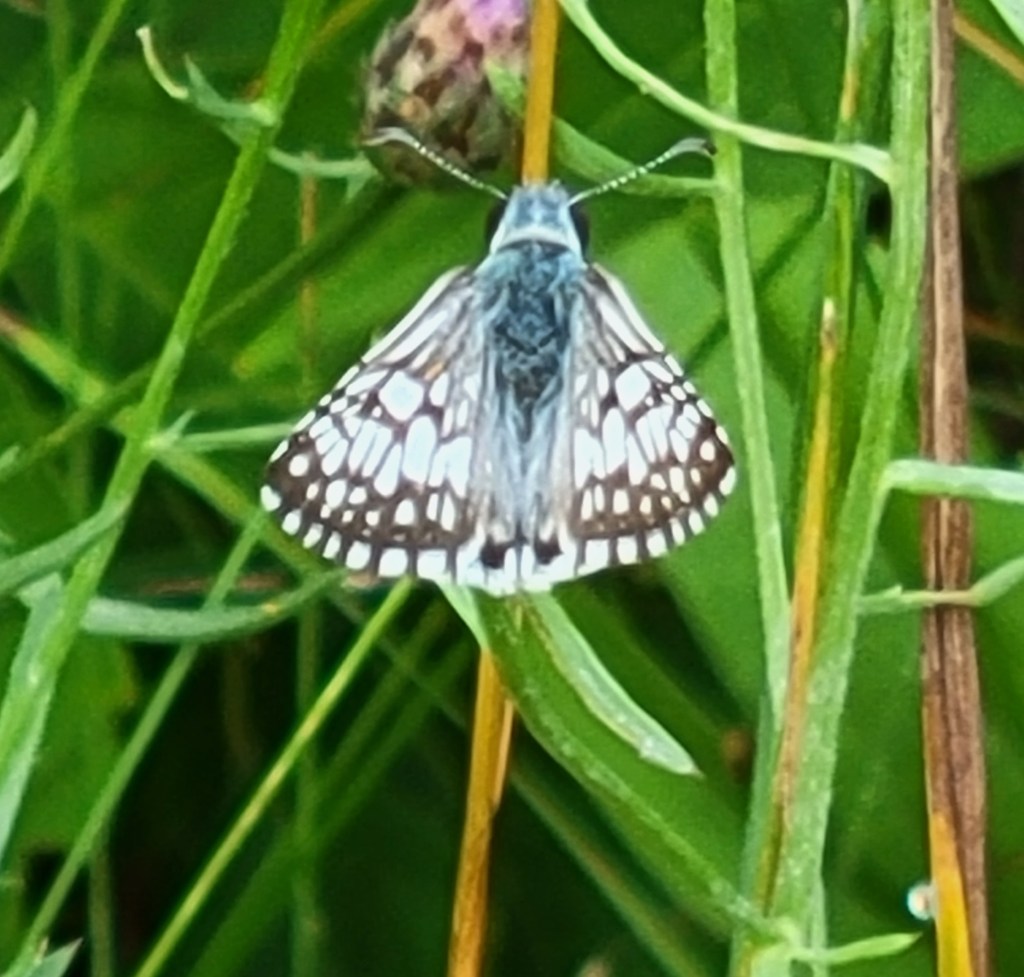
July 22 It is found in a variety of habitats, especially in fields and meadows, often low on plants or even on the ground.
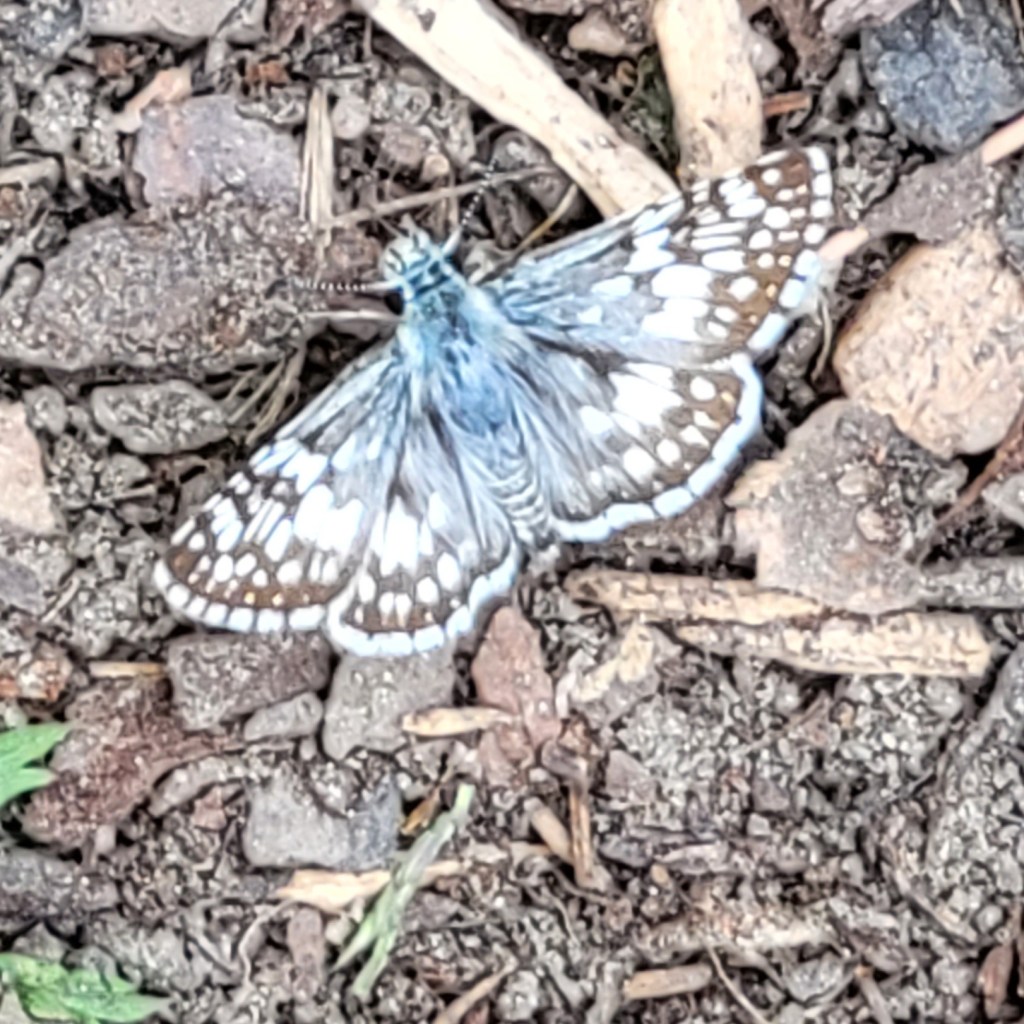
August 14 The Common Checkered-Skipper is probably the most widespread skipper in North America (perhaps a reason for the name “common”), but southern Michigan is at the northern edge of its range. It spends the winter as a caterpillar, but according to different reports, not this far north. It wonders north only as an adult in the spring.
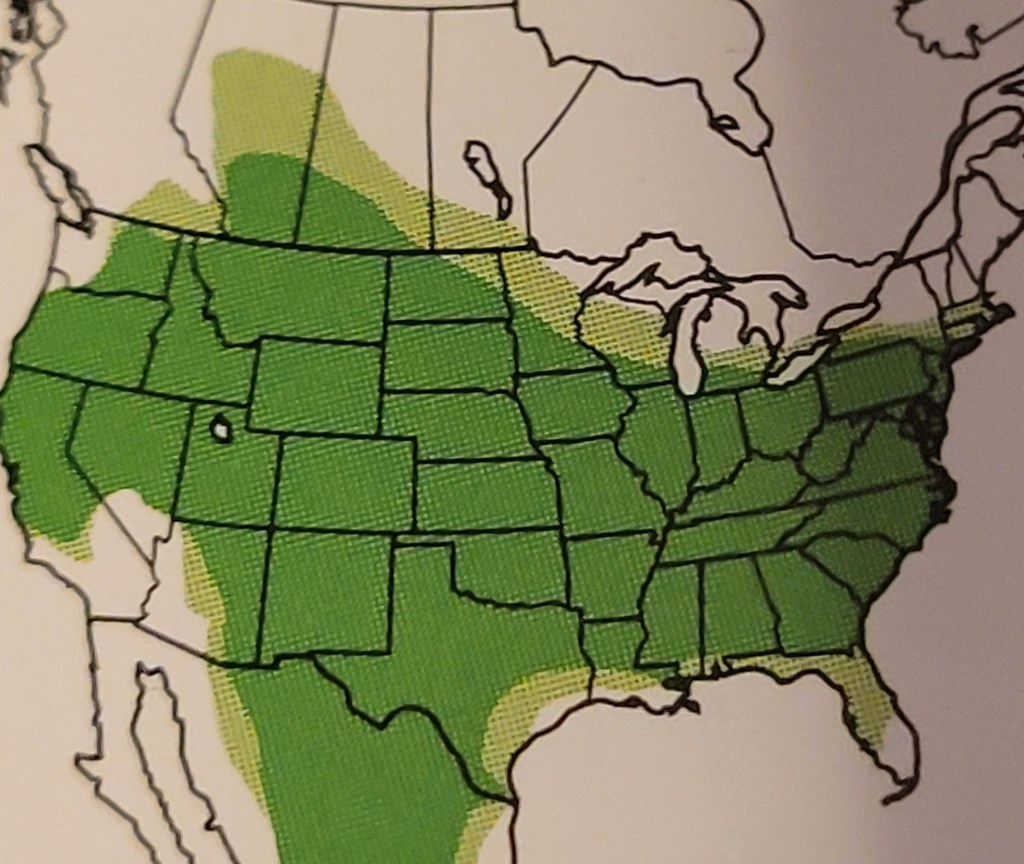
Kaufman Field Guide to Butterflies of North America It almost always has its wings open when visiting plants. None of my photos is of an individual with closed wings.
July 24 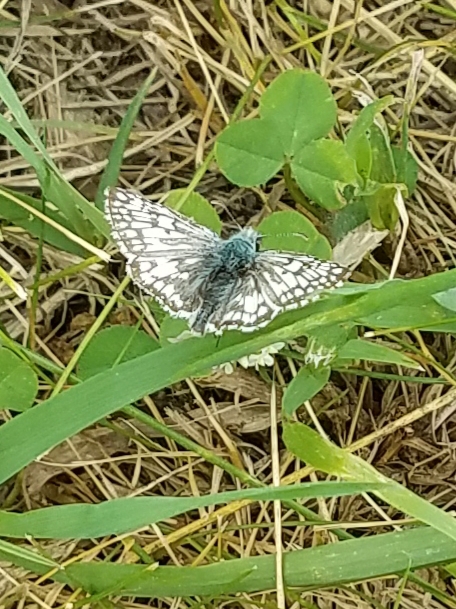
June 10 Even very experienced butterfly enthusiasts remark how difficult it is to distinguish the many different small similar-looking skippers. I definitely agree and am including only the ones that I find most recognizable in this list of 23 butterfly species to watch in Eliza Howell Park in 2023. Two of these are the Silver-spotted Skipper (# 2) and the Common Checkered-Skipper.
-
Eastern Tiger Swallowtail: # 7 of “23 Butterflies in 2023”
One of the largest, one of the most recognizable, one of most common butterflies in Eliza Howell Park is the Eastern Tiger Swallowtail.
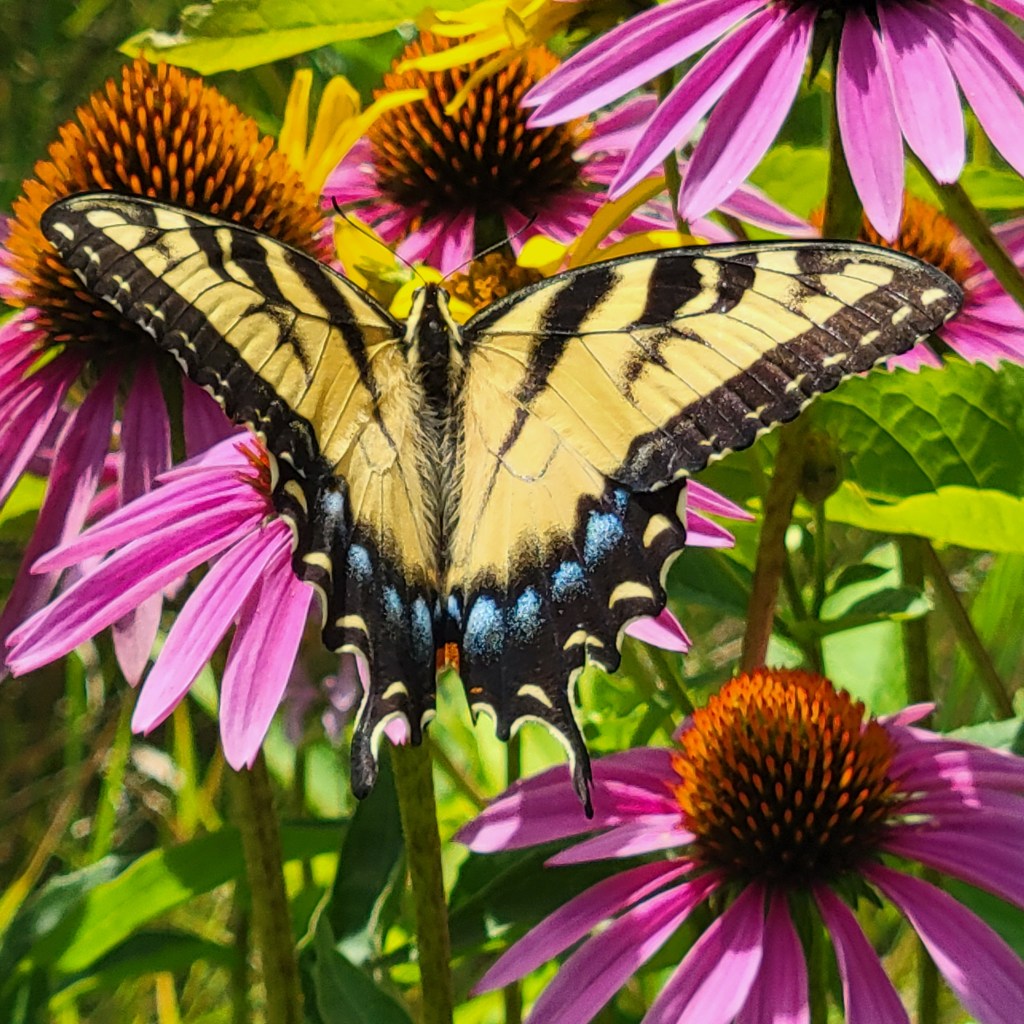
Female on Purple Coneflower This is a species with a small color difference between females and males. Females have blue on the hindwings.

Male on Wild Bergamot About the name: a) “Swallowtail” comes from the two little “tails” on the hindwings, similar to some species in the swallow family of birds; b) “Tiger” relates to the yellow and black colors; c) “Eastern” is needed to distinguish it from other species of Tiger Swallowtails, such Western and Canadian. Only the Eastern is found here.

Kaufman Field Guide to Butterflies of North America One characteristic of the Eastern Tiger Swallowtail is that it frequently visits flowers, whether garden flowers or wildflowers. In Eliza Howell, it is commonly found on pink-red-purple blooms.
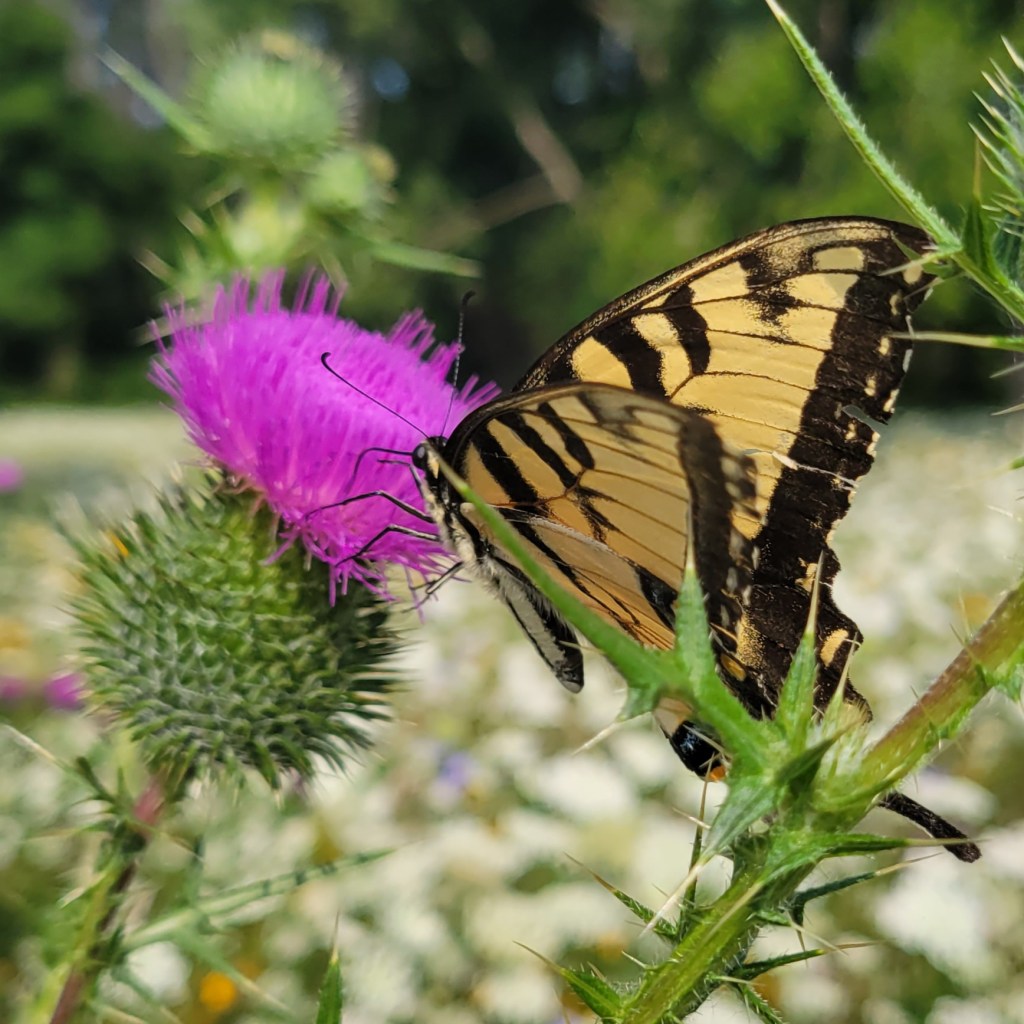
On Thistle 
On Red Clover 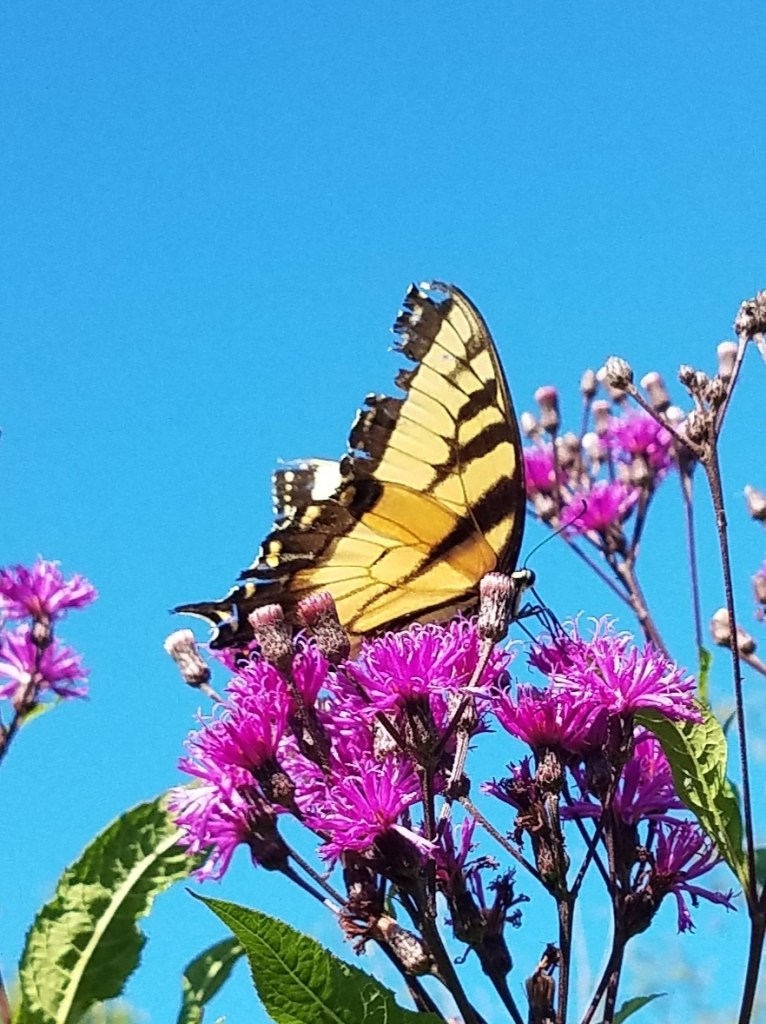
On Ironweed The wingspan is about 5 inches.
There are two broods a year: roughly from mid-May to mid-June and from mid-July to mid-August. Most of my photos are from the second period.
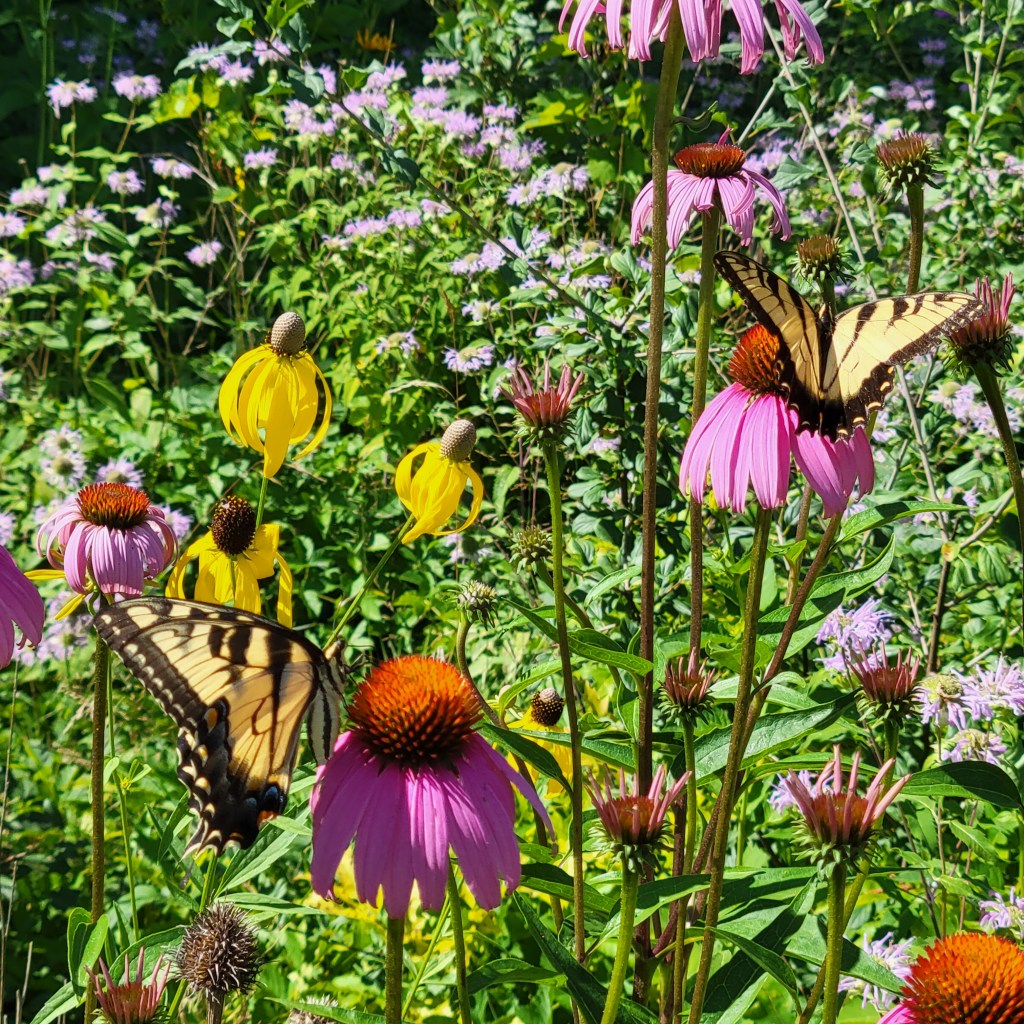
Two on Purple Coneflowers in late July 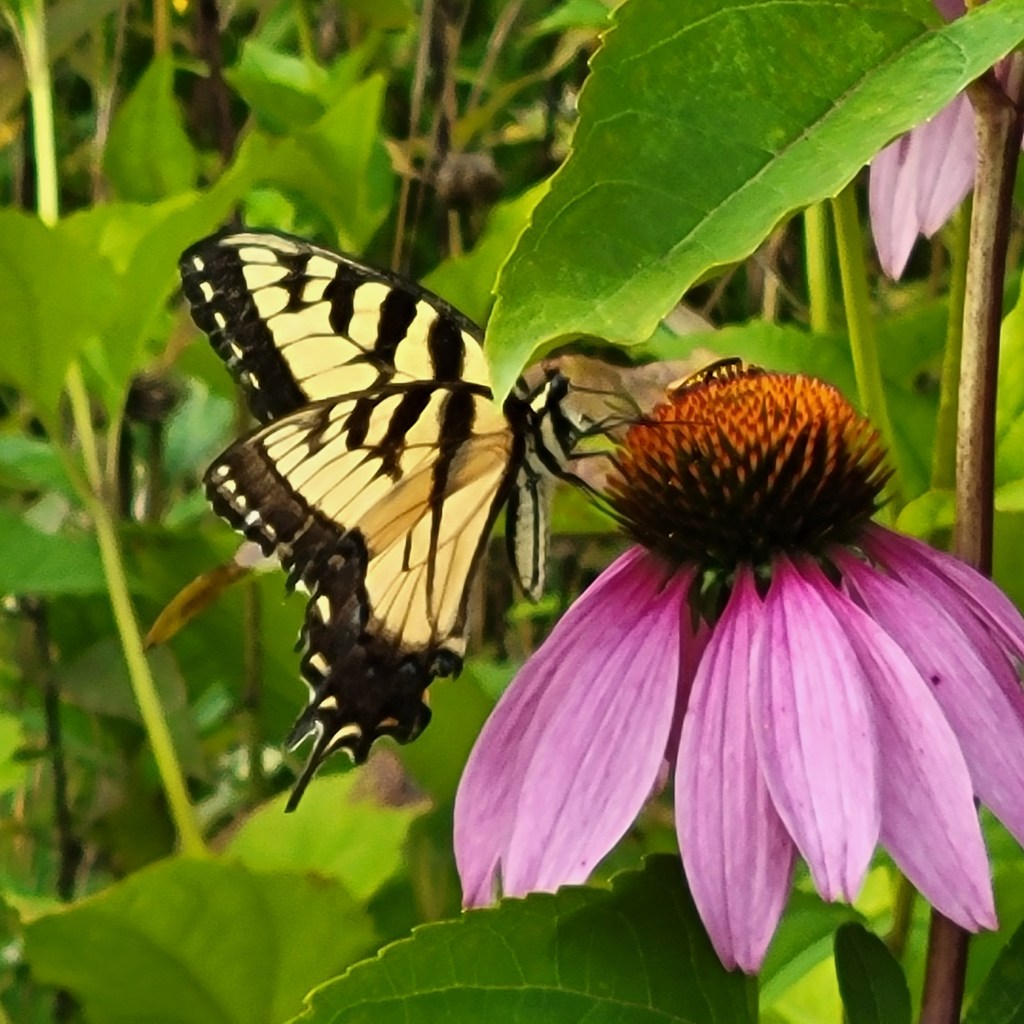
On Purple Coneflower in August The caterpillars feed on the leaves of a variety of common trees and enter the chrysalis stage before winter, completing development in the spring.
They can sometimes be seen flying high — and nectaring high on tall flowers.

On Joe Pye Weed E. Tiger Swallowtail is large, lovely, and easily attracted to flowers. It is probably second only to the Monarch in recognizability. It is easy to find and photograph in the park, especially in late July and early August.
It is definitely one of the 23 species that visitors have an excellent chance seeing in Eliza Howell in season
-
Little Wood-Satyr: # 6 of “23 Butterflies in 2023”
Leonard Weber
February 13, 2023
It is not a brightly colored butterfly; it is not large; it is not usually attracted to flowers. The Little Wood-Satyr is, however, reliably present during most nature walks in Eliza Howell Park in late May and early June.
It is common before many of the better-known species begin to claim our attention.
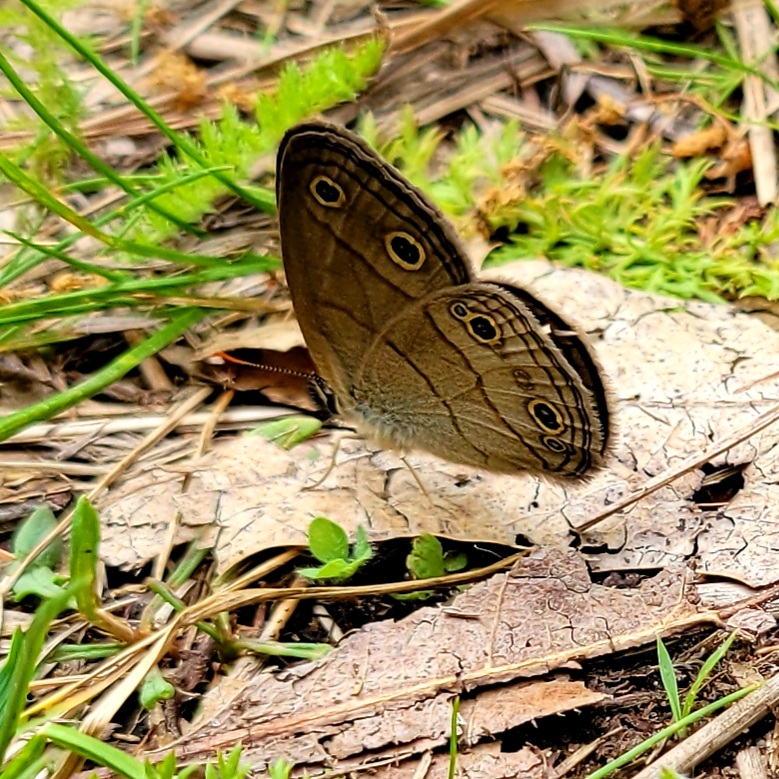
Photo taken on May 24 The Little Wood-Satyr has a wingspan of about 1 3/4 inches. The most distinctive feature is the eyespots, the round spots on the wings that are visible whether wings are closed or open.
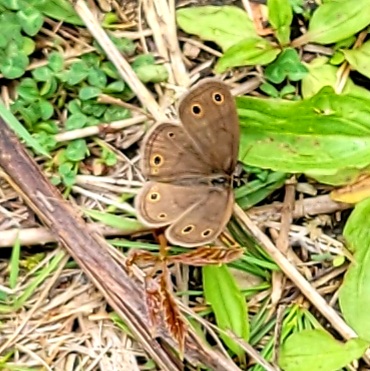
May 24 I often see it when I walk near the edge of the woods in the wildflower field. It is sometimes on the ground, more often low on green plants.
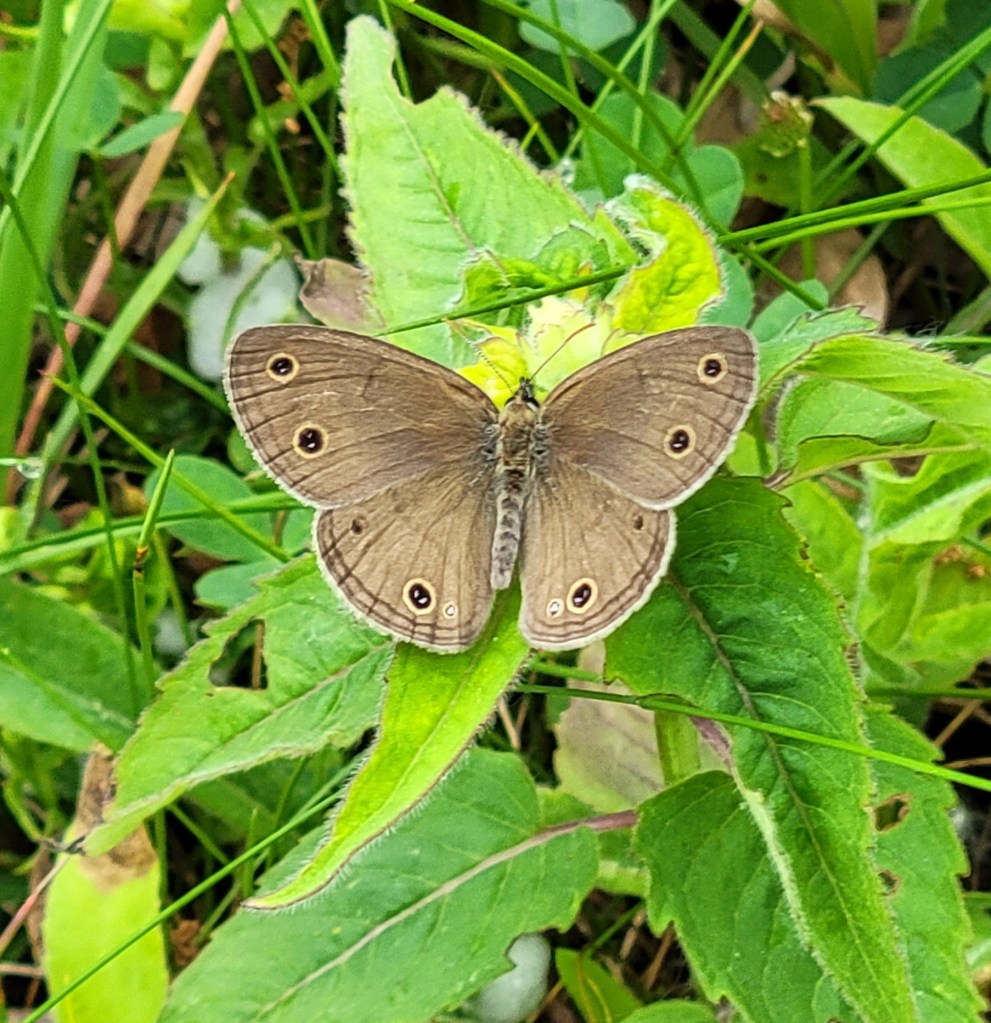
June 2 Little Wood-Satyrs rarely eat nectar (I have no photos of one on a bloom). They feed on fluids such as tree sap and aphid honeydew.

June 13 The adults are present for only a few weeks. They lay eggs on grass blades and the caterpillars spend the winter in hibernation.
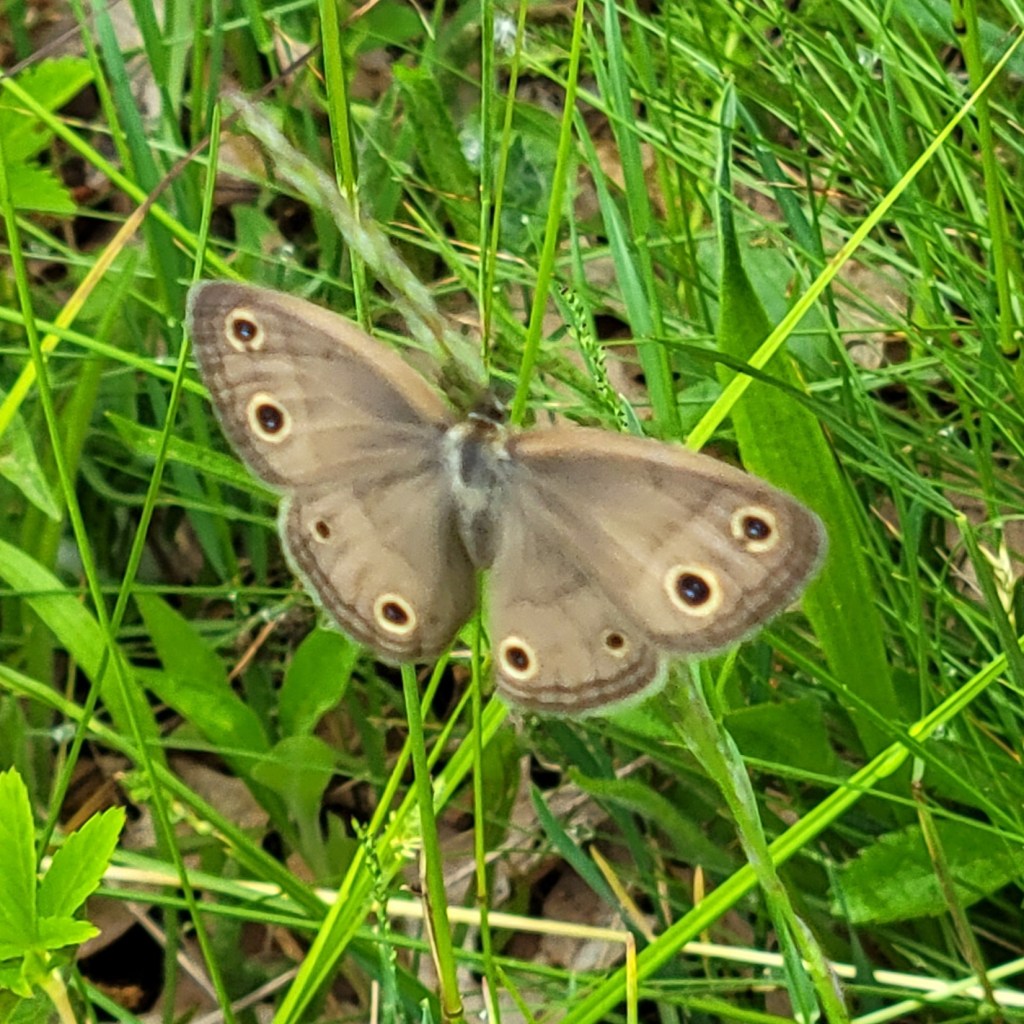
June 2 The Little Wood-Satyr does not get the attention that some other (more colorful) butterflies get, but I am always very pleased to see it — with its slow bouncy flight — early in the butterfly season.
They definitely belong on the list of 23 butterflies that I count on seeing in Eliza Howell Park in 2023.
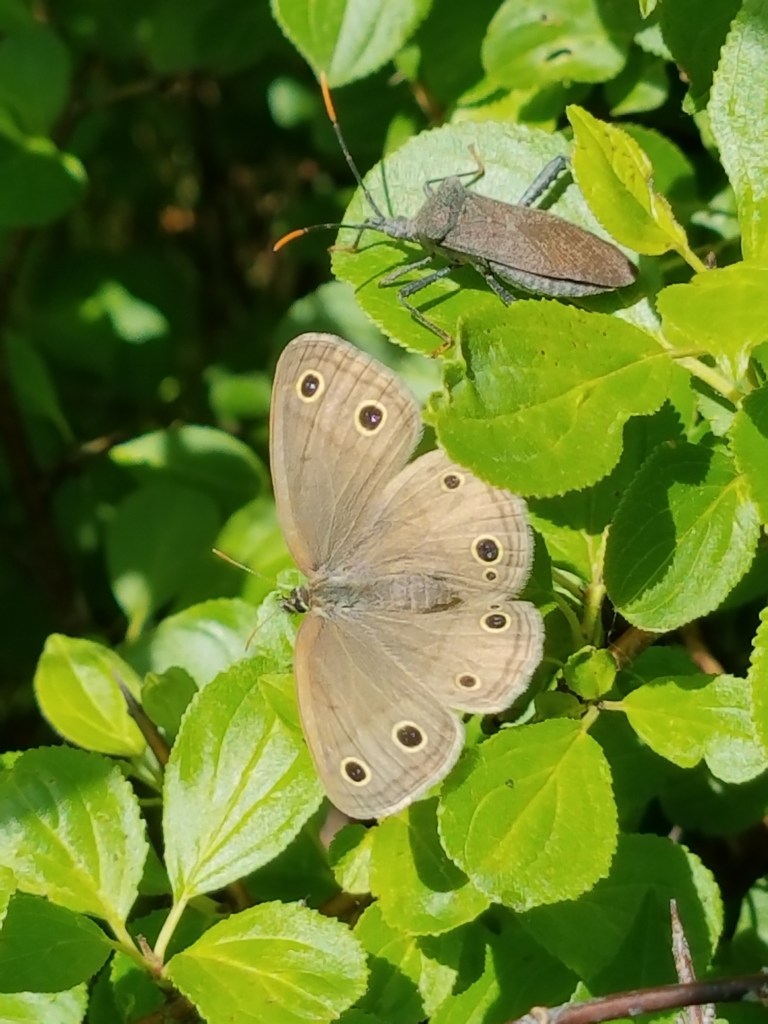
June 4
-
Subscribe
Subscribed
Have a WordPress.com account? Log in now.

