-
Wild Bergamot: A Favorite of Butterflies
In early July in Detroit’s Eliza Howell Park, Wild Bergamot begins to bloom. For nature watchers, it is an important and exciting time, a signal that the summer buterfly season is here.

As is evident from this recently taken photo, Wild Bergamot attracts a variety of other insects in addition to butterflies. My focus here, though, is on some of the butterfly species that I hope to see again this year.

Red-spotted Purple The red spots of the Red-spotted Purple can be seen when the wings are closed.
Bergamot grows in clumps, about 3 – 4 feet tall. It is widespread in the wildflower meadow of the park, spreading by both rhizomes and seed, and blooming during most of July and August.
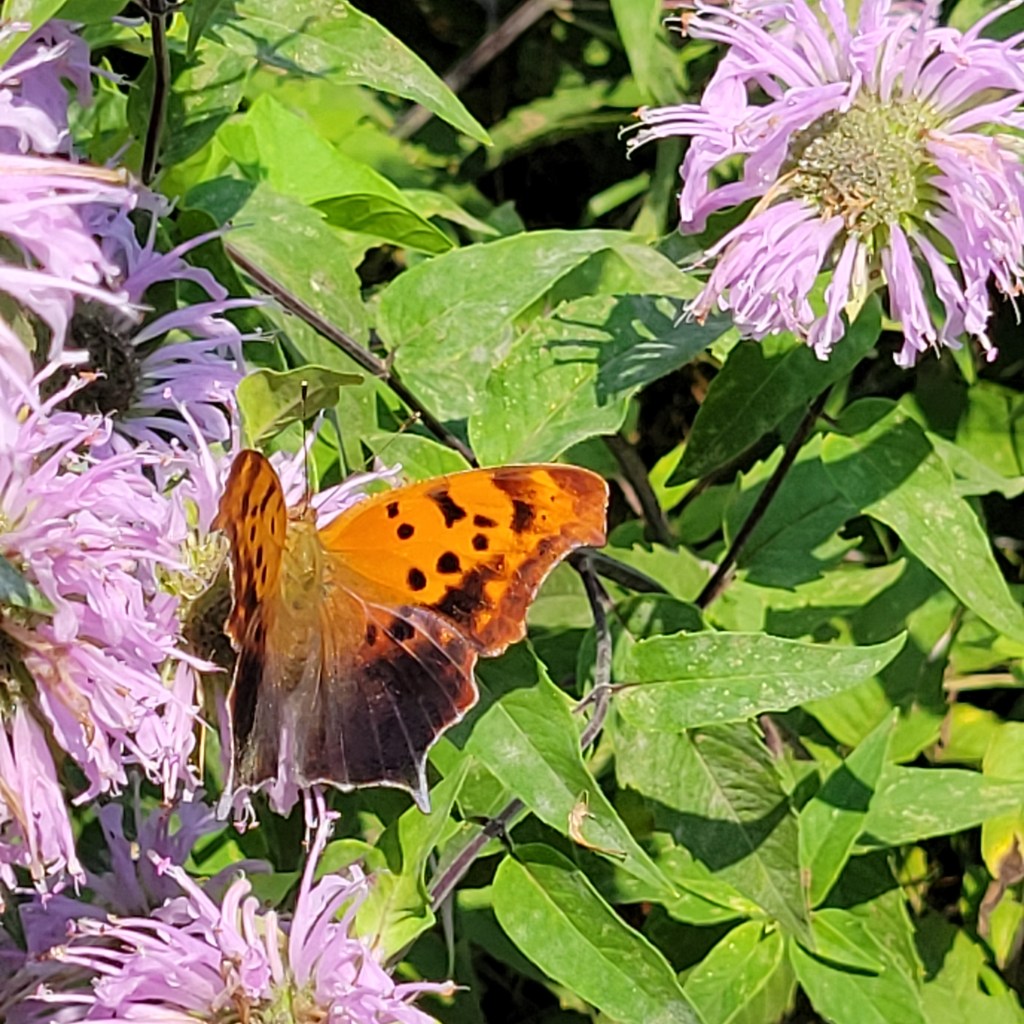
Question Mark The small mark that gives the Question Mark its name is on the under side of the wing, not visible here.
Many gardeners grow a type of Bergamot, especially the red variety. It is often called Bee Balm and it attracts hummingbirds in addition to insects.

Great Spangled Frittilary This week I saw the first Great Spangled Frittilary of the year in Eliza Howell — and it was visiting Bergamot. This photo is from last year.
Some of my insect-watching time is spent just standing next to a clump of Bergamot, noting the activity. A lovely insect might just come by, ignoring me as it seeks nectar.

Mourning Cloak Mourning Cloak is not very common in the summer, but when they do fly in the park in July, Wild Bergamot is one place they stop.

Eastern Tiger Swallowtail Tiger Swallowtail is more common in Eliza Howell. It makes the rounds of various flowers, one of which is Bergamot.

Silver-spotted Skipper Photos can sometimes be misleading in terms of a the size of the subject. Comparing the insect to the size of rhe flower, one can see that a Silver-spotted Skipper is considerably smaller than a Tiger Swallowtail.
Wild Bergamot also attracts, at times, those fascinating daytime moths known as hummingbird moths. They hover at flowers, similar to the way hummingbirds behave.
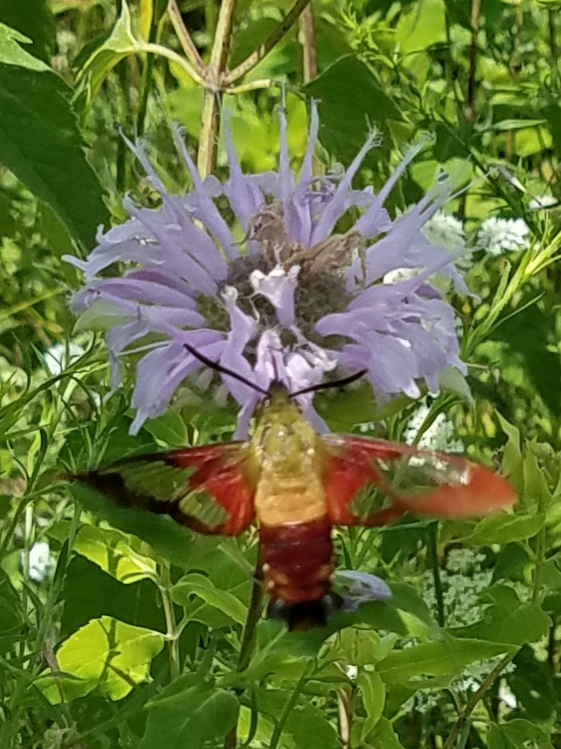
Hummingbird Clearwing Moth 
Strawberry Clearwing Moth As one can see from this series of photos, taken the last two summers, Wild Bergamot in bloom means it’s time to start hanging out in the wildflowers!

-
Bald-faced Hornet Nest Construction: Starting Small
One of my annual projects is to make note of all the Bald-faced Hornet nests that I am able to spot in Eliza Howell Park (most years, about 10). I usually start seeing them in early September and continue to find more as leaves fall. They are large, but often placed in the thick of tree leaves, not visible until they are full size at the end of summer.
The nests are made of “paper,” wood chewed and mixed with saliva.
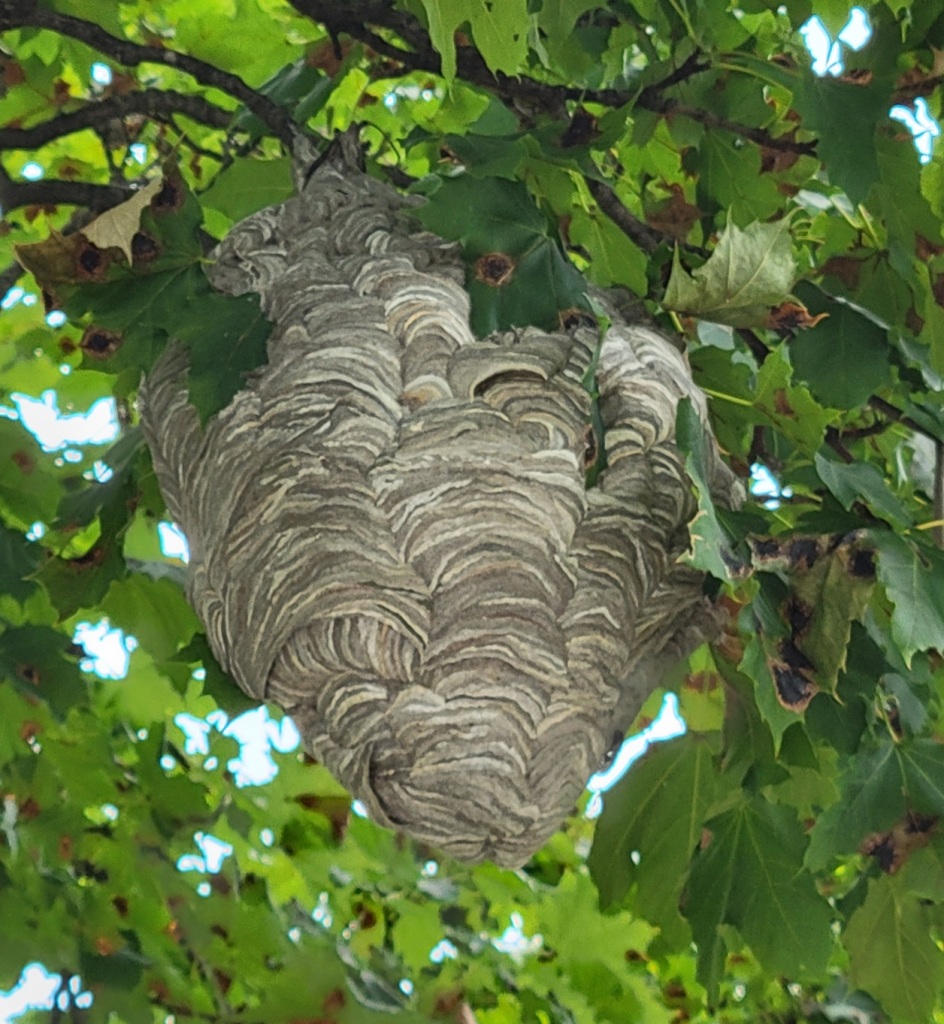
This is the first one found in 2021, in early September, visible only when one was almost directly underneath.
This year I have — finally — located a nest in the very early stage of construction.
Only mated female hornets (new queens) remain from last year. When a queen emerges from hibernation, she constructs a nest, lays eggs, and cares for the young workers, all on her own.
This nest, found on June 6, was probably the first stage, the initial construction. It was about three inches long. Since I had never seen an early-stage nest before, I watched until a hornet emerged so I could confirm the species.

If one knows where to stand and where to look, the nest is quite visible. Not only have I found the early-stage nest that I have been hoping for, but I should be able to watch what happens as the season progresses.
I have since stopped by almost daily. For more than a week, there were no noticeable changes, but by June 16, the entrance tunnel had been removed.
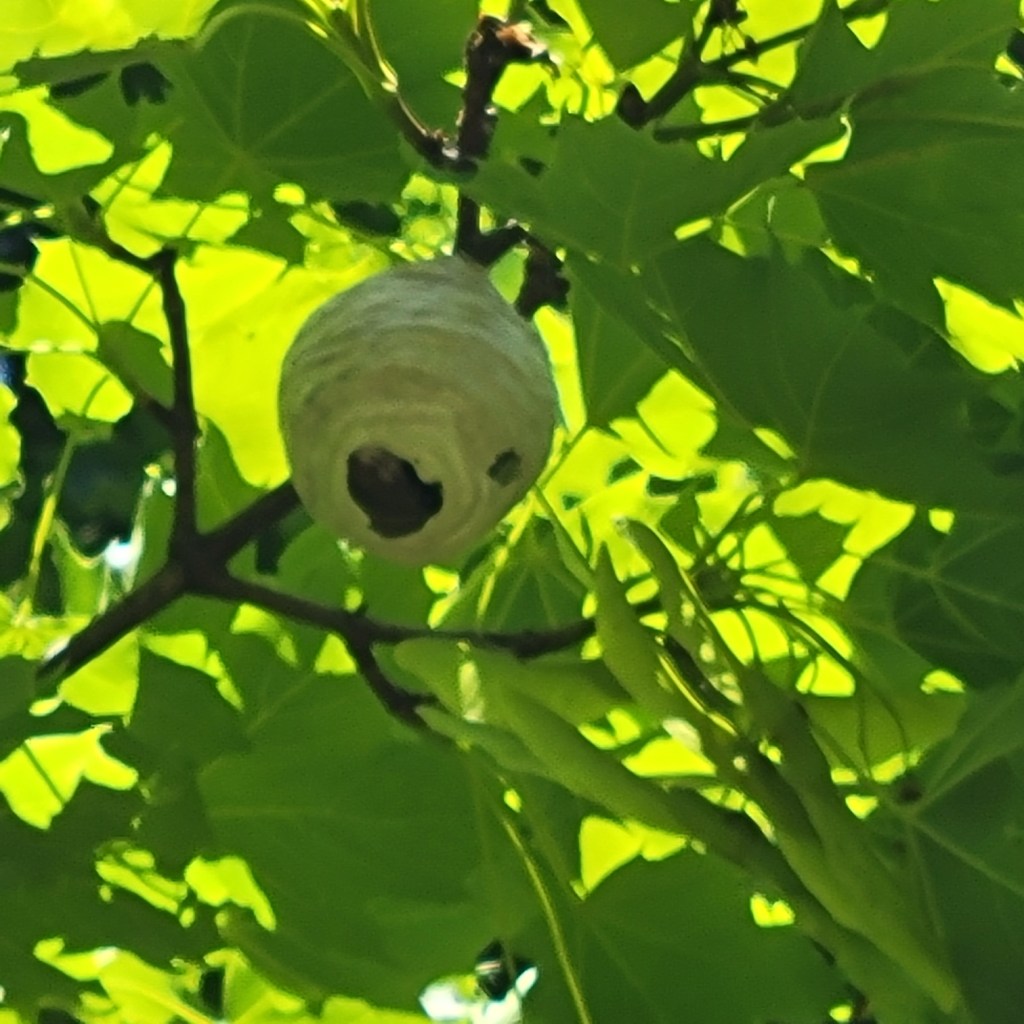
Almost every day since, there have been more changes. It looks as though the hornets are tearing apart the previous outer wall and making a new one, a little larger. In the process, some of the inner activity of the nest is visible with the use of binoculars
This is June 21

And this is June 24. Note the outer layer being constructed from the top down

By June 27, the bottom of the nest is beginning to look more closed, more like a small version of a full-size nest. At this point it is approximately softball size.

So, in three weeks, there has been a significant change in the size and some modification of the shape of the nest.

The hornets are actively and energetically engaged in increasing the numbers of new hornets (the queen’s role now is to lay the eggs; the workers construct the cells and care for the young). The workers are also continuously expanding the size of the nest to accommodate the growing population.
In two months, if all goes well, the nest will be home to hundreds of Bald-faced Hornets and will be, perhaps, over a foot long. This one, which I had cut down at the end of October last year and was showing to a group in April, shows how big they typically get.

This story is just beginning; it is only three weeks old. I am looking forward to see how the nest develops and what more I might learn about the behavior of these fascinating insects.
There will likely also be more to follow here.
-
Red Clover and June Butterflies
In mid-June in Detroit, Summer meadow wildflowers are just beginning to bloom and butterflies are becoming active. Among the flowers now blooming, one is clearly attracting more butterflies than others: Red Clover.


Other flowers that are butterfly magnets — like Wild Bergamot, Purple Coneflower, Joe Pye Weed — usually start blooming in July. So, for now, I walk through Red Clover patches, phone camera in hand. (All photos here were taken in June, 2022, in the park.)

Silver-spotted Skipper 
Monarch 
European Skipper Red Clover, a native of Eurasia, was brought to North America centuries ago for agricultural purposes. It is used as a fodder crop and to improve the soil. It fixes nitrogen, a plant fertilizer.
Red Clover has long been naturalized here and bees, butterflies, and other insects are attracted to it for pollin and nectar.
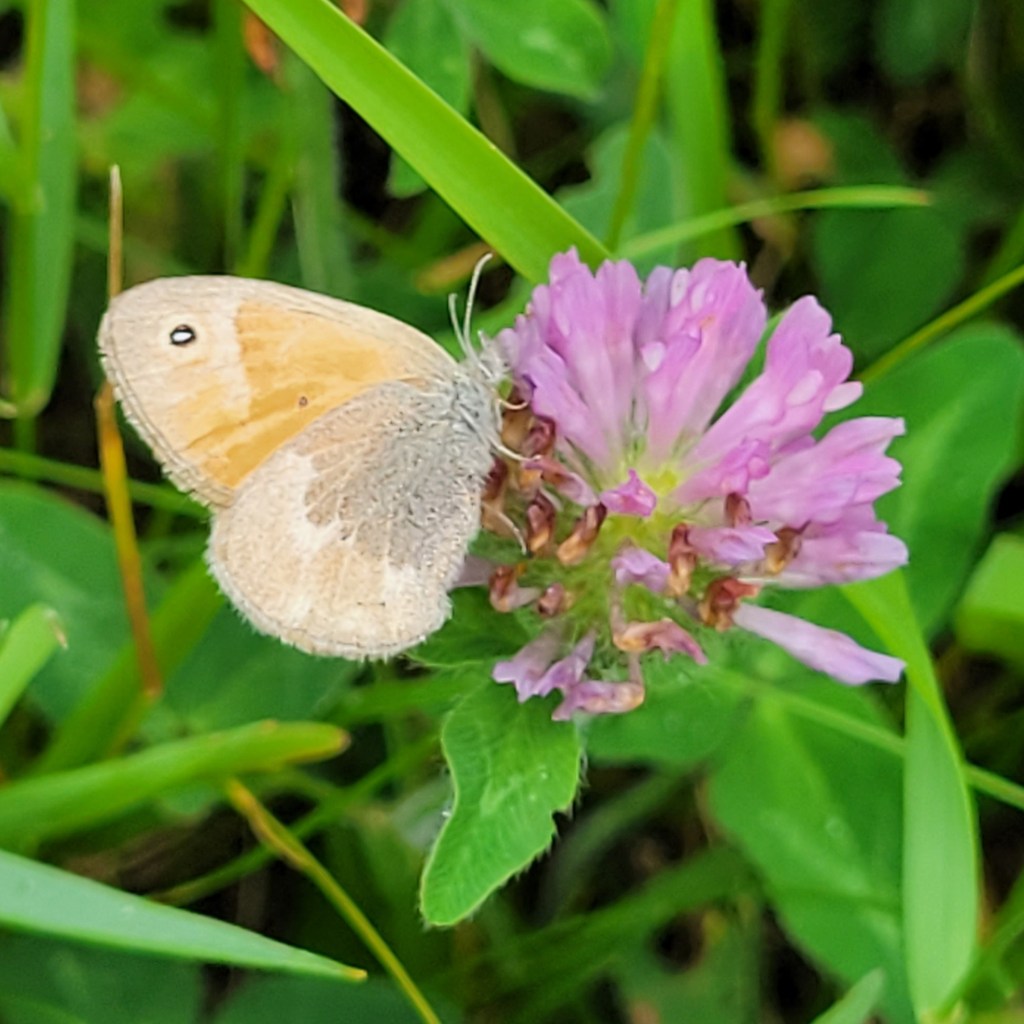
Common Ringlet 
Eastern Tiger Swallowtail “Butterfly season” in Eliza Howell Park, the weeks when they are most abundant, begins in July. Based on the number of species that I have already seen visiting Red Clover in June…

American Lady 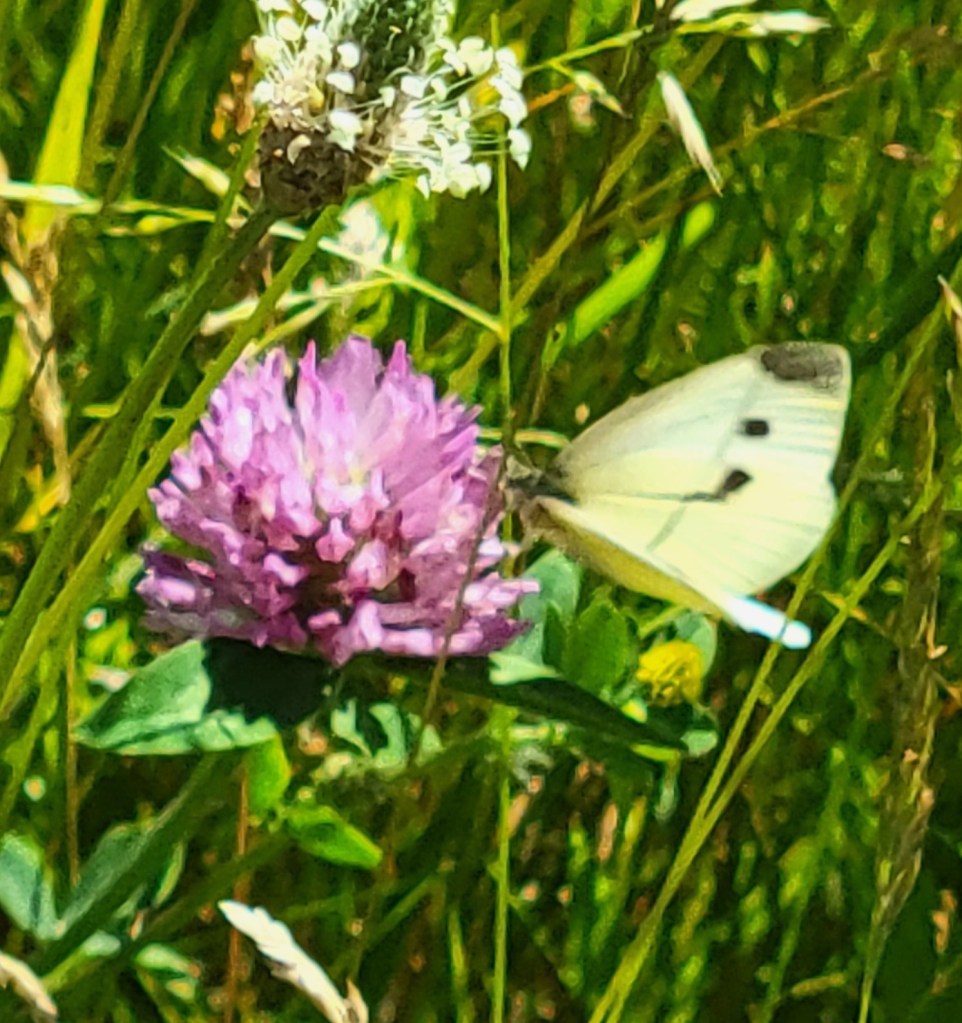
Cabbage White 
Hobomok Skipper … it looks like 2022 might be a good butterfly year.
-
Snapping Turtle Lays Eggs: This Morning in the Park
When I first spotted the large Snapping Turtle in the field during my walk in Eliza Howell Park this morning, I immediately suspected that it was on a mission to find warm friable earth for laying and burying eggs.
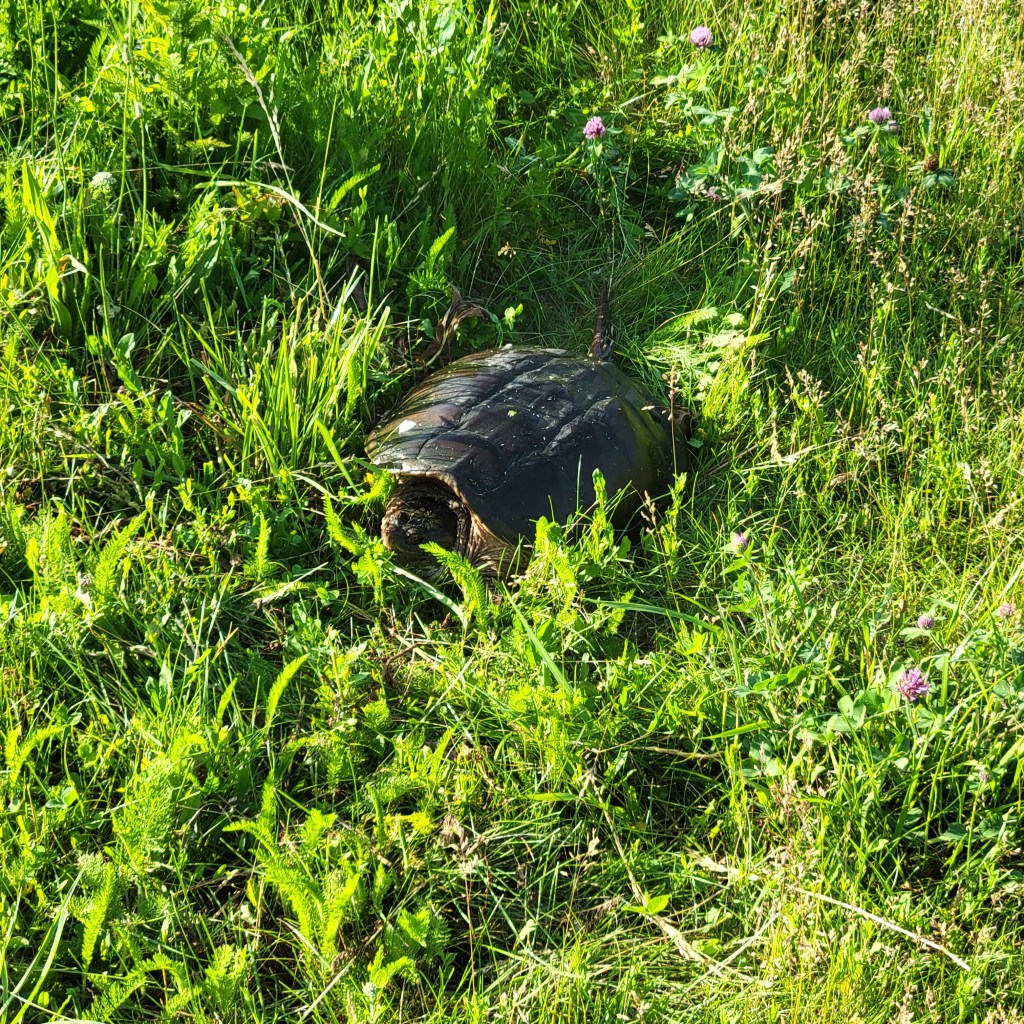
The Common Snapping Turtle has a carapace (upper shell) that is over a foot in length. It spends almost its entire life in water; the usual reason for traveling any distance from the river in June is to make a nest.
It stopped walking when I got close and withdrew its head.
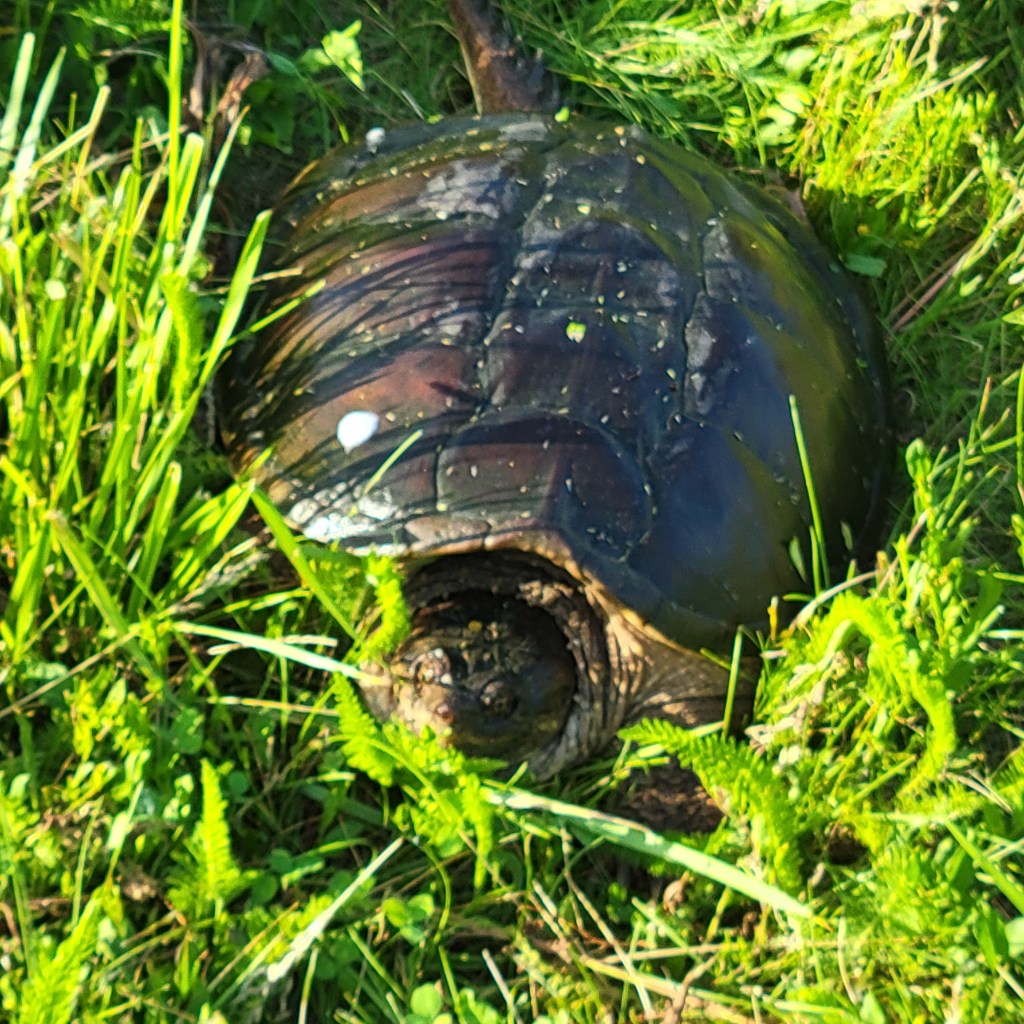
I immediately left it to its mission, hoping I might find its nesting location when I returned later.
About 50 minutes later I returned to the area and was able to locate it. She (I now knew it was a female) was on some soft soil at the edge of a bench platform that had been installed this spring. She was obviously involved in laying eggs in the soil.
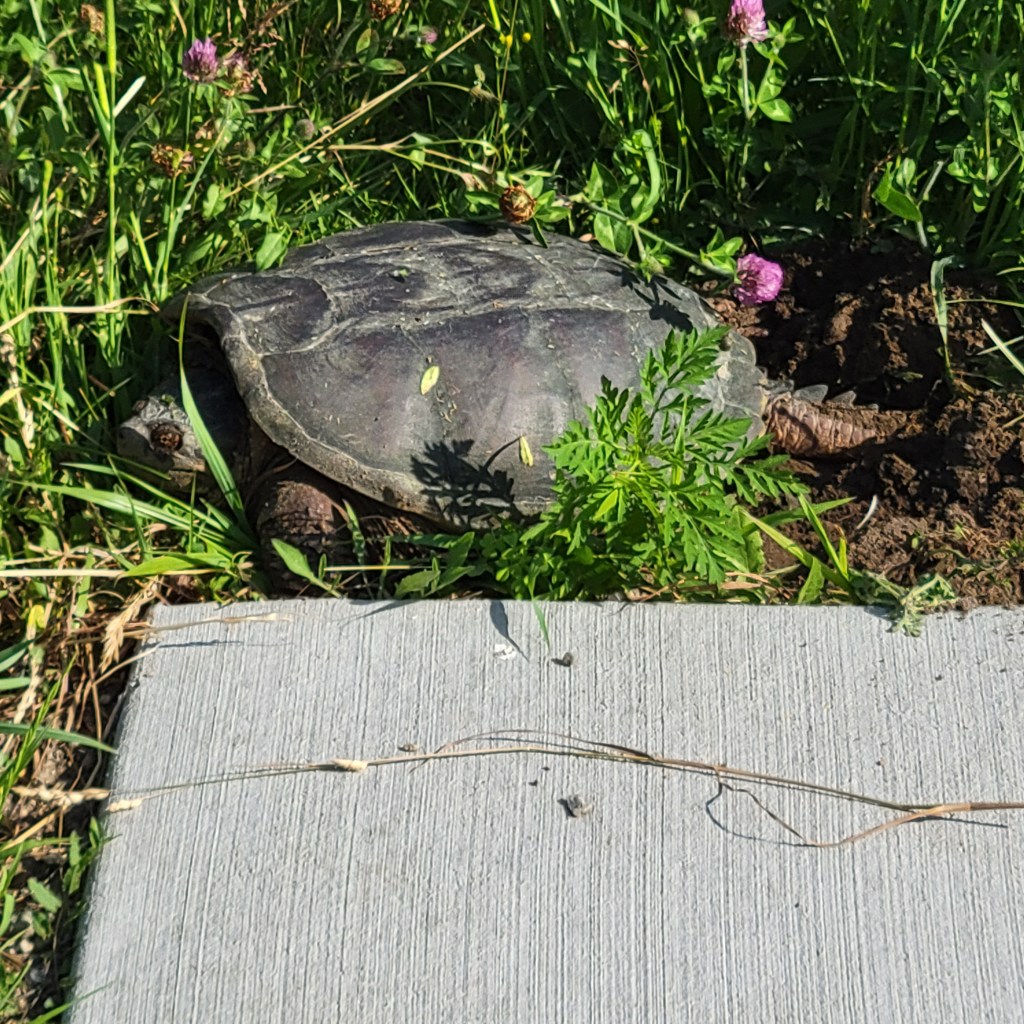
Over the next hour and 15 minutes I watched, at times from a distance and at times from much closer, as she labored to deposit eggs in the ground. Snapping Turtles lay about 20 – 40 ping-pong size eggs and cover them with soil. The warm soil is the incubator.
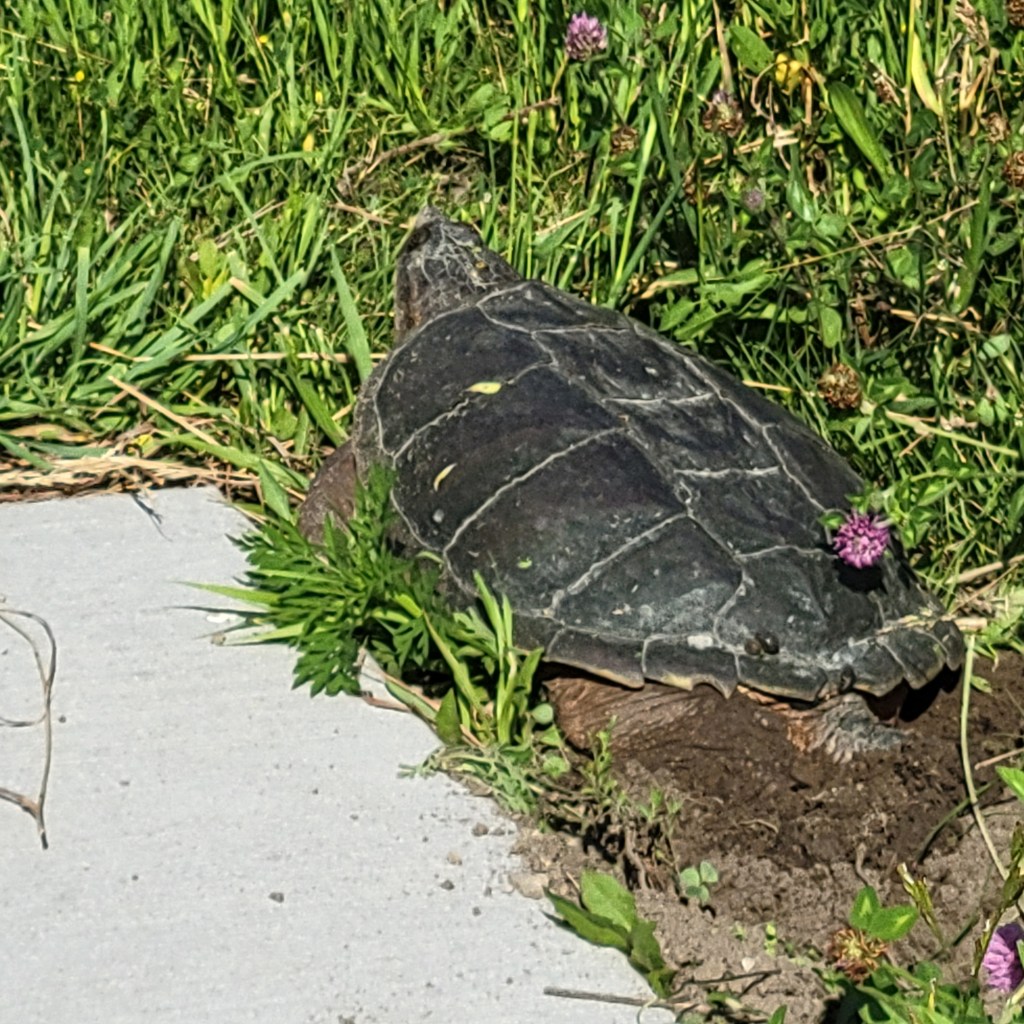
Being so occupied, she did not seem to mind when I got closer (I was quiet and made no sudden moves).

She could be anywhere from about 1 to 4 decades old; at about 10 years old, they reach maturity and they might live to about 40. As adults they have few threats apart from humans. And at this egg-laying time of the year, they are at risk of being hit by vehicles when crossing roads.
If all goes well, the eggs will hatch in about 80 – 90 days and the hatchlings will find their own way to the river.
After covering the eggs, she walked away, heading back to her life in the water. Her active mothering role is over — for this year
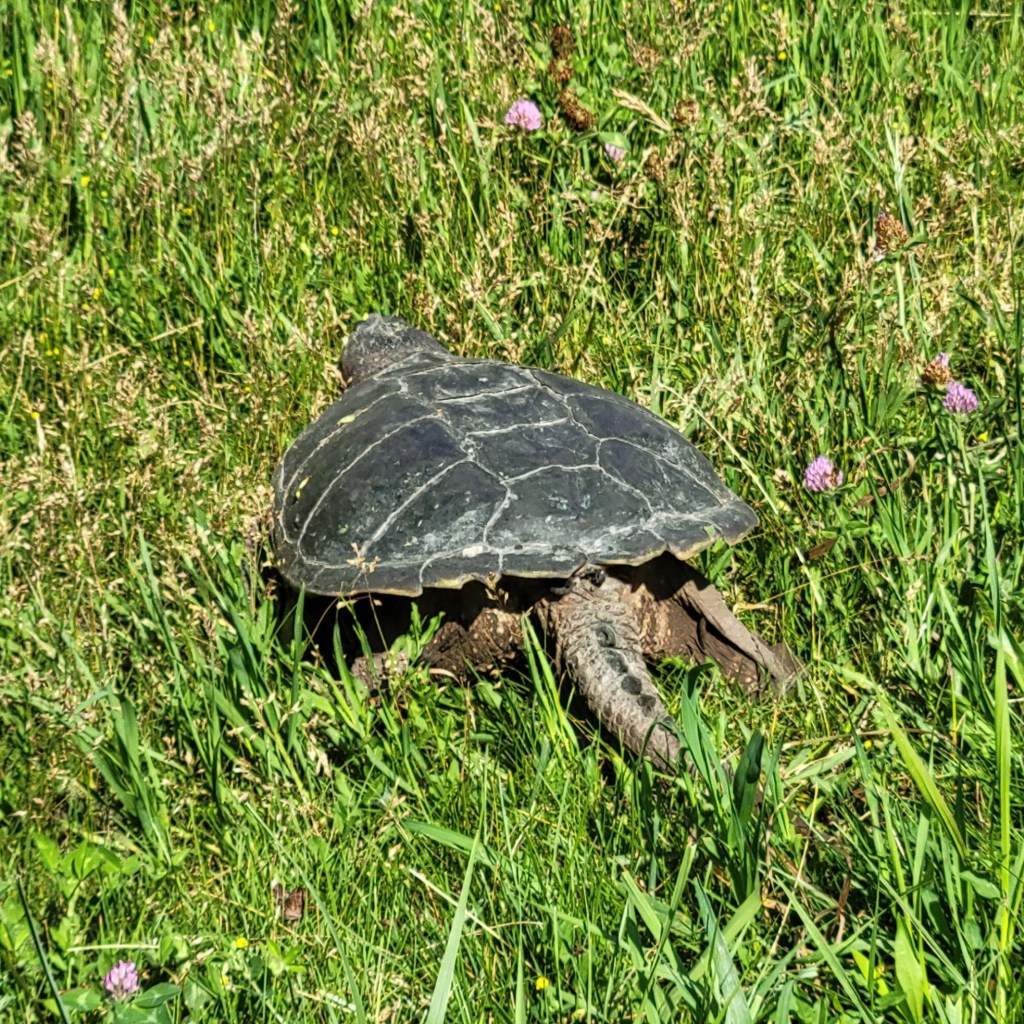
Later, after returning home, I did a little research and learned that the sex of the young turtles is determined by the temperature in the underground nest. At certain temperatures, all become female and at other temperatures, all become male. There is only a very narrow range where there will be some of each.
The mother’s task completed, the only signs of her morning mission are the spot of disturbed soil and the temporary track of pushed-over plants that marked her route.
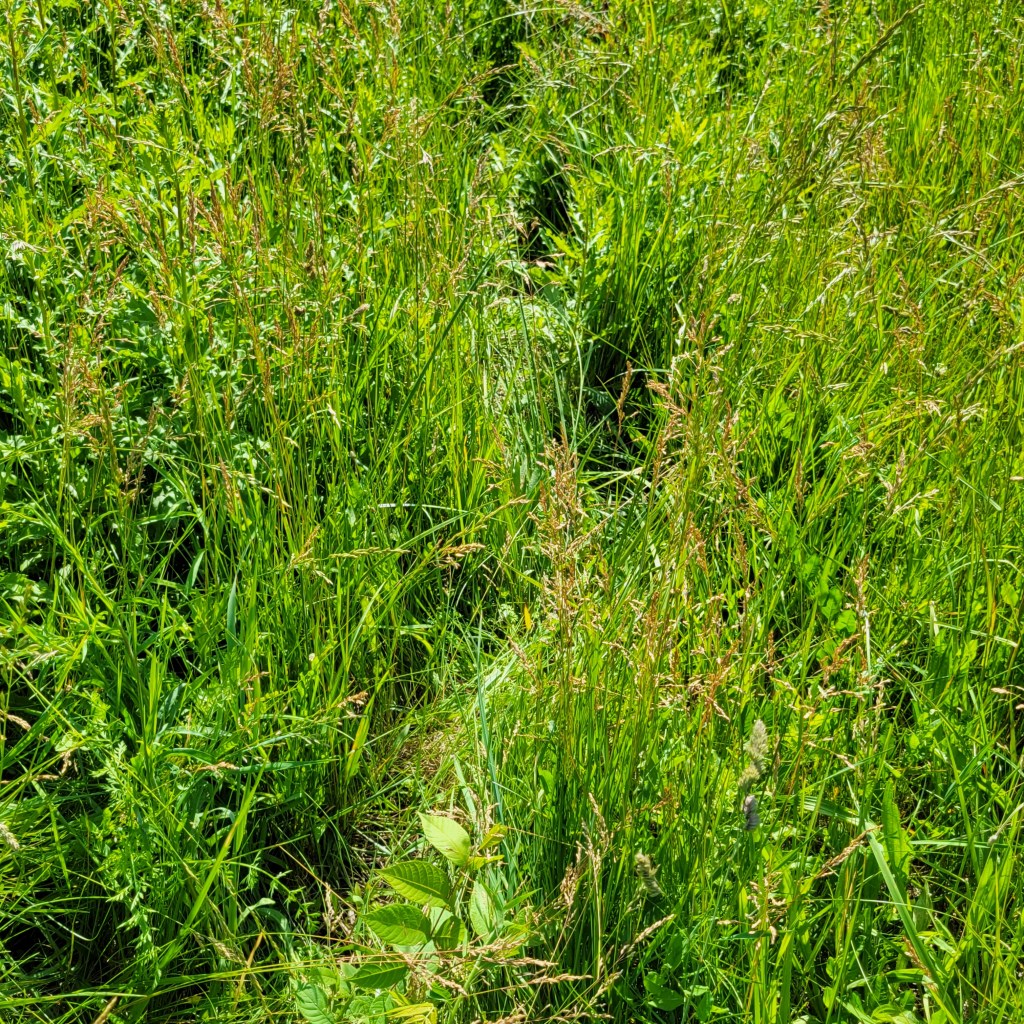
The question now is how will the eggs / young fare. Contrary to the situation of adults, they are at great risk of predators. But the start looks good.
And again Eliza Howell Park was the scene of a new nature walk experience.
-
A June Morning: 8 Images
While most of my attention is focused on nesting birds prior to the June 11 Detroit Audubon field trip here, Eliza Howell Park is increasingly looking more like summer (that is, more evidence of meadow flowers and of insects).
Here are a few images from my walk in the park in the morning of June 8.
Hackberry Emperor (on the painted footbridge railing).

Ebony Jewelwing (damselfly).

Flowerfly nectaring on Coreopsis.

Early stage Bald-faced Hornet nest. (By September, this 3-inch-long nest will probably be about 15 inches long and 6 inches wide.)

Estern Tiger Swallowtail on red clover.

Yellow Goatsbeard in bloom.
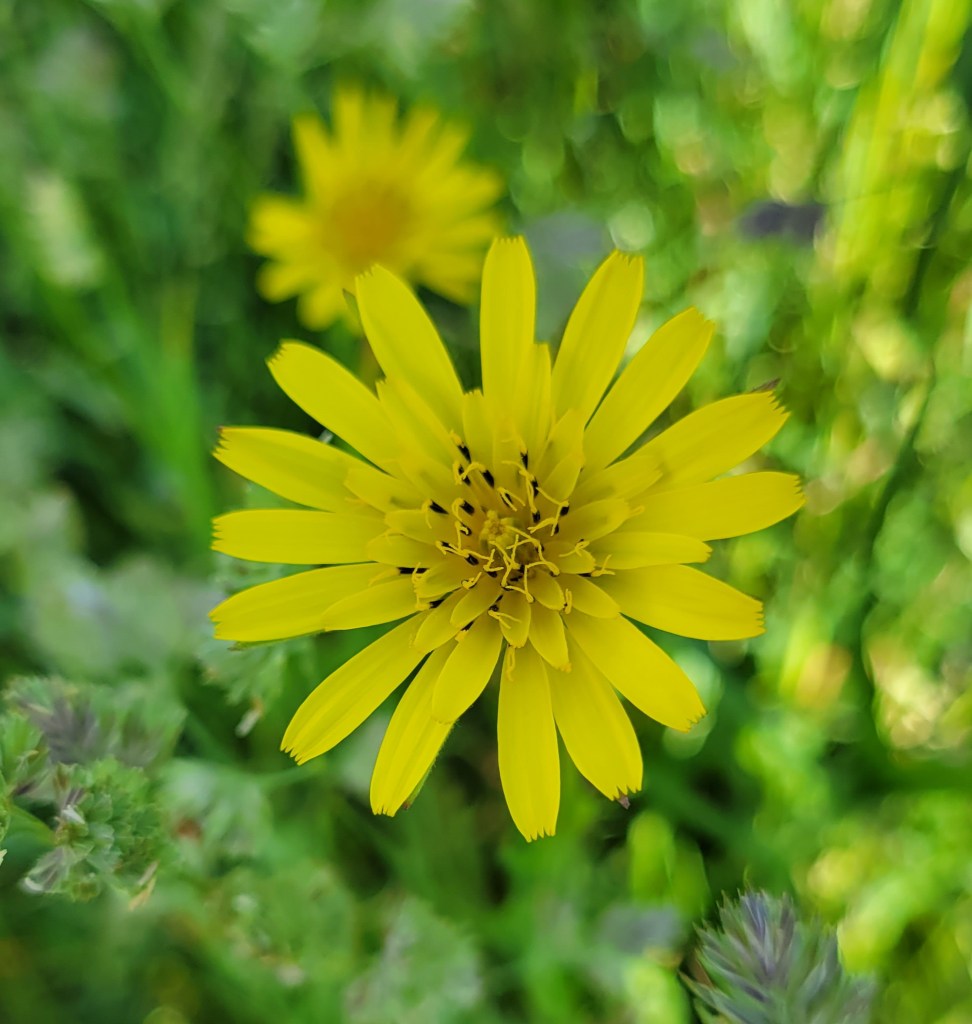
Yellow Goatsbeard in seed.

Twelve-spotted Skimmer (dragonfly).
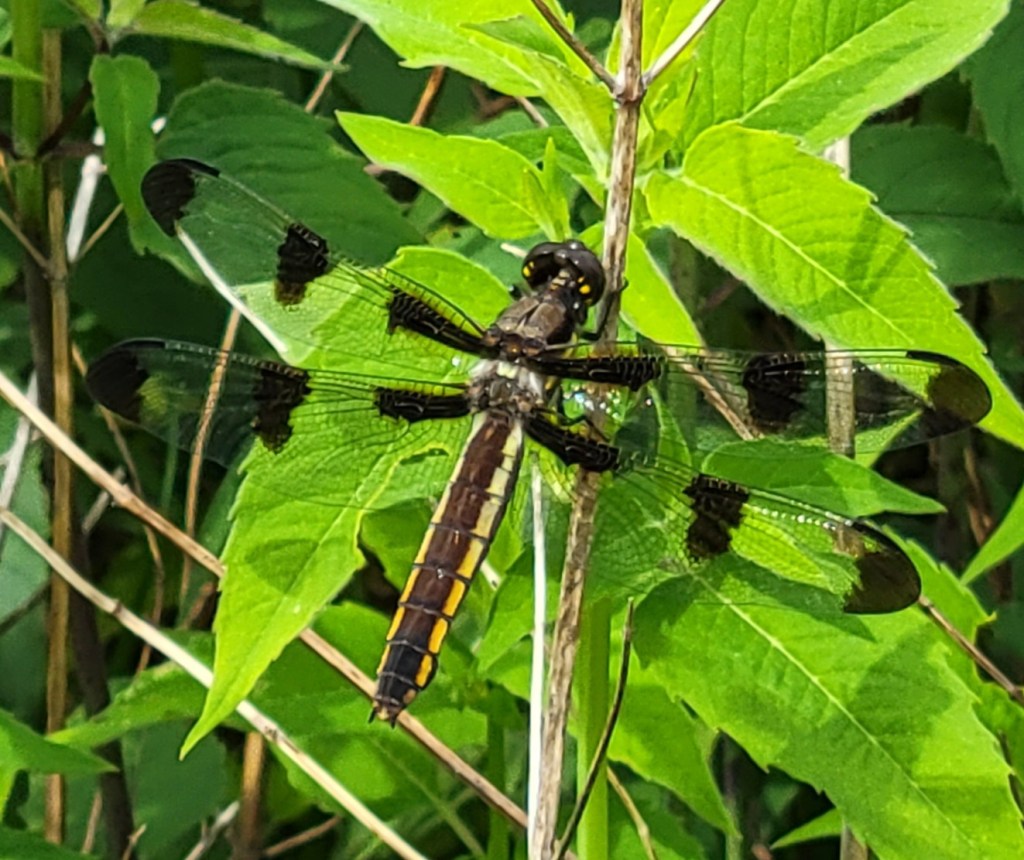
The weather is not always the best — and is certainly not the only — indication of the transition to summer.
-
When Young Praying Mantises Emerge
The marvelous month of May has arrived in Eliza Howell Park and it is bringing out nature lovers. The forest floor is alive with small ephemeral flowers and some of the elusive colorful warblers are pausing briefly on their 3000-mile annual spring migration from Central America to the North Woods.
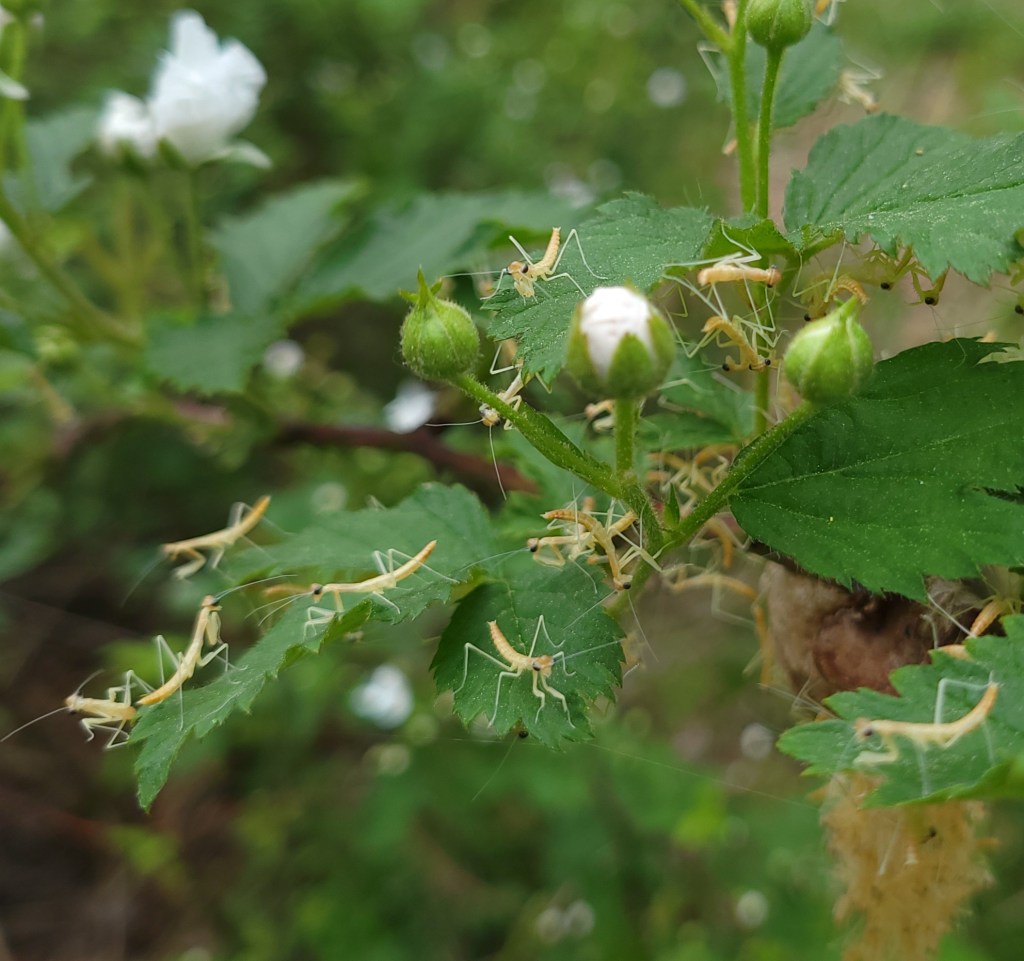
One of the marvels of May in the park is observed by very few people — the emergence of the year’s Praying Mantises. It happens quickly and the timing is weather-dependant, so not fully predictable. Someone in the right spot at the right time (probably late in May) can observe the fascinating phenomenon of a hundred or more young mantises crawling out of and away from an egg case in which they spent the last 8 months.
Scattered in the park, mostly near the meadow wildflower field, are a number of egg cases (oothecae) of the Chinese Praying Mantis, attached to shrubs, limbs of small trees, flower stems, and vines, usually 1 to 4 feet from the ground. This photo is from this week.
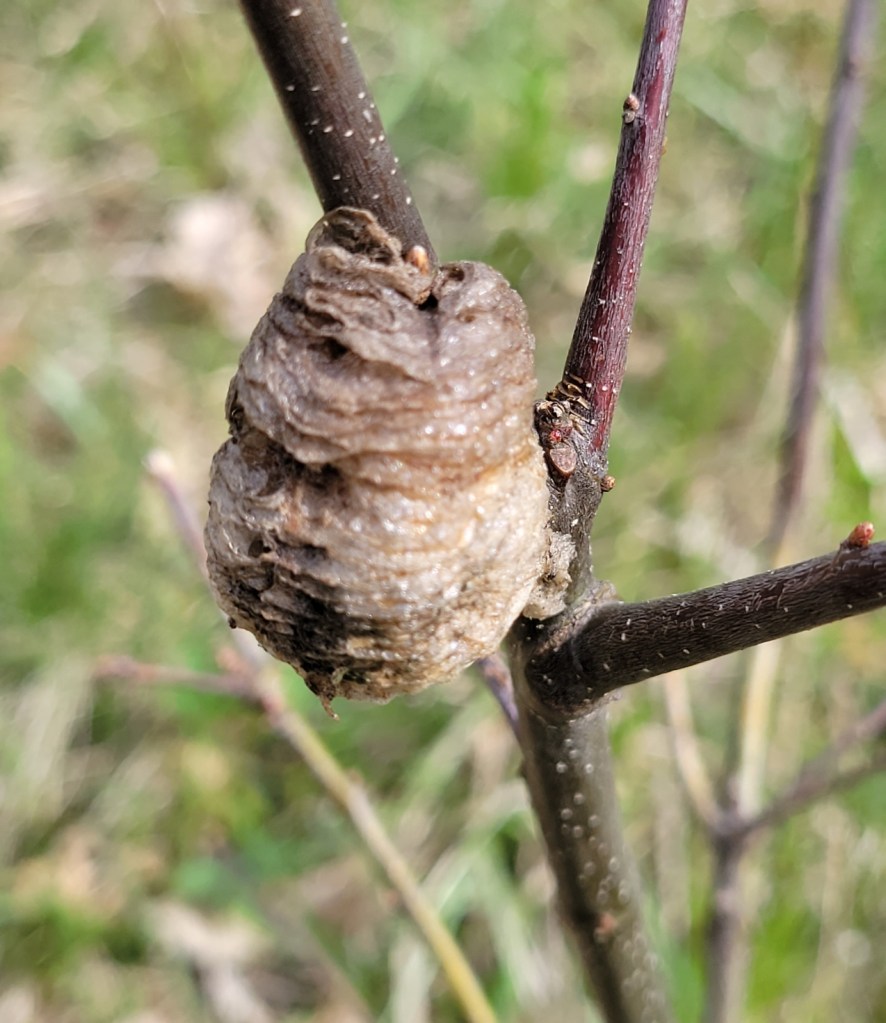
Later this month, tiny new mantises will emerge en masse from the cases that survived the winter intact and healthy. Last year, a colleague and I witnessed such events most clearly May 21 to May 23.

Praying Mantis young are very small. The egg case is usully only about an inch high and contains dozens to hundreds. Though tiny, they emerge fully developed, except that they lack wings. They head away immediately and begin to search for other insects to eat.

Praying Mantises do not survive the winter as adults. The new ones that energe in the spring die in the fall, after mating and egg laying. I usually don’t see them until some time in August, by which time they are fully grown and are preying upon the insects attracted to the summer flowers. The Chinese Praying Mantis is often over three inches long at maturity

After mating, females lay eggs (making the cases at the same time). In Eliza Howell, this usually occurs in September. This egg case was new when this picture was taken in mid September.

From September until May, through the long cold winter, the Praying Mantis population is contained in these insulated oothecae

By far the largest number of Praying Mantises in Eliza Howell Park are the Chinese species — and my observations above all apply to it. This year, though, we found a few cases that are distinct enough (and placed differently enough) to be a different species. It is probably European Praying Mantis, a little smaller species also found in Michigan.

As it gets warmer, we will try to keep an eye on these few cases as well. I have no experience with what they look like as the young emerge. With watching — and with sone luck — perhaps it will happen this year.
The weather has been cool this spring, so I do not expect mantis emergence within the next few days, but I hope I am there whenever it happens. It is a “Wow!” experience.

-
First Spring Wildflowers: The Season Begins
It is always a challenge picking the dates, weeks in advance, for early spring wildflower walks. The challenge is in selecting a time when the short-lived blooms are visible. They are called “ephemerals” for a reason.
This year Spring has been colder than average here in Detroit and first flowering is later than normal. But, thanks to a couple of recent warm sunny days, a variety of small flowers can now be seen on walks in Eliza Howell Park.
Bloodroot
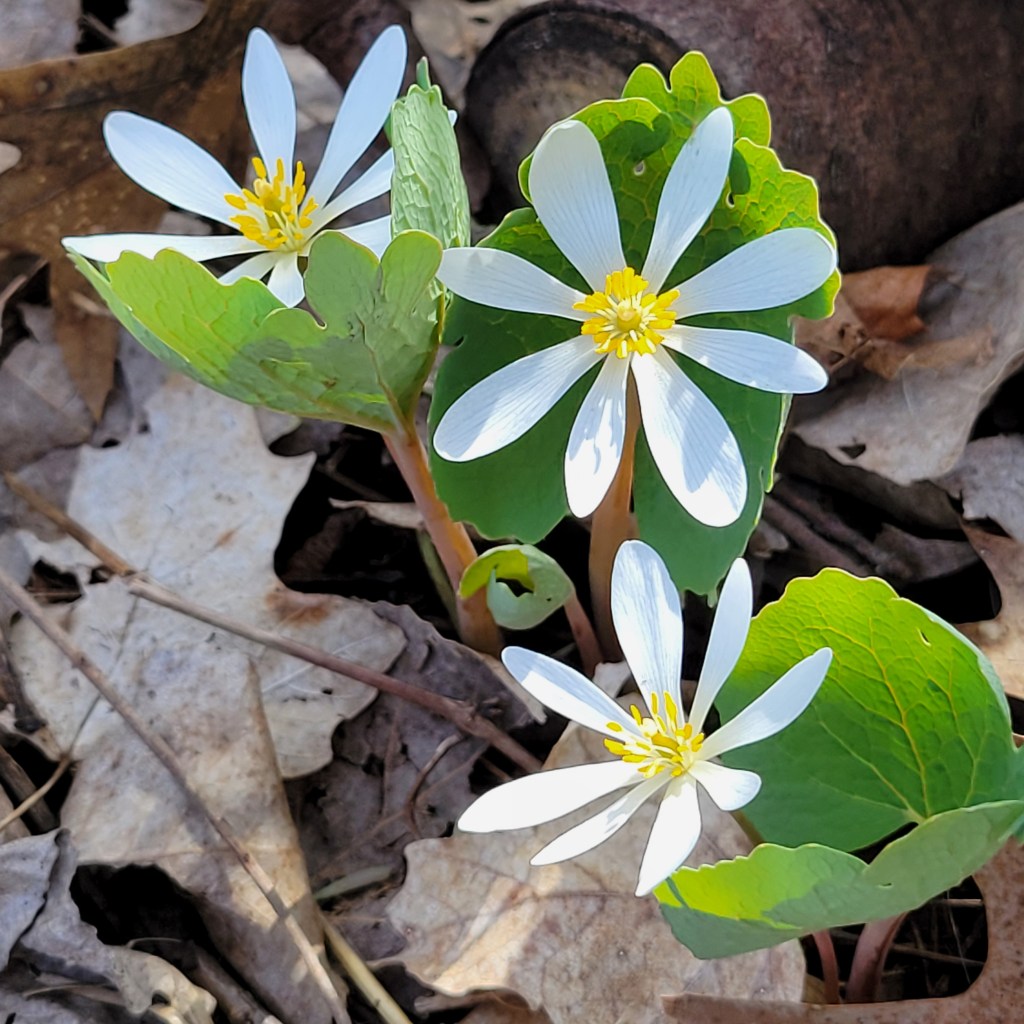

Bloodroot grows on a little higher ground than most of the other early spring flowers, so it is now usually my first stop before I head down to the floodplain. There is only a limited number of days to observe this one-leaf, one-bloom flower, named after the orange-red rhizomes.
Spring Beauty


I tend to post something about Spring Beauties ever year. They are the most common early flower in the park, small, and ranging in color from mostly white to pink. As the second photo here shows, when the flowers appear, the insects come.
This is the first year that I have noticed that a number of participants on these wild flower nature walks are as excited as I am to see the insects. Pollinators have been receiving a lot of publicity and it is having an effect!
Yellow Trout Lily

Named Trout Lily because the mottled leaves reminded someone of a Brown or Brook Trout, this is also is quite common. At least the leaves are common; not every plant has a flower. It is a true lily.
White Trout Lily

Less common is another species of Trout Lily. The leaves of White Trout Lily are a little narrower. An alternative (and misleading) name for Trout Lilies, “Dogtooth Violet,” is more often used for the white species.
Cut-leaved Toothwort

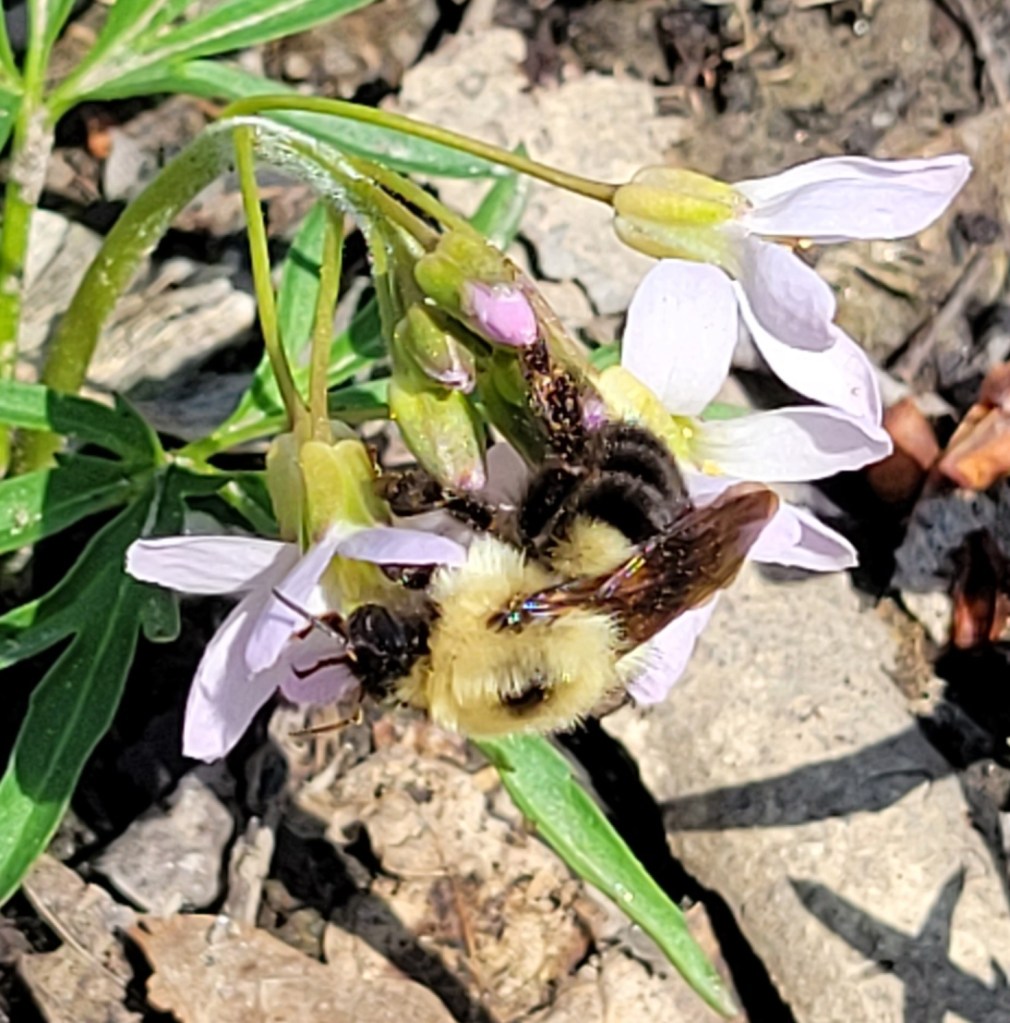
Another flower that varies a little from white to pink is named for the ridges on the leaves and a tooth-like growth on the roots. It’s size is evident in the second photo, with the presence of a large bumblebee. It is popular with pollinators.
Dutchman’s Breeches

Dutchman’s Breeches is, at least in Eliza Howell Park, a quite uncommon flower, one that I always enjoy seeing. Its name comes from the appearance of the flower, suggesting pantaloons, hanging upside down and somewhat inflated. (The flower names that we inherit from previous generations sometimes add to the fun of wildflower walks.)
There are a variety of other wildflowers that will soon be blooming near the river, including varieties of Violets, Wild Ginger, Wild Geranium, Trillium, and Mayapple.
Pussytoes
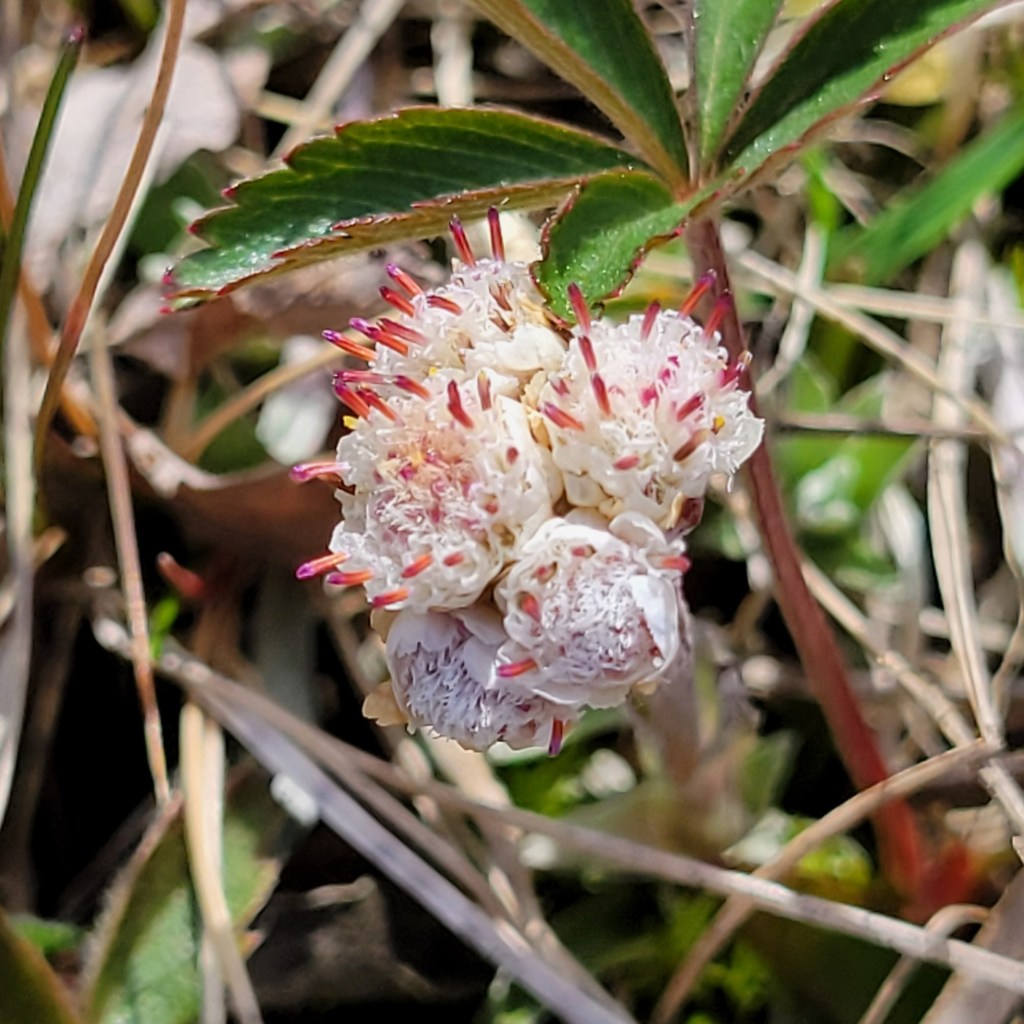

Back up from the river, in the park fields, there are a few scattered locations where Pussytoes (named by the resemblance to a cat’s paw) grow. They are short and not easy to spot. The photos show the difference between the male and the female flowers.
…..
The flower season has begun. For the next 6 months or so, there will be flowers blooming in Eliza Howell, the species and locations differing as the seasons progress. The pollinators and humans visiting the park welcome them.
-
Hemp Dogbane: Extended Seed Dispersal
One of the advantages of walking in the same park regularly — and of taking pictures in different seasons — is that I have the opportunity to see and to review later the ways in which different species develop over the months.
As I approached a patch of Hemp Dogbane in Eliza Howell Park this week, I was struck by how colorful the plants look now in the Speing sunshine. They had shiwn no color in the Winter.

April 14 I also noticed seeds floating away in the breeze, attached to tufts of silk. I find wind seed dispersal fascinating, so I stopped for a closer look.

April 14 
April 14 Remembering that I had seen Hemp Dogbane seeds dispersal last Fall, I was curious about the extended released. So I took a look at some photo records.
A picture taken in the Winter doesn’t show any seeds being released at that time, but it does appear that some of seedpods still contain seeds, though most are open and empty.
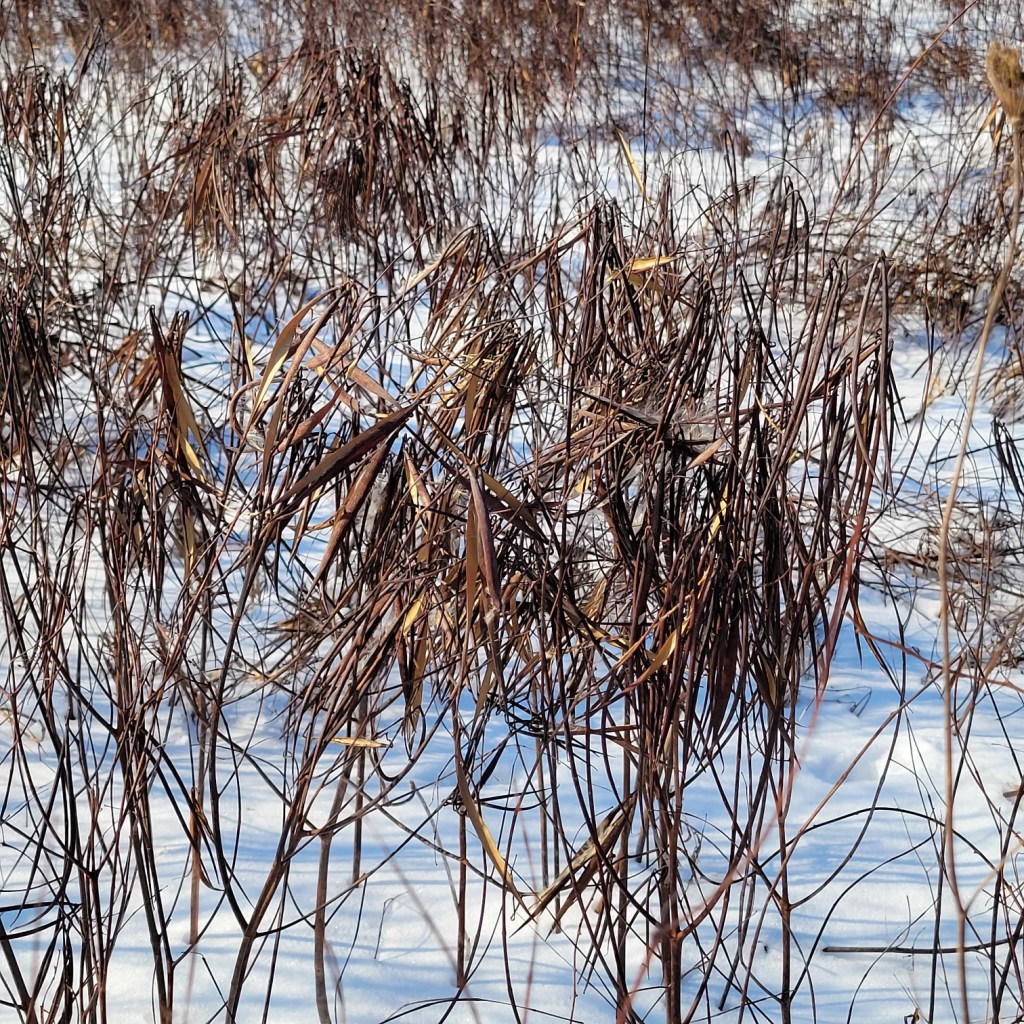
January 31 According to the Fall photos, the Dogbane was full size (nearly 4 feet) by the middle of September
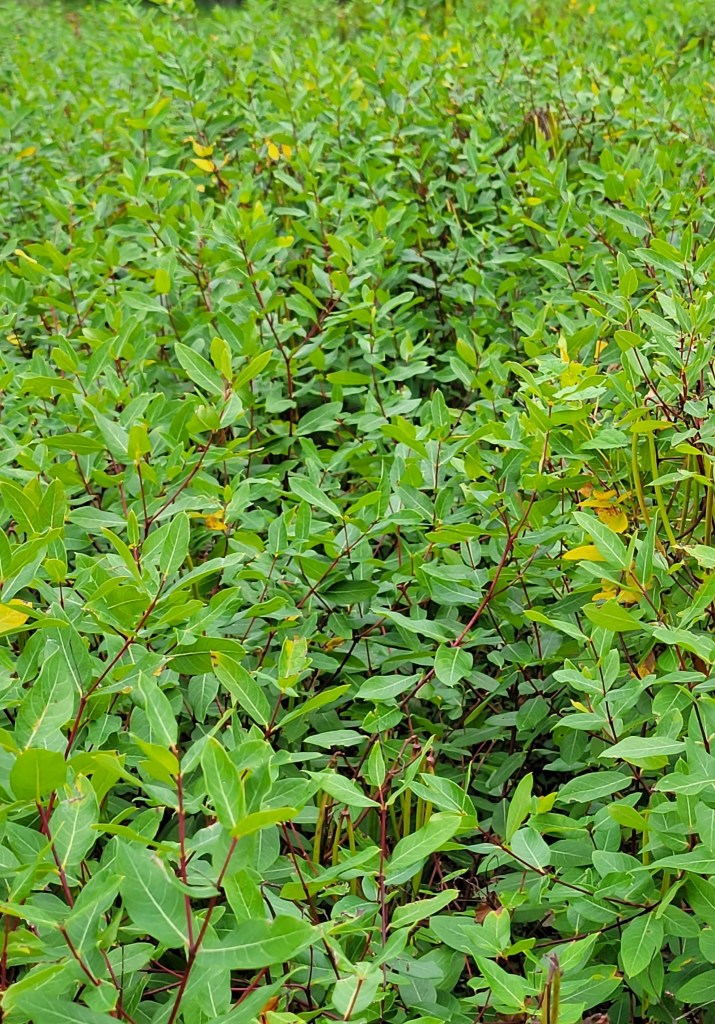
September 13 And, by that time, the numerous seedpods were well developed.

September 13 Each plant has many seedpods, reportedly 10 to 60 (I have never counted), and each of the seedpods contains dozens of seeds. So a large patch of Hemp Dogbane, such as the one I have been visiting, produces an enormous number of seeds.
The first evidence that I have of seed dispersal from last year’s plants is from September. Most seeds reach maturity by October.
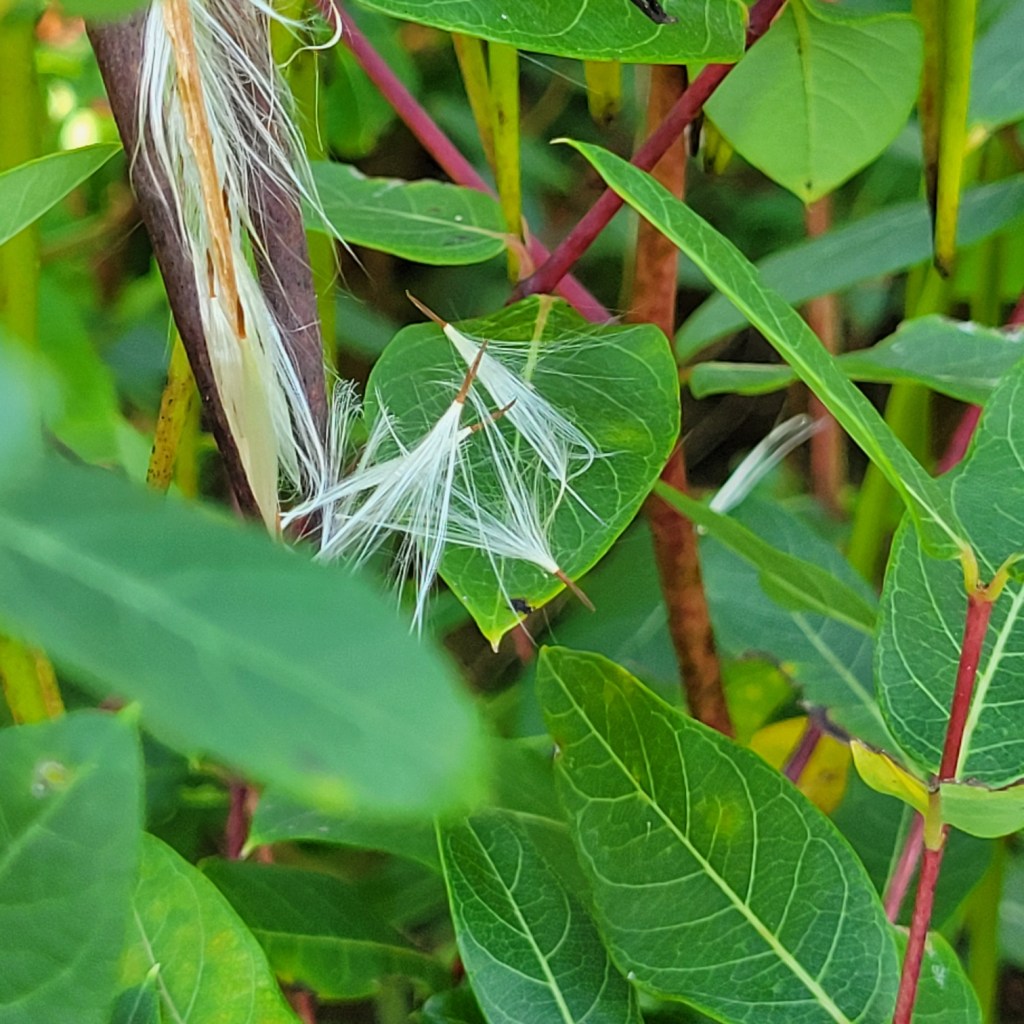
September 14 Hemp Dogbane is also called Common Dogbane and Indian Hemp. The “dogbane” name comes from the fact that the plant is poisonous to dogs (and other mammals). The “hemp” name refers to the fact that native Americans used fibers from the stems as twine.
Hemp Dogbane is native and widespread in the United States. It looks to me similar to some types of milkweed, especially the stems and leaves. Flowering occurs in June – July. Milkweed seeds are also attached to light-weight tufts that lets them float away.

June 21 Even though I return to the same locations time after time, I am always learning. Better said: Because I return to the same locations time after time, I am always learning. Before now, I did not know that Hemp Dogbane seed is “blowing in the wind” in the Fall and again in the Spring.
-
Cavity Nesting Birds: The Season Begins
As I indicated in the last post, April is a month for checking the forest floor, looking for and admiring the emerging spring wildflowers. April is also a month for checking dead trees or limbs as well as holes/cavities in live trees.
There are approximately 14 bird species that (always or usually) nest in tree cavities in Eliza Howell Park. The beginning of cavity nesting season might be a good time to comment briefly on a few of them.
Red-bellied Woodpecker
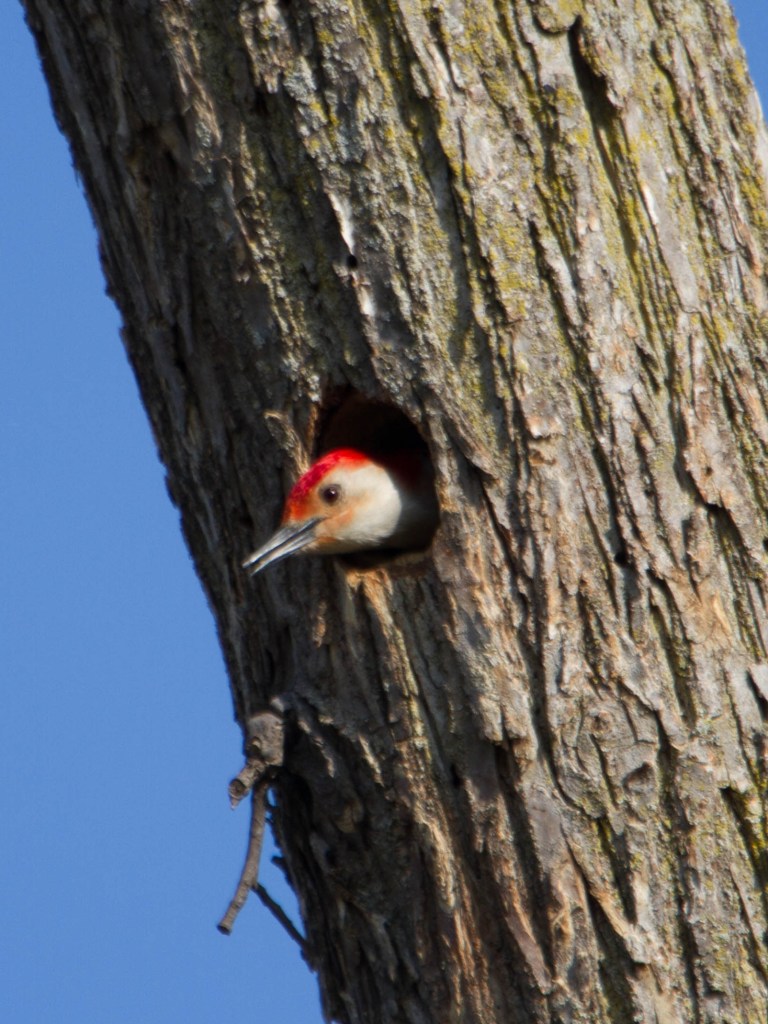
Photo by Margaret Weber It is not too difficult to spot Red-bellied Woodpeckers excavating holes at this time of the year. They often stop their work to call out loudly, especially the male who does most of the excavation. In EHP they often choose a large dead tree or a dead limb on a live tree. They might have used the same tree or limb before, but they make a new nest each time.
European Starlings often use old Red-bellied Woodpecker nests for their own use — and sometimes use brand new ones. I have several times over the years seen Starlings watching as the woodpeckers near completion of a new nesting hole and then move in to take it over when the woodpeckers are away. Once inside, the Starling is able hold off the larger and more powerful Red-bellied Woodpecker, which will then start over, making another hole from the beginning.
Wood Duck
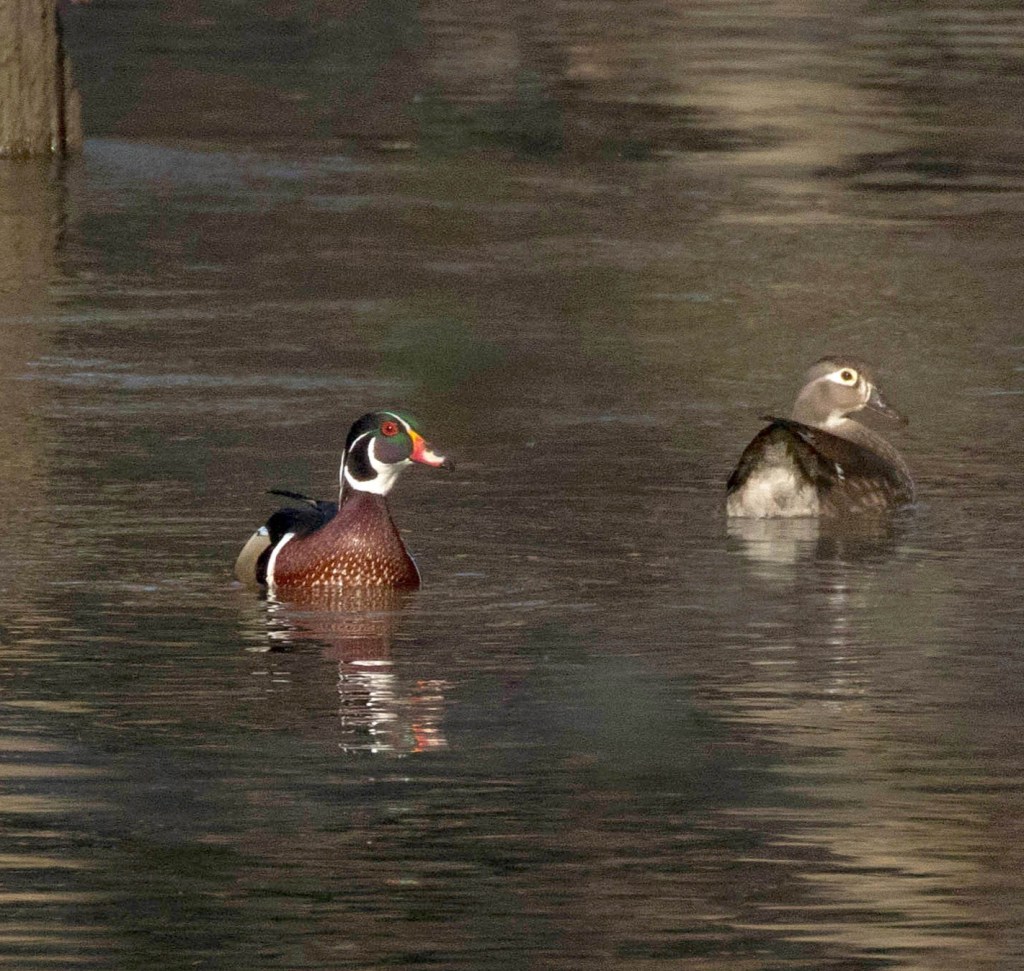
Photo by Margaret Weber Wood Ducks breed in the park and they, too, nest in tree cavities. Contrary to Red-bellied Woodpeckers, their nests are not at all easy to find. At this time of the year, I sometimes see a pair or two moving quite high among the acres of large trees near the river, early in the morning. They are apparently “house hunting,” checking out natural cavities that they might use.
Wood Ducks do not excavate and they do not add any nesting material, so there are not many times to see them around the nest. Once the eggs hatch, the young leave the nest the next day or so (drop/jump to the ground) so there is no back and forth to the nest after hatching. So the opportunities to spot the nesting tree are few. Finding a Wood Duck nest in this park means being in the exactly right spot, at the right time, looking in the right direction.
Black-capped Chickadee

Photo by Margaret Weber People are sometimes surprised to learn that the little Black-capped Chickadee is a cavity nester. Perhaps the bigger surprise is that it often (though not always) excavates its own nesting hole. It frequently selects a stump, long dead and rotting. It is not able to dig into wood as well as a woodpecker, but it gets the job done.
One pair is currently working on the hole indicated below, the picture taken earlier this week from across the river.

White-breasted Nuthatch

Photo by Margaret Weber The White-breasted Nuthatch is another small bird that nests in a tree cavity, but it does not make its own; it uses a natural cavity or an old woodpecker hole.
This is one species that will sometimes use the same nest more than one year. I am currently keeping an eye on a nesting location (a natural cavity about 15 geet up a tree trunk) used each of the last two years. If they return to it again, it will likely happen this month.
Eastern Bluebird

Photo by Margaret Weber Bluebirds are well known as a bird that will nest in a box (and a pair will sometimes use a box in Eliza Howell), but it seems that they prefer other cavities here. The photo above is from 2021, when they used a hole that had been made or enlarged by chickadees a couple years earlier.
April is the usual time for Bluebirds to prepare a nest. I have been watching a pair recently. They are in the same general section of the park quite often and I am hoping that I will soon see them carrying nesting material (the behavior that usually leads me to a nest).
Downy Woodpecker
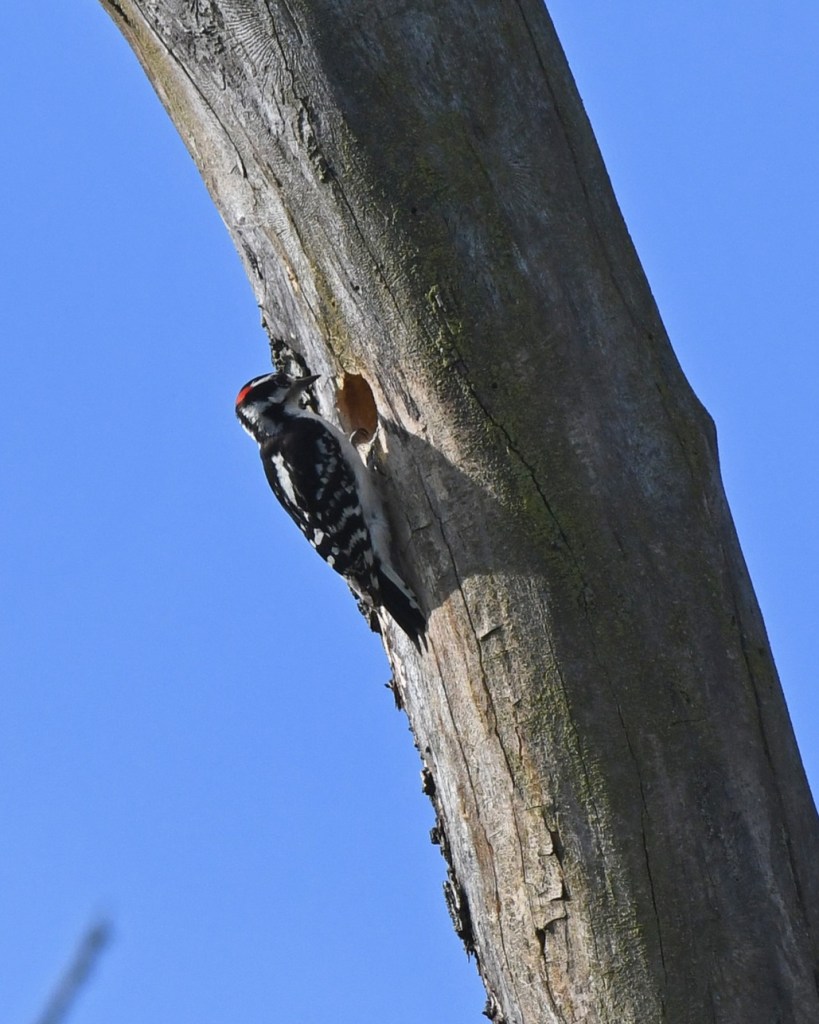
Photo by Kevin Murphy There are four species of woodpeckers that nest in Eliza Howell: Hairy, Red-bellied, Downy, and Northern Flicker. Downy, the smallest, is foraging in pairs now, but it is probably just a little early for them to begin a nest.
As is the case with the other three woodpecters, they excavate a new hole each time. In the case of Downies, their hole is usually on the underside of a dead tree limb that slants, that is not vertically straight, as can be seen in the photo above.
Great Crested Flycatcher

Photo by Margaret Weber Very few members of the flycatcher family nest in tree cavities; the Great Crested is the only one in eastern North America. Its nests are in either natural or woodpecker-made holes.
Great Crested Flycatcher does not return from its winter grounds until May and begins nesting later than most other cavity nesters, after tree leaves have emerged.
……
Most birds make a nest outside, placing it on tree or shrub branches or on the ground, and constructing it with varying types and amounts of plant and other naterials. There is a sizable minority of species, however, that nests in cavities. They include a number of year-round residents and the cavity users tend to start earlier.
The cavity nesting season has begun.
-
Focus on Forest Floor Flowers: April Watch
One of the annual field trips offered by Detroit Audubon is a spring woodland wild flower walk in Eliza Howell Park. In winter, I select a date for that event, long before I have a sense of how quickly spring will progress.
Based on past records, this year’s date is April 23. It’s a cold spring this year and I am hoping the selected date will coincide with peak blooming time this year.
The spring flowers are small and low to the ground. Though it may take a close look to appreciate them fully, many are fascinated by these first wildflowers of the year. Three of several species here every year are:
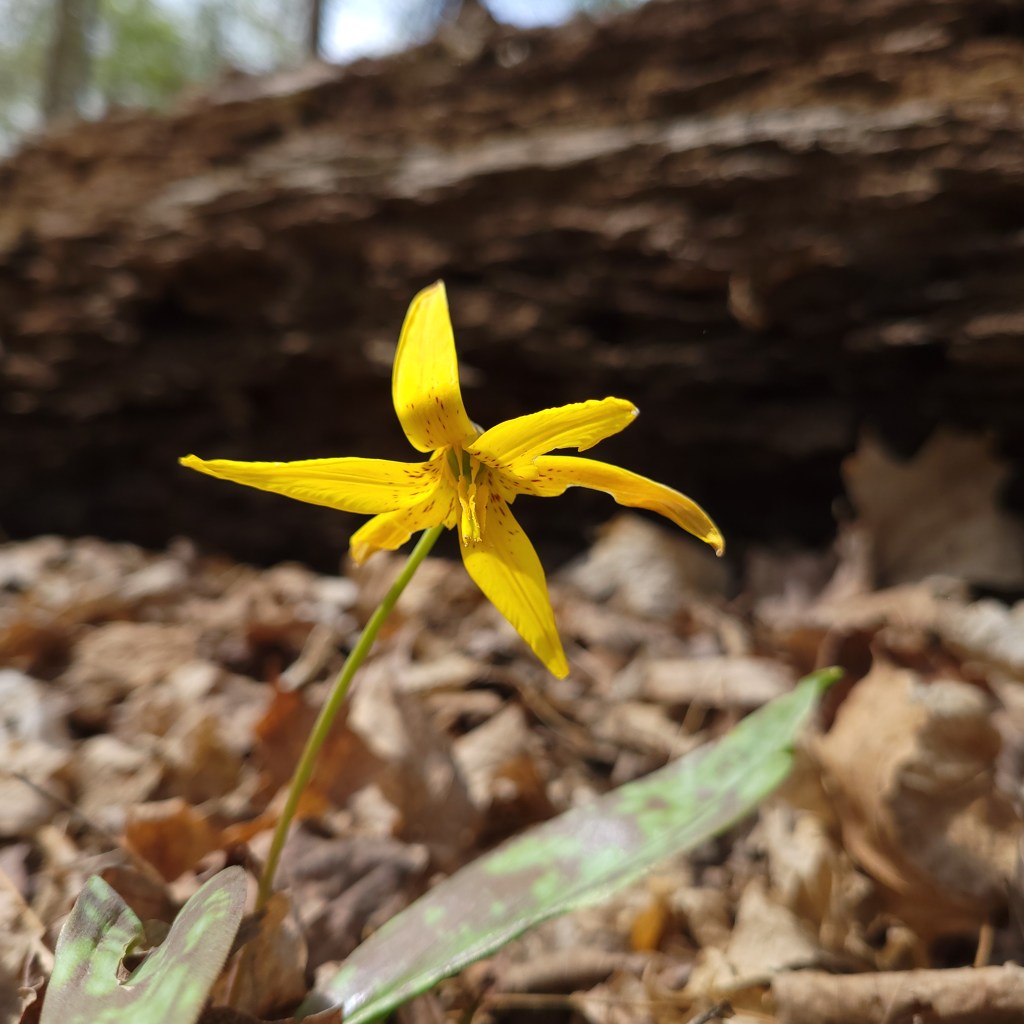
Trout Lily 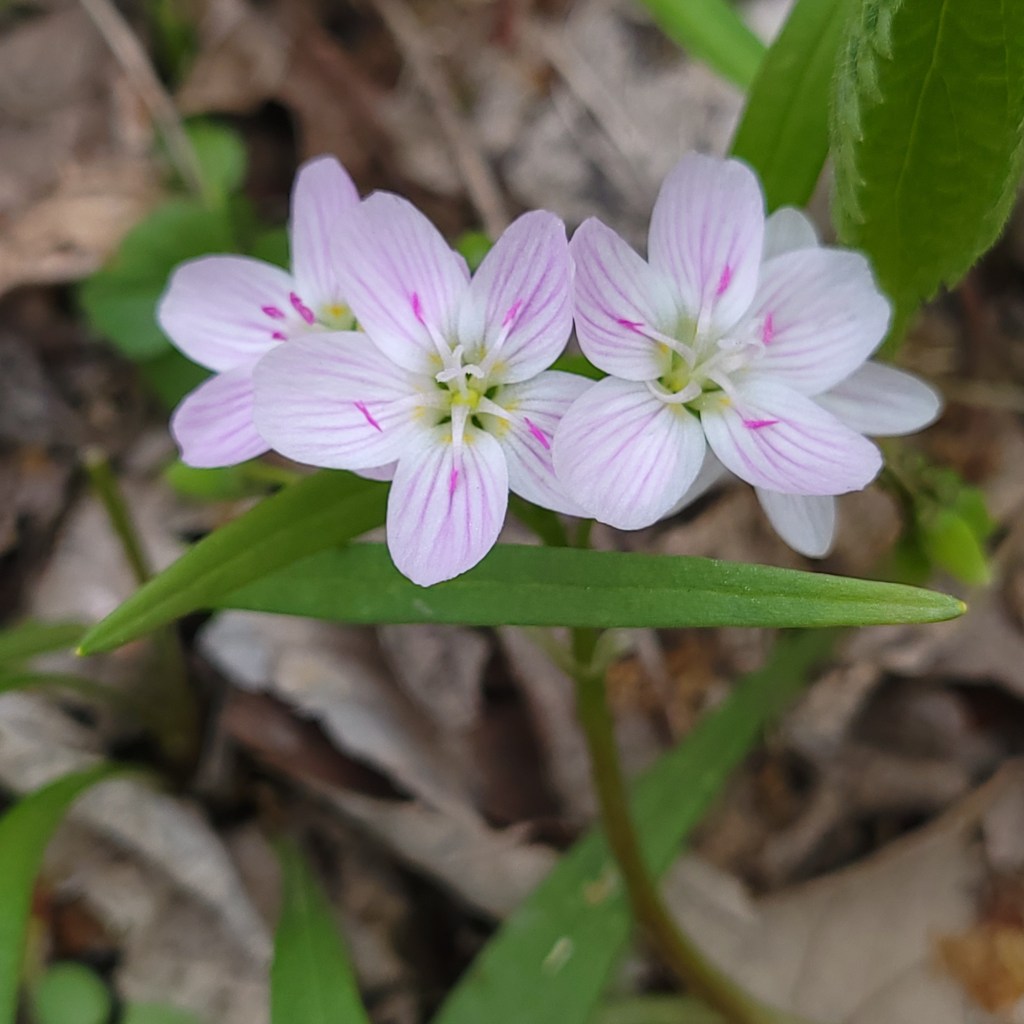
Spring Beauty 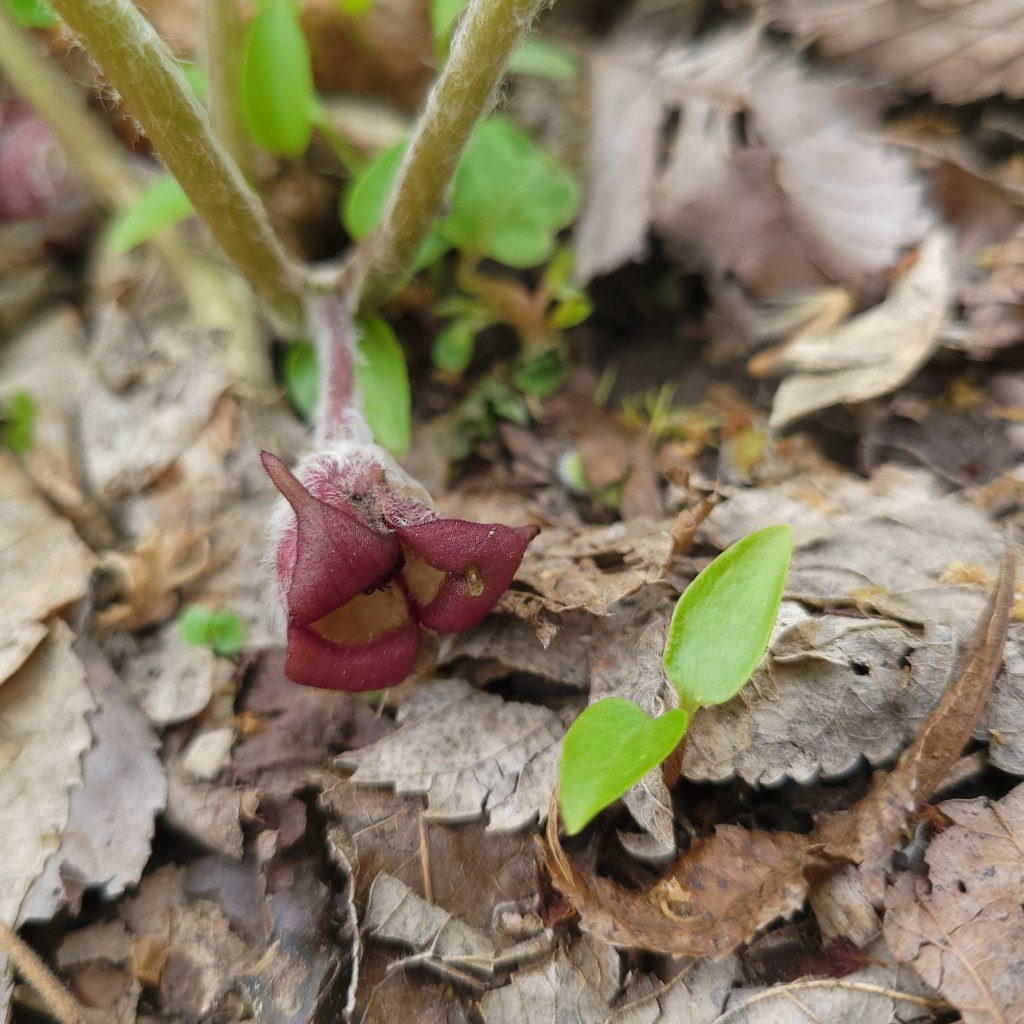
Wild Ginger These perennial wildflowers have little foliage, grow in the woods before the trees have leaves to shade the ground, and are short-lived, dying back before summer. They are often referred to as “spring ephemerals.”
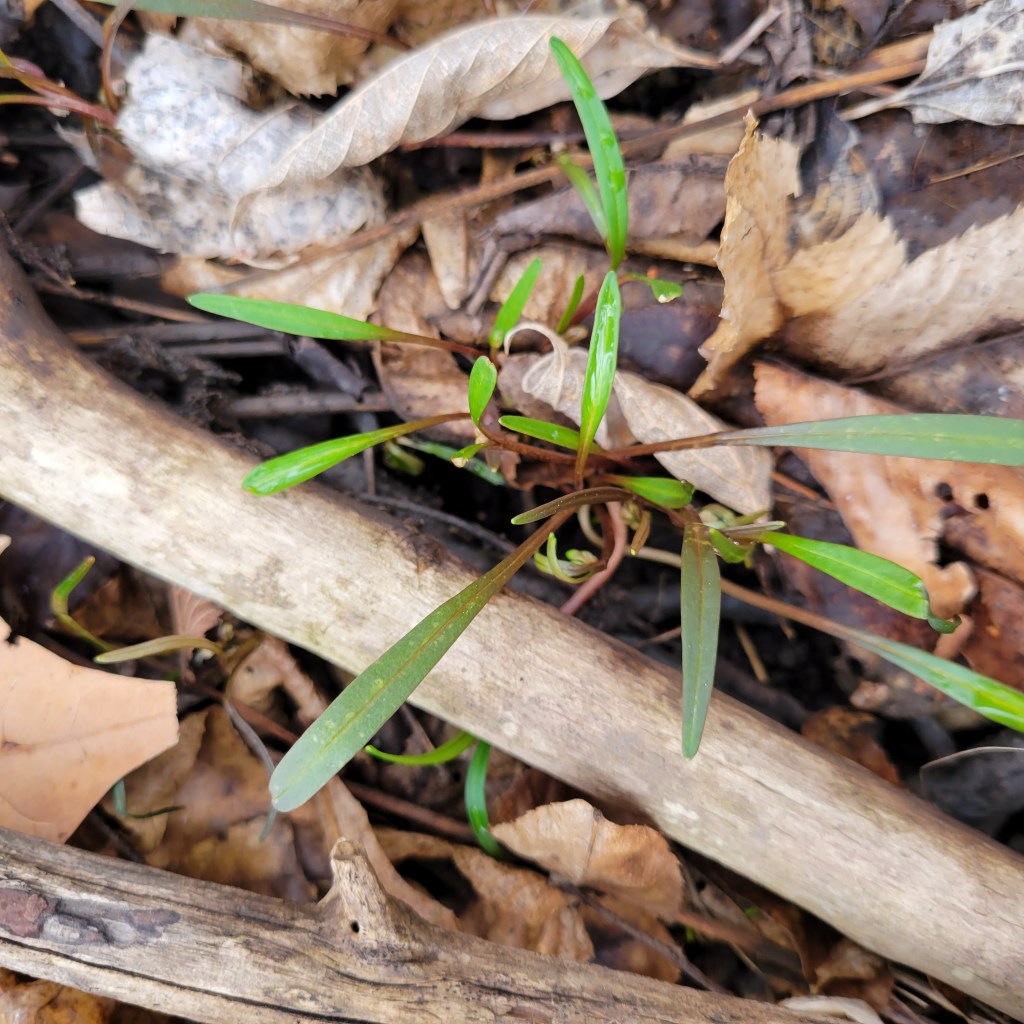
The plants are just starting to emerge. Spring Beauty is one of the earliest; I saw these leaves just yesterday.
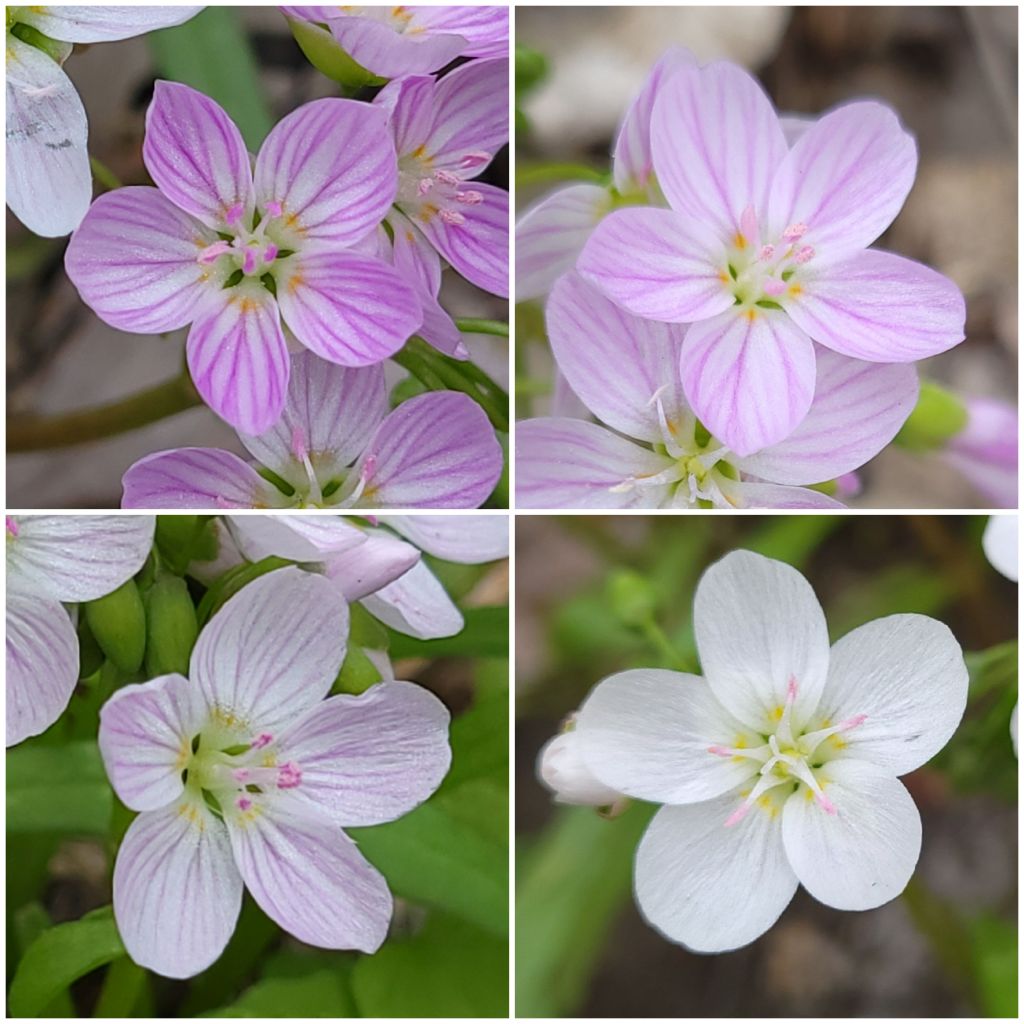
Spring Beauty is also one of the most abundant of the spring ephemerals in the park, showing several different color variations.
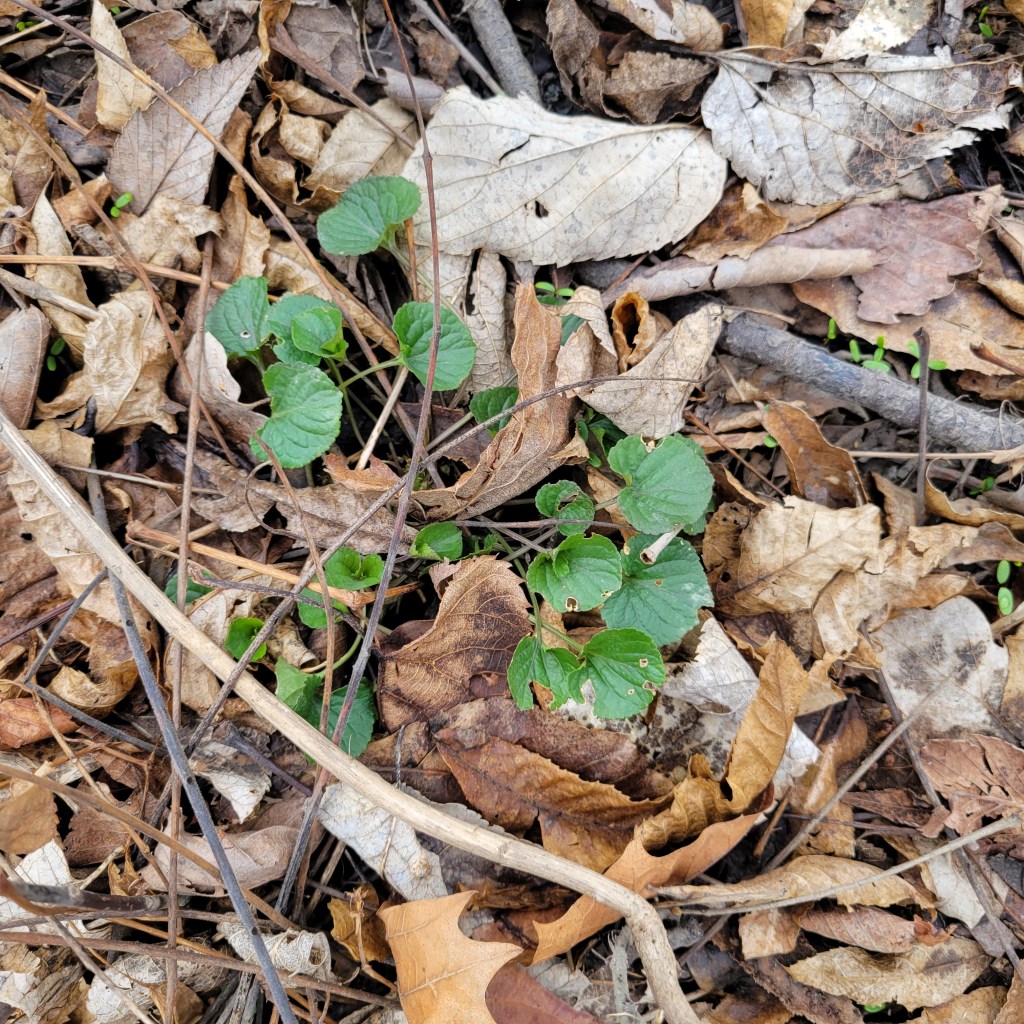
The leaves of Violets are also becoming visible.
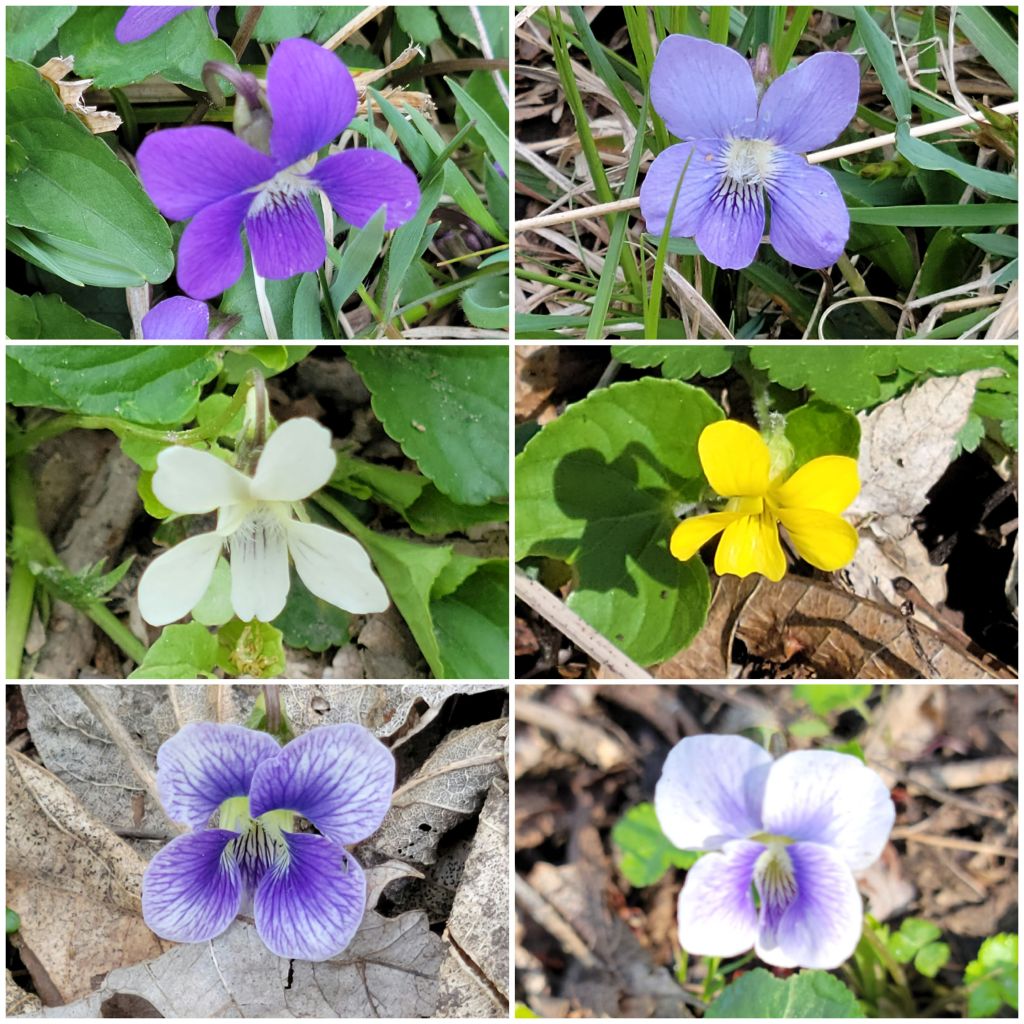
Violet is a common yard flower, often growing where it may not be wanted and not always greatly valued. But I annually find myself seeking out — and admiring — the varieties found in Eliza Howell.
I have also seen the first indication that Mayapple is emerging, the stem just starting to poke up.
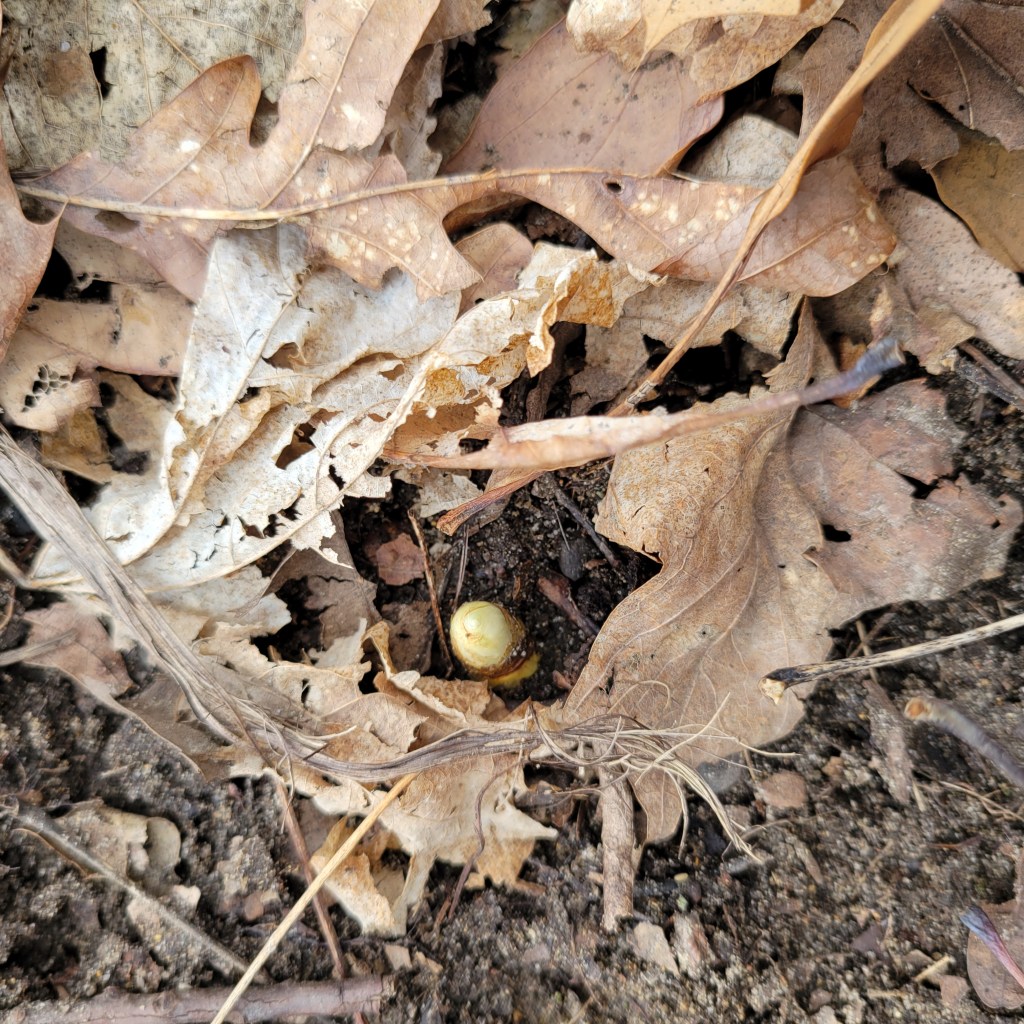
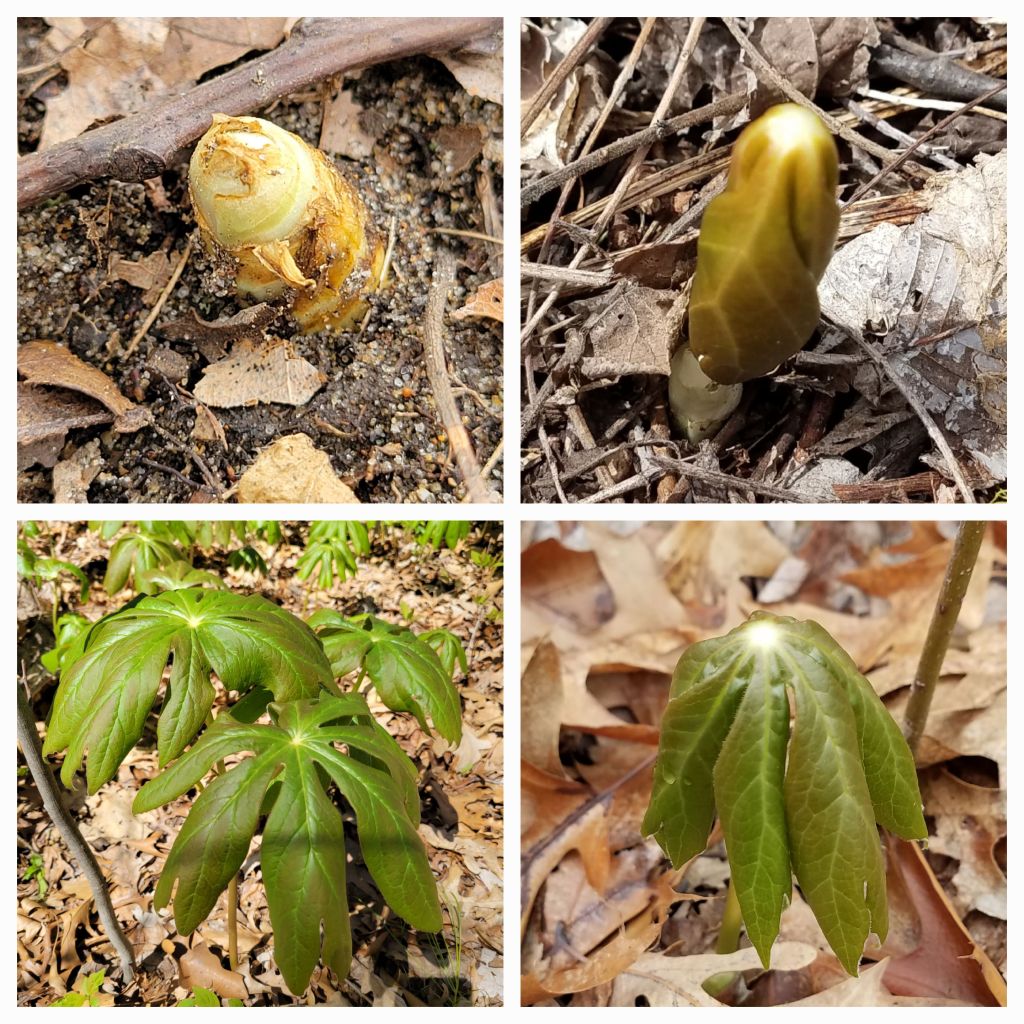
Mayapple differs from many of the other woodland spring wildflowers in that it is larger, with a lot of foliage and few flowers (which bloom in May). Mayapple is sometimes referred as the umbrella plant, and part of my enjoyment of it in April is watching the way the leaves unfurl as the plant grows.
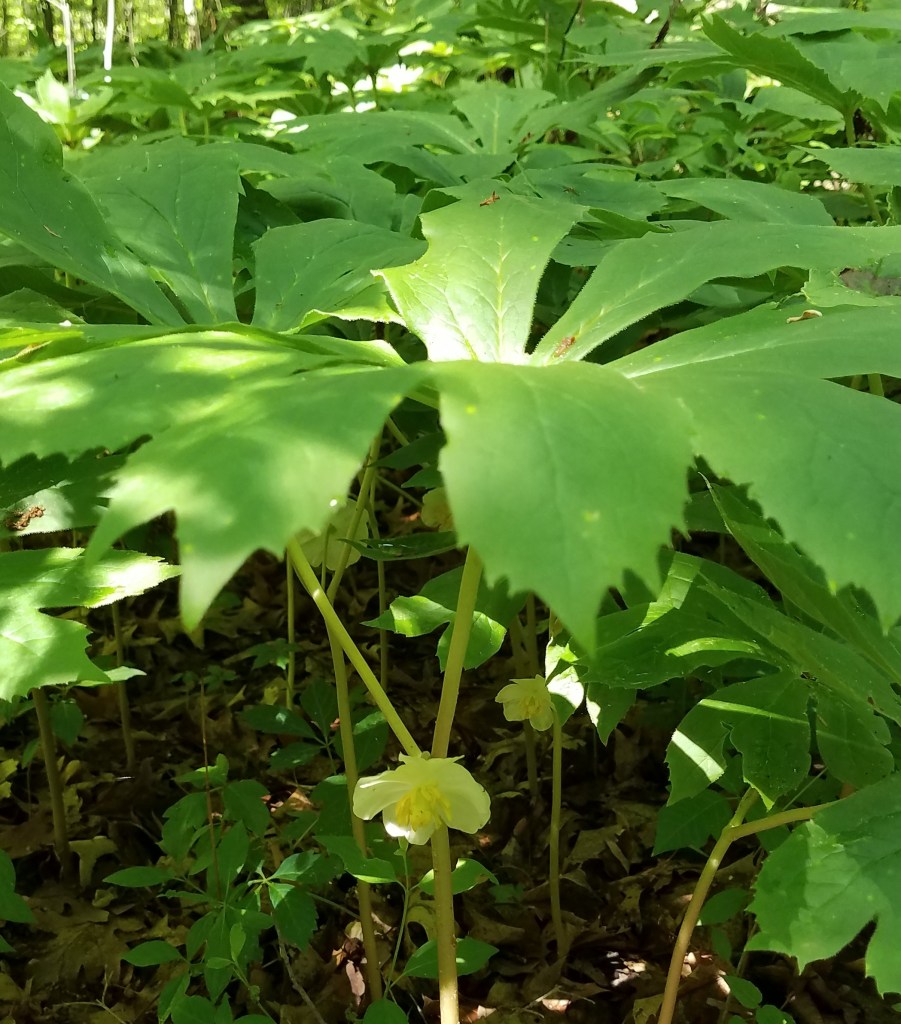
A Mayapple plant has a single flower that hangs under the leaves.
April is a time to watch for certain migrating bird species and a time to try to locate / watch early nest making.
But much of the time during the next 2 – 3 weeks I will be looking down at the forest floor as I walk: watching how the flowers are developing, how abundant common species are this year, and looking for species that are not very common here, such as Dutchman’s Breeches
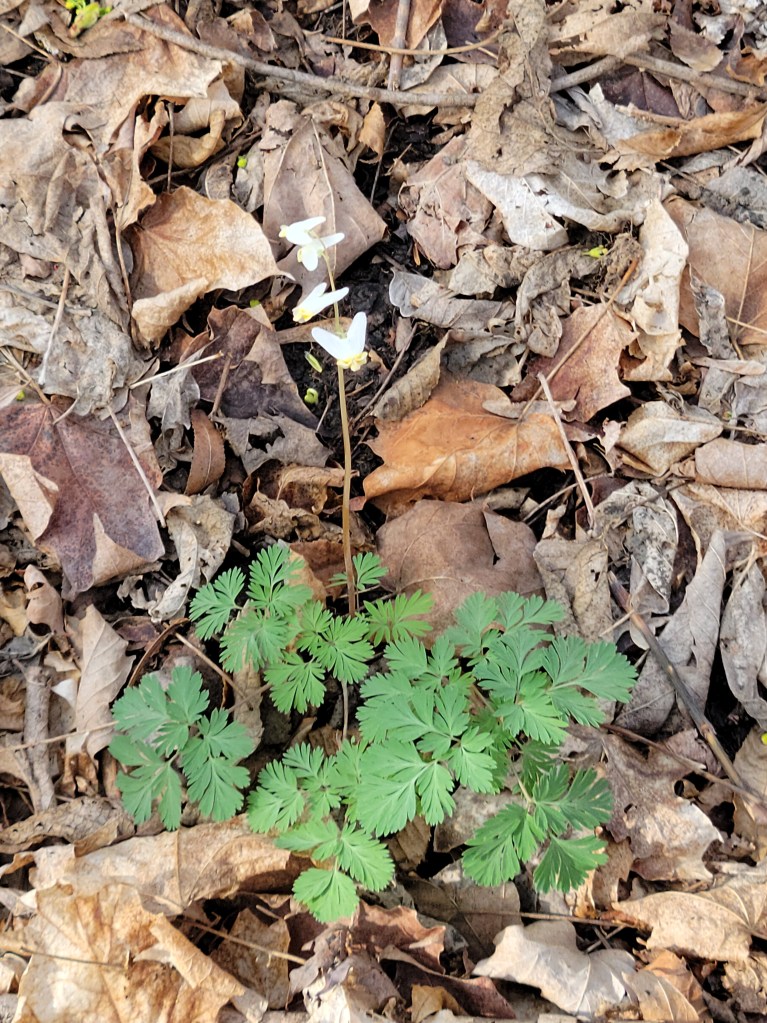
Dutchman’s Breeches An annual April highlight is watching spring woodland wildflowers — and sharing the opportunity and enjoyment with others.
-
Subscribe
Subscribed
Have a WordPress.com account? Log in now.

