-
Fruit of Horse Nettle: Attractive, Seldom Eaten
Leonard Weber
December 11, 2022
Horse Nettle is one of the few perennials in Eliza Howell Park that hold their fruit into Winter. The berries, which remind me of small yellow tomatoes, are still on the plants well into December.

Horse Nettle (also known as Carolina Horsenettle and a variety of other names) is a native species. It is not truly a nettle; rather, it is in the nightshade family. All parts of the plant are poisonous to some degree, the mature fruit probably the most so.
Horse Nettle grows 2 to 3 feet tall, often in small patches. Now that most of the the leaves have falken, the fruit clusters are easily visible. Each berry is about 1/2 inch in diameter

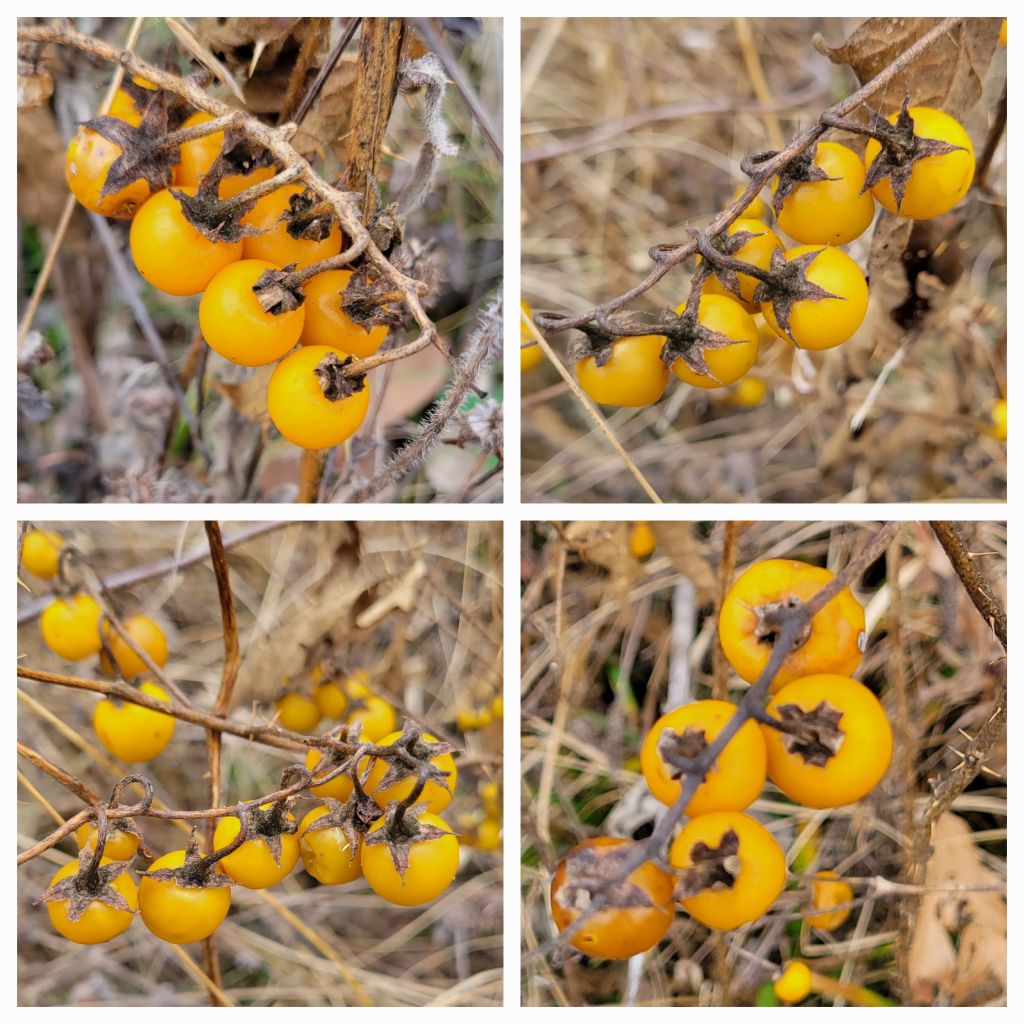
Horse Nettle is a field plant that both attracts and repels. The flowers and the fruit, both developing and mature, are quite attractive…

…but all parts of the plant are poisonous, at least to mammals. And the plant has sharp spines (perhaps the reason for being called “nettle”) that discourage browsing by livestock and other plant-eating mammals.

Reports indicate that some birds, like Ring-necked Pheasants and Wild Turkeys, eat the fruit, but I have not yet seen any evidence that animals consume the berries here. The more common fruit-eating birds (such as Robins and Cedar Waxwings and Starlings) have shown no interest.
Plants often promote the next generation by spreading seeds, using a variety of dispersal methods. The seeds of fruit-producing plants often get scattered by being eaten by animals and deposited elsewhere in scat.
Horse Nettle fruit is seedy,…
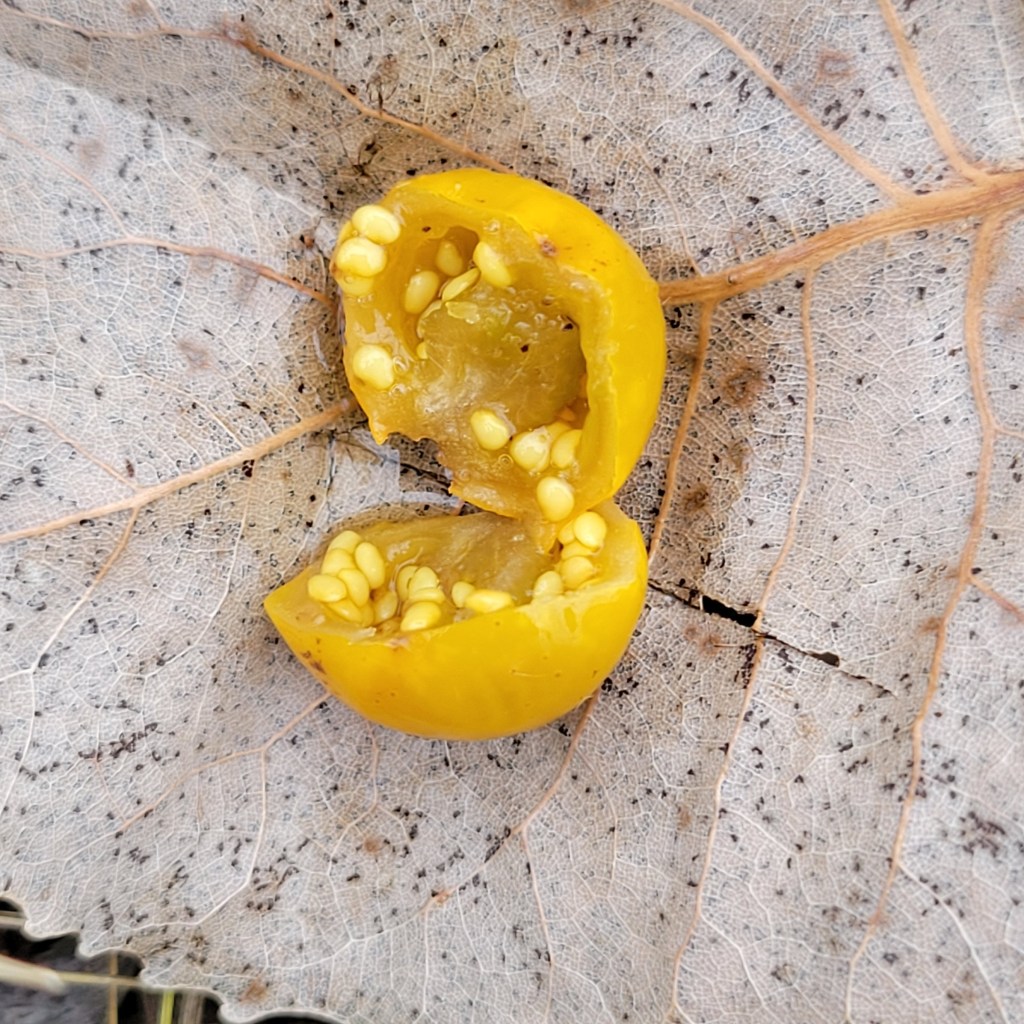
…but its poisonous nature discourages consumption of it. This species spreads primarily by underground rhizomes and by dropped fruit/seeds. So it is not a surprize that it is usually found in patches.
I am often asked whether a particular fruit is edible. The answer for Horse Nettle is clear: it is NOT.
The poisonous nature of the fruit directs attention to the fascinating methods plants have developed to produce future generations.
-
Nature in November: Eliza Howell Park 2022
Leonard Weber November 30, 2022
In Detroit, November marks the transition from Fall to Winter. Now, at the end of November, Eliza Howell Park looks and feels like Winter.
Below are a number of photos, all taken during November nature walks in the park this year. Hopefully, they will provide a sense of what can be observed here in November.
1. View from the footbridge
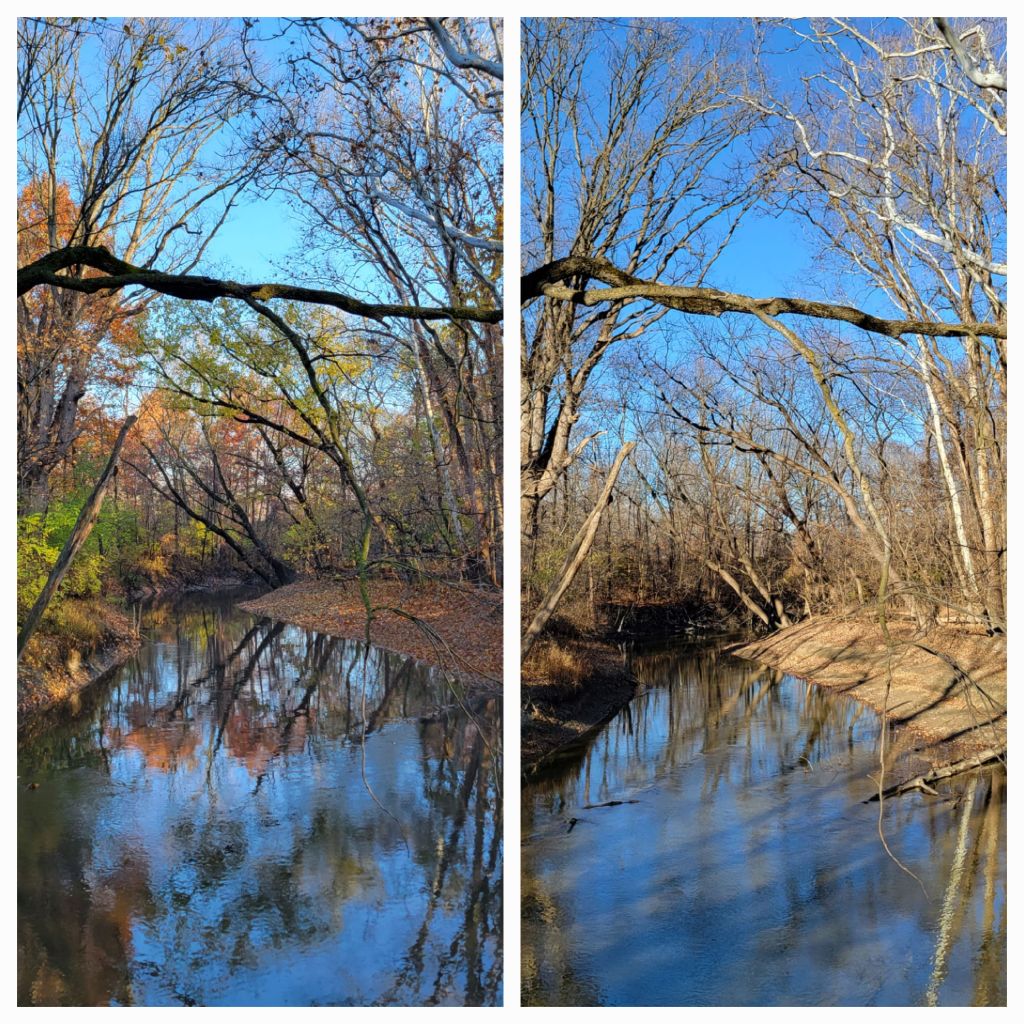
November 1 and November 26 2. The beauty of fallen leaves
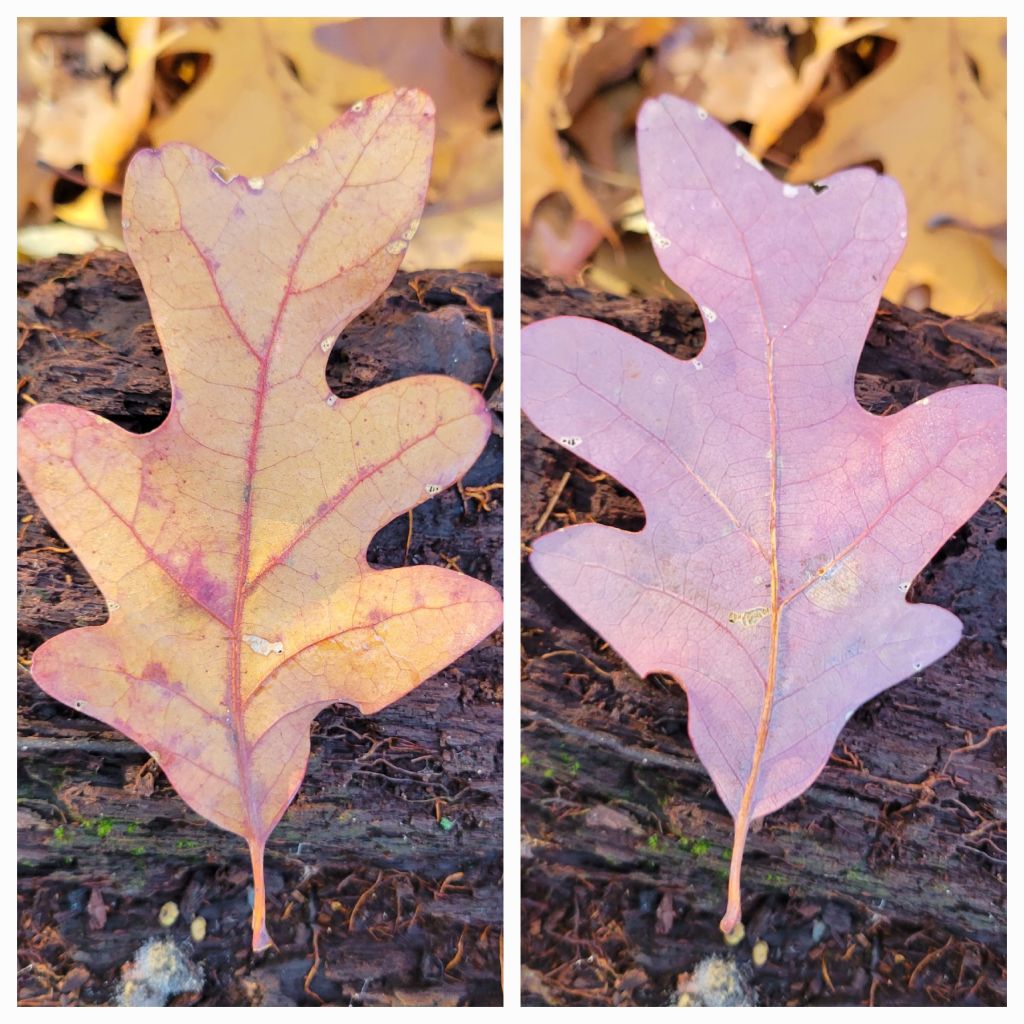
Two sides of the same white oak leaf 3. A few fruits / seeds still hanging
Note: in each of the following collages, the identification starts with top left and proceeds clockwise.
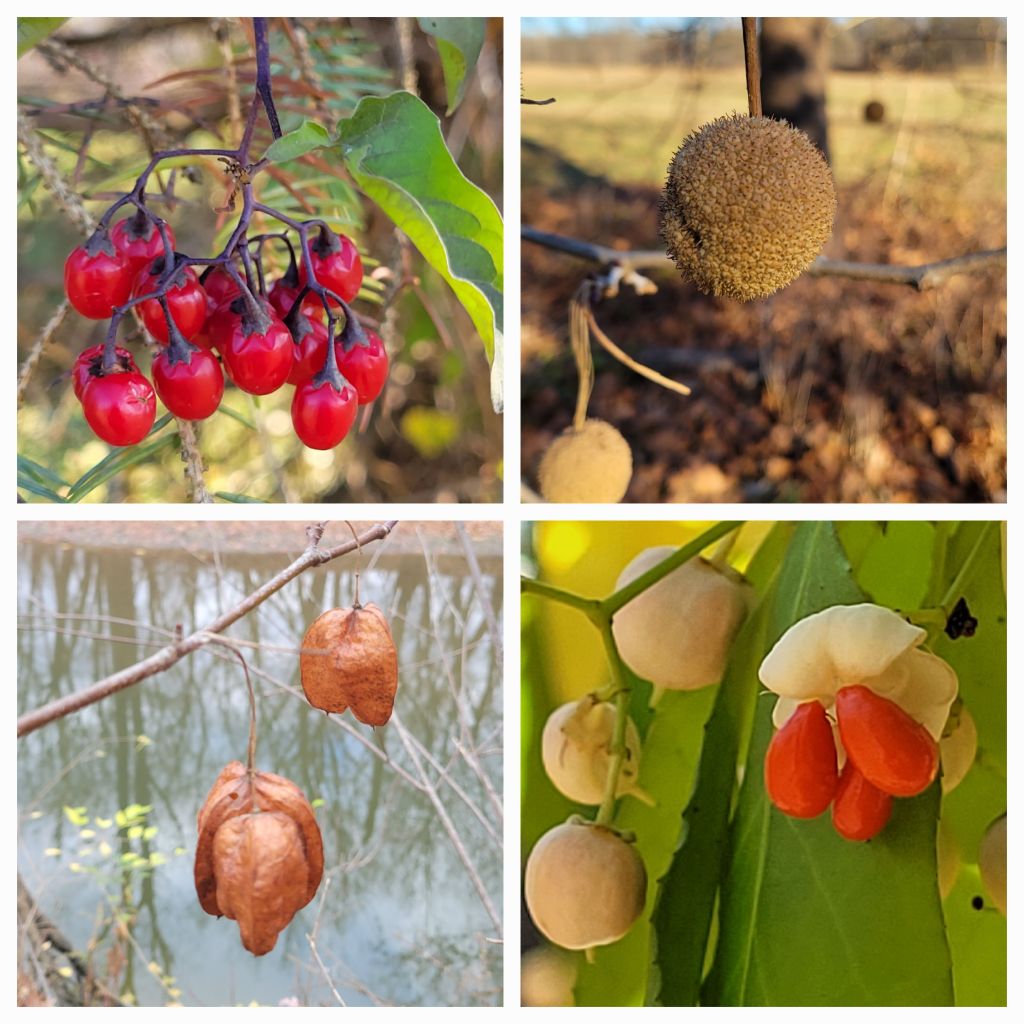
Bittersweet Nighshade, Sycamore, Winter Creeper, American Bladdernut 4. Life under woodland rotting logs
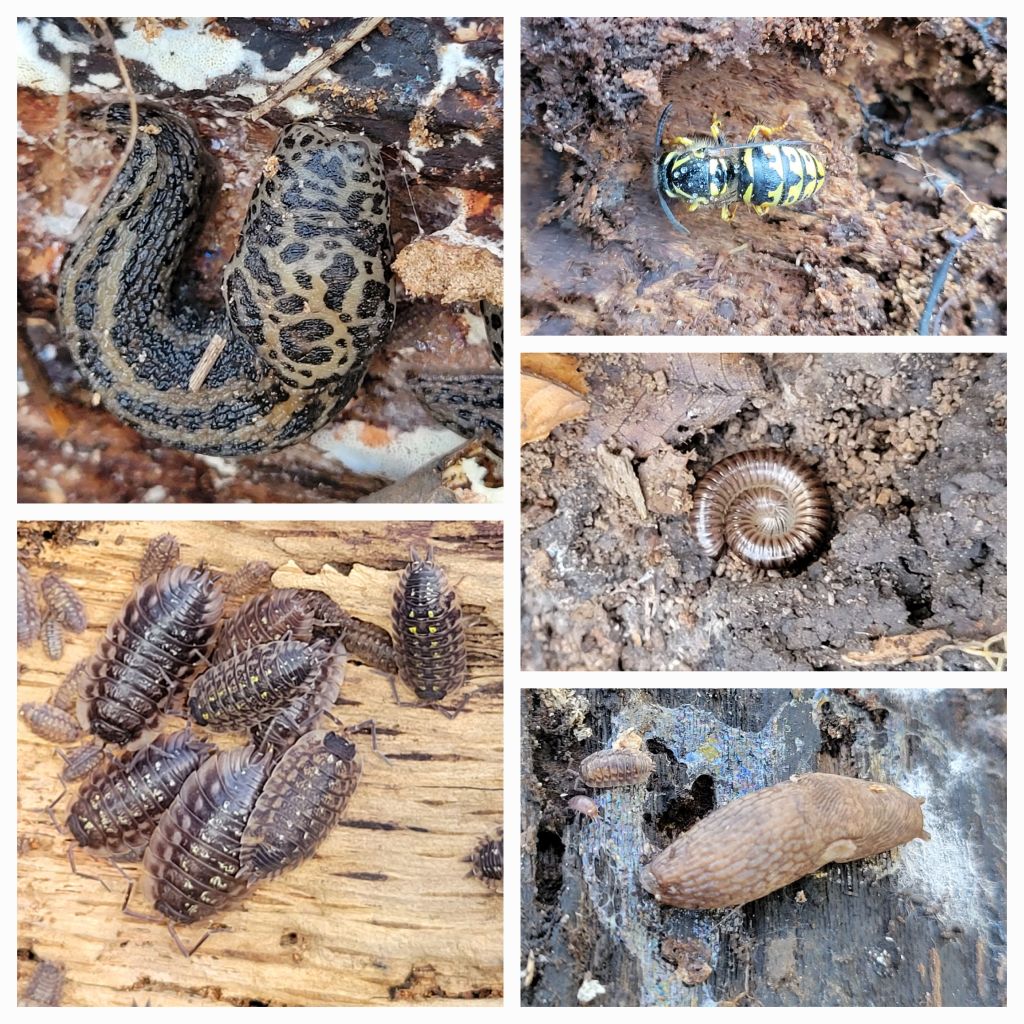
Leopard Slug, Yellowjacket queen, Millipede, unidentified slug, Wood Lice 5. Foraging Animals

Wild Turkey, Fox Squirrel, Coyote 6. Mushrooms on logs

(Identification not yet complete) 7. Mammal tracks in first snow
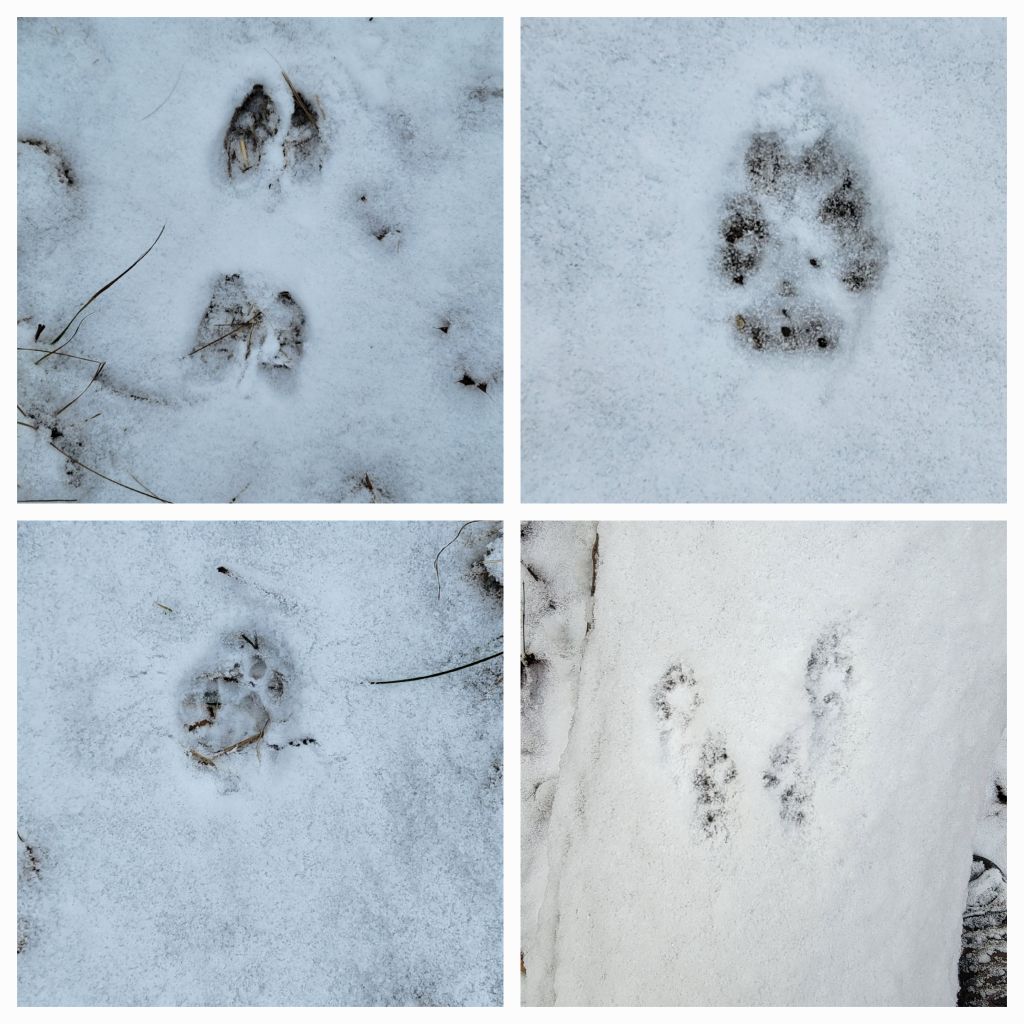
Whitetail Deer, Coyote, Squirrel, Feral Cat 8. Distinctive tree bark

Shagbark Hickory and American Beech 
Common Hackberry and Black Cherry 9. Insect Nurseries

Blackberry Knot Gall (wasp) and Praying Mantis Ootheca 10. Tree buds anticipating 2023

American Sycamore, Red Oak, Eastern Cottonwood, Shagbark Hickory Each month the walks in Eliza Howell Park provide opportunities for different observations and adventures. November has been fascinating.
Now on to December!
-
American Bladdernut: From May to November
Though it is the middke of Nivember, It is starting to look and feel a lot like Winter in Eliza Howell Park. One tree species that is more noticeable in Winter, because it retains its seeds, is a small tree known as American Bladdernut.

The seed capsules are perhaps the most distinctive aspect of this small tree or shrub. They are about 2 inches long, light and papery, and the shape has been compared to a bladder (hence the common name of the species).

I am aware of only one location in the park where these trees grow, a cluster of 20 or more of them on the riverbank, near the woodland path. I first noticed them a couple years ago, in the Winter, when the leaves were down.
Since then, I have visited the spot at different times of the year, getting to know the tree better.

Bladdernut flowers, in clusters, are present in May.
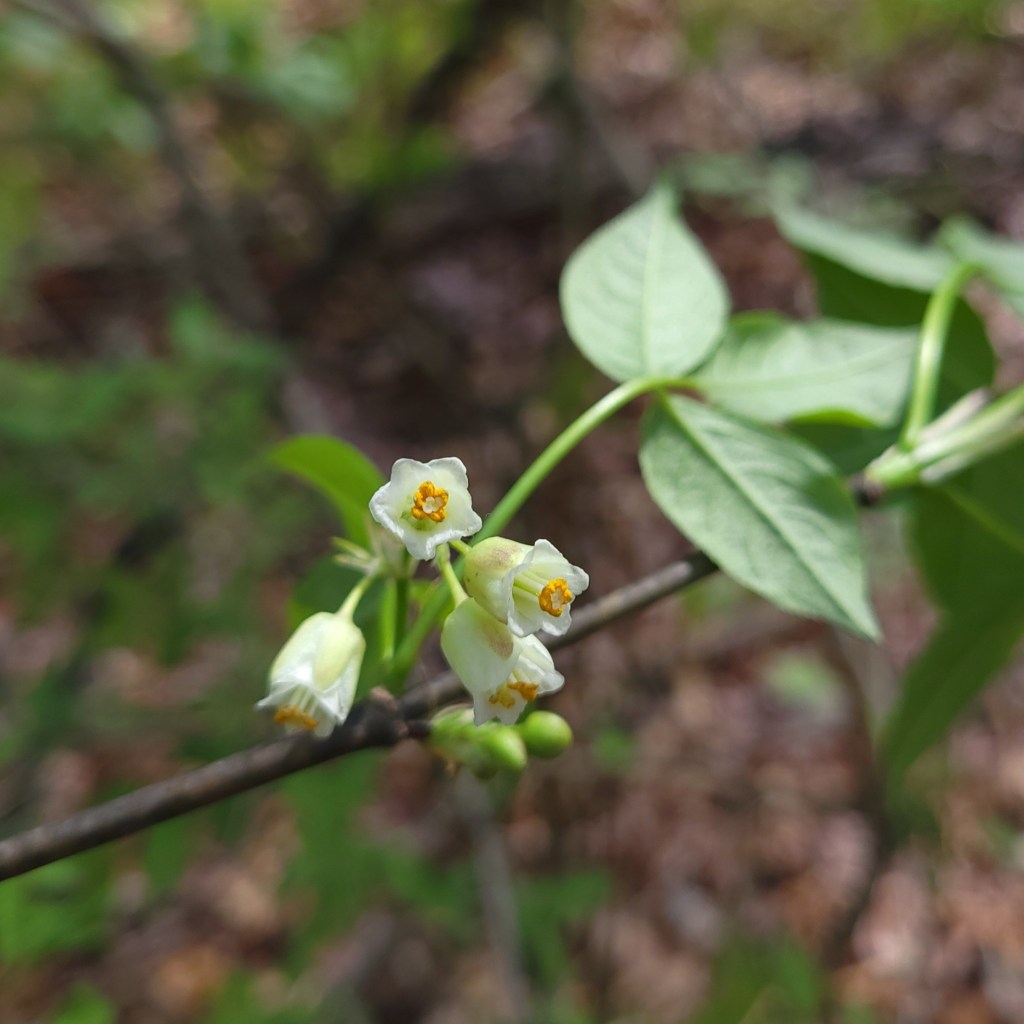
In the months since, the seed capsules have grown and gradually changed in color, just recently reaching their mature shade of brown. The seeds are abundant this year.

The capsules have three sections, each containing one or more seeds. In the Fall and Winter the seeds are loose inside the pod, sounding like a rattle when the capsule is shaken.

The seeds are about the size and shape of a popcorn kernel. They are edible, hard and crunchy.

I find Bladdernut fascinating, perhaps because I was totally unaware of it for most of my life and because it is quite unlike other trees found in Eliza Howell Park. It is native but, at least here, uncommon.
At this time of the year, the Bladdernut patch is one of the regular stops on my walks. This photo is from my most recent park visit, on November 20.
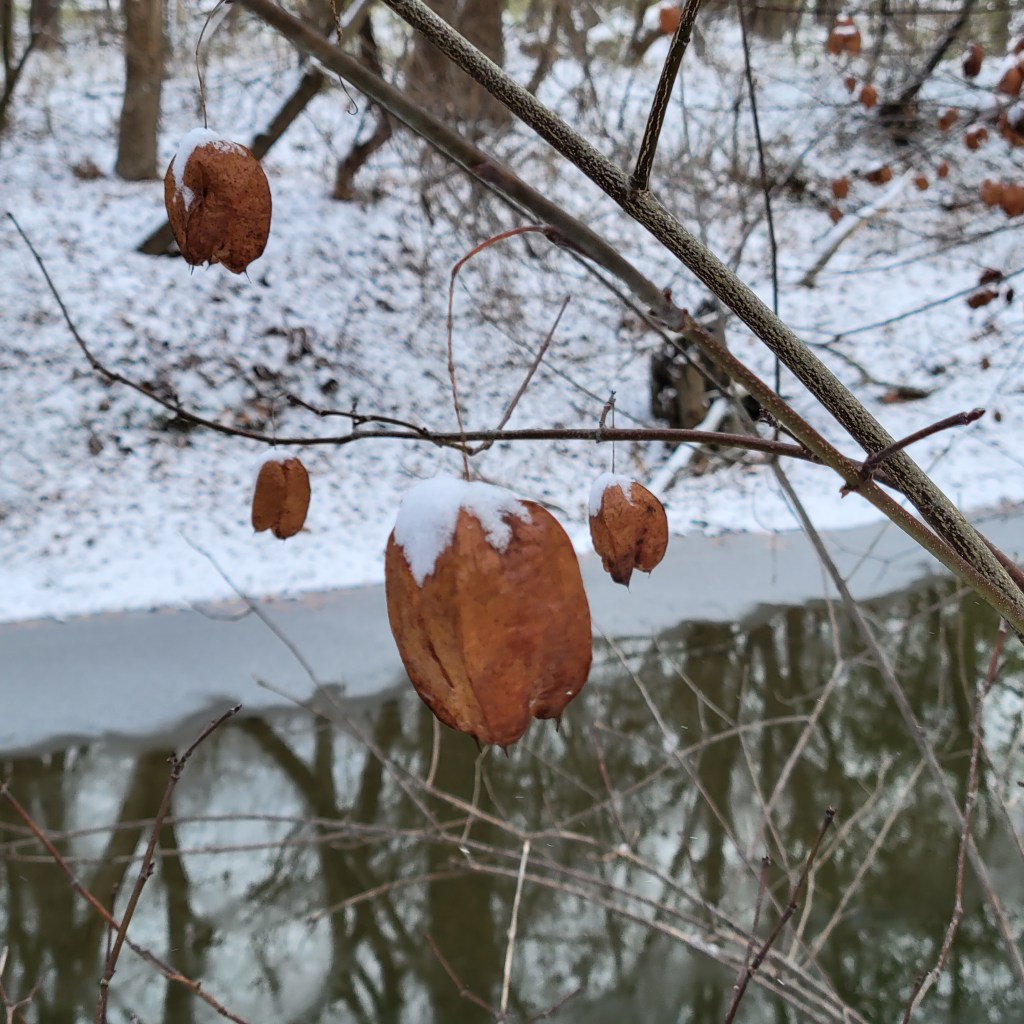
I have also begun to vary my walks, checking other areas near the river, to see if I can find another grouping of Bladdernuts. This leafless time is definitely the best time of the year to spot them.
-
Pileated Woodpecker: Juvenile Searching for a Territory of its Own?
Today, November 14, 2022, after almost 18 years of nature walks here, I saw a Pileated Woodpecker in Eliza Howell Park for the first time.
The Pileated Woodpecker is the largest woodpecker in North America — unless the Ivory-billed Woodpecker still exists somewhere in a southern swamp. It is 16 – 19 inches in length with a wingspan of about 30 inches. With its size and bright red crest, it is a striking bird.
This photo is from another Michigan location.

Photo by Margaret Weber Pileated Woodpeckers are found to the south of us, to the north, to the east, to the west, but Detroit is in one of the areas where they are normally absent. Note the white spots on range map from the Cornell Lab of Ornithology.
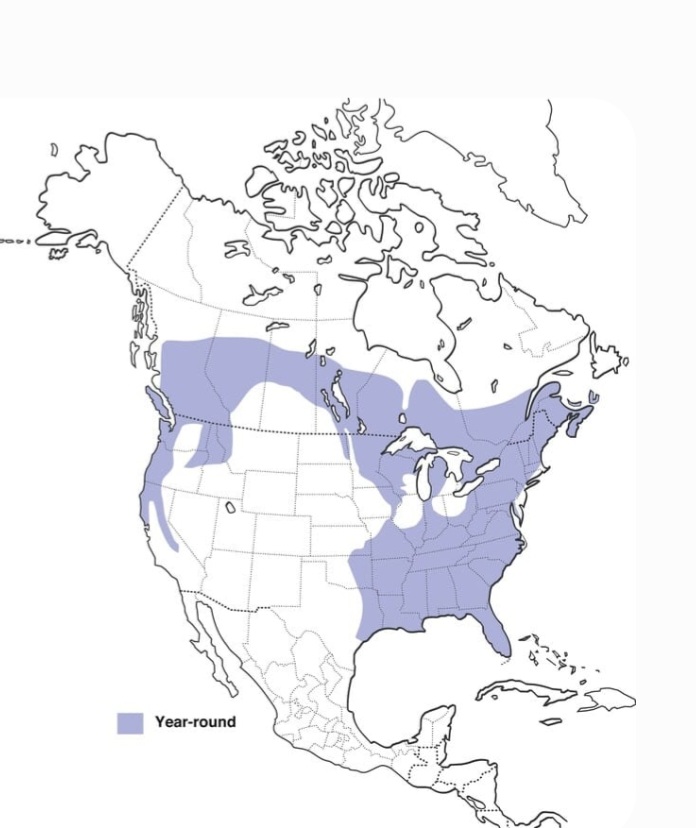
When I got a glimpse of a bird that showed red and black and white disappearing behind the trunk of a large tree, I immediately thought woodpecker, but wasn’t sure which species. Soon it flew, chased by robins, and there was no doubt.
Since bird watchers are often asked to document sightings of unusual birds, I grabbed my phone when it stopped on a limb some distance away. The bird is so distinctive that even this poor photo can serve as verification that a Pileated visited EHP.

Pileated Woodpeckers eat berries on occasion and the robins that were chasing this one away appeared to be protecting their Honeysuckle berry food source.
Much more frequently they search for insects, often making large holes in trees, especially dead wood. Carpenter Ants are a favorite food.

Photo by Margaret Weber Pileated Woodpeckers stay with the same mate for life and remain in the same large territory year-round. The young stay with the parents until the Fall, when the juveniles go out on their own, to find their territory and a mate.
So I am not surprised that my first sighting of a Pileated here is in the Fall. This is one bird species whose numbers appear to be increasing and places like Eliza Howell, with a substantive wooded area with large inviting trees and no resident pair, may very well attract a juvenile looking for a place of its own.
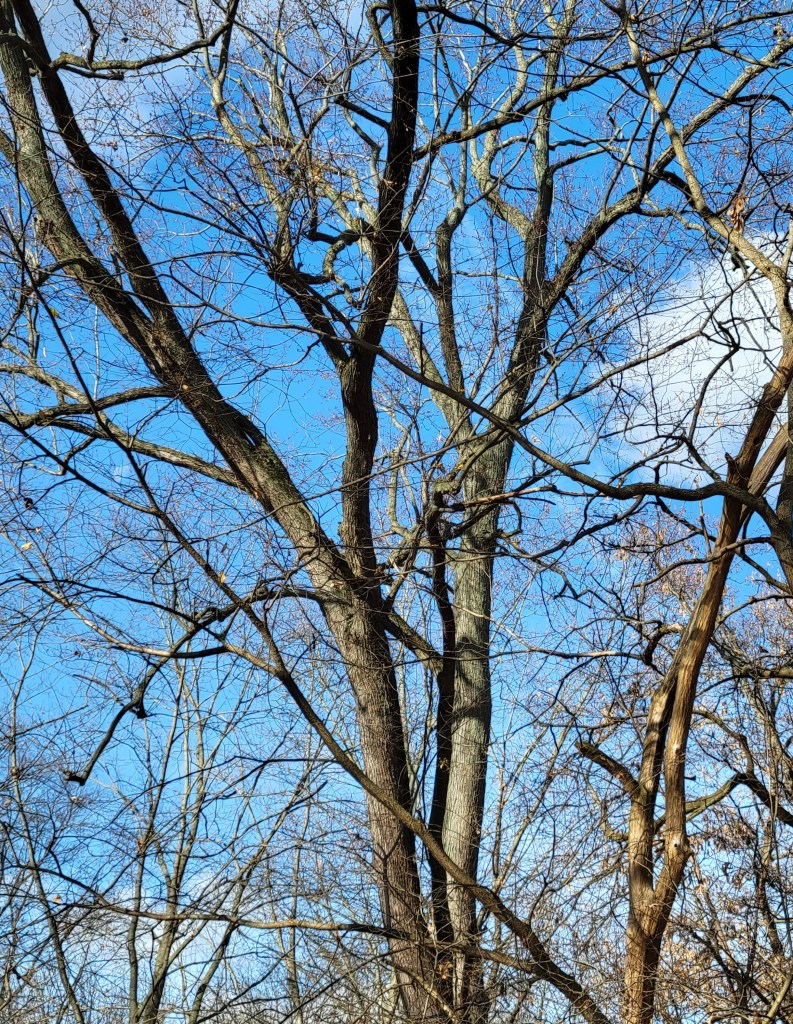
I do not know definitely that today’s bird was a juvenile, but it seems reasonable to think so. In which case, it may continue to search further. Or it may decide to stay in this area, with Eliza Howell being part of its new territory.
I will be watching!
……
A footnote: When I recorded today’s find, I checked a couple numbers. Pileated Woodpecker is the 157th bird species that I have identified in Eliza Howell Park. And I spotted it on the 2095th walk during which I have listed the birds seen.
-
A Walk in the Woods: An Invitation and a Preview
November 17 is National “Take a Hike” Day. This seems like a good occasion to offer a Walk in the Woods in Eliza Howell Park. Our “hike” will be a leisurely nature walk.

A mid-November walk provides an opportunity to observe things that often get missed or ignored when the leaves are on the trees.
The entrance to the largest section of park woodland is a colorful footbridge over the Main Branch of the Rouge River

Tree trunks stand out at this time of the year, calling attention to the great variation of species and of size. The next photo is of a large American Beech. The young beeches at its base gradually lose their leaves in November.
There is a formula for estimating the age of trees (based on the diameter of the trunk) that we can use on one of these trees during our walk. Some trees in this woodland were growing here before Michigan became a state.
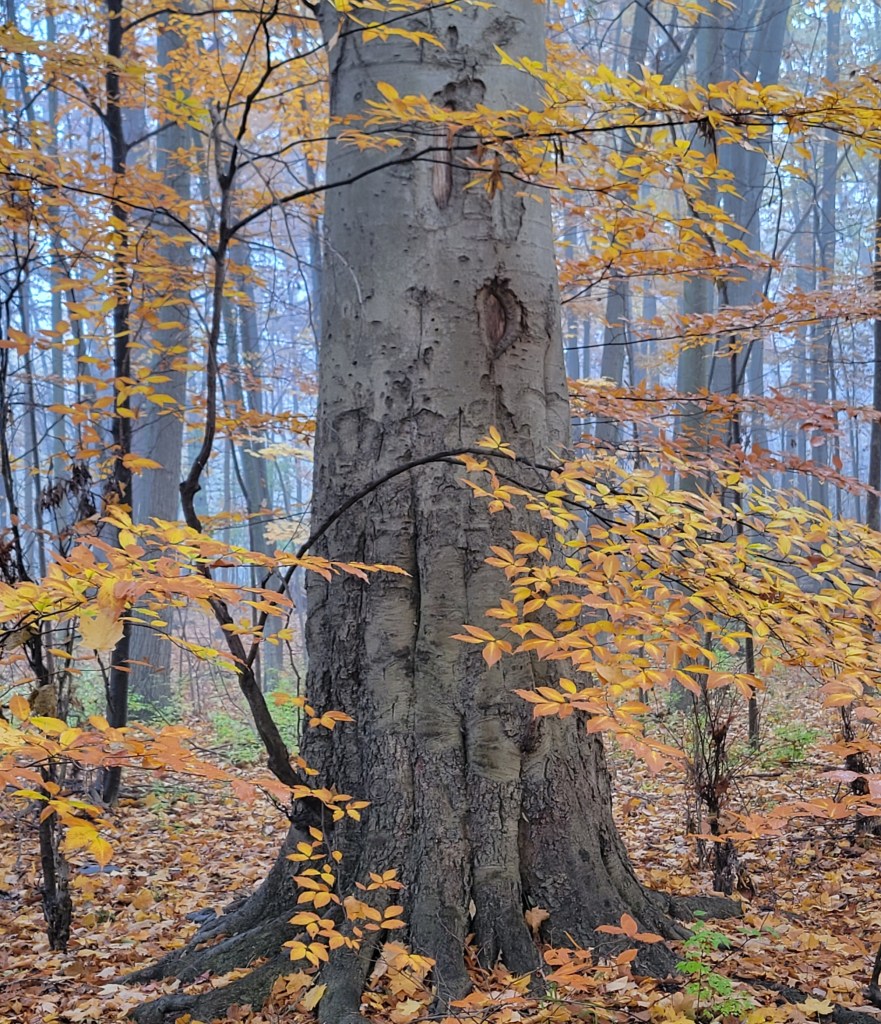
American Beech November is also a good time to observe the variety of squirrels in the park. They are foraging during most of the daylight hours (which are getting increasingly limted).
There are three species of tree squirrels in Eliza Howell, though it might look like there are four. The Eastern Gray Squirrel can be either gray or black. In most parts of the United States, the gray morph is much more common than the black morph. The opposite is true here.

From top left, clockwise: Fox Squirrel, Gray Squirrel (gray morph), Gray Squirrel (black morph), Red Squirrel Many visitors to the park have never had the opportunity to see Bladdernuts. There is one patch of Bladdernut trees close to the river path and this is a good time to stop and get introduced.
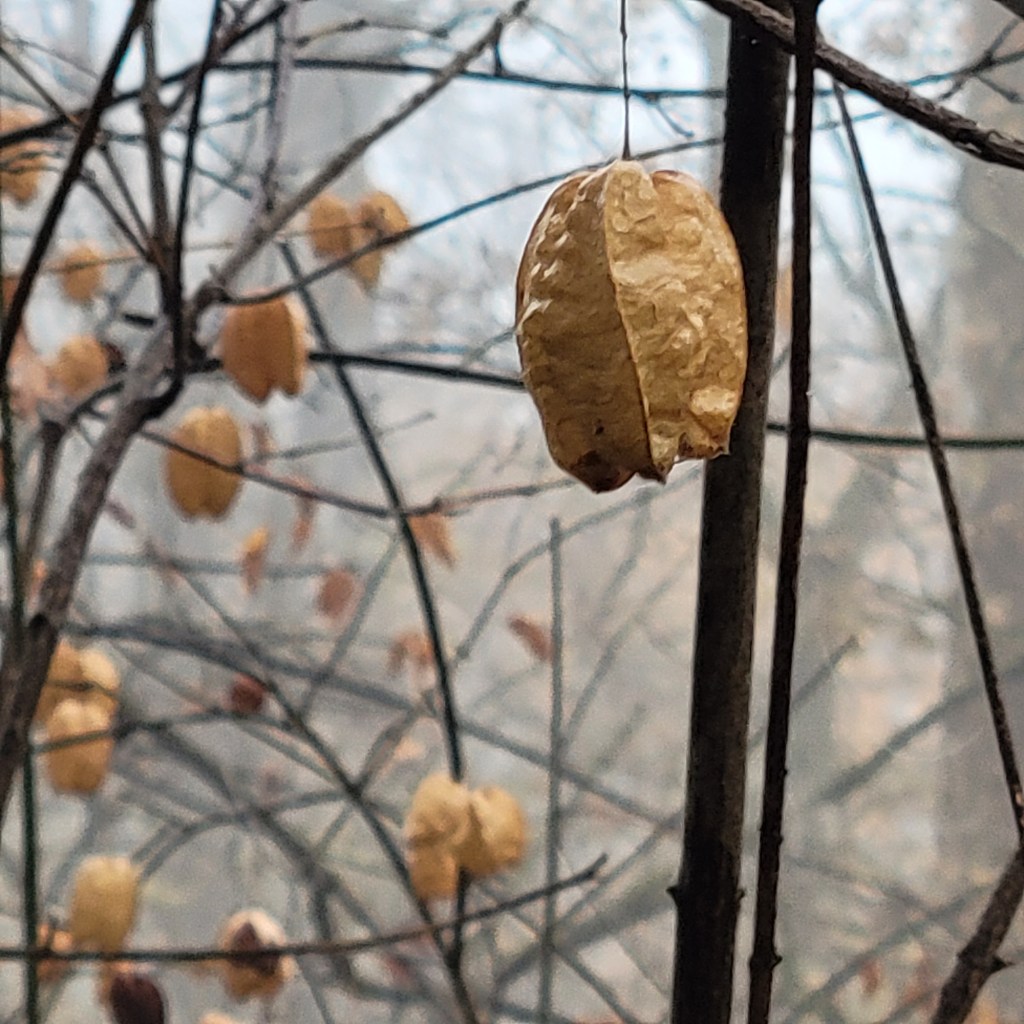
Bladdernut As I walk the woodland path in the Fall, I often stop to examine logs on the ground, looking for mushroons that grow on the dead wood. They come in various sizes and shapes and colors and have an important role in decomposition, speeding up the breakdown of dead wood.

Black-footed Polypore
(identification not confirmed)The river path can be walked both upstream and downstream from the footbridge. Near the end of the path downstream, there are some climbing vines with evergreen leaves and late-ripening berries (Winter Creeper Euonymus), easily missed in the summer but very visible in November.
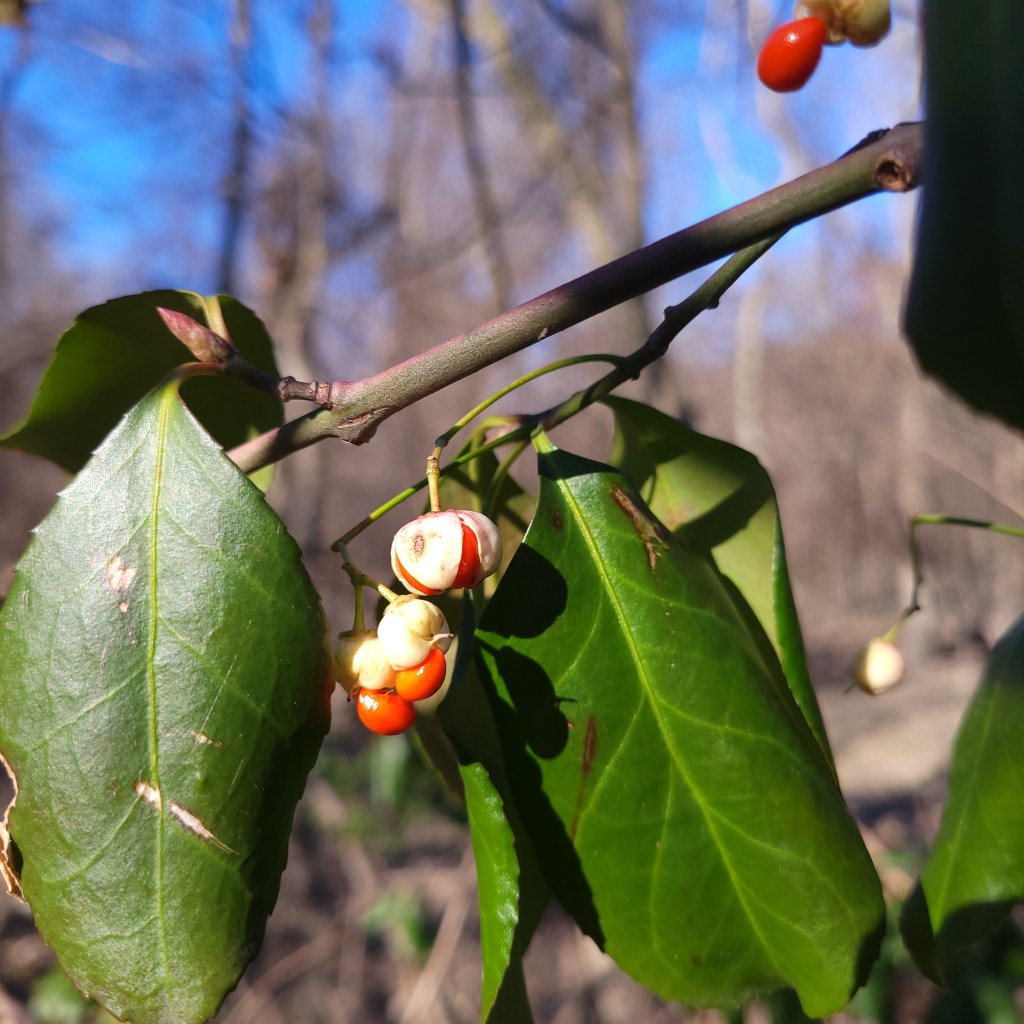
Winter Creeper Euonymus The leafless forest also provides great opportunity to examine a variety of vines that climb trees. Even with the absence of leaves, it is often possible to identify the vine species by the bark or by the method is uses to climb.

Virginia Creeper Kathleen Garrett and I will be the guides on this walk. Persons of all ages are welcome.
We will meet at 10:00 a.m. and spend an hour and a half to two hours walking the woodland path, stopping frequently. Total distance covered will be less than 2 miles.
For more information or to sign up, please email
-
A Frosty Blackberry Morning
On cold sunny mornings in the Fall, I look forward to the first hour in Eliza Howell Park. I try to get there before the frost melts.

Recently I have been trying to learn more about Blackberry Knot Galls (where wasp larvae are developing — more on this in a forthcoming post), so today I headed immediately to a gall-laden blackberry patch. Each gall, exposed now that leaves have fallen, was touched with frost crystals.

Blackberry Knot Gall 
The leaves that do remain on the blackberry canes were also decorated with frost.
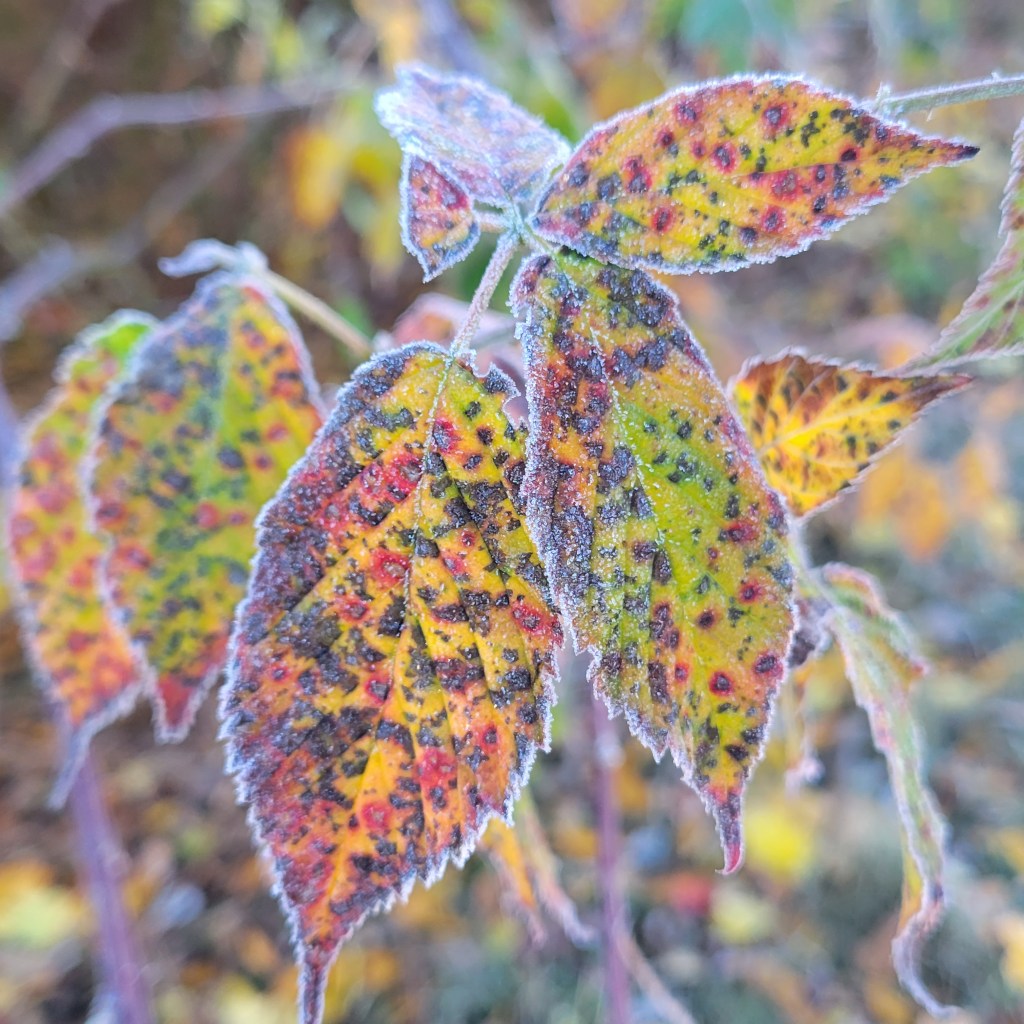

Blackberries are, of course, known for their thorns. The frost did not ignore them.

Soon the frost started to melt (and the first Fox Sparrow of the Fall migration led me to refocus my attention!). So I moved on from the blackberries, with deep appreciation for a wonderful frosty start to the day.
-
Red Oaks and White Oaks — and a Halloween Reminder
During the second half of October, my attention is often on tree leaves during my walks in Detroit’s Eliza Howell Park. Recently I collected a leaf each from some of the oak trees that grow in the park and made a small photo collection.
Oak leaves rarely have brilliant Fall colors. My attention is, instead, on the variety of oaks present.

There are dozens of different oak species native to Eastern North Anerica, but it is usually not necessary to know the precise species of an individual tree. As long as I can accurately place it in one of the two major groups of North American oaks (the Red Oaks and White Oaks), I know quite a lot about the tree.
The differences between the Red and White families are significant and more important than the differences from one species to another within a group.
* The acorns of White Oaks mature in one growing season and germinate in the Fall. Red Oak acorns take two years and germinate in the Spring.
* Deer reportedly prefer eating White Oak acorns; Wood Ducks prefer Red Oak acorns. In Eliza Howell Park, the Blue Jays I watch harvesting acorns spend most of their time in Red Oak trees.
* Red Oaks grow faster than White Oaks; White Oaks grow larger and live longer.
* Both Red Oak and White Oak are hardwoods, with White Oak rated a little higher on the hardness chart.
One way of identifying whether an individual tree is in the Red Oak or the White Oak group is by the bark. White Oak bark has more furrows and ridges than Red Oak.

Bur Oak (a White Oak) 
Pin Oak (a Red Oak) Here are the same two trees, placed side by side.

White Oak on left; Red Oak on right Most people, definitely including myself, tell the difference by the leaves. The leaves of White Oaks typically have smooth or rounded edges on the lobes. Red Oak leaves usually have pointy tips at the end of the lobes.
The 8 leaves in the next two collages are from trees that I would identify as White Oaks.


The above can be compared to the leaves of Red Oaks — the next 2 four packs.
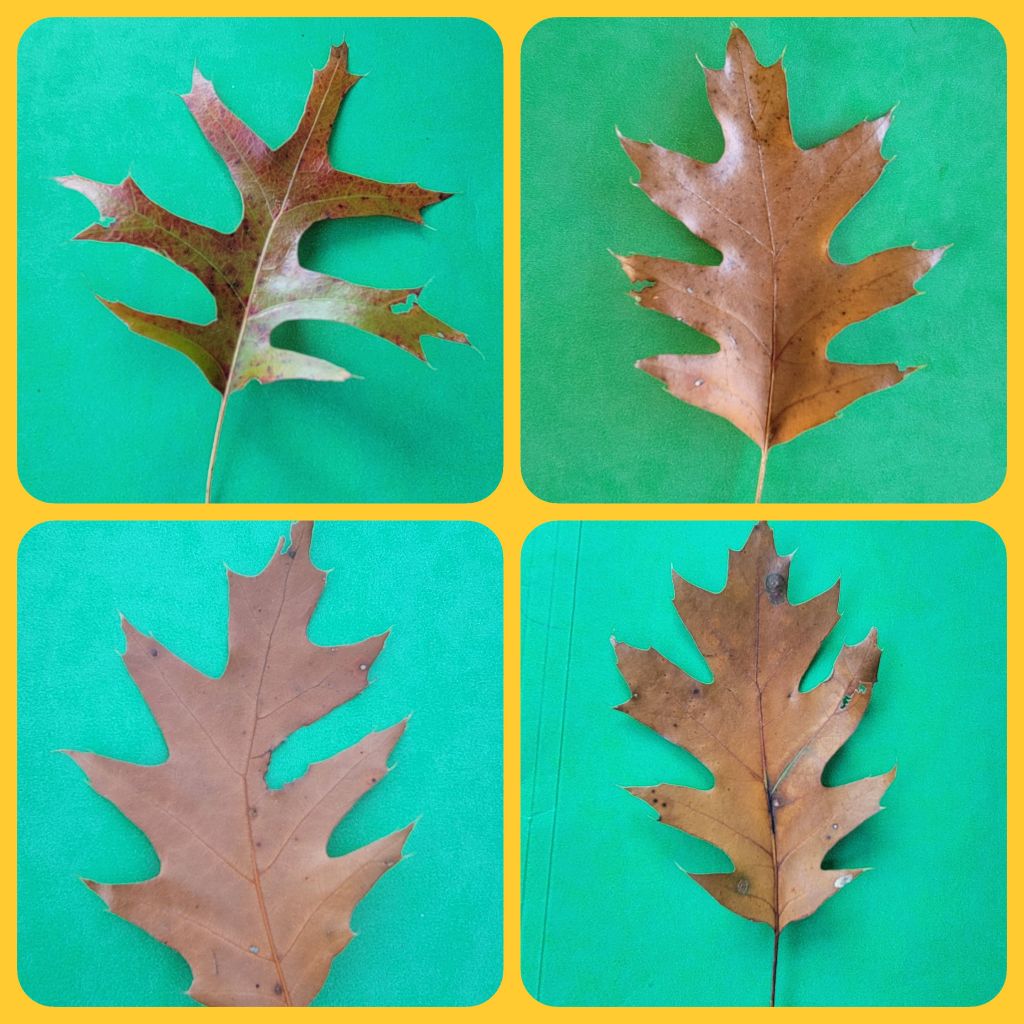

Distinguishing between the two types of oaks by leaves is much easier, in my opinion, than by the bark. The simple question is whether the lobes are pointed or more rounded.
On different occasions in the last several years, individuals on nature walks have indicated that they knew that the leaves of one oak group were pointed and that the leaves of the other were not, but that they didn’t remember which is which!
While thinking about a memory aid that I could suggest two years ago at this time of the year, I walked past Halloween decorations in a neighborhood yard, decorations that included a graveyard symbol.

When trying to remember which oak group has pointed leaves, one can think of this Halloween symbol. For tree identification purposes, “R I P” means “Red is pointed. ”
If leaves are present, most oak species can fairly easily be identified as either Red or White. Of course, a general guideline is a just a general guideline. There are exceptions.
Here are two species in Eliza Howell that required that I identify the species first before I could know the group.

Shingle Oak – a Red Oak 
Chinkapin Oak – a White Oak “Oak” is a type of tree that most of us hear about early in life and have some basic familiarity with. But, as with so much else that one encounters on repeated nature walks, there is always more to learn and appreciate.
-
Greenbrier: The Vine and the Red-seeded Fruit
The leaves of most plants in Eliza Howell Park are changing color and falling now that we getting deeper into October. One of the exceptions is Greenbrier, a native vine, uncommon in the park. The leaves will remain green until winter — and many of the stems stay green throughout the winter.

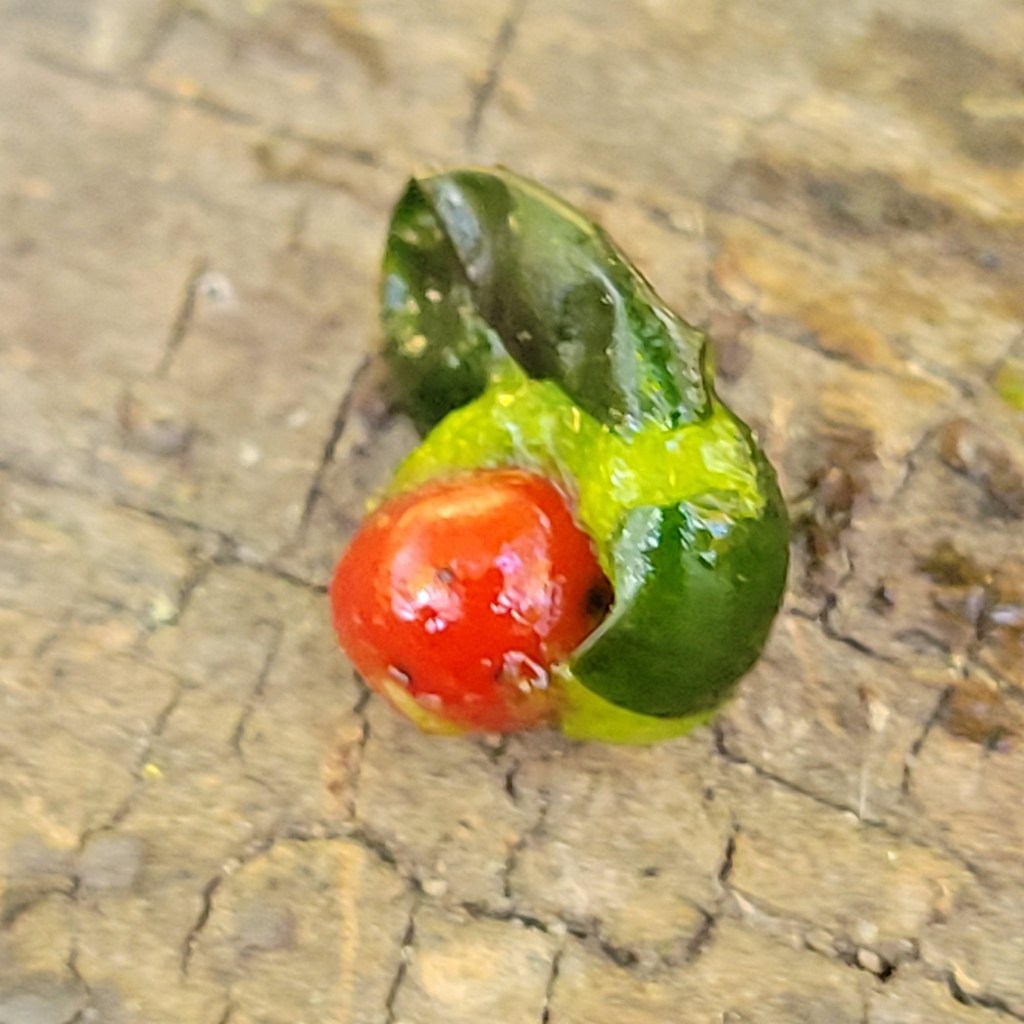
Greenbrier chatches my attention in October prinarily because of the fruit. Though the berries are usually described in the published descriptions as bluish black when ripe, they tend to retain a definite green look here.

There are different species of Greenbrier. The Eliza Howell species is, I think, Bristly Greenbrier. One indication is the fact that the lower stems have short spires.

Greenbrier is a vine that climbs by using tendrils to attach itself to the limbs of other plants (or to other Grernbrier branches). It is a very effective climber, easily capable of rising over 10 feet.


I am familiar with only a couple Greenbrier patches in Eliza Howell; they are close to the riverbank, but not to one another. It is a dioecious plant (male and female plants are separate) and there is only one location where I find a female producing fruit. I stop there frequently at this time of rhe year.

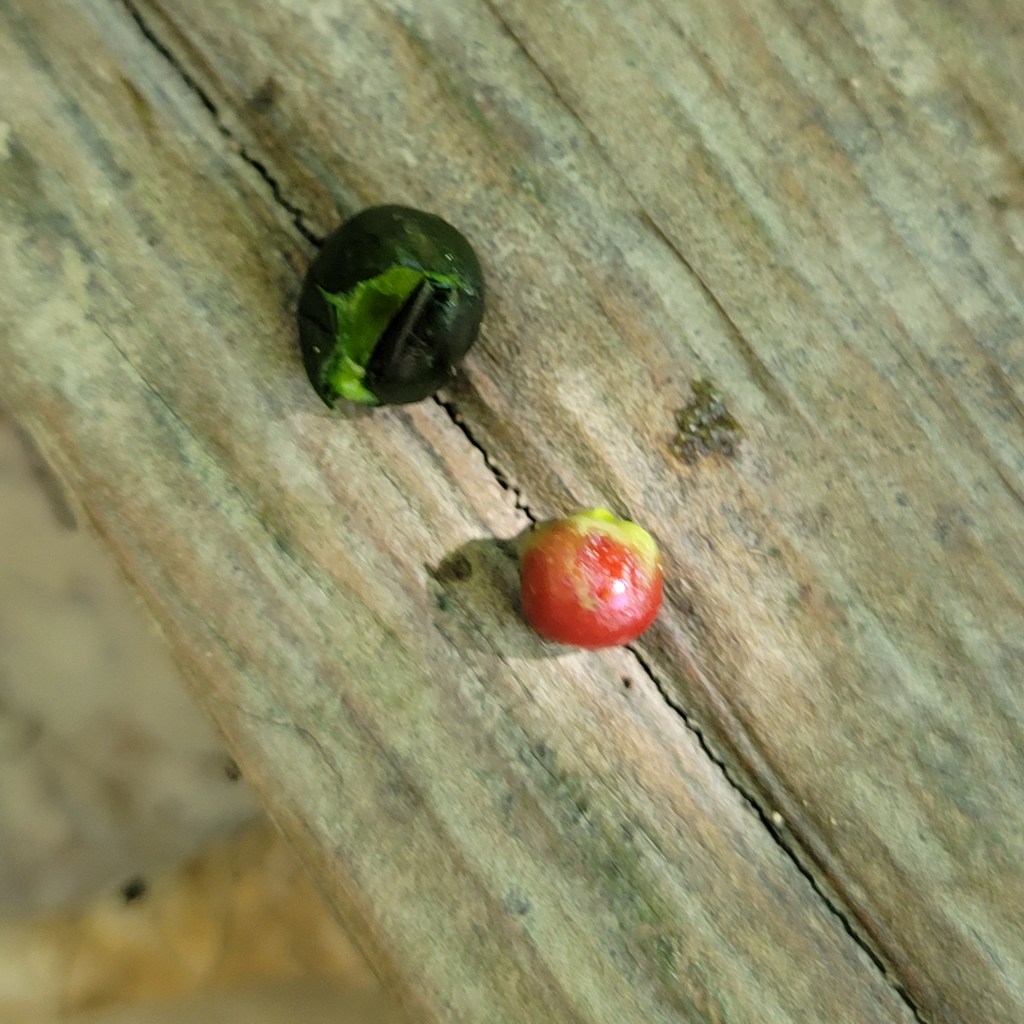
The berries are small and each one that I have opened contains just one seed, a large red seed.
The next photo was taken in late December last year, when the trees were all bare and the Greenbrier leaves were finally turning.

Greenbrier is a vine that I have come to know only in recent years, but it has now become part of the plant environment that I check on regularly on my walks. And especially from October through December, it has become a regular stop when others join me for walks along the riverbank, .
-
Seasonal Change: October
The arrival of October signals the beginning of Fall in Eliza Howell Park in Detroit. Early in the month, tree leaves are slowly beginning to change color and one can easily anticipate the major transition that will be occurring soon.
For years I have been taking a photo from the footbridge over the Rouge River, facing upstream, at approximately the first day of each month.
This is the most recent.
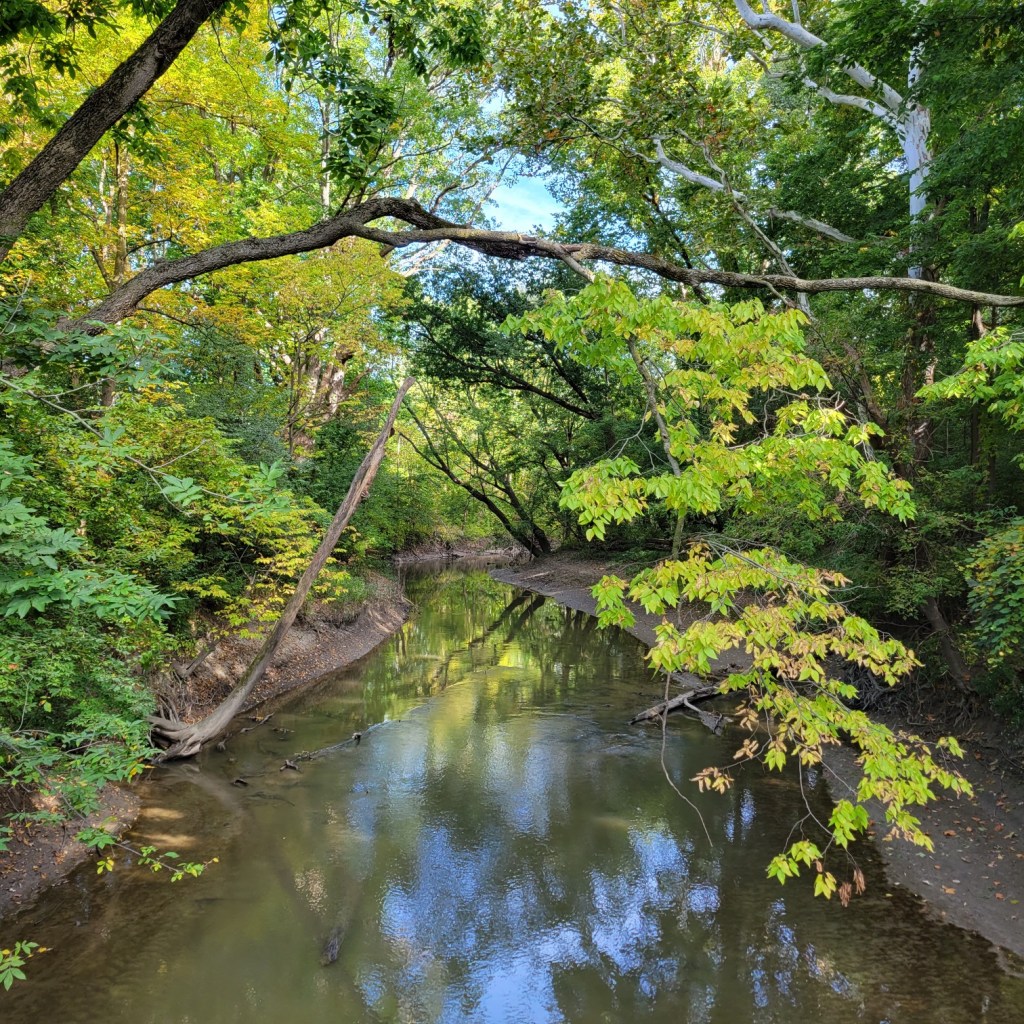
October 1, 2022 Almost all the leaves remain on the trees, but some change has begun. The change is not yet dramatic, but it is evident when compared to a month ago

August 31, 2022 Based on multi-year experience, it is easy to know what will happening over the next couple months. The change in October is significant, but…

November 1, 2021 it tends to be surpassed by the change during November.

November 30, 2021 From December through April the changes are in the extent of snow and ice cover, if any; the trees remain leafless.

February 1, 2022 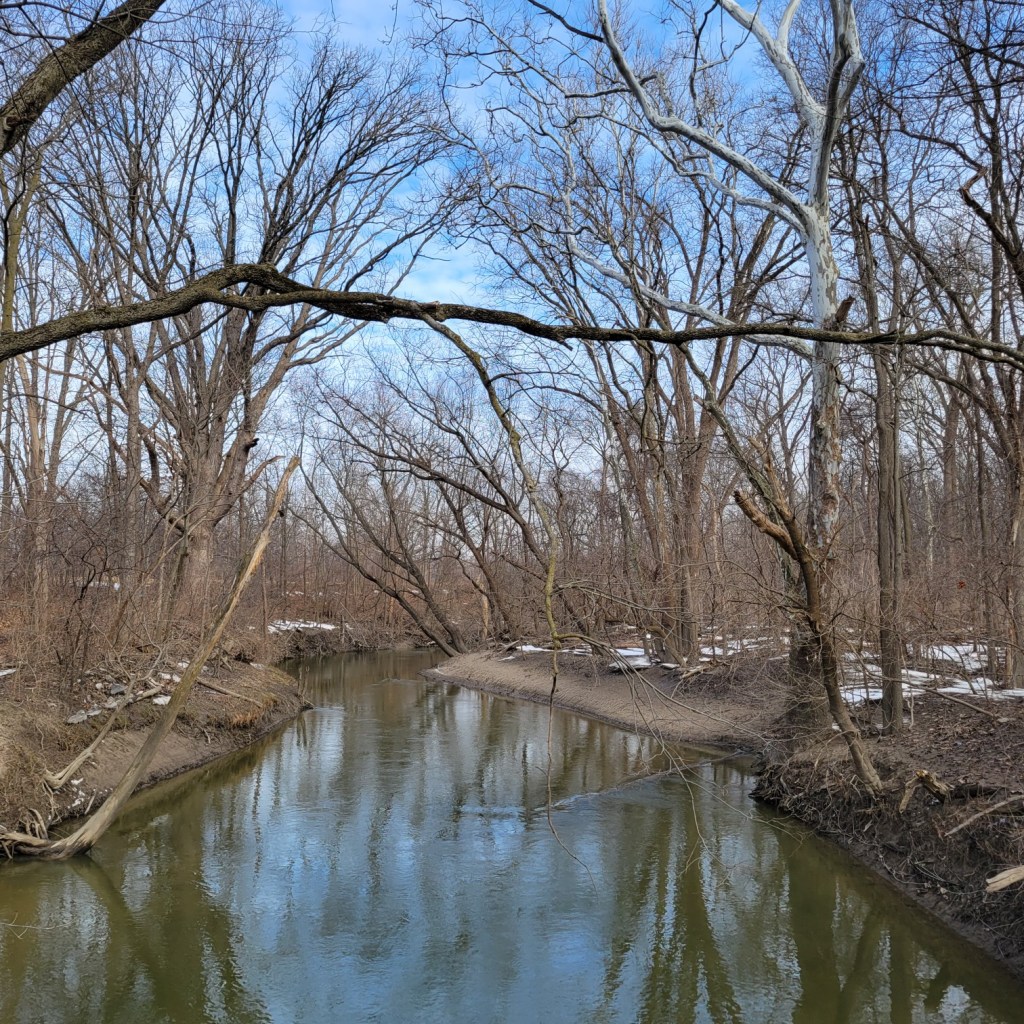
March 1, 2022 By May, new leaves are appearing, first on the sbrubs and small trees of the understory.

May 1, 2022 By June, the view is lush with green, a look that remains unchanged well into September.
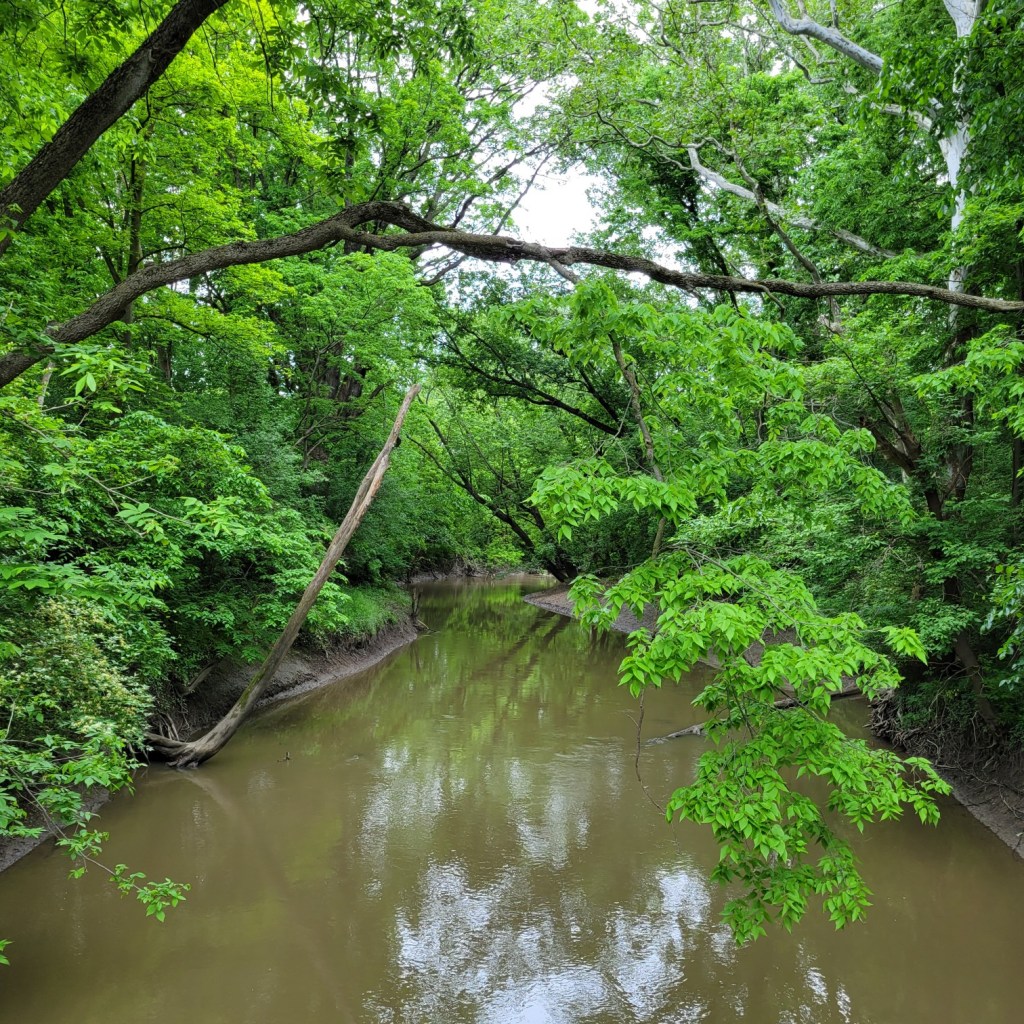
June 2, 2022 Nature’s annual seasonal cycle is always fascinating to watch, no matter how predictable and no matter how many years I have watched it. The beginning of October is of major significance in the cycle here in southeast Michigan, announcing as it does that we are again heading into a major change.
-
Monarch Butterflies in September: The Amazing Migration Begins
Each year I tend to pay more careful attention to Monarch Butterflies in September than I do in August or July. I am curious about when I will see the last one of the year and I am fascinated by the very long migration they are undertaking.

On New England Aster Those that are present in Eliza Howell Park now are part of the last brood (or generation) of the year. The life of this generation is quite different from that of the Monarchs I was watching here earlier in the year.

On Goldenrod These individuals, emerged from their chrysalises in (late) August or early September, are beginning about a 9-month lifespan; the lifespan of the previous generation can be measured in weeks, not months.
The previous generation developed from eggs laid here in Michigan this summer and, as adults, quickly began to produce more young. These September Monarchs have a whole different mission. Their sexual maturity is delayed until after they complete the long, long migration to Mexico and survive the winter there.
Their role now is to fuel up and head south.

On Ironweed I find it helpful to have a visual image of the migration. This map is taken from monarchbuttterflyusa com.

Most will arrive in their Mexican wintering grounds in November. There they hang out in the fir tree forests, where they cluster on the tree trunks, staying in the region for the rest of the winter.
In March they head back north, now sexually mature. They stop to lay eggs (on milkweed plants, of course) in northern Mexico or the southern U. S., leaving the rest of the trip to the next generation. This new generation, which has never seen Michigan, arrive here usually in May.
Between the Monarchs arriving in the spring and those now departing to the south, there is a generation, perhaps two, that live their whole lives here.
Now my focus is on the bright new generation that is leaving us in order to survive the winter, so that others can return.
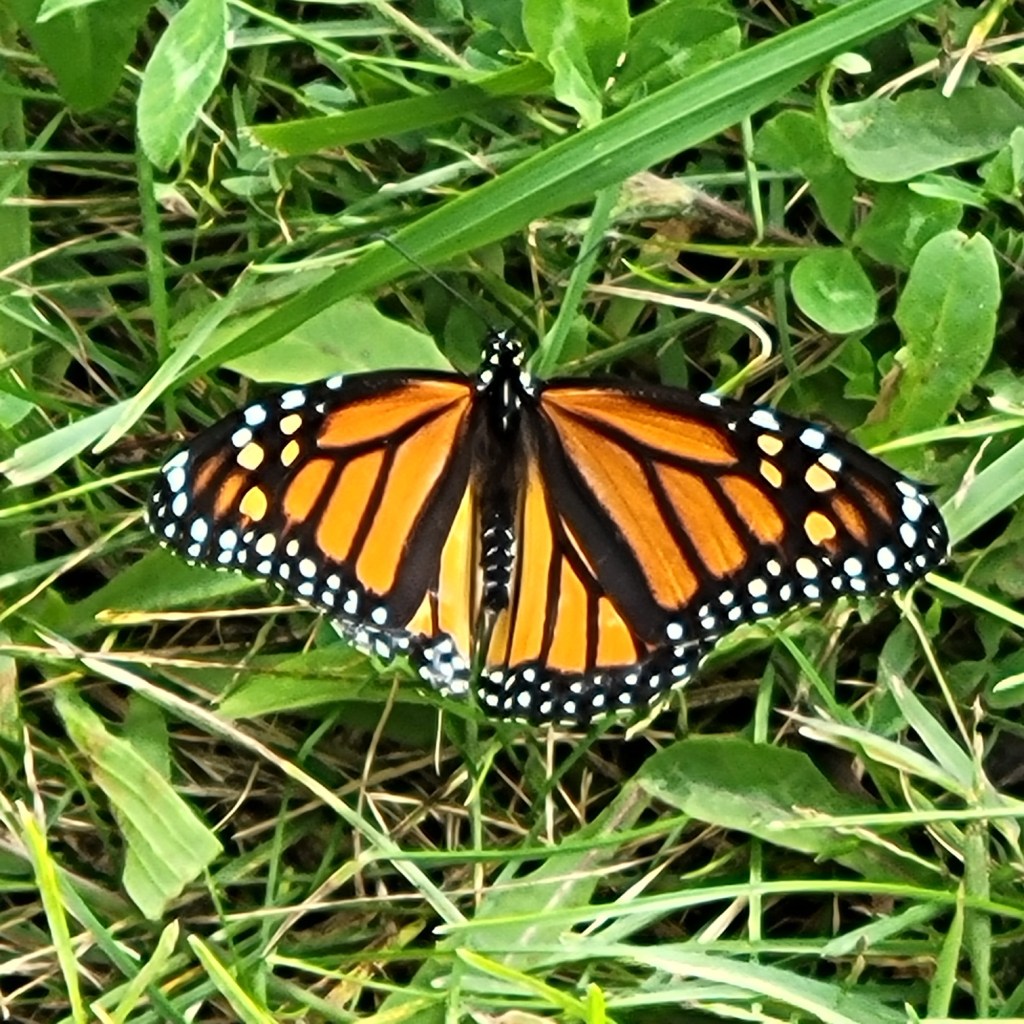
Neither the departing Monarchs nor those that will arrive here in the spring are making a trip that they have taken before. In another of nature’s wonders, they know where to go.

Some butterfly species survive the winter as eggs, some as larvae, some in the chrysalis stage, some hibernate as adults. Monarchs have a different strategy, migrating thousands of miles south and then back north.
I am sure that I am not the only one who looks forward to seeing the next generation next spring!
-
Subscribe
Subscribed
Have a WordPress.com account? Log in now.

